CMU Portugal inRes Startup Receives Hovione Capital Investment


AdaptTech AdaptTech, one of CMU Portugal Program inRes teams, received an investment from Hovione Capital.
News that our National Director, João Claro, receives with “satisfaction and pride” and that “will be decisive for this innovative solution to successfully hit the market”.
For Hovione Capital ’s CEO, Peter Villax, “projects like AdaptTech are the ones the company wants to invest in: an interesting and innovative product, but above all a promising team of young entrepreneurs.”Frederico Carpinteiro, AdaptTech’s CEO, says that Hovione was the best investor they could have in Portugal. “They are a reference in the medical devices area and we know that they’ll help us to define a plan and implement it in a best way possible.”

Hovione Capital is specialized in the Health sector and AdaptTech product consists in a smart fitting solution for prosthesis, capable of identifying localized problems within the stump-socket interface, evaluate the level of adaptation and suggest the needed modifications to maximize it.

The startup is located at Founders and Founders, in Porto, and was founded by Frederico Carpinteiro and Mário Espinoza, who are also alumni from Faculdade de Engenheira of the University of Porto.

Read the Portuguese articles at: Jornal de Negócios (June 3, 2016).


inRes, short for “in Residence”, is a very early stage acceleration program for entrepreneurial teams working in Information and Communication Technologies in Portugal. Organized by the Carnegie Mellon Portugal Program, funded by Fundação para a Ciência e a Tecnologia, inRes provides a training period in Portugal, followed by a seven-week structured immersion in the U.S., anchored at Carnegie Mellon University, including six weeks in Pittsburgh and a final week in Silicon Valley. AdaptTech drove more than 5500 km in four American states and in Canada, attended almost 40 meetings and did more than 100 direct contacts, during inRes immersion, in 2015.

CMU Portugal Principal Investigator Named Head of Machine Learning Department at Carnegie Mellon University

CMU Portugal PI :: Manuela Veloso CMU Portugal Principal Investigator Named Head of Machine Learning Department at Carnegie Mellon University

Manuela Veloso photo Manuela Veloso, CMU Portugal Program (CMU Portugal) Principal Investigator for the ERI INSIDE, and renowned Portuguese researcher at Carnegie Mellon University (CMU), is the new head of Carnegie Mellon University’s Machine Learning Department (MLD).

“Carnegie Mellon’s Artificial Intelligence (AI) community has long nurtured the field of machine learning — software that acquires knowledge and improves its performance with experience — culminating in the creation of the world’s first Machine Learning Department 10 years ago,” Andrew Moore, dean of the School of Computer Science, said when interviewed by CMU.

“Manuela is the embodiment of this legacy. Her knowledge of all aspects of AI and her dedication make her the perfect person to lead MLD now that machine learning has emerged as a major component of the world’s economy.”

Manuela Veloso has also been advisor to several CMU Portugal dual degree PhD students in Computer Science and Electrical and Computer Engineering.

The computer scientist, known for her work in artificial intelligence and robotics, has been collaborating with CMU since 1992 as a faculty member after earning her PhD in computer science at the same university.

CMU Alumni Portuguese Chapter receives record-high attendance

The 2016 Spring Event took place last April 15 in Lisbon, at Equal Experts.

Alumni Chapter The CMU Alumni Portuguese Chapter received a record-high attendance on its last event, on April 15, hosted by Equal Experts, in Lisbon, at the IDEIAhub in Parque das Nações. With a participation of 16 people, the chapter had as main objectives the building and strengthening of the bridges between CMU and innovative companies.

“We aim to raise CMU awareness in Europe as a source of talented individuals, with a special focus on the CMU Portugal Program, by sharing our experiences with the community”, explained chapter leaders Miguel Duarte and Ricardo Marques.

The group presented itself, by talking a few minutes regarding their current position and the challenges that they face everyday and discussed some of the next steps of the chapter, that include a chapter election around May/June and possible events in Lisbon or Porto.

“We will invite CMU Alumni and companies to share their experience and current projects. We are considering broadcasting the events online, so that we can broaden the audience and reach out to chapter members abroad”, reveal both leaders.

The CMU Alumni is also intending to create a closer relationship with other Alumni groups.

“We have already reached out to the Alumni Chapter in the London and intend to reach out to other chapters in Europe. Hosting a joint event online would be a great way to connect!,” consider Miguel and Ricardo.

The event had the participation of João Rodrigues (MHCI’11), Daniel Freitas (MHCI’11), Rogério Afonso (MSE’10), João Almeida (MSE’09), Cátia Sousa (MHCI’13), Filipa Jervis (MHCI’08), Rui Aguiar (MSE’11), Bruno Lopes (MSIN’08), Gonçalo Pereira (MSIN’08), Fábio Ferreira (MSIN’08), Wang Ling (PhD Student), Zita Marinho (PhD Student), Sabina Zejnilovic (PhD Student), Sofia Morais (MSE’12), Ricardo Marques (MSIT-IS’08) and Miguel Duarte (MSE’10) who got the chance, according to Miguel, of “learning a bit more of what it is that makes all of us different, while sharing a common inheritance”.

* The CMU Alumni Portuguese Chapter, one of the first CMU Alumni groups in Europe, was created in 2009 by Luís Costa (MSIT-IS’08), Filipa Jervis (MHCI’08) and Ricardo Caetano (MSIN’08) and aims to provide CMU Alumni with a CMU home outside CMU. The chapter keeps the community operating as a professional family, providing a great network of resources which anyone anywhere can leverage to share experience and achieve better results at any given task. It also provides a bridge between Alumni, the Program and industry, facilitating the connection among people with differentiated goals.

* Equal Experts (EE) is a network of IT consultants, specialized in the agile delivery of projects of all shapes and sizes. With offices in the US, Canada, UK, Portugal and India, EE’s software solutions serve millions of customers in the private and public sectors.

CMU Portugal inRes Startup Playsketch Wins Exame Informática Honorable Mention

Playsketch was distinguished with the mention on Software Category

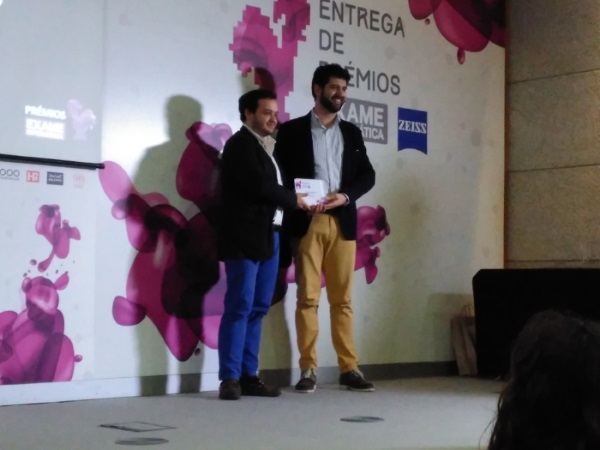
April 2016 - Playsketch Wins Exame Informática Honorable Mention Playsketch, one of CMU Portugal Program inRes selected team, received an honorable mention in the Software Category, by Exame Informática, at their annual awards ceremony, on April 27, in Lisbon. The startup and other nine projects were selected by Exame Informática magazine and television journalists newsroom.“It is always very good to be recognized by one of the standards in terms of technology journalism in Portugal which is Exame Informática. It was very unexpected because we didn’t apply to the prize and we are very happy with it”, reacted Playsketch CEO, Pedro Santa.

The team also emphasizes the importance of the CMU Portugal Program on this honorable mention.

“CMU Portugal and inRes Program were pivotal in this prize because it was through the context and the communications team of CMU Portugal that we obtained this connection with Exame Informática that now we can tell that they are a news partner for us”, say the founders Pedro Santa and Luís Pereira.

Playsketch also expects to be on the news soon with the release of the highly anticipated app.

“We are preparing our app to be released, so we have a lot of effort to be done in terms of getting the product to the finishing line, but also, since we are approaching our launch date, we have even more work to do on the marketing and the promotion sides. These will clearly be two of our main efforts in the coming months”, states Pedro Santa.

* Playsketch was founded by Pedro Santa and Luís Pereira in 2014 with the aim of enabling everyone to create games by drawing them on paper, using their mobile apps to capture the drawings and have them translated to playable games in minutes. The mobile application with the same name will hit the market this year. The entrepreneurial team was one of the four selected projects of the 2015 edition of inRes, the early stage acceleration program of the CMU Portugal Program. inRes provides a training period in Portugal, followed by a seven-week structured immersion period in the U.S., anchored at the Carnegie Mellon University campuses in Pittsburgh and in Silicon Valley. Playsketch is headed at Instituto Pedro Nunes, in Coimbra.

More information at http://playsketch.net .

May 2016

CMU Portugal inRes Startup Launches its Flagship Product Worldwide

Project based on 3D with big game-developing industry expectations CMU Portugal inRes Startup Launches its Flagship Product Worldwide
Sceelix is one of the four selected projects of the 2015 edition of inRes

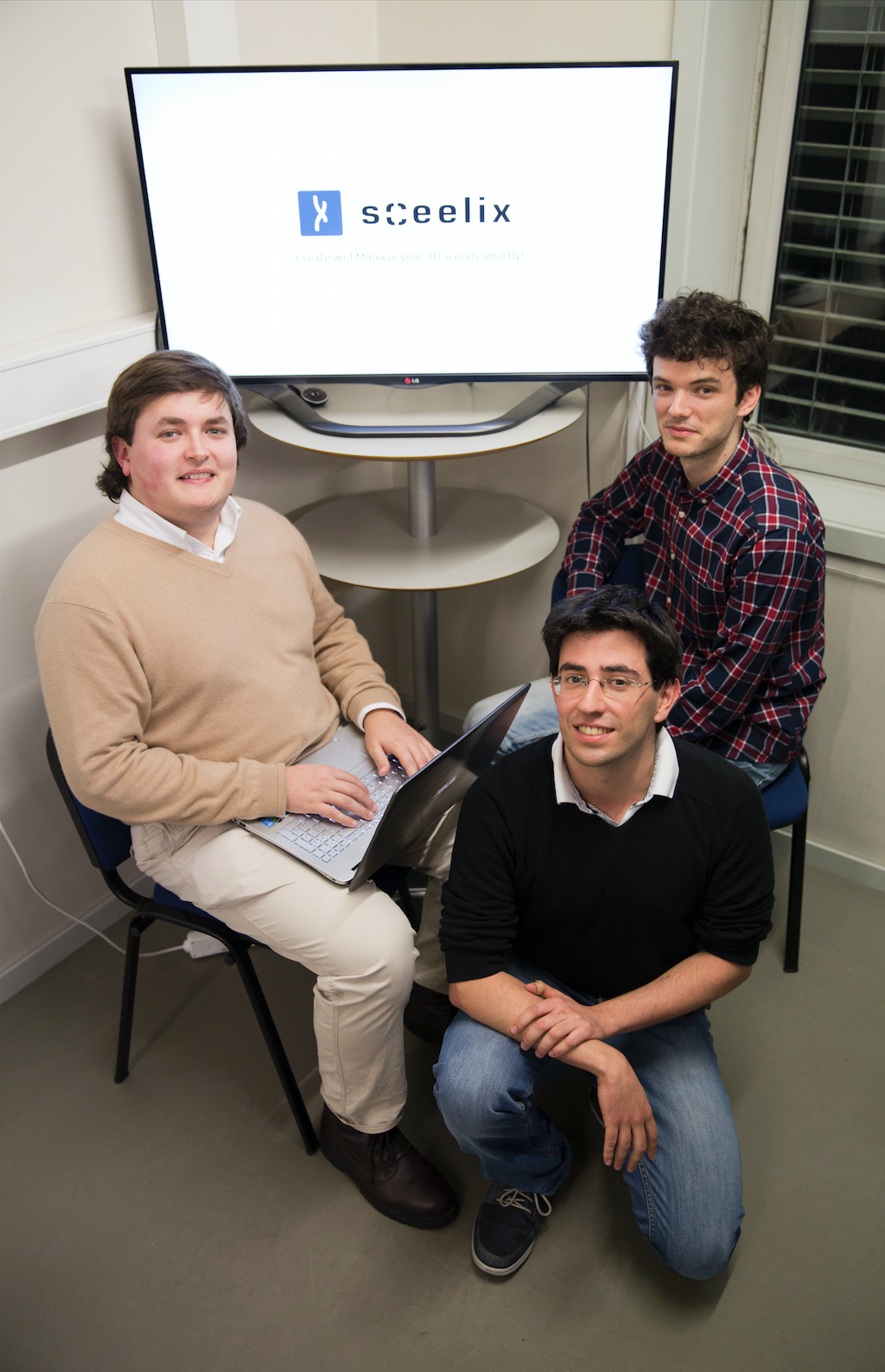
Sceelix team Sceelix, one of the four selected projects of the 2015 edition of inRes, the early stage acceleration program of the Carnegie Mellon Portugal Program (CMU Portugal), has just launched its flagship product and it is available worldwide.
“One year has passed since we started Sceelix as an entrepreneurial venture and today we can happily announce the launch of our flagship product. The inRes CMU Portugal Program helps us along this journey on several fronts. Value proposition communication and contact with several fields in our main potential market – the United States – were two key points that have helped us in the short term and will surely bare fruit in the medium and long terms to come”, reveals the co-founder Francisco Rebello de Andrade.

The software allows the creation of 3D scenes and other content (like terrains, vegetation or cities) in a more efficient and manageable way, and with less hassle, using procedural generation technology. It is also possible to export or integrate the resulting creations directly into the Unity’s game engine and more engines will follow.

“Procedural generation technology consists of creating digital content from algorithms, rules and parameters, allowing you, for instance, to simulate the growth patterns of vegetation or mimic the architectural style of a city. Because of its parameterized nature, it makes it easy for you to change the size of your scene to something 10 times bigger with a simple change of a parameter. Sceelix lets you define all the aspects of your scene through its very own visual language, making it easier to manage and control”, emphasize Sceelix co-founders Francisco Rebello de Andrade and Pedro Silva.

Procedural generation can also be used to generate scenes at runtime, method used in several game types like roguelikes and infinite-runners, and specific games like Diablo 3, Minecraft and the highly anticipated by the gaming community No Man’s Sky, that is coming out this June.

More information at www.sceelix.com .

* Sceelix – Create and Manage your 3D Scenes Smartly – was founded by Pedro Silva and Francisco Rebello de Andrade in 2015 and was one of the four selected projects of the 2015 edition of inRes, the early stage acceleration program of the CMU Portugal Program. inRes provides a training period in Portugal, followed by a seven-week structured immersion period in the U.S., anchored at the Carnegie Mellon University campuses in Pittsburgh and in Silicon Valley. The startup is located at UPTEC, Science and Technology Park of University of Porto.

April 2016

Mambu Raises €8 Million in Funding to Accelerate Global Expansion

CMU Portugal startup :: Mambu Mambu raises €8 Million in Funding to Accelerate Global Expansion
Mambu is a startup in the field of microfinance that was born in 2009 as the result of an idea from a master project carried out in the scope of the Carnegie Mellon Portugal Program, funded by Fundação para a Ciência e a Tecnologia. This SaaS banking platform provider recently announced its latest funding round of €8 Million, which was l ed by Acton Capital Partners and CommerzVentures with the participation from existing investors.

This latest funding will be used to continue building on Mambu’s global momentum and successes, with the company achieving over three times year-over-year growth and recording several significant milestones over the last 12 months. This includes over 30 new customers, a quadrupling of portfolio under management and an array of new functionality including support for various SME and P2P lending methodologies.

“This latest funding round is a testament to our growing client base and increasing market needs for a cloud banking platform,” said Eugene Danilkis, CEO of Mambu. “We are building out the product and onboarding customers in multiple geographies and are excited that this new capital will allow us to deploy faster and better support our global client base as we continue to enable the next generation of banking service providers.”

As part of its global growth, Mambu plans to substantially expand its commercial team, increase investment into the platform and open further offices to support its growth in Asia and the Americas. The company is at the forefront of digital banking with an innovative offering that provides the complete core banking software and infrastructure needed to bring its digital-first banking business model to market.

“The FinTech landscape is rapidly evolving and with investment in this space at a high the industry is seeing an increase in opportunities across all geographies and banking verticals,” said Fritz Oidtmann, Managing Partner at Acton Capital Partners. “We were impressed with Mambu’s position as a global FinTech platform player with great potential as the platform-of-choice for emerging FinTech companies and as an engine for innovation for the established organizations. We look forward to helping the company build on the momentum it has already achieved and continue to establish themselves as the cloud engine of the FinTech revolution.”

“We see Mambu as the next generation of banking platforms and cloud technology with huge potential to fill a significant need in the market,” said Stefan Tirtey, Managing Director at CommerzVentures. “Mambu has rapidly evolved to be an industry-leading modern, cloud based banking system that is opening up new opportunities for digital-first banking and is well positioned as a disruptive challenger to traditional and legacy banking systems.”

Source: Mambu Press Release

January 2016


Related article: Mambu Startup Obtains Funds to Expand its Microfinance Service

CMU Alumni Chapter in Portugal Organizes Session at OutSystems


2015 CMU Alumni Portugal Chapter Event at Outsystems When we took the chapter leadership our top priority was to build bridges between the innovative companies and the CMU community. At the end of November, we had an incredible event hosted by OutSystems that built on the two previous events at Feedzai and PT-Inovacao and took it to the next level.

Lúcio Ferrão (Principal engineer and OutSystems co-founder) gave an inspiring talk on how the company grew from its humble beginnings in writing software that eased the development of WAP sites for domestic telcos to a large company whose software is deployed worldwide. He also talked about company values and culture – if you haven’t read “The small book of the few Big Rules”, please do – there is some inspiring stuff there. Lúcio also showed us around the office, I especially appreciated how pretty much every surface can be (and is) used to jot down ideas, discussions etc.

Afterwards, João Rodrigues (UX Expert, MHCI’11 alumni) presented a heartwarming and funny presentation on how listening to your customers can make your software better but also improve their quality of life (he presented how repetitive strain injury could be prevented by improving user interface design). We also had a lively discussion on how ensure UX works together with engineering and how to cope with conflicting priorities. I’ve shared a bit of my experience on the HMRC digital project where along side with a shared UX services we also had dedicated UX resources for every team (I’m convinced that this was a critical success factor on having won the UK IT industry Digital Project of the Year award)

Ricardo Marques (Software Engineer and Security expert MSIT-IS’08 alumni and who also shares chapter leadership) talked about his role on the SWAT team. I’ve worked in the past in companies where either high customer priorities were not addressed in due time or the trade off was product backlog and team morale disruption due to ever changing priorities. OutSystems has a special commando team – appropriately named SWAT – whose goal is to quickly create new customer-triggered product functionality to address critical field needs. Since these changes may be customer specific at first, the SWAT team makes changes anywhere (from the product installer to user interface localization) while mitigating the risk to the rest of the customer base. SWAT does these customer-triggered changes but also works along with core product teams to make sure the changes are integrated to the main product line.

Following the great event at OutSystems, the next event will be hosted by Talkdesk (Talkdesk is disrupting customer care by allowing anyone to setup a call center anywhere in 5 minutes.) on the 1st Quarter 2016! More information will be provided in the near future.

*Leaders of the CMU Alumni Portugal Chapter

December 2015

Coaching and Monitoring Rehabilitation Exercises

Entrepreneurial Research Initiative: Augmented Human Assistance (AHA) Coaching and Monitoring Rehabilitation Exercises

AHA team2

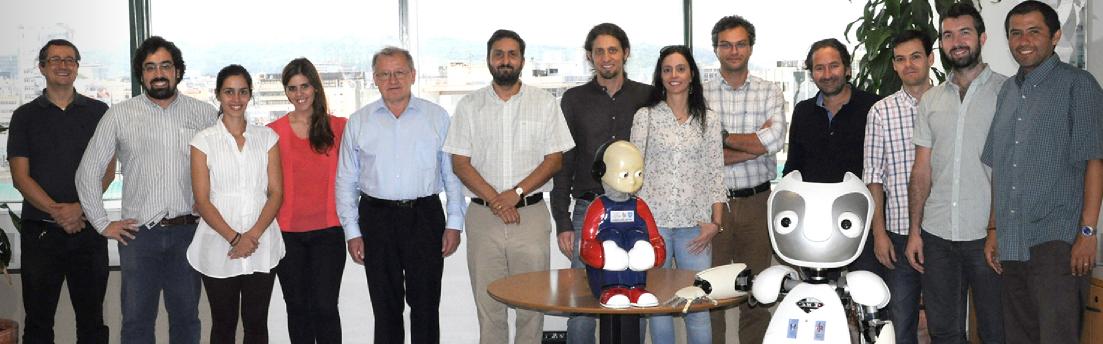
More than 30 young and senior researchers from both sides of the Atlantic, Portugal and United States (Pittsburgh), are involved on the Entrepreneurial Research Initiative (ERI) that seeks to build an intelligent robotic coach to assist people in exercise programs for active aging and rehabilitation.

Alex Bernardino /uploadedImages/people/faculty-researchers/Daniel Siewiorek.gif Led by Alexandre Bernardino, from Instituto Superior Técnico (IST), Asim Smailagic, and Daniel P. Siewiorek, both from Carnegie Mellon University (CMU), the ERI titled “Augmented Human Assistance” (AHA) involves two dual degree Ph.D. students: João Guilherme Antunes Martins (who is on his 2nd year) and Min Hun Lee (who is on his 1 st year). Both doctoral students at the end of their studies will receive a diploma from IST and CMU.

With approximately one year and a half of activity, the research team has published 10 papers, has been working closely with its partner companies and advisory board, and has already collected exercise data from end users that tested its technology. We have talked with the principal investigators of this initiative, which has a timeframe of four year of research work. The ERI AHA is carried out in the auspices of the CMU Portugal Program, funded by Fundação para a Ciência e a Tecnologia (FCT).

CMU Portugal Program: How do you comment on this first year of activity of the ERI?

Augmented Human Assistance Principal Investigators (AHA PIs): The first year was very active and exciting. We had many meetings and discussions with great enthusiasm, that led to a common view of the project goals. This was the first time some of the partners worked together, so meetings and discussions also led to mutual learning and discovery. Since our team is highly complementary and multi-disciplinary, all partners certainly learned a lot from each other and got their complementariness strengthened. We are all very motivated and committed to the project and driven to put together all the different pieces of work, and give life to our exciting goal: an intelligent robotic coach to assist people in exercise programs for active aging and rehabilitation purposes.


“We have been working with end-user groups (…) to collect exercise data to evaluate and validate the developed methods, and in a senior sports facility (…) where we tested a prototype with 17 end users.” AHA PIs


CMU Portugal Program: What outcomes can be communicated so far?

AHA PIs: We have already several publications in conferences and journals, reporting the scientific components of the project. We got also some appearances in the press, where some robotic demonstrations were already presented. We had contact with the research community in talks in conferences and workshops, including a booth at a conference for distributing information about the project. We have been working with end-user groups at Faculdade de Motricidade Humana (FMH) to collect exercise data to evaluate and validate the developed methods, and in a senior sports facility in Madeira, where we tested a prototype with 17 end users.

CMU Portugal Program: This ERI has an Advisory Board, what has been its role?

AHA PIs: Yes. We have an advisory board composed by members of academia, technological companies, health clinics and end users. We had our first meeting in May 2015 where the advisors had the first contact with the project and started to form an idea of the objectives and the way the project is expected to progress during the years. The advisors also presented their works so we could understand each other more effectively. At the end of the meeting, they provided suggestions for improvements in the project activities and overall directions. These meetings will be held every year, and we hope to improve continuously from the benefits of this collaboration.

CMU Portugal Program: What has been the role of the partner companies involved so far?

AHA PIs: Partner companies have been very active in the project promotion, and are playing an extremely helpful role in the specification of the requirements according to their experience in market trends and product constraints. They have been providing hardware and software platforms for the development of prototypes. In this first phase of the project, PLUX provided different types of sensors that will allow to study the patients electrophysiological activities, and promoted internal workshops to explain the functionalities and modes of utilization of such devices. This is also very useful for the company to improve its products.

CMU Portugal Program: What are the major activities scheduled for the next year?

AHA PIs: The project milestones set for the second year are related to the virtual coaching technology and augmented reality games. Further, it will be a period when most of technical integration activities among partners and services will take place. We are aiming at a system able to motivate, engage and assess the physical fitness of the users using more interactive and immersive experiences. This requires a complex technical infrastructure and system architecture that is being put in place. In parallel we will keep improving the robotic platforms in preparation for the third year milestone: the robot coach.


“Companies are actively in the project, driving technological innovation with a high potential in the consumer market.” – AHA PIs


CMU Portugal Program: Now that a year has passed, what do you feel that are the main differences between an ERI and other research projects?

AHA PIs: There is certainly a bigger emphasis in close to market technologies and we must be permanently looking for product opportunities that companies can exploit. So part of the effort must be put on driving technologies up in the Technological Readiness Level looking for exploitation opportunities. Because of this, companies are actively in the project, driving technological innovation with a high potential in the consumer market. Apart from this, things are not much different, and there is always space to do fundamental research and drive ideas for longer-term applications.

December 2015


Entrepreneurial Research Initiatives (ERIs) are projects in science, engineering, management and policy that link both fundamental and applied research to technological innovation and economic development. This bridging is pursued by explicitly focusing on important real world problems entailing significant scientific challenges – more

João Mota Receives 2015 IEEE SPS Young Author Best Paper Award

Alumnus in ECE from IST and CMU: João Mota
João Mota Receives 2015 IEEE SPS Young Author Best Paper Award

JMota 2015 João Mota was recently distinguished with the 2015 IEEE SPS Young Author Best Paper Award for the paper “Distributed Basis Pursuit”, published at the IEEE Transactions on Signal Processing, Volume: 60, No. 4, on April 2012. The paper was written by João Mota, with his advisors João Xavier (IST), Pedro M.Q. Aguiar (IST), and Markus Püschel (CMU). “This award couldn’t have been more timely, as I am currently applying for academic positions. And having such an award will be a major asset,” says João Mota.

João Mota got his dual degree Ph.D. in Electrical and Computer Engineering (ECE), at Instituto Superior Técnico (IST) and Carnegie Mellon University (CMU), in 2013, with the dissertation titled “Communication-Efficient Algorithms For Distributed Optimization.” Afterwards he become a Postdoctoral Researcher at the University College London. João Mota’s research interests include optimization theory and algorithms, big data processing, compressed sensing, distributed algorithms, control, machine learning, and sensor networks.

CMU Portugal Program: What is the paper about?
João Mota (JM): The paper describes a very efficient distributed algorithm to solve a problem called Basis Pursuit. Intuitively, and using images as an example, Basis Pursuit enables reconstructing images from very few measurements; a measurement can be an individual pixel or something more complex, for example, the result of multiplying all the pixels of the image by a random number and adding up the resulting (random) numbers. Using just a few measurements of this type, Basis Pursuit can still reconstruct the image by exploiting the image’s redundant information. In fact, most signals we deal with, from audio and video to sensor and financial data, contain redundant information and, thus, can be compressed. This is one of the reasons why Basis Pursuit and the theory that explains how it works, Compressed Sensing, have become so popular. They have been used to improve several technologies, for example, Magnetic Resonance Imaging (MRI), and even to create new ones such as the single-pixel camera. Our paper considers a distributed scenario in which the measurements are spread over the nodes of a network, for example, a sensor network or a computer cluster. No node has access to the full data neither can it control the other nodes. It is thus a completely decentralized scenario. Such a scenario arises in situations where we want reliability (if one node stops working it does not jeopardize the entire system) or simply when the amount of data is so large that it cannot be stored or processed by a single computer.

CMU Portugal Program: What are the main findings of this paper?
JM: The paper proposes an algorithm that specifies what each node has to do, in particular the messages each node exchanges with its neighbors in order to solve the Basis Pursuit problem. At the end of the algorithm, all nodes know the solution of the problem as if it were solved in a centralized way, with all the data known at a single location. Although there are several distributed algorithms that also solve Basis Pursuit, what makes our algorithm special is its efficiency: namely, it solves the problem using much fewer communications than what competing algorithms use. Since the paper was published, however, other researchers have proposed algorithms that solve Basis Pursuit even more efficiently.

CMU Portugal: What was the impact of the paper in this research field?
JM: The award notice didn’t give the reason for the award, but I speculate that it was because of the work it made possible afterwards. In particular, in our subsequent work, we generalized the algorithm to solve other distributed problems, for example, to perform data inference, compute network routes, and design control systems. To my knowledge, there is no more efficient way to solve these problems than with our generalized algorithm. The awarded paper thus lays the foundations for creating this extremely efficient distributed algorithm.

November 2015

Article Related:
João Mota Uses Distributed Algorithms to Solve Optimization Problems
João Mota and his Qualifier Exam Experience

Call for Applications for Doctoral Program Scholarships 2016/2017 is now open!