Veniam wins the TU-Automotive Award for Best Auto Mobility Product/Service in 2016

Veniam wins the TU-Automotive Award for Best Auto Mobility Product/Service in 2016
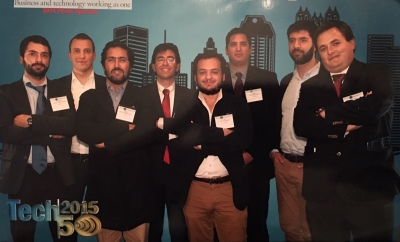
Veniam, a startup created in the scope of the CMU Portugal Program (CMU Portugal), was awarded with the 2016 Best Auto Mobility Product/Service at the TU-Automotive Awards.

The TU-Automotive Awards 2016 are considered the most prestigious and anticipated awards in the connected car industry and its judges elected Veniam after analyzing 400 nominations from all over the world.

Veniam’s goal is to connect vehicles to the each other and to the Internet using vehicular mesh networking technologies. Veniam designs, develops and deploys vehicular ad-hoc networks for any type of business.

Veniam was founded by João Barros, faculty at the Faculdade de Engenharia of the Universidade do Porto, and by Susana Sargento, faculty at the Universidade de Aveiro. Veniam is a spin-off company that uses technologies developed at Universidade de Aveiro and Instituto de Telecomunicações under the CMU Portugal Program.

June 2016

CMU Portugal Team on Tour to Present inRes to Entrepreneurs

inRes :: Very early stage acceleration program for entrepreneurial teams working in ICT in Portugal CMU Portugal Team on Tour to Present inRes to Entrepreneurs

inRes roadshow beta i 2 Are you starting a new business? Have you proven technical feasibility? Have you had interaction with your target industry? Is your business project based on Information and Communication Technologies? Would you like to improve and advance your business project, and learn from leading Entrepreneurship experts in Portugal, Pittsburgh and Silicon Valley? – These were the questions asked to entrepreneurs around the country during the 2016 inRes Roadshow. The goal was to present this CMU Portugal Program (CMU Portugal) initiative and to attract talented teams with innovative ideas interested in applying.

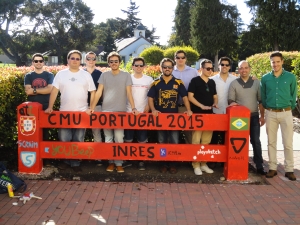
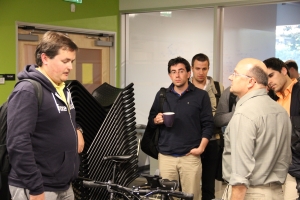
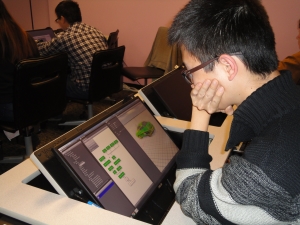
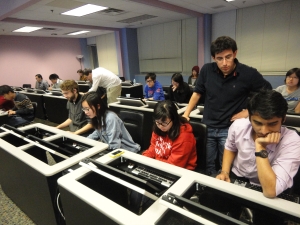
Between April and May 2016, CMU Portugal Team, led by the National Director of the Program, João Claro, and some of the inRes teams of previous editions presented this very early stage acceleration program at UPTEC (Porto), Beta-I (Lisbon), IPN (Coimbra) and INESC TEC (Porto) to present this very early stage acceleration program.
In the scope of the 2015 and the 2014 Editions of inRes , eight teams of entrepreneurs – Adapttech, Playsketch, Sceelix, Scraim, AddVolt, Displr, Followprice and Xhockware – leveraged the international partnership established through the CMU Portugal to access and be immersed in the highly dynamic entrepreneurial ecosystems of Carnegie Mellon University, in Pittsburgh and in Silicon Valley.

inRes roadshow UPTEC inRes roadshow INESC TEC
inRes roadshow beta i inRes roadshow IPN

inRes is a very early stage acceleration program for Portuguese entrepreneurial teams working in Information and Communication Technologies, in Portugal. Offered by the CMU Portugal Program, which is funded by Fundação para a Ciência e a Tecnologia, inRes provides a training period in Portugal, followed by a seven-week structured immersion period in Pittsburgh, in the U.S., anchored at Carnegie Mellon University.

June 2016

High-Quality Scientific Work Close to Local Industry Brings Excellent Results

2016 Project Review Meeting High-Quality Scientific Work Close to Local Industry Brings Excellent Results

project review The CMU Portugal Program (CMU Portugal) held its Annual Project Review Meeting on March 8-9 2016, at Fundação Portuguesa das Comunicações, in Lisbon. The Entrepreneurial Research Initiatives (ERIs) from the 2013 call have accomplished excellent results and the new ERIs, which started in 2016, were considered by the Review Committee (RC) as having innovative ideas that they believe will accomplish great outcomes. The evaluation moment brought CMU Portugal researchers and the RC together.

The teams of the 12 ERIs in the scope of the Program, and funded by the Fundação para a Ciência e a Tecnologia (FCT), presented their achievements and outcomes, on March 8. Six of these projects started in 2013, and because of their many results, they went through a more detailed evaluation. Some of the teams were able to show prototypes or even talk about the continuation of the projects.

project review 2 project review 3

About the more recent ERIs, the RC says: “The new ERIs starting in 2016 aim at ground breaking results in many fields like wearable electronics, sustainable development, smart cities, medicine or recommendation systems. We encourage the research teams to use the synergies with CMU to make these aims a reality.”
This year, the panel committee was chaired by Carles Sierra, from the Artificial Intelligence Research Institute, Spanish National Research Council (Spain), who led a team of international experts: André Tosi Furtado from the Instituto de Geociências da Universidade Estadual de Campinas (Brazil), Hans-Dieter Burkhard from the Humboldt University Berlin (Germany), Helmer Strik from the Centre for Language and Speech Technology, Radboud University, (Nijmegen, The Netherlands), Miguel Lagunas from The Centre Tecnològic de Telecomunicacions de Catalunya (Spain) and Paolo Bonato from the Wyss Institute for Biologically Inspired Engineering, Harvard University (USA).

project review 4 project review 5

On March 9, a poster and demo session took place and the researchers were able to showcase their prototypes and results. This functioned as a network moment between all research teams, which provided a good starting point to create synergies.

This day activities counted with the presence of the Board of Directors of CMU Portugal: the President of the Board of Directors and of FCT, Paulo Ferrão; the Rector of the Universidade do Porto and Representative of the Conselho de Reitores das Universidades Portuguesas, Sebastião Feyo de Azevedo; the Executive Director of Novabase Corporate, Rogério Carapuça; the National Director of CMU Portugal, João Claro; the Dean of the College of Engineering at Carnegie Mellon University (CMU); the Vice Provost for International Programs and Strategy at CMU, Jimmy Hsia and the Director of CMU Portugal at CMU, José M. F. Moura.

project review 6 project review 7
project review 8 project review 9

March 2016

CMU Portugal Alumnus Distinguished with Azorean Assembly Congratulatory Letter

After receiving the prestigious IBM Scientific Award CMU Portugal Alumnus Distinguished with Azorean Assembly Congratulatory Letter Ricardo Cabral was distinguished by the Legislative Assembly of the Azores Autonomous Region.

Ricardo Cabral CMU Portugal PhD Alumnus, Ricardo Cabral, received a Congratulatory Letter by the Legislative Assembly of the Azores Autonomous Region, in the scope of his distinction with the prestigious IBM Scientific Award and his PhD work.

The official letter from the Legislative Assembly of the Azores Autonomous Region highlights that “besides the huge joy,” “every time an Azorean is recognized by his work, in any knowledge area, it is extremely prestigious” for all the Azorean, “that a name from this islands wins such a substantial notoriety in the scientific world and at the highest level.” The vote was unanimously approved.

Ricardo Cabral graduated from the dual degree doctoral program in Electrical and Computer Engineering by Instituto Superior Técnico (IST) and Carnegie Mellon University (CMU) and won the 2014 IBM Scientific Award with his doctoral thesis “Unifying Low-rank Models for Visual Learning.” The CMU Portugal Alumnus’ advisors were João Paulo Costeira and Alexandre Bernardino, from ISR-IST/UL, and Fernando De la Torre, from CMU.

Ricardo Cabral defended his PhD thesis in February 2015 and is currently employed at Apple, after working at Google, where he helped on the creation of Indoor Maps.

Reaching the American Market: The Pathway in Finding the Right Prosthetic Match

inRes 2015 :: Adapttech Adapttech | Reaching the American Market: The Pathway in Finding the Right Prosthetic Match

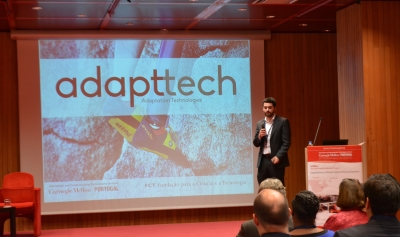
AdaptTech After covering more than six American States, driving more than 5500 km, spending more than 500 liters of gasoline, attending almost 40 meetings and making more than 100 direct contacts, Adapttech is ready for the American market, has a clearer value proposition and has different stories to tell. “It is difficult to establish a comparison of Adapttech before and after inRes,” the Adapttech team states. Read more and see how Frederico Carpinteiro and Mario Espinoza, both co-founders of Adapttech, made their project bigger while immersed at Carnegie Mellon University (CMU) for seven weeks.

“It is difficult to establish a comparison of Adapttech before and after inRes. Now the business plan is validated and the business model is very clear. That was the game changer.” Adapttech team
What is Adapttech?

The idea of creating Adapttech appeared when Frederico Carpinteiro started studying prosthetics and its fitting problems during his thesis. By that time Mario Espinoza was already working with wearable devices. Fortunately, they met during a course in 2013 and started working together. Adapttech was officially created in February 2015.

Now, as the startup’s website mentions, their “product consists in a smart fitting solution for prosthesis, capable of identifying localized problems within the stump-socket interface, evaluate the level of adaptation and suggest the needed modifications to maximize it.”

AdaptTech1 AdaptTech2

Why inRes?

As Mario Espinoza stated “Carnegie Mellon University is a worldwide reference and they have the resources, the knowledge, the contacts and the network. It was something we couldn’t refuse.”
When they started working on this, Adapttech’s team was sharing a space with Addvolt, a team that participated in the inRes 2014 edition. Having talked with them about their experience in Pittsburgh made Adapttech’s team realise that “inRes 2015 was the perfect opportunity to validate the product in the American market.” Also the CMU brand is highly recognized, especially in the IT world, as the team mentioned, while in Pittsburgh. “When we send an email and they see Carnegie Mellon, we get an answer”.
“When we send an email and they see Carnegie Mellon, we get an answer.” Adapttech team

AdaptTech3 AdaptTech4

Workshops in Portugal and immersion in a fast paced environment in Carnegie Mellon

The training phase started in Portugal and Frederico Carpinteiro states that having Tara Branstad and Dave Mawhinney preparing the team for the American market before they went to Pittsburgh was really interesting”. Mario also mentioned that for a teams like these, made of engineers, and that don’t have many classes in management, the training was important because it gave them valuable information – “we got well prepared to go.” According to João Claro, National Director of the CMU Portugal Program, the teams needed to go from “being a project to being a startup.”
“João Claro told us that we needed to go from being a project to being a startup.” Adapttech team
While at CMU, the team was able to improve and validate different parts of their business model canvas. “We did more in a month in the US than we would have done in a year in Portugal,” team mentions. In the US they concluded that because of the fact that their products could keep record of the evolution of the prosthetics, the technicians and patients could follow-up and be protected in case of litigation. “Technicians could also use this data to justify their decisions to the insurance companies. They saw the value there because this mean less paperwork,” Frederico Carpinteiro stresses.
“We did more in a month in the US than we would have done in a year in Portugal.” Adapttech team
As a team, Adapttech grew a lot during this period at CMU. “Now we know better how it is to work as a team. We know when one needs to step in to help the other,” Mario Espinoza states. “When we came here we started experimenting several ways of approach and now we have kind of a script. We really saw the improvements in meetings,” Frederico Carpinteiro adds.

AdaptTech5 AdaptTech6

Incubation at Project Olympus

“At Project Olympus, we had the opportunity to work in an entrepreneurial environment shared with local companies,” Adapttech team stressed. Having a space in this incubator and the help of Kit Needham (Project Olympus Director) was helpful for the development of their project because it allowed them to get primary feedback, facilitate some contacts and have a space to carry out meetings.

Building a strong and valuable network

Mario Espinoza said that reaching the American market was one of the reasons that made them apply to the inRes 2015 edition. The goal was accomplished as they went to several events and valuable meetings. “We had a lot of people asking us for exclusivity. We didn’t know that the prosthetic market was so competitive,” Adapttech team stresses.
“We had a lot of people asking us for exclusivity. We didn’t know that the prosthetic market was so competitive.” Adapttech team

They participated in Investor Round Robin, Launch CMU, BlueTree Screening meetings and several entrepreneurs’ lectures. The team stated that the most relevant contacts made while in the US were with the School of Health Rehabilitation and Sciences (SHRC) from the University of Pittsburgh, the Medical Center for Orthotics and Prosthetics (MCOP), which is the exclusive contractor for lower-limb prosthetics for Walter Reed National Military Center and with whom they will deploy a pilot, Hanger Clinic, Ohio Willow Wood and Veteran Affairs. All in all, the team says they brought to Portugal “a huge network, a lot of potential customers” and the conviction that the American market is the right market for their product.

“We brought to Portugal a huge network, a lot of potential customers and the conviction that the American market is the right market for our product.” Adapttech team

AdaptTech7 AdaptTech8

Cultural adventure
Frederico Carpinteiro identified the timelines and schedules as the biggest difference between the American and Portuguese realities. “It was surprising how easily we could get meetings with CEOs and the way they talk with us like we are at the same level as they are,” he added. Regarding the feedback, they stated that Americans are more “straight to the point” and very enthusiastic about the ideas they find interesting.
In the US, there are also some simple rules, which these Portuguese entrepreneurs followed such as: arrive 10 minutes before the scheduled time, wear appropriate attire and adapt the speech depending on whom one is talking to.
Due to the meetings the team had in several places, Frederico and Mario drove a lot inside the US and even went to Canada. During one of these trips they had the opportunity to visit the Niagara Falls.

AdaptTech9

January 2016

Playsketch: The True Value of Immersing a Creative Project in Pittsburgh

inRes 2015: Very Early Stage Acceleration Program Playsketch: The True Value of Immersing a Creative Project in Pittsburgh

Playsketch1 “Imagine, Draw and Play” is the motto of Playsketch, one of the 2015 inRes teams, and Luís Pereira and Pedro Santa, the founders, took it to the US. They made around 150 contacts with potential customers and experts and had great feedback about their project. The experience, according to the Playsketch team, gave “meaning to the word ‘acceleration’”.

“Awesome.” “This is so cool. I want this for Christmas” “What a neat idea.” Playsketch potential customers
Turning the idea into startup – the adventure in the US
The Playsketch team decided to apply to the inRes Program mainly because they wanted to “get closer to the management side of things”. “We knew this program would equip us with business management capabilities and skills,” Pedro Santa explains. The team says that the inRes initiative exceeded their expectations.
“inRes exceeded our expectations in several levels.”
Playsketch team

Playsketch2 Playsketch3

The team says Playsketch as a project and them as entrepreneurs have changed a lot after the immersion in CMU. “It has given us new ways to see this business, startup and entrepreneurship world in a much wider and holistic perspective,” they stress.
The training in Portugal, before the members travelled to the US, was also extremely valuable. “We were able to redefine our value proposition and focus on the type of customers we should target,” the team states.
“Our contact network exploded in size.” Playsketch team
Luís Pereira highlights the fact that Playsketch’s contact network “exploded in size”, while immersed in CMU, “not just in number but also in the quality of the contacts”. The startup had around 50 meetings with experts, people from the industry and partners that allowed them to perform hands-on activities. At events, such as the Maker Faire Pittsburgh and LaunchCMU, they were able to contact with around 100 potential users. The amount of great feedback put some pressure on the team to launch the app as lots of potential clients asked “where can I get this?” All of this made them feel like they “were playing in the first league.”

Playsketch4 Playsketch5

Luís Pereira highlights the fact that Playsketch’s contact network “exploded in size”, while immersed in CMU, “not just in number but also in the quality of the contacts”. The startup had around 50 meetings with experts, people from the industry and partners that allowed them to perform hands-on activities. At events, such as the Maker Faire Pittsburgh and LaunchCMU, they were able to contact with around 100 potential users. The amount of great feedback put some pressure on the team to launch the app as lots of potential clients asked “where can I get this?” All of this made them feel like they “were playing in the first league.”

They also got some constructive criticisms that made them realize the biggest challenges they would still have to face. “One of the biggest challenges is that consumer products, like ours, are hard to get right and that’s why we are working on the customer discovery and development to meet the needs of our potential clients,” the team explains. The founders also mention that, because their product is targeted to children and families, it is crucial “to be aware of the importance of the user interface and the user experience”.
“We felt like we were playing in the first league.” Playsketch team
During the immersion in Pittsburgh, they had meetings with “key people from Y Combinator, Kickstarter, the main scholars of game design and one of the investors of our competitor,” Luís Pereira stressed.
inRes had a huge role in alerting the Playsketch team for the importance of nurturing, growing and keeping the contact network. “More important than knowing is knowing who knows”, Pedro Santa said. Dave Mahiney also says that the three most important things when “building a startup are networking, networking and networking.”
“According to Dave Mahiney (Co-Director, CMU Center for Innovation and Entrepreneurship) the three most important things when you are building a startup are: networking, networking and networking.” Playsketch team

Playsketch6 Playsketch7

The American business culture
In comparison to Portugal, the Playsketch team says the US is clearly more business oriented. “They like to be succinct and have action items by the end of the meeting,” the team explains.
Luís Pereira and Pedro Santa also look at the Pittsburgh entrepreneurial world with different eyes comparatively to the rest of the US: “We were surprised with how people are helpful. We think this is Pittsburgh trademark.”
After this inRes experience, the Playsketch team feels fearless regarding business networking and simply talking to people. “We learned to not be afraid to reach out and now we are more self-confident. The worst that can happen is getting ‘no’ for an answer,” Pedro Santa explains. The team feels that now they have a home in the US.
“We now feel that we have a home in the US.” Playsketch team

Playsketch8 Playsketch9

Creating Playsketch
Back in 2009, at Codebits Hackathon, their idea, a solution that makes use of drawings on paper as an easy and natural way to create games, won 6th place among 60 contestants. However, Luís Pereira and Pedro Santa had to keep pursuing their PhD and other professional ventures. In 2013, they had the first workshops about business and as they are both engineers, these were crucial for the development of the project.
In the beginning of 2014, they finally started working on Playsketch on a full time basis. Between 2013 and 2015, before enrolling in the inRes adventure, they went through several programs for young entrepreneurs and related to startup acceleration.

Playsketch10

Related articles:
inRes 2015: Portuguese Startup Showcases at the 1st Maker Faire in Pittsburgh

inRes 2015: What are the Expectations of the Teams?

January 2016

Networking and Creating Bonds to Build 3D Scenes Smartly

Networking and Creating Bonds to Build 3D Scenes Smartly

sceelix1 After six intensive weeks in Pittsburgh and one week in Silicon Valley, where Carnegie Mellon University (CMU) has its campuses, the Sceelix team brought back to Portugal several enriching experiences: more than 50 contacts in the gaming, urban planning and simulation industries, two workshops with master students in gaming and human computer-interaction, pitches at companies like UBER and Ford Research and Innovation, among others. Francisco Rebello de Andrade and Pedro Brandão da Silva, co-founders of Sceelix, believe the participation on inRes, of the CMU Portugal Program, “added value both at a personal and venture levels.”

The team says that inRes gave them “the ticket to go in this adventure, to experience this and to learn with these people and also to have the opportunity to know a different lifestyle, a different culture”.
“This is a great opportunity that was given to us. (…) inRes gave us the ticket to go in this adventure, to experience this and to learn with these people and also to have the opportunity to know a different lifestyle, a different culture (…).” Francisco Rebello de Andrade, Sceelix General Manager
Sceelix is an innovative software that allows the creation of complete and unique 3D scenes, with terrains, vegetation, cities and other elements, in an efficient and manageable way. This software was created by Pedro Silva during his PhD, and the goal is to make it available in the market. Pedro Silva explains, “Through a powerful procedural engine and an intuitive visual node-based editor, all and any kind of scene elements, from 3D models and textures to game physics and behaviors, can be automatically generated using visual creation rules.”

sceelix2 sceelix3

The idea of applying to inRes came across when Pedro and Francisco were thinking about how it would be possible to validate the business model and the technology, to make the software accessible to the market. “We saw the information online, and we thought that this program matched our goals: CMU expertise on Human Computer Interaction and Entertainment Technology and the US market,” explained Francisco. “inRes gave us the opportunity to meet with people with whom we would have difficult to interact otherwise,” explained Pedro Brandão. “We applied and fortunately we were selected,” said Francisco.

Both entrepreneurs see the path through inRes as a journey that has provided them outstanding experiences. “Now we’re having the experience in the world of entrepreneurship which is completely different in the way it works comparing with the academia. So it’s interesting to see and learn how it’s done,” the team explains. Since their return to Portugal, they launched a campaign on Steam that they feel that it is the best way to make awareness about Sceelix and to make a beta version available to developers and to all the people who want to develop their own game.
“Now we’re having the experience in the world of entrepreneurship which is completely different in the way it works comparing with the academia. So it’s interesting to see and learn how it’s done.” Pedro Brandão da Silva, Sceelix Development Manager

Pittsburgh, Silicon Valley and the brand CMU
“It was not just going to Pittsburgh or Silicon Valley, it was going to the United States with the CMU brand,” says Pedro Silva. Another key-issue of the immersion was the cultural openness to listen to what the entrepreneurs had to say.
While in Pittsburgh, Sceelix headquarters were at Project Olympus. Kit Needham, associate director of Project Olympus, hosted the team and provided some guidance during the time they spent in there. “We made more than 50 contacts in the gaming, urban planning and simulation industries, as well as in gaming and user experience academia,” tells Francisco Andrade.
Pedro and Francisco met with a variety of people: the biggest producer of games in Pennsylvania, named Schell Games, and with the game accelerator from Silicon Valley which has important contacts and involvement with Silicon Valley’s indie game community. “We were able to open doors, that otherwise it would be very difficult to open,” emphasizes Pedro Silva. “It was amazing to see people that are actually game developers/designers trying out our tool and providing positive and valuable feedback”, says Francisco Andrade.
“We also met with Charles Palmer from the Harrisburg University, who was in charge of the ‘Let´s play PA’, which is a gaming event that takes place in Pennsylvania, one of the top 10 of the US,” recalls Francisco Andrade. Sceelix team also had office hours with Kevin Hale, one of the members of Y Combinator, an accelerator that invests in startups. Pedro and Francisco also collected valuable feedback from Laura Ballay and Jessica Hammer, both from HCII.
During all inRes experience, Sceelix was mentored by Dave Mawhinney, from CIE, who provided some guidance, and helped the team to schedule some meetings and to get in contact with key-persons. “As Dave Mawhinney says, it is still who you know that is more important than what you know,” the team explains.

sceelix4

“As Dave Mawhinney says, it is still who you know that is more important than what you know.” Sceelix team
Entrepreneurial Events and Workshops
In the scope of inRes, all the teams actively participated at the Launch CMU, an event organized by the Center for Innovation and Entrepreneurship. The four teams made a pitch and had their own booth.
Besides the agenda prepared by the CMU Portugal Program to the immersion period in the US, the Sceelix team was able to organize two workshops. The first one was held at the CMU’s Entertainment Technology Center, where more than 20 master students listened to a talk from Pedro Silva and tested a Sceelix demo. “The students were very curious about the potential of the software and were amazed with its flexibility. This was very gratifying”, explains Pedro Silva. The second workshop was held at the CMU’s Human-Computer Interaction Institute (HCII) where the master students provided feedback related with usability, as well as different ways to get awareness within the game developers’ community. Pedro Silva adds “in the past, we had already organized workshops like the ones we held in the US, namely at Catholic University, in Portugal, and at Ghent University, in Netherlands, and the feedback was also very positive.”

sceelix5 sceelix6

To get to know better the investors world in the US, the agenda for the teams also included the presence at the BlueTree Screening Meeting, which is promoted by the BlueTree Allied Angels, a group of accredited investors that invests in regional, early-stage companies. The teams were able to see presentation of projects divided in two moments: 20 minutes, uninterrupted, to present the investment opportunity, and 15 minutes for Q&A. “This was a grateful experience because it provided us some guidance on how presentations to investors should be made,” Pedro Silva explains.

sceelix7 sceelix8

The Future
As they were going to lots of meetings with different organizations, Sceelix team was able to find a potential client – Remaking Cities Institute, which is currently working in remaking cities in 3D.
Talking about the future, the team explains that one of their goals “in the long term is to keep the contact with the academia because there’s a lot of research that can still be done using our software.”
Regarding Sceelix as a product, they expect to have a store that “will allow people to share and sell the plug-inns they developed.” As one of the co-founders explains, in the end, the team will “have people adding value to our tool.”

December 2015

Research Progress on Human-Robot Interaction to Help Children with Impaired Development

Entrepreneurial Research Initiative: INSIDE Research Progress on Human-Robot Interaction to Help Children with Impaired Development

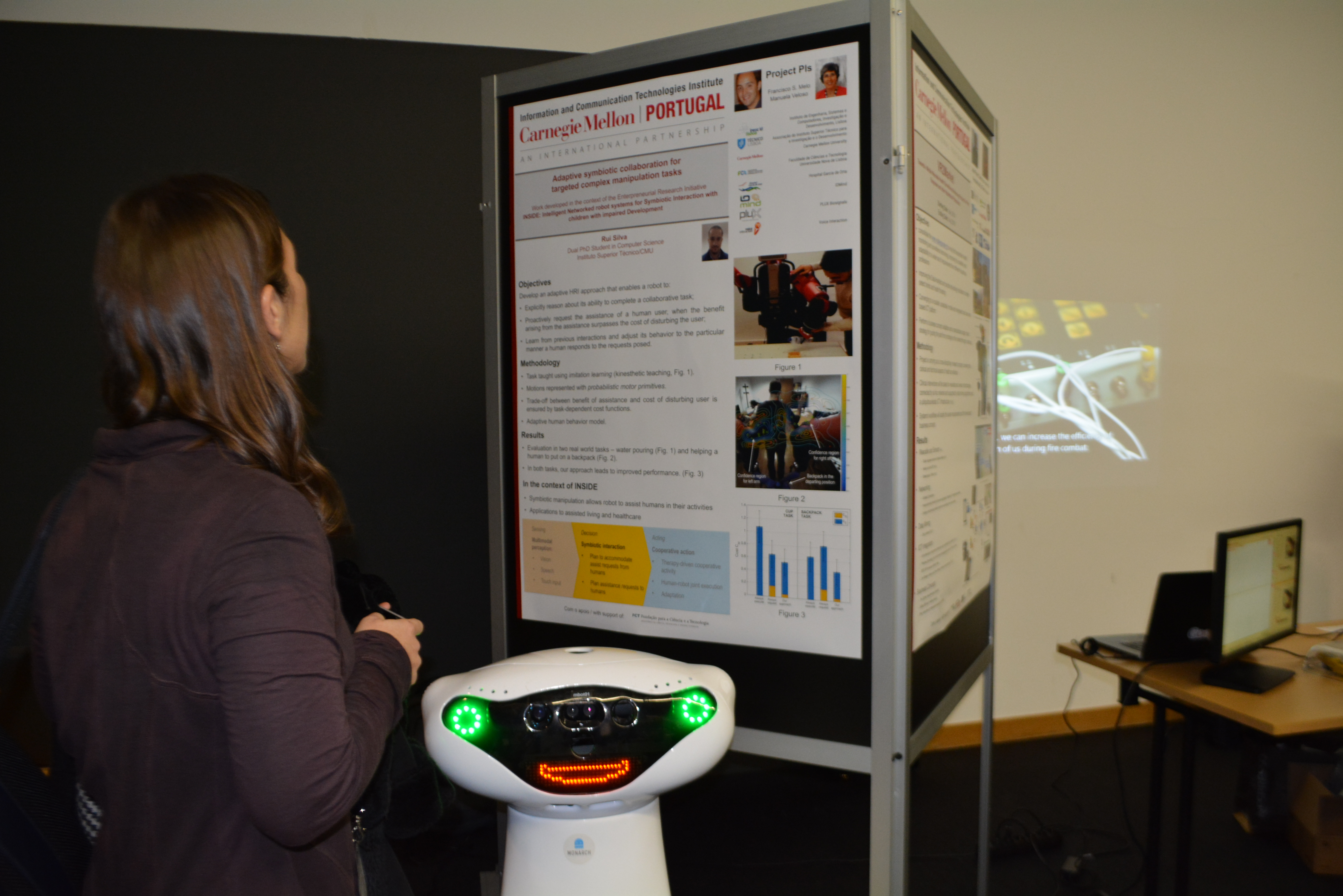
INSIDE1 How can robots plan their course of action to coordinate with and accommodate for the actions of their human teammates? How can task, context and environment information collected from a set of networked sensors be exploited to create more natural and engaging interactions between humans and robots involved in a joint cooperative activity in a physical environment? – These were the main questions in the beginning of the Entrepreneurial Research Initiative (ERI) INSIDE.

After one year of the INSIDE ERI and more than 20 researchers involved, the results can already be seen and some questions can already be answered. – Some steps towards getting the technologies closer to the end-user, studies made with children with autism in a Portuguese Hospital, some preliminary publications, the conclusion of two Master thesis on the context of the project and a lot more.

This project is led by Francisco Melo, from INESC-ID and Instituto Superior Técnico (Universidade de Lisboa), and Manuela Veloso, faculty member at the School of Computer Science at Carnegie Mellon University (CMU). To know more about the ERI INSIDE that is carried out in the scope of the CMU Portugal Program, funded by Fundação para a Ciência e a Tecnologia (FCT), read the following interview with both PIs.

Francisco Melo Manuela Veloso INSIDE
Portuguese PI

Francisco Melo

(INESC-ID/ IST-UL)

CMU PI

Manuela Veloso

(CS)

CMU Portugal Program: How do you comment on this first year of activity of the ERI?
INSIDE PIs : The first year was very active at several levels.
In a broad, project-wide level, we had extensive meetings between the technical partners and the medical team. In light of the multidisciplinary nature of the team, these meetings were important learning opportunities where we were able to reach a “common language” and solidify our vision of the project. Additionally, these meetings were decisive in designing the scenarios in which we will test the technology developed in the context of INSIDE with end-users.
In terms of research, we investigated symbiotic human-robot interaction, a central topic to the project, where both humans and robot interact in a mutually beneficial way: robots assist humans in their activity but also rely on human assistance to complete their task.
We also took important steps in terms of bringing our work closer to end-users. We ran several studies in Hospital Garcia de Orta where robots and children with Autism Spectrum Disorders collaborated during therapy sessions. These studies, which relied on a Wizard-of-Oz framework (where the robot is tele-operated without the user realizing) allowed us to evaluate the response of the children to the robot while, at the same time, collect extensive data (audio, video and sensor data from the robot) to be used for further development.
“We also took important steps in terms of bringing our work closer to end-users”

INSIDE6 INSIDE7

CMU Portugal Program: What outcomes can be communicated so far?
INSIDE PIs : Although this was only the first year of the INSIDE initiative, we are very excited about the pace at which our work is progressing in all three axis around which INSIDE is structured (research, innovation and technology and education).
In terms of research, our work on human-robot interaction already led to some preliminary publications, both in international conferences and journals, on the topics of ad hoc teamwork, human-agent interaction in tutoring scenarios, multimodal human-robot interaction (for example using lights and speech for task-specific interaction).
Additionally, we had two MSc students concluding their thesis in the context of the project, with two other on their way to conclusion. We have an active dual-PhD student working in human-robot collaboration and are currently in the process of recruiting additional PhD students. The integration of both MSc and PhD students in the project is, in our view, an important outcome that meets the educative goals of INSIDE.
Still in terms of education, we hired two excellent post-doctoral researchers from Portugal and Spain who have been important additions to the team. We also integrated several younger researchers in the team who have helped us in the significant effort of deploying the robot (and associated infrastructure) to the hospital.
In terms of technology and innovation, we emphasize the preliminary studies involving end-users in the hospital—which were, perhaps, the most significant outcome of this first year. The preliminary studies were essential at several levels. First, the studies allowed us to successively improve the layout of the interaction scenario, the design of the tasks that the robot and the children jointly face and how the interaction between the robot and the children takes place.
Second, they allowed us to collect extensive data (audio, video and sensor data from the robot), which is now being cleaned and annotated and from which the robot controllers and behaviors will be constructed.
Thirdly, they allowed us to gain important insights into the children’s response to the robot, both to the robots’ requests and to several important situations created around the robot during the therapy session—situations which have an important role in better understanding the potential impact of our intervention in therapy.
Overall, this has been a very productive first year and we have great expectations of the times ahead.

“(…) we are very excited about the pace at which our work is progressing in all three axis around which INSIDE is structured (research, innovation and technology and education).”

INSIDE2 INSIDE5

CMU Portugal Program: How is the research work with Hospital Garcia de Orta going on?
INSIDE PIs : The interaction with the medical team from Hospital Garcia de Orta has been, in our opinion, both fundamental and very enriching. On one hand, it provides a much needed, humane vision of our research, contrasting with the more technology-oriented perspective of the technical partners.
On the other hand, the medical team played a central role in the studies conducted so far. Their intervention took place at several levels (logistic, technical and scientific).
The studies were conducted in the facilities of the hospital, with the HGO team providing the technical partners extended access to the facilities during preparation. The medical team was responsible for selecting the children that participated in the studies, while guaranteeing strict adherence to established ethical practices involved in studies with children.
Additionally, the design of the tasks in the therapy sessions was done in close collaboration with the medical team, and the robot operation was closely monitored/oriented by elements of the medical team standing by the wizard. Currently, the medical team is finalizing the analysis of the video data from the studies.
“The interaction with the medical team from Hospital Garcia de Orta has been, in our opinion, both fundamental and very enriching.”
CMU Portugal Program: What has been the role of the partner companies involved so far?
INSIDE PIs : INSIDE includes three companies in its consortium: PLUX, IDMind and VoiceInteraction. They have participated in all meetings, bringing important insights from the industry regarding the role of the different technologies in INSIDE. The companies have also played an important role in all the activity developed during this first year:
– PLUX, whose activity is centered around biometric sensing and processing of biometric signals, developed a solution allowing hear-beat monitors to be incorporated in the clothes to be worn by the children participating in the studies, often unwilling to wear unknown devices. This device was already tested in one of the studies.
– IDMind has played a central role in all matters concerning the robot platform used in the studies. They designed and built the robot used so far, and have included a number of adaptations to meet the research goals of INSIDE. Additionally, they are in the process of concluding the design of a robotic platform especially conceived for the INSIDE project.
– Finally, in one of the studies the voice of the robot was synthesized (instead of pre-recorded) using VoiceInteraction’s speech synthesis module, DIXI.

CMU Portugal Program: What are the major activities scheduled for the next year?
INSIDE PIs : We are currently exploring several work avenues in parallel. On a more research-oriented level, we are looking into the idea of symbiotic human-robot interaction from different perspectives. In particular, we have investigated human-robot ad hoc teams and collaborative manipulation as implicit forms of symbiotic autonomy. Additionally, we have also been working on identifying and synthesizing emotions in speech, and on personalizing the appearance of the robot using expressions and lighting to complement speech during task execution.
In terms of technology, we are currently cleaning and annotating the data collected in the studies while designing a semi-autonomous control architecture for the robot. We expect to run a new study in early Spring where the robot will interact with the children autonomously, and the human operator will only be monitoring the robot behavior, correcting it when necessary. This is an important step towards having a fully autonomous robot interact with children in a therapy session.
Finally, in terms of education, we are very excited with the possibility of bringing in one or even two additional PhD students in the project.
“We expect to run a new study in early Spring where the robot will interact with the children autonomously, and the human operator will only be monitoring the robot behavior, correcting it when necessary.”
INSIDE8 INSIDE9

CMU Portugal Program: Now that a year has passed, what do you feel that are the main differences between an ERI and other research projects?
INSIDE PIs : Our perception is that an ERI has a broader scope than a “standard” research project. Our work does not (and should not) focus exclusively on research or research-driven technology, but should also look beyond research into the potential application of this research. In a sense, the broader scope of INSIDE pushes our work out of the lab, allowing a much clearer and more immediate understanding of the implications that our research and the technology we developed may have in society.
Additionally, in INSIDE we have been particularly driven by the benefits that the integration of young researchers in the project may have in their education and career.
“(…) an ERI has a broader scope than a ‘standard’ research project.”

_______________________________________
Entrepreneurial Research Initiatives (ERIs) are projects in science, engineering, management and policy that link both fundamental and applied research to technological innovation and economic development. This bridging is pursued by explicitly focusing on important real world problems entailing significant scientific challenges – more

Photo Credits: Exame Informática and INSIDE website

CMU Portugal Principal Investigator Receives Highest Faculty Distinction at Carnegie Mellon

CMU Portugal Principal Investigator Receives Highest Faculty Distinction at Carnegie Mellon Jelena Kovačević is collaborating with Early Bird Projects and Dual Degree PhD Programs

Jelena Kovačević The CMU Portugal Program Principal Investigator (PI) Jelena Kovačević received the title of University Professor, the highest distinction awarded at Carnegie Mellon University (CMU), recognizing her international stature and contributions to research and education. Besides Jelena Kovačević, Marlene Behrmann, the George A. and Helen Dunham Cowan Professor of Cognitive Neuroscience and member of National Academy of Sciences and Jonathan Caulkins, H. Guyford Stever Professor of Operations Research and Public Policy at the H. John Heinz III College and member of the National Academy of Engineering, among other positions, were also named University Professors.
Jelena Kovačević is the David Edward Schramm University Professor and Head of Electrical and Computer Engineering and Professor of Biomedical Engineering by courtesy.

“I am honored and humbled by this distinction. Carnegie Mellon exemplifies the vibrant intellectual environment we strive for in research and education, and I am proud to be part of it,” said Kovačević.

A CMU faculty member since 2003, Kovačević is an authority on signal processing, multiresolution techniques and wavelet theory with applications in biology, medicine and smart infrastructure. She is a fellow of the Institute of Electrical and Electronics Engineers and of the European Signal Processing Conference and has co-authored a widely used textbook, “Wavelets and Subband Coding,” as well as a more recent one, “Foundations of Signal Processing.”
She is a co-author of a top-10 cited paper in the Journal of Applied and Computational Harmonic Analysis and a paper on multidimensional filter banks and wavelets that was selected as one of the Fundamental Papers in Wavelet Theory.

Kovačević received the Belgrade October Prize in 1986, the Eliahu Ibraham Jury Award at Columbia University in 1991 and the 2010 Philip L. Dowd Fellowship Award from CMU’s College of Engineering. Her recent work has focused on biomedical imaging, smart infrastructure and graph signal processing.

Jelena Kovačević has long had ties with the CMU Portugal Program. She was the PhD advisor of Filipe Condessa, a dual degree student at the Instituto Superior Técnico and CMU, who received the best paper award at the International Geoscience and Remote Sensing Symposium, the world’s leading event in its field, in 2015. More recently, she has been involved as the CMU PI of the EarlyBird Project BRIDGE – BRinging multimedia Information for cancer Discovery inGastroenterology Environment, that involves the Instituto de Telecomunicações, the University of Porto and the Instituto Português de Oncologia and is funded by the Fundação para a Ciência e a Tecnologia.

The title of University Professor is awarded to professors who represent the intellectual leadership of CMU through their expertise and accomplishments in their respective fields of study.

In 2014, CMU Portugal Members Manuela Veloso and IreneFonseca were also distinguished with this title.

June 2016

_________

More information available here