
New Academic Year Brings New Dual Degree Doctoral Students

Academic Year 2015/2016 New Academic Year Brings New Dual Degree Doctoral Students
One of the shifts from Phase I to Phase II of the CMU Portugal Program was related to the way education activities would be seen. It was defined that the support would be mostly integrated in the Entrepreneurial Research Initiatives (ERIs), carried out in the auspices of the CMU Portugal Program. This year, the new dual degree Ph.D. students João Falcão (FEUP/CMU), Min Hun Lee (IST/CMU) and Rui Teixeira da Silva (IST/CMU) are linked with the VR2MARKET, AHA and INSIDE initiatives, respectively. Throughout FCT funding, Maria Joana Correia was also admitted as a doctoral student at Instituto Superior Técnico (IST) and Carnegie Mellon University (CMU).

______

João Falcão, dual degree doctoral student in ECE
Aligning Ph.D. Research in Computer Vision with the ERI VR2Market
João Falcão was already a Ph.D. student at the Silicon Valley campus at CMU, when he got to know the VR2Market initiative. His first contact was when he attended a talk given by João Paulo Cunha, the principal investigator of the VR2MARKET on the Portuguese side. João Falcão explains: “This immediately got my attention, and it was through João Paulo that I got information about the dual degrees opportunities.” João Falcão applied to the dual degree doctoral program in Electrical and Computer Engineering (ECE), and was admitted.

2015_Joao_Falcao “My role within the VR2Market will be to bridge the work that has been done in Portugal and in Pittsburgh with the work done in wireless communication (with CROSSMobile) at Silicon Valley,” the student states. “I will align my research in computer vision with the project’s needs to merge vital signals with image recognition,” he adds. During his Ph.D., João Falcão is advised by João Paulo Cunha (FEUP/INESC TEC) and Robert Iannucci (CMU).

João Falcão has a master’s degree in Engineering from Cornell University, and a bachelor’s degree by Instituto Superior Técnico (IST). His research interests are in the area of computer vision, mobile computing, embedded connected devices and cyber-physical systems.

_______
Min Hun Lee, dual degree doctoral student in ECE
Solving Challenging Problems and Enhance Quality of Living in the World
Min Hun Lee is a dual degree doctoral student in ECE who is very enthusiastic about his link with the AHA (Augment Human Assistance) initiative, and his participation on the development of a virtual coach system. Min Hun Lee was already involved in a graduate research project at CMU, when his advisor spoke with him about the possibility of applying to a dual degree Ph.D..

/uploadedImages/people/students/Min Hun Lee.png “Virtual coaches monitor the users’ activity performance and provide feedback and encouragement based on situational awareness including cognitive state and circumstances,” Min Hun Lee says. “The virtual coach module for the AHA initiative will incorporate knowledge on the user’s state from an extended set of sensors and will personalize the therapeutic game exercise,” the student explains. Alexandre Bernardino (IST), Sergi Bermúdez i Badia (UMa), Daniel P. Siwiorek (CMU), and Asim Smailagic (CMU) are his advisors.

Min Hun Lee is South Korean, has a master’s degree in ECE from CMU, and has worked as a research engineer at LG Electronics – South Korea. When asked about the future, Min Hun Lee says he wants to pursue his research interests “while collaborating with others to solve challenging problems and enhance quality of living in the world.”

______

Rui Teixeira Silva, dual degree doctoral student in CS
Making a Positive Contribution to the World
Rui Teixeira Silva became involved in the CMU Portugal Program in two different ways: as an Undergraduate Internship Member (UIP) and now as a dual degree Ph.D. student in Computer Science (CS). While he was at CMU as an Undergraduate he had an amazing time, since he had the opportunity “to do research at the highest level, in one of the best universities in the world.”

/uploadedImages/people/students/RuiSilva.jpg Now that he is a dual degree Ph.D. student he will be involved on the INSIDE initiative. “I plan to contribute to this project by developing machine learning algorithms applied to robotics, with the goal of allowing robots to interact with humans, and assist them in a multitude of tasks,” Rui states. His advisors are Francisco Melo (IST/INESC ID) and Manuela Veloso (CMU). For Rui Silva to be involved on this ERI is very challenging, because it has an ambitious and honorable goal: “the deployment of the research developed in a real-world scenario with children with impaired development, for therapeutical purposes.”

Rui Teixeira da Silva finished a master’s degree in Information Systems and Computer Engineering in 2014, at IST. He’s also a Member of the Executive Board of the Pedagogical Council of IST.

______

Maria Joana Correia, dual degree doctoral student in LTI
Contribute to the Development of New Speech and Language Technologies

“ While I was finishing my master’s degree I decided I wanted to continue to study, in particular, in a research area similar to the one on my thesis (speech processing),” states Maria Joana Correia, who is starting a dual degree Ph.D. program at IST and CMU. “So I approached my advisor, Prof. Isabel Trancoso and expressed my desire. Prof. Isabel Trancoso told me about the CMU Portugal Program and how INESC ID, the laboratory where I was at that moment, was involved in the program. It immediately got my attention, since all the involved institutions have exceptional research teams. I applied in the following round,” explains Joana.

For the time being, Joana Correia will not be involved on an ERI, however, she already had the opportunity to collaborate with the team working on the INSIDE initiative. Joana explains: “We developed and tested new techniques aiming to enhance the quality of a noisy speech signal to make it more intelligible. Hopefully, this small contribution will help them to achieve their ultimate goal of having robots interacting seamlessly with children in an unsupervised hospital environment.” This experience makes her feel that “in the future, I hope to have the opportunity to work along side the INSIDE team again, as well as to establish new collaborations with other research groups.”

Joana Correia’s priority for the near future is “to develop a strong theoretical background, so that, further in the degree, I can apply it in my own research and be successful in contributing to the development of new speech and language technologies.”

October 2015

____
Call for Applications for Doctoral Program Scholarships 2016/2017 is open! more
Research Opportunities more
Success Stories more

João Claro Appointed to the Board of Directors of INESC TEC

National Director of the CMU Portugal Program
João Claro Appointed to the Board of Directors of INESC TEC

JoaoClaro_INESC3 The National Director of the CMU Portugal Program, João Claro, was recently appointed as member of the Board of Directors of INESC Technology and Science – INESC TEC. João Claro is very honored with this nomination, which he feels is also a great responsibility, given the “30 years of success in R&D and technology transfer of such a dynamic and innovative organization.”

João Claro is a faculty member in the Department of Industrial Engineering and Management of the Faculdade de Engenharia of the Universidade do Porto (FEUP), and holds appointments with INESC TEC, where he is now member of the Board of Directors and heads the Centre for Innovation, Technology and Entrepreneurship, and with Porto Business School (PBS), where he is member of the Academic Council and heads the area of Innovation and Entrepreneurship. João Claro holds a Ph.D. in Electrical and Computer Engineering (ECE) from FEUP (2008), an MSc in Quantitative Methods in Management from PBS (2002), and an undergraduate degree in ECE from FEUP (1993). Prior to returning to the University, he was software engineer and project manager at Edinfor (1994-1998).

INESC TEC is an associate laboratory with more than 650 researchers, including close to 300 PhDs, involved in R&D and advanced consulting in the area of Information and Communications Technologies. Since its creation, it has focused its activity on realizing the motto “From knowledge generation to science-based innovation”, at the interface of academia, industry, and the public sector.

September 2015

Portuguese Startup Showcases at the Pittsburgh Maker Faire

inRes 2015: Playsktech Portuguese Startup Showcases at the 1st Maker Faire in Pittsburgh

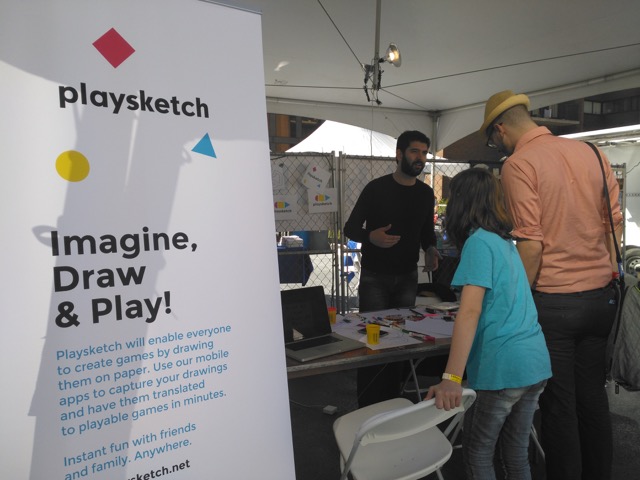
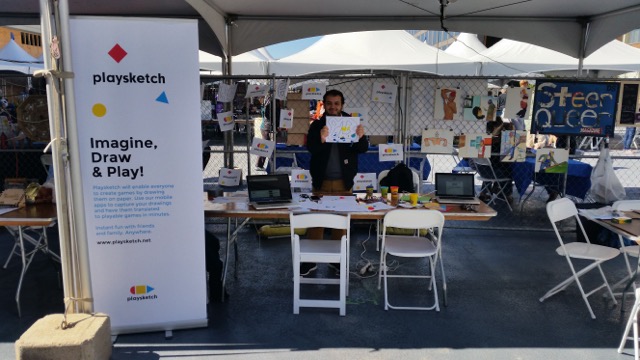
Playsketch maker faire1 The Portuguese early-stage startup Playsktech, linked with the CMU Portugal inRes Program, is currently in Pittsburgh and CMU, in the scope of a six-week visit. During this period, the team showcased its technology at the 1st Maker Faire held in Pittsburgh, in the US. “Our technology allows everyone to make its own games in a very simple and instant way, through drawings on the paper,” explains Pedro Santa, co-founder of Playsktech.

More than 60 kids, families, teachers and other visitors approached the Playsketch booth at the Maker Faire curious about, at first, with what was going on with all the “Play-doh”, crayons, marker and paper mess on the tables. “So as the story goes, you really just need a sheet of paper (or that napkin or paper table cloth) and a pencil, then you pick your mobile or tablet loaded with a Playsketch app, take a photo of the drawing, setup a few parameters, and in seconds your drawing comes alive as a simple playable game,” explains Pedro Santa.

“For one, we just felt there was a lot of untapped creative potential among us to think about game or play activities. I mean, as kids we invented simple games all the time on the playground,” says Luís Lucas Pereira, the other co-founder of Playsketch. “And we also feel that games are becoming a more and more popular instrument for creative expression and entertainment,” continues Luís Pereira.

Luis Pereira and Pedro Santa, two Computer Science alumni from the Universidade de Coimbra, in Portugal, have been knowing each other since high-school, but it was only when working on a Human Computer Interaction and Game Design research lab together, that they started ‘playing’ with the idea of drawing simple videogames.

Playsketch maker faire2 Playsketch maker faire3

The 1 st Maker Faire in Pittsburgh gathered more than 200 makers, this October, which was a celebration of technology, art, electronics, engineering and the maker and DIY movement. “This participation allowed us to gather feedback, to promote and validate our product, and to accelerate the process of launching the first app to the first semester of 2016,” says Pedro Santa.

October, 2015
______
inRes 2015
Launched in 2014 by the CMU Portugal Program, funded by the Fundação para a Ciência e a Tecnologia (Portuguese funding agency), inRes is a very early stage acceleration program for Portuguese entrepreneurial teams working in Information and Communication Technologies (ICT) that push them past their comfort zones, and requires them to work at a steep pace, cope with high levels of uncertainty, and constantly reach out for contacts to further build and validate their business projects. inRes is based on the Lean LaunchPad method. inRes provides a training period in Portugal, followed by a seven-week structured immersion period in Pittsburgh, in the U.S., anchored at Carnegie Mellon University (CMU). inRes is organized bu the CMU Portugal Program, in cooperation with Carnegie Mellon University (CMU), Caixa Capital, Pittsburgh Regional Alliance (PRA), UTEN Portugal, and INESC TEC.

CMU Portugal Startups and inRes Teams Nominated for the UP Awards 2015

CMU Portugal Startups and inRes Teams Nominated for the UP Awards 2015

/uploadedImages/inRes_Program/followprice.jpg /uploadedImages/inRes_Program/xhockware.png Addvolt logo

Followprice, Xhockware, AddVolt, Streambolico and Veniam – three inRes 2014 teams and two startups, all linked with the CMU Portugal Program, are nominated for the first edition of the UP Awards, promoted by Portugal Startups. According to the organization, these awards are meant to promote Portuguese innovation and raise awareness to the new businesses among the public and the industry.

In the category “B2B Startup of the Year”, two of the nominees are Followprice and Xhockware. Followprice developed a digital “button” for users to follow the price changes while doing online shopping, and Xhockware developed the Youbeep, a system that alows users a fast and seamless checkout retail experience.

The “Most Promissing Technology Innovation” category has six nominees, and among them are AddVolt, with their energy-saving solutions for the transportation market; Streambolico, and their solutions for improving wireless communication in mobile devices; and Veniam, which builds and operates wireless networks of vehicles and of other moving things.

Followprice, AddVolt and Xhockware participated in the 2014 edition of inRes, a very early stage acceleration program for Portuguese entrepreneurial teams working in Information and Communication Technologies (ICT) in Portugal, offered by the Carnegie Mellon Portugal Program.

Streambolico and Veniam are two of the 10 startups created as a result of the activities carried out in the auspicies of the CMU Portugal Program.

Voting is now open at the UP Awards website. The finalists will be communicated on October 27th, and the winners will be announced on November 27, at the UP Awards Gala.

October 2015

CMU Portugal Program Showcases Research at ICT 2015

CMU Portugal Program Showcases Research at the ICT 2015
The CMU Portugal Program showcased its education, research and innovation activities at the ICT 2015 – Innovate, Connect, Transform, organised by the European Commission, together with the Fundação para a Ciência e a Tecnologia (FCT). The event took place at the Centro de Congresso de Lisboa, between October 20 and 22, 2015.

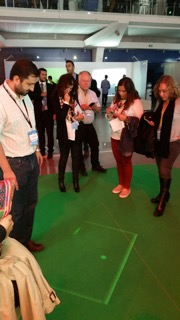
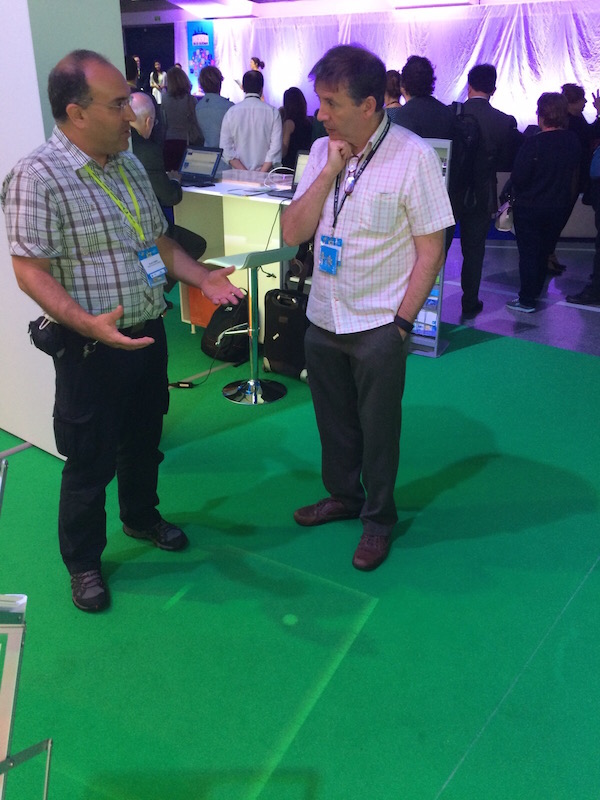
CMU Portugal Program at ICT 2015 b The international partnerships with the American universities – CMU, MIT and UT Austin -, were invited by FCT to actively participate on the ICT 2015 event. The goal was to showcase its different activities on education, research and innovation.

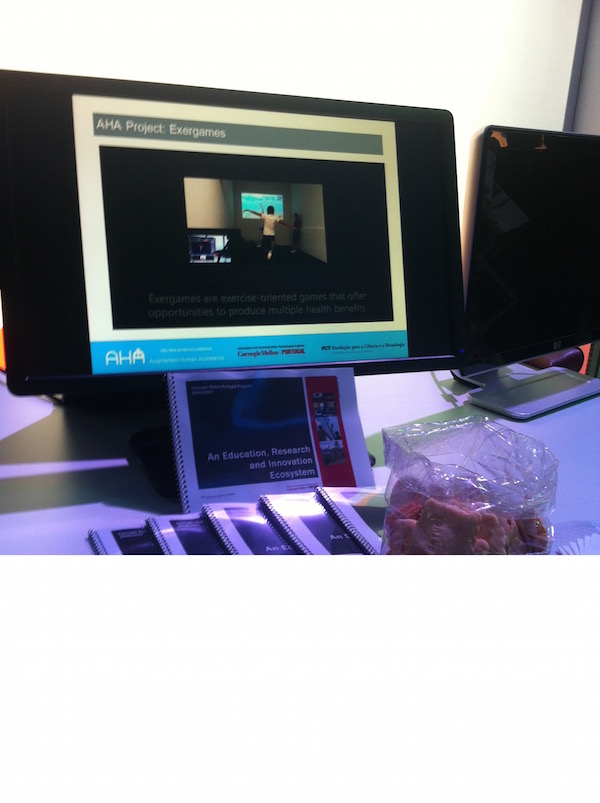
Besides the institutional participation, the CMU Portugal Program has had the opportunity to have demos from three Entrepreneurial Research Initiatives (ERIs): Augmented Human Assistance (AHA), Intelligent Networked robot Systems for Symbiotic Interaction with Children with Impaired Development (INSIDE), and Towards a Mobile Wearable Health Surveillance Product for First Response and other Hazardous Professions (VR2Market).

CMU Portugal Program at ICT 2015 d CMU Portugal Program at ICT 2015 c
CMU Portugal Program at ICT 2015 g

CMU Portugal Program at ICT 2015 e
CMU Portugal Program at ICT 2015 h

October, 2015

Luís Brandão Presents Paper at the Privacy Enhancing Technologies Symposium

Dual Degree Ph.D. Student Research Work on Cryptography Luís Brandão Presents Paper at the Privacy Enhancing Technologies Symposium

Luis_B We live in a world where digital identity has become an essential aspect of daily life. At any time, different platforms can be used to access multiple online services – private and public – and remotely request and execute actions on behalf of a human user. This scenario raises questions about privacy and security: what constitutes a secure identification or authentication? When is anonymity recommendable or acceptable? Which third parties should be able to track activities of users in online services? Interested in these questions, a dual degree doctoral student of the CMU Portugal Program, Luís Brandão, has recently presented a paper at the 15 th Privacy Enhancing Technologies Symposium (PETS 2015), exposing privacy and security problems in two identification/authentication systems being developed in the United States and the United Kingdom for nation-scale use by citizens.

Freely available online via open access, the paper is entitled “Toward Mending Two Nation-Scale Brokered Identification Systems” and results from joint work by four co-authors. Luís Brandão is at Faculdade de Ciências da Universidade de Lisboa (FCUL) and Carnegie Mellon University (CMU). The other co-authors are Nicolas Christin (CMU), George Danezis (University College London), and an anonymous author.

The paper is about the Connect.Gov and the GOV.UK Verify systems, respectively being developed, and in early stages of deployment, in the US and UK. These systems publicly advertise “enabling trusted digital interactions between people & government” (Connect.Gov) and being “the new way to prove who you are online so you can use government services safely” (GOV.UK Verify). However, Luís Brandão explains that “the paper describes serious privacy and security shortcomings in these systems, which can be inferred from publicly available information. If these systems reach the intended operational activity – altogether more than a hundred million users and a myriad of online services – then the identified vulnerabilities could be exploited to support undetected mass surveillance. The paper also proposes repairs to identified problems, describing how certain cryptographic techniques can be embedded to enable desired privacy and security.”

Luís Brandão’s Ph.D. research is in the area of cryptography, mainly focused on secure two-party computation (S2PC) – “allowing two parties to make computations over their combined inputs while retaining privacy of their inputs and outputs.” “Interestingly, S2PC can be used as a privacy-enhancing tool to solve a major privacy problem found in the analyzed systems,” says Luís Brandão, explaining that “on a more personal academic level this research was a direct opportunity to put in practice technical expertise acquired throughout the Ph.D.”


“The paper describes serious privacy and security shortcomings in these systems, which […] could be exploited to support undetected mass surveillance [… It] also proposes repairs to identified problems.”


CMU Portugal: What is the high-level goal of the systems being analyzed in this paper?

Luís Brandão [LB]: The systems intend to provide a more convenient mechanism for citizens to identify and authenticate online to public-sector services (extendable in the future to private-sector services). This is done without relying on any kind of national electronic identity-card. Suppose that a user connected to the Internet would like to confer some personal details of its social security account online, and also submit tax declarations online, and access personal records held at an online account in a hospital … and access 20 or 50 or more online “service providers.” The systems we analyzed intend to allow each user to choose one (or possibly several) “identity provider(s),” certified by a trusted (and trustworthy) authority, to help the user identify and authenticate to any service provider. This avoids the costly process of initial identity registrations of the user in presence at each service provider (e.g., to show identification cards in hand and request sending of a password to a physical address), and does not require the user to maintain specific credentials (e.g., username, password, hardware token) for each service provider. One of the main privacy goals is to prevent the identity providers from tracking users across different service providers, and vice-versa. While related documentation calls this property “unlinkability,” our paper characterizes several other types of unlinkability and shows that these systems fail to achieve most of them, with great risk to citizens’ privacy.

CMU Portugal: The paper talks about brokered-identification systems – what does it mean and does it bring more flexibility, privacy and/or security to the identification/authentication process?

LB: A brokered identification system is one where the communication between service provider and identity provider is brokered (i.e., mediated) by another party. The systems we looked at propose using a central online entity (a “hub”) as the broker, and leave the user with a mostly passive participation. Their brokering mechanisms enable hiding the accessed service providers from the identity provider, but fail, for example, to prevent linkability by the hub, who becomes able to track users across all service providers. One main consideration addressed in our paper is how to prevent such capability, while keeping the hub as a mediator (a structural constraint of Connect.Gov and GOV.UK Verify) and enabling auditability and forensics.


“[…] the hub, controlled by the government, can track users across all their authentications, because it sees persistent user pseudonyms in all authentications […] it even sees (in clear text) additional identifiable attributes of the user [… it] could even impersonate users to access their accounts at service providers.”


CMU Portugal: It seems that the analyzed systems – Connect.Gov and GOV.UK Verify – propose achieving a convenient service and a privacy benefit at the cost of other problems. In the paper the authors state that these systems, “which altogether aim at serving more than a hundred million citizens, (…) suffer from serious privacy and security shortcomings, fail to comply with privacy-preserving guidelines they are meant to follow, and may actually degrade user privacy.” What specific problems are you addressing in the paper?

LB: The paper highlights that the identified vulnerabilities could be exploited as a technical capability for undetected mass surveillance, if the systems reach the intended nation-scale operational activity. The identified problems are in sharp opposition to privacy-preserving guidelines from the public strategies that these systems claim to follow – respectively, the “National Strategy for Trusted Identities in Cyberspace” (NSTIC) in the US and the “Identity Assurance Principles” in the UK. The paper alerts that in GOV.UK Verify and Connect.Gov the hub, controlled by the government, can track users across all their authentications, because it sees persistent user pseudonyms in all authentications. Furthermore, it even sees (in clear text) additional identifiable attributes of the user, e.g., name and contact information, flowing from identity providers to service providers. Another problem exposed in the paper is that a hub compromised by an adversary could even impersonate users to access their accounts at service providers. In the paper we succinctly describe possible impersonation attacks.

CMU Portugal: Why is it problematic to give such linkability capability to the hub?

LB: It is well recognized by the privacy-research community that the ability to link related events may pose a serious threat to privacy. Valuable private information can be inferred by linking different events to the same user, and any privacy breach at any seemingly unimportant service provider may also disclose additional information linkable to accesses at other more sensitive services. To make the case worse, the hub also sees directly-identifiable information (e.g., name, birth-date, social security number, etc.) in some user authentications.


“[…] certain cryptographic techniques can be used to enable desired privacy and security properties […] The paper recommends that these findings be taken as a contribution in a process that should still better formalize the privacy and security requirements (including a balance with auditability and forensics, as a way to promote better accountability)…”


CMU Portugal: Does the paper propose repairs to the identified vulnerabilities?

LB: The paper describes how certain cryptographic techniques can be used to enable desired privacy and security properties. The solutions take into account the structural constraint of using a central online entity (the “hub”) to mediate all communications, and the users being passive in most of the authentication protocol. The paper recommends that these findings be taken as a contribution in a process that should still better formalize the privacy and security requirements (including a balance with auditability and forensics, as a way to promote better accountability) and should still define a solution that fully integrates all desired properties and includes an unambiguous description made available for public review.

CMU Portugal: What does this mean for the end-user, the citizen?

LB: An implementation without adequate repairs means developing a central entity with the capability to impersonate and track the activities of all end-users across a myriad of online services. This capability can hypothetically be abused by some entity (internal or external) that (detectably or undetectably) is able to compromise the hub. It could (wrongly) seem at first glance that the described issues are necessary as a tradeoff to achieve the desired operational convenience. Conversely, this paper shows that upon implementing appropriate repairs it is possible to achieve resilience against a compromised hub. The paper states that this matter requires further research, formalization and public review. For now it remains unclear if, when or how the analyzed brokered identification systems may evolve in the direction of repairing the identified privacy and security issues that could affect their end-users.

September 2015

____
Luis Brandão Presents Paper at Asiacrypt 2013 more

Innovative Research on Activity Trackers Receives International Distinction

Early Bird Project: “Studying the Long-term Acceptance of Personal Health Informatics Tools”
Innovative Research on Activity Trackers Receives International Award
A paper on activity trackers written by the research team of the Early Bird Project “Studying the Long-term Acceptance of Personal Health Informatics Tools”, carried out in the scope of the CMU Portugal Program, has received an Honorable Mention at the 2015 ACM International Joint Conference on Pervasive and Ubiquitous Computing (UbiComp 2015).

Evangelos Karapanos (PI) and Rúben Gouveia, researchers from the Madeira Interactive Technologies Institute (M-ITI), and Marc Hassenzahl, from the Folkwang University of Arts (Germany), were the authors of the distinguished paper entitled “How Do We Engage With Activity Trackers? A Longitudinal Study of Habito.” The paper analyses users’ attitudes towards personal tracking applications. Three other papers of this team were also presented at the same conference, held in September in Osaka, Japan.

Evangelos Karapanos Jodi Forlizzi The PI’s of the Early Bird Project, Evangelos Karapanos (M-ITI) and Jodi Forlizzi (CMU), explain the main findings of the study and its impact in the overall objective of the project.

CMU Portugal: The paper “How Do We Engage With Activity Trackers? A Longitudinal Study of Habito” received an Honorable Mention Award for Best Paper at the Ubicomp Conference. What are the main findings of the paper?

Evangelos Karapanos (EK) and Jodi Forlizzi (JF): This paper looks at what happens when physical activity trackers are deployed in the ‘real world’. These devices measure one’s physical activity and provide feedback with the goal of motivating individuals to walk or exercise more. Our study showed that things often don’t go as expected by the tracker designers. We found that that people rarely look back at their past performance data. Instead, they access the tracker in brief sessions, to check how much they have walked so far without any further interaction. Additionally, most activity trackers feature ‘goal setting’ abilities – users set their own activity goals and feedback is provided as to how far they are from accomplishing it. Our study found that only 30% of users set their own goal and 80% of those never update the goal again. Also, we found that current physical activity trackers work only for people that have the motivation to change their behaviors but have no concrete plans on how to do it. We need to think how trackers can instill initial motivation for behavior change rather than merely support the process of it.

CMU Portugal: How is this research different from other studies on activity trackers?

EK & JF: We wanted to understand how people adopt, engage with and discontinue from using activity trackers in the real world. A recent survey found that a third of tracker owners discard them within 6 months, which motivated us for this paper. The difference is that the majority of early studies were limited in their own ways: participants were pre-selected to ensure they had the motivation to increase their physical activity in the first place, they knew they were testing a research prototype and most studies covered only a limited timespan. As such, our real-world experiences with trackers contradicted the results of early findings on the topic.

EBP_PHI Tools_Team EBP_PHI Tools_Presentation@UbiComp
From left to right: Fabio Pereira, Tiago Ornelas, Evangelos Karapanos, Ana Caraban, Ruben Gouveia and Vitor Teixeira. Ruben Gouveia presents the paper at UbiComp.

CMU Portugal: How is this paper related to the overall goals of the Early Bird Project?

EK & JF: This was a preliminary study, partially conducted before the start of the project but it lies at the core of the project’s objectives and was inspired during the writing of the project’s proposal. This first study revealed the complexities of activity tracking in everyday life, such as users lacking the motivation to set goals, interacting very briefly with the tracker and showing no interest in their own historical data. In a second study (currently under review), we studied the factors that made the adoption of the tracker successful for some users but not for others. These findings inspired the design ideas for new kinds of trackers, that our research team of Masters in Engineering Informatics, led by Ana Caraban, are working on. Prototypes for smartphones and smart watches have been developed, which will be deployed in user studies over the coming months.

CMU Portugal: How many members, in Portugal and at CMU, does your EBP research team include?

EK & JF: The team in Portugal consists of six members: Evangelos Karapanos, Ana Caraban, Ruben Gouveia and three graduate students, Fabio Perreira, Tiago Ornelas, Vitor Teixeira. From Carnegie Mellon University, we have Jodi Forlizzi and Rebecca Gulotta, of the Human-Computer Interaction Institute.

October, 2015

___
Early Bird Projects
Early Bird Projects are designed to assist small teams of researchers from Portuguese institutions, CMU, and industry partners, to jumpstart high-impact potential activities of strategic relevance for the Program. more

“Difficult Tasks Can Only be Accomplished if One is Persistent Enough”

Alumnus Hugo Gonçalves talks about his dissertation and experience in the Program “Difficult Tasks Can Only be Accomplished if One is Persistent Enough”

HugoGoncalves Hugo Gonçalves comes across as a hard-working researcher that is inspired in his work, and does not shy away from a challenge. In July 2015, Hugo defended his thesis “Accelerated Sparse Coding with Overcomplete Dictionaries for Image Processing Applications,” which allowed him to accomplish his academic goals: to obtain a dual degree Ph.D. in Electrical and Computer Engineering (ECE) at Universidade do Porto and Carnegie Mellon University (CMU). Hugo’s dissertation was supervised by Miguel Velhote Correia, from Faculdade de Engenharia of the Universidade do Porto, and Xin Li, from CMU.

The research focus of his Ph.D. was sparse coding, a more mathematical topic than his original proposal, a change that put him on the right track to the job he wanted. Hugo first started as an Analog Design Engineer at Synopsys Inc., while he was still a dual degree doctoral student, which he says was the perfect balance: “Working at Synopsys during the day, and working on my Ph.D. at night and on the weekends made me do more with the same time.” Synopsis Inc. is Silicon to Software™ partner for innovative companies developing electronic products and software applications, which has an office in Porto, Portugal.

CMU Portugal: Recently you defended a dissertation titled “Accelerated Sparse Coding with Overcomplete Dictionaries for Image Processing Applications.” What were your main findings?

Hugo Gonçalves (HG): Sparse coding has many applications in several fields, but the algorithms used to solve the sparse coding problem are considered time-consuming. The dissertation selected the fastest algorithm through a benchmark among several algorithms, and developed a few ways of accelerating the same algorithm. In particular, an application of sparse coding for wafer probe testing, developed by my advisor Xin Li, obtained a substantial reduction in processing time.

CMU Portugal: During your Ph.D. you had to change your thesis proposal. Could you please comment on what you felt and the major challenges you had to face at the time?

Hugo Gonçalves with his colleagues at CMU Hugo Gonçalves with his colleagues at CMU. HG: When I started the CMU Portugal program, I continued the research that was already planned. It consisted of an ASIC (Application Specific Integrated Circuit) implementation of parallel computing for sensor vision, which ended up providing unfavorable results. Since the development cycle of an ASIC is very long, trying a different implementation meant that I could not meet the dissertation deadline. This was a big setback for my doctoral program, and so I was advised not to include it in the dissertation. I had to take an alternative path. It was decided that I would follow the algorithmic path, for which I already had a good basis, as I was familiarized with sparse coding.

CMU Portugal: You published three papers with your co-advisors in Portugal and at CMU. How do you comment on this experience of having one advisor on each side of the Atlantic?

HG: There are pros and cons to having two advisors in different locations. The pros are that I could benefit from two different ways of thinking and different perspectives. On the other hand, there is always one advisor who is far away and it is more difficult for him to be completely aware of what is happening. Nevertheless, today we have several communication channels that help us to communicate when necessary. The difference in time zones was also an advantage and a disadvantage: on one side, the time overlap was small, so it was more difficult to set up meetings, although my advisors always managed to find a common time slot. Even still; this was also positive because the period of the day that both advisors could respond was larger.

CMU Portugal: In looking back, what are your fondest memories of this experience?

HG: I experienced new things mainly in Pittsburgh, especially because I am from Porto and FEUP. I was amazed by CMU’s environment and cultural diversity. Both inside and outside campus, things are very different than in Portugal. Also, I had some great moments with the people I met in Pittsburgh, especially my roommates. Of course, my stay in the United States was a unique opportunity to visit cities that I would otherwise not have the opportunity to visit soon. There were, however, some moments of adversity, when nothing that I tried seemed to work. But in looking back, I feel that the challenges I experienced during my research led me to never forget that difficult tasks can only be accomplished if we are persistent.

CMU Portugal: You are now an Analog Design Engineer at Synopsys Inc., in Porto. What led you to accept this position?

HG: As I said before, I designed an ASIC, which was in fact made of analog components. Although I finished my dissertation with a mathematical topic, I learned and practiced with a significant amount of analog designs, which I enjoyed very much. SNPS Portugal was creating an analog team in Porto, and looking for analog designers. It seemed a suitable position for me: a highly specialized job in an international company, with challenging problems, and doing something that I knew I would like to do. Regarding the timeline, I accepted the position at a moment when I did not have a scholarship anymore, and focusing uniquely on the Ph.D. was becoming counterproductive. Working at Synopsys during the day, and working on my Ph.D at night and on the weekends made me do more with the same time.

“ The dual degree program was an opportunity to learn and practice the analog design that I needed to get this position. Right now, I am sure that I made the right choice to apply to this position and it would probably not happen if I did not go through the doctoral program.” – Hugo Gonçalves

September 2015

M-ITI Team Wins the ICEC Grand Challenge in Entertainment Computing

M-ITI Team Wins the ICEC Grand Challenge in Entertainment Computing

Yasmines_adventure Yasmines_adventure2

A team of researchers from the Madeira Interactive Technologies Institute (M-ITI) won first prize in the International Conference on Entertainment Computing (ICEC 2015) Grand Challenge sponsored by the IFIP, in Norway. The multidisciplinary team, lead by Valentina Nisi with Mara Dionisio, Luis Ferreira, Julian Hanna and Nuno Nunes were awarded first prize for their submission entitled “Yasmine’s Adventures”.

Yasmine’s Adventures is a location-aware multimedia story (LAMS) that creates an interactive trail across the landscape surrounding Mehringplatz, in Berlin. It uses markers placed around the neighborhood, along a defined path, that can be captured with smart-phones, triggering an augmented-reality interface. The user then explores the neighborhood with Yasmine trough videos. This project was created with the goal of challenging and engaging visitors of the world famous Jewish Museum to explore the adjacent and relatively neglected streets of the area in which it is situated.

Yasmine’s Adventures was developed under the Future Fabulators project funded by the EC Culture Europe program with the support of the Berlin Jewish Museum and the Agência Regional para o Desenvolvimento da Investigação, Tecnologia e Inovação, ARDITI (Regional Agency for the Development of Research, Technology and Innovation).

This is the first edition of the ICEC2015 Grand Challenge, sponsored by the Spanish company Brainstorm and featured a panel of professors from several US universities, Greece, Brazil and Norway. This year’s Grand Challenge is focused towards an overall theme of producing Entertainment Computing for a Better Life, specifically looking for explorations within Augmented Reality/Virtual Reality used in digital storytelling, possibly within movie/TV/Short stories as well as interactive and immersive art.

October 2015