CMU Portugal: Partnership between Carnegie Mellon University, FCT and CRUP celebrates 10 years

10th anniversary of the CMU Portugal Program is celebrated on October 27 CMU Portugal: Partnership between Carnegie Mellon University, FCT and CRUP celebrates 10 years
10years_video_cover

10 years, 15 universities, 120 companies

During 10 years of activity, the Carnegie Mellon Portugal Program (CMU Portugal) , funded by the Fundação para a Ciência e Tecnologia (FCT), which also involves 15 Portuguese universities, Carnegie Mellon University (CMU) and 120 partner companies, has mobilized over 900 students, researchers and faculty from both sides of the Atlantic, supported about 50 collaborative research projects, attracted over 15 million in private co-financing, accelerated the projects of 17 Portuguese entrepreneurial teams in the United States, and prompted the creation of 11 startups, that have collectively attracted more than $67 million of venture capital investment, mostly international, and created more than 200 skilled job positions.

These are some of numbers of the CMU Portugal Program, the education, research and innovation platform that integrates universities, research institutions and Portuguese companies in collaboration with CMU, in the U.S.A..

Launched in 2006, the Program’s mission is to place Portugal at the forefront of science and innovation, in focused areas of Information and Communication Technologies (ICT) through cutting-edge research, excellence in postgraduate training and a close link with the Portuguese industry.

“In these 10 years, we have built a creative environment, in which Portugal and CMU have collaborated on the challenges posed by the knowledge societies and by the ICT areas, as its main foundation,” state the directors of the Program, João Claro and José Manuel Fonseca de Moura.

For the Program director in Portugal, João Claro, “the initial objectives of the CMU Portugal Program were to improve the cooperation among the Portuguese universities and their cooperation with business, while learning from CMU’s huge success in these matters, and intensifying the integration of our country in the international knowledge and business networks, where CMU has a very strong presence. What happened was far beyond that. We have created a fertile international ecosystem, that captivates talent, research, best practices, while empowering institutions, and keeping ideas and people flowing between academia and business, and these ingredients resulted in a unique entrepreneurial culture that goes from science to innovation, with fantastic results. What we have achieved in terms of developing talent and knowledge creation and its application to important problems of institutions and people’s daily lives is proof of our success and the greatest incentive to the continuation of the program.”

A close and fruitful international collaboration in education and research

The Program’s strong educational component has mobilized a total of 370 students, of doctoral and professional master’s dual degree programs (a diploma from the Portuguese university and a diploma from CMU). The doctoral programs, in particular, received more than 900 applications to the almost 120 open positions. The Undergraduate Internship and Faculty Exchange programs have also accepted, respectively, 37 students and 67 teachers who conducted immersive experiences at CMU, in the U.S.A., in Pittsburgh or in Silicon Valley.

In the research field, the Program involved, in collaboration with CMU, several dozen Portuguese universities and research centers, and several dozen Portuguese companies that co-financed, with more than EUR 4 million, the 25 Collaborative Projects launched in the first phase (2006-2012 ) of the Program, and the 12 Entrepreneurial Research Initiatives and 10 Early Bird Projects launched in the second phase (2012-2017). These projects have resulted in over a thousand publications, many in top magazines and conferences, over 100 prototypes, dozens of distinctions and awards, five patents and three university spinoffs.

“The Carnegie Mellon Portugal Program has pioneered the development of international partnership models between higher education institutions, research institutes and companies, models that are now being replicated in other parts of the world, particularly in China and Russia,” elucidates the Program director at CMU, José Manuel Fonseca de Moura

The Madeira Interactive Technologies Institute of the University of Madeira (M-ITI)

Created in 2009 in the scope of the CMU Portugal Program, the M-ITI is considered a regional, national and international innovation hub, particularly for the research developed in the field of human-machine interaction. Since its creation, the institute excels in talent acquisition and developing innovative research projects. The level of employability of its students is above 90% and the Regional Government of Madeira has awarded it the Public Utility Status as it organizes and develops its activities, non-profit, for the benefit of the entire region. And because it creates and supports advanced training of human resource initiatives and provides other services in the same domain, cooperating with higher education institutions and research institutions in the human-computer interaction area, specifically with the Pólo Científico e Tecnológico (Science and Technology Hub) – Madeira Tecnopolo, SA.

11 startups driven and 17 entrepreneurial teams accelerated in the US

Among the 11 startups that were born in the scope of the CMU Portugal Program and have already raised a total venture capital funding of over 67 million dollars (Dognaedis, Feedzai, Geolink, Mambu, Orange Bird, Prisma, RedLight Software, Sentilant, Streambolico, Veniam and Virtual Traffic Lights), are already leading companies.

For example, the case of Feedzai, operating in the area of fraud prevention in electronic payments. Since 2013 this company has had an annual average growth of 300 percent, and is a potential future Portuguese unicorn. Worth mentioning also, Geolink, that developed a taxi services communication and rating technology, installed in 1,400 vehicles from 13 municipalities of the country. Finally, looking to Veniam, considered one of the 50 most disruptive companies in the world, according to a ranking published by CNBC. Working on the implementation of Wi-Fi technology in vehicles, the company was also considered one of the world’s top 15 in the wireless industry, according to FierceWireless.

Of the 17 teams that have participated in inRes, the CMU Portugal Program business accelerator, three will be on the next Web Summit, held in Lisbon in November. They are Addvolt, Helppier and Xhockware.

AddVolt conceived the “WeTruck” technological solution that saves more than 90 percent in diesel consumption of cooling systems in trucks, reduces noise by 30% and cuts 844 kg in monthly CO2 emissions per vehicle. Helppier developed an online software that allows users to create interactive tutorials for websites or web applications in a short period of time, while Xhockware, created a device system that allows, through a smartphone, to reduce queues in supermarkets, while improving customer experience and reducing costs for retailers.

Knowledge transfer for industry

During these 10 years, João Claro also emphasizes the transfer of knowledge, experience and international contacts networks to the industry. “Because that’s what we have been able to accomplish working side by side with companies such as Portugal Telecom, Novabase and Nokia Siemens, that are our partners from the start, in our research projects, and with the placement of the vast majority of students that did their internships, masters and doctoral programs in the CMU Portugal Program. And because we have been doing that so well during the first decade of existence, that the number of our partner companies has grown in this way”, the national director of CMU Portugal Program elucidates, with pride.

Assessment and future

The External Review Committee of the CMU Portugal Program, during their most recent visit, expressed once again the strong conviction that this “is an imaginative, world-class program, with the ability to create distinctive value and operate a positive cultural change in universities in Portugal. All of the involved (government, FCT, universities and companies, teachers and students in Portugal and at Carnegie Mellon University) can be rightly proud of what is being achieved”. According to João Claro and José Manuel Fonseca de Moura, it is precisely “with the confidence provided by the results already achieved, that we remain firmly committed to creating a future with Portugal as a leader in Science and Innovation”.

The activities of the CMU Portugal Program are funded by FCT, supported by the Council of Rectors of Portuguese Universities (CRUP) and co-financed by the partner companies and by CMU.

Watch our celebration video here

Undergraduate Internships Program Results

Undergraduate Internship Program Results
The Carnegie Mellon Portugal Program recently announced the name of the six candidates accepted to its new Undergraduate Internship Program (UIP), which provides intensive eight to twelve week research experiences for talented undergraduates at Carnegie Mellon University (CMU), in the United States.

The main goal of UIP is to provide high-quality research opportunities, offering undergraduates the possibility of developing their knowledge and skills as researchers, while opening perspectives for graduate studies and career opportunities in cutting-edge fields of Information and Communication Technologies (ICT).

João Claro and José M.F. Moura, directors of the CMU Portugal Program in Portugal and at CMU, respectively, are very pleased with the “high quality of all the applications submitted, which is a positive sign of the strong link between the Portuguese and CMU scientific communities.”

The six candidates accepted are:

Name Affiliation Host at CMU Host Department at CMU Sponsor in Portugal Semester
Albert Linde FCTUNL Umut A. Acar Computer Science Rodrigo Rodrigues Summer ‘14
César Carpinteiro FEUP Shawn Blanton Electrical and Computer Engineering José Machado Silva Spring ‘15
Francisco Torres FEUP Shawn Blanton Electrical and Computer Engineering Vitor Grade Tavares Spring ‘15
Mariana Oliveira FCUP J. Zico Kolter Computer Science Luís Torgo Summer ‘14
Salomé Azevedo CLSBE Pedro Ferreira Engineering and Public Policy Pedro Oliveira Summer ‘14
Tiago Cardoso FEUP David Garlan Institute for Software Research Rui Abreu Summer ‘14

The applications were reviewed by a panel of academics composed by João Paulo Costeira (IST-UL), Luís Almeida (FEUP), and the directors of the CMU Portugal Program.

This unique opportunity is provided by the Carnegie Mellon Portugal Program to encourage and prepare talented undergraduates to pursue careers in research in the scope of the scientific areas of the dual degree doctoral programs offered by the Program. A new phase to submit applications is open until September 30, 2014.

July 2014

______
Undergraduate Internship Program (UIP)
The Undergraduate Internship Program, offered by the Carnegie Mellon Portugal Program, is an intensive eight to twelve weeks research experience for talented undergraduates, who will have the opportunity to participate in state-of-the-art research projects, interact with prominent research teams, and be mentored by leading faculty and researchers, in a cultural immersion at Carnegie Mellon University.

Playsketch Plans to Launch App in 2017

One of the participating teams of inRes 2015 Playsketch Plans to Launch App in 2017
CMU Portugal Program inRes team, Playsketch, has announced that they plan to release their videogame creation app in 2017. Their application, with the same name, started as an idea the founders, Pedro Santa and Luís Pereira, had seven years ago and now it becomes a reality.

Playsketch is a Coimbra based startup and one of the four teams that participated in the 2015 edition of the inRes program. They showcased at the 1 st Maker Faire in Pittsburgh and have also won Exame Informática’s Honorable Mention in the software category, at the publication’s annual awards.

The Playsketch app is aimed at the younger audience, but adults will enjoy it too. “The experience of facing a blank sheet of paper is very liberating and we think it is a more natural way for people to express themselves, and maybe even invent stories”, explained Pedro Santa, co-founder.

To create a game, all the user needs is a pen, paper and a smartphone. After drawing up the elements to the game, the user takes a picture of it and the game traces it, recognizing the elements. With the image, the app creates the game based on templates of game themes, like “racing” or “match 3” and “space invaders”.

The beta version is available by registration on the website and the final version is expected in 2017.

October 2016

Related articles:

Portuguese Startup Showcases at the Pittsburgh Maker Faire

Playsketch: The True Value of Immersing a Creative Project in Pittsburgh

CMU Portugal inRes Startup Playsketch Wins Exame Informática Honorable Mention

Carnegie Mellon Specialist on Sensor Systems Used on Pills Authentication Gives a Talk in Porto

Carnegie Mellon University (CMU) Faculty Member L. Richard Carley, will deliver a talk about the Integrated Passive Single-Chip RFID/Sensor Systems. This new technology, with potential applications as the medicinal pill authentication and as in-vivo biological sensing, is his main area of research at CMU. The talk will take place at Faculdade de Engenharia of the University of Porto on October 6.

The medicinal pill authentication, for example, is especially important considering that lifesaving prescription drugs can cost $1,000 per pill, which makes them an extremely attractive target for counterfeiters. The solution developed by L. Richard Carley’s CMU team consists on a tiny RFID transponder with an encrypted identifier that can be embedded in each pill and that could help reduce the counterfeiting of these drugs.

The session will take place this Thursday, October 6, at 2:30pm in room I-105 (building I of FEUP, -1 floor).

“Toward the Design of Integrated Passive Single-Chip RFID/Sensor Systems”

Abstract: The design of fully integrated RFID/Sensor Systems, ones in which the antenna, the RFID circuitry, and the sensor circuitry are all fabricated on the same integrated circuit substrate, is challenging because the small size of the antenna and its proximity to a resistive ground plane (the integrated circuit substrate) both decrease the RF energy that can be harvested to operate the passive system.

This presentation will present simplifying approximations in order to develop basic equations demonstrating the challenge posed by the size and geometry of the antenna to the ability of the RFID system to harvest energy; and, these equations will be validated with electromagnetic field simulations. The presentation will also include results on a novel out-of-plane integrated antenna structure that offers a 1000X improvement in power transfer. Finally, the presentation will examine the challenging issue of matching the antenna to the on-chip electronics and efficiently converting it to a voltage that can power on-chip circuitry. The presentation will end with a brief exploration of potential applications of this new technology to medicinal pill authentication and to in-vivo biological sensing applications.

More information available at: L. Richard Carley bio

Carnegie Mellon Portugal Program Sends Four Entrepreneurial Teams to United States

Carnegie Mellon Portugal Program Sends Four Entrepreneurial Teams to United States
2016_inRes_group2

The 2016 edition of inRes, the business acceleration initiative of the CMU Portugal Program, funded by the Fundação para a Ciência e a Tecnologia, will take four teams of entrepreneurs to the United States, in a seven-week immersion period. Based on the Carnegie Mellon University (CMU) Pittsburgh campus, the visit will focus on the participants’ training and the adjustment of business and product/service concepts.

The first phase of this business accelerating program took place in Portugal and the teams All in Surf , Helppier , Smart Insole and Tactile Wireless Evolution (TWEvo) are already in the United States. Until the end of October, in addition to several seminars, workshops and hands-on sessions, the participants will have the opportunity to take part in international conferences and important events, which will allow them to greatly enhance their visibility and networking skills.

Beyond the Pittsburgh experience, the entrepreneurs will have the opportunity to return to the United States for a week-long immersion in the Silicon Valley ecosystem, in a program that will take place next year.

For All in Surf, created by Márcio Borgonovo-Santos, during this immersion period in the United States, they expect to be able to develop their entrepreneurial skills and amplify their contact network. “Forcibly, we want to step out of our comfort zone to absorb the north American culture and break into the business world,” he says. All in Surf focuses on sports with a gliding-on-water component and applies their optimizing technology to improve performance, using several metrics. Whether targeting the improvement of materials, equipment or training techniques, All in Surf always strives to improve the sporting experience.

“The inRes program has done a great job elevating Helppier. Our expectations are very high since it is an excellent opportunity to explore new markets related to customer care and to meet a unique networking ecosystem, with experts, investors and potential customers in the United States. We believe this program will bring valuable ideas, feedback and knowledge for the growth and internationalization of our business. “Daniela Lopes and Marco Garcia are participants from Helppier, that is developing an online software service that allows you to create interactive aids for web sites or web apps in a short period of time.

To Carlos Ribeiro and Eduardo Castañeda, from TWEvo , “the CMU immersion is an unique opportunity to discuss the project in this entrepreneurial ecosystem. With this community’s support we hope to find the partners we need to succeed.” A video streaming system for drones, that improves the transmission’s speed and quality, is being developed by this team.

Smart Insole is working on a flexible insole fitted with sensors that allows it to adapt to any type of footwear, according to the user’s needs. “Our expectation is to evolve. We’re eager to show our product, but even more eager to reflect in it all of the feedback we receive from the people we’ll come into contact with,” states Pedro Lopes and João Lourenço.

To João Claro, National Director of the CMU Portugal Program and inRes coordinator, this is a “unique opportunity to be able to dive in the largest cluster of the world’s leading technology industries, with some of the largest companies and investors. These entrepreneurs create a valuable network and gain access to experts and mentors, potential users, customers or partners who are often decisive in setting a successful course for startups, products and services. ”

This year, inRes expert team has relied on the contribution of Robb Myer, the resident Carnegie Mellon University entrepreneur, also founder and former president of the successful startup NoWait. Robb Myer has been a mentor for dozens of teams and has extensive business experience in technology.

In addition to João Claro and Robb Myer, among the experts involved in this third edition, we highlight Dave Mawhinney, recently nominated executive director of the Swartz Center for Entrepreneurship; Needham Kit, of the “Project Olympus” accelerator; and Tara Branstad and Reed McManigle, of CMU’s Center for Technology Transfer and Enterprise Creation.

September 2016

CMU Portugal Program – inRes

inRes, abreviation for “Entrepreneurship in Residence”, is a business acceleration program in the Information and Communication Technologies field that includes a first phase of training in Portugal, followed by two months of immersion in Pittsburgh and Carnegie Mellon University.

The inRes is an initiative promoted by the Carnegie Mellon Portugal Program, funded by the Fundação para a Ciência e a Tecnologia (FCT) and supported by the Conselho de Reitores das Universidades Portuguesas (CRUP), in partnership with Carnegie Mellon University, Pittsburgh Regional Alliance (PRA) and INESC TEC.

CMU Portugal Welcomes New Students with “Interface between Technology and Society” Workshop

Orientation Day 2016 was held on September 17 at Católica Lisbon School of Business & Economics CMU Portugal Welcomes New Students with “Interface between Technology and Society” Workshop
2016_Orientation_Day_3

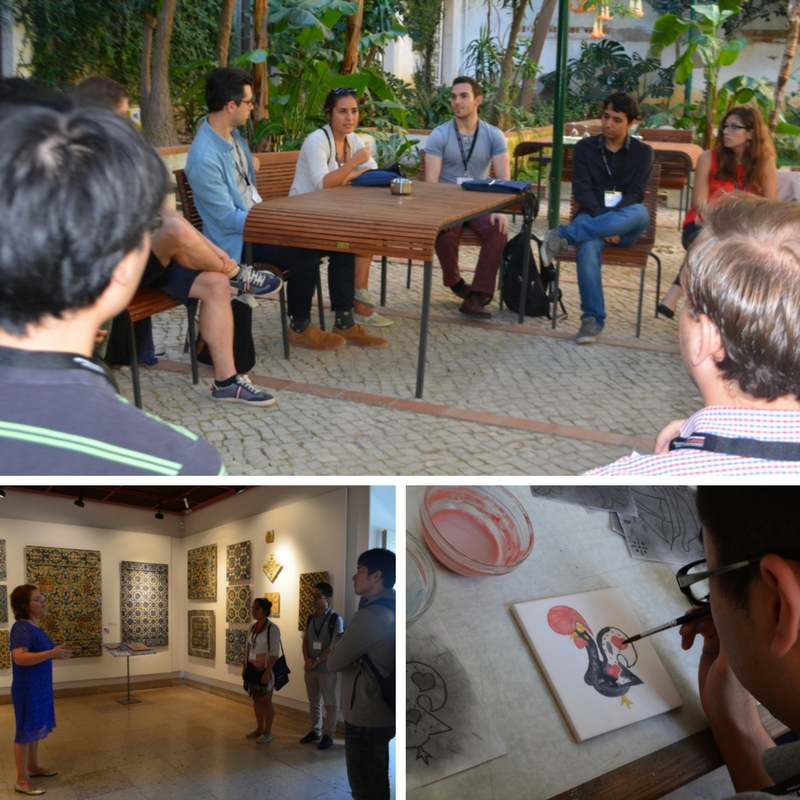
Almost 30 students accepted CMU Portugal Program’s (CMU Portugal) Orientation Day challenge for a full-day event that took place on September 17, in Lisbon, under the theme “CMU Portugal Program: at the Interface between Technology and Society”.

The event, which is part of CMU Portugal’s annual calendar, marks the beginning of a new academic year, welcoming the new students and introducing them to the partnership. Católica Lisbon School of Business & Economics (CLSBE) was the venue for this year.

2016_Orientation_Day_1 The Chairman of New Energy Solutions, Jorge Vasconcelos, was the industry expert invited to deliver the keynote, titled “The energy transition: how public policies and technology create innovation – and how industry and society react”. The participants’ feedback revealed a high level of interest in the keynote, conducted by one of the world’s leading specialists in the area.The afternoon agenda also included a roundtable moderated by the Coordinator of the CMU Portugal Dual Degree PhD in EPP at FEUP, José Silva Matos, with the participation of the PhD alumni Alexandre Mateus, Policy Analyst at the European Commission, Paul van der Boor, Consultant at McKinsey & Company, and Leid Zejnilovic, Assistant Professor at Nova SBE. The alumni offered their views on the topic of the workshop, and shared their experiences under the CMU Portugal partnership, as well as valuable advice to all the students that attended the session. The workshop started with the welcome words of João Pedro Covas, on behalf of CLSBE, and an overview of the Program by the National Director, Professor João Claro. The current PhD students Zita Marinho (CS-Robotics) and Jaime Bonnín (EPP) followed, sharing their experiences in the program, and emphasizing key points of the Portuguese-American partnership and lessons learned so far. As usual on every Orientation Day, the morning was occupied with networking and cultural activities. This year, CMU Portugal organized a visit to the Museu Nacional do Azulejo (National Tile Museum). The guests were treated to a guided tour and a workshop, in which they had the opportunity to paint their own tiles, based on templates of traditional Portuguese tile designs and their own drawing skills. 2016_Orientation_Day_2

September 2016

CMU Portugal inRes Startup Sceelix is now on Steam


inRes 2015 Sceelix on Steam Sceelix launches their software today on Steam, one of the largest digital content distribution services worldwide, with over 125 million active participants. The Porto based startup, Sceelix, was one of the teams participating in the 2015 edition of inRes. According to Sceelix’s website, their software allows the user to create complete and unique 3D scenes, with terrains, vegetation, cities, and other elements, in an efficient and manageable way. It has a powerful procedural engine and an intuitive visual node-based editor that can automatically generate any kind of scene elements, from 3D models and textures to game physics and behaviors.

For now, the software is only available in the Early Access format and the 1.0 version release is slated for late 2016.

“We chose to release this early version because the users’ feedback and validation is key to determine the best way forward,” states Francisco Rebello de Andrade, co-founder of Sceelix. “This is a great opportunity for potential buyers to obtain the software at an affordable price, as we anticipate we will change our pricing strategy with the launch of the 1.0 version, to a subscription-based scheme.”

The videogame Hyper Gods, from the Porto based videogame studio Ground Control Studios, will be the first big name videogame where part of the scenery was generated with Sceelix’s software. The game is expected to debut at the end of September 2016 also on Steam.

Steam is a digital distribution platform developed by Valve Corporation, offering digital rights management (DRM), multiplayer gaming and social networking services. It is estimated that as of 2009, Steam had a 70% share of the digital distribution market for video games.


inRes, short for “in Residence”, is a very early stage acceleration program for entrepreneurial teams working in Information and Communication Technologies in Portugal. Organized by the Carnegie Mellon Portugal Program, funded by Fundação para a Ciência e a Tecnologia, inRes provides a training period in Portugal, followed by a seven-week structured immersion in the U.S., anchored at Carnegie Mellon University, including six weeks in Pittsburgh and a week in Silicon Valley.

Related articles in the Media

Empowering Portuguese Entrepreneurs – inRes 2016 Has Already Started!

Kick-off of inRes third edition – Entrepreneurship in Residence Empowering Portuguese Entrepreneurs – inRes 2016 Has Already Started!

inRes 2016 teams One more edition of inRes, the business acceleration initiative of the Carnegie Mellon Portugal Program (CMU Portugal), funded by Fundação para a Ciência e a Tecnologia, has already started!

The preparation phase, which features five teams – All in Surf, Helppier, James, Smart Insole and Wireless Link – is focused on empowering the participants and on fine-tuning the product/services concepts. The main goal is the development of a plan for the immersion of seven weeks in the U.S. The kick-off workshop took place on June 30, at INESC TEC, Porto.

The Addvolt founders (one of the inRes 2014 teams) were present in the second day of the workshop. Their presence, advice and stories were valuable and crucial for the 2016 teams.

This year, Robb Myer, resident entrepreneur of Carnegie Mellon University (CMU) and founder and ex-president of the successful start-up NoWait, is part of the inRes team of mentors. Robb Myer has been mentoring dozens of teams and has now a long business experience in the technological field.

inRes started, in Portugal, with five workshops and with the participation of the mentors. This will be followed by an immersion in the Pittsburgh campus and in the Silicon Valley CMU campus. After the pilot immersion in Silicon Valley in the past edition, the program will consolidate its presence in one of the biggest ecosystems of cutting-edge technology industry, where some of the biggest companies and investors are settled.

“We give teams the opportunity of having excellent training, such as the intensive workshops. With these they can start working on a broader network of contacts, in particular through the access to experts and mentors,” stresses João Claro, the National Director of CMU Portugal and inRes coordinator.

The director highlights the quality of the teams. “The teams of this edition have innovative and very promising projects, which aim to explore strategic sectors in the ICT area. In addition, the projects are in a development stage which will give them the opportunity of benefitting of one of the main areas of inRes – refine and validate their product concepts and business models, through the contact with experts, potential users, clients or partners.”

The selected teams for the first stage of the third inRes edition and their products are:

  • All in Surf – Technology applied to aquatic sports activities. It maximizes the efficiency of the metrics and it helps the athletes to improve the activity, through training sessions, materials or equipment.
  • Helppier – Online software service that allows the creation of interactive help for a website or web application, in a short period of time.
  • James – Software solution for risk managers, which enables the use of advanced algorithms that avoid bad debts.
  • Smart Insole – Flexible insole, which is equipped with sensors that allow the adaptation of the product to any type of footwear and according to the users’ needs.
  • Wireless Link – System that improves the speed and quality of video transmission in live drones.

The selected teams are from different parts of the country (Portugal) – Lisbon, Leiria, Aveiro, Coimbra and Porto. Some of them have strong connections with universities and research centers, for example Instituto de Telecomunicações, Instituto Politécnico de Leiria, Instituto de Sistemas e Robótica, Universidade de Coimbra and Universidade do Porto.

For the selected teams, inRes will be a relevant springboard since it will open doors to future contacts, and it will allow the teams to be selected for a second phase when they will be able to immerse in the U.S. ecosystem. This program also allows the entrepreneurs to get and consolidate management skills that are essential regarding the early stage of the projects.

As the coordinator of inRes, João Claro highlights the unique and innovative format of the program: “We have been able to boost these teams, contributing for the success of new products and services in an international market and increasing their feasibility, sustainability and competitiveness.”

The workshops in Portugal will take place until September 9 and the immersion in Pittsburgh will start on September 15. As the immersion has the duration of seven weeks, the teams will finally be back in November. In the U.S., the participants will be able to attend seminars, workshops, hands-on sessions, conferences and internationally recognised events.

July 2016

Veniam named one of the most innovative companies in America by‪ ‎CNBC‬ at #28

Veniam named one of the most innovative companies in America by‪ ‎CNBC‬ at #28
Veniam, a startup created in the scope of the CMU Portugal Program (CMU Portugal), was lauded by CNBC as one of the 50 most forward-thinking companies in America by CNBC.

Veniam was selected among 750 companies by the fourth annual Disruptor 50 from CNBC. Ranked on the 28th position, Veniam went from building the world largest network of connected vehicles in Porto (Portugal) and supporting more than 4 million internet sessions to delivering key managed services for intelligent transportation systems and urban services in NY and Singapore. Currently, Veniam designs, develops and deploys vehicular ad-hoc networks for any type of business.

Veniam was founded by João Barros, faculty at the Faculdade de Engenharia of the Universidade do Porto, and by Susana Sargento, faculty at the Universidade de Aveiro. Veniam is a spin-off company that uses technologies developed at Universidade de Aveiro and Instituto de Telecomunicações under the CMU Portugal Program.

June 2016