This year’s edition of the CMU Portugal online Info Session “How to apply to a CMU Portugal Affiliated Ph.D. Program Scholarship” was held both onsite at the new CMU Portugal facilities shared with ITI – Interactive Technologies Institute at Factory (Hub Criativo do Beato) and via zoom, gathering potential candidates willing to know more about the 2023 available scholarships.
The goal of this Session was to disclose further information about the third edition of the “Affiliated Ph.D. Programs” initiative. Under this call, up to 12 Scholarships are available for the 2023/2023 academic year in selected cutting-edge areas of Information and Communication Technologies (ICT), related to the scope of the CMU Portugal Program. The selected candidates will be hosted at a Portuguese University and benefit from a research period of up to 12 months at Carnegie Mellon University in Pittsburgh.
The Info Session was moderated by the Program Executive Director in Portugal, Sílvia Castro, who introduced CMU Portugal National Co-Director. Inês Lynce welcomed the participants and pointed out the main characteristics of this initiative.
The application guidelines and main requirements were introduced by João Fumega, CMU Portugal’s Education Officer. Megan Berty, CMU Portugal Associate Director at CMU, spoke next on the supervision requirements at CMU and the support available by the CMU Portugal coordination office in Pittsburgh.
One of the Affiliated Ph.D. Programs main feature is to encourage potential candidates to submit applications involving collaboration with a Company in the work plan. There are currently Affiliated students collaborating with top companies such as Unbabel, Outsystems, NOS Comunicações or Farfetch. Ricardo Sousa, Principal Data Scientist at Farfetch and CMU Portugal project PI (IFetch), joined as speaker to share with the audience his experience of having Ph.D. candidates working with the company and its main benefits.
Next, to share firsthand the experience of being a CMU Portugal candidate, António Brito and Diogo Silva joined the discussion and answered some questions placed by the CMU Portugal team. António is a 1st year Affiliated Ph.D. student in EPP at ISCTE who and Diogo a 2nd year Affiliated Ph.D. student in Language Technologies at NOVA University of Lisbon who is working with Farfetch under his Ph.D.
Finally, to end the session, there was time for a fruitful 20-minute Q&A, which allowed all participants to clarify their doubts with the panelists.
As a Women in Science, female researchers can serve as important role models and contribute to attracting and inspiring other young women to this field. Inês Lynce, CMU Portugal Program National Director and currently President at INESC ID, is a computer scientist highly recognized for her work in the field of Artificial Intelligence.
Under an invitation by Ciência Viva to celebrate the International Day of Women and Girls in Science (IDWGIS), she was part on February 11th at Pavilhão do Conhecimento of the Roundtable “Pergunta-me o que é ser cientista” (Ask me what it means to be a scientist), where female researchers and university students from different areas of science shared ideas on what it means to be a “woman in science” in each one of their fields.
According to Inês, “It was a great Roundtable. To have two college students as part of the discussion gave a great perspective on the importance of having female role models to follow in academia, research, or in leading positions in Companies. Women are stronger than they know, but it is easier to believe in that if we see and feel we are not alone.”
As a Computer Scientist and a mother of two young girls, she considers this kind of activities “essential to share experiences with a new generation of students but also with their parents. Initiatives like this, addressed to families, are crucial because parents or guardians have a huge impact on what children choose to be, and their support is essential to follow their dreams.”
The IDWGIS at Pavilhão do Conhecimento was entirely dedicated to promoting activities to encourage and promote access for all girls and women to training and education in the field of science, allowing young visitors to be part of scientific experiences or even participate in a quiz about Women who changed the world.
The CMU Portugal National Co-Director and Interactive Technologies Institute (ITI) President, Nuno Nunes, accepted the challenge launched by the initiative “Cientista Regressa à Escola” (Scientist Returns to School) to visit his primary school and share his experience as a researcher with young students through science workshops.
Nuno Nunes, who spent his childhood on the Portuguese Island Madeira, went back to his school “Escola Básica da Pena,” in Funchal, where he studied until age 10. In a “time travel” back to where his education started, Nuno mentioned, “I have great memories about that time. Back then, I had no idea I would become a Computer Scientist, maybe because computers weren’t accessible to everyone. At that time, it would have been great to have someone coming to my school to share their experience. That’s why I’ve accepted this challenge. It is a great initiative, and I’m happy to participate.”
Currently, a Full professor in Human-Computer Interaction at Instituto Superior Técnico, Nuno shared his experience with two groups of 9/10-year-olds while teaching them the basics of coding using Sphero Edu. But most important was to adapt the teaching methods to the audience by using interactive and engaging tools where children could be part of the experience.
During the activities, Nuno taught how Artificial Intelligence worked using ChatGPT and created a conversation with Cristiano Ronaldo using this AI model. Students were invited to place the famous football player questions that would be answered through this AI solution. One of the kids wanted to know, for example, if Ronaldo remembered his mother, who went to school with him in Madeira, and another one asked him how he had become so rich and how he could do the same.
Throughout the activity, Nuno also pointed out some examples of his work and of the projects he leads, namely the Arcadia Project, an initiative focused on climate change. The overall feedback and participation of the children were highly positive. Many questions were placed, some easier to respond to than others, but Nuno said, “when faced with those kids’ questions impossible to respond to, sometimes a laugh is the best answer!”
The initiative was a success and a great experience not only for the children:
“It was a unique experience to return here after all these years. But more importantly, it was a great opportunity to talk about my work and hopefully inspired children to pursue the careers they want”, Nuno Nunes.
‘Cientista Regressa à Escola’ is a science outreach initiative where researchers/scientists return to their primary schools to share their academic and professional experiences with students. The educational program is implemented by Native Scientists, a non-profit organization connecting underserved children and scientists, that aims to promote scientific culture and literacy to young children, inspiring them to follow a path in science. Since it was launched in September 2021, 16 scientists have had the opportunity to return to their primary schools. Joana Bordalo, who leads the program, says, “We want to assure that every child in Portugal, no matter their background, is allowed to meet a scientist from their hometown before entering middle school.” By the end of 2023, another 33 visits are already planned.
Over 170 people gathered to discuss research progress in ICT under the CMU Portugal Program
The CMU Portugal Program Summit 2022 “New Frontiers in tech” gathered, on November 9 and 10, 179 members of its community for two days of discussion on cutting-edge topics in ICT. The Factory Lisbon was the gathering place for the community of Carnegie Mellon University (CMU) and Portugal.
The CMU committee counted sixteen faculty members, including the Dean of the College of Engineering at CMU, Bill Sanders, and the University’s Provost and Chief Academic Officer, James H. Garrett. They were joined in Lisbon by many CMU Portugal students, faculty & researchers from Portuguese partner research Institutions, and representatives from Portuguese partner Companies, Fundação para a Ciência e a Tecnologia, and the Embassy of the United States of America in Portugal.
The Program’s National Co-Director, Inês Lynce, opened the Welcome Session, highlighting the Program’s achievements over the past 16 years. Afterward, Sir John O’Reilly, who has Chaired the CMU Portugal External Review Committee (ERC) since its beginning, shared his view on the evolution of CMU Portugal to this point, and CMU Provost James H. Garrett emphasized the importance of the Partnership to Carnegie Mellon University’s global reach. The President of Fundação para a Ciência e Tecnologia (FCT), Madalena Alves, closed this session by expressing the Institution’s long-lasting support to the CMU Portugal international partnership that counts on more than 16 years of activity in Research, Education, and Innovation in the field of Information and Communication Technologies.
The CMU Portugal Program Summit 2022 also served as a platform to present to the CMU Portugal External Review Committee the work and the outcomes that have been made by the Program in the last year, giving them a broad perspective of the research and education initiatives being developed under the scope of the Program. Throughout the two days, the ERC had the opportunity to evaluate the Program’s activities and assess its overall performance at internal meetings.ERC Chair Sir John O’Reilly, Giulio Sandini, Senior Researcher and Founding Director of the Italian Institute of Technology, and Fernando Pereira, VP and Engineering Fellow at Google, attended the Conference onsight, leading the discussion in several panels as moderators. Joining remotely were Yvonne Rogers, Professor and Director at the Centre of Excellence in Human-Computer Interaction of the University College London, and Ali Sayed, Dean of Engineering EPFL School of Engineering.
Sir John O’Reilly, ERC Chair
Giulio Sandini, ERC Member
Fernando Pereira, ERC Member
Industry commitment to the Program
During CMU Portugal’s third phase, several Portuguese ICT companies have been associated with the Program, with 16 CMU Portugal Industrial Affiliates, 17 Companies involved in large-scale projects, and several more in the Ph.D. thesis. In addition to the companies already involved with the Program, others were present at CMU Portugal Summit 2022, such as Fundação Santander Portugal, Startup Lisboa, Neuraspace, and WoW Systems, expressed being open to future collaboration opportunities that may arise in the future.
The first talk of the day was held by the President of Fundação Santander Portugal and head of ESG at the Santander Group, Inês Oom de Sousa, who shared with the audience the Foundation’s investment strategy in R&D+I for social impact and to open the CMU Portugal engagement to foundations promoting the social impact of world-class research.
Vasco Pedro, Co-Founder, and CEO at Unbabel, led the first Keynote session. During his talk, he spoke about the work developed under Unbabel. This AI-powered Language Operations platform helps businesses deliver multilingual support at scale, focusing on its long-lasting relationship with the CMU Portugal Program. Vasco Pedro is a CMU’s Language Technology Institute (LTI) graduate, and Unbabel is currently one of the Program’s Industrial Affiliated Partners and is leading the Large Scale Project, MAIA. Vasco’s involvement with Carnegie Mellon University has spanned over 15 years, and he is a big supporter of the collaborative research initiatives made possible through the CMU Portugal Program.
After a great presentation by Unbabel’s CEO, the first Roundtable under the topic “Mobilizing agendas for business innovation” took place, a discussion moderated by Sir John O Reilly, Chair of CMU Portugal External Review Committee (University College London; Chairman at SERC, A*STAR in Singapore and President of Khalifa University of Science and Technology) and Joana Mendonça, former CMU Portugal Scientific Director and now President at ANI (Portuguese Innovation Agency).
Paulo Dimas, VP of Product Innovation at Unbabel, spoke about the initiative “Responsible AI,” which aims to lead the charge on developing the next generation of AI products created ethically and used to change society for the better. Paulo’s intervention was followed by Miguel Campos, CEO at Wow Systems that leads the “The Egames Lab ” consortium that aims to boost Portugal’s eGames development sector and creatives Industries. Carlos Cerqueira, Business Development Manager at Neuraspace, completed the panel on the work developed by the company, which is exploring AI smarter space traffic management to fight space debris.
Continued investment in graduate education through CMU Portugal
The CMU Portugal Program Summit 2022 “New Frontiers in tech” counted with a high participation of CMU Portugal students, with 54 posters submitted, allowing them to present their research work at the Poster Sessions held throughout the Summit. The posters were exhibited during the two-day event at Factory Lisbon rooftop. They were a great way for students to interact with CMU Portugal Community during coffee and lunch breaks. The Exhibit continues even after the end of the meeting with all the posters available online- E-Posters.
Ana Paiva, CMU Portugal Researcher
Carolina Carreira, CMU Portugal Student
The work and the legacy of the CMU Portugal Program in higher education was the discussion topic at the Roundtable “Talent Development”. This session gathered five students and alums from theDual Degree and Affiliated Ph.D. Programs, to share with the audience their experience and other useful insights. The discussion was conducted by Bill Sanders, Dean of CMU College of Engineering and João Magalhães, Professor at FCT NOVA.
To represent the Alumni community: Sabina Zejnilovic, CMU Portugal Dual Degree Ph.D. Alumni and Data Scientist at Cloudflare, and Susana Brandão, CMU Portugal Dual Degree Ph.D. Alumni and Expert Data Scientist at Feedzai. As students were part of the panel: Alex Gaudio, CMU Portugal Dual Degree Ph.D. in ECE; Maria Andrada, CMU Portugal Affiliated Ph.D. in Robotics and Rudolph Santarromana, CMU Portugal Dual Degree Ph.D. in EPP.
The discussion was a success, with a large participation from the audience at the Q&A, a great way to show the outcomes of the CMU Portugal Educational Initiatives and the impact that they have on the higher education system in Portugal and at CMU.
Improving machine learning and applications in healthcare
The following panel, “Improving machine learning and applications in healthcare,” was led by Jodi Forlizzi, Professor in Computer Science and HCII at CMU and João Paulo Cunha, one of our Scientific Directors and Professor at Universidade do Porto (FEUP). Three of our Large Scale projects focused on health topics were under discussion: “TAMI: Transparent Artificial Medical Intelligence” presented by Asim Smailagic (CMU); Nuno André da Silva (Hospital da Luz Learning Health) to introduce “IntelligentCare: Intelligent Multimorbidity Management System”; and Margarida Nery (Glintt) with “WoW: Wireless biOmonitoring stickers and smart bed architecture: toWards Untethered Patients”.
The Second Keynote speaker with the last presentation of the day was Gil Azevedo, the Executive Director of Startup Lisboa, on the work developed by the private non-profit association founded in 2012 that provides entrepreneurs with office space as well as a support structure – mentoring, strategic partnerships and perks, access to investment. Startup Lisbon is now leading the development and implementation of HUB Criativo do Beato, an Innovation Center for creative and technological companies emerging in the eastern riverside front of Lisbon, where Factory Lisbon is located and where the Conference took place.
Day 1 of the Summit demonstrated great participation of CMU Portugal attendees, who benefitted from the Q&A moments during the sessions to question and give fruitful insights to the speakers. Even better were the many networking moments happening during the coffee and lunch breaks, which after more than two years of remote events, allowed the CMU Portugal Community to get back together, catch up and share the developments of their work but also build the ground for future collaborations.
Societal Computing to address societal issues and create technologies that impact society.
On the second day, everything was ready to launch another day of discussion and networking! Nicolas Christin, Professor in Engineering and Public Policy, Software and Societal Systems at CMU started with a Keynote on “Societal Computing,” focusing on the importance for computer scientists to study the societal impacts of their work to prevent (or at least limit) the undesirable use of the new technologies and ensure they are used to improve our lives.
Nicholas Christin, CMU
The CMU Portugal Program Summit 2022 “New Frontiers in tech” second day was also a platform to present the research being developed under the Program, with five panels to present and discuss the Program’s Large Scale Collaborative Projects and Exploratory Research Projects.
The panel “AI for extracting value from data” wasconducted byGiulio Sandini, CMU Portugal ERC Member and Senior Researcher and Founding Director at the Italian Institute of Technology and Paulo Marques, Co-founder and Technical Fellow at Feedzai. Four CMU Portugal projects were presented: “Building HOPE – Building Holistic Optimization of Prosumed Energy” by Carlos Silva (Técnico) and Ana Luísa Pereira (dstSolar); BEE2WasteCrypto by Ian Scott (NOVA IMS) and Rui He (CMU); “FLOYD: 5G/SDN Intelligent Systems For LOw latencY V2X communications in cross-Domain mobility applications” by João Silva (Capgemini Engineering); “SafeForest: Semi-Autonomous Robotic System for Forest Cleaning and Fire Prevention” by Michael Couceiro (Ingeniarius).
Isabel Trancoso (Tècnico and INESC ID) and João Barros (Nexar)
The “Adaptive, automated, and autonomic computing” panel was led by Isabel Trancoso, faculty at Técnico and researcher at INESC ID alongside João Barros, former CMU Portugal National Director who founded Veniam, an example of a CMU Portugal project launched in 2009 (DRIVE IN) that was turned into a successful startup. Over the last decade, Veniam became a leading provider of intelligent networking for the internet of moving things led by João Barros as CEO. The company was recently acquired by Nexar, the largest collector of vision data from vehicles in the US (news article).
To present the three LSCRPs, we were happy to welcome the Industry PIs from all the projects, including Pedro Bizarro, Chief Science Officer at Feedzai leading the CAMELOT presentation; João Abril de Abreu, Managing product research and innovation at OutSystems, joined João Costa Seco (FCT NOVA) and Ruben Martins (CMU) to introduce GOLEM; and finally Pedro Artur Fidalgo, Director of Risk Management at Mobileum, the company leading the AIDA consortium.
Understanding conversations to improve productivity
Fernando Pereira (Google) and Lia Patrício (FEUP)
Fernando Pereira, CMU Portugal ERC member and VP and Engineering Fellow at Google joined Lia Patricio, CMU Portugal Scientific Director from FEUP to lead the panel “Understanding conversations to improve productivity”. At this session João Magalhães (FCT NOVA), Pedro Ferreira (Farfetch) and Alexander Rudnicky (CMU) showed the work being developed by the project’s consortium under “iFetch: Multimodal conversational agents for the online fashion Marketplace”, a Large Scale initiative led by the Portuguese Unicorn Company Farfetch. To present “MAIA: Multilingual Virtual Agents for Customer Service”, two members of the team: Paulo Dimas (Unbabel) and Graham Neubig (CMU).
In the past year, 6 new Exploratory Research Projects have initiated their activities. The panel “Explorative ideas for ambitious goals I” was led by Ruben Martins, CMU Faculty member, and João Ferreira, Faculty at Técnico and researcher at INESC ID. Three Exploratory Research Projects were invited to present, starting with José Fragoso Santos (Técnico) of the project “DIVINA: Detecting Injection Vulnerabilities In Node.js Applications”, followed by Alexandre Ferreira da Silva (Universidade do Minho) with “Prometheus – PocketQube Framework Designed for Research and Educational access to Space”, and Nuno Santos (INESC ID) with “DAnon: Supervised Deanonymization of Dark Web Traffic for Cybercrime Investigation”.
The last panel of Exploratory Research Projects was focused on Healthcare under the title “Explorative ideas for ambitious goals II”. Rema Padman, CMU Professor, alongside Francisca Leite, Director at Hospital da Luz Learning Health to lead the discussion.
Mahmoud Tavakoli, from ISR Coimbra (Universidade de Coimbra) explained the goal of “Exoskins: AI Codesign of Robotic and Personalized Compliant Exoskins for Physical Exercises, Prosthesis and Rehabilitation.”, followed by Jodi Forlizzi who is leading the “shiftHRI: Exploring the Transfer of Agency to Older Adults in HRI” project at CMU; and last Cláudia Soares (FCT NOVA) and Qiwei Han (NOVA SBE) introduced “MD2TRUST: Trustworthy data science for improving healthcare efficiency: the case of the medical referral process”.
Michela Magasjoined CMU Portugal Program Summit 2022 remotely for the last keynote. Michela Magas is Chair at the Industry Commons Foundation and innovation advisor to the European Commission, and the G7 leaders gave the talk “From hands-on experimentation to Industry Commons”. Michela Magas bridges research and industry with a track record of over 25 years of innovation. She is a member of President von der Leyen’s High-Level Round Table for the New European Bauhaus, and a member of the Advisory Board of CERN IdeaSquare (ISAB-G). In 2017 she was awarded European Woman Innovator of the Year.
To close the “CMU Portugal Program Summit 2022 “New Frontiers in tech”, James H. Garrett Provost at Carnegie Mellon University, Sir John O’Reilly Chair of CMU Portugal ERC, and José M.F.Moura, CMU Portugal Program Director at CMU, expressed their gratitude to all the attendees coming from CMU and across Portugal, and also their satisfaction with what has been achieved under the Program to date, but above all to see the possibilities that have arisen for future collaborations which were strengthened during this two days of discussion.
This two-day meeting was a great platform to gather expertise from Industry and Academia from both sides of the Atlantic, opening a pathway for network collaborations between the two countries and exploring the many opportunities offered within the scope of the international partnership.
But this Conference and the CMU Portugal Program are, above all, about people: students under our Ph.D. Programs, alumni who now have leading positions in companies that are still connected to the Program, Researchers and Faculty involved in our initiatives, partners from Industry who support CMU Portugal collaborative research activities, non-corporate entities, and Institutions of the Portuguese R&D System that are a key part of the Program. All gathered to celebrate and share what has been accomplished and establish the groundwork for the future in a joint commitment to keep defining the “New Frontiers in Tech”.
Building the future
After the Closing Ceremony, the CMU Portugal Program Directors, along with the Dean of the College of Engineering at CMU, Bill Sanders, CMU Provost, and Chief Academic Officer, James H. Garrett, the Program’s Board of Directors, and the External Review Committee members, met with the Portuguese Minister of Science, Technology and Higher Education, Elvira Fortunato to share an overview of the Program and its achievements, sharing a perspective of what can be improved in the future. The meeting was followed by a high-level dinner which allowed a further assessment of the outcomes of the international partnership, which is expected to be renewed at the end of 2023.
With an end to the 2022 Summit, the Carnegie Mellon Portugal Program hosted on the next day, November 11th, its annual Board of Directors (BoD) Meeting, which is part of CMU Portugal’s governing structure and is responsible for policy oversight and discussion of the CMU Portugal Program plan of activities. The Meeting was chaired by Madalena Alves, President, at Fundação para a Ciência e a Tecnologia and counted with the presence of James H. Garrett, Provost, at Carnegie Mellon University, William H. Sanders, Dean at Carnegie Mellon University, College of Engineering, Rogério Carapuça, President of the Portuguese Association for Development of Communications (APDC), Representative of Industry and was joined remotely by Paulo Jorge Ferreira, Rector, Universidade de Aveiro, Representative of the Council of Portuguese Rectors. The Board Meeting also counted the participation of the CMU Portugal National Directors, Inês Lynce and Nuno Nunes; the CMU Portugal Director at CMU, José M.F. Moura; the Executive Director in Portugal, Sílvia Castro; the Associate Director at CMU, Megan Berty; and Ana Reis from the International Partnerships Office at FCT.
After the initial opening remarks by Madalena Alves (FCT) and James H. Garrett (CMU), the CMU Portugal directors presented the CMU Portugal Progress Report for 2022 and the plan of activities for 2023. In the end, it was discussed the vision plan for CMU Portugal’s next funding phase after 2023.
In a meeting held in parallel, the ERC gathered for a final internal meeting to evaluate the Program’s overall performance, followed by the presentation of the Committee’s report to the CMU Portugal Directors.
The External Review Committee is appointed by the Fundação para a Ciência e Tecnologia (FCT). This committee reviews the yearly activities implemented by the CMU Portugal Program in general and has an advisory role oriented toward the independent evaluation of the activities of the Program. The CMU Portugal ERC members elected for CMU Portugal 3rd phase are: Sir John O’Reilly as Chair (UCL, UK and A* STAR Singapore; Fernando Pereira (Google, USA); Yvonne Rogers (UCL, UK); Giulio Sandini (IIT, Italy); and Ali Sayed (EPFL, Switzerland).
As a result of these extensive interactions during the two days of the Conference, the ERC will soon present a Public Report that will be published on our website.
On Tuesday, October 25th, Professor Luís Caires spoke with the Carnegie Mellon University community during the Principles of Programming Group (PoP) Seminar. The session named “Concurrent Programming with Sessions and Shared State, in Linear Logic” was focused on stateful programming involving sharing and concurrency as is common place in modern software development, and the challenges of getting complex concurrent code right, even for skilled developers. The speakers introduced CLASS, a typed core programming language for higher-order concurrent programming, for which static typing ensures absence of a broad class of “dynamic bugs”: well-typed programs never deadlock, do not leak memory, and always terminate. These properties result from CLASS foundations, based on a conservative extension of Linear Logic with shareable affine state, via a propositions-as-types interpretation of proofs as session processes. The main part of the talk was a presentation of a suite of challenging code examples, with type-checker and interpreter implementation, that illustrate the expressiveness and some programming techniques for our language.
Luís Caires is a Scientific Director of the CMU Portugal Program, Full Professor of Computer Science at the Department of Informatics, NOVA University Lisbon, and Director of the NOVA Laboratory for Computer Science and Informatics. Caires visited Carnegie Mellon University October 24th – 27th, 2022 to meet with organizers from across the University, including the Project Olympus, the Center for Technology Transfer and Enterprise Creation (CTTEC), Professors and Researchers of the Computer Science Department and the Software and Societal Systems Department.
The Carnegie Mellon Portugal Program strongly supports the mobility of Portuguese academics to be hosted at Carnegie Mellon University to work in research and education, thus building international knowledge networks that allow extended and substantial immersion in world-class learning, teaching, and research.
The Principles of Programming Group (PoP) at Carnegie Mellon aims to understand, develop, and demonstrate the principles, processes, and supporting technologies for the construction of computing systems. A distinguishing characteristic of the PoP group is that it applies formal principles to problems of realistic scale and complexity, for example: automatic verification of large-scale commercial hardware systems; implementation of high-speed network communication software in the ML language; application of type-theoretic principles in the construction of realistic compilers.
The CMU Portugal Program hosted a Networking Lunch on campus in the Cohon University Center at CMU on October 25, 2022. This event brought together Dual Degree Ph.D. students, Affiliated Ph.D. students, students from the Visiting Students Program and visiting faculty and researchers. CMU Portugal Director José M.F. Moura, Luís Caires, CMU Portugal Scientific Director, and Manuela Veloso, Herbert A. Simon University Professor Emerita also joined the lunch. Seven different departments including Electrical Computer Engineering, Engineering and Public Policy, Computer Science, Human Computer Interaction, Robotics, Language Technologies and Software and Societal Systems were represented among the group.
There are 22 Dual Degree Ph.D. students, 3 Affiliated Ph.D. students, 8 Visiting Students and several visiting researchers from Portugal at CMU this semester. The networking event offers a unique opportunity to gather those from across disciplines and affiliations, connected by the CMU Portugal Program, to build knowledge networks and foster a supportive, inclusive community.
The Carnegie Mellon Portugal Program and Fundação para a Ciência e a Tecnologia (FCT), currently have an open Call for up to 6 Dual Degree Ph.D. scholarships to start in the 2023/2024 academic year in ICT related areas. For additional information about our Ph.Ds. and application process please visit our Admissions and Scholarshipspage.
On September 30th took place the 5th Webinar “Anomaly detection in large graphs” of the AIDA Webinar Series promoted by the team of the Large Scale Collaborative project AIDA with the support of the CMU Portugal.
The session counted on Christos Faloutsos (Carnegie Mellon University) as main speaker, and also joining the session as speakers Jeremy Lee (Carnegie Mellon University), Mirela Teixeira Cazzolato (Carnegie Mellon University and University of São Paulo), Saranya Vijayakumar. Pedro Fidalgo from the Project company promoter Mobileum, participated as moderator.
Summary Webinar #5: Given a large who-calls-whom graph, how can we find patterns and anomalies? In this presentation we will discuss some patterns that several real graphs seem to obey (small diameter, power-law degree distributions), and how to use them for anomaly detection in real settings, like Mobileum’s call-graph, and other social networks.
This was the last Webinar of the “AIDA Webinar Series I Improving 5G Risk Management” which counted a total of five (5) Webinars held every two months from December 2021 to September 2022, gathering leading experts from academia to industry involved with the project.
On September 23rd the Portuguese Agency for Innovation (ANI) in collaboration with the CMU Portugal Program, hosted the online Info session “Horizon Europe – Funding Opportunities for R&D and Innovation” for the CMU Portugal community. The session counted more than 100 participants, ranging from Academia to Industry interested in knowing more about the Horizon 2020 opportunities.
One of Horizon Europe’s (HE) main objectives is to increase the innovation of European companies and facilitate the transformation of knowledge produced in Europe into competitive advantages, translated into social and economic impact. In the case of Portugal, there is a challenge in this most recent European framework program to increase national participation with a particular focus on the companies, also aiming to double the number of participations by national companies.
To achieve this goal, ANI promoted this session to guide the CMU Portugal community through the available initiatives related to the Program’s focus areas. Marta Pinto and João Ribau, both Horizon 2020 National Contact Points, led the session. They shared with the audience strategies for widening and strengthening participation in the Horizon 2020 Program.
Marta Ribau presentation “Funding opportunities for collaborative R&D projects”, introduced the overall mission of Horizon Europe and its focus areas. She then led the audience through the multiple funding instruments with a focus on Digital, Industry and Space (Cluster 4) and Health (Cluster 1), pointing out the available opportunities to fund R&D&I projects.
Under Pilar III, João Ribau shared guidelines to take ideas to market , guiding participants through the available Calls and funding opportunities explaining all about the EIC Pathfinder Program that supports the exploration of bold ideas for radically new technologies. Applicants participating in EIC Pathfinder projects are typically visionary scientists and entrepreneurial researchers from universities, research organizations, start-ups, high-tech SMEs or industry stakeholders interested in technological research and innovation.
From June 23, 2022, to March 9, 2023, Hospital da Luz Learning Health will host a series of Seminars on Artificial Intelligence (A.I.) in Healthcare, focusing on applications of A.I. in health-related issues. Throughout this series of seminars, held under the scope of CMU Portugal Large Scale project IntelligentCare, invited speakers will share their contributions and ideas on Advanced Analytics in Healthcare.
Next Sessions:
4th Session | July 21 | 5 pm (Lisbon) “Personalized medicine in the era of A.I.” by Ana Teresa Freitas
The Seminars will be held onsite and online. Registration is free but mandatory.
The CMU Portugal Large Scale Project IntelligentCare is promoted by Hospital da Luz Learning Health, in collaboration with Priberam, Hospital da Luz Lisboa, INESC ID, Instituto Superior Técnico, and the Heinz College at Carnegie Mellon.
Previous Sessions:
1st Session | June 23 | 5pm (Lisbon) “A blueprint of the AI-enabled hospital: Data, infrastructure, algorithms and applications” by Jorge Cardoso
2nd Session | June 29 | 5pm (Lisbon) “Multimorbidity analytics: Disease progression and treatment pathways for chronic conditions” by Rema Padman
3rd Session | July 5 | 5pm (Lisbon) “Towards understanding biomedical complexity with actionable models” by Luis Mateus Rocha
We use cookies to ensure that we give you the best experience on our website. By using our website you agree to our Privacy Policy.





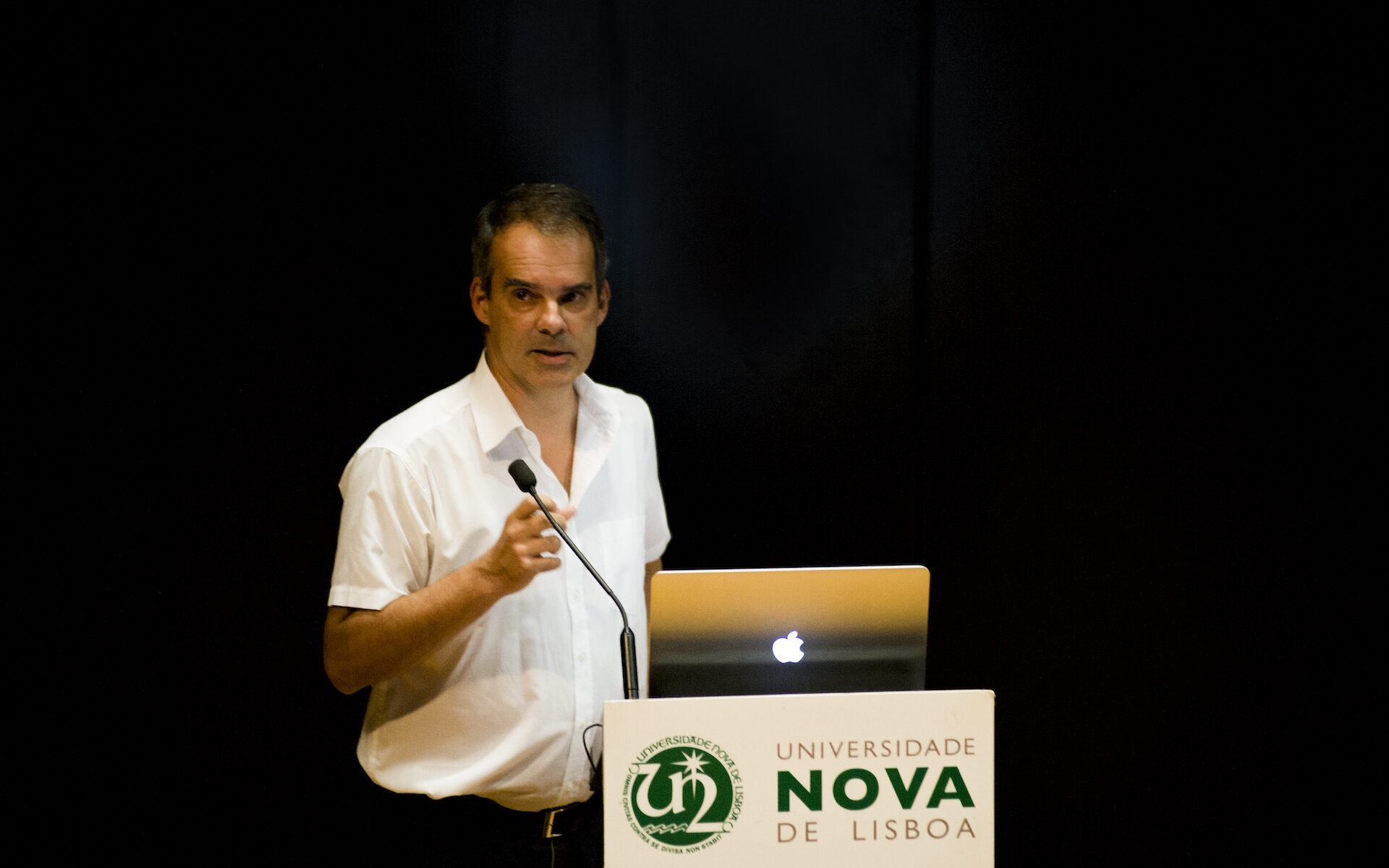
 On Tuesday, October 25th, Professor Luís Caires spoke with the Carnegie Mellon University community during the Principles of Programming Group (PoP) Seminar. The session named “Concurrent Programming with Sessions and Shared State, in Linear Logic” was focused on stateful programming involving sharing and concurrency as is common place in modern software development, and the challenges of getting complex concurrent code right, even for skilled developers. The speakers introduced CLASS, a typed core programming language for higher-order concurrent programming, for which static typing ensures absence of a broad class of “dynamic bugs”: well-typed programs never deadlock, do not leak memory, and always terminate. These properties result from CLASS foundations, based on a conservative extension of Linear Logic with shareable affine state, via a propositions-as-types interpretation of proofs as session processes. The main part of the talk was a presentation of a suite of challenging code examples, with type-checker and interpreter implementation, that illustrate the expressiveness and some programming techniques for our language.


