Priberam Machine Learning Lunch Seminar: An Iterative, Constrained Approach for Pitch Component Extraction

Priberam Machine Learning Lunch Seminar: An Iterative, Constrained Approach for Pitch Component Extraction
Speaker: Gopala Anumanchipalli (INESC-ID, LTI/CMU)
Venue: IST Alameda, Sala PA2 (Edifício de Pós-Graduação)
Date: Tuesday, November 30th, 2010
Time: 13:00
Lunch will be provided

Abstract:
In this talk I will describe an approach for automatic extraction of global and local patterns of pitch(F0) contours taking into account the overall trends of these phenomena in the presented data. We propose an iterative algorithm to optimally extract these components to minimize the reconstruction error of the F0 contour. Furthermore, we present a constraint specification strategy to incorporate known constraints on these phenomena to converge on better realizations of the components (like the Phrase and Accent commands of the physiologically motivated Fujisaki Model of F0). The extracted components are shown to be correlated to established theoritical notions of declination, metrical feet and accent tones.

Bio:
Gopala is a Ph.D. student in the LTI, Carnegie Mellon University and INESC-ID Lisboa, IST. He is advised by Dr. Alan W Black and Dr. Luis Oliveira. He is currently at INESC-ID. He is interested broadly in everything to do with language, but specifically works on building models and transformation approaches for prosody in Speech synthesis. He is working in the PT-Star project aiming to do Speech-to-Speech machine translation of video lectures.

ICTI Student Research Presentation Lunch 2010

ICTI Student Research Presentation Lunch 2010
Date: November 19, 2010
Place: Gates Building – Conference room 8102

PROGRAM in pdf

AGENDA

12 p – 1:30p
12:00p – 12:30p Buffet (Gates 8102)
12:30p – 12:50p The True Impact of Scientific Research on Industrial Technology? A Reassessment of IT Patent Citations

Ali Shams. Presentation by: Ali Shams (TCE -Heniz)
Ali Shams is a third year student of the Technological Change and Entrepreneurship PhD program. His research is concerned with the relationship between academic science and industrial technology in the context of technological change in the IT industry. He has an undergraduate degree in Industrial Engineering from Sharif University of Technology, and a master’s degree in Entrepreneurship Research from University of Tehran.

Summary: Economic research based on surveys, interviews, and case studies indicates that the linkage between science and industry is significant and growing in importance over time. Statistical analysis of patent-to-paper citations also strongly supports the notion of a growing science-technology linkage. However, this approach seems to suggest that the linkage is highly concentrated in the biotechnology, biomedical, and pharmaceutical domains, and comparatively weak everywhere else. This finding is not only inconsistent with previous research results, it is also difficult to reconcile with the widely held notion that the IT revolution, arguably the most significant development of our time, has grown, in no small part, thanks to important advances in IT-related scientific disciplines. This paper aims to address this apparent inconsistency. We argue that patent citations to papers in the IT industry are created in the context of a special structure of relationships between academic science and industrial R&D that gives rise to a chaining pattern in citations, which, in turn, obscures the true effect of science on technology. Our approach is inspired by a long-known phenomenon in the science bibliometrics literature called “Obliteration by Incorporation”, which explains how scientific contributions become embedded in the pool of accepted knowledge of a field, while their sources gradually become forgotten by the community. We verify our claim using patent citation data for a sizable portion of US patents granted between 1983-1999. The results provide a new outlook on the effect of scientific research on industrial technology. Based on this outlook, we create a ranking of scientific research organizations in terms of the impact of their research on industrial R&D.

12:50p – 1:00p Q & A
1:00p – 1:20p Can a Wind Farm with Storage Survive in the Day-Ahead Market

Brandon Mauch Presentation by: Brandon Mauch (EPP)
Brandon Mauch is a third year student in Engineering and Public Policy at CMU and IST. His research focuses on the integration of wind energy into existing electricity grids. Prior to joining the CMUPortugal program, he worked for the U.S. Department of State.

Summary: Currently, wind farms do not participate in day-ahead electricity markets. However, in future electric grids with large wind capacity it may be necessary for wind farms to participate in day-ahead markets. This is challenging due to the variability and unpredictability of wind power. Over the past few years, several researchers have considered the possibility of using energy storage to firm wind power output and provide some level of control. We investigate the economic viability of coupling a wind farm with compressed air energy storage (CAES) to participate in the day-ahead electricity market. In our analysis we assume that renewable portfolio standards have been fully met and government subsidies have expired. The wind farm is modeled as a price taker who is free to offer any amount of electricity on the market. Optimal hourly dispatch quantities of electricity for one year are calculated using a dynamic programming model. Dispatch quantities from the model are then used with measured wind power generation data to determine hourly profits for the wind farm.

1:20p – 1:30p Q & A
1:30p Conclude

2010 MSE Seminars of Software Engineering: SCRUM Agile Software Development

2010 MSE Seminars of Software Engineering: SCRUM: Agile Software Development
Dates: November 27, 2010, 10:00h (Auditorim of Novabase/Parque das Nações, Lisboa) and December 4, 2010, 10:00 (Hotel Ipanema Porto, Porto)
Organization: University of Coimbra | Carnegie Mellon Portugal Program
[Admission is free with the registration 3 days prior to each seminar]

REGISTRATION FORM

Speed, quality and price are the words that rule the world of software development in current times. Increasing number of customers is demanding low-cost software which would be available instantaneously. A company that responds to these requests by saying “it will be ready for the next semester,” is “dead”. The world has changed! This seminar is intended for software engineers, team leaders and project managers who want to learn more about rapid software development particularly using the SCRUM methodology.

Topics:
– Organization and management of agile teams
– Efficient Management of Requirements
– Planning and monitoring
– Estimate

Agenda:
– [1.5h] Agile software development using SCRUM
– [0.5h] CMU | UC Master of Software Engineering

Audience:
– Software Engineers – Team Leaders and Project Managers
– Companies interested in participating in the program CMU | Portugal

Lecturers:
Professor Mário Zenha-Rela, University of Coimbra / Carnegie Mellon University
Professor Licinio Roque, University of Coimbra / Carnegie Mellon University
Professor Pedro Bizarro, University of Coimbra / Carnegie Mellon University
Professor Paulo Rupino, Universidade de Coimbra / Carnegie Mellon University

For any questions please contact: info-mse@dei.uc.pt.

The Carnegie Mellon Portugal Program Will be Present at the Business & Innovation Network @ FEUP

The Carnegie Mellon Portugal Program Will be Present at the Business & Innovation Network @ FEUP
The Carnegie Mellon Portugal Program will have a stand in the Tech-based Star-up Exhibition, at the Business & Innovation Network@FEUP. This event will be held on November 10, 11 and 12, 2010, at Faculdade de Engenharia da Universidade do Porto (FEUP).

The BIN@FEUP aims to bring together a wide range of national and international partners with different yet complementary interests on business and innovation themes. We expect to have a big participation of tech-based companies (start-ups) and many other stakeholders of the Innovation process: Business Incubators; Investors; Business Consultants; Research Groups; Technology Parks; and many others…

During this event, the Carnegie Mellon Portugal Program will show demos of two research projects: Vital Responder and Drive-In.

Priberam Machine Learning Lunch Seminar: Learning simple texture discrimination filters, by Rui Guerreiro (ISR)

Priberam Machine Learning Lunch Seminar: Learning simple texture discrimination filters, by Rui Guerreiro (ISR)
Venue: IST Alameda, Sala PA2 (Edif. de Pós-Graduação)
Date: Tuesday, November 16nd, 2010
Time: 13:00
Lunch will be provided

Abstract:
Everyday tasks like walking on the street, recognizing a friend or understanding a scene seem so simple and immediate that transposing it to a computer might seem like an easy task. Only when we try it do we realize our immense talent, as humans, in making sense of the data that reaches our senses. In this talk I illustrate some of these difficulties and particularize for the context of texture discrimination. I introduce a simple supervised learning approach (using Genetic Algorithms) that enables high-frame rate texture discrimination and compare it with current state-of-the-art methods. I further particularize the general methodology to rotationally discriminant and rotationally invariant discrimination. I conclude with experimental results, which illustrate that it is successful in capturing the essence of the texture discrimination problem.

Bio:
Rui Guerreiro received his licenciatura (2002) and MSc (2003) degrees from Instituto Superior Técnico (IST), Portugal, in Electrical & Electronical Engineering, the latter on the topic of 2D-to-3D conversion using Structure from Motion. In 2003, he joined Siemens S.A. in Lisbon where he worked in high-speed circuit design for communication systems.~In 2005, he joined the Video Processing Group of Philips Research, Eindhoven, The Netherlands, where he worked on picture enhancement topics (motion estimation, halo-free frame-rate up-conversion, multi-band enhancement, temporal compression artifact suppression, spatial color processing, color therapy), 2D-to-3D conversion for 3D-TVs (scene classification, depth-from-focus, motion-based segmentation) and supervised student work on low-cost gaze tracking. In 2009, he started a PhD at IST, on perception-based 2D-to-3D conversion. He has 4 patents and 9 peer-reviewed publications on these topics.

Anthony Rowe Gives a Special Seminar in Portugal On Embedded Sensing Systems For Energy-Efficiency In Buildings

Date: Friday, November 5, 2010, 16:00-17:00
Speaker: Anthony Rowe, Carnegie Mellon University
Organization: The Instituto de Telecomunicações and the Department of Electrical and Computer Engineering
Place: FEUP Building I, Room I-105

Abstract:
Non-Intrusive Load Monitoring (NILM) is a promising technique for disaggregating per-appliance energy consumption in buildings from aggregate voltage/current measurements. One major limitation of the approach is that it typically requires a training phase during which users must manually label device transitions. This talk presents an inexpensive contactless electromagnetic field (EMF) event-detector that can detect appliance state changes within close proximity based on magnetic and electric field fluctuations. Each detector wirelessly transmits state changes via a sensor network to a circuit-panel energy meter, which can then be used to label and disambiguate appliance transitions detected from the aggregate signals as well as to track the associated energy consumption. Our EMF sensors are able to detect significant power state changes from a few inches away making it possible to externally monitor in-wall wiring to devices (e.g., overhead lights). We also address how this technology can be used as a first step towards the broader goal of net-zero energy buildings.

Bio:
Anthony Rowe is an Assistant Research Professor at Carnegie Mellon University. He received a Ph.D. in ECE from CMU in 2010. His research interests include networked real-time embedded systems for sensor and actuator applications. Currently, he is investigating how to design future embedded systems to support applications ranging from building energy optimization to hazardous work-zone safety that are energy-efficient and provide real-time properties.

Priberam Machine Learning Lunch Seminar: Mind The Gap: Reconstruction of missing cardiovascular signals using adaptive filtering

Priberam Machine Learning Lunch Seminar: Mind The Gap: Reconstruction of missing cardiovascular signals using adaptive filtering
Speaker: Andras Hartmann (INESC-ID)
Venue: IST Alameda, Sala PA2 (Edifício de Pós-Graduação)
Date: Tuesday, November 2nd, 2010
Time: 13:00
Lunch will be provided

Abstract:
In this talk I will introduce a robust method for filling in short missing segments in multiparameter Intensive Care Unit cardiovascular data. This work was inspired by the “PhysioNet/Computing in Cardiology Challenge 2010: Mind the Gap”. The interconnections between the signals were identified in the form of composite IIR transfer functions using the signals’ history. A genetic algorithm was applied for inferring the filter coefficients. Assuming that the connections do not vary in time, we managed to reconstruct the missing signals using the yet available parallel measured signals and the transfer functions.
The results are promising, as this method achieved the 5th place among 53 participants of the challenge. We concluded that this approach can be efficient in reconstructing and even detecting missing or corrupted cardiovascular signals or other type of datasets with several modalities and strong interconnections between them.


Bio:
András Hartmann received his MSc degree from Budapest University of Technology and Economics in Information Systems and Computational Engineering with specialization in software design in 2005. In 2008 he gained his MSc, this time in Biomedical Engineering in a joint program of Semmelweis Medical University and Budapest University of Technology and Economics. Since July 2009 he is a member of the INESC-ID KDBIO Group, working on the project DynaMo – Dynamical modeling, control and optimization of metabolic networks. He is interested in modeling complex biological and physiological systems, in particular: identification and dynamic modeling of metabolic networks; spatial and temporal connectivity in human brain; and dynamic modeling of cardiovascular system.

ERC Meeting 2010

External Review Committee of the Carnegie Mellon Portugal Program 2010
The ERC Meeting 2010 will be held in Porto at Faculdade de Engenharia da Universidade do Porto (FEUP at Google Maps), between October 14-15, 2010.

Download the ERC Meeting program in pdf format.
[pdf file]

Registration Form

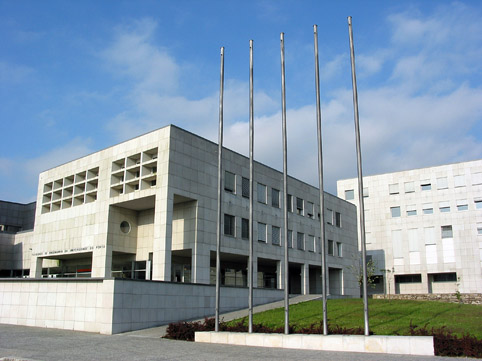
FEUP Administration Building
Faculdade de Engenharia da Universidade do Porto (FEUP)
Rua Dr. Roberto Frias, s/n 4200-465 Porto PORTUGAL

Venue: FEUP Administration Building – meeting room 113
(location of the meeting room inside FEUP http://www.fe.up.pt/si_uk/edificios_geral.FormView?P_EDIFICIO=A)
AGENDA October 14 th , 2010

13:15-15:30 ERC meets with “Electrical and Computer Engineering”
Ph.D. and MSc Programs, Faculty Exchange, Virtual Campus, Research (Projects and Ph.D. Theses), Industrial Cooperation
Two Thematic Networks: Future Internet NET-FIT; Security and Critical Infrastructures NET-SCIP; PT Security Lab

15:45-18:45 ERC meets with “Computer Science”
Ph.D. and MSc Programs, Faculty Exchange, Virtual Campus, Research (Projects and Ph.D. Theses), Industrial Cooperation
Two Focus Areas: Institute for Software Engineering; Madeira Interactive Technologies Institute

19:00-19:45 ERC meets with “PhD and Master Students”
October 15 th , 2010
9:00 Research Highlights with Industry Partners

11:00 ERC meets with “Language Technologies”
Ph.D. Programs and Projects

11:45 ERC meets with “Applied Mathematics”
Faculty, Ph.D. and Post-Docs

12:30 ERC meets with “Participants of the Faculty Exchange Program” (includes working lunch)

13:45 ERC meets with “EPP and TCE”
Ph.D. Programs, Faculty Exchange, Virtual Campus, Research (Projects and Ph.D. Theses), Industrial Cooperation

16:00-17:00 ERC meets with “Alumni”

There will be available during the evaluation days meeting rooms with internet access, which will be available for project meetings, brainstorming sessions, proposal writing, and other collaborative activities. Since a strong presence is expected from all partners in Portugal and from Carnegie Mellon, all PIs are strongly encouraged to convene their teams in Porto during the aforementioned days.

In order to organize the meeting rooms, the coffee breaks and all the logistics needed to this event we have online (Google form) a registration/confirmation form that we kindly ask everyone to fill in until October 4th:
https://spreadsheets.google.com/viewform?formkey=dG1HNlVwX0Z5c2xZNk1WNzdCaUhQb0E6MA

__________
About Portugal: http://www.visitportugal.com/Cultures/EN-US/default.html
About Porto: http://www.portoturismo.pt/

Public Policy and Innovation Dynamics in Network Industries: Annual Meeting

Public Policy and Innovation Dynamics in Network Industries: Annual Meeting
October 11th and 12th 2010
Places: Instituto Superior Técnico (IST), Universidade Técnica de Lisboa (UTL), and Faculdade de Engenharia da Universidade do Porto (FEUP)

Summary
Interdisciplinary research at the intersection of engineering, innovation, management and public policy with application to Network Industries has been a trust area developed in the context of the Carnegie Mellon Portugal Program. This annual meeting will provide an overview of the research accomplishments achieved so far in this field. Additionally, it will lay down solid ground for continued collaboration between Portuguese research and education institutions and Carnegie Mellon University on research applied to critical networked infrastructures. Students, post-docs, research fellows and faculty, both from Portuguese Universities and from Carnegie Mellon University, will present ongoing work and discuss results and ideas for future research with a number of companies as well as governmental agencies.

Focus will be given to the following topics: peer-to-peer networks, efficient spectrum management, universal service policy, segmented regulation for telecommunication networks, social analytics and media, architectures for next generation Internet, the impact of network neutrality, the impact of broadband on society, vehicular ad-hoc networks, renewable sources of energy and climate change, sensor networks for atmospheric monitoring, network optimization and smart grids, electric vehicles and energy efficiency. An overview of educational programs and research projects underway involving interdisciplinary teams of Portuguese researchers and Carnegie Mellon University faculty will also be provided.
AGENDA: Monday October 11th – IST, Lisbon
09.30 – Welcome Remarks: Pedro Ferreira, Room V0.15
09.45 – 12.30 Research Challenges in ICTs Policy, Room V0.15.
Presentations by:
Luis Correia, Associate Professor, IST.
Carnegie Mellon Portugal Students: Ram Saruti; Moinul Zaber; Alexandre Mateus; Patrick Agyapong.
Carnegie Mellon Portugal Research Fellows: Pavel Krivitsky; Paul Laskowski; Michael Oraro; Chintan Vaishnav.

09.45 – 12.30 Research Challenges in Energy Policy, Room CC VC, Level -1.
Presentations by:
IST Faculty: João Santana; Marcelino Ferreira; Pedro Carvalho; Jorge Sousa; João Pedro Gomes.
Carnegie Mellon Faculty: Peter Adams (tbc)
Carnegie Mellon Portugal Students: Brandon Mauch; Collen Horin.

18.00 – 19.00 Reception and Keynote Speech on Energy and Climate Change, IST (Room tba)
“The Climate Problem is an Energy Problem: Issues in decarbonizing electricity and transportation”
Professor Granger Morgan, Head, Department of Engineering and Public Policy, CMU

Abstract:
Morgan will begin by briefly recapping why we have a climate problem and why the climate problem is basically an energy problem. Then he will outline options for reducing emissions of CO2 from the electricity system, arguing that no single technology or strategy can achieve this objective – that a portfolio of solutions on both the demand and supply side will be necessary. He will outline what he sees as some of the more pressing research challenges and needs. In the second half of the talk he will discuss the problem of reducing net emissions from transportation. Here much of his focus will be on hybrid, plug hybrid and electric vehicles, along with battery technology. Again he will outline key research challenges and needs. He will conclude with a few broader observations on the challenge of implementing the needed changes.

AGENDA: Tuesday October 12th – FEUP, Porto
09.30 – Welcome Remarks by José Silva Matos, Room B032

09.45 – 10.15 Engineering and Public Policy: Overview by Professor Granger Morgan, CMU

10.30 – 12.15 Research Challenges in ICTs Policy II, Room B032.
Presentations by:
Carnegie Mellon Faculty: Ramayya Krishnan; Marvin Sirbu;
FEUP Faculty: João Barros; Fausto Vieira; Ricardo Morla.

10.45 – 12.30 Research Challenges in Energy Policy II: Room VC 124
Carnegie Mellon Faculty: Granger Morgan
FEUP Faculty: Peças Lopes, Manuel Matos, Vladimiro Miranda

17.00 – 18.30 Reception and Keynote Speech on Complex Social Analytics, FEUP (Room B032)
“Computational Social Analytics: the iLab@Heinz experience”
Professor Ramayya Krishnan, Dean, Heinz College, CMU

Abstract:
The increasing use of digital devices and instrumented networks enables detailed data to be collected about how people live their lives, communicate, collaborate and conduct work. These data provide an unprecedented opportunity to leverage both computation and social science to develop new behavioral theories and to pioneer new privacy-preserving analytic techniques with applications in societal and commercial contexts. Recognizing the inherently inter-disciplinary nature of the effort, the iLab at the Heinz College has convened a group of faculty from around the CMU campus with expertise in social science (sociology and economics), marketing science, optimization, machine learning and statistics and compiled a set of large societal scale data sets in multiple contexts from different nations (e.g., India and Portugal). This talk will discuss some examples of research conducted at the lab and discuss preliminary evidence of what has been accomplished to date.