Anthony Rowe Gives a Special Seminar in Portugal On Embedded Sensing Systems For Energy-Efficiency In Buildings

Date: Friday, November 5, 2010, 16:00-17:00
Speaker: Anthony Rowe, Carnegie Mellon University
Organization: The Instituto de Telecomunicações and the Department of Electrical and Computer Engineering
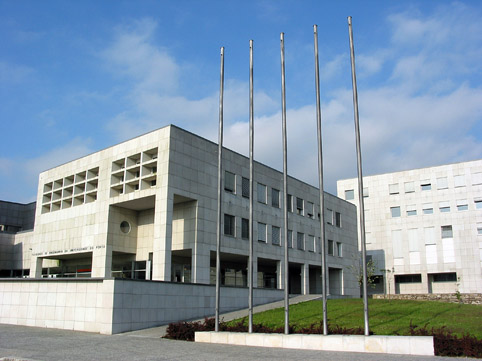
Place: FEUP Building I, Room I-105

Abstract:
Non-Intrusive Load Monitoring (NILM) is a promising technique for disaggregating per-appliance energy consumption in buildings from aggregate voltage/current measurements. One major limitation of the approach is that it typically requires a training phase during which users must manually label device transitions. This talk presents an inexpensive contactless electromagnetic field (EMF) event-detector that can detect appliance state changes within close proximity based on magnetic and electric field fluctuations. Each detector wirelessly transmits state changes via a sensor network to a circuit-panel energy meter, which can then be used to label and disambiguate appliance transitions detected from the aggregate signals as well as to track the associated energy consumption. Our EMF sensors are able to detect significant power state changes from a few inches away making it possible to externally monitor in-wall wiring to devices (e.g., overhead lights). We also address how this technology can be used as a first step towards the broader goal of net-zero energy buildings.

Bio:
Anthony Rowe is an Assistant Research Professor at Carnegie Mellon University. He received a Ph.D. in ECE from CMU in 2010. His research interests include networked real-time embedded systems for sensor and actuator applications. Currently, he is investigating how to design future embedded systems to support applications ranging from building energy optimization to hazardous work-zone safety that are energy-efficient and provide real-time properties.

Priberam Machine Learning Lunch Seminar: Mind The Gap: Reconstruction of missing cardiovascular signals using adaptive filtering

Priberam Machine Learning Lunch Seminar: Mind The Gap: Reconstruction of missing cardiovascular signals using adaptive filtering
Speaker: Andras Hartmann (INESC-ID)
Venue: IST Alameda, Sala PA2 (Edifício de Pós-Graduação)
Date: Tuesday, November 2nd, 2010
Time: 13:00
Lunch will be provided

Abstract:
In this talk I will introduce a robust method for filling in short missing segments in multiparameter Intensive Care Unit cardiovascular data. This work was inspired by the “PhysioNet/Computing in Cardiology Challenge 2010: Mind the Gap”. The interconnections between the signals were identified in the form of composite IIR transfer functions using the signals’ history. A genetic algorithm was applied for inferring the filter coefficients. Assuming that the connections do not vary in time, we managed to reconstruct the missing signals using the yet available parallel measured signals and the transfer functions.
The results are promising, as this method achieved the 5th place among 53 participants of the challenge. We concluded that this approach can be efficient in reconstructing and even detecting missing or corrupted cardiovascular signals or other type of datasets with several modalities and strong interconnections between them.

—
Bio:
András Hartmann received his MSc degree from Budapest University of Technology and Economics in Information Systems and Computational Engineering with specialization in software design in 2005. In 2008 he gained his MSc, this time in Biomedical Engineering in a joint program of Semmelweis Medical University and Budapest University of Technology and Economics. Since July 2009 he is a member of the INESC-ID KDBIO Group, working on the project DynaMo – Dynamical modeling, control and optimization of metabolic networks. He is interested in modeling complex biological and physiological systems, in particular: identification and dynamic modeling of metabolic networks; spatial and temporal connectivity in human brain; and dynamic modeling of cardiovascular system.

ERC Meeting 2010

External Review Committee of the Carnegie Mellon Portugal Program 2010
The ERC Meeting 2010 will be held in Porto at Faculdade de Engenharia da Universidade do Porto (FEUP at Google Maps), between October 14-15, 2010.

Download the ERC Meeting program in pdf format.
[pdf file]

Registration Form

FEUP Administration Building
Faculdade de Engenharia da Universidade do Porto (FEUP)
Rua Dr. Roberto Frias, s/n 4200-465 Porto PORTUGAL

Venue: FEUP Administration Building – meeting room 113
(location of the meeting room inside FEUP http://www.fe.up.pt/si_uk/edificios_geral.FormView?P_EDIFICIO=A)
AGENDA October 14 th , 2010

13:15-15:30 ERC meets with “Electrical and Computer Engineering”
Ph.D. and MSc Programs, Faculty Exchange, Virtual Campus, Research (Projects and Ph.D. Theses), Industrial Cooperation
Two Thematic Networks: Future Internet NET-FIT; Security and Critical Infrastructures NET-SCIP; PT Security Lab

15:45-18:45 ERC meets with “Computer Science”
Ph.D. and MSc Programs, Faculty Exchange, Virtual Campus, Research (Projects and Ph.D. Theses), Industrial Cooperation
Two Focus Areas: Institute for Software Engineering; Madeira Interactive Technologies Institute

19:00-19:45 ERC meets with “PhD and Master Students”
October 15 th , 2010
9:00 Research Highlights with Industry Partners

11:00 ERC meets with “Language Technologies”
Ph.D. Programs and Projects

11:45 ERC meets with “Applied Mathematics”
Faculty, Ph.D. and Post-Docs

12:30 ERC meets with “Participants of the Faculty Exchange Program” (includes working lunch)

13:45 ERC meets with “EPP and TCE”
Ph.D. Programs, Faculty Exchange, Virtual Campus, Research (Projects and Ph.D. Theses), Industrial Cooperation

16:00-17:00 ERC meets with “Alumni”

There will be available during the evaluation days meeting rooms with internet access, which will be available for project meetings, brainstorming sessions, proposal writing, and other collaborative activities. Since a strong presence is expected from all partners in Portugal and from Carnegie Mellon, all PIs are strongly encouraged to convene their teams in Porto during the aforementioned days.

In order to organize the meeting rooms, the coffee breaks and all the logistics needed to this event we have online (Google form) a registration/confirmation form that we kindly ask everyone to fill in until October 4th:
https://spreadsheets.google.com/viewform?formkey=dG1HNlVwX0Z5c2xZNk1WNzdCaUhQb0E6MA

__________
About Portugal: http://www.visitportugal.com/Cultures/EN-US/default.html
About Porto: http://www.portoturismo.pt/

Public Policy and Innovation Dynamics in Network Industries: Annual Meeting

Public Policy and Innovation Dynamics in Network Industries: Annual Meeting
October 11th and 12th 2010
Places: Instituto Superior Técnico (IST), Universidade Técnica de Lisboa (UTL), and Faculdade de Engenharia da Universidade do Porto (FEUP)

Summary
Interdisciplinary research at the intersection of engineering, innovation, management and public policy with application to Network Industries has been a trust area developed in the context of the Carnegie Mellon Portugal Program. This annual meeting will provide an overview of the research accomplishments achieved so far in this field. Additionally, it will lay down solid ground for continued collaboration between Portuguese research and education institutions and Carnegie Mellon University on research applied to critical networked infrastructures. Students, post-docs, research fellows and faculty, both from Portuguese Universities and from Carnegie Mellon University, will present ongoing work and discuss results and ideas for future research with a number of companies as well as governmental agencies.

Focus will be given to the following topics: peer-to-peer networks, efficient spectrum management, universal service policy, segmented regulation for telecommunication networks, social analytics and media, architectures for next generation Internet, the impact of network neutrality, the impact of broadband on society, vehicular ad-hoc networks, renewable sources of energy and climate change, sensor networks for atmospheric monitoring, network optimization and smart grids, electric vehicles and energy efficiency. An overview of educational programs and research projects underway involving interdisciplinary teams of Portuguese researchers and Carnegie Mellon University faculty will also be provided.
AGENDA: Monday October 11th – IST, Lisbon
09.30 – Welcome Remarks: Pedro Ferreira, Room V0.15
09.45 – 12.30 Research Challenges in ICTs Policy, Room V0.15.
Presentations by:
Luis Correia, Associate Professor, IST.
Carnegie Mellon Portugal Students: Ram Saruti; Moinul Zaber; Alexandre Mateus; Patrick Agyapong.
Carnegie Mellon Portugal Research Fellows: Pavel Krivitsky; Paul Laskowski; Michael Oraro; Chintan Vaishnav.

09.45 – 12.30 Research Challenges in Energy Policy, Room CC VC, Level -1.
Presentations by:
IST Faculty: João Santana; Marcelino Ferreira; Pedro Carvalho; Jorge Sousa; João Pedro Gomes.
Carnegie Mellon Faculty: Peter Adams (tbc)
Carnegie Mellon Portugal Students: Brandon Mauch; Collen Horin.

18.00 – 19.00 Reception and Keynote Speech on Energy and Climate Change, IST (Room tba)
“The Climate Problem is an Energy Problem: Issues in decarbonizing electricity and transportation”
Professor Granger Morgan, Head, Department of Engineering and Public Policy, CMU

Abstract:
Morgan will begin by briefly recapping why we have a climate problem and why the climate problem is basically an energy problem. Then he will outline options for reducing emissions of CO2 from the electricity system, arguing that no single technology or strategy can achieve this objective – that a portfolio of solutions on both the demand and supply side will be necessary. He will outline what he sees as some of the more pressing research challenges and needs. In the second half of the talk he will discuss the problem of reducing net emissions from transportation. Here much of his focus will be on hybrid, plug hybrid and electric vehicles, along with battery technology. Again he will outline key research challenges and needs. He will conclude with a few broader observations on the challenge of implementing the needed changes.

AGENDA: Tuesday October 12th – FEUP, Porto
09.30 – Welcome Remarks by José Silva Matos, Room B032

09.45 – 10.15 Engineering and Public Policy: Overview by Professor Granger Morgan, CMU

10.30 – 12.15 Research Challenges in ICTs Policy II, Room B032.
Presentations by:
Carnegie Mellon Faculty: Ramayya Krishnan; Marvin Sirbu;
FEUP Faculty: João Barros; Fausto Vieira; Ricardo Morla.

10.45 – 12.30 Research Challenges in Energy Policy II: Room VC 124
Carnegie Mellon Faculty: Granger Morgan
FEUP Faculty: Peças Lopes, Manuel Matos, Vladimiro Miranda

17.00 – 18.30 Reception and Keynote Speech on Complex Social Analytics, FEUP (Room B032)
“Computational Social Analytics: the iLab@Heinz experience”
Professor Ramayya Krishnan, Dean, Heinz College, CMU

Abstract:
The increasing use of digital devices and instrumented networks enables detailed data to be collected about how people live their lives, communicate, collaborate and conduct work. These data provide an unprecedented opportunity to leverage both computation and social science to develop new behavioral theories and to pioneer new privacy-preserving analytic techniques with applications in societal and commercial contexts. Recognizing the inherently inter-disciplinary nature of the effort, the iLab at the Heinz College has convened a group of faculty from around the CMU campus with expertise in social science (sociology and economics), marketing science, optimization, machine learning and statistics and compiled a set of large societal scale data sets in multiple contexts from different nations (e.g., India and Portugal). This talk will discuss some examples of research conducted at the lab and discuss preliminary evidence of what has been accomplished to date.
NET-SCIP Workshop on Security

NET-SCIP Workshop on Security
Date: October 13, 2010
Place: Faculdade de Engenharia da Universidade do Porto
Registration Form: http://net-scip.cmuportugal.org/?page_id=116

The Innovation Network on Security and Critical Infrastructure Protection (NET-SCIP) is currently gathering the scientific community, the private sector and the main government agencies in Portugal with the goal of developing comparative advantages in new security technologies, services, and protection of critical infrastructures.

As part of this initiative, NET-SCIP is organising a one-day workshop on the 13th of October 2010 at Faculdade de Engenharia da Universidade do Porto, Porto, Portugal. Researchers, professionals and practitioners interested in participating are invited to submit a 1-page position abstract outlining the topic of their ongoing work and interests. Selected submissions will be invited for presentation at the workshop.

The organisers wish to especially encourage industry professionals and junior researchers (Ph.D. students, post-docs) to consider participating in this workshop.

Theme & topics:
The convergence of telecommunication networks, information systems and control technologies has become a reality. The internet is more and more the platform of choice for the many information flows that support critical infrastructures and critical information and communication systems. Examples include energy and fuel networks, supply chains for materials, water and food, transportation networks and healthcare systems, as well as medium and large enterprises exploring business relationships in a open global market of inter-dependent services. At the same time sophisticated technologies based on sensor networks allow for the aggregation of physical data in real time with respect to spaces, equipment and people.

Given the growing inter-dependence of all these systems, the impact of cyber-attacks is no longer circumscribed to particular information systems and is now a real threat both to the infrastructures and basic services on which we all depend in our everyday life.

Centered on scientific and technological advancement, NET-SCIP shall promote an inter-disciplinary approach by which experts from engineering, basic sciences, economy, design and psychology come together to create new knowledge and develop security solutions for all kinds of users and companies.

Important dates:
30 September 2010: Submission of position papers
5 October 2010: Notification of acceptance
13 October 2010: Workshop is held

Submission: send position abstracts to:
nuno@di.fc.ul.pt
vassilis@cmu.edu
luis.caires@di.fct.unl.pt

For more information, please visit
http://net-scip.cmuportugal.org

2010 Carnegie Mellon Portugal Program – Student Orientation in Portugal

Place: Faculdade de Ciências e Tecnologia da Universidade de Coimbra (GPS coordinates: 40°11’11″N 8°24’56″W)
Room: Anfiteatro B2

The Carnegie Mellon Portugal Program is organizing the Orientation day for the newly enrolled students who are starting their academic year 2010/2011 in Portugal, as well as for the students that are coming to Portugal for the first time. The Orientation day is going to be held in Coimbra on September 18 th and the chosen venue is University of Coimbra.

AGENDA

10:30 – 11:00 Registration and welcome coffee

11:00 – 11:10 Welcome to Coimbra

João Gabriel Silva, Head, Faculdade de Ciências e Tecnologia da Universidade de Coimbra

11:10 – 11:25 Carnegie Mellon Portugal Program Overview

João Barros, National Director, Carnegie Mellon Portugal Program

11:25 – 11:40 New Students Introductions

11:40 – 11:55 Policy on Cheating

11:55 – 12:10 Students Matters (residence card, visa requirements, other issues)

Sanja Sontor, Information officer and Event Coordinator, Carnegie Mellon Portugal Program

12:10 – 12:30 Expectations & Experience

Rui Meireles (Ph.D. CS)
Filippo Cagnetti (Post Doc Math)

12:30 – 12:45 Alumni Chapter

Nuno Seixas and Filipa Jervis, Alumni, Carnegie Mellon Portugal Program

12:45 – 14:15 Lunch

14:15 – 14:45 How to Create a Company

Paulo Santos, Instituto Pedro Nunes

14:45 – 15:15 From Research to the Market

Pedro Bizarro, Feedzai

15:15 – 15:45 Coffee break

15:45 – 16:15 The Importance of Innovation

Marco Costa, Critical Software

16:15 – 16:45 Innovation in a Globalized Market

Pedro Falcão, Novabase Capital

16: 45 – 17:00 Closing Remarks

João Barros, National Director, Carnegie Mellon Portugal Program

Registration Form for the Students (deadline: September 3, 2010):
http://spreadsheets.google.com/viewform?formkey=dDlJNnVqQUZtaVJyVXBtWWo0b2NkRFE6MQ

Related Articles:
2009: Carnegie Mellon Portugal Program Organizes Orientation Day in Aveiro
https://cmuportugal.org/tiercontent.aspx?id=1580

2010 Carnegie Mellon Portugal Program Student Orientation at Carnegie Mellon

2010 Carnegie Mellon Portugal Program Student Orientation at Carnegie Mellon
Singleton Room, Roberts Hall
Tuesday, September 7, 2010
5:00 – 6:30 p.m
Speakers:
Welcome and ICTI Program Overview
Professor José M.F. Moura, Director ICTI@CMU, and Electrical and Computer Engineering faculty member

Proper Attribution, Advisors role
Professor Peter Steenkiste, Computer Science and Electrical and Computer Engineering faculty member, and ICTI@CMU Area Coordinator for CS and ECE

Expectations & Experiences
Presentation by 3 continuing ICTI@CMU students:
· ECE: Luis Brandão
· EPP: Patrick Agyapong
· EPP: Alexandre Mateus

Post-Doctoral Academy in Mathematics 2010

Post-Doctoral Academy in Mathematics
Date: September 23-24, 2010
Place: Faculdade de Ciências e Tecnologia, Universidade Nova de Lisboa, Campus da Caparica ( How to reach the campus? )
Organizers: Carnegie Mellon Portugal Program and UT Austin Portugal Program

Main Speakers (4 x 1h mini courses):
Robert Pego (CMU) – Long-time nonlinear dynamics of waves and clusters
Gordan Zitkovic (UT Austin) – Financial Markets: Black-Scholes and Beyond

Talks by post-docs in the program Carnegie Mellon Portugal and UT Austin | Portugal programs

Confirmed names:
Filippo Cagnetti (Post Doc Training in Applied Mathematics, Carnegie Mellon Portugal Program – Instituto Superior Técnico and Carnegie Mellon University)
Mohammad El Smaily (Post Doc Training in Applied Mathematics, Carnegie Mellon Portugal Program – Pacific Institute for the Mathematical Sciences and at The University of British Columbia).
Rita Ferreira (Ph.D. Student in Applied Mathematics – Carnegie Mellon University and Universidade Nova de Lisboa)
Carolin Kreisbeck (Post Doc Training in Applied Mathematics, Carnegie Mellon Portugal Program – Carnegie Mellon University)
Rafayel Teymurazyan (Universidade de Lisboa)

Click here for titles and abstracts (partial list)

Organizing Committee:
Cartaz

Fabio Chalub (chair, UNL)
Rita Ferreira (UNL & CMU)
Isabel Gomes (UNL)
José Maria Gomes (UNL)
Ana Margarida Ribeiro (UNL)

Further informations: Fabio Chalub ( chalub@fct.unl.pt )

Sponsors:
CMA/UNL

Science 2010 – Encounter with Science and Technology

Carnegie Mellon Portugal Program at Ciência 2010 – Encontro com a Ciência e Tecnologia em Portugal
July 4-7 2010 – Centro de Congressos de Lisboa

The organization of Ciência 2010 – Encontro com a Ciência e Tecnologia (Science 2010 – Encounter with Science and Technology) in Portugal, invited Ph.D. students enrolled in the Carnegie Mellon Portugal Program to present a scientific poster at this conference. The posters will be displayed between the 4 th and 7 th of July in the Lisbon Conference Center.

The Science 2010 – Encounter with Science and Technology Conference aims to be the point of encounter and exchange of knowledge among the Portuguese scientific community. It is a prime opportunity to get to know the work being done by Portuguese scientists in the most relevant areas of activity.

Ph.D. Students Posters:
Alexandre Mateus – P2P on Campus: Who, What and How Much
Ali Shams – A New Method for Investigating University-to-Industry Knowledge Spillovers
Ana Venâncio – Does Red Tape Hold Back Entrepreneurs? Evidence from Portugal
André Regateiro – Revisiting firm size and job creation
Augusto Santos – Subspace Segmentation Problem
Cristina Carias – Creation of New Firms, Worker Mobility, and effect of employee exit on parent firms
Filipe Militão – Aliasing control with view-based typestate
Hugo Conceição – Self-Organized Traffic Control
João Miranda – Acoustic model training with imperfect transcripts
José Jerónimo Rodrigues – Automatic Vision Recognition System
Luís Brandão – Defining Thresholds for Anomaly Detection in a Hadoop Distributed System with Map-Reduce Workloads
Luís Marujo – Reap.PT: Early Stage
Masoud Honarvar Nazari – Technical and Policy issues of Modern Electric Energy Systems with Large Penetration opf Distributed Generators
Mate Boban – VANET Multiplay Games: A New Application
Patrick Agyapong – Spillover Effects from Wiring Schools with Broadband
Rathapon Saruthirathanaworakun – Dynamic Primary-Secondary Spectrum Sharing with Cellular Systems
Ricardo Cabral – Nuclear norm techniques for parameterizing subspaces
Rita Ferreira – Waves in a thin and periodically oscillating medium
Rodrigo Belo – Broadband in Schools: Good or Bad for Students’ Performance?
Rui Meireles – Line of sight in Vehicular Networks: na experimental study
Sérgio Pequito – New Approach to Non-Linear Observers : The Entropy Penalized Minimum Energy Estimator
Sven Stork – Æminium: Freeing Programmers from the Shackles of Sequentiality
Vikram Gupta – Wireless Low Power Synchronization from AC Power Lines
Vinay Prabhu – Who is more intrusive? 1 eavesdropper with M ears or M eavesdroppers with 1 ear each? An analytical characterization of critical secrecy parameters in wireless environs.
Wang Ling – PT-STAR – Speech Translation Advanced Research to and from Portuguese
Ye Can – Quantifying Stress in First Responder Professionals using Signal Processing Methologies

More information about this event at: http://www.ciencia2010.pt