Launching of the Professional Master Program in Entertainment Technology

Launching of the Professional Master Program in Entertainment Technology
July 19, 2010 – 10:00 (GMT)
Madeira, Portugal

The session will be attended by Don Marinelli, executive director of the ETC, Manuel Heitor, Portuguese Secretary of State for Science, Technology and Higher Education, João Cunha e Silva, vice-president of the Madeira regional government, José Manuel Castanheira da Costa, rector of the Universidade da Madeira, João Barros, National Director of the Carnegie Mellon Portugal Program, and Raul Caires, president of the Madeira Tecnopolo.

More information about the Master of Entertainment Technology available at: https://cmuportugal.org/dynamic.aspx?id=2650 .

Priberam Machine Learning Lunch Seminar: Genetic Programming

Priberam Machine Learning Lunch Seminar: “Genetic Programming”
Date: February 15, 2011
Place: Instituto Superior Técnico, Universidade Técnica de Lisboa (room PA2, Pós-Graduação building, IST – Campus Alameda)

This Priberam Machine Learning Lunch Seminar will be given by Sara Silva, senior researcher of the KDBIO group at INESC-ID Lisboa, will be the speaker in this seminar focused on “A Tutorial on Genetic Programming”. Genetic Programming (GP) is the youngest paradigm inside the Artificial Intelligence field called Evolutionary Computation. Created by John Koza in 1992, it can be regarded as a powerful generalization of Genetic Algorithms, but unfortunately it is still poorly understood outside the GP community. The goal of this tutorial is to provide motivation, intuition and practical advice about GP, along with very few technical details.

1st Lisbon Machine Learning School


LXLS 2011 a Date: July 20-25, 2011*
Place: Instituto Superior Técnico (IST), Universidade Tecnica de Lisboa, Portugal
Organizers: jointly by IST, the Instituto de Telecomunicações and the Spoken Language Systems Lab – L2F of INESC-ID
url: http://lxmls.it.pt/

Call for Participation: To apply, please send a brief summary of your research interests (maximum 1 page) along with your CV mentioning name, country, and affiliation to: lxmls-2011@lx.it.pt.

In its debut year, the topic of the school is “Learning for the Web.” The school will cover a range of Machine Learning (ML) topics, from theory to practice, that are important in solving Natural Language Processing (NLP) problems that arise in the analysis and use of Web data.

Target audience is:
– Researchers and graduate students in the fields of NLP and Computational Linguistics;
– Computer scientists who have interests in statistics and machine learning;
– Industry practitioners who desire a more in depth understanding of these subjects.

Features of LxMLS:
– No deep previous knowledge of ML or NLP is assumed;
– Recommended reading will be provided in advance;
– Includes a strong practical component;
– A day zero is scheduled to review basic concepts and introduce the necessary tools for implementation exercises;
– Days will be divided into tutorials and practical sessions (view schedule);
– Both basic and advanced topics will be covered;
– Instructors are leading researchers in machine learning.

List of Speakers:
– MÁRIO FIGUEIREDO – Instituto Superior Técnico | Portugal
– KOBY CRAMMER – Technion, Israel Institute of Technogly | Israel
– BEN TASKAR – University of Pennsylvania | USA
– NOAH SMITH – Carnegie Mellon University | USA
– JASON EISNER – Johns Hopkins University | USA
– XAVIER CARRERAS – Universitat Politècnica de Catalunya | Spain
– FERNANDO PEREIRA – Google Inc. | USA

Important Dates:
– Application Deadline: March 31, 2011
– Decision: April 15, 2011
– Early Registration: May 31, 2011
– Summer School: July 20-26, 2011 (right in-between UAI and EMNLP)

*Note the convenient timeframe, strategically collocated in-between important ML and NLP conferences that are held nearby: IJCAI, UAI, and EMNLP.

New Innovation Networks in Key Focused Areas of ICT

New Innovation Networks in Key Focused Areas of ICT
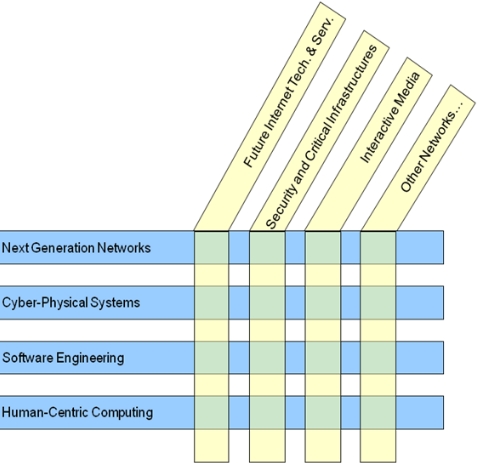
The Carnegie Mellon Portugal program launched four new innovation networks, whose goal is to consolidate and expand the successful cooperation among all partner institutions and industrial affiliates.

– Innovation Network on Security and Critical Infrastructure Protection (NET-SCIP)
url: http://net-scip.cmuportugal.org

– Innovation Network on Future Internet Services and Technologies (NET- FIT)
url: http://net-fit.cmuportugal.org

– Innovation Network on Services and Technologies for Interactive Media (NET-STIM)
url: http://net-stim.cmuportugal.org

– Innovation Network on Software Engineering (NET-SEI)
url: http://net-sei.cmuportugal.org/

__
EVENTS
For this purpose, three different thematic events sponsored by FCT, one for each innovation network, shall join corporate executives and members of the scientific community:

1) Innovation Forum on Security and Critical Infrastructure Protection (NET-SCIP), Coimbra, on the morning of Monday, February 22, 2010. read more

2) Innovation Forum on Future Internet Services and Technologies (NET- FIT) , Lisbon, on the morning of Tuesday, February 23, 2010. read more

3) Innovation Forum on Services and Technologies for Interactive Media (NET-STIM) , Lisbon, on the morning of Wednesday, February 24, 2010. read more

innovation networks graph The three networks shall build on the ongoing research and education activities of the Carnegie Mellon Portugal program and are envisioned to become active platforms for fruitful interactions between industry and academia.

The thematic events, which also feature the latest outcomes of the international partnership to the general public, are included in the visit to Portugal of the President of Carnegie Mellon University, Dr. Jared Cohon, and the Dean of Engineering, Dr. Pradeep Khosla, scheduled to begin on February 22, 2010.

Related Article: Portuguese Universities and ICT Companies Work Closer Together

Priberam Machine Learning Lunch Seminar: Blind Separation and Blind Deblurring of Natural Images

Priberam Machine Learning Lunch Seminar: “Blind Separation and Blind Deblurring of Natural Images”
Speaker: Mariana Almeida (IST/UTL, IT)
Venue: IST Alameda, Sala PA2 (Edifício de Pós-Graduação)
Date: Wednesday, February 2nd, 2011
Time: 13:00
Lunch will be provided

Abstract:
The thesis addresses two important nonlinear inverse problems in image processing: the separation of show-through and the bleed-trough mixtures and the blind deblurring of images. New solutions to cope with their high levels of indetermination are proposed. Two separation methods are developed for the first problem. In a first approach, the indeterminacy of nonlinear Independent Component Analysis (ICA) is reduced through the use of a physical model with only four parameters. Based on other properties, a wavelet-based method is also developed. This non-iterative approach performs space-variant non pixel-wise separation. Both techniques reach separation results competitive with those of other methods. Regarding blind deblurring, the technique that is developed does not impose strong restrictions on the blurring filter, overcoming the ill-posedness of Blind Image Deconvolution (BID) by initially considering the main image edges and, progressively, handling fainter and smaller ones. The BID technique is extended for deblurring shift-variant degradations in which the blurred image consists of two layers that were subjected to different degradations. The approach is successfully tested on several images, with a variety of synthetic and real-life blurs, both in shift-invariant and two-layer problems. The deblurring results are visually and quantitatively better than those obtained with other state-of-the-art methods.

Bio:
Mariana Almeida graduated in Electrical Engineering by the “Instituto Superior Técnico” (IST, the Engineering School of the Technical University of Lisbon), Lisbon, Portugal, in 2005. She also received the PhD degree in the Electrical Engineering Department of IST, in 2010. Her Ph.D. studies were developed in the field of blind image separation and deconvolution, under the supervision of Prof. Luís B. Almeida, at IT – Instituto de Telecomunicacões, Lisbon, Portugal. She is currently a post-doc. student of Prof. Mário Figueiredo and an invited Assintant Professor at “Instituto Superior das Ciências do Trabalho e da Empresa” (ISCTE – Lisbon University Institute), Lisbon, Portugal.

ICTI@CMU Orientation & Team Building Session

ICTI@CMU Orientation & Team Building Session
Date: Saturday, January 15, 2011
Time: 1:00 – 4:00 p.m.
P lace: Noble Manor Lanes, 2440 Noblestown Rd., Pittsburgh, PA 15205

Please Join ICTI@CMU Staff Members, New and Returning Ph.D., MS Students and New Exchange Faculty Members for the Spring 2011 Semester Orientation & Team Building Session.

Hors d’oeuvres will be served! The Orientation begins at 1:00 p.m with a welcome and program overview. Followed by Bowling, Food and Good Cheer!

For more information please contact: Nicole Hillard-Hudson at nhillard@andrew.cmu.edu
Office: 412.268.1728

Priberam Machine Learning Lunch Seminar: Resonance-based Signal Analysis

Priberam Machine Learning Lunch Seminar: Resonance-based Signal Analysis
Speaker: Ivan Selesnick (Polytechnic Institute of New York University, USA)
Venue: IST Alameda, Sala PA2 (Edifício de Pós-Graduação)
Date: Tuesday, January 18 th , 2011
Time: 13:00

Lunch will be provided

Abstract:
Numerous signals arising from physiological and physical processes are not only non-stationary but also posses a mixture of sustained oscillations and non-oscillatory transients that are difficult to disentangle by linear methods. Examples of such signals include speech, biomedical and geophysical signals. This talk describes the decomposition of such signals into ‘resonance’ components: A high-resonance signal is one in which oscillations are sustained; while a low-resonance signal is one comprised mostly of non-oscillatory transients of unspecified shape and duration. While frequency components are straightforwardly defined and can be obtained by linear filtering, resonance components are more difficult to define and procedures to obtain resonance components are necessarily nonlinear. The decomposition algorithm presented in this talk utilizes recent developments in signal processing, including sparse signal representations using SALSA and constant-Q (wavelet) transforms with tunable Q-factors.

Bio:
I received the BS, MEE, and PhD degrees in Electrical Engineering in 1990, 1991, and 1996 from Rice University, Houston, TX. I joined Polytechnic University in 1997, where I am currently an Associate Professor of Electrical and Computer Engineering. In 1997, I was a visiting professor at the University of Erlangen-Nurnberg, Germany. I received an Alexander von Humboldt Fellowship in 1997, and a National Science Foundation Career award in 1999. In 2003 I received the Jacobs Excellence in Education Award from Polytechnic University. As a PhD student I received a DARPA-NDSEG fellowship in 1991. My PhD dissertation received the Budd Award for Best Engineering Thesis at Rice University in 1996 and an award from the Rice-TMC chapter of Sigma Xi. I have been an associate editor of the IEEE Transactions on Image Processing (2002-2007) and of IEEE Signal Processing Letters (2007-2009). I am currently an associate editor of IEEE Transactions on Signal Processing (2009-2011) and an area editor for the same journal (2010-2011). I have also been a member of the IEEE Signal Processing Theory and Methods Technical Committee.

Workshop: Frontiers in Entrepreneurship research: Entrepreneurship, Innovation and Human Capital

Workshop: Frontiers in Entrepreneurship research: Entrepreneurship, Innovation and Human Capital
Date: December 17-18, 2010
Place: Católica Lisbon, School of Business and Economics, Lisbon, Portugal

Motivation
One of the major socio-economic trends since the 1990s has been the rise of entrepreneurshipvas a driver of innovation, competitiveness and economic development. One central aspect in the creation and growth of knowledge-based firms is the role played by the human capital of the entrepreneur. Human capital entails the stock of knowledge and skills that reside within individuals and that can be developed over time. This includes general human capital, which comprises formal education, and previous job-market experience. But it also entails specific human capital, encompassing prior experiences that might be more relevant for an individual to decide on engaging in the development of knowledge-based firms. For instance, entrepreneurial experience, top management experience, or previous work experience in the same sector where the new firm is being started are likely to endow individuals with knowledge and skills that are specific for the tasks required from a knowledge-based entrepreneur.

The last two decades have seen the emergence of encompassing data sources linking individuals and firms over time. Such data sets are rare and hard to access. These longitudinal datasets can be used to track the evolution of markets and individual firm performance as well as individuals’ professional and entrepreneurial experiences over time, allowing for the examination of their decisions and behavioral patterns in the labor market. Some of these longitudinal datasets match employees, employers, patents and their characteristics over time.

This workshop aims to present and discuss cutting edge work from leading researchers in the areas of entrepreneurship and innovation focusing on the role played by human capital in the entrepreneurial and innovation processes. Most papers will leverage new longitudinal databases, often in connection with other complementary sources of data.

Scientific Coordination:
• Rui Baptista, Instituto Superior Técnico, Universidade Técnica de Lisboa (IST-UTL)
• Steven Klepper, Social and Decision Sciences, Carnegie Mellon University (CMU)
• Pedro Oliveira, Católica Lisbon, School of Business and Economics (FCEE-Católica)• Francisco Veloso, Católica Lisbon, School of Business and Economics (FCEE- Católica) and Engineering and Public Policy, Carnegie Mellon University (CMU)
PROGRAM Friday, December 17, 2010
Welcome and Registration: 12:30 (Room 515 – 1st floor)
Opening Lunch: 13:00-14:30 (Room 515 – 1st floor)
Opening Public Session: 14:30 – 15:45 (Room 512 – 1st floor)
Chair: Francisco Veloso, FCEE-Católica and CMU

Welcome: Fátima Barros, Dean, Católica Lisbon, School of Business and Economics

Keynote speaker:
Maryann Feldman, University of North Carolina at Chapel Hill
“Dealmakers and the making of a High Tech Entrepreneurial Region”

15:45-16:15 Coffee Break (Executive lounge – 3rd floor)
16:15 – 18:30 Research Session 1 (Room 522B – 2nd floor)
Chair: Fernando Branco, FCEE- Católica
16:15-17:00 “Gender diversity and team performance: Evidence from a field experiment,” Mirjam van Praag, University of Amsterdam
Commentary: Francisco Lima, IST-UTL

17:00-17:45 “Spinoff Location: Agglomeration vs. Organizational
Reproduction: The Molds Cluster in Portugal,” Carla Costa, FCEE-Católica, IST-UTL and CMU
Commentary: Jolanda Hessels, Erasmus University Rotterdam

17:45-18:30 “Stars and misfits: Self-employment and labor market frictions,”
Peter Thompson, Florida International University
Commentary: Marco Vivarelli, Catholic University, Milan and Piacenza

Dinner: 20:00 (venue TBA)
Saturday, December 18, 2010 9:30 – 11:00 Research Session 2 (Room 522B – 2nd floor)
Chair: Pedro Oliveira, FCEE-Católica
9:30-10:15 “Business partnerships and the commercialization of inventions,”
Thomas Astebro, HEC Paris
Commentary: A. Miguel Amaral, IST-UTL

10:15-11:00 “Job hopping, spinoffs, and the mobility of US merchant semiconductor inventors,” Cristobal Cheyre, FCEE- Católica, IST-UTL and CMU
Commentary: Raquel Ortega-Argilés, IST-UTL

11:00 – 11:30 Coffee Break (Executive lounge – 3rd floor)
11:30 – 13:00 Research Session 3 (Room 522B – 2nd floor)
Chair: Francisco Lima, IST-UTL
11:30-12:15 “Organizational legacy and entrepreneurial firm performance,” Maryann Feldman, University of North Carolina at Chapel Hill
Commentary: José Mata, FE-UNL

12:15-13:00 “Entrepreneurship, the initial labor force, and the location of new firms,” Cristina Carias, FCEE- Católica, IST-UTL and CMU
Commentary: Andrei Villaroel, FCEE-Católica

13:00-14:30 Lunch (Room 529 – 2nd floor)
14:30 – 16:45 Research Session 4 (Room 522B – 2nd floor)
Chair: Rui Baptista, IST-UTL
14:30-15:15 “Financing entrepreneurship and the old-boy network incentive,” Simon Parker, University of Western Ontario
Commentary: José Corrêa Guedes, FCEE- Católica

15:15-16:00 “Do entry regulations deter entrepreneurship and job creation?
Evidence from recent reforms in Portugal,” Ana Venâncio, FCEE- Católica, ISTUTL and CMU Commentary: Sander Hoogendoorn, University of Amsterdam

16:00-16:45 “How does personal bankruptcy law affect start-ups?” Geraldo Cerqueiro, FCEE- Católica
Commentary: Andre van Stel, University of Amsterdam

Dinner: 20:00 (venue TBA)

Workshop: Identification and Risk Analysis in Software Project

Workshop: Identification and Risk Analysis in Software Project

CMU / UC PROFESSIONAL MASTER OF SOFTWARE ENGINEERING PROGRAM

Seminars on Software Development

Date: December 11, 2010, 10:00
Place: Department of Computer Science, Faculty of Science and Technology, University of Coimbra

The projects of software development are activities that are “based on uncertainty “. The development teams need to be able to anticipate potential hazards and react accordingly. Therefore, the Risk Management emerges as an essential tool to reduce potential damage in terms of cost, time, scope and quality. This seminar is oriented to the software engineers, team leaders and project managers who want to learn more on identifying and analyzing risks. The seminar will focus on defining thresholds for success, identification and characterization of hazard, as well as on foundations about mitigation techniques.

Agenda
· [1.5h] Identification and Risk Analysis in Software Project
· [0.5h] CMU | UC Master of Software Engineering

Target:
· Software Engineers
· Team Leaders and Project Managers
· Companies interested in participating in the program CMU | Portugal