Nine Faculty from Portugal are at Carnegie Mellon during the Spring

Nine Faculty from Portugal are at Carnegie Mellon during the Spring
Nine faculty from six different Portuguese universities are spending the 2011 Spring Semester at Carnegie Mellon University, under the Carnegie Mellon Portugal Faculty Exchange program. Since its inception, this program has had over 26 members who have sought to accomplish their goals in research and teaching.

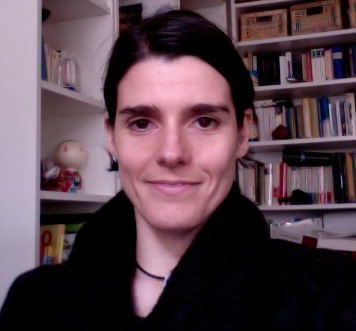
Ana Aguiar Ana Aguiar and Pedro Quelhas, from the Faculdade de Engenharia da Universidade do Porto (FEUP), have different goals. Aguiar will focus her research activities on communication aspects for vehicular ad-hoc networks (VANET), and on the preparation of future joint work. She will work closely with Peter Steenkiste, and will also collaborate in the undergraduate course “Introduction to Telecommunication Networks.”
Quelhas, on the other hand, will teach the class 42-540: Introductions to Biomedical Signal Processing in collaboration with Jelena Kovačević. In terms of research, Quelhas expects to explore redundant image transforms for texture characterization through the design of new feature extraction methods and subsequent texture classification using machine learning approaches. Pedro Quelhas faculty exchange
Barbara Pizzileo
Monchu Chen
Sergi Bermudez
The Universidade da Madeira (UMa) sent three faculty members to Carnegie Mellon this semester: Barbara Pizzileo, Monchu Chen, and Sergi Bermúdez i Badia. Pizzileo will take part as a member of several research activities in conjunction between Carnegie Mellon and UMa to explore the application of data mining and modeling tools for the development of an intelligent framework in the civil engineering field.

Monchu Chen wants to gain experience as part of training at Entertainment Technology Center (ETC), at Carnegie Mellon University, in order to replicate some of the courses at UMa.

Sergi Bermúdez i Badia will reinforce his collaboration with Daniel Siewiorek’s team to develop serious games and to use entertainment technologies in the context of motor rehabilitation. Badia expects that the exchange will also be used to visit other faculty members of diverse background, especially at the psychology department and robotics institute, to foster future multidisciplinary collaborations and possible project proposals for future calls.

Bruno Cabral, from the Faculdade de Ciências e Tecnologia da Universidade de Coimbra (FCTUC), intends to undergo training and obtain the core competences necessary to integrate the faculty body of the dual degree Professional Master in Software Engineering. As co-PI of the AEminium project, that seeks to create a platform which builds in concurrency by default, Cabral thinks that this stay at Carnegie Mellon will also provide the opportunity to follow and contribute to the research work conducted at Carnegie Mellon in respect to this project. Bruno Cabral
Rodrigo Ventura Rodrigo Ventura, from Instituto Superior Técnico da Universidade Técnica de Lisboa (IST/UTL), is collaborating on cognition and learning for humanoids robots areas, building upon his previous and ongoing research at ISR in these topics. During the semester he will integrate the faculty team of the graduate course on Artificial Intelligence (15780), coordinated by Manuela Veloso, professor in the computer science department, at Carnegie Mellon.
Carla Ferreira, from Faculdade de Ciências e Tecnologia da Universidade Nova de Lisboa (FCTUNL), and Susana Sargento, from Universidade de Aveiro, will stay at Carnegie Mellon for short periods. Ferreira will stay at Carnegie Mellon for two periods: from February 15 to May 30, and from July 1 to July 31. During these periods, Ferreira will attend the “Programming Language Semantics” course with Steve Brooks, from Carnegie Mellon, and will work as a teacher assistant on some of the classes. This course is related to one offered by FCTUNL, in the context of the dual degree Ph.D. program in Computer Science. Carla Ferreira
Susana Sargento During the exchange period, Sargento will work in both departments of computer science and electrical and computer engineering at Carnegie Mellon. She will be engaged in the “Computer Networks” course that is to be taught by Peter Steenkiste, from Carnegie Mellon. She looks also to evolve her collaboration with Steenkiste and Ozan Tonguz, both in the framework of the Carnegie Mellon Portugal program and in the co-advisory of the Ph.D. students André Cardote and André Reis.

January 2011

First Start-up Launched Within the Partnership

First Start-up Launched Within the Partnership
FeedZai is the first start-up to be created as a result of the Carnegie Mellon Portugal Program, funded by the Portuguese Fundação para a Ciência e a Tecnologia (FCT). Paulo Marques and Pedro Bizarro, two faculty members of the Faculdade de Ciências e Tecnologia da Universidade de Coimbra (FCTUC), and Nuno Sebastião, product manager at the European Space Agency (ESA), embarked on the adventure to create a new startup specialized in processing large volumes of data with low-latency producing actionable information in real-time.

Paulo Jorge Pimenta MarquesPedro Gustavo BizarroNuno Sebastião
(left to right) Paulo Marques, Pedro Bizarro and Nuno Sebastião

The idea of creating FeedZai came from two different vectors. “On one hand both me and Pedro Bizarro where having very good results in terms of research in real-time data processing at the university. Since both of us had a number of projects with industry over the years that lead us to recognize that there was an important opportunity available in this domain,” explains Paulo Marques. He further added that “Nuno Sebastião was just comple-ting his MBA from the London Business School, being interested in returning to Portugal after having work at the European Space Agency for almost a decade.” FeedZai was the result of several conversations between the three friends, and the common goal of “creating a company and a product that could have a global reach and impact.” The name is connected to the area, because “Feed” comes from “data feeds,” which is what company processes, and “’Zai’ is simply because it’s cool.”

This company brought to the market “a revolutionizing product in terms of real-time data processing,” which allows companies to look into their data in real-time, as things are happening, and understand in detail what is going on. Paulo Marques gives examples: “it allows a telecommunication operator to know in real-time how its network traffic is behaving and if it is following a ‘normal’ pattern or not; it allows an electrical utility company to understand in detail the load that is taking place in the network and if there are ‘unexpected leaks’ occurring. In a sense, we take the massive amounts of data that companies are currently generating and are able to produce real time intelligence over that.” Feedzai website

“The partnership with Carnegie Mellon University has been very important in this process. I would say even critical,” says Paulo Marques adding that “being adjunct professors from Carnegie Mellon University gives us, me and Pedro Bizarro, a high degree of credibility which is quite important when trying to convince a company to try out a new technology.” On the other hand, Marques emphasizes that there are a number of activities that the Carnegie Mellon Portugal program has been promoting, where this startup have been present, which opened FeedZai to new markets. For instance, the ‘Smart Energy Workshops’ organized by the program allowed this company to reach to the energy market and to start working on this domain.

Two years after the creation of FeedZai, Paulo Marques says that “this last year has been quite intensive.” The FeedZai team “has been furiously developing our product, which is called FeedZai Pulse, which at the same time working with existing customers and potential future customers. In terms of markets we are in three different verticals: energy, banking and telecommunications.” At present, the FeedZai team developed a complete energy monitoring solution for one of their customers, and has a number of projects currently ongoing. FeedZai team is “processing in real-time bank transactions for two different costumers, and are doing real-time monitoring of telecommunication data for another.” Currently, they have 12 engineers working full-time and a lot of work to tackle. “It has been a very intensive year!”

January 2011

Paper Reveals that Firm Size and Growth is Mediated by the Industry Conditions

Paper Reveals that Firm Size and Growth is Mediated by the Industry Conditions

André Filipe Abreu Regateiro André Regateiro, a dual degree Ph.D. student in the Technological Change and Entrepreneurship (TCE) program, is studying the connection between firm size and job creation. During his studies he discovered that “the relationship between firm size and firm growth is mediated by the industry conditions,” because “in declining or low-growth industries smaller firms grow faster than larger ones but that relationship reverses for faster growing industries.”

Policy makers typically focus on Small and Medium Enterprises (SME) as the engines of economic growth and job creation. Examples of this can be seen in practically every job related to legislation of most countries. Regateiro’s work intends to “put this reasoning to the test.”

Regateiro is working with a detailed Portuguese database, which covers the entire Portuguese economy from 1986 to 2008 and provides details on both firms and workers. Through this database, he found that “the relationship between firm size and firm growth is not such a simple story as saying that small firms grow faster.” In particular, Regateiro found that the “relationship between firm size and firm growth is mediated by the industry conditions: In declining or low-growth industries, smaller firms grow faster than larger ones but that relationship reverses for faster growing industries.”

Regateiro says “this effect seems to be caused by a greater ability of larger firms to adapt to the economic climate. Small firms are always job creators while large firms switch from job destroyers to job creators as industry conditions improve.” One of the main impacts of the research that Regateiro is carrying out is that it could “force the government to rethink on how we support job creation.”

“We used to think that small firms grew faster, now we know that it just happen in low growth industries,” says Regateiro. “Now we know that large firms are also very important creators of new jobs.”

André Regateiro is co-advised by Rui Baptista of Instituto Superior Técnico, Universidade Técnica de Lisboa (IST/UTL); Lee Branstetter and Serguey Branguinsky, also of Carnegie Mellon University. He says that the amount of information on any academic subject out there is staggering. Therefore, “the advisors role is to direct you, as quickly as possible, to the knowledge frontier, showing you how you can make your own contribution,” says Regateiro adding that “my advisors have been great in that role.” Regateiro also emphasized the different background of his advisors, which help him to get “different perspectives on the subject.”

In the future, Regateiro plans on getting a job at a University “that has a strong focus on research.”

Full article available at http://www.heinz.cmu.edu/research/398full.pdf

November 2010

Two Portuguese Ph.D. Students Pass Qualifier Exam and Comment on their Experience

Two Portuguese Ph.D. Students Pass Qualifier Exam and Comment on their Experience
The qualifier exam evaluates the student’s general knowledge and preparation for undertaking a doctoral program in his or her chosen area of study. Recently, two Portuguese Ph.D. students in Electrical and Computer Engineering (ECE), under the Carnegie Mellon | Portugal Program, took their qualifier exam after only two months of study at Carnegie Mellon University. Jerónimo Rodrigues and João Mota were encouraged to take the exam by their professors, and they made it through with good results.

“I cannot say the qualifier is a pleasant experience,” says Mota. “In ECE, [the exam] consists of three people trying to find flaws either in your research or in your background knowledge.” In Mota’s case, the adjudicators focused on the applications of his research, which is to develop distributed algorithms that are as fast, or faster, than the centralized ones. More specifically, compressed sensing is a new paradigm in the acquisition of signals that states that it is possible to acquire signals in an already compressed form [in the usual paradigm the signals are compressed only after their acquisition]. This theory has countless applications.” Mota says that practical application is the weakest part of his research because he is doing “something that nobody else had tried before.” Mota’s goal is “to give my contribution to the theory of compressed sensing.”
____________ “Perhaps the most important aspect of the Carnegie Mellon | Portugal Program is the interaction with the faculty and students of both universities,” says Mota.
______
Rodrigues says that he could have improved his score if he had taken the exam at a later date, but he is glad to have gotten it out of the way. “It is good to know early if we meet the requirements that Carnegie Mellon sets for a student,” he says. Rodrigues’ work involves “a Vision algorithm compiler, for the Honda industries,” the major goal of which is “to automate the process of inserting parts onto an assembly line.”

Mota and Rodrigues both have some advice for their colleagues who will take the qualifier exam. Their first tip is to know the requirements of the qualifier and what is expected of the student who is taking the exam. “You should know how to give a general idea,” says Mota, “not only of the proofs of your results, but also of the proofs of other people’s results that you use in your work. It is also important that you know the definition of all the important words you say and write.”
__________ Rodrigues encourages students to meet frequently with both advisors, from Portugal and from Carnegie Mellon University.
__________
As a final suggestion, Mota says, “don’t panic. The goal of the qualifier is to see if we can represent Carnegie Mellon at a scientific conference. So, expect the committee to be aggressive [in the nature of the questions]. It is their role to question every detail of your work and this might be uncomfortable to you. Instead of panicking, try to get out of that area of discomfort graciously, by leading the conversation to where you want.”

January 2010

Faculty Exchange Increases the Professional Relations with CMU’s Researchers

Faculty Exchange Program Increases the Professional Relations with CMU’s Researchers

Rui Maranhão Rui Maranhão is an assistant professor at Faculdade de Engenharia da Universidade do Porto (FEUP) who joined the Faculty Exchange program to spend the fall semester at the Carnegie Mellon University’s School of Computer Science. Maranhão found out about the Carnegie Mellon Portugal Program, and specifically about the Faculty Exchange program, when he started working at FEUP in September 2009.

“Knowing the reputation of Carnegie Mellon University in my teaching/research domain (most of computer technology was pioneered at CMU), I found that this was a great opportunity for me to work and seek partnerships in one of the most renowned universities in the world,” Maranhão says. Maranhão’s main goal in joining the program “was to develop a professional, strong relationship with well-known academics that would lead [him] to joint participation in future research projects, joint scientific publications, and co-advise Ph.D. students.” Maranhão also says that he was “attracted by the fact that the Faculty Exchange Program would give me the opportunity to be involved in a teaching team.”

Maranhão has been at Carnegie Mellon University since August 2010. He says that his experience “thus far has been excellent, and overly rewarding,” adding that “besides having the opportunity to meet (e.g., to discuss possible directions for joint research projects) world class researchers.” His stay at CMU is giving him “the opportunity to attend inspiring seminars/ lectures not only by researchers from CMU and other institutions but also by people from industry.”

Currently, Maranhão is a part of the teaching team for the undergraduate course “Foundations of Software Engineering,” which is a core course for students completing a minor in Software Engineering . The teaching team also consists of Jonathan Aldrich and William Scherlis, who are faculty members at CMU. Maranhão also attends courses for the Masters of Software Engineering to get insights on how to improve the courses he teaches at FEUP.

Maranhão is involved in Carnegie Mellon’s ABLE Project’s Rainbow research group, led by Professor David Garlan. This research project aims to build intelligent, self-healing systems that are robust to software faults (also know as “bugs”).

“We seek long-term collaboration under this project,” says Maranhão, “including the proposal of dual Ph.D. thesis projects, as well as a submission of a research proposal (either to NSF or FCT).” When he returns to FEUP in December 2011, Rui Maranhão hopes to bring “the good teaching practices” which he experienced while at CMU. Furthermore, this experience helped him to strengthen the professional relations with CMU’s researchers and professors. “Hopefully this will be the beginning of co-supervision of research projects and involvement in future research .” Maranhão says.

December, 2010

First Semester of the Incoming 2012 Entertainment Technology Class of the Madeira Interactive Technologies Institute

First Semester of the Incoming 2012 Entertainment Technology Class of the Madeira Interactive Technologies Institute
by Michelle Macau*

Michelle Macau This is the first semester of the incoming 2012 MET class of the Madeira Interactive Technologies Institute (MiTi) of the Universidade da Madeira. The model for the MET program in Madeira follows that of Carnegie-Mellon’s Entertainment Technology Center, a project not classroom-based, curriculum. The first immersive semester, affectionately known as “boot camp” (named after the initial intense training for recruits in the Armed Forces), is when the students take most of their classes. These include the four core courses: Improvisational Acting, Visual Story, Building Virtual Worlds and ETC Fundamentals.

The first immersive semester, affectionately known as “boot camp” (named after the initial intense training for recruits in the Armed Forces), is when the students take most of their classes. These include the four core courses: Improvisational Acting, Visual Story, Building Virtual Worlds and ETC Fundamentals.

Though the model is similar, at MiTi, the schedule is a bit different. The students are taking two core courses, this fall 2010 semester, and two electives. They will take the other two core courses at the ETC in Pittsburgh in the spring 2011. My purpose this semester in Madeira, is to teach Improvisational Acting and ETC Fundamentals and prepare the students for their next semester at CMU in Pittsburgh. Improvisational Acting focuses on non-linear narrative and team building. It was Ed Catmull, President of Pixar Animation Studios, who suggested teaching Improvisational Acting to ETC founders, Dr. Donald Marinelli and Dr. Randy Pausch, in 1998. One of the reasons is that Improvisational Acting teaches teamwork. Knowing how to work well in teams is essential for anyone in the entertainment technology business. Teams in this field are comprised of people from various backgrounds and cultures…engineers and programmers working with artists, writers and designers. In order to work together successfully communication and understanding each other is key. Improvisational Acting teaches how to work successfully together in teams.

Another reason is because Improvisational Acting teaches about non-linear storytelling, how to create characters and putting characters and story together. This area of Improv also supports the second core course being taught in Madeira, ETC Fundamentals. In ETC Fundamentals MET students learn the craft of Storytelling. MET Madeira 02

They understand the “Climactic Plot Structure”, the Poetics of Artistotle (Plot, Character, Diction, Theme, Melody and Spectacle) and the aesthetic principles of interactivity as defined by Janet Murray in her book Hamlet on the Holodeck…Immersion, Agency and Transformation. They also learn the Hero’s Journey as defined by Joseph Campbell and interpreted by Christopher Vogel and how to apply it to creating and analyzing Story.

In addition, MET’ers go on field trips, or “adventure modules.” This gets them outside and reintroduces danger to their lives. The trips are a bonds them with their peers as they learn to interpret and analyze the experience. This dissection enables them to understand the nature of the events and why they are enjoyable and entertaining. Not only do they write their analysis, but they also make oral presentations in class in order to develop and practice presentation skills. This is all done in preparation for their client-based projects in later semesters.

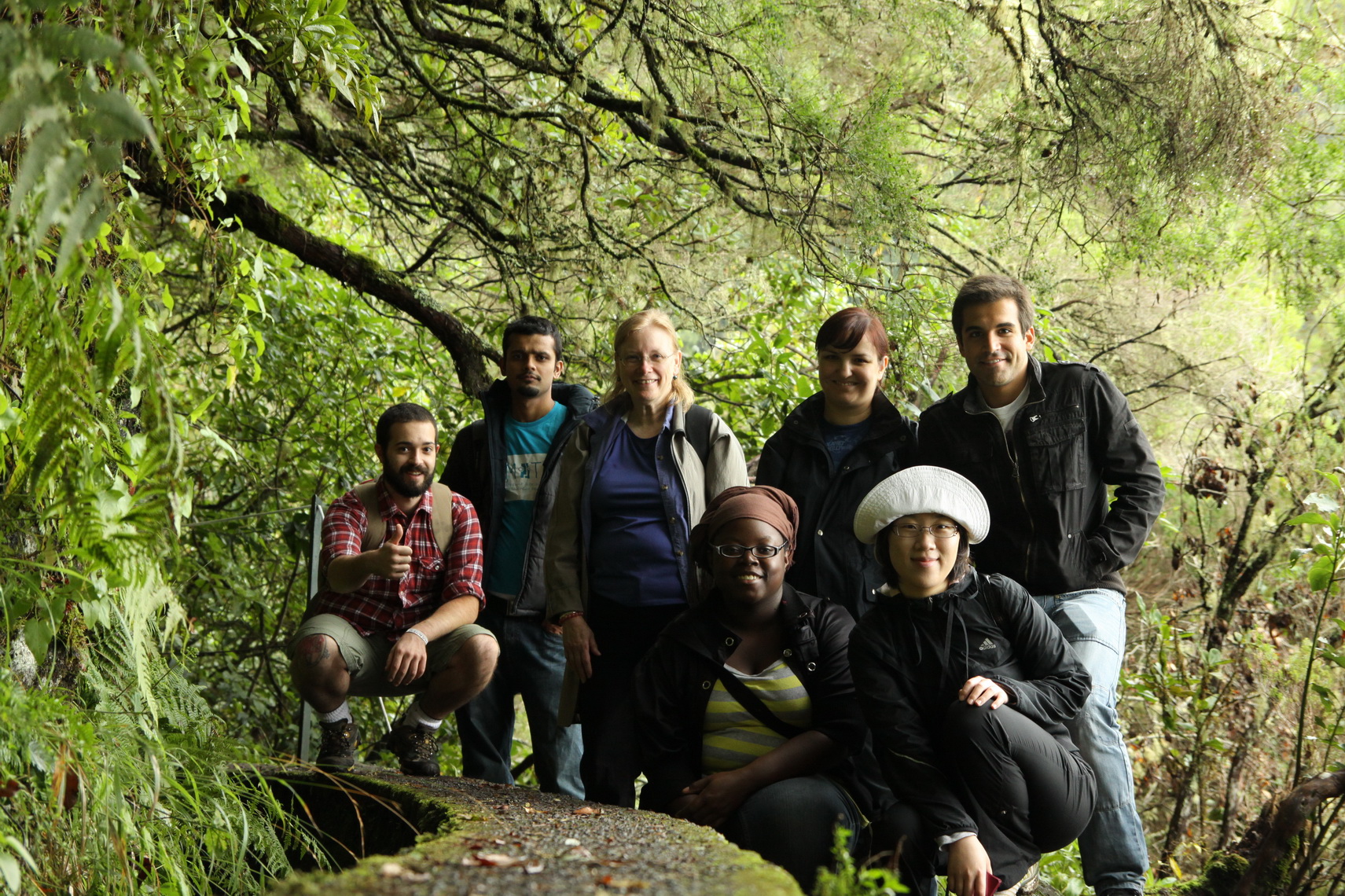
The adventure modules we have taken have given all of us the opportunity to explore and experience the variety and uniqueness that is Madeira. We have traveled to the north of the island, and walked the levada at Queimadas, near Santana, to Caldeirão Verde. We experienced the sudden change in weather of the island when heavy rain and fog descended forcing us to turn back. A visit to Parque Tematico do Madeira, a theme park comprised of several pavilions depicting the discovery, history and environment of the islands and offering a variety of rides and experiences, highlighted the culture of the island.

MET Madeira 2010 01 The weather also played a part in one of the adventures being cancelled due to high winds and rough seas – swimming with the dolphins would be best scheduled in the summer and early fall. We did swim in the ocean at the public pool in Lido enjoying the coral formations, fish, sunshine and warmth that only Madeira offers in November.

We played “tourist” and took the Telefericos da Madeira (cable car) in Funchal to Monte where we had a 360-degree view of the city and the surrounding areas. In Monte we visited the location where a chapel was swept away by the storms earlier in 2010 and explored Monte Church. For many of the students, it was their first time in a Catholic Church. Again, the weather, rain and fog was ever present, but this time it did not stop us from travelling by the basket toboggan down Monte Road back to Funchal.

These experiences are then analyzed by the students in terms of story structure and also focuses their understanding on the level of entertainment the experiences offer, what and how technology is used (if any), why tourists pay money to have these entertainment experiences, and finally, if given the opportunity, suggestions of how these experiences might be enhanced or changed. For me personally, it has been wonderful to experience life in Madeira and Funchal specifically. The people, food, and the always-present sea and mountains have made it a glorious place to live and work.

* Theater director, actor, administrator and teacher at the Entertainment Technology Center, Carnegie Mellon University

December, 2010

Logica Hires Alumni and Launches New Lab in Madeira

Logica Hires Alumni and Launches New Lab in Madeira
André Dória and Nuno Laginha are two alumni from the dual degree Professional Master of Human-Computer Interaction program, offered by the Universidade da Madeira and Carnegie Mellon University. Both finished their Professional Master in December 2009, and were hired by Logica a few months later to develop a new business area in Madeira: Logica Service Design Lab.

Before joining the Professional Masters program, Dória and Laginha studied diverse areas. Dória is from Software Engineering (Universidade da Madeira) and Laginha is from Communications and Multimedia Design (Instituto Politécnico de Coimbra). This multidisciplinary focus is one of the most important advantages of the Professional Master of Human-Computer Interaction, which joins people from different professional areas and cultures and combines their knowledge and experiences.

“The multidisciplinary and diversity of cultures of the participants in this master ensured that the growth of my professional skills would be accompanied by a personal growth,” said Dória, “which allows me to be a good employee and a “team player.”

A few months after finishing the degree program, Dória and Laginha went to an interview in Logica. “During my interview for the job,”said Dória, “I was impressed with the way that Logica looks at service design and the importance of human-computer interaction. I felt very proud going from a Professional Master to a company that works in the areas of utilities, telecommunications, mobility and industry.”

Currently, Dória and Laginha are consultants in the company. They are also developing a new Research and Development business area: Logica Service Design. They work on the implementation of procedures of usability, contextual research, and finding new opportunities for consumer services, interface design, and prototyping of innovative concepts that can be de-monstrated to partners and customers from Logica. “Our intervention is transversal to the different business units,” said Laginha, “however being more engaged in the area of energy and ‘Utilities.’”

For Dória his experience in the professional master was “intense and challenging,” because it gave him the opportunity to work in an area that he admired, and also to work with the best of the best. For Nuno Laginha, this experience was “absolutely fantastic! I experienced moments which will stay in my memory forever.”

To be a Carnegie Mellon Portugal Program Alumnus…

Nuno Laginha “I am very proud to be a Carnegie Mellon Portugal Program alumnus because we belong to an “elite” of Portuguese students who have successfully completed a top Masters worldwide. This is very gratifying and reinforces the value of dedication and effort undertaken. This experience was very rewarding, from the contact with colleagues and teachers of different nationalities and backgrounds, from whom I learned a lot, to the unique opportunity to study in one of the world’s best universities. I also emphasize the spirit of mutual help, friendship and professionalism among colleagues, in particular the Portuguese.” – Nuno Laginha, Alumni of the MHCI program
Carlos Doria “To be an alumni of the Carnegie Mellon Portugal Program is to be a part of a group of people who went through similar experiences. I perso-nally feel that I won, that I crossed barriers and that I belong, with all the credit, to a group of extraordinary people.” – André Dória, Alumni of the MHCI program

September, 2010

MSE Program Officially Welcomes New Program Coordinator

MSE Program Officially Welcomes New Program Coordinator
In March 2010, the Carnegie Mellon Portugal Professional Master of Software Engineering (MSE) program officially bid farewell to former Program Coordinator Paulo Marques and welcomed Marco Vieira to the helm. In a farewell letter, Marques said, “These last three years were extremely intense, with immense challenges as well as successes.”

Marques has been with the Carnegie Mellon Portugal Program since day one. In 2007, he was the first Portuguese faculty member of the Program to spend time at Carnegie Mellon, an exchange which he says “had a profound effect on me, both at a personal and at a professional level.” Through his involvement with the Program, he was able to forge personal friendships and research contacts with many of Car-negie Mellon’s faculty and staff, as well act as a liaison between the Universidade de Coimbra (UC) and Carnegie Mellon.

“It was a very enriching experience to have contact with the many different cultures present at CMU,” Marques said, “which are so different from our European [culture].”
According to Marques, the relationship between Carnegie Mellon and Portugal “has grown stronger and deeper.”

“The relationship is very tight and, in fact, quite interdependent,” he said. “Work being done on-site at Carnegie Mellon University is daily being used in Coimbra and vice-versa. That involves a great deal of trust.”

The MSE program provides opportunities for those involved to work with top-level faculty and staff from both Universidade de Coimbra and Carnegie Mellon. It has led to the introduction of new advanced degrees in Software Engineering in Portugal, as well as allowing industry professionals to tap into university research and knowledge base.
“I really believe that the Carnegie Mellon Portugal Program has a big impact on universities, industry, and the society at large,” said Marques. “I was the first volunteer, […] because I believe in it. I believed we are changing the world together.”

The coming year will see Marques on sabbatical, focusing on the Carnegie Mellon Portugal Aeminium research project (for which he serves a Principle Investigator), updating his book on software development in C# and .NET, and growing his spin-off company FeedZai.

The sabbatical is an opportunity afforded to faculty in Portugal every seven years, one that Marques did not want to say no to, despite the certainty that he would not have enough time to run the program. The trade-off? Saying goodbye to the program that he had seen from infancy to fruition. However, Marques leaves with the belief that this change will benefit the program in the long run. “It makes sense to let someone take the helm and ensure that the MSE program enjoys at least as much success, if not more, as it has in the last three years,” he said.

Vieira, for his part, is no stranger to the MSE program nor to Marques’ work. The two were colleagues during their undergra-duate years and worked together in the same Software and Systems Engineering group. They have collaborated on research projects, as industry consultants, and as educators.

Vieira has taught in the MSE program since the first year and was one of the first UC faculty members to go to CMU for training and certification. “Marco [Vieira] is one of the best researchers and teachers I know,” said Marques. “I think that the MSE program and the partnership are in great hands!” Vieira sees this new position as “a huge challenge,” but he is clear about his goals. One, perhaps the most obvious, is to “guarantee the continuity of the work performed by Paulo Marques,” with whom Vieira credits with the program’s success. “Paulo did extremely good work in implementing and coordinating the Program,” said Vieira. “He should be held responsible for the current success of the MSE program in Portugal.”

The future success of the program, however, will lie in its ability to garner recognition from other countries and to draw students from those countries. Vieira sees this as an important goal because the Portuguese software development market is small. The program rides on its affiliates’ capacity for software development. Thus, internatio-nalization will be a vital component to the lasting success of the MSE program, and yet it is one that has remained somewhat elusive. Attracting foreign students can be difficult, Vieira said, even more so because of the current economic situation.

“I hope I’ll bring new ideas and fresh vision to the MSE program,” said Vieira, who remains determined to ensure the program’s success. Vieira is an expert on experimental dependability and security assessment and benchmarking.

His research interests are in robustness assessment and improvement in Service Oriented Architectures (SOA), fault injection, security in database systems, software development processes, and software quality assurance. He has authored and co-authored of more than 60 papers in refereed international conferences and journals in these subjects.

September, 2010

FCT Funds 12 New Carnegie Mellon Portugal Research Projects

FCT Funds 12 New Carnegie Mellon Portugal Research Projects
In September 2010, the Portuguese Fundação para a Ciência e a Tecnologia published the results of the Second Call for Research and Development Projects, under the Carnegie Mellon Portugal Program.

The independent evaluation panel analyzed 22 projects and selected 12 to be funded by this partnership. The evaluation panel included Professor Sir John O’Reilly (chair), Professor Luigia Carlucci Aiello, Professor Tariq Durrani and Professor Joel Moses. These projects will be carried out during the next three years.

The research projects funded under this second call converge on the strategic areas of the Program, including Software Engineering for Large Scale Systems, Cyber-physical Systems for Environmental Intelligence, New Generation Networks and Resilient Operations in a Network Environment, and other areas related to Information and Communication Technologies (ICT).

At this time, the Carnegie Mellon Portugal Program is supporting the development of 22 research projects. Each project includes at least two research institutions in Portugal, one research group at Carnegie Mellon and one Portuguese company. A financial commitment from the industrial partner is expected, which can take many forms from direct funding to man power or prototy-ping. The impact of these projects will be measured by the successful deployment of research prototypes and the adoption of new services by companies and by building successful partnerships between industry and academia.


Main Areas

Project Title

Portugal Principal Investigators

Carnegie Mellon University Principal Investigators

Software Engineering for Large Scale Robust
Assuring Dependability in Architecture-based Adaptive Systems Rogério Neves de Lemos
(FCT/UC)
David Garlan (CMU)
ATTEST: AlgoriThms and Tools for reasoning about dEpendable SysTems João Paulo Silva
(INESC ID / INESC / IST/UTL)
Edmund M. Clarke (CMU)
Affidavit – Automating the Proof of Quality Attributes for Large Scale Software Architectures Mário Zenha Rela
(FCTUC)
David Garlan
(CMU)

Cyber-physical Systems for Environmental Intelligence
Novel information processing methodologies for intelligent sensor networks João de Freitas Xavier
(IST/UTL)
Bruno Sinopoli
(CMU)
Cyber-Physical Systems Technologies for Energy-Optimized Data Centers Eduardo de Médicis Tovar
(ISEP/IPP)
Raj Rajkumar
(CMU)
MAIS-S: Multiagent Intelligent Surveillance System Francisco Saraiva de Melo
(INESC ID / INESC / IST/UTL)
Manuela M. Veloso
(CMU)
SELF-PVP: Self-organizing power management for photo-voltaic power plants Vítor Grade Tavares
(INESC Porto / FEUP)
Shawn Blanton
(CMU)
Toward Dynamic Monitoring and Decision (DYMONDS)–Based Smart Distribution Systems Luis Marcelino Ferreira
(IST/UTL)
Marija Ilic
(CMU)

New Generation Networks and Resi-lient Operations in a Network Environment
NeTS: Next Generation Network Operations and Management Ricardo Santos Morla
(INESC Porto / FEUP)
Hyong Kim
(CMU)
TRONE – Trustworthy and Resilient Operations in a Network Environment Paulo Veríssimo
(FFC / FC/UL)
Priya Narasimhan
(CMU)

Other Areas Related to ICT
The Role of ‘User Innovators’ in the Development of Telecom Products and Services Pedro Mendes Oliveira
(UCP)
Francisco Veloso
(CMU)
Innovation and the Global Economy: An investigation of critical challenges for Intellectual Property, Strategy and Policy in IT and beyond Fernando Ribeiro Branco
(UCP)
Lee Branstetter
(CMU)

More information available at https://cmuportugal.org/tiercontent.aspx?id=130.