Carnegie Mellon Portugal Program welcomes students to the new academic year with the 2017 Orientation Day

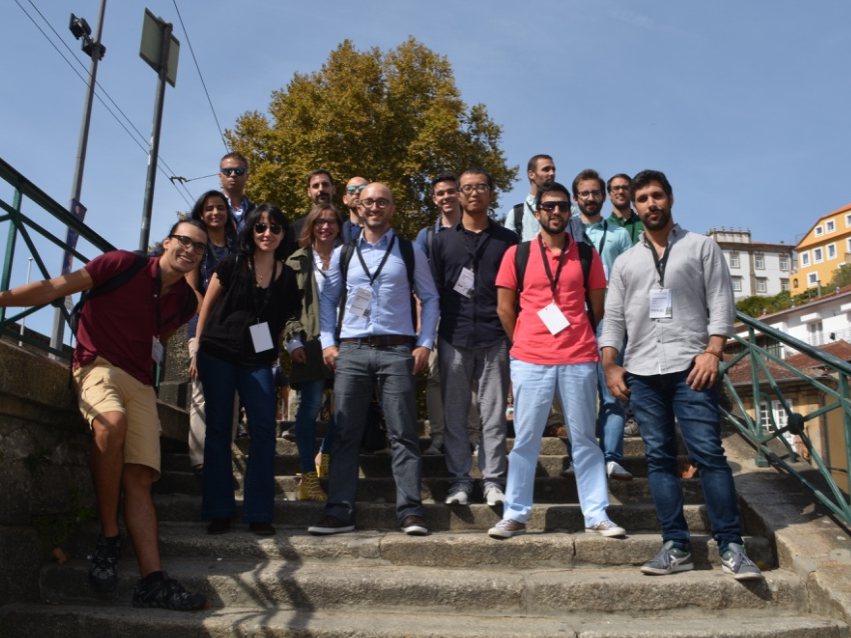
OD2017_group_photo

The CMU Portugal Program held its annual Orientation Day event on September 30, to welcome the new students and to allow the community to share experiences and network, while having fun. Almost 20 guests participated in the day-long activities that began close to the Douro river, included a tram car and a 5D Movie experiences and ended at INESC TEC.

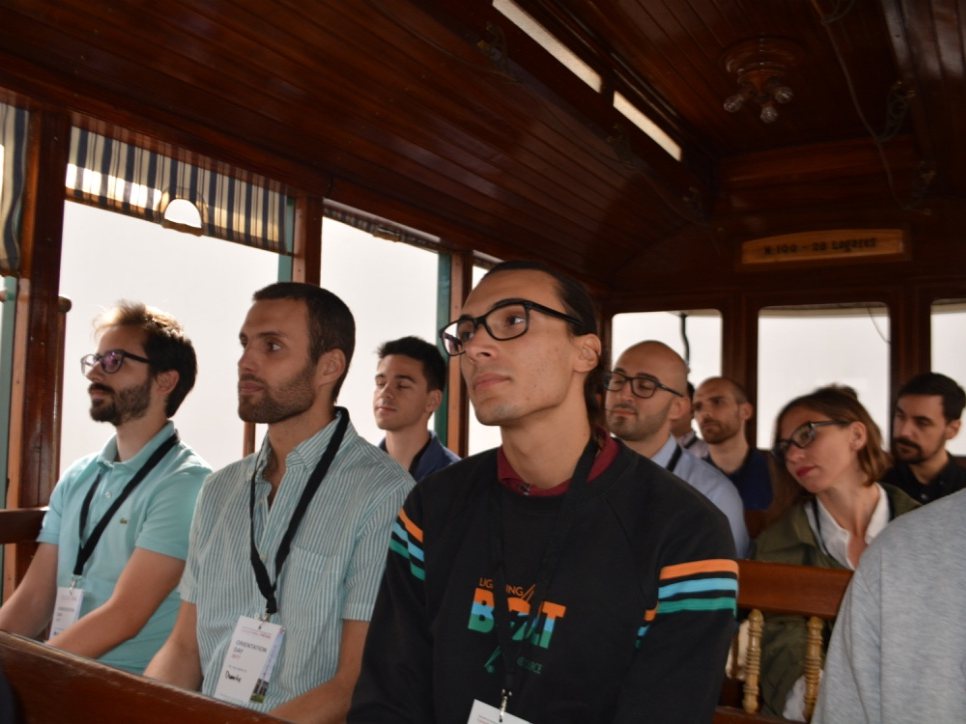
The day started, as is the format of the Orientation Day, with a recreational activity, that this year took place at the Museu do Carro Eléctrico, a museum dedicated to Porto’s public electric trams, detailing their history and evolution to the present day. It started with an introduction to the participants, followed by a visit with a knowledgeable museum’s tour guide that ended with a tram ride along the scenic river-side.

Yet another activity was planned, one to give students the “birds’ eye view” of the city: a 5D movie experience, featuring a sightseeing tour of Porto from a bird’s perspective, with dynamic motion seats and sensations like water spray, wind and aromas, accompanying a 10-minute 3D film.
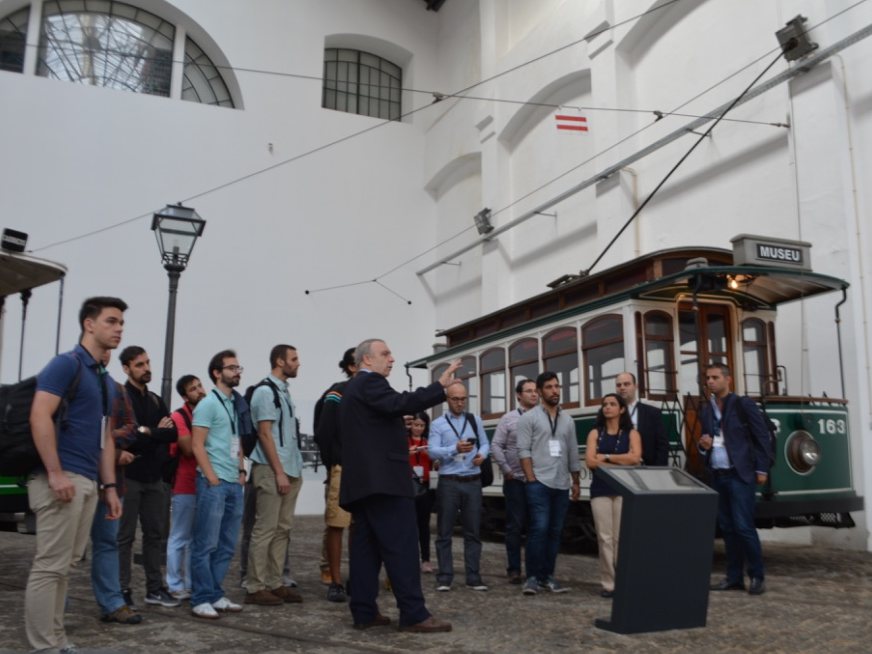
OD2017_museum OD2017_tram_students
OD2017_tram_inside OD2017_Alfandega

The day continued at INESC TEC, located in the campus of the Faculdade de Engenharia da Universidade do Porto (FEUP), where lunch was served in a casual buffet-style, so that all could network before the afternoon sessions.

Starting the second part of the day, a brief welcoming session by Professor João Claro and Sara Brandão took place with an overview of its history and its instruments, and ended with a presentation on student matters, dedicated to the new members of the community. The session also had a brief introduction of Professor Rodrigo Rodrigues, from Instituto Superior Técnico, as one of those responsible for the Program’s next phase.

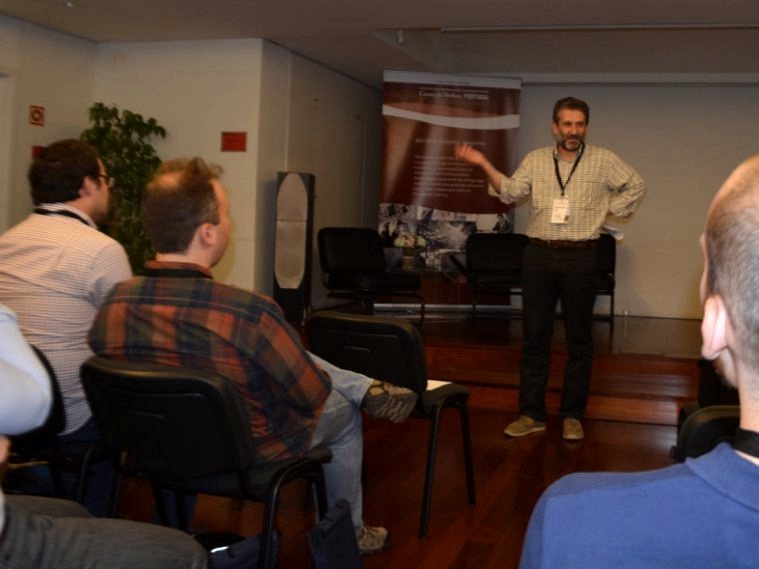
To address the experience of the dual degree doctoral students, a panel of two current Ph. D. students, Luís Pinto (ECE) and Manuel Loureiro (EPP), and alumna Carla Costa (TCE) held an interactive session with all participants. They shared their dual program experiences, to give the new students an idea of what a doctoral degree spanning two continents can be like. First, Luís and Manuel talked about their experience so far, and Carla talked about the memories of her doctorate, from a personal point of view. Then, they opened the floor to questions from the audience, where the group talked about their concerns and challenges, in what was an opportunity for sharing and connecting over a common journey.

The last session of the day focused on the Alumni Chapter of the Ph. D. students and the Master students’ programs and was presented by their representatives, Ricardo Marques and Miguel Duarte, respectively. They shared the stories of the communities, groups that offer support in many ways to students and graduates, and keeps the bond among all that have participated in the educational programs.

The achieved goal of the event was to give the opportunity to the students to learn more about the partnership, its education programs, and also about the Alumni Chapter.

The orientation day event has become a tradition of the CMU Portugal Program, perhaps the most informal of the Program’s event calendar but also one of the most valued. The balance of the day with, on one hand, experiencing the recreational activities and sharing moments and on the other hand, being briefed on the program in a light way and in a relaxed environment, is appreciated by all involved.

This day is often the kick-off of activities for dual degree Ph.D. students, that typically spend two years in CMU and three years in Portugal, during their doctorate. This a demanding time for students, with a tight academic schedule and many professional challenges, designed to stimulate growth in all areas. With this welcome, the leadership and staff try to adjust expectations and direct students to the Program’s assets in supporting them in this phase, such as the alumni, both directly and through their chapters.
OD2017_JC OD2017_Alumni_chapter

October 2017

“My Ph.D. was very challenging, but immensely rewarding” – interview with Shaolong Liu

Shaolong Liu

Shaolong Liu started his Ph. D. in the 2012/2013 academic year, in Electrical and Computer Engineering. He developed his work with advisors Prof. Jorge Fernandes, from Instituto Superior Técnico in Lisbon and Larry Pileggi, at the Carnegie Mellon’s Electrical and Computer Engineering Department. He shared with us his thoughts on the dual degree Ph. D. experience, now that he is already working as design engineer.

CMU Portugal – You just began your professional career, what are you working on?

Shaolong Liu – I am an analog design engineer at Analog Devices. We design, manufacture, and market a lot of high performance analog, mixed-signal, and digital signal processing integrated circuits, that are used in almost all kinds of electronic equipment.

CMU Portugal – Does your work align with your research interests?

Shaolong Liu – Yes, very much. I was already interested in analog/mixed-signal circuit design, ultra-low power design, data converters and analog signal processing.

CMU Portugal – Your thesis is called “SAR ADCs Design and Calibration in Nano-scaled Technologies”. Can you tell us more about it?

Shaolong Liu – The research focuses on replacement of traditional analog signal processing by digital ones. The analog-to-digital converters (ADCs) are necessary for interface between the analog world and the digital one, enhancing their speed, resolution and power efficiency. Still there is the issue of optimization of the design, due to device mismatch, thermal noise and reduced voltage headroom of current technologies. In this work, we investigated the impacts of offset mismatch, comparator noise and capacitor mismatch on high-speed Successive-approximation-register (SAR) ADCs. A set of techniques were proposed, such as an analytical model to estimate the resolution and predict the yield of Loop-unrolled (LU) SAR ADCs with presence of comparator offset mismatch, a background calibration technique to resolve the comparator mismatch issue and an extended statistical element selection (SES) calibration technique is proposed to calibrate the capacitor mismatch. Two prototypes were developed to validate the concept, which proved successful.

CMU Portugal – What would you call your main achievements during your doctorate?

Shaolong Liu – My Ph. D. work studied the analog-to-digital converters (ADCs), which are fundamental blocks for almost all modern electronic and communication systems. We investigated one of the mainstream type ADC in the era of nano-scaled technologies. Our theoretical analyses pointed out some directions for improving the performance of this type of ADCs. The results were demonstrated by two implemented prototype ADCs with state-of-the-art performance achieved. These works have led to one top-tier journal publication and one pending top-tier conference publication.

CMU Portugal – What would you say are the main aspects of the CMU Portugal Ph. D. dual degrees?

Shaolong Liu – It was a great privilege to study in two great universities, CMU and IST in my case, on both sides of the Atlantic. We benefited significantly from the collaborations with our advisors and colleagues on both sides, learned a lot from different cultures, and, again, made many great friends.

CMU Portugal – How do you describe your Ph. D. experience and would you recommend this opportunity to other students?

Shaolong Liu – I found my Ph. D. very challenging, but immensely rewarding. The experience not only shaped the depth and breadth of my knowledge and capability but also offered me great chances to meet many great people. Yes, I will recommend it and I would be happy to help anyone in this community within my capability, if needed.

November 2017

CMU and U. Porto Team Wins the 2017 ICDM Best Paper Award

Carnegie Mellon University (CMU) and University of Porto team, won the 2017 IEEE International Conference on Data Mining (ICDM) Best Paper award for the paper “TensorCast: Forecasting with Context using Coupled Tensors“, a novel method that forecasts time-evolving networks like Twitter, for example. The conference will be held between November 18-21 in New Orleans, US.

ICDM Best Paper_MIguel AraujoThe team members (l-r) Christos Faloutsos, Miguel Araújo and Pedro Manuel Pinto Ribeiro.

“TensorCast is able to forecast multiple co-evolving sequences, such as users buying products or user retweets. It takes into account side information (like demographics) and it scales up to millions of data points by carefully focusing on the few most active ones,” explain the authors Miguel Ramos de Araújo, Carnegie Mellon Portugal Program Computer Science Ph. D. Alumnus, INESC TEC Researcher, and Data Analyst at Feedzai; Pedro Manuel Pinto Ribeiro, Araújo’s Ph. D. co-adviser, Faculty Member at Faculdade de Ciências ofthe University of Porto, and INESC TEC researcher; and Christos Faloutsos, Araújo’s Ph. D. co-advisor and Faculty Member at CMU.

The ICDM is a top research conference in data mining and according to the team “despite all the data sources our systems have available, forecasts combining all this information are simultaneously very relevant and very difficult to create”.

The collaboration was enabled by the CMU Portugal Program, as both the Ph. D. funding and the travel support were instrumental to connect the two sides of the ocean.

The paper will be presented on November 19, at 2:00 pm.

Back in 2014, Miguel Araújo had already won a Best Student Paper Runner-Up Award at the Pacific Asia Knowledge Discovery and Data Mining 2014 (PAKDD) for the paper he co-authored with his advisors titled “Com2: Fast Automatic Discovery of Temporal (’Comet’) Communities”.

CMU Portugal opens call for applications to eight Dual Degree Ph. D. Scholarships

The call for applications for eight dual degree Ph. D. fellowships from the Carnegie Mellon Portugal Program (CMU Portugal), funded by the Fundação para a Ciência e a Tecnologia , are open for the 2018/2019 school year.

The deadline for submitting applications for these doctoral programs, which guarantee the award of two degrees – that of the selected Portuguese university and that of Carnegie Mellon University – depends on the area of ​research considered. Candidates may apply for Computer Science, Software Engineering, Language Technologies, until December 14; for Electrical and Computer Engineering and Mechanical Engineering, until December 15; for Engineering and Public Policy until January 1, 2018 and for Applied Mathematics and Technological Change and Entrepreneurship until January 15, 2018.

Currently attending the Language Technologies Ph. D. program, Carla Viegas, highlights the fact that this is a “rich opportunity to know the world of research in Portugal, as well as in CMU.” The student holds that “this is an important experience, both professionally and personally” as she works “in a new research area that captivates interest and allows us to meet other people with whom we share the interest for research”.

André Martins, who completed his Ph. D. in Language Technologies in 2011, in the scope of the CMU Portugal Program, recently received a European Research Council grant worth € 1.4 million euros. In a statement on receiving this grant, the former student did not forget the important role that the participation in the CMU Portugal Program had, referring that “the period at CMU provided the experience of working with top researchers” with whom he learnt “immensely” and “also established a network of collaborations that was fundamental in the attribution of this funding”. DeepSPIN, the award winning project André leads, consists of combining structured statistical learning methods with artificial neural networks, applying them to natural language processing.

Since the start of CMU Portugal, in 2006, more than 900 potential students have already applied for dual-degree programs, of which about 120 have been selected.

In addition to the eight scholarships available to students interested in the doctoral programs mentioned above, other alternative forms of funding are possible, for example, through the combination of a regular FCT scholarship with additional CMU funds. For more information and to apply click here.

October 2017

Minister of Science, Technology and Higher Education visits Carnegie Mellon to Prepare the New Phase of the CMU Portugal Program

Portuguese Delegation visited Carnegie Mellon University to Discuss the Future of the Partnership Minister of Science, Technology and Higher Education visits Carnegie Mellon to Prepare the New Phase of the CMU Portugal Program
A Portuguese delegation led by the Minister of Science, Technology and Higher Education, Manuel Heitor, accompanied by the President of the Fundação para a Ciência e a Tecnologia (FCT), Paul Ferrão, was at Carnegie Mellon University (CMU), in Pittsburgh, on October 16 and 17, to develop the proposal for the next phase of the Carnegie Mellon Portugal Program. The objective is to strengthen the partnership with the American university, intensifying the collaboration that already exists with Portuguese companies and organizations. To this effect, the delegation included several companies, such as Thales and Outsystems.

José M. F. Moura, director at CMU of the partnership stated that “since 2006, the year of its establishment, the partnership between Carnegie Mellon, the Portuguese government and Portuguese universities has already generated a creative and fertile ecosystem on a global scale. As examples are the 11 startups that were born under the Program, and which have already created more than 400 qualified jobs in high-end technologies in the country and have attracted very significant foreign investment. It remains the objective of the partnership to establish itself as an agent of change, developing activities that reinforce the entrepreneurial spirit and innovation of Portuguese teachers and researchers, creating jobs of high quality and wealth in Portugal. ”

During the two-day visit, the Portuguese delegation, led by Minister Manuel Heitor, that also includes, in addition to the President of FCT, those responsible for preparing the proposal for the next phase of the Program, professors Rodrigo Rodrigues and Nuno Nunes, and representatives of several national companies, among other personalities, have met with CMU President Farnam Jahanian, deans, department directors, professors, and heads of research centers linked to the areas of interest of the institutions that form part of the delegation.

On the agenda were also scheduled visits to research centers of American companies located in Pittsburgh, including Amazon, Uber and Disney.

October 2017

An interview with Chen Wang – Dual Degree Ph. D. Alumna in ECE

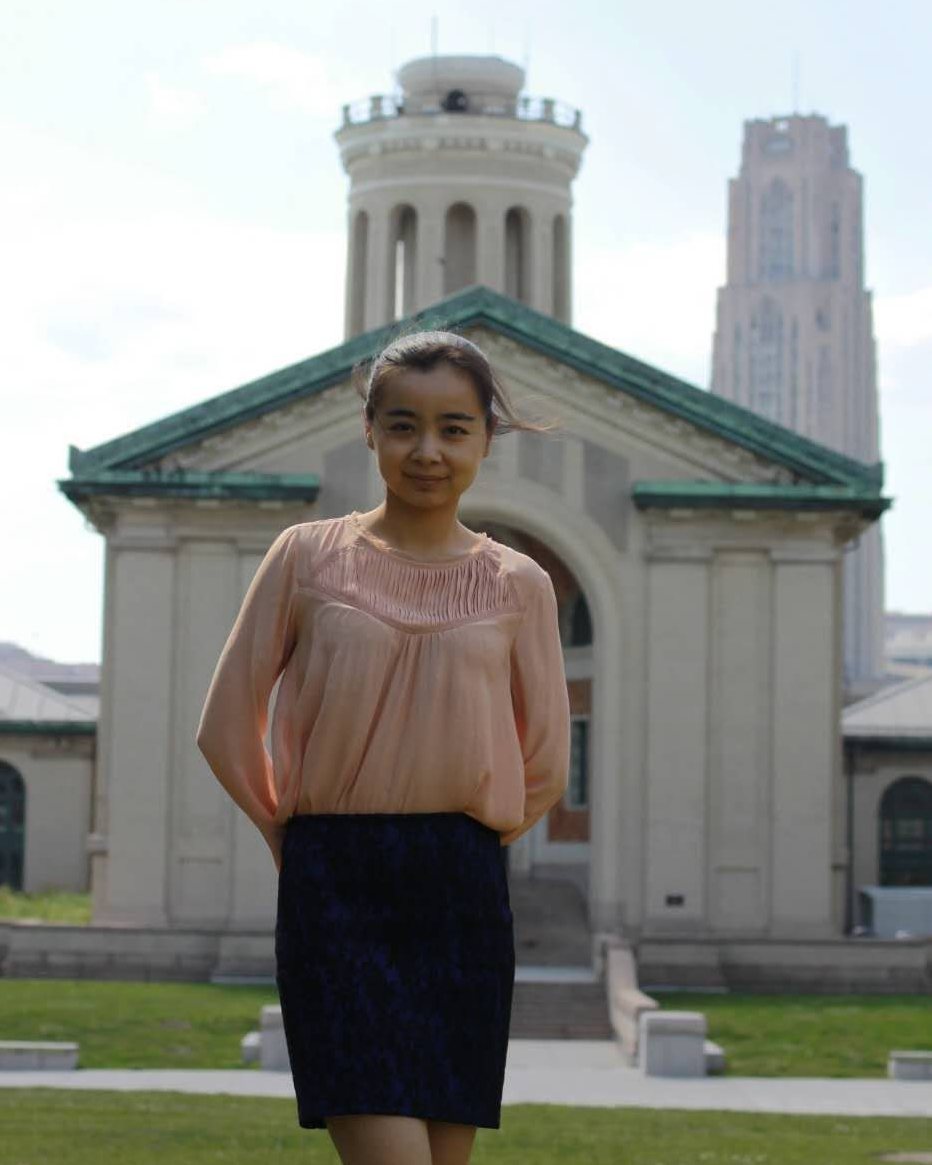
Chen Wang in CMU_PittsChen Wang is an Electrical and Computer Engineering graduate that started her Ph. D. in the 2010/2011 academic year. Her host institution in Portugal is Faculdade de Engenharia da Universidade do Porto, with the orientation of Prof. Ricardo Morla. At CMU, her advisor was Hyong Kim, at the Electrical and Computer Engineering Department.
As she recently graduated, we caught up with her on career path and a look back at her dual degree Ph. D. experience.

CMU Portugal – Firstly, congratulations on your graduation. Can you tell us a bit more about your thesis?

Chen Wang – My thesis is titled “QoE based Management and Control for Large-scale VoD System in the Cloud”. In a quick summary, the Cloud infrastructure has become an ideal platform for large-scale applications, such as Video-on-Demand (VoD). As these types of systems migrate to the Cloud, there are new challenges because the virtualization and resource sharing make it difficult to manage the user’s Quality of Experience (QoE). Operational failures in the Cloud can lead to session crashes.

As VoD providers struggle to identify what causes QoE degradation, we proposed to apply end-user QoE in the management and control of large-scale VoD systems in the Cloud. We presented a QoE-based management and control systems and validated them in production Clouds (Microsoft Azure, Google Cloud and Amazon Web Service).

Our research shows that transit networks are the most common bottleneck that causes the QoE anomalies. The cloud providers should identify these bottleneck transit networks and collaborate with Internet Service Providers (ISPs) to bypass them.

CMU Portugal – Did your research interests align with your thesis?

Chen Wang – QoE driven system management, Cloud system management, Network management and control, Video analysis and retrieval system, so yes, I got to explored them in my thesis.

CMU Portugal – What is your current professional position?

Chen Wang – I am a research staff member at IBM, in the Thomas J. Watson Research centre, in New York, USA.

CMU Portugal – What would you say are the main aspects of the CMU Portugal Ph. D. dual degrees?

Chen Wang – CMU Portugal Program definitely gives opportunities to collaborate with researchers in both Portugal and US.

CMU Portugal – What would you call your main achievements during your doctorate?

Chen Wang – I’ve had four papers published so far and three are to be submitted. I’ve also given talks at conferences twice.

CMU Portugal – How do you describe your Ph. D. experience and would you recommend this opportunity to other students?

Chen Wang – It was very challenging but really exciting and fulfilling. And definitely yes, I would you recommend it to other students.

October 2017

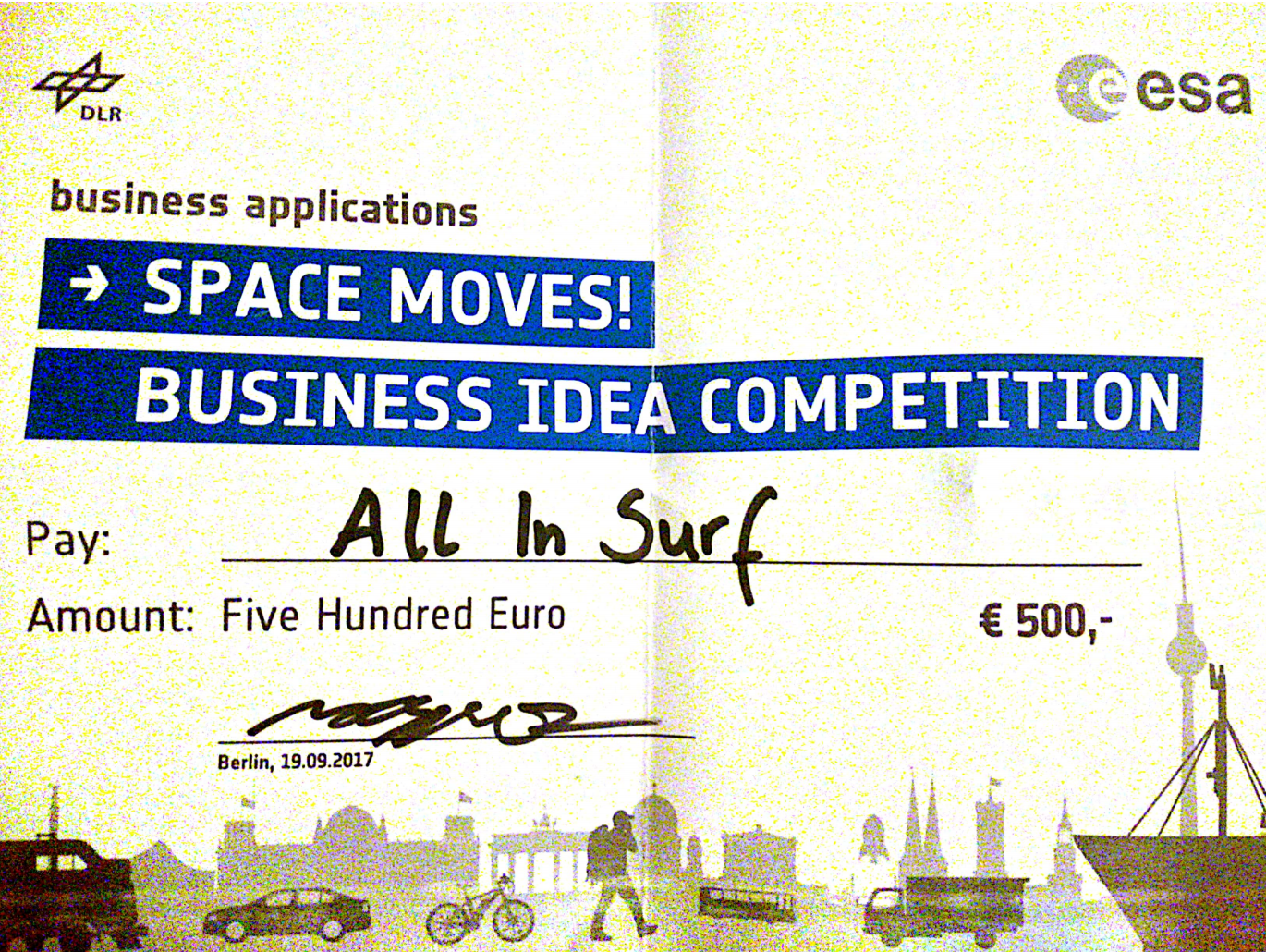
All in Surf wins third place at Space Moves ESA competition

All in Surf Wins Third Place at Space Moves ESA Competition
AllinSurf_ESA_Award

One of the inRes 2016 selected teams, All in Surf, has won third place in the Space Moves! Business Idea Competition. This competition was organized by the European Space Agency (ESA) together with the Space Administration of the German Aerospace Centre (DLR) to promote space-enabled services with a major focus on transport and mobility.

According to the event’s webpage, the competition focused on “new space-enabled business concepts”, such as service concepts which have the potential to become commercial in the short to medium term and are enabled by space, i.e., make use of data, information and/or capabilities provided by existing space-assets.

The winners were presented during The Space Moves! event, created to promote space-enabled services with a major focus on transport and mobility, that is part of ESA’s annual ARTES Applications workshop. This is the seventh edition of this initiative, that brings together companies, users, experts, entrepreneurs, and the start-up scene to foster partnerships, spark new ideas, and inform about ESA funding and support opportunities.

September 2017

Portuguese Entrepreneurs Develop their Business Models in the United States

4th edition of inRes – CMU Portugal Program’s Business Acceleration Initiative Portuguese Entrepreneurs Develop their Business Models in the United States
As part of the second phase of the 2017 edition of inRes – Entrepreneurship in Residence – a business acceleration initiative offered by the Carnegie Mellon Portugal Program (CMU Portugal) – three teams of Portuguese entrepreneurs just arrived at Carnegie Mellon University (CMU) to participate in an immersion period lasting seven weeks, until October 29. Caterpillar Math, Connect Robotics, and WESENSS are the teams participating in this fourth edition of the inRes program.

Funded by the Fundação para a Ciência e a Tecnologia, inRes is now giving the participating teams the opportunity to benefit from the amenities at the Swartz Center for Entrepreneurship, for six weeks, at the Pittsburgh campus. Afterward, a week-long visit at CMU’s Silicon Valley campus is scheduled, for an intensive phase of business model validation, fine-tuning of technology solutions, and contacts with companies and investors.

For the WESENSS team, “the opportunity to personally contact different stakeholders, on a daily basis, and establish a close and trusting relationship with them is something that no other program provides.” Rui Rosas and Duarte Dias, team representatives, “expect to return from the inRes program with a better understanding of stakeholders’ expectations and needs, and with the definition of a sustainable business model and market strategy”. The team is working on developing a solution that monitors vital signs for first responders, such as firefighters, rescuers and police, allowing them to increase their operational efficiency and reduce their health risks.

Together with WESENSS, also Caterpillar Math – a digital games team that aims to develop player’s math skills – and Connect Robotics – a drone delivery service, which includes standalone air traffic management technology for drones – have already participated in the first phase of inRes which took place in Porto and Lisbon, between June and August, during which several workshops were conducted by a team of experienced mentors.

For João Claro, the national director of the CMU Portugal Program and coordinator of inRes, “with its unique and innovative format in Portugal, inRes allows teams to contact specialists, mentors, clients and investors, which is often vital for their success, and this is an advantage that all participants have acknowledged.”

September 2017

André Martins receives the 2017 ERC Starting Grant worth 1,4 million euros

Andre Martins_2017André Martins is one of the researchers awarded with the European Research Council (ERC) Starting Grant. The CMU Portugal Program dual degree Ph. D. alumnus and current Head of Research at Unbabel, will receive one of 406 starting grants to early-stage researchers across Europe, eight of whom are Portuguese or working in Portugal.

When contacted by the program, André shared his reaction to the announcement, stating that he “was very happy” when he received the good news. “This is a very competitive call targeted at scientifically groundbreaking projects. Overall, I think the panel members liked the problem I was tackling, the proposed methodology, which puts together machine learning and natural language processing, and they appreciated the involvement of an industry partner (Unbabel), which emphasizes the practical applicability of the project, tackling a real world problem, with a huge potential impact,” André went on to explain.

André will receive 1,442 million euros for the project that he is spearheading, in collaboration with Instituto Superior Técnico (IST) and Instituto de Telecomunicações: “the overarching goal of DeepSPIN is to bring together deep learning and structured prediction to solve challenging tasks in natural language processing, including machine translation, quality estimation, and syntactic parsing.” Through this research, the team expects to “empower neural networks with a planning mechanism for structural search, and to connect this to reinforcement learning and combinatorial optimization. Also, an interpretable latent structure will be induced inside the network, that will exploit synergies with probabilistic inference and sparse modeling methods. Finally, reducing the need for labeled data with domain adaptation, data-driven regularization and weak supervision.”

Three positions for Ph. D. students and three postdoctoral researchers have been announced to participate in the project.

A dual degree Ph. D. in Language Technology from Carnegie Mellon University and IST, André Martins graduated in 2012 and won the IBM Scientific Award in the same year, and founded the Lisbon Machine Learning School, a week-long summer school, sponsored by Google, with seven editions thus far. He believes the experience in the CMU Portugal Program had an impact on his career: “I benefited immensely from my participation as a PhD student in the CMU Portugal Program. My stay at CMU provided me the experience of working with top researchers in my research field, from which I learned a lot. It also made it possible to start a network of collaborations which was fundamental for the success of this grant.”

The ERC grants are awarded to researchers of any nationality, established or willing to settle in Europe. This year 3085 proposals were received, of which about 13% were financed. Forty-five beneficiaries are citizens of non-European countries, based across Europe.

September 2017


Related news:

André Martins Develops: “A model that uses statistics to revolutionize the way computers understand the human language”

André Martins Gets a Ph.D. and is Hired by Priberam