CMU Portugal Alumnus Receives Best Young Teacher Award from Oulu University


/uploadedImages/people/students/Denzil Ferreira.jpeg Denzil Ferreira, alumnus of the dual degree Professional Master of Human-Computer Interaction (MHCI), between 2010 and 2011, received the Best Young Teacher Award from the University of Oulu in Finland, where he is currently pursuing a Ph.D. in Ubiquitous and Mobile Computing.

According to a press release published by the University of Oulu, Denzil Ferreira received this award due to his “contribution to developing training material and facilitating student projects on two courses: Human-Computer Interaction and Mobile & Social Computing.” The award was recommended by engineering student guilds and is offered to one of the youngest teachers of the Departments of Computer Science and Engineering, Electrical Engineering, and Communications Engineering.

Denzil Ferreira is not only a researcher at the MediaTeam Oulu group at the Department of Computer Science of the University of Oulu, but also a member of the UbicompLab research group at the Human-Computer Interaction Institute at Carnegie Mellon University. His Ph.D. thesis focuses on AWARE, a mobile context and instrumentation middleware for understanding human behavior, a subject he has always been interested in.

A native of the Madeira Island, Portugal, Denzil Ferreira majored in Computer Science and two years later concluded his master’s degree in Software Engineering. The researcher has also worked in industry for over 8 years. The HCI master’s program, during which he developed a mobile software solution (“OneTouch”), gave him the opportunity to explore new ways of bringing technology to everyone, which is something he always strived for. The dual degree Professional Master in Human-Computer Interaction is taught by the Universidade da Madeira and Carnegie Mellon University, in the scope of the Carnegie Mellon Portugal Program, funded by the Fundação para a Ciência e a Tecnologia.

The Best Young Teacher Award is an annual honor given by the University of Oulu.

April 2013

New Facilities of M-ITI Reflect the Commitment to the CMU Portugal Program’s Mission

New Facilities of M-ITI Reflect the Commitment to the CMU Portugal Program’s Mission

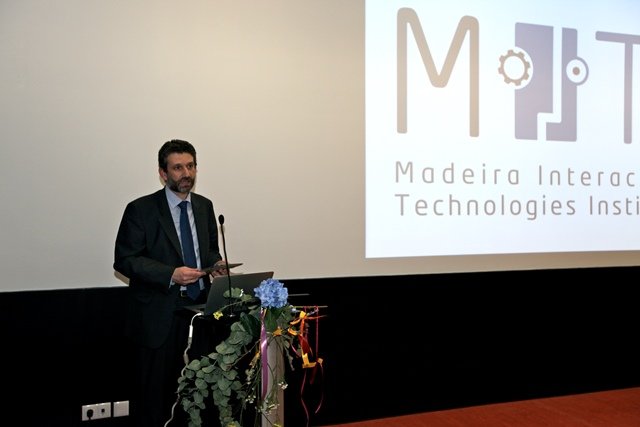
Madeira ITI JClaro The Madeira Interactive Technologies Institute (M-ITI), a not-for-profit innovation institution, which was created in the scope of the Carnegie Mellon Portugal Program in 2009, opened its new facilities on March 22, 2013. The national director of the Program, João Claro, stated at the inauguration ceremony that M-ITI is “an exemplary realization of the mission of the Carnegie Mellon Portugal Program.”

In his speech, João Claro highlighted M-ITI’s successful investment in its Professional Master’s Degrees, running in the scope of the CMU Portugal Program, which is funded by the Fundação para a Ciência e a Tecnologia. As part of a high level training supported by a diverse group of faculty members, the students carry out a capstone project, which aims at addressing real world problems. These projects have attracted established companies, such as Logica or Novabase, to collaborate with M-ITI, but are also a way to start new companies, as is the case with the startup Mambu (more information available at https://cmuportugal.org/tiercontent.aspx?id=4506 ). “M-ITI’s perseverance in investing in Professional Master’s and in finding sustainable solutions for their future is unique and is an example that many other institutions should follow,” stated João Claro.

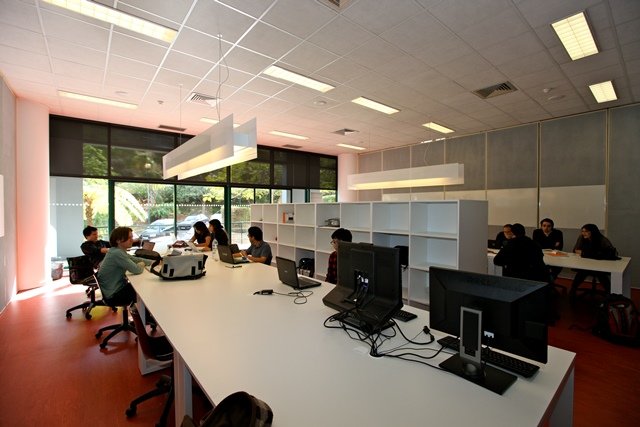
The new space will welcome faculty, researchers and students, as well as support services, and will continue to host research on computer science and human-computer interaction. It is expected that the facilities will help M-ITI in joining the best institutions in Europe working in this area. “The US are much stronger, but we think that Madeira can have the ambition of having an international center of excellence in this area,” said the president of M-ITI, Nuno Nunes, who is also one of the scientific directors of the Carnegie Mellon Portugal Program. The vice-president of the Regional Government of Madeira, João Cunha e Silva, also attended the ceremony and confirmed the Institute’s potential: “I feel I am at a place where the future will grow, I have no doubt about it,” he stated. Madeira ITI facilities

The Madeira Interactive Technologies Institute was created by the Universidade da Madeira, the Madeira Tecnopolo and by Carnegie Mellon University, as an honorary partner. The goal was to provide a home for the various collaborations between these partners, in both research and education. The Institute operates in the multidisciplinary field of Human-Computer Interaction, receiving contributions from the areas of Information Technology, Design and Psychology.

April 2013

Gopala Anumanchipalli Receives IEEE Spoken Language Processing Student Grant

Gopala Anumanchipalli Receives IEEE Spoken Language Processing Student Grant

Gopala Krishna Anumanchipalli Gopala Anumanchipalli , a dual degree doctoral student in Language Technologies at Instituto Superior Técnico of the Universidade Técnica de Lisboa and Carnegie Mellon University, was the recipient of one of two IEEE Spoken Language Processing Student Grants for his paper at the International Conference on Acoustics, Speech, and Signal Processing (ICASSP-2013).

The paper is titled A Style Capturing Approach to F0 transformation in Voice Conversion, and was written by Gopala Krishna Anumanchipalli, with his two advisors Luis C. Oliveira, from IST/UTL, and Alan W Black, from Carnegie Mellon University.

Gopala Anumanchipalli is very honored with this recognition. “I believe the work we published can spawn a new line of research on the effective use of long range speaking characteristics of speakers for voice conversion with implications also in the fields of speech synthesis, speaker identification and verification.” Gopala Anumanchipalli hopes that “the grant will encourage more researchers to take up the challenge of using long term prosodic features for improvement of existing speech technologies.”

These awards are supported by funds from a book by three researchers at Microsoft (XD Huang, Alex Acero and Hsiao-Wuen Hon). The Awards Subcommittee of the Speech and Language Technical Committee (SLTC) judged his paper as superior.

March 2013

Read other stories at: https://cmuportugal.org/tiercontent.aspx?id=238

Byron Yu Visits Portugal to Strengthen Research on Neuroscience


Byron Yu Byron Yu, an assistant professor of Electrical and Computer Engineering and Biomedical Engineering at Carnegie Mellon University, visited Portugal at the end of 2012. The goal was twofold: to meet with several faculty members of Instituto Superior Técnico of the Universidade Técnica de Lisboa (IST/UTL), and to establish a co-advising relationship for João Semedo, a dual degree doctoral student in Electrical and Computer Engineering (ECE), who started his doctoral program recently.

Byron Yu is co-supervising João Semedo along with Christian Machens, from the Champalimaud Foundation, and João Paulo Costeira, from IST/UNL. The research work of this doctoral student has just begun, but Byron Yu expects that the supervision from these three different institutions, focused on different areas of expertise, will provide the student with a particular approach to his research on neurosciences. “We are expecting that the three-way collaboration between IST/UTL, Carnegie Mellon University, and the Champalimaud Foundation will provide João Semedo with a unique training experience and allow us to make research advances that leverage the strengths of each institution,” stated Byron Yu adding that “the Champalimaud Foundation houses world-class research in experimental and theoretical neuroscience.”

While in Portugal, the researcher also gave a talk about his group’s work – the Neural Signal Processing Group – that focuses on the intersection of signal processing/machine learning, biomedical engineering, and basic neuroscience. The research collaboration seeks to elucidate how large populations of neurons process information ranging from encoding sensory stimuli to guiding motor actions.

Byron Yu has been engaged in this research topic since 2001. His main concern is “to understand how neurons in the brain process information.” The researcher has already registered a patent concerning the subject, entitled “Decoding of Neural Signals for Movement Control.”

The scientific advances on neural signals enable the monitoring of the activity of tens to hundreds of neurons simultaneously. At the moment, the group is aiming to “develop and apply novel signal processing algorithms to elucidate how these neurons work together to encode sensory stimuli and drive motor actions,” Byron Yu said. The work already has a biomedical application, Brain-Computer Interfaces (BCI), which “assists paralyzed and disabled patients by translating neural activity into control signals of a prosthetic limb or computer cursor,” he explained.

Byron Yu has been at CMU since 2010. He is affiliated to the Center for the Neural Basis of Cognition, the Machine Learning Department and the Robotics Institute of Carnegie Mellon University, where he teaches two courses: Signals and Systems (18-290) and with Neural Signal Processing. Byron Yu is a member of the Society for Neuroscience, and he has written multiple papers and is also the recipient of several fellowships and awards.

March 2013

Madeira-ITI Opens New Facilities

Madeira-ITI Opens New Facilities

Madeira ITI The Madeira Interactive Technologies Institute, a not-for-profit innovation institution that focuses its research in the areas of computer science and human-computer interaction, will be inaugurating its new facilities on Friday, March 22, 2013. The Universidade da Madeira, the Madeira Tecnopólo and Carnegie Mellon University, as an honorary partner, launched the Institute in January 2010, in the scope of the Carnegie Mellon Portugal Program, funded by the Fundação para a Ciência e a Tecnologia.

More than 180 faculty members, researchers and students from all educational programs and research projects related to the Madeira Interactive Technologies Institute (M-ITI) will use this new space to carry out research, organize lectures and seminars, and promote high-level postgraduate training, among several other activities. The new facilities are located on the second underground floor of the Madeira Tecnopólo building, thereby maintaining the proximity to the university and to the business center.

The Institute operates in the multidisciplinary field of human-computer interaction, receiving contributions from the areas of Information Technology, Design and Psychology. The aim of the Institute is to tackle important scientific and technological challenges that are relevant to society and have a significant economic impact. The mission of the research and postgraduate training provided by the Institute includes expanding the understanding of the human experience with interactive technologies through fundamental and applied research, with innovation and responsiveness to real-world needs through multidisciplinary collaborations based on diverse perspectives.

More than three hundred thousand Euros were invested in the space, 85 per cent of which funded by the European Regional Development Fund (FEDER), through the program Intervir +, Priority 1 – Innovation, Technological Development and Knowledge Society. Madeira ITI 02

The ceremony will have the presence of the Rector of the Universidade da Madeira, José Manuel Castanheira da Costa, the Regional Secretary for Education and Human Resources, Jaime Freitas, the Chairman of the Steering Committee of the M-ITI, Nuno Jardim Nunes, and the National Director of the Carnegie Mellon Portugal Program, João Claro.

March 2013

Veniam ’Works wins International Entrepreneurship Competition

Veniam ’Works Wins International Entrepreneurship Competition

VENIAM WORKS The spin-off Veniam ’Works won the first place at the 3rd Edition of Building Global Innovators, an international entrepreneurship and innovation competition promoted by ISCTE – IUL and the MIT Portugal Program. The company will transform cars into hotspots.

Veniam ’Works was born in 2012 as part of the research project DRIVE-IN carried out in the scope of the Carnegie Mellon Portugal Program, funded by the Fundação para a Ciência e Tecnologia. Veniam ‘Works was created by João Barros, former national director of the Carnegie Mellon Portugal Program and faculty member at the Faculdade de Engenharia of the Universidade do Porto, and Susana Sargento, faculty member at the Universidade de Aveiro. The spin-off’s team also includes two U.S. entrepreneurs, Robin Chase (who created Zipcar, the largest car sharing company in the world) and Roy Russell (Chief Technology Officer at Zipcar), and several doctoral students.

The spin-off’s new technology allows vehicles to connect to each other and to existing mobile communications networks, whether they are cellular or Wi-Fi. “The system helps vehicles connect to other vehicles and access points, and quickly cover a city, offering a transmission radius ten times higher than the usual Wi-Fi,” said Susana Sargento. The goal is twofold: to reduce traffic in the mobile network, and to share information on vehicles and traffic. In the case of the former, the telecommunications operators and their customers can relieve data traffic in traditional mobile networks. This innovative technology that enables vehicle-to-vehicle communication opens endless possibilities in applications ranging from data sharing to traffic safety or even entertainment.

Currently, the city of Porto, in Portugal, has a unique vehicle-to-vehicle testbed where this technology is being tested. More than 450 taxis, from the fleet of RadiTaxis, are equipped with a kit that enables vehicle-to-vehicle communication using the technology developed by Veniam. “We expect to have the technology on the market in about 18 months,” said João Barros.

The competition’s grand finalist had already been awarded one hundred thousand euros in the final stage of the competition, as a track finalist. As the grand finalist, among 132 candidates, the company earned a further one hundred thousand euros. The award will allow Veniam ’Works to evolve and continue improving the vehicles’ Internet connection. “This award is an acknowledgement that this company has everything to be successful and that everyone involved in organizing this prestigious competition is committed to making us move forward. That is fantastic,” stated Susana Sargento. The funds will serve as a valuable resource for the spin-off. However, the amount can be doubled if the company successfully implements its Go-to-Market plan.

Veniam ’Works wants to be the leader in connecting vehicles to the Internet. The solution provided by the company is affordable, unlike similar technology on the market. “We offer robust and cost-effective ways of providing in-vehicle Internet access and seamless connectivity to your car or fleet. Since we develop our own wireless routers and communication protocols for vehicle-to-vehicle and vehicle-to-infrastructure communications, we can equip large fleets in a cost-effective way,” explained João Barros.

Exporting the Solution is the Next Step
Working in Portugal and in the United States, Veniam ’Works already has business angel investment in New York, Boston, London and Lisbon, and is connected with a project funded by the European Union, through the National Strategic Reference Framework (QREN). Exporting the solution will be the next step, and therefore the company is already preparing a capital injection in order to complete the proof of concept, develop the final product and enter in international markets later this year. The plan also includes a capital increase of about three million euros by the end of 2013.

Building Global Innovators is a global innovation and entrepreneurship competition that identifies and rewards strong embryonic or early stage projects focusing by design on global markets. The competition is sponsored by the Instituto Universitário de Lisboa (ISCTE), in partnership with the MIT Portugal Program, the Deshpande Center for Technological Innovation and the Martin Trust Center for MIT Entrepreneurship.

March 2013

Russian Delegation Visits Carnegie Mellon Portugal Program Stakeholders

Russian Delegation Visits Carnegie Mellon Portugal Stakeholders

Russian Delegation Visits CMU Portugal Stakeholders Between March 14 th and 15 th , 2013, a Russian delegation led by Mark Shmulevich, Deputy Minister of the Federal Republic of Russia for Communication and Mass Media, attended several meetings in Portugal about the challenges and outcomes of the Carnegie Mellon Portugal Program.

The Russian Federal Government and the Republic of Tatarstan, part of the Russian Federation, are developing a federal project to build a new satellite city outside Kazan, which will focus on technology and innovation. The city is called Innopolis and will be built over the next 15 years. The city will include a new university with bachelors, masters and Ph.D. programs which will focus on employability and on the practical application of technical knowledge. In order to establish the university, the Russian delegation has been looking to see what has been done by other countries in terms of investment in IT education, and what has been the return on that investment and the lessons learned.

While in Portugal, the Russian delegation had the opportunity to meet with the President of the Portuguese Fundação para a Ciência e a Tecnologia, Miguel Seabra, with the Rector of the Universidade do Porto and Chairman of the Board of Directors of the Carnegie Mellon Portugal Program, José Marques dos Santos, and with the Rector of the Universidade de Coimbra, João Gabriel Silva. The delegation also met with the national director of the partnership, with the dean of the Faculdade de Engenharia of the Universidade do Porto (FEUP), the president of Instituto Superior Técnico of the Universidade Técnica de Lisboa, the Dean of the Católica Lisbon School of Business and Economics, the Vice-Dean of the Porto Business School, the president of INESC Porto, the head of the Department of Electrical and Computer Engineering at FEUP, the former national director of the partnership, the head of Human Resources and Corporate Development at Novabase, and with several researchers and entrepreneurs involved in the partnership activities.

The Russian Delegation included Mark Shmulevich, Deputy Minister of the Federal Republic of Russia for Communication and Mass Media, Dmitry Kondratyev, Rector of the Innopolis University in Russia, Alexander Tormasov, Director of Academics at Innopolis University, and Elmira Khalitova, Assistant to the Rector for external relations at the same University. The delegation was accompanied by Bill Guttman, Chairman of the Board, and by Gil Taran, Chief Executive Officer, at iCarnegie Global Learning.

Before the visit to Portugal, Carnegie Mellon University organized a visit of the Russian delegation to Qatar. Afterwards the delegation will be heading to Kazakhstan, Colombia/Mexico and the Far East.

March, 2013

The Faculty Exchange Program ‘Was a Very Fruitful and Successful Experience’

The Faculty Exchange Program “Was a Very Fruitful and Successful Experience”

Petia Georgieva Petia Georgieva, a researcher at the Instituto de Engenharia Eletrotécnica e Telemática de Aveiro (IEETA) and assistant professor at the Department of Electronics Telecommunications and Informatics of the Universidade de Aveiro, spent three and a half months at Carnegie Mellon University working as a visiting professor and researcher, as part of the Faculty Exchange Program of the Carnegie Mellon Portugal Program.

“I was involved in the course on Machine Learning (10-601) given by Tom Mitchell and was responsible for giving recitations, designing homework and exams. Furthermore, I attended lectures and teaching assistant meetings,” she described. This teaching activity also allowed her to update her lectures on the Machine Learning module given to graduate students of the Ph.D. program on Electrical Engineering of the Universidade de Aveiro.

The research was conducted in collaboration with Fernando De La Torre, a researcher at the Computer Vision Center in the Robotics Institute. “We have worked on a new approach to differentiate cognitive brain states directly from functional Magnetic Resonance Images (fMRI),” she stated. “We applied Robust Principal Component Analysis (RPCA), a theoretical framework for dimensionality reduction developed a few years ago by Fernando, to construct low dimensional linear-subspace representations from the noisy fMRI images for each subject, and afterwards we performed a Gaussian Naive Bayes (GNB) classification,” she added.

Their work represented a significant progress to the area comparatively to previous studies. In the past, cognitive brain states from fMRI were differentiated by transforming the fMRI into a time sequence of voxels from which the brain states are inferred. The work by De La Torre and Georgieva improved the classification rate of a real benchmark fMRI data. Petia Georgieva gave a talk in the Robotics Institute (Joint VASC-CBI Seminar) to present her work on brain imaging.

During her stay at CMU, she worked on and wrote three papers: “Robust Principal Component Analysis for improving cognitive brain states discrimination from fMRI”, accepted for presentation at the IbPRIA 2013, 6th Iberian Conference on Pattern Recognition and Image Analysis; “Bayesian approach for reconstruction of moving brain dipoles,” accepted for presentation at the ICIAR 2013, Int. Conf. on Image Analysis and Recognition; and “A particle filter framework for localization of dynamic EEG sources,” submitted to the journal PlosOne.

Petia Georgieva also attended weekly meetings of the research group on intelligent robots, promoted by Manuela Veloso (CORAL) from the Computer Science Department. She “learned about CoBots – Collaborative Mobile Robots.” Furthermore, the researcher participated in meetings of the research group of Jelena Kovačević of the Center for Bioimage Informatics at CMU, as well as in Ph.D. thesis proposal presentations and Ph.D. defenses, and in seminars and talks given by technological and scientific leaders from all over the world.

According to Petia Georgieva, her stay at CMU was “very fruitful and successful” and she hopes to remain involved in the Carnegie Mellon Portugal Program, for example through the co-supervision of doctoral students with professors from Carnegie Mellon.

March 2013

Researcher Develops Technology That Improves Fan Experience at Super Bowl

Researcher Develops Technology That Improves Fan Experience at Super Bowl

Priya Narasimhan There is no doubt that “Super Bowl” is the biggest sports event in the United States and also the one with the largest audience. For Priya Narasimhan, researcher at Carnegie Mellon University (CMU), its significance goes beyond that: it is also at the same time personal and professional.

As a football fan, Narasimhan just couldn’t sit down and watch peacefully the game at the stadium. She had to do more. Thus was born YinzCam, a smartphone application that improves the fan experience while watching the game, even if they are sitting down in the worst seat of the stadium.

That is what happened recently: the Baltimore Ravens won over San Francisco 49ers (34-31) at the “Super Bowl” in Mercedes-Benz Superdome in New Orleans, Louisiana. If Priya enjoyed the game, we don’t know yet, but certainly the 72 thousand fans appreciated it a lot due to the smartphone application that allowed them to watch the game and its replays from far more angles than just their stadium seats. Overcoming of the latency issue for streaming video is also an asset of this technology.

“[Before] I was often unable to see the goal, the touchdown, the interception, or the save because my view was often blocked by people taller than I was, and most of all, at just the moment that it counted during the game,” told Narasimhan. “I wanted the best of both worlds — the level of control over the experience that I have with my TV sitting on my couch at home, along with the unbeatable shared experience of watching a game in a stadium with 80,000 rabid sports fans like myself,” she said.

Her fan experience soon led to YinzCam. By 2009, the technology of the startup was experimented with the Pittsburgh Penguins during their Stanley Cup run. Since then, the number of teams and stadiums that adopted the application didn’t stop growing. At the moment, the concern of YinzCam goes beyond it. The startup develops the official mobile apps of various sports teams, including its unique in-stadium replay technology along with out-of-stadium statistics, roster, news, photos, live press conferences and much, much more.

“In my opinion, they’ve become the preeminent in-stadium sports app developer in the world,” said Jonathan Kraft, the owner of New England Patriots, the first NFL team to use YinzCam’s technology. “As in-stadium smartphone and tablet apps continue to develop, we fully believe YinzCam will be leading the charge with the most state of the art applications for this market,” he stressed.

YinzCam’s mobile apps have been downloaded over 6 million times by NFL, NHL and NBA fans worldwide. The company is also now expanding to support sports teams outside the United States.

Priya Narasimhan was in Portugal last January to speak at the Inaugural Symposium “Carnegie Mellon Portugal: An Entrepreneurial University Industry Ecosystem in ICT,” where she talked about her experience as a researcher then become an entrepreneur. Priya Narasimhan is deeply connected with the CMU Portugal program, through the co-supervising of students and as principal investigator from Carnegie Mellon University of two research projects: TRONE and Vital Responder.

source: http://www.cmu.edu/homepage/computing/2013/winter/super-bowl-play.shtml

March 2013