Portuguese Team wins International Competition for Android Application Developers

Portuguese Team wins International Competition for Android Application Developers

Greenspark team The GreenSpark team, which involves a Carnegie Mellon Portugal Program master student, won the student category of the Ericsson Application Awards 2013, an international competition for Android application developers. The application created by the team helps to manage solar panels, making their use simple and more cost-effective. The jury of the competition considered that the team “presented a solution based on energy efficiency, with a truly global reach.”

The team includes Joel Rodrigues, a post-graduation student in Human Aspects of Technology at the Universidade da Madeira, and Poan Shen, a student in the dual degree Masters Program on Entertainment Technology, of the Universidade da Madeira and Carnegie Mellon University, as part of the Carnegie Mellon Portugal Program. Both students are affiliated with the Madeira Interactive Technologies Institute (M-ITI), which was created in the scope of the CMU Portugal Program in 2009.

For Nuno Nunes, founder and president of the M-ITI, this is “a good example of the spillovers of the interdisciplinary International Programs and the consequence of attracting high quality international students.” In his opinion “they ‘push’ the local students even when they are not enrolled in the dual-degree programs,” adding “they give them access to high quality interdisciplinary education that will never be possible in the traditional academic Portuguese system.”

At the Award Ceremony, which took place at Ericsson’s Headquarters in Stockholm, Sweden, on May 22, 2013, the GreenSpark team showcased its app “Sun Monitor” before a jury of experts. The jury’s justification for choosing GreenSpark application was that “the team has focused on the performance of solar cells at a time when energy consumption and efficiency is increasingly in focus, and has produced an app with obvious benefits to users and all stakeholders in the energy business”, according to a press release by Ericsson.

The students could not be more pleased. Participating in the competition was “an amazing experience that allowed me to grow, to learn many things, and it definitely taught me to look at the world from a completely new perspective,” stressed Joel Rodrigues. Winning the prize “is a great motivation to keep us moving forward,” added Poan Shen.

It was the second time that the team participated in the competition, and due to their first experience they were able to avoid some mistakes this time. “I knew that a good project cannot just rely on technology, and that we should also present our concepts well enough so that the jury and the users can understand and appreciate our work,” stated Poan Shen. According to the student, studying Entertainment Technology has also inspired the application development. “As a MET student I knew that our application should engage its users with a user-friendly interface,” he said. Poan Shen also learned that the video must be both informative and interesting. “While at the M-ITI, I learned how to see technology differently, something that helped my teammate and I to design and define the scope of the project,” the student stressed.

Both students have different ideas on how invest the 25k award. Poan Shen would like “to use the money to improve the application and also to prepare its deployment in Taiwan,” and Joel Rodrigues will use the money to pursue his studies in Human Computer Interaction.

The Sun Monitor, developed by the GreenSpark team, is a service provided via cloud computing, a customized device and a web application that manages household solar power systems in an energy/cost effective way and greatly reduces exposure to networking threats. The solution created by the students has already been successfully tested in a prototype installed in Taiwan. The next step will be to improve the application and deploy the solution to more systems in that island.

The Ericsson Application Awards is an international competition for Android application developers. This was the fourth consecutive year that the competition was held and this year’s theme was Apps for City Life. Almost 200 teams from 52 countries competed in the student and company categories. The winner in the company category was Therapy Box from the United Kingdom.

May 2013

Steven Klepper: A Life Dedicated to Research and Teaching

Steven Klepper: A Life Dedicated to Research and Teaching

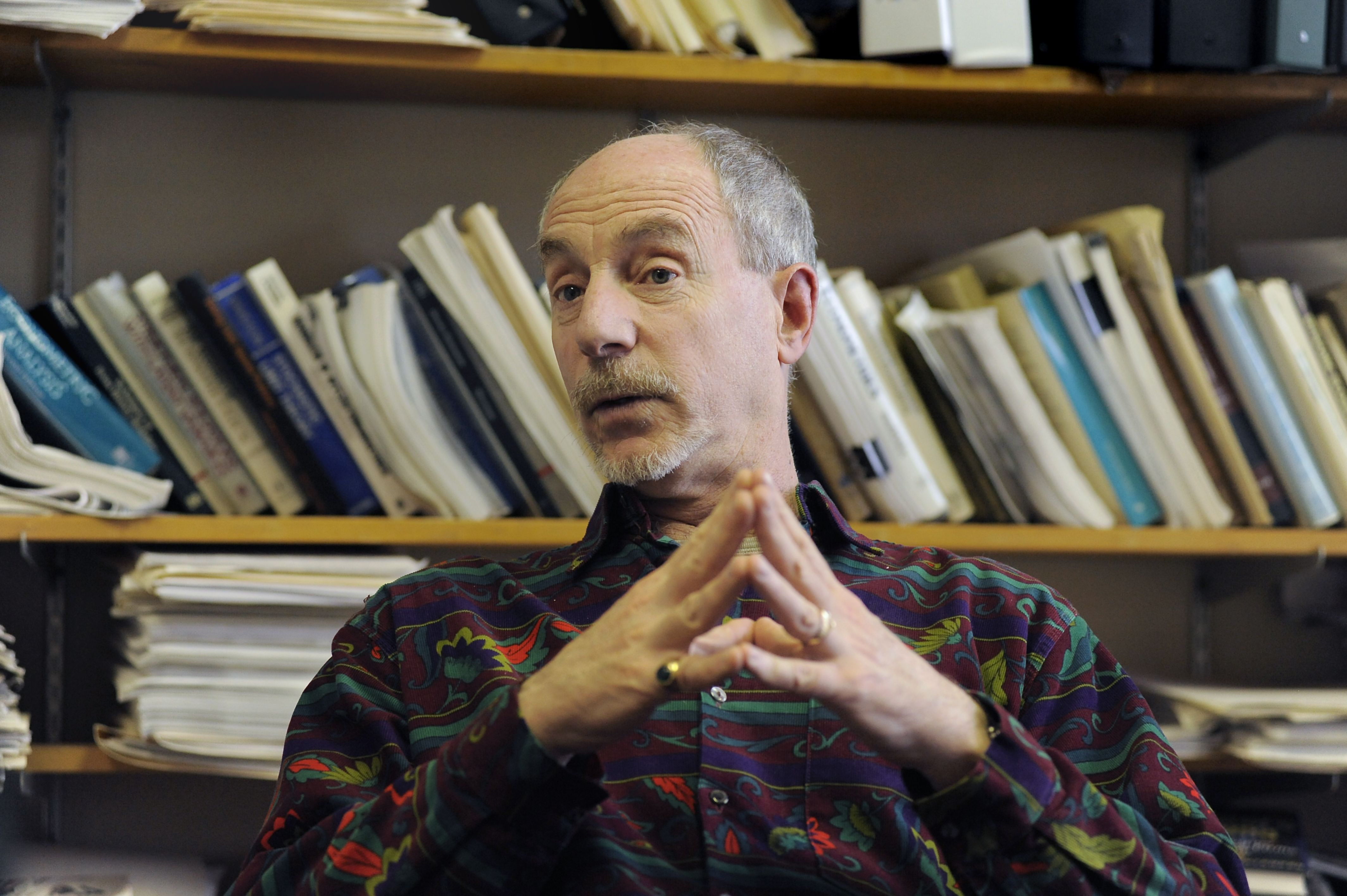
Steven Klepper 1 Steven Klepper, the Arthur Arton Hamerschlag Professor of Economics and Social Science at Carnegie Mellon University and a distinguished member of the Carnegie Mellon Portugal Program, died Monday, May 27, at age 64. A renowned teacher and researcher, Klepper’s pioneering work integrated elements of traditional economic models with evolutionary theory, bridging gaps between the study of entrepreneurship and mainstream economics.

“Steven Klepper was a true friend of the Carnegie Mellon Portugal Program. He was deeply involved in our work in the area of Technological Change and Entrepreneurship, where he helped to create our dual degree doctoral program, led research collaborations, and mentored several students. He was an outstanding scholar, incredibly devoted to his teaching and research, and to the students and colleagues that he worked closely with. His passing is an enormous loss,” said João Claro, national director of the Carnegie Mellon Portugal Program.

As a contributing member of the CMU Portugal program, Klepper was the lead investigator at CMU on a project titled Human Capital, Knowledge Based Firms, and the Entrepreneurial Life-Cycle. He collaborated with Rui Baptista, Professor at Instituto Superior Técnico of the Universidade Técnica de Lisboa (IST) and lead investigator of the project in Portugal, to investigate the role of general and specific human capital on successive stages of the development of knowledge-based firms, and to look at the role played by human capital on individual decisions taken by entrepreneurs over their lifecycle. The project involves teams from academic institutions (CMU, IST/UTL, Universidade Católica Portuguesa, and ISCTE – Lisbon University Institute) as well as companies (YDreams and Alfama).

Collaborating with Klepper over the past two decades, Baptista came to know him as an extraordinary scholar and an even better human being. “Some scholars make an impact with innovative ideas,” said Baptista, “others with outstanding analytic rigor. Steven was that rare specimen who was outstanding in both sweeping vision and attention to detail. Steven’s approach to modeling,” Baptista added, “was only made possible by the collection of a staggering amount of knowledge about the way industries evolve over time, and how innovation impacts such development. The depth of thought he put into minimal details was remarkable.” When Baptista connected with Klepper in August 1997 and chose to relocate to Pittsburgh for his postdoctoral research, Klepper was exceptionally welcoming. “From the moment he picked me up at the airport and took me to watch his son’s soccer practice (which he coached), I felt home,” Baptista recalled.

In addition to his research contributions, Klepper was instrumental in establishing the Technological Change and Entrepreneurship (TCE) Ph.D. within CMU Portugal Program. “His remarkable research work and seniority did not preclude his willingness and commitment to the program since its inception. He always contributed at meetings in Lisbon or Pittsburgh, seminars, and students’ presentations, and even in his office at CMU when going through all the TCE students’ Ph.D. plans. We will miss his example, guidance, and wit,” said Francisco Lima, Professor of the Management and Engineering Department at IST and faculty of the TCE Ph.D. Baptista echoed this by saying that “Steven’s commitment to the Carnegie Mellon Portugal initiative was the true measure of his character: an established scholar with nothing to prove and no need for more funding or disciples, he was involved from the first minute as if his career depended on it. His leadership was fundamental for the establishment and progress of the Ph.D. in Technological Change and Entrepreneurship. He can never be replaced.”

Klepper advised a number of Dual Degree Ph.D. students in TCE and had a significant impact on their professional and personal lives. Students advised by Klepper include Ana Venâncio (enrolled in 2007-08), Carla Costa (enrolled in 2007-08), Cristina Carias (enrolled in 2007-08), Cristóbal Cheyre (enrolled in 2008-09), and Soheil Hooshangi (enrolled in 2010-11).

Costa appreciated how Klepper would use “tough love” to encourage his students to constantly fine-tune their work. “I fondly remember the day that I went into his office to discuss a presentation of my research, which I was happy to have finished one week ahead of schedule. He patiently showed me what was wrong with each slide, why it was wrong, and what I could do to improve it. After a long meeting, not a single slide was left untouched. I remember saying to him, ‘Okay, I’ll start over,’ and then leaving to change everything. In the end, I had to recognize that the final result was 10 times better than the initial version,” Costa reflected.

Carias also cherishes Klepper’s ability to challenge and inspire as it has helped her considerably in the long run. “In one meeting with all the students and professors in the [TCE] program, I recall him saying that one day we would appreciate and better understand the difficult process of obtaining a Ph.D. That day was my first day at my current job. Today, I meet with senior directors at the federal agency where I work; I feel grateful as I had the best preparation I could ever have had, having been Steven’s student,” Carias said. Steven Klepper 2

Although his flair for bringing the best out of his students will surely be missed, his kindness and compassion will forever be remembered by those he mentored. “I will always be in debt to Steven, for he was an incredible role model as a scholar and he always compelled me to become a much better researcher than I ever imagined I could be. On top of that, he was also a very kind and warm person, even willing to talk about his own difficulties to encourage me to overcome mine. I feel very privileged to have worked with Steven and I know that he will be deeply missed, for his shoes will be really hard to fill,” said Costa.

“Upon my arrival in the United States in June 2008, Steven kindly gave me his and [his wife] Florence’s phone number, should I need anything. I was an emigrant in a foreign country, had no family or friends in Pittsburgh, and will never forget that act of kindness. I shall also remember that even though he was already a giant in the research world, and I was still only making baby steps, he always kindly referred to and treated me as a colleague, which I could and can only aspire to be,” said Carias.

Carias summarized the broad reach of Klepper’s professionalism and personality: “Steven’s legacy far surpasses the well-known published research that has changed the minds of many; his legacy continues in the many students that learned from him how to go from the known to the unknown, the difference between the trivial and the fundamental, and countless other lessons we learned from him,” said Carias. “I will forever be honored and grateful I had such a wonderful mentor.”

Klepper is survived by his wife, Florence Rouzier, and their two children, Arielle and Julian. A memorial service was held Wednesday, May 29, at the Homewood Cemetery Nondenominational Chapel at 1599 South Dallas Ave., Pittsburgh, PA, 15217. Memorial contributions may be made to the Crossroads Foundation, 2915 Webster Avenue, Pittsburgh, PA 15219.

A memorial is being planned for the fall on the Pittsburgh campus.

June 2013

Ph.D. Student Awarded Scholarship for the Summer Academy on Sustainable Energy Finance

Ph.D. Student Awarded Scholarship for the Summer Academy on Sustainable Energy Finance

/uploadedImages/people/students/ivone_pena.JPG Ivonne Peña, a dual degree Ph.D. Student in Engineering and Public Policy, was awarded one of five available scholarships to participate in the Summer Academy on Sustainable Energy Finance, held July 14-19 th , 2013, by the Frankfurt Finance School and the UNEP Collaborating Centre for Climate and Sustainable Energy Finance. This is a highly competitive program, directed towards professionals and experts from different disciplines that work on areas related with financing climate change solutions.

Ivonne is keen on directing her future professional goals towards an effective cooperation with developing regions. During her Ph.D. studies at Instituto Superior Técnico of the Universidade Técnica de Lisboa (IST/UTL) and Carnegie Mellon University (CMU), Ivonne has not only developed a deep understanding of the strengths and weaknesses of the wind feed-in tariffs, but has also firmed up her intellectual will to apply her knowledge to solve related problems in developing regions. In particular, feed-in tariff policies were established as finance mechanisms to promote renewable energy in Portugal, and she wants to use her expertise to contribute to design an energy policy framework in developing countries such as Colombia. Her background in engineering and her Master’s in sustainability, along with her deep knowledge of energy policy, will help her to characterize and understand other challenges that developing countries face to ensure effective financing of renewable energy.

Ivonne Peña is co-advised by Marcelino Ferreira, from IST/UTL, and Inês Azevedo, from CMU.

May 2013

Patrick Agyapong Successfully Defended his Ph.D. Thesis

Patrick Agyapong Successfully Defended his Ph.D. Thesis

Patrick Kwadwo Agyapong Patrick Kwadwo Agyapong, a dual degree doctoral student in Engineering and Public Policy, successfully defended his thesis titled “Economic Incentives in Content-Centric Networking: Implications for Protocol Design and Public Policy” on April 2013. Co-advised by Rui Prior, from the Faculdade de Ciências of the Universidade do Porto, and by Marvin Sirbu, from Carnegie Mellon University, Patrick Agyapong’s research work focused on “how economic and social welfare analysis can be used to inform the design of a Content-Centric Networking (CCN) architecture that provides network stakeholders with incentives to deploy and use.”

The student, in conjunction with his advisors, identifies and discusses threats in the CCN content delivery model and proposes some mechanisms to address these threats. In addition, the dissertation classifies some policy implications of the CCN content delivery model and proposes some policy interventions that may lead to desirable deployment outcomes.

May 2013

Sabina Zejnilovic, Dual Degree Ph.D. Student: “I would like to make a positive impact in our everyday life”

Sabina Zejnilovic, Dual Degree Ph.D. Student: “I would like to make a positive impact in our everyday life”

Sabina Z. Natural from Sarajevo, Bosnia and Herzegovina, and with industry and academic experience, Sabina Zejnilovic is a dual degree Ph.D. student in Electrical and Computer Engineering (ECE) since 2011/2012, at Instituto Superior Técnico of the Universidade Técnica de Lisboa (IST/UTL) and Carnegie Mellon University (CMU).

Networks fascinate her, “whether they are connecting communication equipment, as in a telecom network, or computers on Internet, or even people in a social network.” As part of her Ph.D., she recently presented a poster titled “Communication Complexity and Energy Efficiency on Consensus Algorithms,” on the Inaugural Symposium of the CMU Portugal Program. Sabina explained that, in conjunction with her two advisors, they “discovered that some slower algorithms are in fact more efficient than the faster ones, as they require overall less communication to achieve the same goal,” adding that “we have also shown that in some network topologies, the algorithms are as efficient communication wise, as they are in complete networks.”

As a Ph.D. student she does not have a clear idea of what she wants to do after completing her graduation: either pursuing academic research or going back to industry. Of one thing she is sure: “I enjoy solving interesting problems, applying engineering practicality and creativity, and seeing the solutions making positive impact in our everyday life,” Sabina Zejnilovic said.

CMU Portugal: You are a dual degree Ph.D. student in ECE, at IST/UTL and CMU, since 2011/2012. Before joining this doctoral program, you left your work as a software Engineer at BH Telecom d.d. Sarajevo. Why did you decide to go in this direction?

Sabina Zejnilovic [SZ]: After completing my Bachelor’s degree in Telecommunications at University of Sarajevo, I was not sure in what directions to pursue my career, if academia or industry. Hence, I did both. I worked as a System Engineer for Bosnian Telecom operator, while keeping ties to my University as a part time teaching assistant and completing a Master’s degree. At that point it was pretty clear that if I wanted to do research at a Ph.D. level, it would require a full time commitment and quite a change in my life. And after years spent working in industry, I felt that I wanted that change and a chance to dedicate myself to a creative and challenging work of a doctoral student. Not to mention that a Ph.D. program abroad, especially a dual degree program, set both in Europe and the USA seemed like an exciting and enriching environment for this line of work.

CMU Portugal: How do you comment on your experience on the dual degree Ph.D. Program so far?

SZ: It turned out to be challenging and exciting in so many aspects. Academic-wise, trying to fulfill the requirements of a doctoral program, not only intellectually challenging research, but all the accompanying aspects of coursework, qualifying exam and teaching internship is certainly no small matter by itself. On top of that, all this is to be done in two different institutions, with two advisors and in two different continents. But in this process what I find the most valuable is that I have an incredible network of top-level researchers, with whom I can exchange ideas and discuss work, a truly inspiring environment.

CMU Portugal: How was the adjustment to these two different cities, two different environments?

SZ: Logistics is not easy. Settling down in a foreign country, dealing with all the cumbersome administration and paperwork, navigating through a new culture and adjusting my lifestyle, only to do that all over again, and then again, well that is quite an experience. However, being exposed to new cultures and meeting new people positively broadens not only work, but also generally, a person’s life perspective. The two cities, Lisbon and Pittsburgh, are so different, both beautiful in their own ways, and offer experiences which I always look forward to come back to.

CMU Portugal: In the Symposium held in January by the CMU Portugal Program, you presented a poster titled “Communication Complexity and Energy Efficiency on Consensus Algorithms.” What have you discovered so far?

SZ: Consensus algorithms have been widely researched, not only by social scientists, but by engineers as well. Studying the process of how different agents in a network exchange information and agree on average of their initial beliefs has wide implications. Since so many different consensus algorithms exist, an interesting problem becomes how to compare them, in terms of their performance: how close they are to agreeing; and in terms of accompanying cost: how many messages had to be exchanged to accomplish that. Communication complexity is a metric that captures both aspects and characterizes energy efficiency of these algorithms. My work involved evaluation of efficiency of some popular consensus algorithms and studying the effect of different network topologies on this efficiency. We have discovered that some slower algorithms are in fact more efficient than the faster ones, as they require overall less communication to achieve the same goal. We have also shown that in some network topologies, the algorithms are as efficient communication wise, as they are in complete networks.

CMU Portugal: What are your main research interests?

SZ: Networks have always been in the focus of my interest, whether they are connecting communication equipment, as in a telecom network, or computers on Internet, or even people in a social network. Modeling and studying the diffusion of phenomena in a network has so many different flavors to it, depending on: is it the passing of information or infection in a communication network, or spreading of a trend or a rumor in a social network that we are interested in. Even though the applications are so numerous and diverse, yet there are a lot of unifying elements. Currently, I am interested in the problem of localizing the origin of such diffusion, which can either be the first infected computer in a network or a trendsetter in a social network. Solving this becomes even more interesting considering the fact that we do not always know the full structure of a network, as some devices and connections may be hidden, and not all friendships are featured on Facebook.

CMU Portugal: How do you envision yourself in the future?

SZ: It is still a fuzzy problem without a clear-cut solution. Although plenty of tasks have been accomplished, still plenty remain until I can defend my thesis. Therefore, I opt to further defer to the future the choice of going into academia or working an industry job. I see the lines separating these two nowadays are blurred, as being in academia may require a bit of entrepreneurship, and working for a company may involve theoretical based research. Wherever it may be, I enjoy solving interesting problems, applying engineering practicality and creativity, and seeing the solutions making positive impact in our everyday life.

May 2013

DRIVE-IN is on the Road Connecting Vehicles and Improving Safety

DRIVE-IN is on the Road Connecting Vehicles and Improving Safety

/uploadedImages/people/faculty-researchers/ferreia-michel_100x100.jpg Have you ever imagined a world without road accidents, and where cars could communicate with each other? This seems an improbable scenario but the DRIVE-IN project, carried out by researchers of the Universidade de Aveiro, Universidade do Porto and Carnegie Mellon University with several companies, could make it real.

The aim of this project, as part of the Carnegie Mellon Portugal Program, is to improve user experience and the overall efficiency of vehicle and road utilization through a pioneer vehicle-to-vehicle communication system, which will help to prevent car crashes or pile-ups. Michel Ferreira, researcher of the Instituto de Telecomunicações and faculty member at Faculdade de Ciências of the Universidade do Porto, is the principal investigator of this project in the Portuguese side. He explains: “today we still use car lights and horns to communicate with the other drivers,” adding “well, imagine that your car is connected with other cars, using a network similar to the one we have in our homes to access the Internet.”

The project involves a fleet of 450 taxis from Raditaxis in the city of Porto, Portugal, since 2011. The experience with Raditaxis, which has been very successful so far, made it possible to design and validate a number of complex issues in terms of vehicle networks, optimizing their mobility, security applications, entertainment and traffic control efficiency. “We were able to understand the speed in real-time transmissions between cars, namely video transmissions,” says Michel Ferreira. As a result, the research team designed different applications. “In the specific context of taxi fleets, we were able to use collective sensing on the taxi meters, which allowed us not only to understand the city and mobility patterns, but also to design advanced recommendation systems for taxi ranks,” stresses Michel Ferreira. “In the summer of 2012, we began to assess the vehicle-to-vehicle communication using hardware developed by the project team itself,” he adds.

The research team developed a prototype, which allows vehicle-to-vehicle communication through the IEEE 802.11p, a standard used to add wireless access in vehicular environments (WAVE). The exchange of information is made in real time using a wireless router developed at Instituto de Telecomunicações, which can, for example, “timely transmit video from vehicles in the front so that obstructions like large trucks can become ‘transparent’ to vehicles behind them,” says Fausto Vieira, researcher at the Instituto de Telecomunicações. With this prototype, “the passengers can also access the Internet from inside the vehicle, using a normal receptor, a mobile phone, a laptop or a tablet, where all the information shared by other vehicles is accessible, and data collected by the automobile can as well be broadcast,” says Susana Sargento, researcher at the Instituto de Telecomunicações and faculty member at the Universidade de Aveiro (UA). Fauto Vieira

Vehicle-to-vehicle communication opens a myriad of new applications, including dissemination of location-based information, vehicle-based social networking and distributed interactive games. The system also provides traffic information, for example, “there is a program that indicates where the taxis are and the distance between them,” states Susana Sargento. Furthermore, the system can indicate where the highest concentrations of passengers are.

From traffic safety to entertainment, DRIVE-IN (Distributed Routing and Infotainment through Vehicular Inter-Networking) has numerous applications. “DRIVE-IN explores the paradigm of the connected vehicle where the driver receives the information through a wireless self-organized network (without requiring a cellular network operating infrastructure), and with extremely high connection speeds between cars,” explains Michel Ferreira.

When it comes to entertainment, the researcher from IT says, “whatever we do on the Internet on our home computer could also be done in a car trip.” It will be possible for passengers from different vehicles to play with each other and speak by videoconference.

/uploadedImages/people/faculty_exchange/susana_sargento.jpg The DRIVE-IN project started three years ago during the first phase of the Carnegie Mellon Portugal Program as a result of common interests of researchers from the Universidade do Porto, Universidade de Aveiro and Carnegie Mellon University. The project has evolved due to the support of the Carnegie Mellon Portugal Program, funded by the Fundação para a Ciência e a Tecnologia, in collaboration with the industrial partner NDrive. Furthermore, Geolink, RadiTáxis and Instituto de Mobilidade e Transportes Terrestres (IMTT) are associated with the project. Other than Michel Ferreira, Susana Sargento, and Peter Steenkiste (from CMU), the DRIVE-IN project also involves dual degree Ph.D. students. The researchers developed concepts, methodologies and technologies in three main research areas: geo-optimized VANET protocols, intelligent and collaborative car routing and VANET applications and services.

The large-scale testbeds gave the researchers another perspective on their work. “It is very interesting for the university to work so closely with the 700 drivers involved in the project. Because of that we can understand their problems and the way science could help solve them,” states Michel Ferreira.

The researchers confirm that in a few years the system may be widely used in all sorts of vehicles: cars, buses and trucks will be able to operate in a networked fashion, sharing important information, and navigation and safety decisions may be based on the messages received from neighboring nodes.

The DRIVE-IN project ended last year, but it led its researchers to other research projects, namely Virtual Traffic Lights (funded by FCT), the Center of Competence in Future Cities (funded by the EU) or I-CITY, which already provide the funding to continue to improve traffic safety and our daily life. Another result of the project was the creation of Veniam ‘Works, a spinoff founded by João Barros, former national director of the Carnegie Mellon Portugal Program and researcher at the Universidade do Porto, and Susana Sargento, researcher at the Universidade de Aveiro.
Videos about this project:
See-Through System: an overtaking assistance system: http://www.youtube.com/watch?v=Esh1EjgBQaI
http://www.dcc.fc.up.pt/~prg/wnp_test.avi
http://www.dcc.fc.up.pt/~prg/demo_mobicom.avi
http://www.dcc.fc.up.pt/~prg/vtl_porto.avi
May 2013

Carnegie Mellon Portugal Program Symposium Kicks Off Phase II

More than 150 government members, rectors, deans, researchers, students, company executives, entrepreneurs and alumni attended the Inaugural Symposium “Carnegie Mellon Portugal: An Entrepreneurial University–Industry Ecosystem in ICT.” The goal of the initiative was to present the achievements of the program in Phase I, and to kick off its Phase II, which for the next five years will have a heightened focus on entrepreneurship and innovation.

The Symposium of the Carnegie Mellon Portugal Program, funded by the Fundação para a Ciência e a Tecnologia, took place at the Instituto Superior Técnico of the Universidade Técnica de Lisboa (IST/UTL), in Portugal, on January 21, 2013. The rector of the Universidade Técnica de Lisboa (UTL), António Cruz Serra, greeted the Carnegie Mellon Portugal Program leadership and stated that the university was proud to host such an event, which served as a reinforcement of its commitment with the partnership. José Marques dos Santos, rector of the Universidade do Porto and chair of the board of the Carnegie Mellon Portugal Program moderated the opening session. José Marques dos Santos made a brief comment about the achievements of the program during Phase I. In his speech, José Marques dos Santos praised José Moura, director of the partnership at Carnegie Mellon University, and João Barros, national director until the end of December 2012, for the “remarkable work” that made a renewal of the program possible. José Marques dos Santos gave a special note of appreciation to João Barros, whose “dedication, know-how and competence were fundamental for the strong Portuguese participation in this program.” The Chair of the Board also welcomed João Claro to his new position as national director of the Carnegie Mellon Portugal Program since January 1, 2013. João Claro followed the remarks of José Marques dos Santos and provided an overview of the program’s roadmap for the next five years.

João Claro focused the first part of his presentation on the results of Phase I and then outlined the agenda for the next five years, promising an “even more ambitious program.” The new national director recalled that the roadmap had been discussed and approved among the Carnegie Mellon Portugal community, and stated that he fully supports it. “We must change mindsets,” he stressed just before saying that the program leadership will continue to pursue the program’s goal of “putting Portugal at the forefront of technology innovation.” “Building on the achievements of Phase I,” João Claro stated, the next phase will competitively promote Entrepreneurial Research Initiatives (ERI), projects that link discovery to technological innovation through an explicit focus on important real world problems to be addressed by overcoming significant scientific challenges. These projects closely integrate activities in research, advanced education, and industry collaboration, strategically aligned towards commercialization and real world impact.

Another change in the program for the next five years is a refocus of its strategic areas. The Carnegie Mellon Portugal Program will now direct its efforts to the key areas of future Internet architectures and business models, secure and dependable software-intensive systems, intelligent electric power and smart transportation systems for sustainable mobility, technology policy and entrepreneurship, large data analysis for network science, network engineering and consumer analytics, human computer interaction and applied mathematics. “I am sure that we will go beyond our goals,” stated João Claro at the end of his presentation. Researchers and Entrepreneurs Discuss Innovation and Entrepreneurship

One of the aspects highlighted during the morning session was that, to succeed in innovation, the Portuguese academia, industry and Carnegie Mellon University must continue to work together. That is precisely the main purpose of the program since its foundation. “The asset of this program is that it combines different views,” stated Sir John O’Reilly, chairman of the External Review Committee of the Carnegie Mellon Portugal Program and vice-chancellor of Cranfield University, during his keynote speech. “Shared vision is about bringing together collective partial views and getting something that is much stronger, much richer, than any one alone,” said Sir John O’Reilly adding “and I think that this is one of the powers of this program that I observed for the last four years.” “Together we developed very powerful capabilities that didn’t exist before,” he said.

Sir John O’Reilly believes that most of the times the creation of knowledge and skills starts in the Universities and flows into companies, and this is why “Universities are the basis of everything.” In his opinion, trying to achieve goals regardless of the obstacles is very important, so Sir John O’Reilly stressed that it is natural that “a successful entrepreneur fails several times before succeeding.” Another idea left by the chair of the External Review Committee was that “new horizons are not discovered by following old roads,” so it is important to be “adventurous in what we do.” Despite the economic context in the country, investing in science is a priority because “science and technology are the foundation of economic growth,” stressed Leonor Parreira, the Portuguese Secretary of State for Science, also a speaker at the symposium.

Miguel Seabra, the president of the Portuguese Foundation for Science and Technology (FCT), assured that FCT will be a committed partner and that the Carnegie Mellon Portugal Program is open to everyone in Portugal who wants to join it. Furthermore, he stressed the need to continue to open new paths. “The challenge for Phase II will be to find new paths and to go from an education based to a project oriented program, which is crucial in this economic crisis,” said Miguel Seabra.

Towards an Environment for Creative Science and High-Growth Ventures

Moderated by João Barros, former national director of the partnership, this session was chaired by Luigia Aiello, member of the External Review Committee of the Carnegie Mellon Portugal Program and faculty member at the University of Rome. This panel included some “entrepreneurs who have very successfully crossed the aisle from university to industry, and that were able to build businesses out of knowledge created at the university, in a way that it is not only scalable but also very international, addressing global markets while creating jobs in Portugal and in the United States,” said João Barros.

The Vice-Rector of the Universidade de Coimbra, Henrique Madeira, presented Coimbra’s innovation ecosystem, which was formally created in 2008 with a core of 10 partners, including the Universidade de Coimbra, Instituto Politécnico de Leiria, Instituto Politécnico de Coimbra, Instituto Pedro Nunes (IPN), IPN Incubator, Biocant Incubator, Coimbra Innovation Park, and three more institutions. Later on, more institutions became members of this ecosystem. Three funded projects helped to support the innovation ecosystem: management and monitoring of the innovation ecosystem; promotion of innovation and entrepreneurship; promotion of innovation to support local and regional development. This initiative contributed to place the Central region of Portugal in the top 100 of the European Regional Innovation Scoreboard 2012. Henrique Madeira feels that “if we apply the classical instruments to the right places of the innovation pipeline, we will get a response,” stressing that it is necessary to continue to strengthen the innovation push.

Francisco Veloso, dean of the Católica Lisbon School of Business and Economics, pointed out that in technology areas there are industry births which follow similar development patterns, namely the Semiconductor Industry in the US, the Laser and Hard Drive Industries in the US, the Mobile Operators in Africa, the Mould Making Industry in Portugal, and many others. According with the studies carried out by the Technological Change and Entrepreneurship group “the seed firms seem to be the distinguishing factor of some knowledge and capabilities that are superior,” said Francisco Veloso adding, “they are coming either from leading firms or from universities.” The dean of the Católica Lisbon emphasized “in Portugal we do not have a lot of leading firms,” so “that is why universities become very important here.”

In his opinion, there are several ideas that can be put into place, such as “encourage excellence; support the entrepreneurs with both projects and a global vision that can make a difference; help to develop and replicate the initial success; learn to live with failure; and recognize that it is not the cluster that makes the difference, but the origin and the quality of the project.” Another idea left by Francisco Veloso was that “top firms make the regions and not the other way around.” Francisco Veloso stated that in Portugal an entrepreneur that fails faces many difficulties in launching a new business, and the reason is that “the legal system in Portugal is very restrictive for the entrepreneurs that fail on the first try,” he explained.

Rogério Carapuça, chairman of Novabase, started by explaining that Novabase’s DNA is to be a professional services firm: “we sell hours of people to solve clients’ problems.” The company is divided in three sectors: telecommunications, banking/finance, and government. Throughout the initial five years, the collaborations between Novabase and the Carnegie Mellon Portugal Program were twofold: people training and involvement in research projects. “This kind of programs help us to train people in the masters and in the Ph.D. levels, and actually we have a person doing a doctoral program,” he said. For Rogério Carapuça “one of the challenges when we train people in these programs, is on how do we keep these people inside the company when they finish their degree.” This is one of the reasons why Novabase created the Software Engineering Group within the company. Novabase’s goal is to “try to address the prime problem that we have to solve in our company, which is how do we package Intellectual Property in order to replicate it on other products,” in other words how can Novabase package the knowledge and make it fruitful in other services, countries or clients. “In the telecommunications area we [are] already replicating technology, and in fact in this case we are winning competitiveness with our knowledge,” he said. For Rogério Carapuça “both Portuguese universities and companies know what they want to sell, but they need to know how to cooperate better.”

Priya Narasimhan directs the Intel Lab at Carnegie Mellon University and she is the founder of Yinzcam, a spinoff of the university. Priya Narasimhan spoke about her journey as an entrepreneur, and about a 15-week course in the Electrical and Computer Engineering Department at Carnegie Mellon University, in which students carry out capstone projects consisting of building a prototype with a tight budget. The founder of Yinzcam explained that students and researchers “almost act like they are in a commercial environment,” adding that “they can fail, but they have to learn something in the process.”

“My dream is that in the next ten years we could produce 100 technology based startups, employing on average 100 engineers and scientists, selling on average 10 million euros world wide in global markets, which by the way represents 1 billion euros of turnover,” stated José Epifânio da Franca, chairman of Portugal Ventures. As chairman of the public venture capital firm in Portugal, José Epifânio da Franca believes that it is possible to “produce national champions.” His optimism comes from being “a strong believer in our talent.” José Epifânio da Franca is a solid supporter of the role that venture capital can play to help the country evolve. During his intervention he described the components of the Ignition Program carried out by Portugal Ventures, one of which is setting up hubs in Portugal and around the world. “The first hub was opened at Silicon Valley,” he said. Paulo Marques, CTO of Feedzai, presented this startup from the Universidade de Coimbra, which provides real time information processing solutions. Six months after launching its first product, Feedzai was processing data from around 90 countries. Currently, it has three offices: Coimbra, Lisbon and Silicon Valley. The secret ingredients were “deep technical knowledge, funding, and a little bit of luck,” said Paulo Marques, adding, “we had to put our own money and to appear on different conferences, to meet and be presented to the key stakeholders.” This faculty member of the Universidade de Coimbra, who has become a successful entrepreneur revealed, “money and results are important, but one of the reasons that took us to launch the company was the challenge of building something out of nothing.” Paulo Marques talked about the other founders, Nuno Sebastião and Pedro Bizarro, and said that “giving back and bringing jobs, projects and money for our country” is what motivates the founding team.

Case Studies of Entrepreneurial Research Initiatives

Moderated by Ed Schlesinger, head of the Electrical and Computer Engineering Department at Carnegie Mellon, this session had its focus placed on the various perspectives involved in Entrepreneurial Research Initiatives (ERI). João Paulo Cunha, researcher at the Faculdade de Engenharia of the Universidade do Porto, spoke about his multiple research projects, David Garlan, director of the Professional Software Engineering Programs at CMU, presented the strong relationship between these programs and industry, João Paulo Costeira, researcher at the Instituto Superior Técnico of the Universidade Técnica de Lisboa, and Frank Pfenning, head of the Computer Science department at CMU, provided a more educational perspective.

João Paulo Costeira raised the question “Should the Ph.D. be really close to the companies and market?” His experience as a professor in Portugal has taught him that the work carried out with Carnegie Mellon is leveraging the collaboration between researchers and companies in Portugal.. João Paulo Costeira gave the example of a dual degree doctoral student at IST/UTL and CMU, João Mota, who was doing very theoretical work in Portugal, and with his advisor at CMU and the courses he took there, got much closer to companies and to apply his algorithms. Another idea left by the speakers of this panel was the importance for the students to go through internships in companies during the doctoral programs. Until now, several dual degree Ph.D. students in the Carnegie Mellon Portugal Program have carried out summer internships in companies such as Google and Bosch. Creativity and entrepreneurship are two critical topics for anyone who wants to succeed. But not all people possess these two characteristics. As stated by Frank Pfenning, head of the Computer Science Department at Carnegie Mellon University, “We can’t force someone to be entrepreneur.” At the end of the session, Ed Schlesinger emphasized, “One characteristic of entrepreneurship is business and understanding business.” Therefore, “one of the things that is going to be important on an ERI setting is understanding how we partner with our colleagues in the business schools to make this happen.” This panel of speakers left two questions for the Carnegie Mellon Portugal Program leadership: What will be viewed as entrepreneurial success? What are the metrics of success?

Engaging Sessions Debate

The afternoon was almost entirely dedicated to the engaging sessions. The speakers and the audience addressed three key areas: bridging science and market, building and exploiting test beds and fostering inter-disciplinary research. In the session “Bridging Science and Market,” the speakers concluded that it is important to create an ecosystem to promote entrepreneurship that is adapted to the different stages of the process. For spin-offs to succeed it is imperative to have resilience to failure as this is a natural part of the process. The idea of going beyond one’s limits was also highlighted. “Portugal is too small, so think in global terms,” said Mário Zenha-Rela from the Faculdade de Ciências e Tecnologia of the Universidade de Coimbra, rapporteur and moderator of this session that joined Pedro Oliveira, from Católica Lisbon School of Business and Economics, Hugo Vieira, from Faculdade de Ciências of the Universidade de Lisboa, Bernardo Mota, from ObservIT, Pedro Ferreira, from CMU, and José Manuel Mendonça, president of INESC Porto and former director of UTEN Portugal.

The key conclusion from the debate in the session “Building and Exploiting Testbeds” was that there is no such thing as a universal testbed and that these experimentation platforms must evolve. According to the speakers in this session, the benefits of using testbeds are undeniable. Besides providing students with real world skills, they allow systems to be debugged. Thus, “using testbeds helps us to learn a lot,” stressed the rapporteur from Carnegie Mellon, Peter Steenkiste. This session gathered Manuela Veloso, from Carnegie Mellon University, Rui Avelãs Nunes, from Critical Software, Rui Meireles, a dual degree doctoral student from Universidade do Porto and Carnegie Mellon, Michel Ferreira, from Faculdade de Ciências of the Universidade do Porto, and Paulo Ferrão, national director of the MIT Portugal Program. In the session “Fostering Inter-disciplinary Research,” the panel discussed the difficulties of promoting interdisciplinary research and working with professionals from different areas, as well as the role of this kind of partnerships in helping to promote research. One of the main conclusions was that design thinking should be more innovative, and that it is important to enable sustainable behaviors through art, according to Nuno Nunes, scientific director of the CMU Portugal Program and researcher at the Universidade da Madeira, speaking during the wrap-up of the engaging sessions. This session’s panel was composed by Marija Ilic, from Carnegie Mellon University, Paulo Luz, from CGI, Ana Venâncio, alumna of Technological Change and Entrepreneurship, Maria Gil, from Novabase Capital, Valentina Nisi, from Universidade da Madeira, and Nuno Correia, from Faculdade de Ciências e Tecnologia of the Universidade Técnica de Lisboa and national director of the UT Austin Portugal Program.

Closing Session Reinforced Value of Technology to Economic Development

The closing session of the Inaugural Symposium reinforced the importance of science and technology to economic development. The panel concluded that it is important to create value from science and to pursue a symbiotic approach that involves industry, universities and businesses.

“The first phase of the program was successful and Carnegie Mellon is very happy and proud of how this collaboration has evolved,” stated James H. Garrett Jr., dean of the College of Engineering at Carnegie Mellon University, adding “we are very excited about this second phase.”

The Secretary of State for Entrepreneurship, Competitiveness and Innovation, Carlos Oliveira, spoke about the importance that this partnership is having in Portugal in terms of bridging science and market. Carlos Oliveira stressed the need to convert even more knowledge created in the universities into products and services, something that he feels should be done “using a symbiotic approach, and not in a technology transfer way.”

Arlindo Oliveira, president of the Instituto Superior Técnico of the Universidade Técnica de Lisboa highlighted the benefits of the program and its economic impact, saying that CMU Portugal has brought research to higher standards. Sir John O’Reilly addressed the positive connection between academia and companies, and stressed that “the challenge will be to maintain the momentum,” adding that “aspirations are even higher, and it will be necessary to do more with less.”

José Moura closed the symposium presenting another goal: “our ambition is that by 2020 Portugal will be one of the most innovative countries in the world.” Posters

The program of the symposium also included a demo and poster session. Dual Degree doctoral students and several researchers that are carrying out research projects with the support of the Carnegie Mellon Portugal Program, funded by the Portuguese Foundation for Science and Technology, presented their most recent research in Computer Science, Electrical and Computer Engineering, Technological Change and Entrepreneurship, and Engineering and Public Policy, among other areas related to ICT.

May 2013

Ph.D. Student Investigates New Techniques to Improve Speech Recognition

Ph.D. Student Investigates New Techniques to Improve Speech Recognition

João Miranda João Miranda is a dual degree Ph.D. student in Language Technologies at the Instituto Superior Técnico of the Universidade Técnica de Lisboa (IST/UTL) and Carnegie Mellon University (CMU), within the CMU Portugal Program. As part of his Ph.D., he is developing new techniques to improve speech recognition, with his two advisors, João Paulo Neto, from IST/UTL, and Alan W. Black, from CMU.

Recently, João Miranda presented a poster on the CMU Portugal Annual Symposium about his research on “Combining multiple parallel streams for improved Automatic Speech Recognition,” which aims at combining multiple information streams in order to improve natural language processing tasks, such as speech recognition. The techniques João Miranda is developing aim at enhancing simultaneous interpretation. “Our method enables us to improve the Automatic Speech Recognizer (ASR) output for each of the interpreters by relying on information from the other streams,” he explained. Speech recognition of lectures can also be improved with these techniques, as well as simultaneous broadcast of sports events by multiple TV channels because the streams are not direct translations of each other, but instead comparable versions.

In order to achieve his goals, João Miranda is using Phrase Tables, originally developed for Statistical Machine Translation, which are going to map word sequences in one stream to those in another. “This method capitalizes on the redundancy across multiple speech streams by biasing them to agree on certain corresponding phrases,” João Miranda said.

The Ph.D. student is also studying the segmentation of the output and the detection of and recovery from disfluency. “The combination of these two techniques is expected to produce significant improvements in the output quality in the European Parliament interpretation task,” for example. João Miranda explained, “We have observed significant improvements in the European Parliament interpretation task, with up to 25% relative reduction in Word Error Rate when compared to a baseline of ASR only, and when combining three speech streams, in the English, Portuguese and Spanish languages.”

João Miranda is in his 4 th year of studies. When questioned about his experience as a dual degree doctoral student with two advisors, João Miranda said that so far the experience has been “very positive,” since ”they can offer two different perspectives on the research.” The researcher highlighted the contribution of the Language Technologies Institute at CMU, where there is a “wider variety of subjects related to Language Technologies, since it is a hub for researchers in the area.”

The student was also involved in the research project “PT-STAR: Speech Translation Advanced Research to and from Portuguese,” which was carried out by Portuguese and CMU researchers in the scope of the CMU Portugal Program. The main goal of the project, which began in 2009 and ended last year, was to improve the current Speech-to-Speech Machine Translation (S2SMT) systems from Portuguese to English and vice-versa.

In the future, João Miranda wants to continue working on speech technologies. “I want to contribute to a near-term future where speech technologies are seamlessly integrated with the environment, with human-like or superior levels of performance, and provide for a closer interaction with technology that would otherwise be less accessible,” he stressed.

May 2013

Portuguese Team is one of the Finalists of the Ericsson Application Awards 2013

Portuguese Team is one of the Finalists of the Ericsson Application Awards 2013
The GreenSpark team, which involves a Carnegie Mellon Portugal Program master student, is one of the finalists in the student category of the Ericsson Application Awards 2013, an international competition for Android application developers. The application created by the team helps to manage solar panels, making their use simpler and more cost-effective.

The team includes Joel Rodrigues, a post-graduation student in Human Aspects of Technology at the Universidade da Madeira, and Poan Shen, a student in the dual degree Masters Program on Entertainment Technology, of the Universidade da Madeira and Carnegie Mellon University, as part of the Carnegie Mellon Portugal Program. The GreenSpark team seeks to promote innovative ideas to boost the use of green energies.

For the competition, the students created a smartphone app that focuses on solar power (video about the app at http://www.youtube.com/watch?v=nOrnEbJKxyc). The idea was to use a customized device to replace the regular PC in order to reduce energy costs. The technology also uses a cloud service to store data from a solar panel monitoring system, which according to the students is safer and easier to access. The Android web application also allows users to access their energy output on the go.

“Cities are now larger, and in order to cope with faster and more dynamic life styles they have increasing energy needs. It is important to have applications to raise our awareness on energy wastes to promote a sustainable future,” stated Joel Rodrigues on a press release sent by the company. The students believe that their idea will boost the use of solar power in households. As a result, future cities could have lower levels of pollution and lower energy prices.

The team went on to the semi-finals after their smartphone app, which helps to manage solar panels, making their use simpler and more cost-effective, was one of the most voted by users from all over the world. The GreenSpark team is now a finalist in the student category together with Girlpower, from Poland.

The next step for the finalists will be to participate in the Award Ceremony at Ericsson’s Headquarters in Stockholm, Sweden, which will take place on May 22. At the event, the teams from Portugal and Poland, along with the other two finalists of the company category, will pitch their app idea to a jury. The winners will not only receive a monetary prize, but will also have the opportunity to showcase their work to the telecom world.

The Ericsson Application Awards (http://www.ericssonapplicationawards.com) is an annual global competition for Android application developers. The theme for this year’s awards is “Apps For City Life”.

May 2013