CMU Portugal Alumni Network Meets in Lisbon


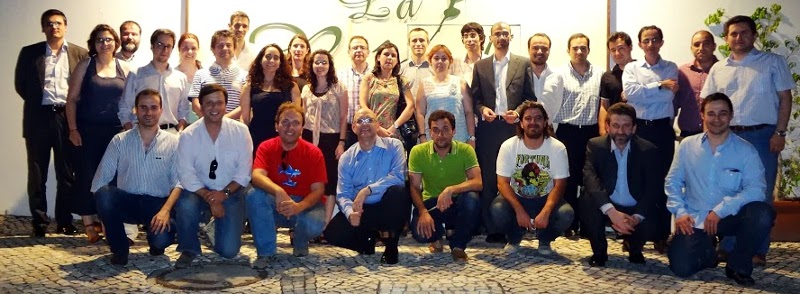
CMU Portugal Alumni Network Event On June 29th , 2013, several alumni of the Carnegie Mellon Portugal Program met in Lisbon, Portugal, with Andrew Shaindlin, associate vice president for Alumni Relations & Annual Giving, of the Carnegie Mellon University, and João Claro, national director of the CMU Portugal Program.

Rita Rodrigues, Ricardo Oliveira, and Gonçalo Pereira, the leaders of the Alumni Network of the CMU Portugal, explained, “it was a great opportunity to get together with alumni who graduated from 2006 to 2013. We had the chance to meet old colleagues not seen in a while, to meet new ones, to hear the news from CMU and to share and discuss a multitude of topics.”

The Alumni Network of the Carnegie Mellon Portugal Program was created in 2009 after the graduation ceremony of the first two classes of the CMU Portugal Program. It has 130 members and includes alumni related or not to the CMU Portugal Program. This network intends “to keep the CMU spirit alive and to build a network of professional relations to promote the interchange of knowledge and innovation,“ concluded the leaders of the Alumni Network.

July 2013

Alumni Network of the Carnegie Mellon Portugal Program
You can get involved with our community through our googlegroup (https://groups.google.com/forum/?hl=en#!forum/cmu-portuguese-alumni-chapter) or one of the channels announced at the CMU Alumni site (http://alumni.cmu.edu/s/1410/alumni/index.aspx?sid=1410&gid=1&pgid=331).

Miguel Godinho Matos Successfully Defended his Ph.D. Thesis

Miguel Godinho Matos Successfully Defended his Ph.D. Thesis

/uploadedImages/people/students/miguel_godinho_matos.jpg On June 18 th , 2013, Miguel Godinho Matos successfully defended his doctoral thesis entitled “Essays in Telecommunications Policy,” at the Instituto Superior Técnico of the Universidade Técnica de Lisboa (IST/UTL), with videoconference to Carnegie Mellon University (CMU). Miguel Godinho Matos worked closely with Pedro Ferreira, his advisor at CMU, Francisco Lima, his advisor at IST/UTL, and with David Krackhardt and Rahul Telang, both from CMU.

In the abstract of his thesis, Miguel Godinho Matos explains that the work carried out during his Ph.D. comprises three independent essays in Telecommunications Policy Management. The first study focuses “on the deployment of green field next generation access network infrastructures when the national regulatory authority has the power to define geographical markets at sub-national level for which it can apply differentiated regulatory remedies – Geographically Segmented Regulation (GSR).” The second study focuses “on how individual purchase decisions are influenced by the behavior of others in their social circle,” and on the third study Miguel Godinho Matos performed “a randomized field experiment to determine the role that likes play on the sales of movies in Video-on-Demand (VoD).” Following these studies, Miguel Matos was able to get some important results, such as: (1) “supply side interdependencies among markets make the implementation of GSR non trivial,” (2) “the propensity of adoption increases with the proportion of each individual’s adopter friends,” and (3) “self-fulfilling prophecies widely discussed in the literature on the effect of ratings on sales are hard to sustain in markets with costly goods that are sufficiently well-known.”

The jury members of Miguel Godinho Matos Ph.D thesis defense were Pedro Ferreira (CMU), Francisco Lima (IST/UTL), David Krackhardt (CMU), Rahul Telang (CMU), Marvin Sirbu (CMU), and Ravi Bapna (University of Minnesota).

July 2013

Ph.D. Student Paper Receives Best Paper Award at the SEAMS 2013

Ph.D. Student Paper Receives Best Paper Award at the SEAMS 2013

/uploadedImages/people/students/casanova-paulo_100x100.jpg “Diagnosing Architectural Run-time Failures” is the title of the paper that granted a Best Paper Award to Paulo Casanova, a dual degree doctoral student in Software Engineering/Computer Science (SE/CS), at Faculdade de CIências e Tecnologia of the Universidade de Coimbra and Carnegie Mellon University. The paper focuses on systems behavior and was presented at the “8th International Symposium on Software Engineering for Adaptive and Self-Managing Systems” (SEAMS 2013), in May 20-21, 2013.

The paper was co-written by Paulo Casanova, David Garlan, and Bradley Schmerl, from Carnegie Mellon University, and Rui Abreu, from Faculdade de Engenharia of the Universidade do Porto. “While significant research has been done over the past years on self-healing systems, identifying which specific parts of the system have failed is still a significant challenge,” explains Paulo Casanova adding that “this research proposes a new technique that leverages design-time diagnosis techniques to perform autonomic diagnosis at run time to identify which parts of the system are failing”. The SEAMS Symposium brings together many of the world’s experts on self-adaptive systems, and “the best paper award signals both the relevance of this area of research and the paper’s contributions to the field of autonomic computing,” stresses Paulo Casanova.

The abstract of the paper explains that it addresses three major shortcomings of the researchers’ previous work. First of all, it uses “an expressive, hierarchical language to describe system behavior that can be used to diagnose when a system is behaving different to expectation; the hierarchical language facilitates mapping low level system events to architecture level events,” Paulo Casanova explains. Moreover, in this work, the researchers provide “an automatic way to determine how much data to collect before an accurate diagnosis can produce”, and “a technique that allows the detection of correlated faults between components”. The results have already been tested and validated by injecting several failures in a system and accurately diagnosing them using the algorithm proposed by the researchers.

Paulo Casanova is a CMU Portugal dual degree Ph.D. student since 2010/2011. He is involved in several research projects, and is co-advised by Mário Zenha-Rela, at the Faculdade de Ciências of the Universidade de Coimbra, and by David Garlan at CMU.

July 2013

M-ITI Researchers Receive Best Paper Award at EICS’ 2013

M-ITI Researchers Receive Best Paper Award at EICS’ 2013

/uploadedImages/people/faculty-researchers/nunes-nuno-jardim_100x100.jpg Three researchers from the Madeira Interactive Technologies Institute (M-ITI), a not-for-profit innovation institution launched in the scope of the Carnegie Mellon Portugal Program, received a best paper award at the scientific conference “Engineering Interactive Computing Systems” (EICS’ 2013). The paper entitled “Improving Software Effort Estimation with Human-Centric Models: a comparison of UCP and iUCP accuracy” make a significant contribution to the Human-Computer Interaction body of knowledge, allowing companies to more accurately estimate project costs in software engineering early in the development lifecycle.

The paper co-authored by Rui Alves and Pedro Valente, doctoral students at the Universidade da Madeira (UMa), and Nuno Nunes, researcher at UMa and president of the M-ITI, presents a study of several projects developed at the CGI Logica (an industry partner of the CMU Portugal Program). In this study, the authors were able to extrapolate effort estimates that confirm the benefits of using human-centric models to enhance software development, in particular for long lasting challenges such as generating accurate project estimates very early in the development of the project.

This research was supervised by the president of M-ITI and scientific director of the CMU Portugal Program, Nuno Nunes, and developed in collaboration with the CGI/Logica Service Design Lab, a research initiative carried out as part of the CMU Portugal Program.

Held in London between June 24 and 27, 2013, EICS’ 2013 is one of the main conferences in the area of Human-Computer Interaction. This event provides a forum to address engineering issues related to the development of software and interactive systems, such as multi-touch devices, applications for entertainment and critical systems (medical, air traffic control).

M-ITI was created by the Universidade da Madeira, the Madeira Tecnopolo and by Carnegie Mellon University, as an honorary partner. Its aim is to provide a home for the various collaborations between these partners, in both research and education.

July 2013

New Dual Degree MS MBA Program Shows Initial Signs of Success

New Dual Degree MS/MBA Program Shows Initial Signs of Success

brochura_joint_program_UP_CMU The first eight students of the new dual degree MS/MBA program in Engineering and Business have already developed important business and management skills, one year after the program was launched by Porto Business School (PBS) and Carnegie Mellon University (CMU). This partnership offers a unique interdisciplinary and international education program, combining an MS in Electrical and Computer Engineering with an MBA, from two different institutions, in two different continents. According to the students, so far the experience has been both positive and intensive. (http://www.pbs.up.pt/?page_id=9446)

The Professional MS in Electrical and Computer Engineering, offered by Carnegie Mellon University, and the Master of Business Administration, offered by Porto Business School, seek to provide students the skills to develop advanced technologies and products, while maintaining an informed business and managerial perspective. The program aims at creating a new breed of engineering leaders who understand the language and practice of business, and are proficient in softer skills such as communication, team management, negotiation or leadership. With this combination of skills, they are favorably positioned to help technology companies achieve success in the marketplace in today’s very complex organizational settings.

In this first year of the program, the students stayed in Portugal, where they attended classes at the Porto Business School, as part of The Magellan MBA, and also at the Faculdade de Engenharia of the Universidade do Porto, where they worked toward the completion of their MS in Electrical and Computer Engineering. So far, the students highlight having learnt about the components of a business plan and having developed communication, presentation and negotiation skills, “which are not only related to business but also useful in all fields including engineering,” stated Yu-Chi Chen, a student who is now transferring to CMU. “The program provided a very good international experience and a different learning practice and methodology,” he stressed. /uploadedImages/programs/Chen Yu-Chi_ms_mba.PNG
Po-Lin Yeh With a background as an electrical engineer, Yu-Chi Chen considers that is important to be familiar with management. For Po-Lin Yeh, also a student in this program, furthering his knowledge as an engineer was always the main goal, but he also acknowledges that he wanted to develop the ability to work together with people from different nationalities, something that was made possible through the MBA program. “The reason why I chose this dual-degree was that I wanted to move from pure hardware design engineering to becoming a systems developer, someone who also knows how to develop application software”. Furthermore, according to Po-Lin Yeh, an “MBA can teach me how to become a top manager, and therefore I think the dual-degree is very suitable for me,” he concluded.

According to these two students, the experience has been both very positive and intensive, as it challenges students to gain not only new know-how in engineering, but also new know-how and soft skills in communication, management and business plans. According to Yu-Chi Chen and Po-Lin Yeh, the most challenging aspect was the team work and the relationship with colleagues from different backgrounds. Overall, in the end, the first year of studying in Portugal met their expectations. “The interdisciplinary feature, international experience and the team work with colleagues from various backgrounds broadened my horizons and enhanced my soft skills,” stressed Yu-Chi Chen.

In the next semester the students will move to Carnegie Mellon University’s Department of Electrical and Computer Engineering, in Pittsburgh, in order to stay two semesters at the CMU campus to improve their engineering skills. By the end of the dual degree program, the students will receive a Master in Business Administration (“The Magellan MBA”) from the Porto Business School and a Master’s Degree in Electrical and Computer Engineering from Carnegie Mellon University.

Now that the first year of the MS/MBA dual degree program has come to an end, it is time for the program to welcome another class in Portugal, starting this fall.

July, 2013

Three Doctoral Students Successfully Finished their Studies

Three Doctoral Students Successfully Finished their Studies
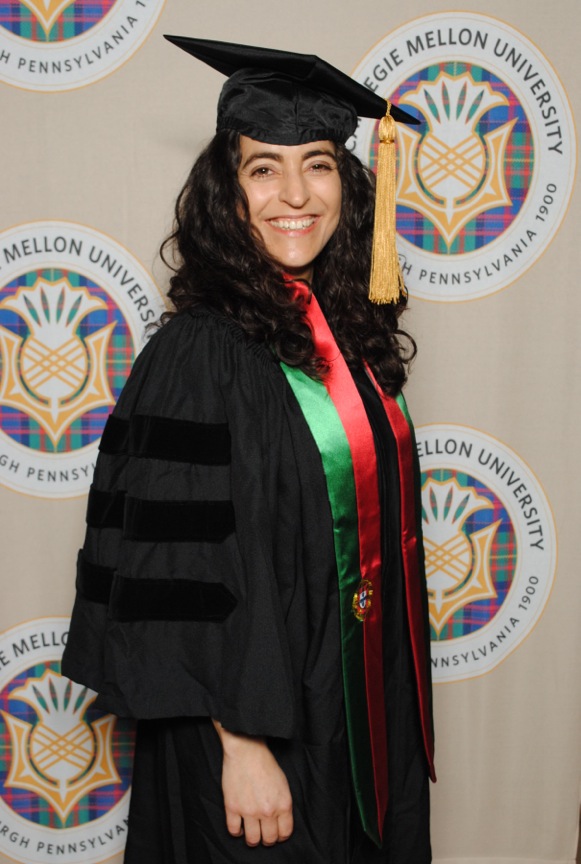
Three dual degree doctoral students of the Carnegie Mellon Portugal Program finished their studies in May 2013. Dragana Bajovic, Carla Costa, and Dusan Jakovetic, successfully defended their thesis dissertations on May 2013, and were able to participate on the 116th commencement ceremony on May 18th-19th, 2013, at Carnegie Mellon University, in Pittsburgh.

/uploadedImages/people/students/Dragana Bajovic.JPG May 14 th , 2013, is a day that Dragana Bajovic and Carla Costa will remember forever: the day when they defended their doctoral dissertations. Dragana Bajovic started her studies in Electrical and Computer Engineering, at Instituto Superior Técnico of the Universidade Técnica de Lisboa and Carnegie Mellon University (CMU), in the academic year 2008/2009. During five years, she spent part of her time with her Portuguese advisor João Xavier, from IST/UTL, and was at CMU with her co-advisor Bruno Sinopolli. A specialist in distributed optimization and information processing in sensor networks, Dragana Bajovic defended her dissertation on “Large Deviations Rates for Distributed Inference.”
“Agglomeration vs. Heritage: The Molds and Plastics Industries in Portugal” is the title of the dissertation defended by Carla Costa, a dual degree student in Technological Change and Entrepreneurship. Carla Costa was co-advised by Rui Baptista, from IST/UTL, and David Hounshell, from Carnegie Mellon University.
(Read the article about Carla’s experience at https://cmuportugal.org/tiercontent.aspx?id=4676 )
/uploadedImages/people/students/costa-carla-m-_100x100.jpg
/uploadedImages/people/students/Dusan Jakovetic(1).JPG On May 16 th , Dusan Jakovetic defended his thesis dissertation on “Distributed Optimization: Algorithms and Convergence Rates.” Dusan started his studies at the IST/UTL and CMU, on the academic year 2008/2009. He was co-advised by João Javier, from IST/UTL, and José M.F. Moura, from CMU. Concentrating his work around wireless sensor networks, distributed smooth and non-smooth optimization, and consensus algorithms, Jakovetic selected the joint doctoral ECE program because he felt that it would allow him to test this dynamic new research area in a real-world environment.

In the scope of the Carnegie Mellon Portugal Program, fifteen Ph.D. degrees have been awarded in different programs, such as Applied Mathematics, Language Technologies, Electrical and Computer Engineering, Software Engineering, Engineering and Public Policy, and Technological Change and Entrepreneurship.

June 2013

New Network Management Software will Improve the Quality of IPTV Service

New Network Management Software will Improve the Quality of IPTV Service

Ricardo Morla_new A group of researchers from Portuguese higher education institutions, Carnegie Mellon University, and Portugal Telecom are concluding the development of a novel network operation and management framework, which aims to improve the delivery of Internet Protocol Television (IP/TV) content to customers. The deployment experiments with data from Portugal Telecom (PT) are having positive results and shortly will move to real time data.

This is a result of the Next Generation Network Operations and Management (NeTS) project, carried out in the scope of the Carnegie Mellon Portugal Program, funded by the Fundação para a Ciência e a Tecnologia. The project follows a new approach to the operation and management of IP/TV networks and combines the expertise of a cross-disciplinary team led by Ricardo Morla, the principal investigator of the project in Portugal who is with the Faculdade de Engenharia of the Universidade do Porto and INESC TEC, and Hyong Kim, his counterpart at Carnegie Mellon University.

It is well known that networks are difficult to manage and operate. Companies are spending more on the daily management and operations of their networks than investing on developing and launching new IT services. According with the principal investigators of this project, studies have shown that scheduled maintenance and upgrades can account for more than 30% of network outages in Tier 1 ISPs, and operator errors are common and can be the root causes for more than 50% of failures in computer systems and networks. The excessive cost of network management is mainly due to the large scale of networks, the heterogeneity of different technologies, and their subtle interactions.

The NeTS project is based on hierarchical network abstraction modeling, structure learning of probabilistic graphical models, and kernel-based learning technologies. To automatically try to understand the nature of the data that goes through the line to a set-top box TV, the researchers gathered “insights from network abstraction, statistical and heuristic machine learning methods intended to build an intelligent network abstraction model,” explained Ricardo Morla.

The team is trying to diagnose the problems that occur in the network broadband access lines, modeling and classifying the data in order to improve the quality of the service. The records say that the connection is the major problem, specifically driven by connectivity loss. “We try to classify the different types of problems underlying that connectivity loss, which could be power failure, noise, and electromagnetic interference in the lines, for instance,” explained Ricardo Morla.

To model the time pattern of the events the research team is extracting important information from the available network management data. Concerning these specific topics, two papers have been submitted. The first one is on improving metrics to diagnose anomalies in the Digital Subscriber Line (DSL) access network using Renyi entropy. The second paper is on learning how to automatically classify different types of DSL anomalies. In both papers the main concern was to help improve the quality of the DSL service provided by the operators. Another paper on this topic was also submitted to the journal IEEE Transactions on Network and Service Management, which addresses the application of Support Vector Machine (SVM) classifiers from a class to this problem. Nets

The Project Team Involves Academia and Portugal Telecom
In addition to the approach and the use of different models to track the behavior of the networks, an innovative aspect of this project is its team, composed by researchers that have knowledge of networking and data.

The team involves researchers from the Instituto de Telecomunicações (IT), INESC TEC, Faculdade de Engenharia of the Universidade do Porto (FEUP), Faculdade de Ciências of the Universidade do Porto (FCUP), Instituto Superior Técnico of the Universidade Técnica de Lisboa (IST/UTL) and Carnegie Mellon University (CMU). The Portuguese telecommunications company Portugal Telecom (PT) also collaborates in this project, providing real data to classify the synchronization loss. “The tests we made with the data provided by PT reached results as good as 99 percent of reliability, which is very good”, said the Portuguese principal investigator. It is expected that PT could be using this software in the future.

Apart from the principal investigators, the project also involved two post doctoral researchers, Simon Malinowski and Angelos Marnerides, and a dual degree Ph.D. student on Electrical and Computer Engineering, Chen Wang. Her work is on the quality of the video provided to users, namely in “trying to optimize how the video servers are instantiated so that the quality of the service that we provide to the users improves”, said Ricardo Morla. The student is co-supervised by the two PIs of this project. The CMU PI is looking into the configuration of the network and into cloud-based approaches.

The software, that runs automatically, reads the data from the log files with management events, processes them and stores the information on a database. “We built a webpage that provides information on the data in a graphical way,” added the researcher. The way data is structured in the program facilitates stakeholders conclusions and decisions, hopefully allowing the operator to proactively correct problems before the customer could even notice them.

Concerning the future, Ricardo Morla has already something in mind to continue his research on the same topic when the NeTS project is concluded. “We will definitely put into place new proposals based on this project’s achievements. We are planning to propose a project on management of cloud and video infrastructure,” he said.

June 2013

Ph.D. Student Chooses Portugal to Study Renewable Energy Policies

Ph.D. Student Chooses Portugal to Study Renewable Energy Policies

Ivonne Pena Cabra 2010 2011 Ivonne Peña is a dual degree Ph.D. student of Engineering and Public Policy (EPP) since 2010/2011. As part of her Ph.D., Ivonne Peña is investigating the impact of policies, grid connection rights and the goals of countries in terms of a widespread use of renewable energies in the European Union, using Portugal as a case study.

Ivonne Peña-Cabra aims at determining the economic and technical implications of reducing obstacles to connections to new wind parks in Portugal, in order to help achieve the Horizon 2020 goals in a more cost-effective way. In order to accomplish her mission, the researcher is studying the public tenders devised to award connection rights to wind power projects that resulted in today’s distribution of wind parks across Portugal. This was the subject of a poster titled “Wind Parks in Portugal: Did Public Tenders Produce Poor Locations?,” presented last January at the Inaugural Symposium of the Carnegie Mellon Portugal Program, in Portugal.

The choice of selecting Portugal to be the case study is associated with the percentage of wind power produced in the country, the second largest in the world. In 2012, 20 percent of electricity in Portugal was produced by wind parks. “My research took this direction because I was exposed to the country’s information and to the Portuguese reality,” she explained.

For her research, Ivonne Peña is using data from the Entidade Reguladora dos Serviços Energéticos (ERSE), investment data from the International Energy Agency (IEA), and connection costs found in the literature. So far, the student has found some preliminary results, which relate the capacity factor to the connection costs of wind generation. She confirmed, for instance, that wind power generation costs decreased as the capacity factor increased, and that the costs increased as the connection costs increased as well.

“Imagine a stakeholder who wants to build a wind park. That stakeholder will try to build the wind park in an area with the best wind resource (reflected in a high capacity factor) because that will lead to higher profits. Now, if that location requires a high connection cost (for example, building a long distribution line, or using a large transformer), the stakeholder will probably re-evaluate if it is better to build the wind park in another location, with a lower capacity factor but requiring lower connection costs,” Ivonne Peña explained. “In other words, the stakeholder’s goal is to minimize the wind power generation costs,” she added.

In the Carnegie Mellon Portugal Program, the dual degree doctoral student is supervised by the Portuguese researcher Marcelino Ferreira, at the Instituto Superior Técnico of the Universidade Técnica de Lisboa (IST/UTL), and by Inês Lima Azevedo at CMU. According to the student, the experience of having two advisors from different institutions is challenging. “I believe that adapting to both environments puts you in a position where you always bring new things to the table, and where you always learn from your ‘new’ peers,” she said, adding that it is essential to prioritize the communication with the advisors in order not to lose focus. “My personal assessment is that this is a unique experience, one that I have enjoyed very much, from which I have learned and grown as a professional and as a person, and for that I am very grateful,” she highlighted.

In the future, Ivonne Penã will continue to put energy policies at the top of her concerns. She envisions herself as an energy policy analyst working for an international or government agency with operations in developing regions. “I want to apply my knowledge to regions that face budget constraints and need other finance mechanisms to promote renewable energy,” she said. “I want to help build the framework of energy policies that comprise both objectives [reducing CO2 emissions and increasing access to electricity services] in my country (Colombia) or anywhere else where this framework is needed,” she concluded.

Ivonne Peña was recently awarded one of five available scholarships to participate in the Summer Academy on Sustainable Energy Finance, held July 14-19th, 2013, by the Frankfurt Finance School and the UNEP Collaborating Centre for Climate and Sustainable Energy Finance. This is a highly competitive program, directed towards professionals and experts from different disciplines that work on areas related with financing climate change solutions. Read the article at https://cmuportugal.org/tiercontent.aspx?id=4634 .

June 2013

Carla Costa Seeks to Identify the Drivers of Industrial Clusters’ Performance


/uploadedImages/people/students/costa-carla-m-_100x100.jpg Agglomeration vs. Heritage: The Molds and Plastics Industries in Portugal” is the title of the dissertation of Carla Costa, who successfully defended her dual degree Ph.D. in Technological Change and Entrepreneurship, on May 14 th , 2013. Co-advised by Rui Baptista, from the Instituto Superior Técnico of the Universidade Técnica de Lisboa, and David Hounshell, from Carnegie Mellon University, Carla Costa expects that her findings will have a real impact for policy makers and firms.
During her Ph.D. studies, Carla Costa made an econometric analysis of detailed data on firms, founders, and workers in the Portuguese molds and plastics industries covering the period of 1986 to 2009. Throughout the analysis of the data, Carla Costa found, among other important issues, “that overall the performance of firms in a clustered industry is mainly driven by the transmission of important tacit knowledge through the entrepreneurial activities of workers from the same or a related industry.” Carla Costa believes that these findings “imply that policies aiming to incentive cluster formation in a region should target industries where tacit knowledge is important.”

In the scope of her Ph.D., Carla Costa and her Portuguese advisor Rui Baptista received for their paper on “Agglomeration vs. Organizational Reproduction: The Molds Cluster in Portugal,” an honorable mention for Best Paper at the 2011 SMS – Strategic Management Society Annual Conference (link: https://cmuportugal.org/tiercontent.aspx?id=3972).

Carla Costa is a passionate woman who in the near future intends to “follow a career in academia involving research, teaching, and work with entrepreneurs.”

Carla Costa

CMU Portugal: You defended your dissertation on May 14 th , 2013. How do you comment on your experience as a dual degree doctoral student in Technological Change and Entrepreneurship?
Carla Costa (CC): My experience in the TCE Program was very positive. I could experience the academic environments of both the U.S. and Europe, and across engineering and business schools. This diversity helps us establish a wider international professional network. However, having two advisors probably introduces an additional level of complexity in a Ph.D. Nevertheless, this is a common practice in many cases also outside the CMU Portugal Program.

CMU Portugal: What were your main findings during your Ph.D. studies?
CC: My research tries to identify the drivers of industrial clusters’ performance. I find that overall the performance of firms in a clustered industry is mainly driven by the transmission of important tacit knowledge through the entrepreneurial activities of workers from the same or a related industry (in the same value-chain). Benefits associated to the accumulation of firms in the same or related industries in a region can also have a positive impact on the performance of those firms, however these are less persistent over time. I also find that the benefits of agglomeration seem to be limited to industries where tacit knowledge is important, and where spinoffs are prevalent.

CMU Portugal: What will be the impact of these findings?
CC: My findings have impact for both policy makers and firms. They imply that policies aiming to incentive cluster formation in a region should target industries where tacit knowledge is important (or in very early industry emergence stages, when knowledge is not yet codified and widespread). These policies should promote the creation of spinoffs by removing non-compete clauses in labor contracts and support the creation of new spinoffs by facilitating access to financing. For entrepreneurs and firms, my findings should influence their location decision. The findings imply that firms should expect to benefit from locating in a region with a strong concentration of competitors and suppliers or customers, in particular if the entrepreneurs were working in the same or a related industry in their prior jobs, and if the tacit knowledge is important in their industry.

CMU Portugal: Now that you have finished your Ph.D., what will you do next?
CC: I want to follow a career in academia involving research, teaching, and work with entrepreneurs. I plan to continue learning from research in order to transfer that knowledge to both students and entrepreneurs. I want my work to have an impact on science but also on economic development. In summary, I want my work to matter for both students who want to know more, and entrepreneurs who want to change the world.

June 2013