
Doctoral Student Investigates User-Innovation by Patients

Doctoral Student Investigates User-Innovation by Patients
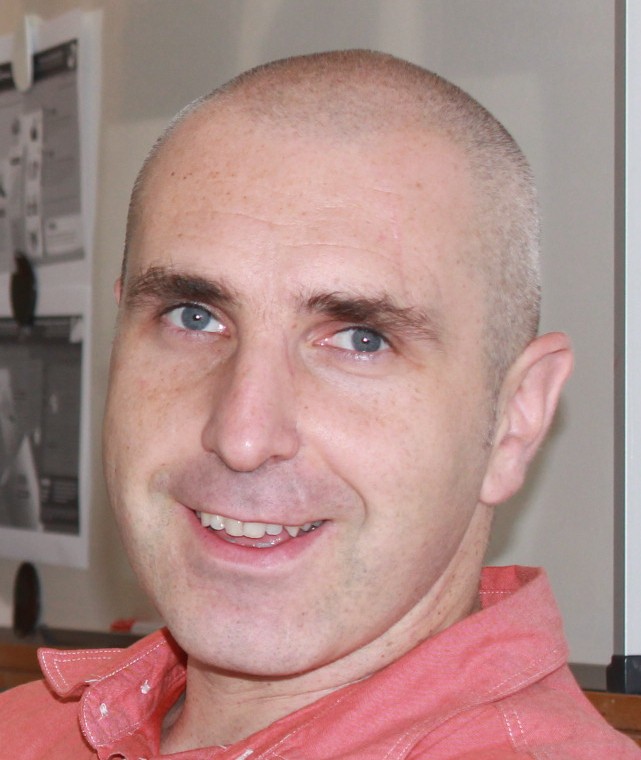
Leid Zejnilovic foto 2 For the last four years the dual degree doctoral student in Technological Change and Entrepreneurship (TCE), Leid Zejnilovic, has been studying the role of ‘users’ as sources of innovative ideas for new Telecom/IT products and services. His most recent paper titled “User-Innovation by Patients” focuses on the health sector, an area which is still “understudied” but “very rewarding,” because “it touches the lives of so many people,” he explained.

Leid Zejnilovic clarified that “the study in Portugal is, to the best of our knowledge, the largest survey of rare-disease patients designed to explore their innovation efforts.” According to some preliminary results it is possible to say: ”innovations developed by the patients have contributed to a significant improvement of the quality of life of the innovators.”

Leid Zejnilovic who is co-advised by Pedro Oliveira, from Católica Lisbon School of Business & Economics, and by Francisco Veloso, from Carnegie Mellon University (CMU), is also a member of one of the Portuguese leading research groups in this area, which has established an innovative social network for patients called Patient Innovation. This is a platform designed for patients and caregivers to show and share their answers and practical solutions developed to fight their diseases. For Leid Zejnilovic “this research is an exciting endeavour with the unique reward of helping others.“

CMU Portugal: You have been studying, during your dual degree Ph.D., the role of user-innovation in different sectors. In your second paper, you embrace the theme “User-innovation by Patients.” Why did you and your advisors select the health sector?
Leid Zejnilovic (LZ): The opportunity to investigate the health sector came through my advisor, Prof. Pedro Oliveira from Universidade Católica Portuguesa – Lisbon. Among other research streams, Pedro Oliveira and his research team have been studying the role of patients in developing new treatments and medical devices. For me, it was easy to decide to join this project as a part of my Ph.D. thesis, for a number of reasons. First, the role of patients as innovators is understudied, and the existing literature indicates that their contributions are very significant and valuable. Personally, and as a researcher, I see this area very rewarding to work in, as touches the lives of so many people. Second, despite the remarkable knowledge already available, many people still do not have solutions for the health problems they face. The number of diseases and their complexity is so big that the system cannot cover them all well enough. This is particularly true for rare diseases, as for many there is no cure and even correct diagnosing is a huge problem. Third, understanding innovation efforts by patients is an important step towards creating a system that enables and stimulates patient-innovations and their diffusion to other patients who may benefit from them.

Patient Innovation brochure 2
CMU Portugal: According to the abstract of the paper, you are investigating innovation efforts by rare-disease patients in Portugal. What have been the main conclusions so far?
LZ: The study in Portugal is, to the best of our knowledge, the largest survey of rare-disease patients designed to explore their innovation efforts. So far we have seen that more than 50% of 500 randomly selected interviewed patients claim investing some efforts to innovate. 15% of them have introduced some innovation, as compared to the existing practices. If we consider the estimations of rare disease patients, there may be about 7.5 million patient-innovators in Europe alone. Their innovations are mostly related to changes in behaviour and strategies to cope with the symptoms. But patients have also developed new treatments and medical devices, which is what we expected. Considering what makes them innovate, we find that it is the subjective perception of need that matters. Our results indicate that the innovations developed by the patients have contributed to a significant improvement of quality of life of the innovators.

CMU Portugal: In what ways do you think these conclusions can have implications for public policy?
LZ: Public policy in the health sector completely ignores the valuable knowledge generated by patients. There was never a serious attempt to measure or understand the patients’ innovative efforts at a national level. Furthermore, patients often experience strong resistance when they try to introduce their innovations. Once they solve some of their problems there is no incentive for them to move forward and diffuse their solutions. Judging by the observed motives for innovating, policy incentives designed to stimulate profit oriented entities do not work well in the case of patient-innovators. Our research opens a debate on the issues that policy makers need to consider for society to be able to benefit from these neglected innovation efforts.

CMU Portugal: What can be the potential for using innovation efforts by patients to improve research in rare diseases?
LZ: Today every individual is equipped with information and knowledge that is made relatively easy available through Internet. Patients are not an exception. They have strong incentives to search for knowledge and solutions for their illness. These incentives are stronger than those of hobbyists or individuals looking for online entertainment. Patients are also the ones that know very well their personal experience with a disease. One of the ways to externalize their tacit knowledge about the disease is through choices they make, solutions they come-up with and the way that affects their life. Knowing what patients are doing to cope with their health-condition and how they approach that process is a very important message. If these experiences are collected, evaluated, improved, and made available for both researchers and other patients, it can certainly help in guiding efforts and informing what can or should be done.

CMU Portugal: Your research work is based on the perspective of user-innovation theory. Could you explain the importance of using this perspective and not another?
LZ: A common approach to look at innovation in medicine or health-care is to see what the scientific community (e.g., research labs and universities) as well as the big pharmaceuticals are doing. This approach has merits and has played an important role in understanding how to improve health-care. Yet, innovation by users is diverse and widely distributed. The solutions developed by patients typically tap unique individual strengths, knowledge, and abilities. Since there is a general increase in user-innovation due to the increasing knowledge and widespread technology tools, focusing on user-innovation enriches our understanding and improves chances to help a broader population faster and better.

CMU Portugal: Are there other research works related with “User-Innovation by Patients,” or is this an innovative area?
LZ:
Published research on the topic of user-innovation by patients is still scarce. Our research group is certainly among the leading groups worldwide. The topic is gaining interest, and this year at our annual meeting of open and user innovation community in Brighton (UK) there were several papers on user-innovation in health-care.

CMU Portugal: Could you tell me more about your research group?
LZ:
We are a very dynamic, interdisciplinary and international research group that keeps building upon state-of-the-art knowledge. For example, in a different study, we are exploring how patients validate their self-developed solutions, and how to help them gain more credibility and visibility. Also, as a result of our research, since we observed that patients don’t have incentives to diffuse and lack a channel to facilitate the diffusion of their innovations, we have established a social network for patients. We think this project can be truly revolutionary and have an impact on the lives of many patients. It has quickly gained support from very distinguished individuals, such as Nobel Prize winners in the health-sciences, and other reputable researchers from different fields, like innovation, law, and medicine. More importantly, it has been enthusiastically supported by patients and patient groups. I feel this research is an exciting endeavour with the unique reward of helping others.

____

Leid Zejnilovic started his dual doctoral degree in the academic year 2009/2010, at the Instituto Superior Técnico of the Universidade Técnica de Lisboa (IST/UTL), at Católica-Lisbon School and Carnegie Mellon University (CMU), within the CMU Portugal Program, which is funded by the Portuguese Fundação para a Ciência e a Tecnologia (FCT). His research interests are Information and Communication Technologies, Innovation and Public Policy.

September 2013

Paper Co-written by Doctoral Student Receives Best Paper Award at the IEEE GreenCom

Paper Co-written by Doctoral Student Receives Best Paper Award at the IEEE GreenCom

Senbo Fu 2012 “Optimized Thermal-aware Workload Distribution Considering Allocation Constraints in Data Centers” is the title of the paper co-writen by Senbo Fu, dual degree doctoral student in Electrical and Computer Engineering (ECE), recipient of the Best Paper Award at the 2013 IEEE International Conference on Green Computing and Communications (IEEE GreenCom), last August in China.

Co-written with Hassan Shamalizadeh (IEETA), Luis Almeida (FEUP/IT), Shuai Wan (FEUP/IT), Paulo Amaral (FEUP/IT), Shashi Prabh (FEUP/IT), this paper addresses a concern with power management, which is increasingly critical for sustainable datacenters. The authors focused their research on a particular aspect that has a strong impact on the power consumed by a datacenter, which is how the workload is distributed among its servers.

The authors of the paper present “a workload distribution optimization method for homogeneous server environments that minimizes total heat recirculation,” according to the abstract of the paper. The authors used “a parameter to constrain the total contribution of each node to the recirculated heat and (…) show that such parameter allows fine-grained control over the number of needed servers and consequently over the balance between IT computing power and cooling power needs.” Additionally, the method incorporated “allocation constraints, representing cases where specific workloads must be allocated to a specific subset of servers only, which for example, result from Service-Level-Agreements with datacenter customers.” The authors “carry out simulation experiments using measurement data provided by the Bluesim tool,” and the results “show the effectiveness of the proposed approach in controlling the active servers, thus total power, needed for a given workload while meeting allocation constraints.”

For Senbo Fu, the involvement in this paper, and this award, open another application area for his research topic, which is Cloud Computing. His expectations are to “be wider in this hot topic, including resource allocation, energy efficiency, power management, fault tolerance, and data center management.”

Senbo Fu is a dual degree doctoral student in Electrical and Computer Engineering (ECE), from the Faculdade de Ciências of the Universidade do Porto (FCUP) and Carnegie Mellon University (CMU). He began his doctoral studies in the academic year 2012/2013, and he is co-advised by Professors Rui Prior, at FCUP, and Hyong Kim, at CMU. Senbo Fu is a dual degree doctoral student of the CMU Portugal Program, which is funded by the Fundação para a Ciência e a Tecnologia (FCT).

September 2013

Acronyms
CMU – Carnegie Mellon University
FCT – Portuguese Foundation for Science and Tecnology
FCUP – Faculdade de Ciências of the Universidade do Porto
FEUP – Faculdade de Engenharia of the Universidade do Porto
IEEETA – Institute of Electronics and Telematics Engineering of Aveiro
IT – Telecommunications Institute

CMU Portugal Organizes Sessions on the Call for Entrepreneurial Research Initiatives

CMU Portugal Organizes Sessions on the Call for Entrepreneurial Research Initiatives

Between July 23 and the end of September, the directors of the Carnegie Mellon Portugal Program are organizing a series of public sessions, in Portugal and at Carnegie Mellon University (CMU), on the Call for Entrepreneurial Research Initiatives (ERIs), funded by the Fundação para a Ciência e a Tecnologia. The goal is to provide information and discuss the mission, structure, and financial support for the ERIs, in order to foster and support the creation of strong proposals. The call will remain open until 5 pm (Lisbon time) of October 16, 2013.

In the public sessions held in July, the national director of the CMU Portugal Program, João Claro, started by giving an overview of Phase I of the Program, and its achievements. According to the national director, the Program has until now carried out 25 collaborative R&D projects, and its dual degree professional masters and doctoral programs have already more than 200 graduates. João Claro stressed how the “Ph.D. dual degree students, in particular, have been very important in linking Portuguese institutions and Carnegie Mellon University.” The institutional support and the strong commitment of the academic community from Portugal and Carnegie Mellon, along with the active role of more than 80 companies, have contributed to groundbreaking research in Information and Communication Technologies (ICT), the deployment of unique testbeds, the strengthening of the connections between the different stakeholders of the partnership, the creation of new sustainable institutions and programs, and an initial economic impact, through the deployment of new advanced capabilities in industry, the improvement of products and services of industry partners, and new products and services provided by the nine startups created in the scope of the Program’s activities.

In Phase II, the Carnegie Mellon Portugal Program aims at consolidating and extending the work started during Phase I. In order to achieve this, the partnership will, in particular, pursue more ambitious international collaborations, closely integrating talent development, research and partnerships with industry. João Claro emphasized that “fostering and strengthening the support to technology commercialization is also essential, as well as further promoting early stage exploratory collaborations, and addressing a refocused set of strategic areas.”

The Call for ERIs is open to projects in science, engineering, management and policy, combining fundamental and applied research, and technological innovation and economic development, to focus on important real world problems entailing significant scientific challenges. The aim is to link scientific discovery and technological innovation, to advance technology and to produce graduates who will be creative innovators in a global economy.

The national director of the program explained that it is expected that the call will fund four to seven projects, with an approximate global budget of 6 million euros, half in Portugal and half at CMU. In order to be accepted to this call, the proposals must fulfill certain criteria. One of the important aspects is that an ERI should focus on real world problems that cannot be addressed without a significant level of fundamental knowledge in ICT, which should feed into devices, components and systems required in solutions for the targeted problem areas. Moreover, an ERI should combine research institutions, companies, markets, and end users throughout all stages of activity, both in Portugal and at CMU.

The proposals must be strongly aligned with the mission of the CMU Portugal Program and, among other potential areas to be included or combined in ERIs, may address seven strategic areas of ICT identified in the Program’s Roadmap for Phase II: Future Internet Architectures and Business Models; Large Data Analysis for Network Engineering and Consumer Analytics; Secure and Dependable Software-Intensive Systems; Intelligent Electric Power and Smart Transportation for Sustainable Mobility; Human-Computer Interaction; Technology Policy and Entrepreneurship; and Applied Mathematics.

To clarify the goals of an ERI, João Claro gave the illustrative example of DRIVE-IN, the largest project, in dimension and budget, carried out in the scope of Phase I of the CMU Portugal Program. The project aimed at improving vehicle user experience, as well as safety and the overall efficiency of vehicle and road utilization, using next generation vehicle-to-vehicle communication networks. The project featured multiple elements that an ERI should have: it addressed a real problem (traffic safety, vehicle and road utilization, vehicle user experience) trying to overcome related scientific challenges (vehicle-to-vehicle communications); it involved Portuguese universities and research labs, Carnegie Mellon University, companies and public organizations, at all stages of its activity; it was able to secure funding from some of its partners; it created a vehicle-to-vehicle communication testbed on a fleet of 465 cabs; and among its results the project has two patents, and a spinoff (Veniam ’Works).

The public sessions have brought together faculty members, researchers, doctoral students, senior staff of innovation and entrepreneurship support organizations, business executives and startup managers. The questions raised by the audience have mainly focused on funding, teams (inclusion of dual degree PhD students) and important topics that should be considered when submitting a proposal for an ERI.

The kick off session took place at INESC Porto, and to date the Program directors have been in sessions at several Portuguese universities, including the Faculdade de Ciências e Tecnologia of the Universidade Nova de Lisboa, the Instituto Superior Técnico of the Universidade de Lisboa, the Universidade de Coimbra, the Universidade de Aveiro, and the Universidade do Minho, and also at Carnegie Mellon University.

At the end of August, the two directors will be together in a session organized in Portugal, and one other held at CMU. In September, other sessions will follow in Portugal. More information about the call at http://www.fct.pt/apoios/projectos/concursos/cmu/2013/ or https://cmuportugal.org/tiercontent.aspx?id=4786 .

August 2013

Monograph Offers New Model to Enhance Use of Clean Resources

Monograph Offers New Model to Enhance Use of Clean Resources

Engineering IT-Enabled Sustainable Electricity Services: The Tale of Two Low-Cost Green Azores Islands Engineering IT-Enabled Sustainable Electricity Services: The Tale of Two Low-Cost Green Azores Islands” is a monograph on sustainable energy that introduces “a first-of-its-kind proof of concept that it is, indeed, possible to utilize very diverse resources in alignment with customers’ preferences while meeting pre-specified societal goals,” as stated by the co-authors Marija Ilic, Le Xie and Qixing Liu. This work provides an overview of the Green Islands (MIT Portugal) and DYMONDS (CMU Portugal) projects, and demonstrates its concepts by simulating electric power systems in two islands in the Azores archipelago, Flores and São Miguel, in Portugal.
Marija Ilic is deeply involved with Portugal and with the Carnegie Mellon Portugal Program, in particular. The idea of studying the Azores islands came from a suggestion given by the former Minister of Science, Technology, and Higher Education, José Mariano Gago, and the former Secretary of State of Science, Technology and Higher Education, Manuel Heitor, and after several conversations with José M.F. Moura, director of the CMU Portugal Program at CMU, and Ernest Moniz, the current United States Secretary of Energy. As a researcher, Marija Ilic works closely with João Peças Lopes, from Universidade do Porto, in the project Green Islands ( http://www.green-islands-azores.uac.pt ), and with Luís Marcelino Ferreira and Pedro Carvalho, both from Instituto Superior Técnico of the Universidade Técnica de Lisboa (IST/UTL), in project DYMONDS (Toward Dynamic Monitoring and Decision-Based Smart Distribution Systems), carried out in the scope of the CMU Portugal Program, among others. In fact, the monograph received the collaboration of Masoud Nazari, dual degree Engineering and Public Policy alumnus, and from Luís Marcelino Ferreira, Pedro Carvalho, and Paulo Ferreira (IST/UTL). /uploadedImages/people/faculty-researchers/ilic-marija_100x100.jpg

According to the three authors, the book was motivated by the “growing challenges and opportunities on the path to sustainable energy services, and focuses on the importance of information technology to overcoming problems, such as those brought about by integrating clean and efficient resources and by the high cost of these technologies.” The biggest challenge faced during the simulations of electric power systems was designing the IT architectures.

The monograph presents methods for predicting variable resources, such as wind power generation, and analyzes the achievable accuracy of these predictions. Throughout this book, the authors show that the cost of serving customers in systems with highly uncertain generation will depend to a very large extent on how well the forecasts are made. Therefore, the supporting IT technologies based on predictive models are critical to avoid the need for fast-responding storage.

With this manual, the authors hope to convince the reader that future green electrical systems cannot be determined by looking only at the common capacity estimates, and the characteristics of individual technologies. “Instead, a systems approach to enhancing today’s planning and operating practices is required in order to use the hidden potential of many distributed clean resources.” If done right, “this would lead to a much higher level of efficiency comparatively to that achieved currently in systems with conventional and fully controllable technologies,” the editors wrote.

According to José M.F. Moura, director of the Carnegie Mellon Portugal Program at CMU, “the fundamentally distributed interactive approach offers the beginning of a framework that has the potential to scale to large power interconnected electric grids such as those of the U.S., China, Europe.” The Philip L. and Marsha Dowd University professor of Electrical and Computer Engineering, who is also member of the National Academy of Engineering, stresses the impact of the DYMONDS project which is a “first seed that explores the potential of making electricity services in the Azores Islands sustainable by means of flexible data-driven embedded IT,” adding that “the end-to-end models and data described in this book can be used by other researchers to enhance the IT and software infrastructures to further improve the performance of the electric grid.”

Marija Ilic is also a professor of Electrical and Computer Engineering and of Engineering and Public Policy at CMU and the director of the university’s Electric Energy Systems Group, which is developing research programs, curricula and outreach initiatives to improve the electric power system in the United States.

The book will be published on August 31 2013, but it is already available for pre-order at Amazon.

Source: http://www.amazon.com/Engineering-IT-Enabled-Sustainable-Electricity-Services/dp/038709735X.

July 2013

Faculty Exchange Program has Empowered 43 Researchers Since its Inception

Faculty Exchange Program has Empowered 43 Researchers Since its Inception
Since its beginning, about six years ago, the Faculty Exchange Program launched by the Carnegie Mellon Portugal Program, has given researchers from Portuguese universities the opportunity to cross the ocean and carry out research and education activities at Carnegie Mellon University (CMU). Overall, these experiences have been very positive and enriching. Soon, six more faculty members will embrace this opportunity: three in Fall 2013, and three in Spring 2014.

More than its figures, what stands out in this program is a unique set of experiences that have deeply influenced researchers in their paths. The program, funded by the Fundação para a Ciência e a Tecnologia, aims at accelerating the adoption of best practices in education, research and innovation, through immersion in the academic environment of a top university. The statements of the researchers that have benefited from this experience confirm how the program is accomplishing its mission.

“This visit was a very fruitful and enriching experience, both at the personal and at the professional levels,” stated João Costa Seco, faculty member of the Faculdade de Ciências e Tecnologia of the Universidade Nova de Lisboa (FCT/UNL), and researcher at the Center of Informatics and Information Technology (CITI). From August to December 2012, João Costa Seco was at the Computer Science Department at CMU, to strengthen an active research collaboration between Frank Pfenning, from CMU, and members of the CITI research team, initiated with project Interfaces , carried out in the scope of the CMU Portugal Program. /uploadedImages/people/faculty-researchers/joao_costa_seco.jpg
/uploadedImages/people/faculty_exchange/petia_georgieva.jpg Petia Georgieva, faculty member of the Universidade de Aveiro (UA), stayed at the Computer Science and Machine Learning departments at CMU, from September to December 2012. In addition to a teaching collaboration with Tom Mitchell, from CMU, Petia Georgieva advanced research that led to two papers that were recently presented at two international conferences held in Portugal.
During her stay at CMU, Marta Castilho Gomes, faculty member at Instituto Superior Técnico of the Universidade Técnica de Lisboa (IST/UTL), interacted with the Process Systems Engineering (PSE) group of the Chemical Engineering Department’s Center for Advanced Process Decision-making (CAPD), the largest research group in the United States in PSE. From March 1 to May 31, 2012, Marta Castilho Gomes was able to meet with Ignacio Grossmann, faculty member at CMU, on a “weekly basis to address a research topic on scheduling of multistage batch scheduling processes.” As has happened with other participants in the Faculty Exchange Program, Marta Castilho Gomes was invited to give a seminar for Ph.D. students of the ECE Department at CMU on “How to get a Ph.D.: A Reflection and Discussion of the Ph.D. Process.”
/uploadedImages/people/faculty-researchers/oakley-ian_100x100.jpg “My visit to Carnegie Mellon allowed me to develop my research, refine my teaching and meaningfully participate in academic service,” highlighted Ian Oakley, assistant professor at the Madeira Interactive Technologies Institute of the Universidade da Madeira (M-ITI/UMa), who visited the Human-Computer Interaction Institute (HCII) from August to December 2012. “The experience was inspiring, practically and culturally speaking, and I strongly recommend it to other faculty members,” he concluded.

João Costa Seco, Petia Georgieva, Marta Castilho Gomes and Ian Oakley are four of the 12 researchers that benefited from the Faculty Exchange Program in 2012. In 2011 and 2010, 14 and 11 other researchers, respectively, participated in the program.

The researchers that embrace this opportunity can spend at least one semester at a CMU department, hosted by a faculty member, and carrying out a myriad of academic activities, according to the workplan submitted to the Carnegie Mellon Portugal Program leadership, as part of their application for the Faculty Exchange Program.

The activities are diverse and the results have been very concrete, including: improvements to the scientific writing process; changes in teaching methods, toward a higher focus on student learning and involvement; introduction of new and dynamic ideas to improve organization within their own departments; higher interaction with other research groups in Portugal, enabled by the relations with other participants in the program; the jump-starting of ongoing research collaborations with their peers at CMU.

The Faculty Exchange Program increased significantly the number of extended visits to CMU by Portuguese faculty members, who in the past six years have come from many different Portuguese institutions, namely: Instituto Superior Técnico of the Universidade Técnica de Lisboa (IST/UTL), Universidade de Aveiro (UA), Universidade Nova de Lisboa (UNL), Universidade da Madeira (UMa), Universidade do Algarve (UAlg), Universidade do Porto (U.Porto), Universidade de Coimbra (UC), Universidade de Lisboa (UL), Universidade Católica Portuguesa (UCP), and Universidade do Minho (UMinho).

Who will be at CMU in Fall 2013 and Spring 2014?

This Fall, Mónica Cameirão, postdoc at M-ITI, Fernando Morgado Dias, faculty member of UMa, and Vasco Miguel Nunes Manquinho, from IST/UTL, will be hosted at different departments at CMU. Mónica Cameirão will be hosted by Daniel P. Siewiorek, director of the Quality of Life Technology Center, and Buhl University Professor of Electrical and Computer Engineering and Computer Science, from August to December 2013. Fernando Morgado Dias and Vasco Miguel Nunes Manquinho, will stay at CMU between September and December 2013. Fernando Morgado Dias will be hosted by Mario Bergés from the Civil and Environmental Engineering Department, and Vasco Miguel Nunes Manquinho will be hosted by Edmund M. Clarke from the Computer Science Department. /uploadedImages/people/faculty_exchange/Monica_cameirao.jpg

In Spring 2014, three more Portuguese faculty members will go to Carnegie Mellon University. Jorge Miguel Sá Silva, from the Universidade de Coimbra, will be hosted at Carnegie Mellon Silicon Valley by Pei Zhang from CyLab and the Information Networking Institute (INI), between January and May 2014. Pedro Sanches Amorim, faculty member of the Universidade do Porto, will be hosted by Ignacio E. Grossmann, Rudolph R. and Florence Dean University Professor of Chemical Engineering, during his stay between February and June, 2014. From March to May 2014, Joel Arrais, from the Universidade de Coimbra, will be hosted by Ziv Bar-Joseph from the Computer Science Department.

This program is a two-way experience that helps to strengthen the ties between researchers from Portugal and CMU. The Faculty Exchange Program will continue throughout Phase II of the CMU Portugal Program, as a fundamental contribution to accomplish its mission of establishing Portugal at the forefront of Science and Innovation in Information and Communication Technologies. A second call for the Faculty Exchange Program is open until September 15 2013, for stays in Spring 2014 and Fall 2014 (link to https://cmuportugal.org/tiercontent.aspx?id=1970).

July 2013

CMU Portugal Researchers Present Their Work at LARSyS 2013

CMU Portugal Researchers Present Their Work at LARSyS 2013

LARSYS 2013 Strengthening a research network and launching new challenges were the main goals of the 2013 Annual Meeting of the Associate Laboratory LARSyS, which had the participation of several researchers involved in the Carnegie Mellon Portugal Program (CMU Portugal) and affiliated with some of the Associate Laboratory’s six R&D. The event was held at the Pavilhão do Conhecimento, in Lisbon, on July 4-5, 2013.

The meeting aimed at fostering the scientific culture of all those involved in the specific research areas of LARSyS, as well as university students and other researchers interested in discussing challenges and new opportunities for robotics, systems and related applications in science and engineering. LARSyS brings together six R&D units, namely the Instituto de Sistemas e Robótica (ISR), the Centro de Investigação em Inovação, Tecnologia e Políticas (IN+), the Centro de Análise Matemática, Geometria e Sistemas Dinâmicos (CAMGSD), the Centro de Recursos Minerais, Mineralogia e Cristalografia (CREMINER), the IMAR Center of the Universidade dos Açores (IMAR Açores), and the Madeira Interactive Technologies Institute (M-ITI). This Associate Laboratory is based on four Portuguese universities: the Universidade Técnica de Lisboa, through the Instituto Superior Técnico (IST/UTL), the Universidade de Lisboa, through the Faculdade de Ciências (FCUL), the Universidade dos Açores (UAc), and the Universidade da Madeira (UMa).

The annual meeting included presentations, discussions and a poster session, led by researchers involved in the research projects carried out at the different R&D units. The program addressed topics such as robotics, human-computer interaction, sustainability and health systems, associated with knowledge strategies emerging both in Portugal and abroad. In the plenary sessions, young researchers discussed new research topics, while technical research sessions were dedicated to brief presentations and the discussion of sample papers and research produced over the last few years. Finally, in the technical sessions the participants presented and discussed emerging challenges.

M-ITI, a not-for-profit innovation institution created in the scope of the Carnegie Mellon Portugal Program, was represented by more than 10 members, who participated in several sessions, addressing different areas of expertise of the Institute, from education and health technologies, to sustainability and assistive technologies.

Several dual degree doctoral students and alumni of the CMU Portugal Program participated actively in different sessions of the event. Ricardo Cabral and Susana Brandão, both students in the fourth year of the Electrical and Computer Engineering (ECE) program, presented their works, entitled “Indoor Reconstruction, Classifiers and Humans in the Loop,” and “3D Sensing Technologies for the Analysis of Consumer Behaviors,” respectively. Dragana Bajovic and Dusan Jakovetic, who recently defended their doctoral theses in ECE, presented a joint paper “Optimization in Complex Random Systems.” Carla Costa, alumna of the Technological Change and Entrepreneurship (TCE) program, talked about “Agglomeration vs. Heritage: The Molds Cluster in Portugal”. Jayakorn Vongkulbhisal and Jerónimo Rodrigues, dual degree doctoral students in ECE, presented their posters, “Displaying Huge Scale Sets of Images in Finite Space” and “Bin-picking of textureless shiny objects using random ferns on multi-light images”, respectively, at the poster session.

The first part of the last session of the event brought together several researchers affiliated with LARSyS, and the directors of two international partnerships, to discuss the World Connections of the Associate Laboratory. João Claro, the national director of the Carnegie Mellon Portugal Program, participated in this session and spoke about the focus on innovation and entrepreneurship in the second phase of the Program, as well as about the growing importance of some emerging topics in the partnership, such as the support to the creation, development and internationalization of startups, the opportunities for student internships in top international companies, the development of alumni relations, the support to exploratory projects at initial research or innovation stages, and the creation of new sustainable institutions and graduate education programs.

The meeting was organized by LARSyS in close collaboration with the Agência Nacional para a Cultura Científica e Tecnológica, Ciência Viva.

July 2013

Workshop Addresses the Gap Between Research and Commercialization

Workshop Addresses the Gap Between Research and Commercialization
“Innovation and Entrepreneurship” was the theme of a workshop organized by the Carnegie Mellon Portugal Program, funded by the Fundação para a Ciência e a Tecnologia (FCT), to bring together different stakeholders to discuss the major challenges and opportunities in paving the way for technology commercialization. The event was held on June 20, 2013, at the Pavilhão do Conhecimento, in Lisbon, Portugal.

The workshop featured researchers, entrepreneurs and experts on taking new ideas to market and Intellectual Property (IP) management. The participants shared their stories of startups created in an academic context, provided an overview of the commercialization process, highlighted the role of different commercialization support initiatives in Portugal and at Carnegie Mellon University (CMU), and discussed the life cycle of IP. The workshop was strongly grounded on the hands-on experience of the participants and the discussion included the presentation of multiple practical examples.

The national director of the CMU Portugal Program, João Claro, opened the half-day workshop reinforcing the role and the importance of innovation and entrepreneurship for Phase II of the partnership. “We have outcomes from research projects carried out in Phase I that are now ready for commercialization. Therefore, this workshop comes in good time,” he said, stressing the importance of fostering the collaboration between CMU, Portuguese research institutions and industry, also for technology commercialization. According to the national director, “there is a strong gap between these two stages [research and commercialization], and the entrepreneurial culture in academia needs to be strengthened.”

The welcome session was followed by a “Product Idea” Pitch Coaching Session, where three Portuguese researchers presented their ideas for new products, and had the opportunity to interact with the participants. Rui José, faculty member and researcher at the Universidade do Minho, pitched “displr.com”, a “social network for interactive place-based screen media that brings together display owners, page visitors, brands and content creators into open collaborative models.” The service aims at reshaping the role and experience of digital display users in the public sphere, by turning them into a rich communication medium that everyone can use.

Carlos Figueiredo, a 4th year Ph.D. student at the Faculdade de Engenharia of the Universidade do Porto, within the UT Austin Portugal Program, presented a proposal for an emergent technology that provides users with the ability to escape their “bubbles” of online information by designing information flows based on Social Network data. This is centered on a new paradigm to define central nodes that determine the access to resources. “Content tailored by whom surprises you,” is his proposal for search and recommendation outside the social bubble.

Nuno Pereira, a researcher at the Research Centre in Real-Time and Embedded Computing Systems (CISTER/INESC TEC, ISEP), introduced “DC Microscope”, an Integrated Datacenter Management Toolset. “DC Microscope” is a monitoring and management system that deals with the computational and physical aspects of a datacenter, for energy-efficient operation. The participants addressed several questions to each researcher, and provided inputs on parts of the concepts and the presentations that could be enriched, related to the description of the products or services, their positioning relative to competition, and future sustainability.

Panel: Inspiring the Future

In the first panel, titled “Multiple Paths to Technology Commercialization,” researchers who became entrepreneurs presented startups at different stages, and with different pathways of development, revealing how the participation in support initiatives, entrepreneurship competitions, and the access to venture capital and investors helped them move toward the market. Reed McManigle, an invited speaker from CMU, focused his presentation on the different components of an entrepreneurial ecosystem, and gave examples of several initiatives organized by CMU to promote an entrepreneurial environment.

Susana Sargento, faculty member of the Universidade de Aveiro and researcher at the Instituto de Telecomunicações (IT), is the co-founder and VP for Engineering of the spin-off Veniam‘Works. The startup was created in the scope of the CMU Portugal Program, and recently won the 2013 Building Global Innovators (BGI) Competition, which according to Susana Sargento was “an amazing experience.” During their participation in the BGI Competition, organized by the ISCTE and the MIT Portugal Program, the Veniam’Works team worked intensively on their business plan, and even changed its main structure. Susana Sargento and João Barros, faculty member of the Universidade do Porto (U.Porto), researcher at IT and national director of the CMU Portugal Program between 2009 and 2012, created the startup in 2012. Veniam’Works provides a seamless low-cost vehicle-based Internet infrastructure. This innovative system, created in the scope of DRIVE-IN, a research project supported by the CMU Portugal Program, is being tested on a taxi fleet in Porto, Portugal, and on a truck fleet at the Port of Leixões, also in Porto.

The co-founder and CTO of Feedzai, Paulo Marques, described how it is possible to “Uncover and Manage Anomalies” with the products of the first startup launched as part of the CMU Portugal Program. Feedzai specializes in processing large volumes of data with low-latency to produce actionable information in real-time, and currently serves clients all over the world. This was one of the main challenges emphasized by Paulo Marques, who was faculty member at the Universidade de Coimbra (UC), and for two years coordinated the dual degree Professional Masters in Software Engineering, taught by the UC and CMU, within the CMU Portugal Program. Paulo Marques explained that it is very important to stay focused when “we have clients in different parts of the world with completely singular needs,” to pay maximum attention to the work done by the competition, and to be prepared to face unexpected difficulties when everything seems to be going well. Feedzai won the BES Inovação Award in 2012, an initiative that, according to Paulo Marques, is very beneficial for startups.

Reed McManigle, senior manager at CTTEC (CMU’s Technology Transfer Office), started his presentation stressing that “CMU is good at promoting entrepreneurship,” and introducing some of the best practices put in place at the university. Culture and incentives, entrepreneurship education, mentors and informal training, advisor networks, and capital and management are all important elements to consider in an entrepreneurship ecosystem. Reed McManigle stressed that networking and interacting, whether formally or informally, is in general very important to the entrepreneurial process. The characteristics of a CEO, the steps to find funding and/or partnerships, or even the incubation stages were all topics addressed by Reed McManigle. He concluded his presentation by showing examples of CMU spinoffs that received different types and levels of assistance.

Advanced Cyclone Systems (ACSystems), a startup created in 2008, was presented by Martha Watson, the company’s business development director. Martha Watson explained the technology, the products and the business model of the spin-off, as well as its development path. ACSystems commercializes an innovative technology called ReCyclone, which was developed and patented internationally by Romualdo Salcedo, faculty member and researcher of the Faculdade de Engenharia da Universidade do Porto. The researcher was challenged by Pedro Ribas Araújo, the company’s CEO since its creation, to participate in the COHiTEC Program, a technology commercialization initiative organized by COTEC Portugal that aims at supporting the economic valorization of the knowledge produced in national R&D institutions. At the end of its participation in COHiTEC, ACSystems became a startup. Martha Watson explained not only the importance of being focused on the company’s goals, but also of having representatives all over the world who are well prepared to commercialize the technology.

Hugo Gamboa presented PLUX – Wireless Biosignals, of which he is a founder and CEO. Established in 2007, this company creates innovative products for physical therapists and researchers, and develops an advanced biosignal-monitoring platform that integrates wearable body sensors, such as electromyography (EMG), electrocardiography (EKG) and respiration sensors, as well as accelerometers, combined with wireless connectivity and software applications. As the CEO of PLUX, he has been awarded with the Biggest Innovation at Hit Barcelona International Innovation Summit (2010) and was the winner of the ISCTE-IUL MIT Portugal Entrepreneurship Competition in the Life Sciences track in 2010. Hugo Gamboa, who is also faculty member of the Universidade Nova de Lisboa, explained that at this stage PLUX is seeking additional investment for marketing, sales and distribution, as well as investors who are experienced in exit.

Roundtable: The Life of IP

In this roundtable, José Maria Maurício, member of the Directive Council of the National Institute of Industrial Property (INPI), started by contextualizing the Portuguese scenario in terms of patents. “Between 2007 and 2012, there was a significant increase in the number of patent applications (118 per cent). Therefore, we can conclude that Portugal has been improving at this level,” he stated. The number of national patents granted in 2012 was 235, a 7.3 percent increase over the previous year. The applications for national patents are mainly submitted by Portuguese institutions (86 percent), 19 percent of which are universities. According to José Maria Maurício, universities “are doing a good work” in this area. Still, 32 per cent of national patent applications were submitted by companies, 47 percent by individual inventors and only 2 percent by research institutions.

Among the universities, in 2012, the Universidade do Porto was the highest ranked, having submitted 18 patent applications, two more than the Universidade de Coimbra, which is followed by the Instituto Superior Técnico of the Universidade Técnica de Lisboa, with six patent applications.

In spite of these positive figures, there is still room for improvement. “Comparatively to other countries at the same level, these figures are still low. There is still some way to go for universities,” he concluded, stressing that there is a gap between universities and enterprises and it is necessary to raise awareness to the importance of IP and its management.

Maria Oliveira, director of the Universidade do Porto Innovation (UPIN), the Universidade do Porto’s Technology Transfer Office, presented the work done at UPIN, since its creation in 2004. UPIN promotes knowledge and technology transfer and the strengthening of the connections between the University and industry, and is responsible for tasks such as IP protection, market analysis or commercialization and negotiation for approximately 60 R&D units. Patenting dilemmas – such as software vs computer implemented inventions, appropriation vs public disclosure, speed of development vs granting time, costs and infringement, and asset value to raise money for startups – represent important challenges for UPIN. Maria Oliveira also described two experiences with CMU on this matter. The teams of inventors for both patents include at least one researcher from the Universidade do Porto, one from Carnegie Mellon University and one with double affiliation. The division of the ownership between the Universidade do Porto and Carnegie Mellon University is 55/45 in one case and 66.6/33.3 percent in the other. One of the patents is already currently licensed to Veniam’Works.

Reed McManigle plays an active role at CTTEC in licensing inventions, forming research collaborations with industry, and establishing startup companies, focused his communication on joint IP processes between CMU and Portuguese universities. He presented the stages of the process followed by CMU, from research to income distribution, covering invention, disclosure, evaluation, patenting and licensing.

Luís Joaquim, from Critical Software, concluded the session with a presentation of the company’s perspectives on IP management and the joint work done with R&D institutions.

July 2013

International Cooperation Instrumental in Advancing Portuguese Research in ICT

2013 Project Review Meeting
International Cooperation Instrumental in Advancing Portuguese Research in ICT

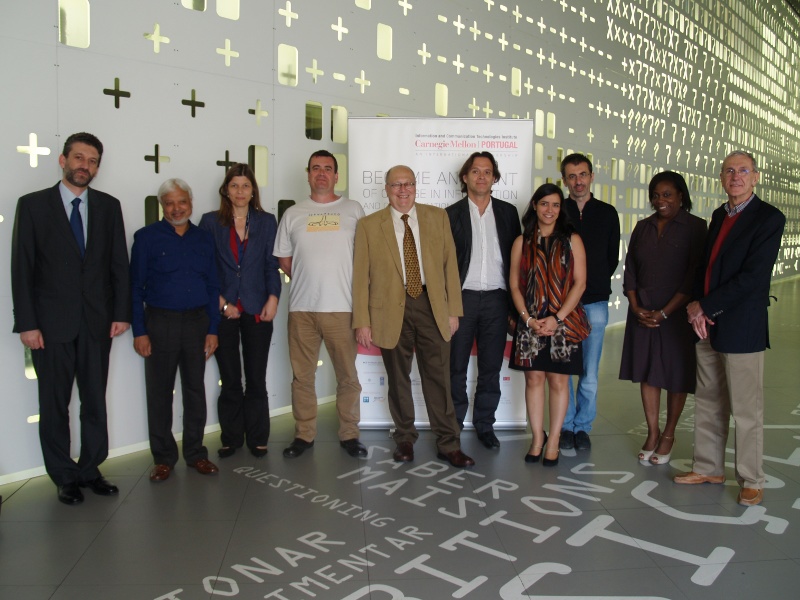
2013 Project Review Meeting The Carnegie Mellon Portugal Program held its third Annual Project Review Meeting on June 19-20, 2013, at the Pavilhão do Conhecimento, in Lisbon. The teams of the 25 R&D projects (link to https://cmuportugal.org/tiercontent.aspx?id=130) carried out in the scope of the program, and funded by the Fundação para a Ciência e a Tecnologia (FCT), presented their achievements, emphasizing the most significant outcomes, which included the establishment of testbeds, the creation of prototypes, or the development of follow-on project proposals approved by national and international funding agencies, among others.

This year the panel committee was chaired by Adam Wolisz, from the Technische Universitaet Berlin (TUB), who led a team of international experts: Carles Sierra, from the Artificial Intelligence Research Institute (IIIA) Spanish National Research Council, Gilles Barthes, from the Madrid Institute for Advanced Studies (IMDEA), H.S. Jamadagni, from the Indian Institute of Science (IIS), and Ulises Cortés, from the Technical University of Catalonia (UPC).

Report June 19-20, 2013

“Overall, the CMU Portugal Program has achieved impressive results. Multiple patterns of very successful ‘community building’ resulting in leadership, in research and development involving academia and industry in an international setting have been created. This has been the case both in big projects as well as in clusters of smaller projects.
For the second phase of the program one can expect both: new proposals (in new directions) and the continuation of cooperation. We recommend supporting proposals for ‘community building’ prepared by new consortia. We also recommend supporting projects leading to strengthening the leadership already achieved in phase one.
The program has been very successful in developing human capital capacities in an international and highly competitive environment. There is, however, a concern that due to the limited amount of positions in academia, numerous brilliant graduates/young researchers are tending to leave the country.
The international cooperation has proved instrumental in advancing the current position of Portuguese research in ICT.”

Professor Adam Wolisz, Technische Universitaet Berlin (TUB) – chair
Professor Carles Sierra, Artificial Intelligence Research Institute (IIIA) Spanish National Research Council Professor
Gilles Barthe, Madrid Institute for Advanced Studies (IMDEA)
Professor H.S. Jamadagni, Indian Institute of Science (IIS)
Professor Ulises Cortés, Technical University of Catalonia (UPC)

Directors (ex officio):
Professor João Claro, Director of ICTI@Portugal
Professor José M.F. Moura, Director of ICTI@Carnegie Mellon

July 2013

Lessons Learned on Professional Master are Useful in Industry

Lessons Learned on Professional Master are Useful in Industry

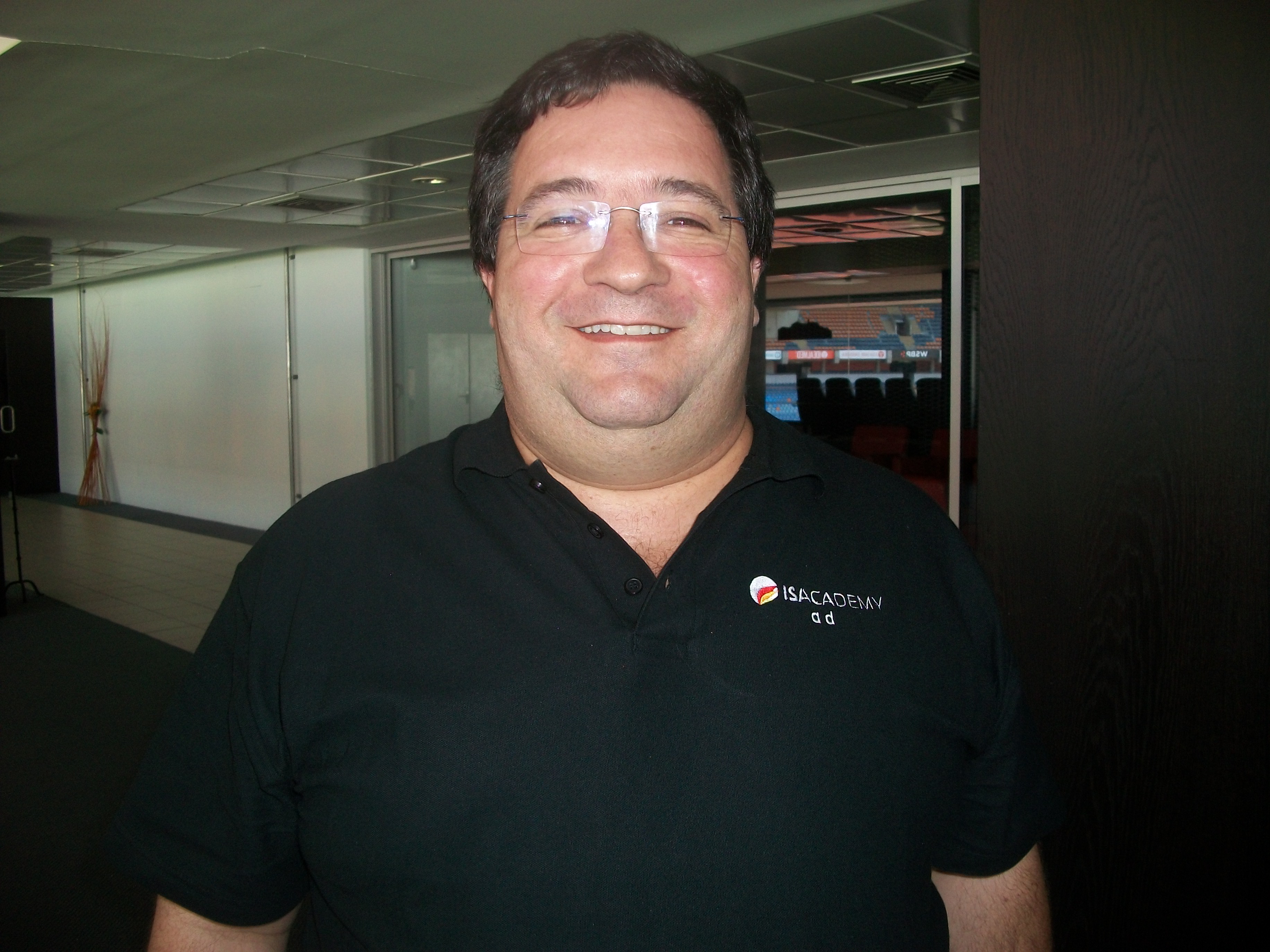
António Damasceno Alumni The Professional Masters of Software Engineering was the reason that ISA hired me in the first place,” says António Damasceno. António is a 2009 graduate from the dual degree Professional Masters in Software Engineering (MSE) offered by the Universidade de Coimbra and Carnegie Mellon University, in the scope of the Carnegie Mellon Portugal Program.

When António Damasceno joined the MSE program, he had more than 20 years of experience in software development and was the project manager of MyNet at the Associacão de Informática of the Center Region of Portugal. Married with two children, the current technological partnerships manager at ISA – Intelligent Sensing Anywhere embraced the opportunity to engage on “the most intense working period of my life at a rate that could not scale in industry,” he reveals.

From his past as a student in the dual degree MSE program, António Damasceno retains that “although we were in an academic environment most of the lessons learned are useful in industry although the root cause of the pressure is different, but the impact in team’s performance is similar.”

CMU Portugal: What memory do you keep from the time you were a MSE student?
António Damasceno (AD): The most intense and important memory from the MSE program is the contact with different cultures and professional environments. In academic terms the courses taught in Portugal comply with CMU standards and are very different to equivalent courses for Portuguese degrees, this is by itself a positive experience. However what makes this dual degree program really different is the immersion in CMU culture and contact with persons, students and staff, from around the world. It was my first experience living abroad for more than a few weeks and gave me the opportunity to get a glimpse on how different cultures learn and see the world. I made some friends and I am sure that some of those relations will last for a long time.

CMU Portugal: Can you describe your experience as a dual degree MSE student?
AD: The MSE experience was intense in multiple dimensions, workload and emotions are probably the two that are most demanding. In terms of workload the first three semesters were, by far, the most intense working period of my life at a rate that could not scale in industry. It challenged all of our limits and made us establish clear goals and prioritize work according to them. The emotional dimension is motivated by the program and by the lack of time for family and friends. The MSE program was designed by James Tomayko from CMU using the concept of “reflective practitioner” proposed by Donald Schon, from MIT. In this concept students are requested to build their knowledge and are often lead by mentors to face their incompetence. This process is extremely demanding in personal terms and, as the work is organized in teams, places huge pressure in all team members.

CMU Portugal: What skills and competences were you able to develop?
AD: Software Engineering pillars are people, process and technology, which is the only one covered in depth in most software engineering degrees. People and process are often mentioned, but without professional experience the full value of those pillars cannot be understood. Programs like MSE that are built on-top of professional experience gain from the accumulated experience of all participants that are forced to look back to career and company, value successes and identify improvement opportunities. As I had to leave the company I was working with to join the MSE, the benefits for my previous employer were null. As this was an important dimension, I volunteered to be involved with ISA during the MSE program to be able to know the company, the persons and the processes. From very early, I was able to contribute to the revision of the conception and development process that, after a few interactions, is compliant to CMMI-DEV maturity level 2. As to the people dimension software engineering teams have very specific challenges that need to be addressed with adequate techniques, especially when team members are brilliant technicians with different concepts of socially accepted behaviors. Professional programs forces practitioners to value this dimension again by reflecting on the persons and interactions they had.

CMU Portugal: In what way did your studies in the MSE program contribute to the position that you have today at ISA – Intelligent Sensing Anywhere?
AD: MSE was the reason that ISA hired me in the first place so it was the entry point. The position I currently have, technological partnership manager, is mapped to the core courses and core competences acquired in the MSE program including: Requirements Engineering, Software Architecture, and Software Process Management. Over the two and a half years I have put into practice all these concepts in small and large projects. Especially relevant is the experience in architecture development and evaluation for a €3 million European project, GiraffPlus, where we were able to detect and solve hidden issues in the system architecture. ISA invited me to manage this new business that is going to be based on system and software engineering best practices to identify and manage projects developed by technological partners.

July 2013