
Young Portuguese Researchers Thrilled with Carnegie Mellon University

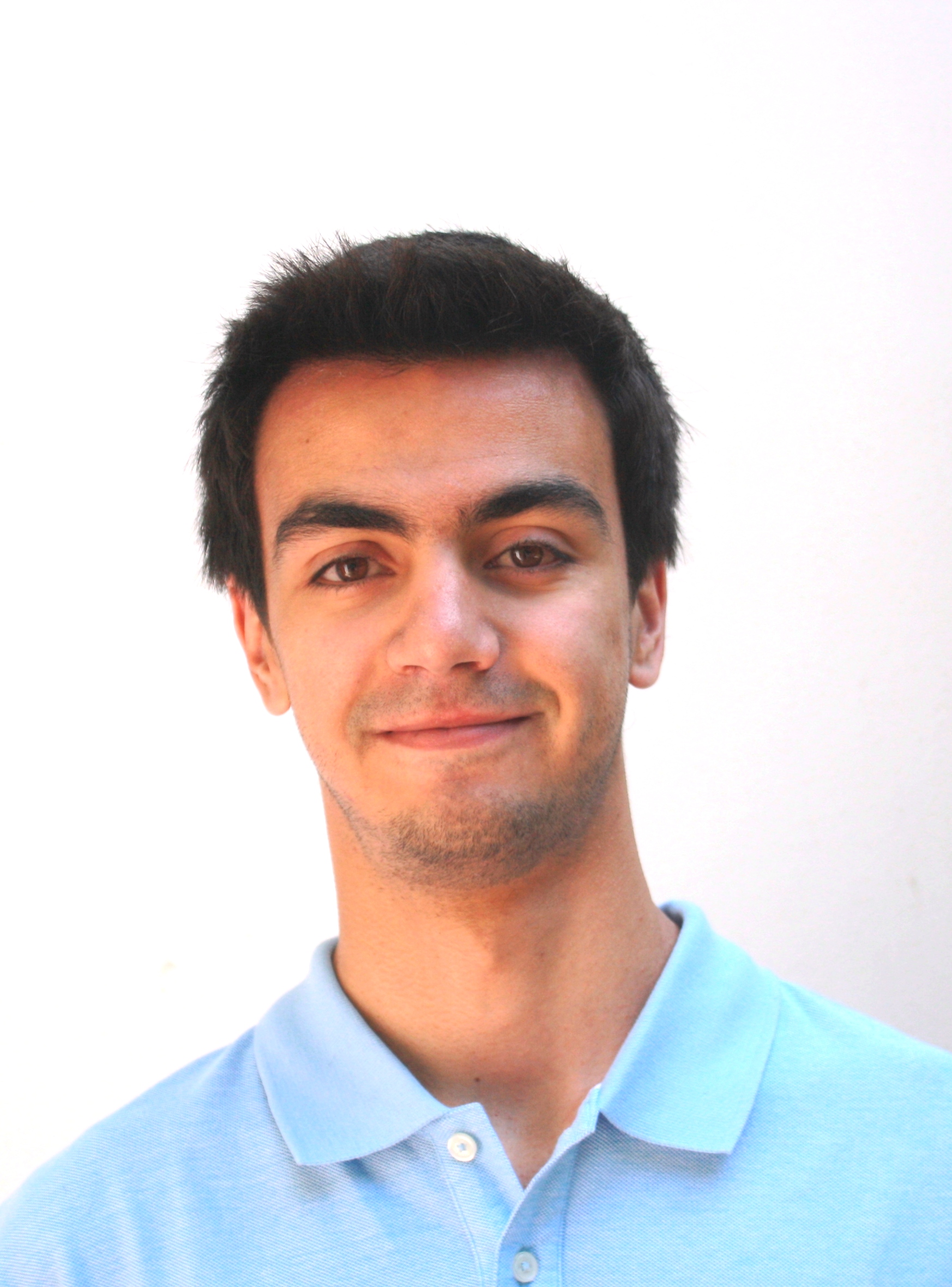
Francisco_Torres_UIPCésar Carpinteiro César Carpinteiro and Francisco Torres, both from Faculdade de Engenharia of the Universidade do Porto (FEUP), were at Carnegie Mellon University (CMU) in the scope of the Undergraduate Internship Program (UIP), promoted by the CMU Portugal Program. The students were hosted by Shawn Blanton, faculty member at the ECE department at CMU, and sponsored by José Machado Silva and Vítor Grade Tavares, faculty members at FEUP and researchers at INESC TEC. During the undergraduate internship they were immersed in a new academic environment.

From February to May 2015, César Carpinteiro (report) moved to CMU to work on an algorithm aimed to improve chip detection of circuit failure. This research work helped him to “learn more about parallel hardware architectures.” César explains, “In a first stage I devised an architecture and implemented the algorithm in an hardware description language. In a second stage I synthesized my design to a Field-programmable Gate Array (FPGA) and evaluated its performance. Although I had familiarity with the design of digital circuits, the bigger scale of this task provided me invaluable experience.”

Francisco Torres (report) was also at CMU at the same time, with the goal of implementing a novel security system in hardware. By working closely with his host at CMU and his sponsor in Portugal, Francisco Torres was able to complete the schedule and tasks successfully, and “the final result was a complete implementation of the system in a board,” he says.

While at CMU, these two Portuguese young researchers had several opportunities to present their research work. “I had the opportunity to join the weekly meetings of the Statistical Learning in Chip Group with Professor Don Thomas and four more Ph.D. students,” says Francisco Torres adding “I led this meeting two times, where I presented my work and got some excellent feedback about it.” César Carpinteiro also participated in several meetings, and led a meeting to present the results of his hardware implementation.

“The CMU campus has endless activities for students,” says César Carpinteiro adding “I left specially impressed with the size and quality of the job fair held in the first week I was at Pittsburgh.” For Francisco Torres, “the whole experience was absolutely great, in a professional, cultural and social standpoint,” adding that “I was in touch with the best research that is being done in ECE and in a city that has a lot to offer.”

Shawn BlantonShawn Blanton was very pleased to receive these young researchers. “Cesar Carpinteiro’s work at CMU was excellent. He exceeded our expectations and we hope to have him as a PHD student here at Carnegie Mellon,” adding “we continue to follow-up on Cesar’s research work and hope to soon publish the results.” For Francisco Torres, Shawn Blanton wrote a recommendation letter in support of his nomination for the Best Master Thesis Prize where he states “We established a very agressive work schedule for Francisco that included milestones that were not only technical in nature but also included occasional updates that required formal presentations to our Ph.D. students. (…) Francisco not only completed the entire project but did so in a very stellar manner.”After returning from CMU, César Carpinteiro continued the project he was developing there and presented it as part of his Master’s thesis. For him, “this Undergraduate Internship made me stand out among the competition, and this month, [September 2015], I started my first job as a Electronics Engineer Trainee at CERN in Geneva, Switzerland.”

Francisco Torres, after returning from CMU, also presented his thesis and finished his Master’s degree. “The project developed at Carnegie Mellon allowed me to have a highly successful thesis. Furthermore, I am still in contact with both my supervisors, Professor Vítor Tavares and Professor Shawn Blanton, in order to write a paper publishing the results obtained. Fortunately, this three-month internship opened excellent doors and brought me exceptional opportunities,” says Francisco Torres.

César Carpinteiro and Francisco Torres were at CMU in the scope of the Undergraduate Internship Program (UIP), offered by the CMU Portugal Program, funded by Fundação para a Ciência e a Tecnologia (FCT).

September 2015

Success Stories – Undergraduate Internship Program

Success Stories – Undergraduate Internship Program
2016 :: 2015 :: 2014
2015
UIP 2015 – Young Portuguese Researchers Thrilled with Carnegie Mellon University

Prof. Xin Li: “Both Bernardo and João Did an Excellent Job in Research”

Renato Negrinho describes the Undergraduate Internship at CMU as “Incredibly Intellectually Stimulating”
2014
Portuguese Undergraduates Awarded with a CMU Portugal Scholarship to do Research at CMU

Undergraduate Internship Program: A Valuable, Rewarding and Unforgettable Experience

Undergraduate Internship Program: Information Sessions in Porto and in Lisbon

Undergraduate Internship Members

Undergraduate Internship Program Results

Renato Negrinho: Experience as an Undergraduate Internship Member

Renato Negrinho describes the Undergraduate Internship at CMU as:
” Incredibly Intellectually Stimulating”

2015 UIP Renato Negrinho Renato Negrinho is a young researcher with a passion for machine learning and very clear future goals. After his admission to the Undergraduate Internship Program, he was admitted to the Ph.D. in Machine Learning at CMU, and to an internship at Xerox in Europe. All these opportunities came from his will to do more and to continuously evolve as a person and as a researcher.

Graduated by Institituto Superior Técnico (IST), Renato Negrinho made an internship at Priberam where he had the opportunity to work closely with André Martins, dual degree alumnus from IST and CMU, in the scope of the CMU Portugal Program. When he applied to the UIP, he had as sponsors in Portugal André Martins and Mário Figueiredo, researcher at IST, and was hosted at CMU by Noah Smith. “My expectations, regarding these experiences, but also in general, are to be able to continue to work hard and learn a lot. To remain engaged and excited about what I am doing. To look for challenges that allow me to continue to grow. These have been my objectives for quite some time now. Just be passionate about what you are doing and work hard and good things will come,” says Renato Negrinho.

CMU Portugal Program: How do you comment on your experience as an Undergraduate Internship Member, that had the opportunity to be at CMU early this year (Feb.-May)?
Renato Negrinho [RN]: I think that overall the experience was extremely positive. CMU is a incredible place for Computer Science, with top-class faculty and students, and an unparalleled research environment. During my stay, I was able to meet people from the Language Technologies Institute and the Machine Learning Department. There is a lot of collaboration among faculty and students. Collaboration is really emphasized at CMU and it is not constrained by department boundaries. Getting faculty involved sometimes seemed as easy as knocking on their office doors and talking to them. This is something I have not seen anywhere else I was also surprised by the range and quality of Computer Science research done at CMU. While at many places there are just a few faculty that work on some set of topics, CMU truly has a wide coverage of the Computer Science spectrum, from the more theoretical to the more applied. There are also frequent talks and regular seminars on topics like Computer Science Theory, Statistics, Machine Learning, and Natural Language Processing, that bring experts from other top US universities and from other places around the world. It was a surprise to see that both students and faculty are extremely hardworking and friendly, being usually more than happy to discuss research. All these facts combined, create a Computer Science research environment at CMU that is second to no other place.

CMU Portugal Program: Your main goal, as described on your application form, was “to devise methods for the identification of multiword expressions with the goal of improving the performance of natural language processing systems.” Were you able to accomplish this goal?
RN: The goal of the internship was partially accomplished by the time it ended. We devised several interesting methods for multiword expression identification, but in Natural Language Processing, the specification a model is usually not enough. It is a scientific field that is very much methods and results driven, and therefore, proposing a new model involves not only specifying it, but also implementing it and running a large number of experiments and comparisons to validate that the proposed model is actually useful, that is, that it is actually better (according to some desired criteria) than other simpler baselines. This requires designing and decomposing the system into parts, and writing the code that implements them, which are very time consuming tasks. This was specially so in our case, as the work we built on is fairly new and still poorly supported code wise, meaning that were not able to reuse much code and had to rewrite most of it from scratch. At the present moment, there is some code left to be written to finish the experiments.

CMU Portugal Program: What kind of support (in terms of research) did you received from your sponsors in Portugal? And from Noah A Smith, at CMU?
RN: I cannot do anything but praise the support that I was given. My sponsors in Portugal, Dr. André Martins and Prof. Mário Figueiredo, encouraged my application and were always ready to help during the internship period, by answering my questions, pointing to relevant references, or just calling my attention to things I should be aware of. During this internship I worked mostly with Prof. Noah Smith and with a senior PhD student from his group, Waleed Ammar. Prof. Noah Smith was extremely kind and attentive, taking the time to integrate me in his group and to meet with me regularly to talk about the project progress and to discuss research in general. I thank him for his time and attention, which made my experience at CMU enjoyable and rewarding.

CMU Portugal Program: What did you gain from this internship experience?
RN: I think that the first and most obvious thing that this internship gave me was just the experience of being in the US at the very best school for Computer Science, doing research within a very good Statistical Natural Language Processing group. I think that describing it this way makes apparent that this is a very rare and valuable opportunity. Besides getting to enjoy the wonderful research environment and meeting some very interesting and hardworking people (both students and faculty) at CMU, being in the US allowed to attend some of the open houses for the PhD programs I got admitted to. In 2014, I prepared and submitted applications to PhD programs, mostly in the US, that I found that could provide an exciting research environment for Machine Learning. Typically, around mid-February, the application decisions come out and you get to know if you have been offered admission or not. Then, somewhere around March, there are usually the so-called open house events, which last for two or three days, where admitted students are invited to visit the university, and meet and talk to the faculty and other admitted and current students. This is a great experience meant to give admitted students a better feel for the university and the program, so that they can make an informed decision on which place to attend.
“One of the things that I like about Machine Learning is that it is has a very diverse community and set of interests interests. Researchers in the community draw from a large number of tools and ideas from a wide range of disciplines, such as Computer Science, Statistics, Mathematics, Signal Processing, and Optimization, to tackle problems that they care about. I also like the fact that problems in Machine Learning drive a lot of research in many other scientific fields these days.”

CMU Portugal Program: You have started an internship at Xerox Research, last May, and you will start your Ph.D. at CMU next September. How did these two opportunities came into place?
RN: I spent the year of 2014 with a scholarship at Priberam and Instituto de Telecomunicações doing research with Dr. André Martins in Machine Learning. This period got me even more excited about research in the field, which led me to apply for a PhD. The field has grown immensely in last few years and with the increasing computational power and data availability, it is safe to assume that Machine Learning it will continue to grow in importance. One of the things that I like about Machine Learning is that it is has a very diverse community and set of interests. Researchers in the community draw from a large number of tools and ideas from a wide range of disciplines, such as Computer Science, Statistics, Mathematics, Signal Processing, and Optimization, to tackle problems that they care about. I also like the fact that problems in Machine Learning drive a lot of research in many other scientific fields these days. Also, companies have a keen interest in the field, with many of the major technology companies following it very closely. Essentially, any company that collects data as part of their operation and that hopes to extract value from it, will have automatically an interest in Machine Learning. In part, this is one of the reasons why I chose the field: besides being very intellectually satisfying, advances in Machine Learning can be really impactful, both academically and technologically. So, after making my mind, I had to prepare the applications, which is a lengthy process requiring a few months of preparation. Getting admitted to a good PhD program in the US is not something easy to accomplish.

CMU Portugal Program: In your opinion, what are the the key factors to be admitted for a Ph.D. in American universities?
RN: In my opinion, having a strong application is a combination of several factors: doing and publishing relevant research in the same (or in a related) field of the program that you applying to; having good recommendations letters from people you have worked with and that are known in community; writing a good motivation letter that tells the admissions committee what are your research interests, what is the work you have done so far, why do you want to pursue such a degree, and why the program that you applying to is right for this. Typically grades and standardised test scores are not strong deciding factors, but may be used for weeding out candidates. Coming from and doing well in a good university helps, but this is hard to gauge for international PhD students because, unless you come from one of the few well known international universities, the committee will not know very much about it and therefore, it will look instead for other indicators of success. A great letter of recommendation from someone that you have worked with previously and is well known in the field is much more valuable. Another of the reasons why I am grateful to the CMU Portugal Program is because I believe that this internship at CMU strengthened my application, providing an international reference that is more familiar to the admissions committee. After submitting the applications, the only thing left to do is hope for the best.
“This opportunity at Xerox is great and I urge other people to go for an international experience. In academia, it is important not be confined to one’s local research community, but rather to strive to be part of the global community.”

CMU Portugal Program: And what about the internship at Xerox?
RN: About the internship at Xerox, after finishing my internship at CMU, I would still have about three months until the start of my PhD, so that got me thinking about applying for another internship. At first, my intention was to stay in the US, but there were several problems (mainly because US federal regulations and company policies) and because I was starting to run out of time, I decided to turn myself to Europe and try my luck there. I talked to Prof. Noah Smith about wanting to do an internship and about the problems I was having so far, and he named some researchers in academic and industry settings that maybe could be interested in having an intern and told me he could write a reference letter if needed. I emailed these researchers with my CV and explained my situation, and eventually some of them showed interest. Dr. Ariadna Quattoni and Dr. Xavier Carreras, which are both at Xerox Research Centre Europe in Grenoble, were looking to take an intern and were interested in my profile. We discussed several possibilities and came up with a project that we were both excited about, and soon after they offered me the position, which I gladly accepted. This opportunity at Xerox is great and I urge other people to go for an international experience. In academia, it is important not be confined to one’s local research community, but rather to strive to be part of the global community. Attending CMU for a PhD in Machine Learning is as much as one can hope to ask for. It is has an amazing research environment and I think it will provide me an unparalleled opportunity to learn and to take my research further. I intend to be worthy to these opportunities. I want to finish by thanking Dr. André Martins (Priberam), and Prof. Pedro Aguiar (IST) and Prof. Mário Figueiredo (IST) as they encouraged and guided me through the process of applying to PhD programs. I am very happy to have them as mentors.

July 2015

Carnegie Mellon Portugal Program Launches Undergraduate Internships Program

Applications for the Undergraduate Internship Program are now open. This program offered by the Carnegie Mellon Portugal Program is an intensive eight to twelve weeks research experience for talented undergraduates, who will have the opportunity to participate in state-of-the-art research projects, interact with prominent research teams, and be mentored by leading faculty and researchers, in a cultural immersion at Carnegie Mellon University.

Read the full article at Canal Superior (May 7, 2014), Computerworld (May 7, 2014), Dinheiro Vivo (May 7, 2014), Manda-te (May 7, 2014), Tek (May 7, 2014), Tech Zone 24 Online (May 7, 2014), Empregos & Estágios (May 7, 2014), Pontos de Vista (May 8, 2014), Human Resources Online (May 8, 2014), Jornalismo Porto Net (May 9, 2014), Boas Notícias (May 9, 2014), Diário Económico (May 12, 2014), Destak (May 12, 2014) and Vida Económica (May 16, 2014).

Bio Boards – Longboards for the Road

All in Surf is one of the 2016 inRes teams, currently in Pittsburgh Bio Boards – Longboards for the Road
One of the 2016 CMU Portugal Program inRes teams, All In Surf, together with Bio Boards, have launched a modified skateboard inspired in surfboards and the way they behave in the water. The Portuguese weekly magazine, Notícias Magazine, interviewed Ricardo Marques for a long article detailing his journey, how the idea for the boards came about and the startup’s direction in the future.

Bio Board is a Portuguese innovation made with materials that are recycled, recyclable, reusable, and biodegradable. It is a three wheeled skateboard, that tries to imitate the handling of a surf board, for the same experience in the water and on the road.

Read the article in Portuguese at Notícias Magazine (October 9, 2016)

The Carnegie Mellon Portugal Program in the Portuguese Media 2012

The Carnegie Mellon Portugal Program in the Portuguese Media 2012 November, 2012
Carnegie Mellon Portugal Program: Open Call for Scholarships 2013/2014
[Expresso Emprego]

Partnerships renewed with Austin and Carnegie Mellon Universities
[Exame Informática]

VENIAM Spin-off Wins ISCTE-IUL MIT Portugal Competition
[On Line News]
October, 2012
The CMU Portugal was Renewed with a Particular Attention to Innovation and New Business Opportunities
[Semana Informática]
September, 2012
Twenty Million Euros for the New Carnegie Mellon Portugal Program
[Dinheiro Vivo, SapoTek, Canal Superior, Ciência PT, Jornal da Madeira online, Diário de Notícias da Madeira, Sol online, i online, Diário de Notícias Ciências online, Público online, Público, Diário de Notícias da Madeira, Diário As Beiras, Jornal da Madeira online, PortugalMail, ComputerWorld]

The Rector of the Universidade da Madeira Comments on the Renewal of the CMU Portugal Partnership
[Jornal da Madeira online]

Partnership Between UMa and Eight other Portuguese Universities and CMU Guaranteed until 2017
[Jornal da Madeira online]

Government Renews Partnership between Portuguese Universities and Carnegie Mellon University
[TV Ciência.pt]
August, 2012

Carnegie Mellon Portugal Program Overview
[Dinheiro Vivo Online]

Pittsburgh: From the Steel to a High Tech Town
[Dinheiro Vivo Online]

REAP.PT Project Enables Foreign Students to Learn to Read Portuguese
[Ciência Hoje, Diário dos Açores]

André Martins Develops: “A model that uses statistics to revolutionize the way computers understand the human language”
[Exame Informática]
July, 2012
PT-STAR Project: Researchers Create a Speech Translation System for Portuguese
[Ciência Hoje, Canal Superior Online]

COMPTA Connects with Universities Through the Carnegie Mellon Portugal Program’s Internships
[Correio da Manhã]

DRIVE-IN Project: Cars Can Communicate With Each Other as They Go
[Jornal de Notícias, TEK.SAPO, rostos.pt, Universidade de Aveiro website]

Vital Responder Project: Wearable Sensors for Posture Monitoring and Fall Detection for Elderly People
[Sol online, Diário Digital, Jornal da Madeira online, Diário de Aveiro, Diário de Leiria, Universidade de Aveiro website]

Robert Unitech said: “The Business Angels Invest in People, More Often than they Invest in Technology”
[TEK.SAPO]

Francisco Veloso said: “We Want to Educate Agents of Change”
[Diário Económico]

Carnegie Mellon: A High Tech University
[Visão]

Researchers Around the World Take Part in the 2 nd Edition of the Lisbon Machine Learning School
[Cienciapt]

Carnegie Mellon Portugal Program Waits for a Decision
[Diário Económico]
June, 2012
To Have Lots of Small and Medium-sized Enterprise Can Be Bad
[Expresso, The Economist, VOX – Research-based policy analysis and commentary from leading economists]

Carnegie Mellon University Gives Two Awards to Sergio Pequito
[Dinheiro Digital, Destak.pt, Expresso Online, Sapo.pt, Rádio Renascença, Porto Canal.pt, RTP.pt, SIC Notícias Online, Diário Digital Online]

The Economic Recovery through the Entrepreneurship
[Semana Informática, Algarve Press Diário]

André Martins Receives IBM Scientific Award 2011
[ComputerWorld.pt, Fibra online, Sapo Tek, PT Jornal, website of the Instituto Superior Técnico of the Universidade Técnica de Lisboa, Ciência.PT, BIT Tecnologia para Todos, Expresso Online, SIC Notícias Online, Visão Online, Porto Canal.pt, TVI 24 Online, Diário Digital, RTP Online, MSN Online, Jornal de Notícias Online, Público Online, Destak.pt, Oje Online, Sapo Online, TV Ciência, Visão, Lux Online, Correio da Manhã]

“We Need Companies that want to Become World Leaders,” interview with Francisco Veloso
[Expresso]
May, 2012
HCI Student Will do an Internship at Apple
[Público, Ciência Hoje, Singular Magazine Online, TVI24 Online, Fibra online]

The Challenge of Exporting Technology
[Jornal de Negócios – In]
January, 2012
The Future of Humanity is in the Hands of Math, Interview to Irene Fonseca
[Diário Económico]

External Review Committee of the Carnegie Mellon Program is Extremely “Impressed” with the Results
[Lusa, Diário de Notícias Online, Público Online, Jornal de Negócios – In, Correio da Manhã, Metro Portugal, Diário de Notícias da Madeira Online, Ciência Hoje Online]

Young Researchers Blend Technology with the Madeira Island Culture
[Ciência Hoje Online]

Manuela Veloso says that “The Future is in the Symbiosis Between Human and Machine”
[Visão]

“Novabase Knew How to Dream High”, interview to Luís Paulo Salvado
[Human Resources Magazine]

Madeira’s Regional President Visits USA and Talks of Weekly Charter

Miguel Albuquerque visits New Bedford and talks about his plans for Madeira Madeira’s Regional President Visits USA and Talks of Weekly Charter
The President of the regional government of Madeira, Miguel Albuquerque, has recently visited the town of New Bedford, Massachusetts, as part of his trip to the USA and Canada. Speaking to the Portuguese immigrant community, Miguel Albuquerque manifested his plan to see through the creation of a weekly charter flight between Madeira and the USA’s East Coast. This is one of the measures that aim to increase Madeira’s visibility as a tourism destination, giving an economic impulse to the region and bringing the immigrant community closer to the island.

Read the Portuguese article on Diário de Notícias Madeira (PDF version)

CMU Portugal Program Represented at European Researchers Night 2016

European Researchers Night 2016 is a science promoting event all over Europe CMU Portugal Program Represented at European Researchers Night 2016
CMU Portugal Program Dual Degree PhD student Carla Viegas and Patient Innovation member Salomé Azevedo were at the 2016 European Researchers Night demonstrating their work. In Portugal, the annual European Researchers Night event took place in Lisbon, Porto, Braga and Funchal simultaneously on the last day of September 2016.

This year’s event was themed “Ciência do Dia-a-Dia” (Everyday Science), featuring several stands where researchers demonstrated their work and its direct impact on people’s daily lives. Carla Viega was demonstrating her app to help kids with their speech therapy and Salomé Azevedo was at the Patient Innovation booth, promoting the platform.

See the coverage of the event on (Carla Viegas speaks at minute 1:00) and (Salomé Azevedo on at 2:20) (October 3, 2016)

Playsketch’s App Will Be Released in 2017

One of the participating teams of inRes 2015 Playsketch’s App Will Be Released in 2017
CMU Portugal Program inRes team, Playsketch, plans to release their videogame creation app in 2017. The beta version is available by registration on the website and the final version is expected in 2017.

To create a game, all the user needs is a pen, paper and a smartphone. After drawing up the elements to the game, the user takes a picture of it and the game traces it, recognizing the elements. With the image, the app creates the game based on templates of game themes, like “racing” or “match 3” and “space invaders”.

Playsketch is a Coimbra based startup and one of the four teams that participated in the 2015 edition of the inRes program. Their application, with the same name, is now seven years in the making and it is aimed at the younger audience, but adults will enjoy it too. “The experience of facing a blank sheet of paper is very liberating and we think it is a more natural way for people to express themselves, and maybe even invent stories”, explained Pedro Santa, co-founder.

Read the Portuguese article on Observador Online (October 3, 2016)