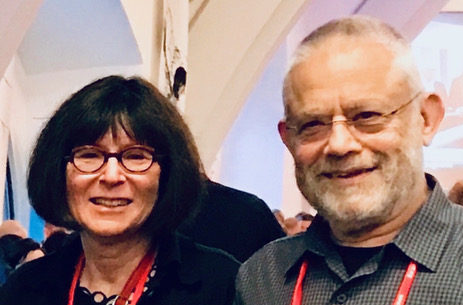
Lenore and Manuel Blum discuss AI and Gender Balance at Portuguese Universities

Between October 23rd and 25th, Lenore and Manuel Blum, both Professors at Carnegie Mellon School of Computer Science, visited for the first time Portugal, under the CMU Portugal Program, to participate in two seminars on gender Balance and for the “duet-talk” “Towards a Conscious AI – A computer architecture inspired by cognitive neuroscience” in Lisbon (Instituto Superior Técnico) and Porto (INESC TEC and Faculdade de Ciências da Universidade do Porto).

In Lisbon, the Seminar on Gender Balance was hosted by Instituto Superior Técnico and organized by the University’s  Diversity and Gender Balance group  in partnership with the CMU Portugal Program.

The day started with an opening by the Minister of Science, Technology and Higher Education, Manuel Heitor, that spoke on the importance of promoting policies to support the role of Women in STEM.

After the presentation and introduction by the Minister, Lenore gave a talk on Gender Balance entitled “CMU: a case study promoting Computer Science in underrepresented groups” focusing on her experience at CMU.

Lenore Blum is highly recognized for her work in supporting the participation of girls and women in Science, Technology, Engineering and Math (STEM) fields. She was a founder of the Association for Women in Mathematics and the Expanding Your Horizons Network for middle and high school girls. At Carnegie Mellon she founded the Women@SCS program and supported innumerous initiatives to increase the number of women in Engineering Courses, both internally and externally.

During her stay in Lisbon she was interviewed by LUSA, the Portuguese News Agency and her testimony was shared by Público Newspaper.  “When there is a small percentage of women in institutions and businesses, they don’t have the same educational experience, like any other minority, and end up by not benefiting from the same professional and social advantages as the majority” – said Lenore-  “it´s always the same idea, it’s not rocket science but common sense. Maybe common sense is not that common, but basically my thesis is that we can change it on a microculture level”.

At Carnegie Mellon there’s currently 50% of girls enrolling in Computer Science courses, a great number of them due to the work developed by the CMU Professor: “I’ve always defended for example that there should be role models to follow in University, like an older sister/younger sister system to help in the integration of those who arrived and provide opportunities for all women to give lectures, stand as role models and be able to create good networks”, a measure that has proven to be very effective. Making life at campus more women friendly, so that they feel welcomed and supported throughout their academic experience and doing outreach programs for high school girls and teaching teachers activities to promote programming and computer sciences from an early age have proven to be very important initiatives in getting more girls at university levels: “We did not change the course curriculum to be women friendly, we changed cultural and social experience of being there. Role models, mentors, community, connections, experiential learning, leadership opportunities, those are the factors that make a difference”, adds Lenore Blum.

The talk was followed by two Roundtables, one about “Women in STEM: Breaking the Glass Ceiling” that counted with Catarina Carvalho from Diário de Notícias as moderator; Teresa Fragoso, President of the Portuguese Commission for Gender Equality; Mariana Araújo, Técnico Alumni and PhD Student; Isabel Sá Correia and Pedro Lima, Full Professors at Técnico and Cristina Fonseca, founder of Talkdesk, Instituto Superior Técnico Alumni.

The second roundtable discussion was on “Gender equality Policies in Lisbon Universities” with the Rector from Universidade de Lisboa António Cruz Serra; Instituto Superior Técnico President Arlindo Oliveira and ISCTE-IUL Vice Rector Maria das Dores Guerreiro.

Lenore and Manuel Blum ended their Lisbon visit with a distinguished lecture “Towards a Conscious AI – A computer architecture inspired by cognitive neuroscience”, that attracted an impressive audience to the Técnico Congress Center Auditorium.

This talk discussed consciousness from the perspective of theoretical computer science and presented various approaches to Consciousness based on the work developed by the cognitive neuroscientist Bernard Baars’ that proposed a Global Workspace Model (GWM) of the brain, sketched its computer architecture, and outlined its implications for understanding consciousness.

Dealing with consciousness formulates according to the authors, an easy problem that is to make a robot simulate feelings of pain and joy and a hard problem that is to make a robot that truly experiences feelings like pain and joy. These are the hardest feelings to explain scientifically.

One of the research major contributions lies in the precise formal definition of a Conscious Turing Machine (CTM), also called Conscious AI. The CTM is defined in the spirit of Alan Turing’s simple yet powerful definition of a computing machine, the Turing Machine (TM), as a way to formalize rigorously, explicitly, mathematically and simply Baars’ GWM.

On October 25th, Lenore Blum also participated in a Gender Balance Seminar at INESC TEC in the morning entitled “Raising awareness for Gender Balance”, promoted by the Gender Balance Group of INESC TEC, with the support of CMU Portugal Program. The opening was led by INESC TEC President Professor José Manuel Mendonça followed by Lenore’s Blum Talk “CMU: a case study promoting Computer Science in underrepresented groups”.

The Seminar continued with a discussion moderated by Prof. Mendonça with invited guests from FEUP, INEGI e FEP, who spoke about the work being done at their Institutions to increase diversity and what their perspectives for the future are. The primary goal of the session which was raising awareness in the institution and among other partners towards these issues was clearly achieved.

After lunch, the discussion continued on a work meeting with some INESC TEC members focused on concrete measures and actions to pursue gender balance at the Institution.

Later on the day, Faculdade de Ciências da Universidade do Porto also hosted the “duet talk” of  Manuel and Lenore Blum on “Towards a Conscious AI”, identical to the session in Lisbon.

News in the Media: LUSA, Público, Diário de Notícias, SIC Notícias, Notícias ao Minuto.

 

“Engineers need training beyond technical areas”, interview with CMU Provost James Garrett in Público Newspaper

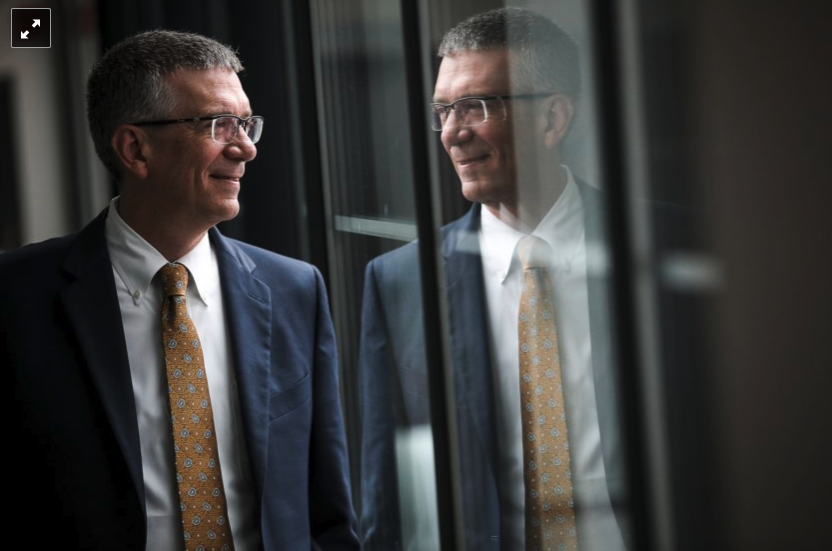
James Garrett, Provost at Carnegie Mellon University, claims that students should have “a better understanding of ethical and social issues.”

Carnegie Mellon is a North American University known for its technology education. The University also has a long tradition in arts and humanities and has Andy Warhol on its list of alumni. James Garrett is the University’s Provost, a top position responsible for managing the institution. Trained as a civil engineer, Garrett says that technology courses can’t neglect the ethical component at a time when information technology is giving rise to a 4th industrial revolution. “There are advantages in understanding what is technologically achievable, what might be the implications for society and what different paths to follow,” he said in a conversation with Newspaper Público. James Garrett was in Lisbon for a Carnegie Mellon Portugal Program Meeting, a longstanding partnership between the American University and several Portuguese Universities.

Carnegie Mellon is known for engineering and technology related courses but also for its arts and humanities colleges. As someone who comes from an engineering background, how do you manage this duality?

What we are noticing is that our faculties of humanities and social sciences are the ones growing the most in terms of applications. We have a great interdisciplinary culture at CMU. Our students can take humanities courses, but they may also have technological subjects. In our Humanities College you find the departments of statistics, psychology, and information systems. Since 1949, our engineering students have had humanities and social sciences courses as a mandatory part of their curriculum.

Why?

We have always believed that engineers need training beyond the technical areas. We need our technology students to have a better understanding of ethical and social issues. Computer science has incorporated ethics as a component of curricula. In engineering, we’ve had it as long as I can remember. When developing new technologies, engineers always say that the safety of people is a priority. It is crucial to consider the social impacts of these technologies.

We are going through a period of change brought on by technical advances. We often forget history: we have had these periods of change.

Technology brings many problems. The power of large technology companies is much debated. Do you think we could be in a different situation if there had been more concern from universities about these ethical issues?

We are going through a period of change brought on by technological advances. Sometimes we forget history: we have always had these periods of change. What is happening is called the 4th industrial revolution. With these changes come opportunities for advances in medicine, telecommunications, mobility. This brings disruptions. The challenge is that the speed at which this is happening is now greater. I believe the focus on technology and society, which is a major focus of Carnegie Mellon, has huge advantages. There are benefits in realizing what is technologically possible, what the implications for society might be and what can be done to increase its positive impact.

The reputation of Tech companies has been decreasing in recent years. Did CMU, being an institution known for research and teaching in technology, feel this impact?

We didn’t notice disinterest in our Computing and Engineering Courses. The number of applications is robust. What we notice is that students across the university are very interested in topics that are more global and social. Sustainability is an area where we have many initiatives and interest from students.

 We glorify those who have gone through a process that is very hard. But let’s look at the filter that is creating a business and making it a success.

 How do you motivate a tech student to graduate when people like Mark Zuckerberg or Bill Gates dropped out of college?

We glorify those who have gone through a process that is very hard. But let’s look at the filter that is creating a business and making it a success. There are legions of people who don’t have the same story of these two people you mentioned. What we are trying to show our students is that this will be an exceptional time to develop their skills: critical thinking, teamwork, respect for interdisciplinarity, diversity of thinking and perspective.

You had a career in civil engineering for decades, which is an area traditionally dominated by men. Have there been changes in recent years?

I have always been proud that civil engineering at Carnegie Mellon was one of the first courses to have more than 50% of women. Several other departments – materials engineering, environmental engineering – have surpassed the 50% threshold for women somewhere in the last decade.

But this is not just a matter of numbers. It is also a matter of the context in which people interact.

In fact there is an interesting phenomenon: when the number exceeds 30% the dynamics change. Women feel less isolated. They are more comfortable to fully participate in class and tend to assume more leadership positions.

Article in Portuguese

In the Media: Interview with Rodrigo Rodrigues – “90 Segundos de Ciência”

The CMU Portugal National Co-Director was interviewed by 90 Segundos de Ciência about his project to improve the efficiency of cloud computing servers. Rodrigo Rodrigues,  Professor at Instituto Superior Técnico and a researcher at InescID, has already been awarded a European Research Council (ERC) Grant to study the development of more efficient and effective protocols for the replication of information in cloud computing.

Cloud computing has some characteristics that make it distinct from traditional computing methods. One of these features is that it requires information to be multiplied by a network of servers spread around the world. This redundancy of information is necessary on the one hand, so that data won’t be lost if the server is destroyed by a natural disaster, and on the other hand so that this information is closer to the end user, thus providing a more interactive service, and responsive to these users.

Ep. 694 Rodrigo Rodrigues – Projeto quer melhorar a eficiência dos servidores para computação em nuvem

In the Media: Opinion article by Joana Mendonça

Will 3D printing be able to revolutionize Distributed Manufacturing?

Opinion article published in Público Newspaper by Joana Mendonça, Faculty at Instituto Superior Técnico and CMU Portugal Scientific Director on the impact of Additive manufacturing (AD), also known as 3D, in traditional manufacturing. This article approaches the results of a recent study developed in collaboration between Universidade de Lisboa and Carnegie Mellon University and supported under the CMU Portugal Program.

Other related articles:  CMU website ;   My Science

Opinion Article pdf

CMU Portugal In the Media: Interview with National Director Nuno Nunes

Nuno Nunes was interviewed by DN Insider, an online Technology Magazine,  about the future of the Program and the launch of its most recent Call for Collaborative R&TD research project that will be open until May 31, 2019. The CMU Portugal National co-director spoke about the success of the Program and its strategy to support Portuguese research and innovation initiatives for the next 10 years: ” the main mission for the third phase of the program, is to foster industry-science relationships in new technologies and in processing large volumes of data.”

Please click here for the full interview.

MAIS-S Project at Exame Informática TV

The MAIS-S Project at the Portuguese Television SIC Notícias
Duke is the name of the robot carried out by researchers from INESC-ID, IST/UL, CMU, and from a Portuguese company called Observit, as part of the MAIS-S Project. The feature has an interview with the principal investigator of this project from the Portuguese side, Francisco Melo (INESC ID & IST/UL). The project was developed in the scope of the CMU Portugal Program, funded by the Fundação para a Ciência e a Tecnologia.

SIC Notícias (Portuguese cable TV), program Exame Informática. (June, 2013).

Madeira-ITI Wins European Grant of €2.35 Million to Boost Research

Madeira-ITI Wins European Grant of €2.35 Million to Boost Research
The Madeira Interactive Technologies Institute (Madeira-ITI), created under the auspices of the CMU Portugal Program and funded by the Fundação para a Ciência e Tecnologia, has just received a grant from the ERA Chairs, a research program of the European Commission’s (EC) Horizon 2020 Framework Program. Project LEAPFROG HCI-DI, which focuses on the areas of Human-Computer Interaction (HCI) and Design Innovation (DI), is one of the first projects selected, and will be receiving €2.35 million for a period of four years.

DN Madeira online (November 28, 2013), Jornal da Madeira online (November 28, 2013), NetMadeira online (November 28, 2013), Diário da Cidade online (November 28, 2013), ComputerWorld (November 28, 2013), Portugal News (November 28, 2013), Tek (November 29, 2013), RTP Madeira (November 29, 2013 and December 13, 2013), BIT (December 1, 2013), Fibra (December 2, 2013), Local.PT (December 2, 2013) and Rádio Renascença (December 5, 2013).

Portuguese Researcher Launches Social Network For Users With Rare Diseases

Portuguese Researcher Launches Social Network For Users With Rare Diseases

The cure for a rare disease could not be in research but in the experience of other patients in a shared social network that a Portuguese researcher at MIT wants to launch by the end of the year. Professor at the Portuguese Catholic University, at the Massachusetts Institute of Technology (MIT) American and coordinator of the Doctoral Program in Tecnological Change and Entrepreneurship at the CMU Portugal Program, Pedro Oliveira says that the network is being developed and that “patients are being asked to integrate the platform and test it.” The social network for patients with rare diseases is one of the outcomes of the project “ The Role of ‘User Innovators’ in the Development of Telecom Products and Services”, developed as part of the Carnegie Mellon Portugal Program.

Read the full article at Expresso Online (November 9, 2013), Correio da Manhã Online (November 9, 2013), Diário Digital (November 9, 2013), Sol Online (November 9, 2013), Público Online and PDF (November 10, 2013), Diário de Notícias (November 10, 2013), A Bola (November 10, 2013), Diário de Coimbra (November 10, 2013) rcm pharma (November 11, 2013), Diário dos Açores (November 12, 2013) and Diário de Leiria (November 12, 2013), Atlântico Expresso (December 2, 2013).

The prodigious Azorean

The prodigious Azorean
Article about Ricardo Cabral, a Carnegie Mellon Portugal Program PhD student in Electrical and Computer Engineering Program. Ricardo Cabral has not yet completed his academic career, but he already has in his curriculum the experiences in Google and Lucasfilm.

Read the full article at Exame Informática (December 1, 2013)