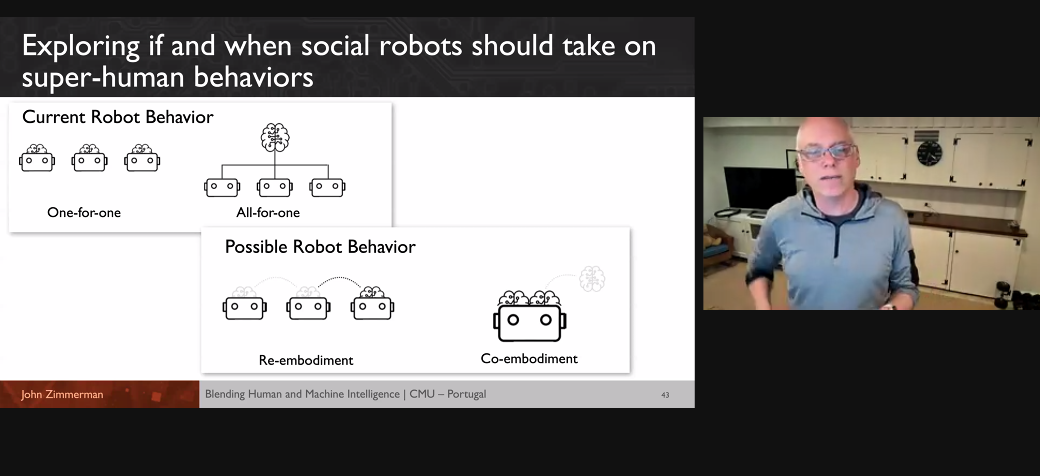
John Zimmerman (CMU) hosted the first Webinar of the series “User Experience Design Talks @CMU Portugal”

Over 130 participants attended the CMU Portugal Webinar hosted by John Zimmerman, Tang Family Professor of HCI and AI at Carnegie Mellon’s HCI Institute hosted on April 27th. This first session launched the series of Webinars “User Experience Design Talks @CMU Portugal” that will take place between April and until June under the Advanced Training Programs in User Experience Design of the CMU Portugal Program, which is planned to start in 2021.

The introduction to the session and presentation of the UxD Advanced Training Program that will start in a near future was led by Nuno Nunes, National Director of the CMU Portugal Program and a senior researcher in the area of Human Computer Interaction. João Guerreiro, Assistant Professor at the Informatics Department at Faculdade de Ciências da Universidade de Lisboa and one of the Faculty members of the UxD Course, welcomed the participants and introduced Professor John Zimmerman, a renowned interaction designer and researcher with more than 20 years of experience designing and researching human-AI interaction.

The talk “Designing Systems that Blend Human and Machine Intelligence” offered a view of how AI Innovation is now focused on creating intelligent tools for professional of different areas of activity including health. For example, clinicians increasingly interact with intelligent tools that aid diagnosis or that predict prognosis however many of these systems fail when they move from the lab to the real world, often for problems with human-AI interaction.
In this talk John Zimmerman explored how innovation teams can better situate AI systems and how professionals experience intelligent tools as valuable and meaningful.

For the full session please watch the video:

Bio
John Zimmerman is the Tang Family Professor of HCI and AI at Carnegie Mellon’s HCI Institute. He has 20 years of experience designing and researching human-AI interaction. His current areas of research includes intelligent systems for professionals, interaction with social robots that function as proxy people, and how designers can better engage with AI as a design material. He teaches courses in UX design, service design, and design of AI products and services.

Next Talks:

  • Session 2: May 18 at 3 pm.(Lisbon)/ 10 am (Pittsburgh)
    “Making Active Materials Green: Morphing Matter for Sustainability”
    Lining Yao is an Assistant Professor of Human-Computer Interaction Institute (HCII) at Carnegie Mellon University, School of Computer Science, directing the Morphing Matter Lab.
    More at the event page
  • Session 3: June 1st at 3 pm.(Lisbon)/ 10 am (Pittsburgh)
    TBA
    Gierad Laput, Research and Engineering Manager at Apple

Registration is free but mandatory: online form. All participants will receive the login credentials the day before the event.

“User Experience Design Talks” by @CMUPortugal will take place between April and June

The Carnegie Mellon Portugal Program will organize between April and June of 2021  a series of webinars entitled “User Experience Design Talks @CMU Portugal”. This initiative follows the success of the Data Science Talks @CMUPortugal that took place in early 2021, gathering more than 200 participants.

The webinar series’ primary goal is to anticipate some of the main topics that will be discussed in the Advanced Training Program in UxD, built in partnership with Faculdade de Ciências e Tecnologia da Universidade Nova de Lisboa (FCT NOVA), Faculdade de Ciências da Universidade de Lisboa (FCUL), Instituto Superior Técnico and the Carnegie Mellon HCI Department. The Advanced Training Program in User Experience Design aims to educate and qualify active agents, aspirants or well-established professionals, as well as researchers and academics in the area of Human-Computer Interaction, in an interdisciplinary, structured and stimulant learning environment.

The three sessions will be hosted by speakers from Carnegie Mellon University and will be held online, offering a look into some cutting-edge topics in research and innovation in HCI that will be later on adressed under the CMU Portugal Advanced Training Program in UxD.

User Experience Design Talks @CMU Portugal” and “Data Science Talks @CMUPortugal”, are conducted under the Advanced Training Programs in User Experience Design and Data Science which are planned to start in 2021.

Registration is free but mandatory: online form. All participants will receive the login credentials the day before the event.

AGENDA

  • Session 1: April 27 at 3 pm (Lisbon)/ 10 am (Pittsburgh)
    “Designing Systems that Blend Human and Machine Intelligence” John Zimmerman, Tang Family Professor of HCI and AI at Carnegie Mellon’s HCI Institute
    More at the event page.
  • Session 2: May 18 at 3 pm.(Lisbon)/ 10 am (Pittsburgh)
    “Making Active Materials Green: Morphing Matter for Sustainability”
    Lining Yao is an Assistant Professor of Human-Computer Interaction Institute (HCII) at Carnegie Mellon University, School of Computer Science, directing the Morphing Matter Lab.
    More at the event page
  • Session 3: June 1st at 3 pm.(Lisbon)/ 10 am (Pittsburgh)
    “Context-Driven Implicit Interactions” by Gierad Laput, Research and Engineering Manager at Apple
    More at the event page

The External Review Committee speaks of a “very positive impact that will probably persist and spread for decades”

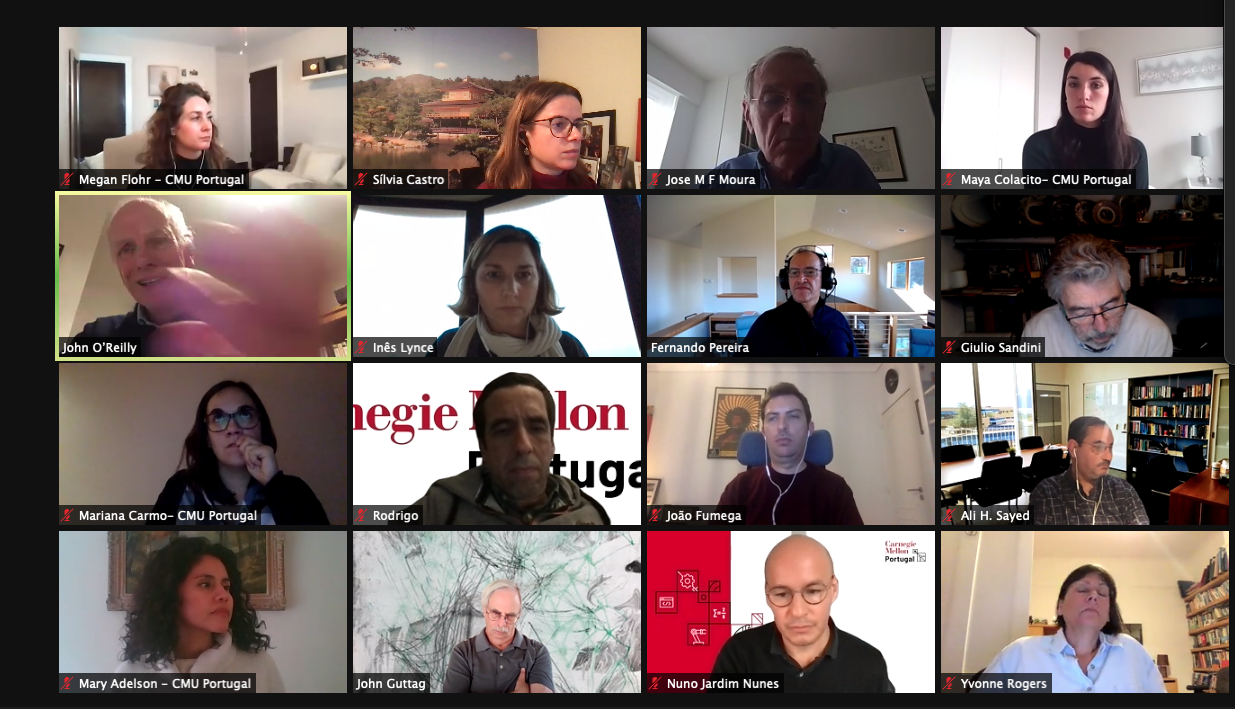
Over three days, from the 25th to the 27th January 2021, the CMU Portugal Program hosted its External Review Committee Meeting (ERC) to evaluate the Program’s overall performance between 2018 and 2020, analyzing in detail the outcomes and achievements of the international Partnership. The External Review Committee is appointed by the Fundação para a Ciência e Tecnologia (FCT). This committee reviews the yearly activities implemented by the CMU Portugal Program in general and has an advisory role oriented towards the independent evaluation of the activities of the Program. The CMU Portugal ERC members elected for CMU Portugal 3rd phase are: Sir John O’Reilly as Chair (UCL, UK and A* STAR Singapore; John Guttag (MIT, USA); Fernando Pereira (Google, USA); Yvonne Rogers (UCL, UK); Giulio Sandini (IIT, Italy); and Ali Sayed (EPFL, Switzerland).

The meeting was held online through videoconference, given the constraints inherent to the on-going COVID-19 Pandemic situation. During three consecutive days, the ERC members had the opportunity to interact with program participants as well as senior representatives of the funding organizations, the Board of Directors and other key stakeholders.

On the first two-days, the Principal investigators in Portugal and at CMU and the industry promoters had the opportunity to present the CMU Portugal recent research initiatives, namely the 7 Exploratory Research Projects 2019 and the 12 Large Scale Collaborative Projects. On the first day, there was also a meeting with some participants of our talent development initiatives, including dual-degree students and alumni and past participants of the visiting Faculty and researchers program.

The last day of the event was reserved for a meeting with the board of directors of the CMU Portugal Program – to whom the ERC reports its assessment of the Program directly- and with the Minister of Science, Technology and Higher Education, Manuel Heitor.  Overall, the 3-day virtual event engaged nearly 100 students, investigators, and companies’ representatives.

As a result of these extensive interactions and the assessment of the extensive written report that the ERC received in advance from the CMU Portugal Directors, it was pointed out that “the collaboration between FCT and ANI, working with the Directors coordinating this third phase of the program, had achieved a high degree of industrial participation both in terms of sectors and individual companies represented, many new to the program or to collaborating in research with universities at this level.” This acknowledgment is the result of the work done to accomplish the mission of the CMU Portugal Program for this 3rd phase that is to place Portugal at the forefront of research and technological development in the area of ICT, by promoting an innovation ecosystem with a tight coupling between cutting-edge research, world-class graduate education, and highly innovative companies in the data-driven economy.

According to the ERC, the overall balance is exceptionally positive namely in fostering innovative research in ICT both in Academia and Industry inn Portugal, with potential to go even further. The evaluation panel also highlighted the important role of the Dual Degree Ph.D. Program referring that along with the industry collaboration they “play a seminal part in the ICT research, innovation and enterprise ecosystem in Portugal by giving participants at one and the same time the opportunity to act both as research performing agents contributing to the desired societal/industrial objectives and outcomes while progressing their further professional development as top-tier individual researchers gaining experience both in Portugal and in Carnegie Mellon University in the USA.“

In conclusion, the ERC stated, “we already see very positive impact and believe this will persist and perhaps spread for decades.”

The full ERC’s public report is already available on our website.

The CMU Portugal Program leadership would like to thank all those who participated in the ERC Meeting. The network built throughout this 3rd phase is an essential part not only of this evaluation result, but of all the outcomes and achievements that the CMU Portugal program has accomplished and will hopefully keep on building in the following years.


Over 50 participants joined the Info Session: “How to apply to a CMU Portugal Affiliated Ph.D. Program Scholarship”

The CMU Portugal online Info Session “How to apply to a CMU Portugal Affiliated Ph.D. Program Scholarship” was a meeting point for future candidates to learn more about the application process and discuss any potential questions and concerns. The event counted with 52 potential candidates.

The session was moderated by the Program Executive Director in Portugal, Sílvia Castro, who began by presenting the two National Directors of the Program, Inês Lynce and Nuno Nunes, who welcomed the participants and pointed out the importance of this recently launched initiative. This is the first edition of the “Affiliated Ph.D. Programswhich offers up to 12 Scholarships for the 2021/2022 academic year hosted by Portuguese Universities with a research period of up to 12 months at Carnegie Mellon University in Pittsburgh.

The Program’s presentation was led by João Fumega, CMU Portugal Education Officer, who went through the main requirements to apply to the currently open Call for up to 12 scholarships under CMU Portugal. Further information about the Call is available here.

At the end of the session, Megan Flohr, the CMU Portugal Associate Director at CMU, spoke about the supervision requirements at CMU under this Call, the support available by the CMU Portugal Coordination office in Pittsburgh and shared valuable tips on how to take the best of the experience in Pittsburgh.

Maria Casimiro, a CMU Portugal Dual degree student from the 2019 Class in Software Engineering, was also a panelist and shared her experience as a Ph.D. student at CMU. She interacted with the participants giving tips about living expenses in Pittsburgh and showed herself available to answer to potential students’ future questions.

For more information please visite our FAQs Page.


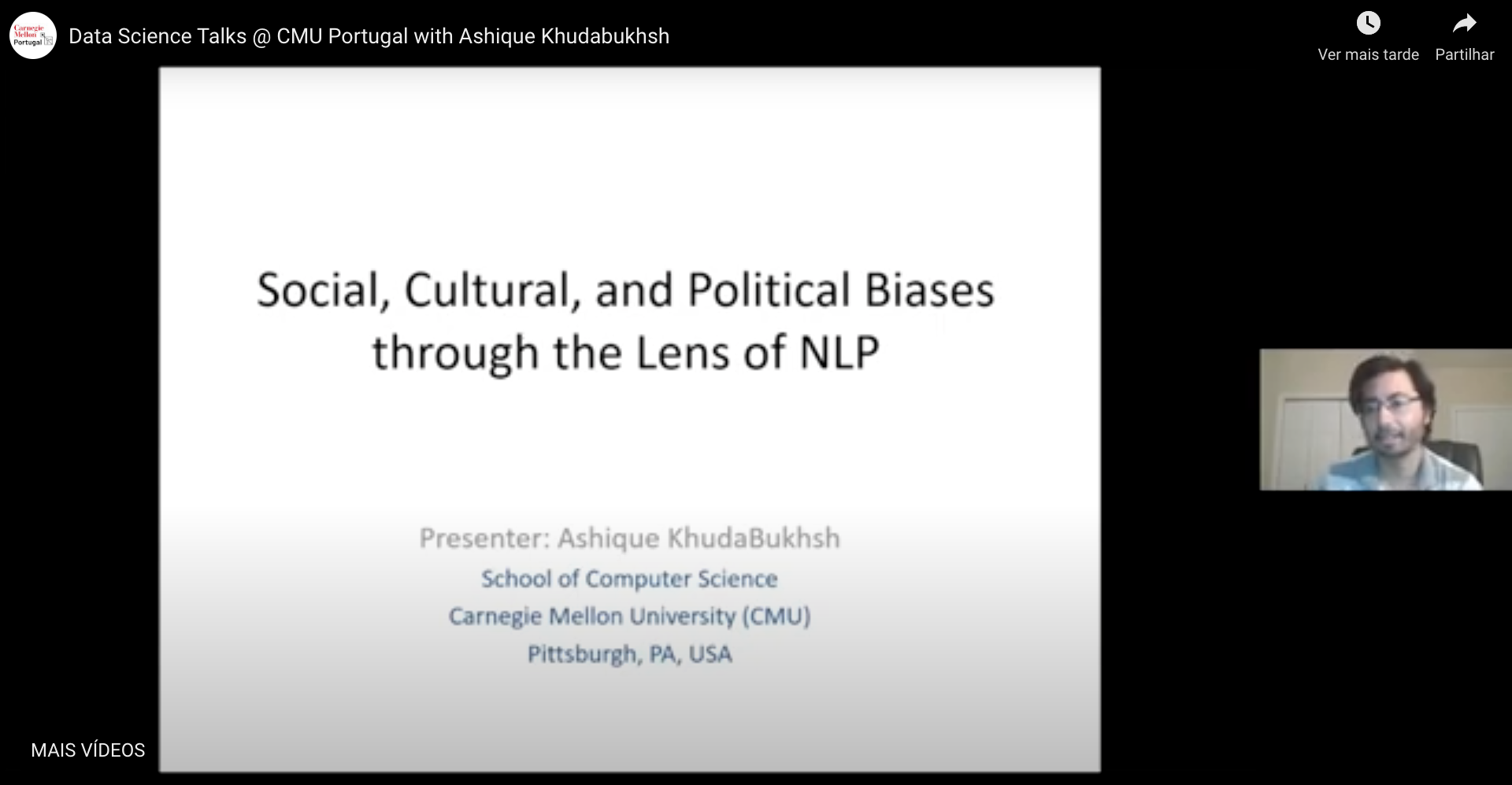
The 3rd @CMUPortugal Data Science Talk highlighted Social, Cultural and Political Biases through the Lens of NLP

Ashique Khudabukhsh is a Project Scientist at the Language Technologies Institute from Carnegie Mellon University (CMU) whose current research lies at the intersection of NLP and AI for Social Impact. In this field, he takes a particular interest in analyzing globally important events in South East Asia and developing methods for noisy social media texts generated in this linguistically diverse region. Another broad focus of his research is US politics involving devising novel methods to quantify, interpret and understand political polarization.

These were, in fact, some of the topics focused under the talk “Social, Cultural and Political Biases through the Lens of NLP” which had three main parts, centered on broad lines of NLP to address:

Cultural and social biases in popular Bollywood and Hollywood movies.
The first part of the talk approached a broad range of NLP techniques to uncover subtle social and cultural biases present in popular entertainment. Beyond occupational stereotypes and gender representation, the study looked at social signals such as son’s preference, retrograde social practices, and bias towards lighter skin color in popular Bollywood movies spanning seven decades and contrasting with similar corpora of Hollywood and world movies.

The long-standing international conflict between the two nuclear adversaries India and Pakistan
The second part of the talk examined what the speaker named as hostility-diffusing, peace-seeking hope speech in the context of the 2019 India-Pakistan conflict. The research tackled several practical challenges that arise from multilingual texts and demonstrate how novel methods can effectively extend linguistic resources (e.g., content classifier, labeled examples) from a world language (e.g., English) to a low-resource language (e.g., Hindi).

The current US political crisis.
The final part of the talk presented a new methodology that offers a fresh perspective on interpreting and understanding political and ideological biases through machine translation. The data set consists of more than 85 million comments on over 200K news videos uploaded by the official YouTube channels of four major US cable news networks. Focusing on a year that saw a raging pandemic, sustained worldwide protests demanding racial justice, an election of global consequence, and a far-from-peaceful transfer of power, the research showed that the used method could light on the deepening political division in the US.

Ashique Khudabukhsh (CMU) joined the group of speakers who have participated in the series of webinars entitled “Data Science Talks @ CMU Portugal” organized in the framework of the Advanced Training Program in Data Science and Machine Learning of the CMU Portugal Program, which is planned to start in 2021

If you weren’t able to watch the session, here’s the link:

Previous Data Science Talks @CMU Portugal
Conversational Assistants for Complex Search Tasks” by Jamie Callan
AI Learns to Race: Machine Learning for Autonomous Driving” by Eric Nyberg

More than 150 participants gathered for fruitful discussion with Jamie Callan

The CMU Portugal Program launched on January 28th the first Talk of its series of webinars “Data Science Talks @ CMU Portugal”, organized in the framework of the Advanced Training Program in Data Science and Machine Learning  which is planned to start in 2021. Jamie Callan, Professor and Interim Director of the CMU Language Technologies Institute, led the first presentation “Conversational Assistants for Complex Search Tasks”. The fruitful discussion approached the impact and development of new and complex conversational assistants, most specifically the TREC Conversational Assistance Track (CAsT), an international forum for research on next-generation conversational assistants that support complex information seeking.

The session started with a brief introduction by João Fumega, CMU Portugal Education Officer, followed by João Magalhães, CMU Portugal Faculty member at FCT UNL and one of the leading Faculty of the CMU Portugal Advanced Training Program in Data Science and Machine Learning.

Briefly, CAsT conversations are 8-12 questions that model a person learning about a topic, for example Cancer, the US electoral college, or the Bronze Age collapse.  During the talk, Jamie presented the characteristics and functionalities of successful CAsT systems allowing them to share their questions.

If you weren’t able to participate, here’s the full session video:


CMU Portugal Session at Ciência 2020 Summit

On November 4th, the CMU Portugal Program held the Session “CMU Portugal – Defining New Frontiers in Technology Within the Health Sector” at Ciência 2020 Summit, the central Science Conference in Portugal promoted by the Ministry of Science Technology and Higher Education (MCTES) along with Fundação para a Ciência e Tecnologia (FCT). This year the annual event was mostly remote due to the current pandemic situation and limited seats were available.

However, the Program was able to host a very fruitful discussion that included presentations from 3 (three) representatives of our new Large-Scale Collaborative Research projects related to the Health Sector.

The session started with a brief presentation from Rodrigo Rodrigues, CMU Portugal National Director, who introduced first-hand the CMU Portugal new Institutional Video for a quick overview of the Program and all its initiatives.

Rodrigo Rodrigues continued with a brief introduction of the 19 new projects developed under the Program and the Education Initiatives’ scope, reminding that a Call for Dual-Degree PhDs is currently open.

Next, it was time for the project presentations, starting with:

Carmel Majidi, CMU Professor in Mechanical Engineering and a long-time CMU Portugal collaborator, PI at the Stretchtonics Entrepreneurial Research Initiative (ERI) and now at the flagship project, WoW – Wireless biOmonitoring stickers and smart bed architecture: toWards Untethered Patients. He is also a supervisor of several CMU Portugal Dual-Degree Ph.D. students. Carmel Majidi spoke about the CMU Portugal projects. Majidi’s involvement focuses mostly on hardware architectures and fabrication methods that allow robots and machines to behave like soft biological organisms and be safe for contact with humans. His research work is currently dedicated to developing unique combinations of mechanical, electrical, and thermal properties that can function as “artificial” skin, nervous tissue, and muscle for soft robotics and wearables.

Francisca Leite, from Hospital da Luz Learning Health, an Industrial Co-Promoter of the CMU Portugal Flagship project IntelligentCare – Intelligent Multimorbidity Management System – followed next with a presentation of the project strategy and goals for the next three years. According to her, “Artificial Intelligence puts us more in control of our health,” and the IntelligentCare project aims at doing exactly that. The main goal is to develop a patient-centric and personalized tool to manage multimorbidity using analytical methods to explore data from electronic health records and measures reported remotely by patients, such as life events, quality of life, and physical activity, amongst others, using smart sensors and mobile solutions. The IntelligentCare tool will aid clinicians and other health care professionals to better manage their patients’ health.

GLSMED Learning Health promotes the project in partnership with Hospital da Luz, Priberam, INESC-ID/Técnico, and the Heinz College of Information Systems and Public Policy at Carnegie Mellon University.

Luís Rosado, Senior Scientist at Fraunhofer Portugal, an academic Co-Promoter of CMU Portugal Flagship, introduced “TAMI: Transparent Artificial Medical Intelligence” via Zoom from Porto. The project is focused on developing artificial intelligence algorithms to make the medical diagnosis of cervical cancer, lung diseases, and glaucoma more “clear and reliable.” First Global promotes the project in partnership with Fraunhofer Portugal, INESC TEC, Administração Regional De Saúde Do Norte, and Engineering Research Accelerator at Carnegie Mellon University.

Margarida Nery is the WoW Manager at Glintt, the Industrial Promoter of this Flagship project. WoW – Wireless biOmonitoring stickers and smart bed architecture: toWards Untethered Patients – is being supported at Carnegie Mellon by Carmel Majidi, who started the presentations. The project will focus on applying electronic skin (e-skin) patches for patient care with the goal of hassle-free wireless patient monitoring, as a step towards untethering the patients from the hospital bed and from the hospital itself to foster domiciliary hospitalization.

The project is promoted in partnership with Instituto de Sistemas e Robótica (ISR Coimbra), Universidade de Coimbra, FCT UC, Centro Hospitalar e Universitário de Coimbra and the Mechanical Engineering Department at Carnegie Mellon University.

To close the session, Rodrigo Rodrigues moderated a brief discussion about the expectations for the future of these projects and how the partnership and support of CMU impact the success of their research.

The video of this session is now available:

Ciência 2020 also counted with Pedro Ferreira, Carnegie Mellon University and CMU Portugal faculty member, and Susana Sargento, Universidade de Aveiro, and CMU Portugal Scientific Director, at the session “Science in Portugal for a more SOCIAL AND DIGITAL Europe”.

Susana Sargento also commented on the digital transformation promoted by science during the current pandemic.

CMU Portugal’s participation also started before the meeting itself with Rodrigo Rodrigues’s participation at the 1st Warmup event leading up to the meeting: “Rebuilding Portugal Through Knowledge, Jobs and Digital Transformation”.

In 2020, 12 new ICT Flagship projects started under the scope of the CMU Portugal Program. For the first time, these research projects are led by Portuguese companies and carried out in partnership between companies and non-corporate entities of the R&D system and research groups at Carnegie Mellon, also representing a very significant public and private financial commitment. Research topics span from Data Science and Engineering, Artificial Intelligence and Machine Learning, Design and Engineering applied to social problems, Forest Fire-Prevention, Data Management, Mobility, and Language Technologies.


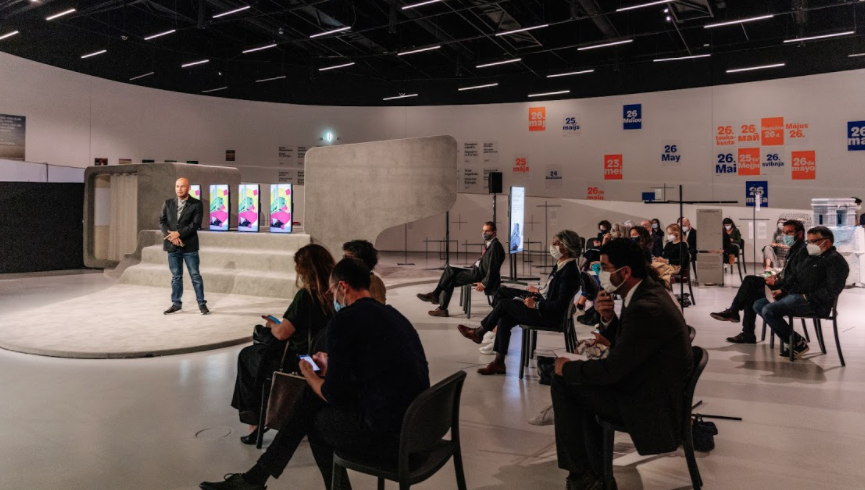
CMU Portugal Orientation Day welcoming the 2020/2021 new students

The CMU Portugal Program held its 2020 Orientation Day on October 11th at the  Fundação Luso-Americana (FLAD) to welcome the eight new Dual Degree Ph.D. students and offer a look at what they can expect from the next years under the Program. Joining the group were other 6 Ph.D. students and 6 alumni, that participated onsite or online to share their CMU Portugal Dual Degree experience.

The session started with a short opening from Nuno Nunes and Rodrigo Rodrigues, CMU Portugal National Directors, and José Moura (online), CMU Portugal Director at CMU,  and FLAD’s Administrator Elsa Henriques that so kindly welcomed this event.

Afterwards, each student had 5 minutes for a brief presentation on their Ph.D. research project starting with the 2020/2021 new students: Afonso Amaral who joined the Ph.D. in Engineering and Public Policy; Latifah Almaghrabi and Pedro Valdeira, Ph.D. in Electrical and Computer Engineering; Afonso Tinoco and Nuno Sabino Ph.D. in Computer Science;  Daniel Ramos in Software Engineering and Patrick Fernandes in Language Technologies. These presentations were followed by the 2019/2020 cohort of students: Neil Metha (ECE), Diogo Cardoso (ECE), Maria Casimiro (SE), Rudolph Santarromana (EPP), Luís Borges (LTI); and Alex Gaudio (ECE) who started his Ph.D. in 2018/2019.

The session continued with testimonies from successful alumni that shared their journey with CMU Portugal, pieces of advice, a broad perspective on the pathway to a dual-degree. The alumni groups included: Alexandre Ligo who is a Research Scientist at University of Virginia and graduated in Engineering and Public Policy (2018); Zita Marinho a CMU Portugal alumna in Computer Science/Robotics (2018), who currently works as a research scientist at DeepMind; Ricardo Cabral, who works as Senior Engineering Manager at Facebook and completed his Ph.D. in Electrical and Computer Engineering (2015); Susana Brandão, a Data Scientist at NOS who graduated in Electrical and Computer Engineering (2015).

At the end of the session Ricardo Marques, currently responsible for the Program’s Alumni Chapter, spoke about the Chapter and invited all students to join the Alumni group.

The Group shared experiences about life at CMU and in Portugal, different cultural approaches to academic life, internships opportunities, challenges and many benefits of being a CMU Portugal Dual-Degree Ph.D. candidate. The overall message from our alumni: “This is a marathon, not a sprint.”

The event’s goal was to allow the students to learn more about the Program, meet their peers, and share their Ph.D. work. This was also an excellent opportunity to meet the National Directors and the CMU Portugal Coordination Office staff that will support them throughout their Ph.D.

At the end of the day there was still time for a coffee break where participants could network and share contacts in a more informal environment.


More than 100 participants joined the CMU Portugal Dual Degree Ph.D online Info Session

The CMU Portugal online Info Session “How to apply for a CMU Portugal Dual-Degree Ph.D. Scholarships” was a meeting point for future candidates to learn more about the application process and discuss any potential questions and concerns. The event’s objective was successfully achieved with a total of 104 participants from all over the globe.

The session has started with a presentation by João Fumega, CMU Portugal Education Officer, who went through the main requirements to apply to the currently open call for up to 12 scholarships under CMU Portugal Program in 7 different Ph.D. programs. Further information is available here.

Dorian Rosca, Advisor and Program Officer at Fulbright Portugal, spoke about the overall application process to American Universities and the Pathway to Graduate School Program designed to help highly motivated and talented students submit competitive applications to graduate programs in the U.S. (http://www.fulbright.pt/estudar-nos-eua/2020-pathway-to-graduate-school).

From Carnegie Mellon University, Jenn Landefeld (Marketing and Communications Manager at the Computer Science Department) and Jessica Tomko (Assistant Director of Admissions, Electrical and Computer Engineering), gave a perspective on how the application process proceeds at the Carnegie Mellon University. Both focus on the specificities of the requirements by their respective departments that offer joint Ph.D. degrees with Portuguese Universities under the scope of CMU Portugal.  Specific information about the requirements, application processes, and guidelines for each Ph.D., is availale here https://cmuportugal.org/dual-degree-phd/ 

At the end of the session, there was still time for Q&A. The lively session was full of many relevant questions about the application process. CMU Portugal FAQs are published here (https://cmuportugal.org/faq/) , and will soon be updated with information gathered through this session.

For more information and doubts about the PhDs please feel free to contact the CMU Portugal program at apply@cmuportugal.org