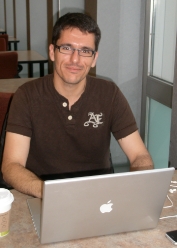
Ph.D. Student in Applied Mathematics: Rita Ferreira

Ph.D. Student in Applied Mathematics: Rita Ferreira

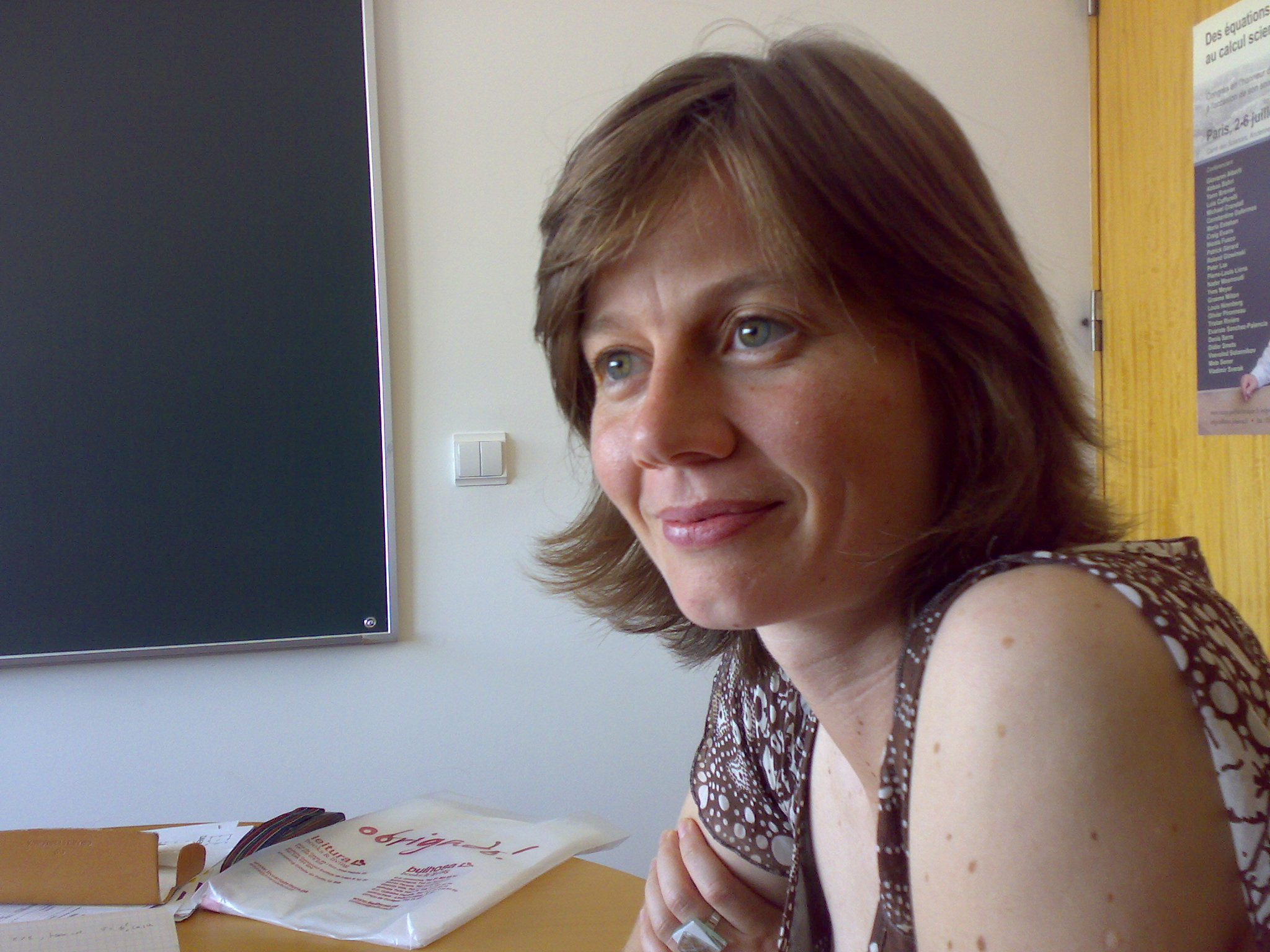
Rita Ferreira was quick to find balance between studies and sports. “At first, the program was a bit overwhelming, but I learned to adjust and now I’m learning so much,” said Ferreira, who is enrolled in the Carnegie Mellon Portugal in applied mathematics program. .Rita Ferreira

Rita’s research areas are centered on continuum mechanics, the calculus of variations, asymptotic analysis and homogenization. The Lisbon native said she plans a career in academic teaching and research.When she’s not busy with school work, she is jogging through scenic Schenley Park, adjacent to Carnegie Mellon, or playing tennis and soccer via the university’s extensive intramural sport program. Rita’s research areas are centered on Continuum Mechanics, Calculus of Variations, Asymptotic Analysis and Homogenization. At the present moment I am working on homogenization problems, where we aim to derive the so called “homogenized models” that intend to describe the macroscopic behavior of a system which is microscopically heterogeneous. In other words, the heterogeneous material is replaced by a homogeneous fictitious one whose overall characteristics are a good approximation to the initial ones.

CMU professor recognized for making things miss

CMU professor recognized for making things miss

That’s one reason the aviation industry is working on upgrading its collision avoidance systems, and it’s also a reason why the work of Carnegie Mellon University’s Andre Platzer is gaining more recognition. Dr. Platzer, a 30-year-old computer science professor, is named in today’s edition of Popular Science as one of its “Brilliant 10,” which the magazine calls “some of the nation’s most promising young researchers.”

Read the article online, in English from Pittsburgh Post-Gazette.

Carnegie Mellon Portugal Program and Portugal Telecom Organize First Annual Forum on Cyber Security


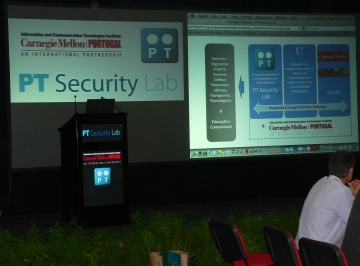
PT Security Lab On September 18th, 2009, in Lisbon, Portugal, the Carnegie Mellon|Portugal Program and the telecommunications company, Portugal Telecom (PT), held a forum to address “The Challenges of Cyber Security at the Turn of the Decade.”
The goal of this event was to meet in one venue the major entities and companies responsible for national infrastructures and critical services in Portugal. They debated and checked the status of Critical National Cyber Security and shared their experiences and knowledge.

In attendance at the opening ceremony were: Carlos Alves Duarte, board member of PT Group, Pradeep Khosla, founding director of CyLab and the Dean of the College of Engineering at Carnegie Mellon University, and Manuel Heitor, Portugal State Secretary for Science, Technology and Higher Education.

The Forum was divided in three panels: “The Challenges of Cyber Security at a New Decade for Critical Infrastructures and Services”, “Panorama of Cyber Security Research in Portugal,” and “Building the CyLab Portugal Network with PT Security Lab.” During the forum, researchers from Portuguese institutions and Carnegie Mellon University, managers from PT, and several entrepreneurs, discussed the ongoing research on Cyber Security.

Portugal Telecom launches PT Security Lab
The center of expertise on cyber security, PT Security Lab, was created in collaboration with the Carnegie Mellon|Portugal Program, with Cylab, and with Portugal Telecom (PT). This center is a unique and cross-sectional framework for PT’s cluster, concentrating know-how and resources. This center is being strengthened with the talent of the masters programs in the Carnegie Mellon|Portugal Program.
The PT Security Lab will leverage the capacity of innovation on cyber security, the development of new products and services adapted to the real problems of companies and public institutions, and will reveal Portugal Telecom like a major reference for cyber security in Portugal.

The key lines of the PT Security Lab are:
– Secure mobile networks and systems;
– Secure computer platforms;
– Secure software engineering;
– Secure home networks and computing;
– Security of cyber-physical systems;
– Usability of security and privacy techniques;
– Advanced security event monitoring, correlation and viewing systems;
– Detection and prevention of internal attacks;
– Detection and prevention of external attacks;
– Security and risk metrics and models.

More information visit: www.ptsecuritylab.telecom.pt

Three years of hard work and progress: Research, Technology, and Graduate Education

Three years of hard work and progress
Research, Technology, and Graduate Education
In October 2006, the Portuguese government and Carnegie Mellon entered into an agreement identified as the Carnegie Mellon|Portugal Program. Some of the key goals include recruiting top students and faculty in the International stage, fostering strong ties among Portuguese Universities themselves and Portuguese Universities with corporate affiliates, and creating an environment that functions on the global stage. Since its inception, the Program has made significant strides in achieving these goals.

In the first academic year (2007/2008), 29 students were enrolled: 11 Ph.D., and 18 professional masters. In the second academic year (2008/2009), 72 additional students were enrolled: two post doctoral, 22 Ph.D., and 48 professional masters. In the third academic year (2009/2010), 67 new students were enrolled: 20 Ph.D. and 47 professional masters. This increased the total enrollment to 168 students.

Stats
______________ In February 2010, the first and second cohort of 60 Professional Masters students who have completed their programs requirements will participate in a single diploma ceremony which will be hosted in Portugal.
______________
The Program involves nine Portuguese Universities: Univ. de Aveiro; Faculdade de Ciências Económicas e Empresariais – Univ. Católica Portuguesa; Faculdade de Ciências e Tecnologia — Univ. de Coimbra; Univ. de Madeira; Escola de Engenharia – Univ. do Minho; Faculdade de Ciências e Tecnologia – Univ. Nova de Lisboa; Faculdade de Ciências – Univ. de Lisboa; Instituto Superior Técnico – Univ. Técnica de Lisboa; and Faculdade de Ciências and Faculdade de Engenharia – Univ. do Porto.
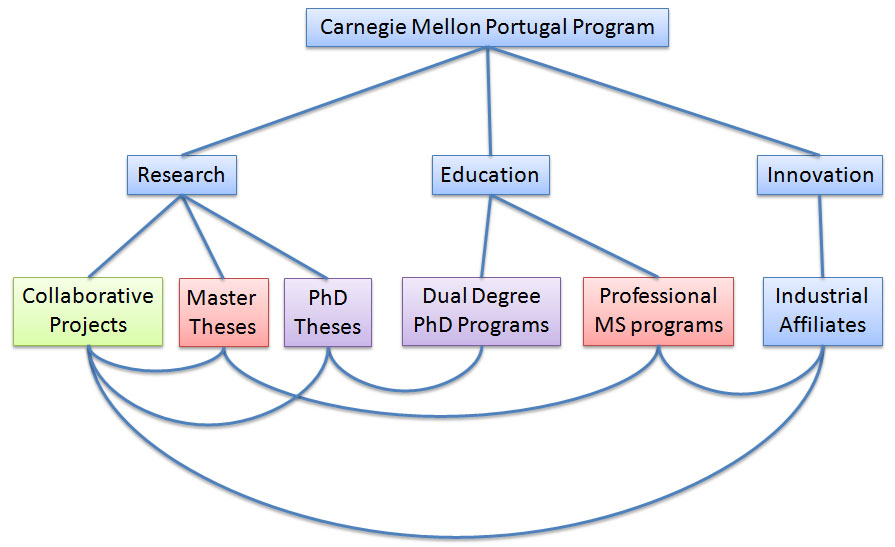
structure by instruments

The Program has also strengthened the ties between Portuguese Universities and industry. Many corporate affiliates provide financial support to over 45 students in the Program, and many of these are now working with these companies after graduation. Currently, the Partnership has more than 39 industry partners. Their commitment to the Program includes: direct funding, human resources, logistical support and equipment for ten innovative research projects, which were selected by Open Calls.
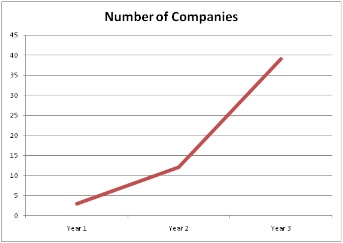
Number of companies 2009

Within the professional masters programs, international student enrollment increased to 21% in 2009/2010. A program that has been very successful in recruiting international students is the professional masters in human computer interaction, which now stands at 50% international enrollment. Currently, 13 different countries are represented in the Professional Masters programs: Australia, Brazil, Canada, China, Costa Rica, Germany, India, Portugal, São Tomé e Príncipe, Spain, UK, Ukraine, and USA. The professional master in software engineering has emphasized recruiting from industrial companies: in the 2008/09 class there were students supported by 3 companies, and in the 2009/10 class there are 9 companies involved. The programs in information networks and information security have been the choice of numerous staff members of Portugal Telecom.

The Ph.D. programs have experienced similar international representation.
_________ There are 15 countries represented in the Ph.D. programs: Bangladesh, Bosnia and Herzegovina, Chile, China, Croatia, Iran, Germany, Ghana, India, Italy, Netherlands, Portugal, Serbia, Thailand, and USA.
___________
Partners: Portugal Telecom, Nokia Siemens Network, and Novabase.

Affiliates: Alert, Alfama, ANACOM, BANIF, Biodevices, Critical Software, EDISOFT, efacec, FiberSensing, Electricidade da Madeira, expedita, IMPRESA, InovaRia, Horários do Funchal, MacLaren, Metropolitano de Lisboa, Microsoft, NDrive, OutSystems, Petratex, Porto Editora, PT Sistemas de Informação, Priberam, Promosoft, sapo.pt, Telbit, Vodafone, WIPRO, wit software, ydreams, ZON Multimedia.

November, 2009

Best Student Paper in Distributed Systems Awarded

Best Student Paper in Distributed Systems Awarded

Henrique Moniz Henrique Moniz, a Ph.D. student in the Faculty of Sciences of the Universidade de Lisboa, won the “Best Student Paper” Award, published in the 23 rd International Symposium on Distributed Computing – DISC 2009. This is one of the main international conferences in the area of theoretical distributed computing.

In developing the paper, “Randomization Can Be a Healer: Consensus with Dynamic Omission Failures,” Moniz worked with senior faculty members of the Faculdade de Ciências da Universidade de Lisboa (FCUL) team: Nuno Neves, Miguel Correia, and Paulo Veríssimo. He says that “the paper solves the problem of consensus in environments such as wireless networks where communication fail-ures are ubiquitous.”

“Consensus is a fundamental problem in distributed computing because it allows the nodes that compose the system to agree on a common value,” Moniz explains. “Basically, any kind of coordinated activity can be reduced to consensus.”
___________
“This contribution is important because it circumvents a 20-year old impossibility result,” says Moniz.
___________
For the team, this award “confirms previous acknowledgments of the high quality research that has been done for more than two decades, like the 2004 and 2007 IBM awards.” To the student the award “represents recog-nition for the hard work involved in struggling with a problem during approximately a year and a confirmation that it is worth sticking to one’s ideas.” Until recently, Moniz was involved in the dual MSIT-IS professional mas-ter program as a Teaching Assistant.

Check the full paper at: http://homepages.di.fc.ul.pt/%7Enuno/PAPERS/DISC09.pdf

Ph.D. Student: Carla Costa is an agent of change


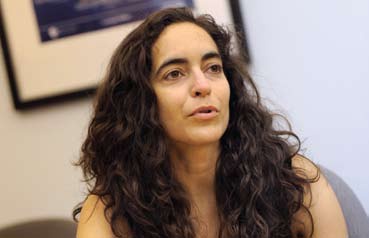
Carla Costa Carla Costa is an agent of change. She has spent one year at Universidade Católica Portuguesa in Portugal, and continues her graduate education at Carnegie Mellon in ICTI’s technological change and entrepreneurship Program.

Costa is from Caldas da Rainha, a small town 60 miles north of Lisbon, and comes to the Carnegie Mellon|Portugal Program with a wealth of knowledge about government, consultancy, biotech business incubators, and university entrepreneurship offices. Her research interests focus on the intersection between innovation, entrepreneurship, and regional economic development.

Costa’s goal is to contribute to a better understanding of the role played by universities in regional industry development, company and industry agglomeration mechanisms, and the role played by country-specific characteristics in those relationships. To this end, she is studying the roles played by university professors’ and graduates’ preferences, entrepreneurs’ preferences and the role of universities in the creation of knowledge-based companies. “I would ultimately like to do some consulting and I may want to teach as my career matures,’’ she says.

Costa praises the program, and is quick to add that the courses are challenging. She also comments on the culturalshock of first coming to the USA from Portugal. “The pace is fast and often frenzied,’’ she says.

But Costa says she is adapting. For example, lunch is a big meal in Portugal. But in the USA it is often skipped or lasts only a few minutes, according to Costa. Still, she praises Carnegie Mellon’s multicultural environment for making her feel more at ease in a new culture. “It is an amazing environment and I want to continue to learn and grow, and the program affords me that opportunity,’’ she says. Costa has already visited several USA cities including Seattle, New York City, Boston, San Francisco, and Washington, D.C.

October, 2009

Francisco Veloso Tapped To Teach in Portugal

Francisco Veloso Tapped To Teach in Portugal

Francisco Veloso Carnegie Mellon University’s Francisco Veloso will spend the 2009 semester teaching at Católica University in Portugal. “I’m going to be doing a lot of innovative work with my students,’’ said Veloso, an ICTI faculty member and assistant professor in the Department of Engineering and Public Policy at Carnegie Mellon. Veloso teaches in the areas of technology policy and management, supply chain decisions, and industrial development. He is interested in the development of technology assets and the role of public policy.

His work specifically aims at integrating engineering and technology knowledge. His current work includes a series of studies on how decisions related to technology and innovation (entry in new technologies, adoption of process improvement methods or modular product solutions) affect firm performance throughout the automotive industry.
In 2008, Veloso received a Sloan Industry Studies Fellowship for his research in the automotive sector. The prestigious Sloan Fellowship supports the work of researchers early in their academic careers who are recognized for their exceptional promise to the advancement of knowledge.
_________
A second and more recent area of research involves evaluating and comparing technological capabilities of knowledge-based industries in developing nations. Some of his current research includes analyzing the software industry in China, India and Brazil.
____________
Veloso holds a B.S. in physics engineering from the Instituto Superior Técnico, an M.S. in technology management from the Instituto Superior de Economia e Gestão, and a Ph.D. in technology, management and policy from the Massachusetts Institute of Technology.

Jonathan Aldrich says: “I am working on a project which has the potential to revolutionize software development.”

Jonathan Aldrich says: “I am working on a project which has the potential to revolutionize software development.”

Jonathan Aldrich The demand for greater computer processing speeds is driving manufacturers to pack two, four or more processors into new computer chips, creating headaches for computer programmers that Carnegie Mellon|Portugal researchers believe they can relieve. The result could revolutionize the way software is developed.

Software engineers have long written computer programs sequentially, compiling a list of instructions that follow one after the other, said Jonathan Aldrich, associate professor in Carnegie Mellon’s Institute for Software Research and director of the software engineering minor. But to take full advantage of the new multicore chips, programmers need to find ways to divide up their instructions so that multiple processors can work concurrently to complete a task.

___________
“Concurrent programming is much, much more difficult than sequential programming,” Aldrich said.
___________
Programmers who continue to focus on what each processor is doing and on all of the potential interference that can occur as processors work on problems in parallel quickly become overwhelmed. “It’s just too much information for simple-minded humans to keep in their heads,” he added with a laugh.
So Aldrich and Paulo Marques of the University of Coimbra are working together on an ambitious new programming paradigm that they call “concurrency by default.” Rather than worry about the order in which their commands are executed, software engineers using this approach could simply specify in their code what computations need to be performed; the lower level task of assigning tasks for either sequential or concurrent processing would be handled automatically.
“It’s an idea that Paulo and I came up with together,” Aldrich said, nothing that both had done extensive research on formal methods for verifying software designs that underlie the “concurrency by default” approach.
“This collaborative research is some of the most exciting of my career.” They will present a paper on the new approach at the Onward! 2009 software engineering conference in Orlando, FL, in October.
Aldrich and Marques co-advise Sven Stork, who just finished his first year in the joint Carnegie Mellon|Portugal Computer Science/Software Engineering Ph.D. Program. Aldrich visited Coimbra in July to meet with Marques and also visited Lisbon, where he is beginning collaborative work with Luis Caires at the Universidade Nova de Lisboa.

Alexandre Mateus: Doctoral student in the ICTI Engineering and Public Policy program


Alexandre Mateus He holds an undergraduate degree in computer engineering, with a major in artificial intelligence, and a master of science in engineering policy and management of technology, both from the Instituto Superior Técnico, in Lisbon. His professional goals are to work on challenging projects that will contribute to policymaking.
“I am concluding the first phase of my project which was looking at issues related to violations of copyright on the Internet, mainly related to peer-to-peer,” explains Mateus. He selected Illinois University and its 6,500 students to conduct the study.“We designed the process of data collection,” he says, “but we didn’t collect [the data] because in the U.S. there is an organization called Institutional Review Board (a committee that has been formally designated to approve, monitor, and review biomedical and behavioral research involving humans with the aim to protect the rights and welfare of the research subjects) that must approve the research.”

Mateus emphasizes that the main findings were that “many people download pirated content, and there are no geographical, social or other relevant differences; downloads are made mainly during the day, when the persons are active; the activity rises around 10 a.m. and then around 10 p.m. begins to fall.” According to Mateus, “one of the problems that took us to the pirated content was the fact that the industry didn’t adapt the technology.”

In light of these findings, Mateus is preparing to study the policy implications of legal business of one or two technologies that are being discussed and that are proposed to facilitate distribution of content online. However, he thinks that those “proposals are designed in terms of engineering, but not in terms of policies: regulation, law, market competition, among many others.”

What is a Ph.D.?
“A Ph.D. is a long-distance race”, says Mateus, “which takes a long time to complete, so we must be prepared to reach the middle and think that this never ends, but we have to continue and think that at the same time we have the opportunity to make very interesting research.

“Carnegie Mellon University has the best Department of Engineering and Public Policy.”