CMU Portugal Program Team Publishes Paper in Environmental Science & Technology Journal

CMU Portugal Program Team Publishes Paper in Environmental Science & Technology Journal

CMU Portugal Research Team on How Building Codes can Save Dollars and the Environment

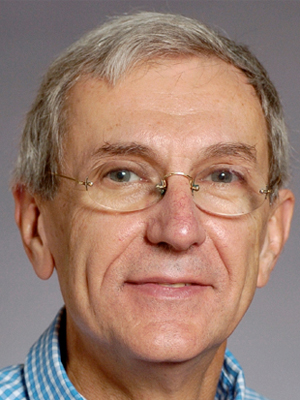
/uploadedImages/people/students/Gilbraith_pq.jpg In an effort to decrease global energy expenditures, more countries are implementing and updating their building codes, for private and commercial constructions. This is the focus of the paper written by the dual degree Ph.D. student Nathaniel Gilbraith, from Instituto Superior Técnico of the Universidade de Lisboa (IST-UL) and CMU, with his advisor Inês Azevedo and with Paula Jaramillo, both researchers at CMU, recently published in the prestigious journal Environmental Science & Technology .

Entitled “Evaluating the Benefits of Commercial Building Energy Codes and Improving Federal Incentives for Code Adoption”, the paper explores the social and private benefits of implementing the ASHRAE 90.1 – 2010 in the United States, which is viewed as a stricter commercial building comparatively to previous legislation.

“My Ph.D. research is quantifying how changes in energy demand can help overcome our energy system challenges and transition to sustainability,” says Nathaniel Gilbraith, explaining that “this research highlights that reducing energy demand can reduce emissions and provide social benefits.”

CMU Portugal Program: What is the importance having this paper accepted and published in this journal?

Nathaniel Gilbraith (NG): This research project was the first project my advisers and I initiated during the dual Ph.D. program. Over time, as we quantified the benefits of building energy codes, we realized that more efficiency buildings can help provide large human, environmental, and climate benefits. For me, it is very important, and I am very proud that we were able to publish this research in a high quality journal and share these results with the community.

CMU Portugal Program: What are the main findings of this paper?

NG: Our results show that by adopting standards that improve building energy efficiency, not only can buildings save energy but that substantial amounts of emissions can be avoided. The human, environmental, and climate value of avoiding these emissions is on the order of hundreds of millions of dollars across the entire United States. Thus, we recommend that governments consider the social benefits of building codes when determining the minimum allowable efficiency level of buildings. One of the main findings of this paper is related with the fact that social benefits will remain substantially larger than the federal incentive funding levels, when considering projected reductions in grid electricity emissions intensity.”

CMU Portugal Program: How did you get to this conclusion?

NG: We found that, in the United States, a relatively small amount of money is allocated towards incentivizing states to adopt building energy codes. The benefits of these codes, however, are substantially larger. This conclusion holds true even when we consider the reductions in emissions intensity associated with recent U.S. laws that require power plants to emit fewer pollutants. Therefore, we believe that building energy codes will continue to provide large human, environmental, and climate benefits will into the future.

CMU Portugal Program: What method and data did you use?

NG: We used the building energy simulation model EnergyPlus to estimate the energy consumption of commercial buildings (such as office buildings, restaurants, hospitals, and schools) for a baseline energy efficiency level and when a more stringent building energy code is in place. We converted energy savings into emissions savings using electricity production and emissions data from the U.S. Environmental Protection Agency. Finally, we quantified the human and environmental benefits of reductions in emissions using the AP2 integrated assessment model; we valued reductions in carbon dioxide emissions using a “Social Cost of Carbon” that estimates the effects of greenhouse gas emissions on our climate and societies.”

CMU Portugal Program: How is this paper related to your Ph.D. research?

NG: My Ph.D. research is quantifying how changes in energy demand can help overcome our energy system challenges and transition to sustainability. This research highlights that reducing energy demand can reduce emissions and provide social benefits. I believe we should value, and compare, all aspects of both increases in energy supply and decreases in energy demand in order to move towards a more sustainable energy system.”

January 2015

Alum Cristobal Cheyre Stresses Importance of Entrepreneurs and Ideas for Clusters


Cristobal Cheyre Cristobal Cheyre recently finished his dual degree doctoral program in Technological Change and Entrepreneurship (TCE), at Instituto Superior Técnico of the Universidade de Lisboa (IST/UL), Católica-Lisbon School and Carnegie Mellon University (CMU). During his five years of studies, he focused his research work on “Inventor Mobility, Knowledge Spillovers and Spinoff Entry in the U.S. Semiconductor Industry: Regional Patterns, Determinants, and Learning Implications.”

Co-advised by Caterina Moschieri from Católica-Lisbon School, and Steven Klepper and Francisco Veloso, from Carnegie Mellon University, Cristobal Cheyre explained that his “results are interesting for policy makers and for the understanding of the benefits and costs of industry clustering,” and also in terms of “economic theory,” because they “provide interesting insights on how we understand the benefits of industry clustering.” Among other findings, this young researcher concluded that “the higher rate of inventor mobility in Silicon Valley is greatly related with the entry of spinoffs in the region,” and that “spinoffs hire several inventors from their parents.”

Cristobal Cheyre stressed that “what was truly unique of Silicon Valley in this period was a group of extraordinary inventors that started firms pursuing ideas that transformed the world”, and what drove “worker mobility and the dynamism of clusters were ideas and entrepreneurs.” Therefore, he concludes, “what policy makers should take from this is that they have to attract entrepreneurs, and provide the conditions for ideas to get to the market.” To better explain this recommendation, Cristobal Cheyre gave as example the organizers of the StartUp Chile initiative, which are “attracting entrepreneurs with good ideas from all over the world and provide them with capital and support to pursue their ideas.”

One of the most recent achievements of Cristobal Cheyre’s research was the publication of the paper “Spinoffs and the Mobility of U.S. Merchant Semiconductor Inventors,” co-written with Francisco Veloso and Steven Klepper, in the leading journal Management Science. For him, this was a “recognition to the quality of the work, and the value of our findings.”

After his graduation, Cristobal Cheyre was invited to become a postdoctoral researcher at Carnegie Mellon University, where he conducts research in collaboration with faculty members from CMU and Católica-Lisbon School. In the future, he also plans “to look for a faculty position” in which he can continue to develop his research on entrepreneurship and technological innovation.

CMU Portugal: How was your experience as a dual degree graduate student, who spent time both in Portugal, at Católica-Lisbon School and IST/UL, and in the U.S., at Carnegie Mellon University?
Cristobal Cheyre: I enjoyed the opportunity of completing my Ph.D. in two different countries that I like and with the support of outstanding institutions. It was a good experience at the personal and professional level. I think the main advantage of spending time at different universities is getting to know more people, with different interests and views. It sure entails greater difficulties, as coordination is never easy, and it can require quite a bit of work, but overall it was a positive experience.

CMU Portugal: “Inventor Mobility, Knowledge Spillovers and Spinoff Entry in the U.S. Semiconductor Industry: Regional Patterns, Determinants, and Learning Implications,” was the theme of your thesis. What were your main findings?
CC: My thesis studied the role of inventor mobility on spinoff entry in the semiconductor industry. This is an industry that is notoriously famous due to its clustering in Silicon Valley, and that has received a lot of attention from policy makers as an example to follow. There are many governments trying to replicate the success of Silicon Valley, following several different theories of what makes this region so successful. We focus in one particular factor that we believe is of prime importance, which is inventors that leave their employer to create their own firm. In the first part of the thesis, I show that the higher rate of inventor mobility in Silicon Valley is greatly related to the entry of spinoffs in the region. What is happening is that many firms are constantly being created in Silicon Valley, and to get started these firms hire many experienced inventors from other firms. The second and third part of the thesis look at the characteristics of the inventors hired by new firms, and at how new firms use the previous knowledge of these inventors. As should be expected, I find that spinoffs hire several inventors from their parents. These workers bring in the necessary knowledge to start the firm. What is surprising is that spinoffs also hire many inventors from other unrelated semiconductor firms. There wasn’t any particular characteristic that explained why these inventors were hired instead of others. In the final part of the dissertation I show that these inventors were hired due to their general knowledge about the industry, and not so much for specific things they may have made with their previous employer.
“What was truly unique of Silicon Valley in this period was a group of extraordinary inventors that started firms pursuing ideas that transformed the world.”

CMU Portugal: What do you think will be the impact of these findings?
CC: The results are interesting for policy makers and for the understanding of the benefits and costs of industry clustering. I think the most interesting part from the side of policy is that it highlights the importance of entrepreneurs and ideas. According to my results, what drives the dynamism of Silicon Valley is the generation of ideas that lead to new firms. Thinking back to the times Silicon Valley started to grow, there wasn’t anything that would make you think this region would turn to be the most notable cluster in the world. What ignited the cluster was that William Shockley decided to start his firm there, which later led to the establishment of Fairchild Semiconductors by some of his employees, which in turns led to many other spinoffs. When these firms entered, they didn’t have a cluster to support them; in fact, the electronics industry was concentrated mostly in the other side of country. As I show in the thesis, they solve this by hiring most of their workforce from other regions. What was truly unique of Silicon Valley in this period was a group of extraordinary inventors that started firms pursuing ideas that transformed the world.

CMU Portugal: What about the contribution to theory of your findings?
CC: In terms of economic theory, my results provide interesting insights on how we understand the benefits of industry clustering. It is frequently argued that the greater mobility of workers in clusters helps all firms located in them to stay at the forefront of the technology. The argument is that as workers move through different firms, they help to disseminate knowledge across the cluster. My results show that most of the mobility corresponds to inventors moving from incumbents to spinoffs. This suggests that spinoffs are benefiting disproportionately from this mechanism, and that incumbents are bearing the cost of constantly loosing workers to new firms. As we know that incumbents don’t move away from clusters, incumbents must enjoy other benefits of being located in agglomerated regions.

CMU Portugal: From this research, you recently published the paper “Spinoffs and the Mobility of US Merchant Semiconductor Inventors,” co-authored by Francisco Veloso and Steven Klepper, in Management Science, a leading management journal. What is the importance of this achievement?
CC: That the paper is getting published in a leading journal is recognition to the quality of the work, and the value of our findings. I’m very glad of seeing a work where I, along with Steven and Francisco, worked for a long time is getting published in such a good journal. This will also help the paper reach a broader audience.

“A notable recent example is the case of StartUp Chile. In this program they are attracting entrepreneurs with good ideas from all over the world and provide them with capital and support to pursue their ideas.”

CMU Portugal: The paper shows how firm entry, and spinoffs in particular, explain the celebrated high levels of inventor mobility in Silicon Valley. You found that there is no extra mobility in a cluster between established firms; so you need entrepreneurship (and spinoffs) to have strong mobility. Is this true? What data did you analyze, and in what sense can these conclusions be of use by other clusters or by public authorities when a cluster is being put into place?
CC: I think this exactly highlights what I already mentioned. What drives worker mobility and the dynamism of clusters are ideas and entrepreneurs. What policy makers should take from this is that they have to attract entrepreneurs, and provide the conditions for ideas to get to the market. A notable recent example is the case of StartUp Chile. In this program they are attracting entrepreneurs with good ideas from all over the world and provide them with capital and support to pursue their ideas. This contrasts with what has been tried many times, which is attracting big corporations to start a cluster. The program is based on the concept that if you attract entrepreneurs and provide them with the means to develop their ideas, an entrepreneurial revolution will follow.

CMU Portugal: Now that you have finished your Ph.D., what will you do next? How do you envision yourself in the future?
CC: I’m currently a postdoctoral researcher at Carnegie Mellon. I’m developing a couple of research projects, some of them in collaboration with faculty from CMU and Catolica-Lisbon School. I’m also co-teaching a seminar course on innovation management at CMU, and I am teaching a course on Strategy and Management of Technological Innovation. My future plan is to look for a faculty position where I can continue to develop my interests on entrepreneurship and technological innovation.

October 2013

CMU Portugal Program Bridging Academia And Industry

Faculty Exchange Program
CMU Portugal Program Bridging Academia And Industry

/uploadedImages/people/faculty_exchange/Pedro Furtado.png Pedro Furtado, faculty member and researcher in the Software and Systems Engineering (SSE) group at Universidade de Coimbra, was at Carnegie Mellon University (CMU) between August and November 2014, as part of the Faculty Exchange Program offered by the CMU Portugal Program. “The experiences I had can be of use to my research group, to my University and to Portugal scientific infrastructure,” emphasizes Pedro Furtado.

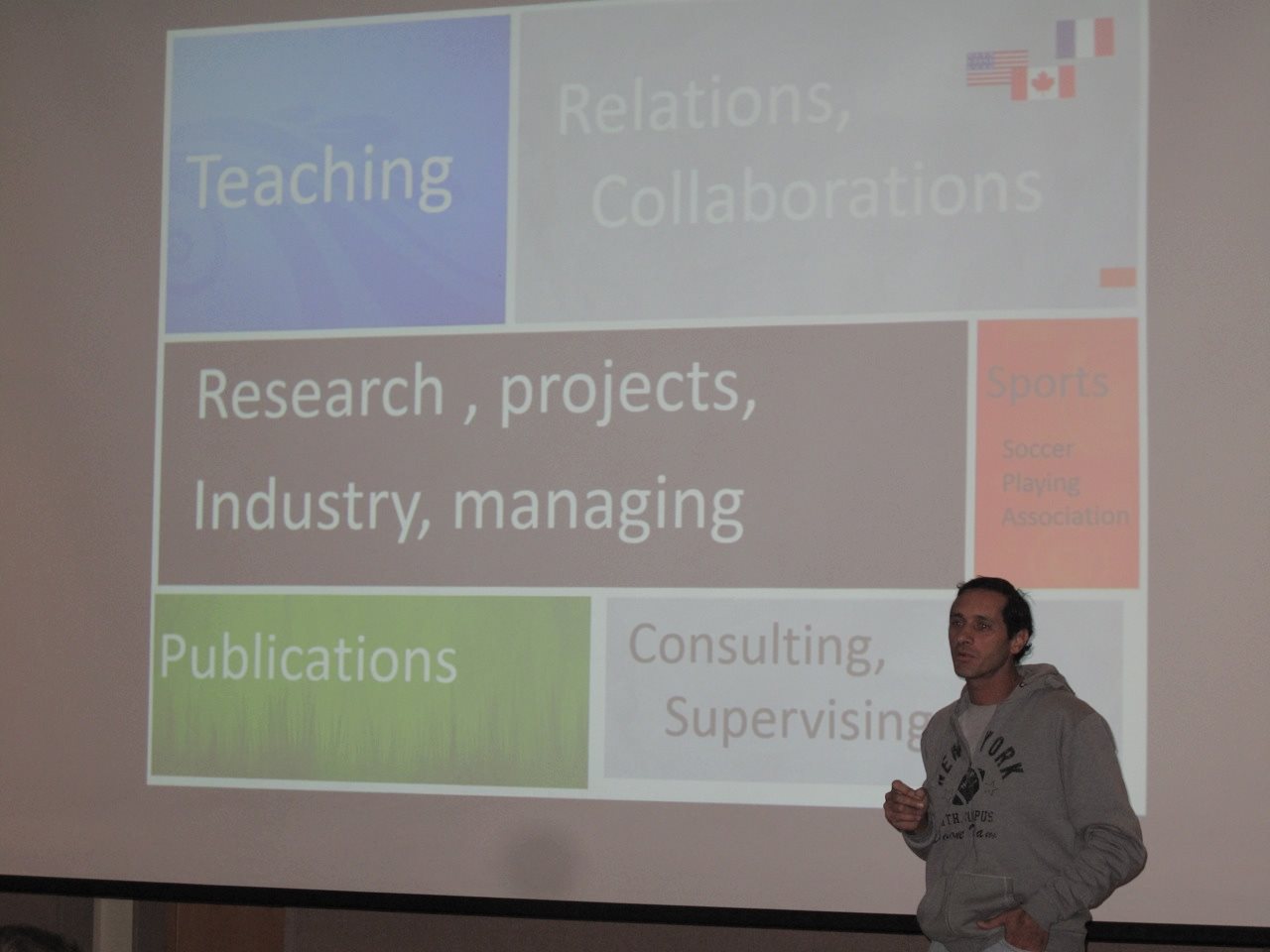
Hosted by David Garlan, professor at CMU’s Institute of Software Research, School of Computer Science, the Portuguese researcher “wanted to understand what was different and excellent at CMU in terms of teaching, research and the relationship with companies and society at large. And this experience was fabulous because we are talking about a world-class university that teaches people how to become project managers and how to develop quality software products,” Pedro Furtado states.

According to the researcher, “professor David Garlan and his colleagues were always making sure that I had the best possible experience while at CMU”, and this was “a great opportunity to learn the best practices in both teaching and research, and to understand not only the mechanics of a top research group and university, but also the key factors necessary to achieve such success.”

“Learning about contents and methods of courses; Learning about research activities in the Institute of Software Research; Researching; Preparing common projects, collaborations and other activities; and Attending lectures and Seminars,” were the goals established by Pedro Furtado, and “all those objectives were fulfilled.”

CMU: A World-class University

“The training I received at CMU was very important for me and for my organization,” he reveals. In particular, “I was fortunate enough to be able to attend different courses, which was not only a learning experience, but has given me an understanding of how the courses are organized,” the faculty member states. “My goal in Portugal will be to incorporate some of the best practices that I found interesting at CMU. The experience I had can be useful to my research group, to my University and to Portugal’s scientific infrastructure,” he adds.

Most of all, learning about the University’s relationship with society and industry was key, especially because Pedro Furtado is working on projects which have an impact on society. “Doing research in Portugal is difficult because funding is scarce; however, we have various industry-related activities because we supervise several projects in industry. Oftentimes our students work on those projects as part of their master and doctoral studies, and we supervise them, and this link is very important,” he says.

Making the Visually Impaired More Autonomous

Imagine a mobile app that guides the visually impaired inside buildings such as malls, allowing them to go to stores of their choice. Pedro Furtado is doing just that. The idea with the app – called SmartGuia and developed by Karen Duarte, a master’s degree student advised by the faculty member – is to allow blind people to become more autonomous. The app won third place at the Fraunhofer Portugal Challenge.

Pedro Quelhas

SmartGuia is a sort of shopping assistant for the visually impaired. For that, the users just need to use their natural language and talk to the phone, asking for what they are looking. “This project came to be exactly because we wanted to have a link to society and a very important societal challenge is helping people with special needs.”

Pedro Furtado is developing assistive technologies, together with José Cecílio, a post-doc researcher who also did his Ph.D. under the supervision of Pedro. This activity has led the team to work with ACAPO – Associação dos Cegos e Amblíopes de Portugal (Portuguese association for the visually impaired). “In this case, we got together with a group of blind people and we asked them what their priorities were, what we could do for them and their answer was clear: they wanted to be autonomous,” the researcher explains.

How Does Smartguia Work?

SmartGuia should be used in a public building, such as a mall. Using their smartphone, the blind users can hit a soft button after which the system asks them where they want to go. Then the device provides the proper directions. “If, for some reason, the users need instructions at any moment, they just have to press the button again and ask for it,” he explains.

“An interesting thing that we understood is that a visually impaired person needs to be autonomous and not having to rely on someone. For instance, we tried to understand if it was important for them to have a way of knowing there was an obstacle ahead and they said ‘no’. So we tailored everything to allow the user to be autonomous, but at the same time providing help if needed,” Pedro Furtado adds.

The platform is currently in Portuguese because the team is working with ACAPO, but the system has a voice synthesizer and a speech recognizer that makes it possible to translate everything automatically. At this moment, the system is designed to work indoors, but according to the researcher it is being expanded to work outside as well, to have a visual interface alternative and to serve the public in general.

Looking to the Future

With a particular focus on helping society and bridging academia and industry together Pedro Furtado wants to succeed in and expand assistive technologies. He is also currently involved in a project called SmartAlzheimer designed for people with Alzheimer’s disease and dementia. “The goal is to help them get to certain places once they start to forget.” According to the researcher, “the CMU Portugal Program is a possible source of interesting projects and funding, and so some of the activities during my stay were related to setting up a project in the future. We hope to submit this as a CMU Portugal project. This can only become a product if we have the right resources,” the researcher states.

Proof of an ongoing concern with society is yet another project that Pedro Furtado is working on, this time with diabetes patients. The tool developed provides an interactive multimedia learning experience for the patients because they have to know how to eat properly and they have to be able to do Carbohydrate Counting, as it is essential to control blood sugar prior to taking insulin. “So what we did was develop a game which shows a plate and different types of food that you can drag to the plate. Then, the device gives you the carb equivalence or you try to guess and see if you got it right,” Pedro Furtado clarifies.

November 2014

________________

The Faculty Exchange Program is offered by the Carnegie Mellon Portugal Program and it allows academics from Portuguese universities to spend at least one term working in research and education at Carnegie Mellon, experiencing the culture of a top university in the United States. Carnegie Mellon professors are also given the opportunity to spend time in Portugal to engage in teaching and research activities with local higher education institutions and research labs.

President of FCT Visits Carnegie Mellon University

President of FCT Visits Carnegie Mellon University
Aiming at consolidating the good relations between the Portuguese scientific community and Carnegie Mellon University (CMU), in the beginning of June a delegation from the Fundação para a Ciência e a Tecnologia (FCT), led by its president Miguel Seabra, visited CMU, with whom Portugal has had a partnership since 2006. The FCT delegation, led by its president Miguel Seabra, included Pedro Carneiro, vice-president, and Emir Sirage, coordinator of FCT’s Technology Office.

2014 May FCT Visit to CMU 03

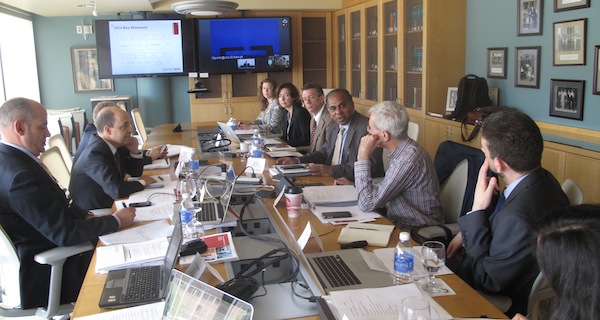
During the two-day visit, Miguel Seabra chaired a meeting of the Board of Directors of the CMU Portugal Program, and met with Subra Suresh, president of CMU, as well as with the deans of the College of Engineering and Heinz College, and with the heads of several departments. The goal was for Miguel Seabra to get to know how CMU has been involved in the partnership, which started in 2006 and was renewed in 2012 for an additional five-year period until 2017.

2014 May FCT Visit to CMU 07

Meeting with the dean of CMU’s Heinz College,

Ramayya Krishnan.

During the meetings, the president of FCT had the opportunity to get to know more closely the opportunities that the scientific community from Portuguese institutions has benefited from within the Program, such as the collaboration with internationally renowned research groups and the exposure to U.S. companies, among others. The internships of dual degree Ph.D. students in companies such as Google, Apple, or Qualcomm, are a tangible example. Other highlights of the visit were the meetings with current students and alumni of the dual degree Ph.D. programs, with researchers from Portuguese universities who are currently participating in the Faculty Exchange Program, as well as with CMU faculty involved in research projects carried out in the scope of the CMU Portugal Program.

2014 May FCT Visit to CMU 06 2014 May FCT Visit to CMU 02

“We feel that Carnegie Mellon University is very committed to and involved in the partnership,” Miguel Seabra stated, adding: “What I had the opportunity to see during this visit confirms that the CMU Portugal Program is well on its way in terms of supporting projects that strengthen the relationship between university and industry in the domain of innovation and entrepreneurship, as planned for the second phase of the Program.” Miguel Seabra also stated that “it is clear that the collaboration between the Portuguese scientific community and Carnegie Mellon University has led to very interesting initiatives. Examples of that are the 10 startups created within the CMU Portugal Program, or the test beds that paved the way for more ambitious projects capable of obtaining European funding, such as the communication network between vehicles that is being used by over 400 taxis in the city of Porto.”

For the directors of the CMU Portugal Program, “this is a relevant moment for the partnership, a moment of acknowledgement and added motivation.” João Claro and José M.F. Moura believe that “this visit gave a more global and improved perspective of the CMU Portugal Program, and its real and potential impact in the scientific community in Portugal and at CMU.” According to the directors of the Program, this “visit is key for the partnership to be able to continue to grow in a consolidated way, launching new lines of research funding and promoting faculty exchange.” The leaders of the CMU Portugal Program also stressed that the partnership will continue to develop innovation and entrepreneurship initiatives, such as “inRes, a business acceleration program in Information and Communication Technologies.”

2014 May FCT Visit to CMU 052014 May FCT Visit to CMU 04

Miguel Seabra also met with several Portuguese faculty members at Carnegie Mellon University, namely José M.F. Moura, also director of the CMU Portugal Program at CMU, Irene Fonseca, president of the largest scientific society dedicated to Applied Mathematics, and Pedro Ferreira, professor of Engineering and Public Policy.

fct visita 1 visita fct 2
[l-r] Pedro Carneiro and Miguel Seabra, having as background the Hammerschlag Hall. [l-r] Pedro Carneiro, Miguel Seabra and Emir Sirage, with a view of the CMU’s cut.

The Board of Directors of the CMU Portugal Program is chaired by Miguel Seabra, president of FCT, and composed by José Marques dos Santos, rector of the Universidade do Porto, representing CRUP – Conselho de Reitores das Universidades Portuguesas (Council of Rectors of the Portuguese Universities), Subra Suresh, president of Carnegie Mellon University, Jim Garret, dean of the College of Engineering, and Rogério Carapuça, chairman of Novabase.

July 2014

José M. F. Moura Named Fellow of National Academy of Inventors

José M. F. Moura Named Fellow of National Academy of Inventors

CMU Portugal José Moura 2014 José M. F. Moura, director of the CMU Portugal Program at CMU, has been named a Fellow of the National Academy of Inventors (NAI). Currently the total number of NAI Fellows is 414, representing more than 150 prestigious research universities and governmental and non-profit research institutions.

“I’m honored to have been elected to the rank of NAI Fellow. This award showcases as much mine and my student’s work and innovative spirit over the years in Carnegie Mellon engineering,” said José M.F. Moura, who currently serves as associate department head of Research and Strategic Initiatives in the Department of Electrical and Computer Engineering at Carnegie Mellon. José M.F. Moura was elevated to NAI Fellow in part because of his research and patent contributions in statistical signal and image processing.

The election to NAI Fellow status is a high professional distinction accorded to academic inventors who have demonstrated a prolific spirit of innovation in creating or facilitating outstanding inventions that have made a tangible impact on quality of life, economic development, and the welfare of society.

Included among all of the NAI Fellows are 61 presidents and senior leadership of research universities and non-profit research institutes, 208 members of the other National Academies (NAS, NAE, IOM), 21 inductees of the National Inventors Hall of Fame, 16 recipients of the U.S. National Medal of Technology and Innovation, 10 recipients of the U.S. National Medal of Science, 21 Nobel Laureates, 11 Lemelson-MIT prize recipients, 112 AAAS Fellows, and 62 IEEE Fellows, among other awards and distinctions.

The NAI Fellows will be inducted on Mar. 20, 2015, as part of the 4th Annual Conference of the National Academy of Inventors at the California Institute of Technology in Pasadena. U.S. Patent and Trademark Office (USPTO) Deputy Commissioner for Patent Operations Andrew Faile will be providing the keynote address for the induction ceremony. Fellows will be presented with a special trophy, newly designed medal, and rosette pin in honor of their outstanding accomplishments.

The 2014 NAI Fellows will be recognized with a full-page announcement in The Chronicle of Higher Education Jan. 16, 2015, issue, and in upcoming issues of Inventors Digest and Technology and Innovation.

In addition to being director of the CMU Portugal Program at CMU and associate department head and a Philip L. and Marsha Dowd University Professor, Moura has also been the principal investigator of several DARPA, NSF, ONR and other agencies grants.

José M.F. Moura holds 11 U.S. patents ranging from image video processing to biomedical areas, several of which have been adopted by industry. A sequence detector from two of his patents (co-inventor Aleksandar Kavcic) has been placed in 2.4 billion disk drives and 60 percent of all computers sold worldwide in the last 10 years. Professor Moura cofounded SPIRALGen, a company to commercialize SPIRAL technology under license from Carnegie Mellon.

The recipient of many research awards and numerous recognitions and honors from professional organizations, Moura is a member of the National Academy of Engineering, a corresponding member of the Portugal Academy of Science, an IEEE Fellow and a Fellow of the AAAS. He is vice president elect of the IEEE, he was an IEEE board director (2012-2013), president of the IEEE Signal Processing Society (SPS), and editor in chief for the Transactions on Signal Processing. He holds a Ph.D. in electrical engineering and computer science, master’s and EE degrees from MIT and an EE degree from Instituto Superior Técnico (IST, Portugal).

The academic inventors and innovators elected to the rank of NAI Fellow are named inventors on U.S. patents and were nominated by their peers for outstanding contributions to innovation in areas such as patents and licensing, innovative discovery and technology, significant impact on society, and support and enhancement of innovation.

The 2014 NAI Fellows Selection Committee comprises 17 members, including NAI Fellows, recipients of U.S. National Medals, National Inventors Hall of Fame inductees, members of the National Academies and senior officials from the USPTO, Association of American Universities, American Association for the Advancement of Science, Association of University Technology Managers, and National Inventors Hall of Fame.

December, 2014

Source: Carnegie Mellon University PR

CMU Portugal Program Presents 2nd Call in Different Universities

Entrepreneurial Research Initiatives Roadshow
CMU Portugal Program Presents 2 nd Call in Different Universities

201411 CMU Portugal ERIs Roadshow FCTUNL From October to November 2014, the CMU Portugal Program leadership organized eight information sessions in Portuguese universities and CMU, to present the 2 nd Call for Entrepreneurial Research Initiatives (ERIs). The sessions gathered more than 150 faculty members, researchers, doctoral students, senior staff of innovation and entrepreneurship support organizations, business executives and startup managers, from Portuguese universities and CMU.

Led by José M.F. Moura and by João Claro, at CMU and in Portugal, respectively, the goal with the sessions was to present and discuss the concept, structure and financial support provided to the Entrepreneurial Research Initiatives (ERIs). Francisco Melo (principal investigator in Portugal of the ERI INSIDE), Alexandre Bernardino (principal Investigator in Portugal of the ERI AHA), and João Paulo Cunha (principal investigator of the ERI VR2MARKET), joined two of the sessions as invited guests to share their experiences on how challenging it can be to write a winning proposal to a call for ERIs.

The invited guests expressed two main concerns that the teams should have when preparing a proposal for this call: the importance of identifying all the members of the consortium and their role; as well as to explain the strategic plan for research, education and innovation, outlining a path to sustainability. They also suggested the use of graphics that may help the reviewers to better understand the structure and impact of the proposal in the different pillars: education, research and innovation.

201411 CMU Portugal ERIs Roadshow ABernardino 201410 ERIs Roadshow FMelo 201411 CMU Portugal ERIs Roadshow JPCunha 201411 CMU Portugal ERIs Roadshow FCTUNL b

The sessions took place at Carnegie Mellon University (Oct. 14), Instituto Superior Técnico of the Universidade de Lisboa and Faculdade de Ciências e Tecnologia of the Universidade Nova de Lisboa (Oct. 16), Faculdade de Ciências e Tecnologia of the Universidade de Coimbra and Universidade de Aveiro (Oct. 20), Faculdade de Engenharia of the Universidade do Porto (Oct. 27) and Universidade do Minho (Nov. 6). Finally, there was a session using videoconference at Universidade da Madeira (Nov. 21).

November 2014

From Classic Lectures to Student-Driven Classes

Faculty Exchange Program
From Classic Lectures to Student-Driven Classes

Ricardo Lopes Pereira When Ricardo Lopes Pereira, faculty member at Instituto Superior Técnico of Universidade de Lisboa (IST/UL) and a researcher at INESC-ID, decided to embark on a journey and go to Carnegie Mellon University (CMU), he saw it as an opportunity “to learn new teaching methodologies, to be exposed to new research practices, and to develop contacts for future collaborations.”

Between February and June 2014, Ricardo Lopes Pereira was hosted at the Robotics Institute by Fernando de la Torre, a faculty member and researcher at CMU, who is deeply involved in the CMU Portugal Program, by leading an Entrepreneurial Research Initiative (ERI), by co-advising dual degree Ph.D. students, and by hosting faculty members from Portuguese universities.

“When I arrived at CMU, in late February, classes had already started for over a month, and so I decided that the best way to become acquainted with CMU’s teaching practices would be to attend some courses,” Ricardo Lopes Pereira states. The faculty member then selected three courses, which are similar to the ones he teaches in Portugal – “Wireless Sensor Networks,” taught by Raj Rajkumar, “Computer Networks” and “Internet Services,” taught by David R. O’Hallaron. “While attending these classes, I had the opportunity to see for myself a great variety of teaching techniques, ranging from classic lectures to student-driven classes with group discussion,” he explains.

According to Ricardo Lopes Pereira, projects were an important part of these courses, “which is consistent with what we do at IST-UL.” During his stay, he met Mario Bergés and Anthony Rowe, faculty members and researchers at CMU, who have a project on Building Automation Systems, called Mortar.io, which uses Wireless Sensor Networks. “I was given the opportunity to participate in this project, for which I developed a FUSE File System interface for reading sensor values and activating actuators,” he explains. This work was then presented as a non-refereed poster at the OpenBAS workshop. As a result of this work, Ricardo Lopes Pereira was invited to participate in a demo abstract titled “Mortar.io: A Concrete Building Automation System,” presented at the 2014 BuildSys conference.

“My collaboration with Prof. Anthony Rowe and his group led me to propose a novel ultrasound localization technique using beam-forming. Patrick Lazik, a Ph.D. student under professor Anthony supervision, is now continuing the experimental work I started,” he says.

While in Pittsburg, Ricardo Lopes Pereira became aware that “teaching assistants also play an important role, as they are not only beneficial for students because they gain experience, but also for professors, who are relieved of some workload,” he explains.

Now that Ricardo Lopes Pereira is back in Portugal, the expectation is that the “collaboration with faculty at CMU continues.” Given the common areas of interest with CMU, “an MSc student of mine Artur Balanuta applied and was awarded with a student mobility scholarship [Undergraduate Internships Program] offered by the CMU Portugal Program to go to CMU in order to further explore the collaboration opportunities identified during my stay.”

Ricardo Lopes Pereira’s research interests include Wireless Sensor Networks, Building Automation, QoS management, routing, load balancing and Peer-to-Peer, with an emphasis on reducing the path stretch of overlay networks and reducing the impact of P2P File Sharing applications on the Internet.

December 2014

________________

The Faculty Exchange Program is offered by the Carnegie Mellon Portugal Program and it allows academics from Portuguese universities to spend at least one term working in research and education at Carnegie Mellon, experiencing the culture of a top university in the United States. Carnegie Mellon professors are also given the opportunity to spend time in Portugal to engage in teaching and research activities with local higher education institutions and research labs.

Bringing Together Dual Degree Ph.D. Students and Alumni


od1 On October 25, 2014, more than 30 students and alumni of the CMU Portugal Program participated in the annual Orientation Day in Lisbon, Portugal, where the goal was to welcome newly enrolled students and the students arriving in Portugal for the first time. The event allowed students and alumni to get to know the most recent achievements of the community, as well as promote networking moments while enjoying the city.

Lisbon, the Beautiful

Praça da Figueira, one of Lisbon’s most famous squares, was the meeting point on the morning of October 25. The students then took the tram to one of Lisbon’s most iconic places, the Castelo de São Jorge (São Jorge Castle), which they visited with the help of a tour guide. At the Castelo de São Jorge, a medieval site overlooking the city center and the River Tejo, the visitors were surprised by the amazing view over the city and the capital’s fantastic weather.

In the middle of the visit, it was time for the first introductions and talks: João Claro, national director of CMU Portugal, welcomed the group and Leid Zeinlovic spoke of his experience as a recent dual degree Ph.D. graduate in Technological Change and Entrepreneurship (TCE).Later, the group walked to the Museu de Artes Decorativas Portuguesas (Decorative Arts Museum), where they had lunch and afterwards participated in the workshop “CMU Portugal Program: From Graduate Education to Innovation Challenges.” Od2

A Community of Excellence
The workshop started with a presentation by João Claro, who gave an overview of the CMU Portugal Program, as well as some facts and figures. The national director went on to describe the various initiatives that the CMU Portugal Program is currently promoting, including the Entrepreneurial Research Initiatives (ERIs) and inRes – a very early stage acceleration program, as well as other programs for students and faculty, such as the Undergraduate Internships Program (UIP), the dual degree Ph.D. and the Faculty Exchange Program, respectively. According to João Claro, at this stage the Program aims to strengthen the collaboration with industry and build a formal industry affiliates program, while engaging with companies involved in the Program.

OD3 The CMU Portugal Program community has over than 550 young and senior researchers from all over the world, who together contribute to the Program’s mission of creating new knowledge in key focused areas of ICT by means of cutting edge research, world-class graduate education and a close connection with the Portuguese industry, aiming at placing Portugal at the forefront of Science and Innovation.

Sara Brandão, executive director of the CMU Portugal Program, spoke about student matters, including administrative and visa-related information that students need to be aware of when they become part of the Program.

The next presentations featured Paulo Casanova, a dual degree doctoral student in Computer Science (Universidade de Coimbra and CMU) and consultant at Novabase, and João Semedo, a dual degree doctoral student in Electrical and Computer Engineering (IST-UL, CMU, Champalimaud Foundation). While Paulo Casanova focused on automatic diagnosis, his area of expertise, João Semedo focused more on the student experiences and their roles as drivers of innovation.

The Perspective of an Academic that Became an Entrepreneur
After that it was time to listen to the perspective of someone who participated in the Faculty Exchange Program, and that is now an entrepreneur. Bruno Cabral is an assistant professor at the Informatics Engineering department of the Universidade de Coimbra (UC), and in 2011 he started teaching as part of the dual degree professional master program in Software Engineering. He is currently CTO at Sentilant, a startup created as part of the CMU Portugal Program.

Bruno Cabral talked about his path from academia to the creation of a startup, explaining what Sentilant does and commercializes. According to the CTO, creating a product from technology is not very easy, but the know-how obtained and the help provided by the Program have been pivotal. In his opinion, the AEMINIUM project, carried out in the scope of the Program, was fundamental for the startup. Carried out by a multidisciplinary team of Universidade de Coimbra, Universidade da Madeira and Carnegie Mellon University, together with Novabase, this project aimed to shape how concurrent software development will be performed in the future and to strengthen Europe and America’s capabilities in this important area.

The Ph.D. is a Growing Process
The Orientation Day was concluded with a roundtable session with the alumni Carla Costa (Ph.D. in TCE), and Miguel Duarte (professional master in Software Engineering), and moderated by João Claro. Carla Costa started by describing how her life changed after the Ph.D. as in two weeks she defended her dissertation, participated in the commencement ceremony at CMU, and was hired by Maastricht University, in The Netherlands.
OD4

What surprised her most was the fact that she learned she loved to teach. The most rewarding thing was her expression of gratitude to the CMU Portugal Program experience. Due to the experience within the Program she can be a scientist, teach and also work with entrepreneurs. According to Carla Costa, doing the Ph.D. as part of the CMU Portugal Program really paid out.

Miguel Duarte, on the other hand, stressed that working with people from different cultures really made a difference, as well as the fact that he was supported by Portugal Telecom, where he worked at the time. Miguel Duarte is currently working at Feedzai, a startup created within the CMU Portugal Program. According to this alumnus the professional master’s changed his perspective of how software should be developed. He also tried to draw the audience’s attention to the CMU Portuguese Alumni chapter, a community that keeps track of and connects the Program’s alumni, encouraging them to join and carry out activities after they graduate.

November 2014

CMU Portugal Organizes Event Targeted to Companies

CMU Portugal Organizes Event Targeted to Companies

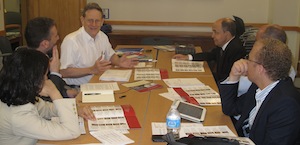
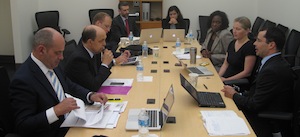
20141105_CMU Portugal with Companies b “CMU Portugal Program: Enabling Innovation in Companies” was the theme of a session with companies that the CMU Portugal Program organized on November 6, 2014, at Católica Lisbon School of Business and Economics (CLSBE), in Lisbon. The event welcomed 15 participants from different organizations, namely CGI, HiTag, Patient Innovation, OutSystems, Thales Group and PT Blue Start.

The main goal of this event was to leverage and strengthen the participation of companies in the different initiatives offered by the CMU Portugal Program, funded by Fundação para a Ciência e a Tecnologia (FCT). Since 2006, the year the Program was founded, over 90 companies have been benefiting from the international ecosystem of education, research and innovation in Information and Communication Technologies (ICT) provided by the Program.

For that, the Program brings together faculty members, researchers, dual degree doctoral and master students, business executives, startup managers, and senior staff of innovation and entrepreneurship support organizations, from both sides of the Atlantic, in Portugal and the United States. One of the highlights of this event was the presentation of opportunities for companies within the 2 nd call for Entrepreneurial Research Initiatives (ERIs), which will remain open until December 16, 2014.

The event started with welcome words from Francisco Veloso, the Dean of Católica Lisbon, who stated that CLSBE is currently involved in one ERI, and that he has been involved in the Program since its inception. João Claro, national director of the CMU Portugal, took the stage to present the Program and to encourage the participants to see it as an opportunity to solve problems and create capabilities. 20141105_CMU Portugal with Companies c
20141105_CMU Portugal with Companies d The event also featured António Melo, R&D Manager at Outsystems, a company located in Lisbon that delivers enterprise mobile and web applications. António Melo stressed that the contact with the CMU Portugal Program and with the Universidade Nova de Lisboa (UNL) has been important for the company in some key areas. According to the R&D Manager of the company, which provides a platform that makes it possible to develop software on the cloud, the experience with the Program and UNL has been very positive.
Other participating companies included GFI (an IT multinational), HiTag (a biotech company), Patient Innovation (a platform for patients and caregivers), the Thales Group (a French multinational with a branch in Portugal for about seven years), and finally PT Blue Start (which provides help to startup companies). 20141105_CMU Portugal with Companies

After the session, the national director of the CMU Portugal Program was available to meet with companies individually, to clarify and better explain the opportunities and possible outcomes of companies participating in the Program’s initiatives.

November 2014