Eight new exploratory projects selected under the CMU Portugal 2024 Call

Fundação para a Ciência e Tecnologia (FCT) has announced the provisional results of the Exploratory Projects of the national programs at CMU, MIT and UT Austin.  Eight new CMU Portugal exploratory projects were selected for funding.

The 2024 call for proposals received 40 submissions, 8 of which were recommended for funding under the scope of the CMU Portugal Program by FCT’s independent panel of evaluators. 

 The winning projects will be led by four Portuguese research Institutions: IST-ID with three projects; INESC-ID and Instituto de Telecomunicações (IT) both with two; and INESC-TEC with one.

The projects will collaborate with 5 different departments at Carnegie Mellon University: Computer Science, Electrical and Computer Engineering, Human-Computer Interaction, Language Technologies, and Robotics

The projects are planned for 12 months, allowing the scientific community to identify and explore new ideas in a bottom-up way. Overall, CMU Portugal is supporting the Portuguese teams with €397.597,06.

The CMU Portugal Program regularly supports the launch of Exploratory Research Projects (ERPs), with the main objective of promoting Portugal’s international competitiveness and innovation capacity in Science and Technology (S&T) in Information and Communication Technologies (ICT). Since 2017, the Program has launched five Calls for Exploratory Projects for 35 funded projects.

In 2025, eight (8) new projects were recommended for funding by the FCT under the Carnegie Mellon Portugal Program, including:

  • Adaptive Query Optimization Architectures to Support Heterogeneous Data Intensive Applications

Principal Investigator in Portugal: José Orlando Roque Nascimento Pereira
Principal Investigator at CMU: Andy Pavlo
Partner Institutions: INESC-TEC; Computer Science Department (CMU)

  • Fully-Homomorphic Encryption from Post-Quantum Code Based Assumptions

Principal Investigator in Portugal: João Miguel Ribeiro
Principal Investigator at CMU: Aayush Jain
Partner Institutions: IT; Computer Science Department (CMU)

  • Minimally-invasive deep-brain stimulation for treating treatment-resistant depression

Principal Investigator in Portugal: Patrícia Figueiredo
Principal Investigator at CMU:Pulkit Grover
Partner Institutions:  IST-ID; Electrical and Computer Engineering Department (CMU)

  • Body Motion Foundation Model for Human Activity Analysis

Principal Investigator in Portugal:  José Santos-Victor
Principal Investigator at CMU:Artur Dubrawski
Partner Institutions:  IST-ID; Robotics Institute (CMU)

  • DIME-FS A Decentralized File System

Principal Investigator in Portugal: David Rogério Póvoa de Matos
Principal Investigator at CMU:Seth Goldstein
Partner Institutions: INESC-ID; Computer Science Department (CMU)

  • Exploring Robotlike RObot behavioRs in users’ Mental Models

Principal Investigator in Portugal: Filipa Isabel Nogueira Correia
Principal Investigator at CMU: Nikolas Martelaro
Partner Institutions: IST-ID; Human-Computer Interaction Institute (CMU)

  • Machine Unlearning in Speech Foundation Models: Learning to Forget

Principal Investigator in Portugal: Francisco Saraiva Sepúlveda Teixeira
Principal Investigator at CMU: Bhiksha Raj Ramakrishnan
Partner Institutions: INESC-ID; Language Technologies Institute (CMU)

  • Neuromorphic quantum-inspired computing

Principal Investigator in Portugal: Emmanuel Zambrini Cruzeiro
Principal Investigator at CMU: Elias Towe
Partner Institutions: IT; Electrical and Computer Engineering Department (CMU)

More information on FCT website

Tekever is the newest Portuguese unicorn company

The CMU Portugal Affiliated company Tekever, specialized in AI-driven Autonomous Systems, is joining the list of Portuguese unicorn companies, since it reached a valuation above one billion pounds (1.173 million euros) after a new funding round. The round included continued support from existing investors such as Ventura Capital, Baillie Gifford, the NATO Innovation Fund, Iberis Capital, and Crescent Cove.

After reaching this valuation milestone, Tekever is the seventh Portuguese unicorn, joining CMU Portugal industrial affiliates Talkdesk, Feedzai, OutSystems, and Remote, in addition to Anchorage and Sword Health.

Founded in 2001 by computer engineering students from Instituto Superior Técnico, Tekever started as a software company focused on developing artificial intelligence but has specialized, since 2010, in building surveillance drones, becoming the European’s leading provider of Unmanned Aerial Vehicles (also known as drones) and a leader in defence technology (deftech).

The company operates in several European countries, has engineering centers in the UK, Portugal and France, production facilities and operational support teams across Europe, including Ukraine. Its surveillance AR3 drones have been used by Ukrainian troops since the beginning of the war in 2022, supporting land and sea operations.

Tekever announced the launch of a five-year £400 million development program for the UK, known as OVERMATCH, “aimed at transforming the UK’s defence industry and ensuring the UK and its allies remain at the forefront of vital autonomous, AI-driven technology”. 

In the Portuguese media: CNN Portugal, Diário de Notícias, E24, ECO, Expresso, Jornal de Negócios, Jornal Económico, Observador, Sapo 24, Sapo Tek, ZAP

Back to Primary School: Paulo Marques continues joining “Cientista Regressa à Escola” Initiative

The Cientista Regressa à Escola” (Same Hometown Programme) an initiative by Native Scientists, once again featured the participation of a CMU Portugal member. For the 4th time, CMU Portugal Scientific Director Paulo Marques was challenged to return to his roots and visit his former primary school to inspire young students through hands-on science workshops.

Paulo Marques grew up in the countryside, in Valdonas, near Tomar, Portugal, where he attended the public primary school “Escola Básica de Valdonas” between 1981 and 1985. Now, nearly 40 years after finishing primary education, he returned to where his educational journey began — and many memories came back:

“This was really a quite poor region. For you to imagine, a lot of families only had a donkey as a means of transportation and sending their kids to school was a major effort. Many didn’t actually go, and dreaming of studying more was only that – a dream.”

Paulo Marques is a renowned Portuguese entrepreneur, engineer, and investor. He co-founded Feedzai, Portugal’s first unicorn and the first startup launched under the CMU Portugal Program. Paulo served as Chief Technology Officer (CTO) for 13 years, leading the company’s product and technology strategy, and he continues to serve on its board of directors. More recently, he became one of the founding partners of TUMO, an innovative school for young people aged 12 to 18 that explores the intersection of creativity and technology.

During the “Cientista Regressa à Escola” activities on April 9, Paulo worked on creating and building robots for exploring Mars with over 40 children aged between 6 and 10. The inspiration was the time Paulo worked for the European Space Agency, helping advance space exploration. Paulo wanted to show that children can dream big, even with space, independently of their origins or conditions. The workshop was co-sponsored  by Robothink, a technology school for children that offers a complete and ongoing curriculum in Robotics, Programming, and Artificial Intelligence. 

The overall feedback and participation from the children, and the teachers, during the activities were incredibly positive – probably making it a day they’ll never forget! But the experience was surely memorable not just for the kids, but also for Paulo Marques:

“It’s amazing to show children from a primary school in a small village in central Portugal that through science, they can grow, explore the world, and even the universe — from the tiniest things like atoms, molecules, and cells to the vastest wonders like stars, galaxies, and nebulas.”


Click to watch the piece by Sic Notícias (in Portuguese)

‘Cientista Regressa à Escola’ is a science outreach initiative where researchers/scientists return to their primary schools to share their academic and professional experiences with students and inspire them for science. The educational program is implemented by Native Scientists, a non-profit organization connecting underserved children and scientists, that aims to promote scientific culture and literacy to young children, inspiring them to follow a path in science. 

In the last three years (2022-2024), 95 scientists have had the opportunity to return to their primary schools. By the end of 2025, another 100 visits are already planned.

More about the initiative here

Other CMU Portugal participants: Nuno Nunes (former CMU Portugal Director) 

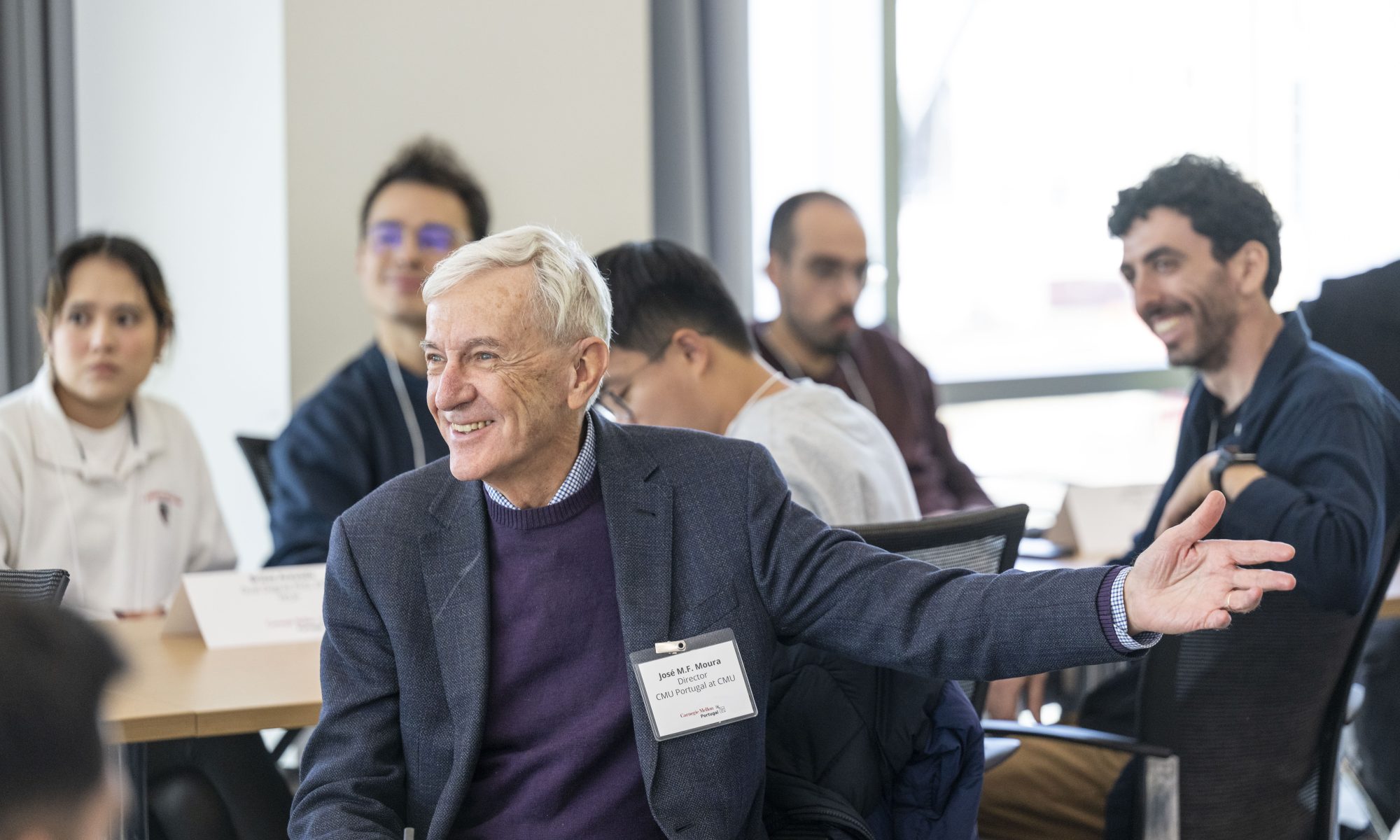
José M. F. Moura Receives IEEE Haraden Pratt Award

José M. F. Moura, Philip L. and Marsha Dowd University Professor and director of the CMU Portugal Program at Carnegie Mellon University, was awarded the IEEE Haraden Pratt Award “for sustained leadership, global service, and outstanding contributions enabling new opportunities for IEEE and its members”. 

His contributions to IEEE have been now recognized in the areas of diversity and inclusion, open access, budget management, governance and financial transparency, having served as President and CEO in 2019, after his role as Vice-President of Technical Activities Board in 2016, transforming IEEE’s infrastructure, product offerings, and revenue models to increase its global reach. 

His numerous accomplishments include leading the launch of 14 new open access journals and developing repositories for data and code sharing. Under his leadership, IEEE introduced a new financial system that provided volunteer leaders with real-time access to their units’ finances, gross revenues, and detailed records of every dollar earned and spent. His contribution also includes the modernization of IEEE’s engagement strategies, notably through the launch of a mobile app designed to strengthen networking opportunities. Moura’s leadership has helped position IEEE at the cutting edge of technological innovation, while preserving its strong commitment to ethical standards and service to its members.

More information about the distinction  here.

And a closer look at the career path of Professor José M.F. Moura:

José M. F. Moura is the Philip L. and Marsha Dowd University Professor at Carnegie Mellon University, with the Electrical and Computer Engineering Department. Since the CMU Portugal Program’s inception in 2006, Moura has served as director of the Program at Carnegie Mellon. The technology of two of his patents (co-inventor A. Kavcic) is found in over 3 billion disk drives (60% of all computers sold since 2003) and was the subject of a 750 million dollar settlement between CMU and Marvell in 2016. 

He is a member of the US National Academy of Engineers, a member of the Portugal Academy of Science, a Fellow of the US National Academy of Inventors, an IEEE Fellow, and a Fellow of the AAAS. He holds honorary doctorates from the University of Strathclyde and Universidade de Lisboa. He received the Great Cross of the Order of The Infante D. Henrique. He received the 2023 IEEE Kilby Signal Processing Medal.

CMU Portugal startup and industry partner Feedzai acquired data company Demyst

Feedzai, the Portuguese unicorn expert in detecting and preventing financial fraud, recently acquired the Australian company Demyst, a specialist in internal and external data access,  for 100 million dollars.

According to Nuno Sebastião, Chairman and CEO of Feedzai, “Demyst and its Zonic platform bring an elegant solution to a hard problem: how to orchestrate the right data, at the right moment, with speed and responsibility.” 

Feedzai’s acquisition of Demyst unifies data orchestration and risk management into a single platform, equipping financial institutions with real-time data, analytics, and trusted AI for optimal risk decisions.

Feedzai was the 1st startup launched under the CMU Portugal Program, by Paulo Marques, Pedro Bizarro and Nuno Sebastião, and in 2021 became the 2nd Unicorn Company born under the partnership, now valued at well above $1 billion.

Feedzai led the Large Scale Collaborative project CAMELOT and became an industry affiliated partner of CMU Portugal, actively contributing to the program’s advanced education and research, investing in R&D and building a highly skilled workforce.  

Two of its founders, Paulo Marques and Pedro Bizarro, have been heavily involved in the program, having participated in the Visiting Faculty mobility initiative. Paulo Marques was also the first Director of the Master’s in Software Engineering from the Portuguese side and continued his affiliation with the Program throughout the years. He is now one of CMU Portugal’s Scientific Directors.

Feedzai-Demyst in the Media:
EN: AFR, AML Intelligence, Biometric Update,  FintechFutures; Fintech Finance News, Finovate;
PT:  Eco Sapo, Expresso, FinanceFeeds, LinkToLeaders, Sic Notícias, Observador

CMU Portugal Celebrates Grad Appreciation Week

Every year Carnegie Mellon University  celebrates Graduate and Professional Student Appreciation Week with a variety of events for graduate students. 

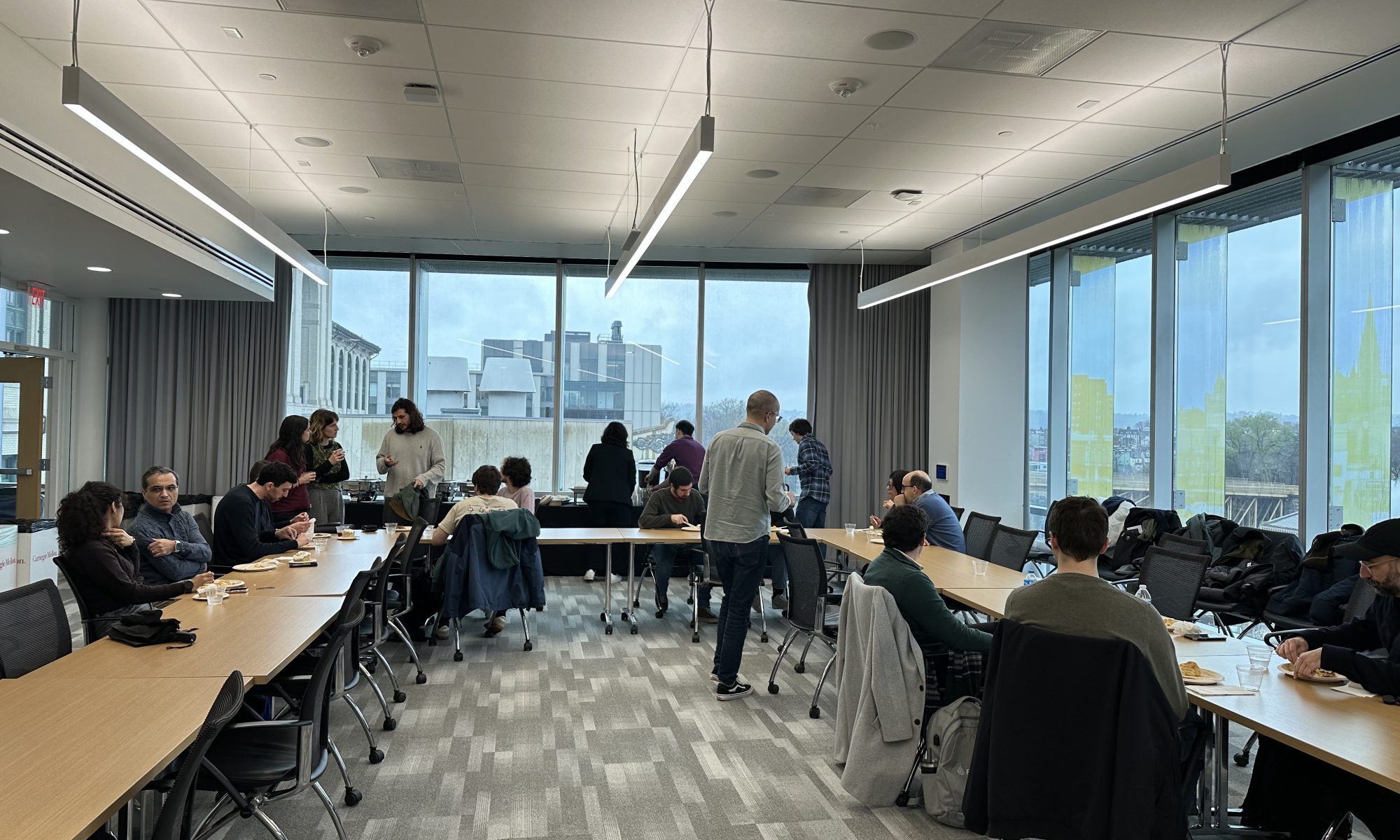
In celebration of this week CMU Portugal hosted a luncheon on Thursday April 10th in Scott Hall. Attendees included Dual Degree and Affiliated Ph.D. students spanning many CMU departments including: Computer Science, Electrical & Computer Engineering, Engineering & Public Policy, Human-Computer Interaction, and Language Technologies. 

The students also span many Portuguese Universities including: Faculty of Social and Human Sciences (FCSH-UNL), NOVA School of Science and Technology (FCT NOVA), University of Aveiro, Instituto Superior Técnico, Faculty of Sciences and Technology of the University of Coimbra, Faculty of Engineering – University of Porto, and University of Lisbon. 

Also in attendance were guests of the CMU Portugal Patient Innovation Residency Program, which consists of six teams who participated in the Patient Innovation (PI) Bootcamp. The teams are currently spending one week at CMU in Pittsburgh, from April 7th to 11th for the final stage of the accelerator program. 

This luncheon provided an opportunity to celebrate the students’ hard work and dedication to the program as well as network with fellow Portuguese entrepreneurs.

CMU Portugal Patient Innovation: six teams are heading to the in-person Residency Program in Pittsburgh


As part of the first edition of the CMU Portugal Patient Innovation Accelerator, the six teams that participated in the Patient Innovation (PI) Bootcamp will be at Carnegie Mellon University (CMU), in Pittsburgh, from April 7th to 11th. 

Launched with a boot camp in May 2024, the PI Accelerator Program aims to support life science startups through a partnership between Carnegie Mellon Portugal, NOVA Medical School, and the Nova School of Business and Economics (Nova SBE). The program follows a hybrid model that combines virtual education, in-person engagement with U.S.-based experts, and targeted workshops in Portugal.

Following Phase I, which took place from January to March 2025 based on weekly virtual and mentorship sessions, the program now transitions to an in-person, intensive residency Program (Phase II), taking place in April.

This week-long residency is designed to prepare participating teams to enter the U.S. market. The program will offer insights, hands-on experience, and industry exposure to support the development of each business plan. 

The teams will be hosted by Project Olympus, a CMU Incubator Program that provides resources and mentorship to help members of the CMU community to turn cutting-edge research into startups; and AlphaLab Health, Pittsburgh’s leading life sciences accelerator, which has been supporting startups since 2008. This in-person residency represents an opportunity for the six startups to explore U.S. market entry, engage with key stakeholders, and test their business models supported by one of US most dynamic life sciences hubs.

The week will feature expert-led workshops, tailored mentorship, and visits to key institutions such as Allegheny Health Network (AHN) and UPMC Enterprises.

Mornings will be structured around sessions led by Project Olympus, including topics such as FDA regulatory strategies; prototyping and product development and customer discovery refinement workshops.

Afternoons will include dedicated self-directed meetings, customer interviews, and one-on-one sessions with Entrepreneurs in Residence (EIRs). 

The Pittsburgh phase will be a turning point for the participating teams. Startups will be able to present their pitches to a panel of U.S. investors and industry leaders and submit their commercialization plans for expert feedback. Additionally, they will continue improving their U.S. market strategy with ongoing virtual mentorship until May.

This work will conclude with an in-person workshop in Portugal in June, where participants will showcase their progress and finalize their go-to-market strategies.

By the end of the Patient Innovation Accelerator Program, teams are expected to have developed solid commercialization plans tailored to both US and EU markets. 

2025 CMU Portugal/Project Olympus Life Sciences US Go To Market Cohort:

  • Auricle – is an audio startup based in Denmark making open-ear headphones with haptic vibration technology.
    Team Members: Pedro Costa, Roberto Reyes
    EIR: Laura Ohlund
  • WOM-iCAREAn antibactericidal hydrogel for enhanced skin and/or mucosal infection control, specifically designed to combat bacterial infections, such as N. gonorrhoeae, it provides targeted prevention and treatment.
    Team Members: André Marques, Bárbara Mendes
    EIR: Max Fedor 
  • MELT4SKIN – proposes to modulate skin pigmentation by interfering with melanin transfer from melanocytes to keratinocytes.  The team identified a small molecule that can efficiently and specifically enhance melanin transfer.
    Team Member: Duarte Barral
    EIR: Sean McDonald
  •  eBreathie: an integrated asthma management solution that wants to redefine how patients and doctors monitor asthma. The system includes a smart inhaler that not only tracks when patients take their medication but also how they do it, creating a detailed inhalation profile for each use.
    Team Members: Ana Rebelo, Ana Constante
    EIR: Craig Markovitz
  • Glooma: focused on early detection of breast cancer. Glooma developed a device used to detect and monitor changes in breast tissue. The SenseGlove is a portable home medical device that works as a breast self-examination method and is linked to a mobile application.
    Team Members: Francisco Nogueira, Frederico Stock, Guilherme Stock
    EIR: Mara McFadden
  • Patient Innovation: Patient Innovation is a non-profit association aimed to disseminate, and scale-up solutions developed by patients and caregivers for their own needs.
    Team Members: Gemma Tria, Margarida Oliveira, Maria Jacinto
    EIR: Laura Ohlund


CMU Portugal team selected for the Amazon Nova AI Challenge

David Semedo and João Magalhães, CMU Portugal National co-director, both researchers at  NOVA LINCS Multimodal Systems group at the Department of Computer Science of NOVA FCT, had their research proposal selected for the 2025 Amazon Nova AI Challenge, a worldwide university AI competition. Their proposal, focusing on enhancing the trustworthiness of Large Language Models (LLMs), was one of the ten selected applications from a pool of 90 applicants worldwide. 

To face this challenge, the team will count on eight students, including CMU Portugal Ph.D. students Diogo Silva, who leads the team, and Diogo Tavares, alongside Rafael Ferreira, João Pedro Soares, Daniel Pina, Iago Paulo, Artur Horal, and Henrique Paz.

Diogo Silva and Diogo Tavares are both CMU Portugal ‘s  Affiliated Ph.D. students at NOVA FCT in the area of Language Technologies, supervised by João Magalhães. During their research period at CMU they were hosted by Carnegie Mellon’s Language Technologies Institute. In previous years, the two students have already participated in other Amazon competitions such as the “Alexa TaskBot Challenge where their team secured first place in 2023, and second place in the 2022 competition.

Click on thumbnail for video (Amazon Science)

“Our participation puts us in a unique position to help address some of the concerns that have been raised regarding the safety and potential risks of open models that are easily available to anyone nowadays. Our team is extremely motivated and, backed by the experience of participating in previous Amazon Science challenges, we are uniquely qualified to tackle this novel challenge”, stated the team leader Diogo Silva. 

The Amazon Nova AI Challenge challenge features participation from 10 universities across 3 countries. Among them, NOVA FCT from Portugal and the Czech Technical University from the Czech Republic are the only two teams outside the USA. The United States is represented by seven universities: Carnegie Mellon University, University of Illinois Urbana-Champaign, University of California at Davis, Virginia Tech, University of Texas at Dallas, Columbia University, University of Wisconsin, and Purdue University.

The theme of this year’s challenge is “Trusted AI: advancing secure, AI-assisted software development to build safer, more reliable applications. The goal is to achieve security by design in Generative AI, building on previous challenges that developed innovative task-assistant LLMs and addressed key security concerns.

The competition is structured in tournament style, with five Model Developer (defense) teams that develop code-generating models and five red teams (attack) that use automated techniques to find vulnerabilities in the models – NOVA FCT’s is one of the red teams. Each defense team’s model will be tested against all five attack teams in a series of four tournaments.

Each winning model developer and red teams will receive 250 thousand dollars, to be split among the students, in sponsorship, monthly Amazon Web Services credits, and the chance to compete for top prizes, with second-place teams earning $100,000. The total investment in teams exceeds $5 million.

The finals will take place in June 2025.

More information about the  Amazon Nova AI Challenge here.

Amazon Science

CMU Portugal students at TEI’25 Conference

Beatrice Maggipinto and Mathilde Gouin, both CMU Portugal Ph.D. students and researchers in Human-Computer Interaction at the Institute of Interactive Technologies (ITI), participated in the 2025 International Conference on Tangible, Embedded, and Embodied Interaction (TEI’25) from March 4-7, 2025, in Bordeaux, France. The TEI’25 conference focuses on issues of human-computer interaction, novel tools and technologies, interactive art, and user experience. 

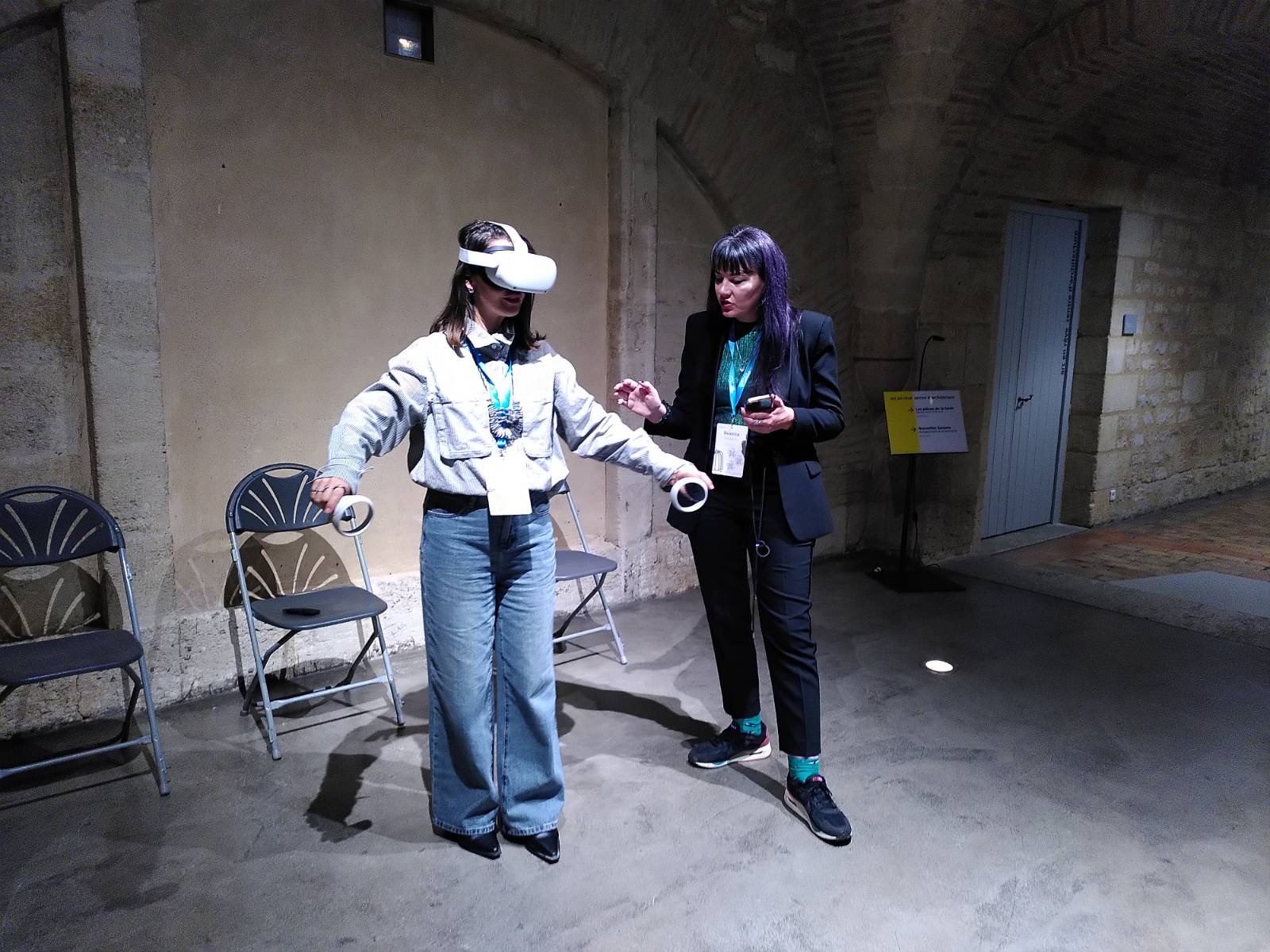
Beatrice Maggipinto is a Dual Degree Ph.D. student supervised in Portugal by Nuno Nunes and Valentina Nisi at ITI/Técnico, and by Jessica Hammer at CMU. At TEI’25, Beatrice presented the research “Echo of the Abyss: Understanding More-than-Human Interconnectedness in the Deep Sea Through Virtual Reality Experiences”, introducing the design of the Virtual Reality (VR) experience that uses animal guides and immersive environments to cultivate a sense of kinship towards marine life.

Beatrice shared highly positive feedback about her participation at TEI’25.  She particularly enjoyed the demo session where she presented the VR project “Echo of the Abyss”: “I connected with many other researchers whom I admire and that have similar interests to mine. I had lovely chats with many of them about our respective plans and projects. It was an honour to see so many people enjoying our game”.


Mathilde Gouin, is an Affiliated Ph.D. student in the area of Human-Computer Interaction supervised by Valentina Nisi at ITI/Técnico and by Daragh Byrne at CMU.  She presented along with Anna Bertmark, their recent research “Natureculture Probes: Opening Up Dialogues in Natural Heritage Landscapes”,  an innovative tool designed to enhance visitor engagement at heritage sites through participatory methods, developed under the LoGaCulture project.

Over the four days, Mathilde had the opportunity to join  a full-day of a sensory data workshop, attend “exceptionally diverse presentations” and participate in an evening of interactive art and demonstrations, where she experienced  cutting-edge technologies and innovative methods firsthand. 

She left the conference “feeling more connected than ever to the HCI and design community and excited by all the remarkable work being done, from 3D printing biomaterials to co-designing with bees and exploring how AI can inspire future art creation.”