CMU Portugal Patient Innovation: six teams are heading to the in-person Residency Program in Pittsburgh


As part of the first edition of the CMU Portugal Patient Innovation Accelerator, the six teams that participated in the Patient Innovation (PI) Bootcamp will be at Carnegie Mellon University (CMU), in Pittsburgh, from April 7th to 11th. 

Launched with a boot camp in May 2024, the PI Accelerator Program aims to support life science startups through a partnership between Carnegie Mellon Portugal, NOVA Medical School, and the Nova School of Business and Economics (Nova SBE). The program follows a hybrid model that combines virtual education, in-person engagement with U.S.-based experts, and targeted workshops in Portugal.

Following Phase I, which took place from January to March 2025 based on weekly virtual and mentorship sessions, the program now transitions to an in-person, intensive residency Program (Phase II), taking place in April.

This week-long residency is designed to prepare participating teams to enter the U.S. market. The program will offer insights, hands-on experience, and industry exposure to support the development of each business plan. 

The teams will be hosted by Project Olympus, a CMU Incubator Program that provides resources and mentorship to help members of the CMU community to turn cutting-edge research into startups; and AlphaLab Health, Pittsburgh’s leading life sciences accelerator, which has been supporting startups since 2008. This in-person residency represents an opportunity for the six startups to explore U.S. market entry, engage with key stakeholders, and test their business models supported by one of US most dynamic life sciences hubs.

The week will feature expert-led workshops, tailored mentorship, and visits to key institutions such as Allegheny Health Network (AHN) and UPMC Enterprises.

Mornings will be structured around sessions led by Project Olympus, including topics such as FDA regulatory strategies; prototyping and product development and customer discovery refinement workshops.

Afternoons will include dedicated self-directed meetings, customer interviews, and one-on-one sessions with Entrepreneurs in Residence (EIRs). 

The Pittsburgh phase will be a turning point for the participating teams. Startups will be able to present their pitches to a panel of U.S. investors and industry leaders and submit their commercialization plans for expert feedback. Additionally, they will continue improving their U.S. market strategy with ongoing virtual mentorship until May.

This work will conclude with an in-person workshop in Portugal in June, where participants will showcase their progress and finalize their go-to-market strategies.

By the end of the Patient Innovation Accelerator Program, teams are expected to have developed solid commercialization plans tailored to both US and EU markets. 

2025 CMU Portugal/Project Olympus Life Sciences US Go To Market Cohort:

  • Auricle – is an audio startup based in Denmark making open-ear headphones with haptic vibration technology.
    Team Members: Pedro Costa, Roberto Reyes
    EIR: Laura Ohlund
  • WOM-iCAREAn antibactericidal hydrogel for enhanced skin and/or mucosal infection control, specifically designed to combat bacterial infections, such as N. gonorrhoeae, it provides targeted prevention and treatment.
    Team Members: André Marques, Bárbara Mendes
    EIR: Max Fedor 
  • MELT4SKIN – proposes to modulate skin pigmentation by interfering with melanin transfer from melanocytes to keratinocytes.  The team identified a small molecule that can efficiently and specifically enhance melanin transfer.
    Team Member: Duarte Barral
    EIR: Sean McDonald
  •  eBreathie: an integrated asthma management solution that wants to redefine how patients and doctors monitor asthma. The system includes a smart inhaler that not only tracks when patients take their medication but also how they do it, creating a detailed inhalation profile for each use.
    Team Members: Ana Rebelo, Ana Constante
    EIR: Craig Markovitz
  • Glooma: focused on early detection of breast cancer. Glooma developed a device used to detect and monitor changes in breast tissue. The SenseGlove is a portable home medical device that works as a breast self-examination method and is linked to a mobile application.
    Team Members: Francisco Nogueira, Frederico Stock, Guilherme Stock
    EIR: Mara McFadden
  • Patient Innovation: Patient Innovation is a non-profit association aimed to disseminate, and scale-up solutions developed by patients and caregivers for their own needs.
    Team Members: Gemma Tria, Margarida Oliveira, Maria Jacinto
    EIR: Laura Ohlund


CMU Portugal team selected for the Amazon Nova AI Challenge

David Semedo and João Magalhães, CMU Portugal National co-director, both researchers at  NOVA LINCS Multimodal Systems group at the Department of Computer Science of NOVA FCT, had their research proposal selected for the 2025 Amazon Nova AI Challenge, a worldwide university AI competition. Their proposal, focusing on enhancing the trustworthiness of Large Language Models (LLMs), was one of the ten selected applications from a pool of 90 applicants worldwide. 

To face this challenge, the team will count on eight students, including CMU Portugal Ph.D. students Diogo Silva, who leads the team, and Diogo Tavares, alongside Rafael Ferreira, João Pedro Soares, Daniel Pina, Iago Paulo, Artur Horal, and Henrique Paz.

Diogo Silva and Diogo Tavares are both CMU Portugal ‘s  Affiliated Ph.D. students at NOVA FCT in the area of Language Technologies, supervised by João Magalhães. During their research period at CMU they were hosted by Carnegie Mellon’s Language Technologies Institute. In previous years, the two students have already participated in other Amazon competitions such as the “Alexa TaskBot Challenge where their team secured first place in 2023, and second place in the 2022 competition.

Click on thumbnail for video (Amazon Science)

“Our participation puts us in a unique position to help address some of the concerns that have been raised regarding the safety and potential risks of open models that are easily available to anyone nowadays. Our team is extremely motivated and, backed by the experience of participating in previous Amazon Science challenges, we are uniquely qualified to tackle this novel challenge”, stated the team leader Diogo Silva. 

The Amazon Nova AI Challenge challenge features participation from 10 universities across 3 countries. Among them, NOVA FCT from Portugal and the Czech Technical University from the Czech Republic are the only two teams outside the USA. The United States is represented by seven universities: Carnegie Mellon University, University of Illinois Urbana-Champaign, University of California at Davis, Virginia Tech, University of Texas at Dallas, Columbia University, University of Wisconsin, and Purdue University.

The theme of this year’s challenge is “Trusted AI: advancing secure, AI-assisted software development to build safer, more reliable applications. The goal is to achieve security by design in Generative AI, building on previous challenges that developed innovative task-assistant LLMs and addressed key security concerns.

The competition is structured in tournament style, with five Model Developer (defense) teams that develop code-generating models and five red teams (attack) that use automated techniques to find vulnerabilities in the models – NOVA FCT’s is one of the red teams. Each defense team’s model will be tested against all five attack teams in a series of four tournaments.

Each winning model developer and red teams will receive 250 thousand dollars, to be split among the students, in sponsorship, monthly Amazon Web Services credits, and the chance to compete for top prizes, with second-place teams earning $100,000. The total investment in teams exceeds $5 million.

The finals will take place in June 2025.

More information about the  Amazon Nova AI Challenge here.

Amazon Science

CMU Portugal students at TEI’25 Conference

Beatrice Maggipinto and Mathilde Gouin, both CMU Portugal Ph.D. students and researchers in Human-Computer Interaction at the Institute of Interactive Technologies (ITI), participated in the 2025 International Conference on Tangible, Embedded, and Embodied Interaction (TEI’25) from March 4-7, 2025, in Bordeaux, France. The TEI’25 conference focuses on issues of human-computer interaction, novel tools and technologies, interactive art, and user experience. 

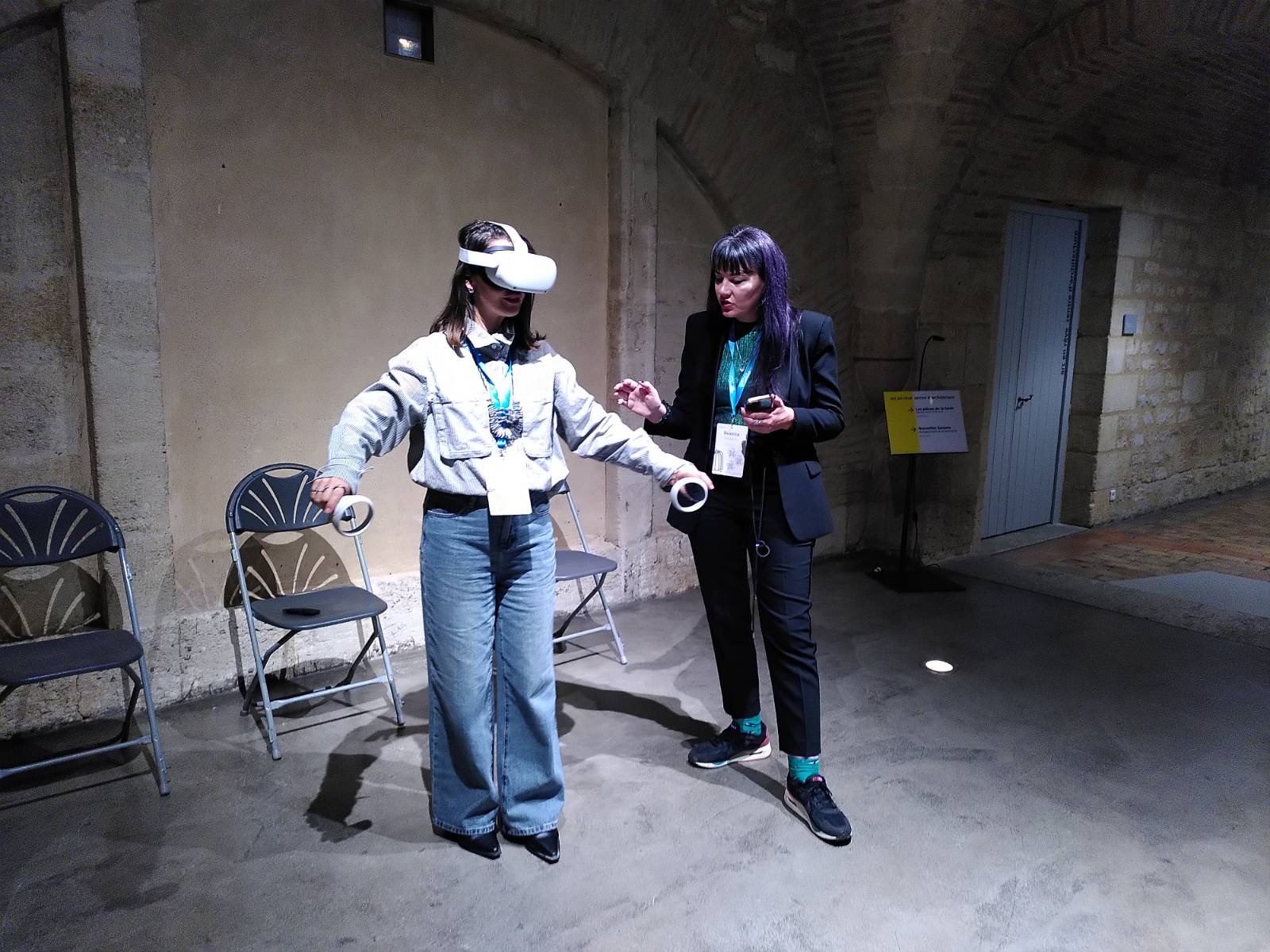
Beatrice Maggipinto is a Dual Degree Ph.D. student supervised in Portugal by Nuno Nunes and Valentina Nisi at ITI/Técnico, and by Jessica Hammer at CMU. At TEI’25, Beatrice presented the research “Echo of the Abyss: Understanding More-than-Human Interconnectedness in the Deep Sea Through Virtual Reality Experiences”, introducing the design of the Virtual Reality (VR) experience that uses animal guides and immersive environments to cultivate a sense of kinship towards marine life.

Beatrice shared highly positive feedback about her participation at TEI’25.  She particularly enjoyed the demo session where she presented the VR project “Echo of the Abyss”: “I connected with many other researchers whom I admire and that have similar interests to mine. I had lovely chats with many of them about our respective plans and projects. It was an honour to see so many people enjoying our game”.


Mathilde Gouin, is an Affiliated Ph.D. student in the area of Human-Computer Interaction supervised by Valentina Nisi at ITI/Técnico and by Daragh Byrne at CMU.  She presented along with Anna Bertmark, their recent research “Natureculture Probes: Opening Up Dialogues in Natural Heritage Landscapes”,  an innovative tool designed to enhance visitor engagement at heritage sites through participatory methods, developed under the LoGaCulture project.

Over the four days, Mathilde had the opportunity to join  a full-day of a sensory data workshop, attend “exceptionally diverse presentations” and participate in an evening of interactive art and demonstrations, where she experienced  cutting-edge technologies and innovative methods firsthand. 

She left the conference “feeling more connected than ever to the HCI and design community and excited by all the remarkable work being done, from 3D printing biomaterials to co-designing with bees and exploring how AI can inspire future art creation.”


12 collaborative research projects selected under PRR Mobilizing agendas

The 2024 CMU Portugal PRR Call for Collaborative Research Grants has selected 12 projects to support the collaboration between Carnegie Mellon University (CMU) research groups and Portuguese research teams engaged in the Portuguese Recovery and Resilience Plan (PRR) Mobilizing Agendas. 

The CMU Portugal-PRR Collaborative Research Grants aim to support collaboration between CMU research groups and the Portuguese research teams participating in the Recovery and Resilience Plan (PRR) Mobilizing Agendas (a Portuguese application program that aims to implement a set of reforms and investments aimed at restoring sustained economic growth, after the pandemic, reinforcing the objective of convergence with Europe over the next decade).

Launched in October 2024, this call received 22 applications from CMU faculty and researchers collaborating with Portuguese researchers involved in the Mobilizing Agendas. As a result, 12 projects have been awarded, with research to be carried out over the next 12 months at CMU and in Portugal. 

The participating CMU research teams are affiliated with 11 departments, including CMU-Africa, Electrical and Computer Engineering, Engineering and Public Policy, Heinz College of Information Systems and Public Policy, Human-Computer Interaction Institute, Entertainment Technology Center, Language Technologies Institute, Mechanical Engineering, Psychology, Robotics Institute, and Software and Societal Systems

The collaborative research projects will be developed in partnership with 16 Portuguese academic & research institutions: Católica Lisbon School of Business & Economics, dst Center, Faculty of Engineering of the University of Porto, Flowbotic, Fraunhofer Portugal AICOS, Institute for Systems and Robotics / LARSyS – Lisboa (ISR), Institute for Systems and Robotics – University of Coimbra, Instituto de Engenharia de Sistemas e Computadores: Investigação e Desenvolvimento (INESC-ID), Instituto de Telecomunicações (IT), Instituto Superior Técnico, Interactive Technologies Institute (ITI-LARSyS), Nexar, Unbabel, University of Aveiro, University of Madeira, and WOWSystems.

The selected projects for funding are the following:

  • A Virtual Reality Game To Transform Attitudes About Climate Change 

Principal Investigator at CMU: Laurie M. Heller
Collaborating PRR Project: eGames Lab
Principal Investigator in Portugal: Ana Pires
Supporting Faculty in Portugal: Pedro F. Campos
Collaborating Institutions: Department of Psychology (CMU); ITI/LARSyS, Instituto Superior Técnico, Universidade de Lisboa; University of Madeira; WOWSYSTEMS – Informática Lda;

  • ACE-FM: Adaptive Conversational Engine powered by Foundation Models

Principal Investigator at CMU: Shinji Watanabe
Collaborating PRR Project: Accelerat.AI
Principal Investigator in Portugal: Alberto Abad
Collaborating Institutions: Language Technologies Institute (CMU); Instituto Superior Técnico (IST)

  • AI and Human Capital Opportunity Atlas for Portugal

Principal Investigator at CMU: Christophe Combemale
Supporting Faculty at CMU: Nikhil George, Ramayya Krishnan, Rahul Telang
Collaborating PRR Project: Center for Responsible AI
Principal Investigator in Portugal: Miguel Matos & Paulo Dimas
Collaborating Institutions: Department of Engineering and Public Policy (CMU); Heinz College of Information Systems and Public Policy (CMU); Católica Lisbon School of Business & Economics; Unbabel

  • AI-mediated Augmented and Assistive Communication Interfaces for ALS: Decoding Movement and Movement Intent Through High-Density EMG and EEG Signals

Principal Investigator at CMU: Pulkit Grover
Collaborating PRR Project: Center for Responsible AI
Principal Investigator in Portugal: Hugo Plácido da Silva
Supporting Faculty in Portugal: Catarina Farinha
Collaborating Institutions:  Department of Electrical & Computer Engineering (CMU); Instituto de Telecomunicações; Instituto Superior Técnico, Universidade de Lisboa; Unbabel

  • CAMCITY – Connected and AI-Driven Mobility for Global Cities

Principal Investigator at CMU: João Barros
Collaborating PRR Project: Route 25: Agenda for Autonomous, Intelligent, Interoperable and Inclusive Mobility
Principal Investigator in Portugal: Ana Aguiar
Supporting Faculty in Portugal: Dr. Ricardo Matos
Collaborating Institutions: CMU-Africa; Department of Electrical and Computer Engineering (CMU); Heinz College of Information Systems and Public Policy (CMU); Faculdade de Engenharia da Universidade do Porto; Nexar

  • Creative Connect: A Data Platform for Climate Action Research

Principal Investigator at CMU: Jessica Hammer
Collaborating PRR Project: eGames Lab
Principal Investigator in Portugal: Pedro Campos
Supporting Faculty in Portugal: Valentina Nisi; Nuno J. Nunes
Collaborating Institutions: Human-Computer Interaction Institute Institute & Entertainment Technology Center (CMU); Interactive Technologies Institute, University of Lisbon; University of Madeira 

  • Designing Digital Documentation for Occupational Safety & Health

Principal Investigator at CMU: Jodi Forlizzi
Collaborating PRR Project: HfPT – Health from Portugal
Principal Investigator in Portugal: Ana Correia de Barros
Supporting Faculty in Portugal: Maria Miguel Costa
Collaborating Institutions: Human-Computer Interaction Institute (CMU); Fraunhofer Portugal AICOS; dst center

  • FastCAM: Fast Computation of Optimal Collision-Avoidance Maneuvers

Principal Investigator at CMU: Zachary Manchester
Collaborating PRR Project: NEURASPACE – AI Fights Space Debris
Principal Investigator in Portugal: Rodrigo Ventura
Collaborating Institutions: Robotics Institute (CMU); Institute for Systems and Robotics – Lisboa, LARSyS, Instituto Superior Técnico

  • Safe Speech Models (SSM)

Principal Investigator at CMU: Bhiksha Raj
Collaborating PRR Project: Accelerat.AI
Principal Investigator in Portugal: Isabel Trancoso
Collaborating Institutions: Language Technologies Institute; Instituto Superior Técnico; INESC-ID Lisboa 

  • SAFE3D-AI: Safety Assurance for 3D Vision AI Systems

Principal Investigator at CMU: David Garlan
Collaborating PRR Project: GreenAuto: Green innovation for the Automotive Industry
Principal Investigator in Portugal: Luís Conde Bento
Supporting Faculty in Portugal: Abel Mendes
Collaborating Institutions: Software and Societal System Department (CMU); Institute of Systems and Robotics – University of Coimbra; Flowbotic

  • SSPaM – Sustainable Sensorized Packaging Materials

Principal Investigator at CMU: Carmel S. Majid
Collaborating PRR Project: Embalagem do Futuro (Future of Packaging)
Principal Investigator in Portugal: Mahmoud Tavakoli
Collaborating Institutions: Department of Mechanical Engineering (CMU); Department of Electrical & Computer Engineering (CMU); Instituto de Sistemas e Robótica (ISR), University of Coimbra

  • TOWARD COST-EFFECTIVE PROVABLE SAFETY IN AUTONOMOUS DRIVING

Principal Investigator at CMU: John M. Dolan
Collaborating PRR Project: Route 25: Agenda for Autonomous, Intelligent, Interoperable and Inclusive Mobility
Principal Investigator in Portugal: Susana Sargento
Supporting Faculty in Portugal: Elisa Bacelo; João Neves
Collaborating Institutions: Robotics Institute (CMU); University of Aveiro

More information about the projects can be found here.

CMU Portugal student André Duarte speaks at Priberam Lab Seminar

André Duarte, a Dual Degree Ph.D. student in Language Technologies at Instituto Superior Técnico / INESC-ID and Carnegie Mellon University, was the invited speaker at the latest  Priberam Lab Machine Learning Lunch Seminar held on March 11th. This seminar is part of a series of biweekly informal meetings hosted at Instituto Superior Técnico, in Lisbon. 

Credits: Priberam

At the event, André talked about DE-COP, a method designed to detect whether copyrighted text has been included in a language model’s training data. André shared that “by leveraging multiple-choice questions that contrast verbatim text with its paraphrases, DE-COP effectively exposes memorization, significantly outperforming prior methods”.  

The CMU Portugal student  also talked about his extended investigation to vision-language models (VLM) with DIS-CO, a new approach for identifying copyrighted visual content in training data. By “using our MovieTection benchmark, built from 14,000 frames across various films, we find that many popular VLMs display clear signs of memorization, raising broader concerns about AI training practices and copyright compliance” explains André. 

“I was really happy to receive this invitation. As a Ph.D. student, I see these opportunities to share our work as truly valuable. So, I can only say thanks for being the one chosen this time.” shared André, who was quite impressed with the turnout of approximately 60 attendees. 

André Duarte’s research focuses on the security and privacy of Generative AI models, with a particular emphasis on Membership Inference Attacks. He is supervised by Arlindo Oliveira, at Instituto Superior Técnico and INESC-ID, and Lei Li, at the Language Technologies Institute of Carnegie Mellon University

In November 2024, André Duarte won the SPARK award for best student article at  Center for Responsible AI Forum 2024, for his article “DE-COP: Detecting Copyrighted Content in Language Models Training Data”, selected among 44 academic submitted projects.

Erica Fuchs Named Kavčić-Moura Professor of Engineering and Public Policy Department

CMU Portugal faculty member Erica Fuchs was selected to receive a College of Engineering endowed chair, recognizing outstanding scholarly achievement. Fuchs was named Kavčić-Moura Professor of the Engineering and Public Policy (EPP) Department at CMU. Endowed chairs are one of the highest recognitions that can be awarded to a faculty member.

Fuchs has been a co-advisor to CMU Portugal Dual Degree PhD alumni, Afonso Amaral, and has participated in recent CMU Portugal Summits, including presenting Engineering and Public Policy during the Fall 2024 Portuguese Delegation visit to Carnegie Mellon University in Pittsburgh led by Professor Fernando Alexandre, Portugal’s Minister of Education, Science and Innovation. 

Fuchs is a Professor in the Department of Engineering and Public Policy, and by courtesy, in the Department of Materials Science and Engineering and the Heinz College of Information Systems and Public Policy. She is also director of the Critical Technology Initiative at Carnegie Mellon. Fuchs’s research focuses on the development, commercialization and global manufacturing of emerging technologies, and national policy in that context.

To learn more about this prestigious award and its other recipients, please see the recent article by CMU. 

Erica Fuchs at CMU Portugal Summit 2024 in Pittsburgh.

REN’s CEO Rodrigo Costa featured in Time100 Climate list

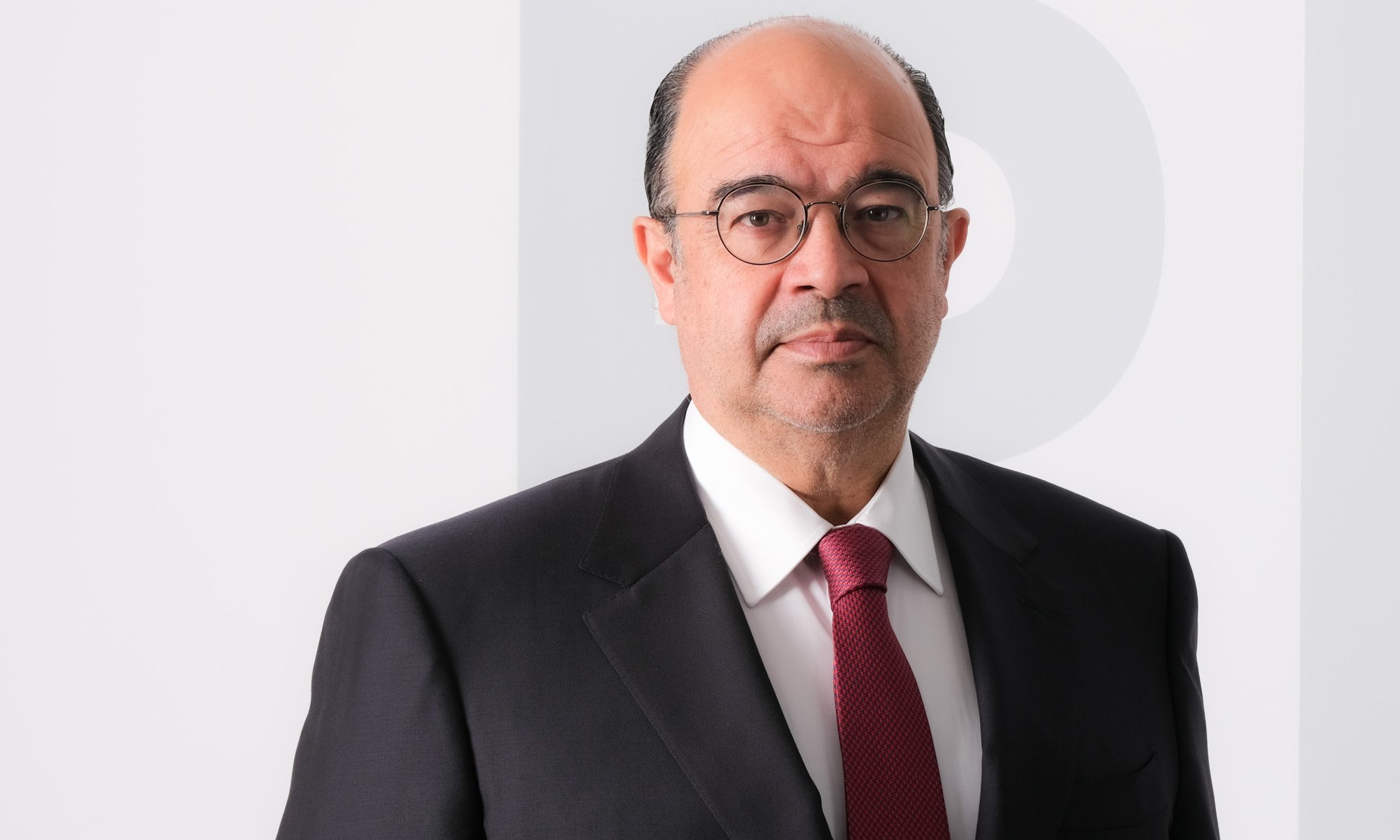
Rodrigo Costa, CEO and Chairman of the Board of Directors of Portugal’s largest energy infrastructure company, Redes Energéticas Nacionais (REN), is the only Portuguese personality featured on the prestigious 2024 Time100 Climate list. This annual list highlights the most influential leaders in the fight against climate change and referred to Costas’ significant contributions to the renewable energy sector and his leadership in advancing sustainable energy initiatives.

REN is a key player in Portugal’s energy infrastructure, ensuring energy security and reliability while driving the country’s transition to a sustainable future. Through a significant investment in grid modernization and renewable energy transition, including green hydrogen projects, REN supports Portugal’s decarbonization goals and economic growth. 

Recently, the company announced an ambitious plan to invest €1.69 billion in the Portuguese electricity grid between 2025 and 2034, more than double the previous plan of €755 million. The proposal, currently under public consultation by the Energy Services Regulatory Authority (ERSE) is focused on modernizing the grid, integrating renewable energy, adapting to climate change, and enhancing cybersecurity.

REN’s influence extends beyond renewable energy. In 2018, the company became an Industry Affiliated Partner of the CMU Portugal Program. But Rodrigo Costa’s connection to the program dates back even further to his time as Executive Vice President at Portugal Telecom, when he helped bring the company into the partnership in 2006.

Considering these recent milestones, we took the opportunity to gather his insights on this achievement and plans for the future.

Congratulations on behalf of the CMU Portugal Program for being featured in Time’s “Time100 Climate” list. Could you share your thoughts on this recognition and what it means to you and to Portugal’s renewable energy sector?

I am honored to be featured in the “Time100 Climate list”, but I recognize that it is mainly a country and corporate recognition. Portugal is a very good example as energy transition is concerned. And REN, Portugal’s energy transmission system operator (TSO), plays a fundamental role in the country’s energy transition.

Twenty years ago no one could anticipate where we are now. Regarding renewable energy generation we came a long way. Portugal was one of the first countries to develop renewable generation beyond hydro. In fact, at the beginning of this century, we start developing wind generation and in the past few years, photovoltaic became the main driver of renewable energy investment. In 2021, the last coal plant was closed, which represented a notable milestone in the energy transition.

In 2024 over 70% of our electricity came from hydro, wind, solar and biomass sources. We all agree that this achievement deserves credit, and I have no doubts that this recognition will encourage others to do the same. Portugal is now in 4th place regarding renewable generation in Europe.

Just in the last 10 years, renewable installed capacity has grown 6 GW, from which, 3,6 GW in the very high voltage network (Hydro 1,7 GW, Solar 1,6 GW and 0,3GW wind).

Total installed generation capacity in 2024 was 22,8 GW and the consumption peak 9,7 GW.

What were the key factors that led you receiving this distinction? Are there specific milestones or initiatives you are particularly proud of?

For sure, REN is a key catalyst on the energy transition process, but it is important to recognize that we are not alone. We recognize that we are but one among a long list of stakeholders, namely Portuguese policy makers, regulators, government agencies, generation and distribution companies, investors, technology and services providers, and universities. Such a collective effort makes the difference!

In REN we keep doing our job, going the extra mile whenever needed so that our projects are delivered as expected.

Developing energy infrastructures is complex, and in multiple situations they may have some negative impact on the environment. That is probably one of the most critical challenges we constantly face.

Being able to move on with the construction of power lines, substations and other project components need to be done with a huge focus on mitigating negative environment consequences. Finding the right path, preserving the ecosystems, being cost efficient, and overcoming these difficulties, I believe has been one of our best achievements.

Over the past 10 years, the following numbers speak more than any words: on solar generation, from 0.4GW to 3.9 GW, with 2 GW in the last two years; on wind, from 4.8 to 5.4 GW; and as already

mentioned, 1.8 GW of coal generation were closed. We were the first European country to be fully supplied by renewable generation during six consecutive days, a major milestone.

How has REN positioned itself as a leader in renewable energy, now including recent advancements in the green hydrogen sector?

We have to be able to anticipate the future, making sure we prepare ourselves as best as we can. Being on top of innovations, exploring the new technologies to find solutions for old or new problems, this is something we cannot stop doing. Hydrogen is a good example.

We recognize that hydrogen is a very serious new old thing. We have gone through decades of research and evaluation of hydrogen potential and we believe that now, with the pressure to depart from fossil fuels, things are finally changing.

Hydrogen can be a major energy option. The most optimistic ones usually state that from the “H2O”, it is enough to remove the “O” and we have clean energy with zero emissions. But we still need more R&D and better production costs. That will come with new production technologies, related investments and increase in demand.

We are doing our part regarding infrastructures. REN was the first European national operator to have its national network of pipelines third party certified to include 10% hydrogen blends. Now, it is completing the evaluation to achieve 100% H2 compatibility and face future pipeline repurposing. Pipelines are still the most efficient way to move H2 but require scale.

Hydrogen sourcing requires the time that other technologies had to be market ready, like wind and solar. To deliver green H2 as a market driven commodity, electrolizer costs and electricity prices have to bridge the existing value gap between production cost and willingness of clients to pay. At present, transportation, refineries and e-fuels are probably the most important cost barriers to lower H2 costs and more affordable and wider use of H2.

Expresso recently highlighted REN’s plan to invest €1.69 billion in the Portuguese electricity grid between 2025 and 2034. How will this investment shape Portugal’s energy landscape, contribute to the broader European grid, and align with REN’s strategic goals for the next decade?

Our 10-year plan results from work we developed with the Government and other domestic and international energy stakeholders. The plan incorporates multiple projects that allow the transmission grid (for high-voltage electricity and for high-pressure natural gas) to adapt to the country needs.

REN, in spite of being privately owned and a listed company on the Lisbon Stock Exchange, is a highly regulated company, which mainly operates two public service concessions, one of high-voltage electricity transmission, the other of high-pressure natural gas transmission and storage. Therefore, its investments, that ensure the maintenance of an efficient and safe energy system and address new market trends, must also fulfill two other major requirements. They must comply with all the clauses of the two public services concessions REN operates and the regulatory framework set by the domestic energy regulator. And they must be previously approved by the government and be well integrated into the country’s energy policy.

Energy transition and industrial development are attracting new clean industries to areas of lower electricity production costs, together with an increase in energy requirements from the new digital world we are building.

As time goes by, our plans are reviewed and updated incorporating necessary adaptations that happen due to national and international rules, innovations, or even crisis.

As energy is concerned, Europe benefits from a well-structured industrial network and the necessary institutional framework, both at the level of the European Union and at the level of Member-States. At the EU level, the European Energy Directorate General, and the two energy national TSO organizations of electricity and natural gas (ENTSOE and ENTSOG, respectively) play a major role. In each country, the energy regulator as well the other government energy and environment bodies are key contributors for the long-term plan design and approval.

The Portuguese Government recently updated the Energy and Climate 2030 targets are as follows in GW´s.

You have supported the CMU-Portugal Program since its beginning, first with Portugal Telecom, then engaging NOS (formerly ZON ), and now REN, which joined CMU-Portugal as an Affiliated Partner in 2018. From your vantage point, any suggestion or advice for the next Phase?

I had the opportunity to discuss with Professor José Fonseca de Moura the future of your program and I think it is evolving in the right direction and that has been recognized by the Portuguese Government.

The program is addressing exactly the core of this decade technology transformation, in particular AI and related technologies.

The opportunity created by the immense and fast increase in computer power has been fantastic and difficult to anticipate where it might take us. Developing and applying new knowledge that are instrumental in developing those new technologies should be a priority for Portuguese universities, and CMU-Portugal has been a great partner in advancing this priority.

When I look back on your program numbers–students, projects, published papers, new business development, knowledge transfer–I feel it was worth it and the future could be even more promising. In fact, past experience in programs like this, help shaping and making them even more efficient and successful.

The majority of the participants in CMU-Portugal programs are pursuing their academic or corporate activities in Portugal and some have decided to move abroad. But I have no doubts that the overall impact has been extremely positive, both for each participant and for the country as a whole.

Since the program’s inception, I have had the opportunity to lead organizations that have taken advantage of the program, either by sending their staff members to CMU-Portugal programs or hiring new employees who have benefited from such programs. And when we evaluate a CV, we recognize important value if the candidate participated in CMU-Portugal or similar programs.

CMU Portugal Spring Lunch Welcomes Students Back to Campus

The CMU Portugal program hosted a lunch on the Carnegie Mellon campus in Pittsburgh on February 11th, 2025, bringing together students currently studying in Pittsburgh.

At CMU, the program’s coordination team regularly creates networking opportunities for students from different Ph.D. programs – who may not typically interact in classes – to connect, build relationships, and expand their professional networks beyond the classroom.

Attending students included Dual Degree Ph.D., Affiliated Ph.Ds. students from many CMU departments including Computer Science (CS), Software and Societal Systems (S3D), Electrical and Computer Engineering (ECE), Human Computer Interaction (HCII), Language Technologies Institute (LTI), and Engineering and Public Policy (EPP). 

This gathering  gave everyone an opportunity to catch-up while enjoying a meal together, sharing their experiences at CMU in Pittsburgh so far.

Claire Le Goues Receives Presidential Early Career Award

CMU Portugal faculty member  Claire Le Goues is one of three recipients of the Presidential Early Career Award for Scientists and Engineers (PECASE). This award is the highest accolade bestowed by the U.S. government on early career scientists and engineers.

Le Goues is a Professor and Associate Department Head for Faculty in the Societal Systems Department (S3D) at CMU. She is also a co-advisor to two CMU Portugal Dual Degree students, Daniel Ramos and Cláudia Mamede, and has hosted several CMU Portugal Visiting Faculty and Researchers in Pittsburgh, notably in 2019 and 2022.

This year she was part of the CMU Portugal 2024 Summit in Pittsburgh, hosting the Portuguese Delegation led by Minister Fernando Alexandre. 

Le Goues’s interests span software engineering and programming languages, and especially in how to construct, maintain, evolve, improve/debug, and assure high-quality software systems. Her group of students and collaborators is called squaresLab. She teaches software engineering and program analysis at the undergraduate, masters, and PhD levels and co-direct the REUSE@CMU summer program.

To learn more about this prestigious award and its recipients, please see the recent article by CMU.

Claire Le Goues at the CMU 2024 Summit