
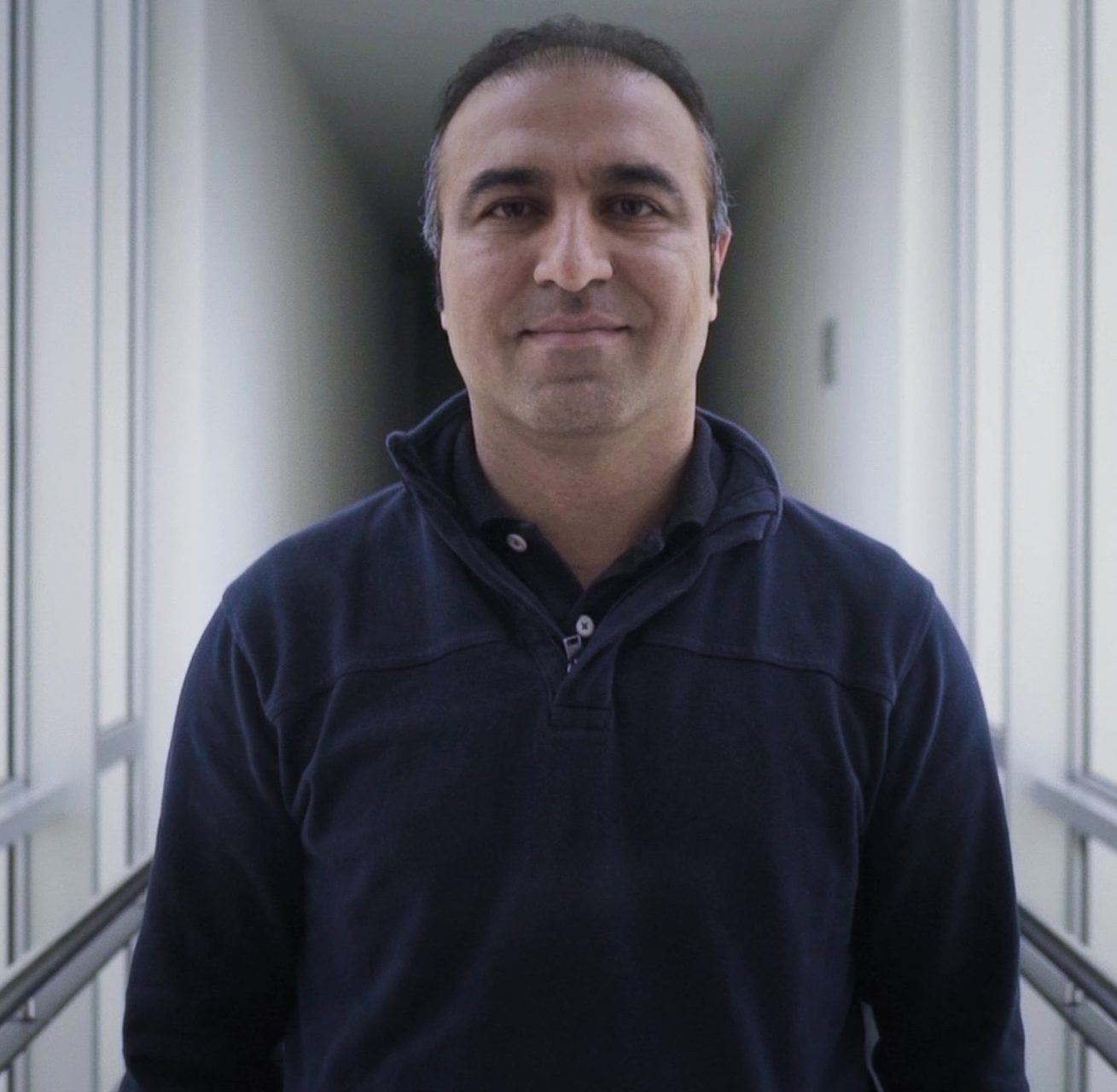
 Mahmoud Tavakoli, director of the “Soft and Printed Microelectronics Laboratory” at the Institute of Systems and Robotics (ISR) of the Faculty of Science and Technology of Universidade de Coimbra (FCTUC), won a Proof of Concept (PoC) grant from the European Research Council (ERC), worth €150,000.
This funding will allow the development of the “KineSense: Stretchable Mechanosensors for Quantitative Musculoskeletal Monitoring and Rehabilitation” project, that aims to create innovative wearable technologies capable of continuously and objectively monitoring muscle activity and joint movements throughout rehabilitation processes.
KineSense combines two complementary systems: ultra-thin patches applied directly to the skin for monitoring muscle activity and a platform based on smart textiles to comfortably and non-invasively track joint movements, both in clinical settings and during users’ daily activities. This technology extends into sports and human performance monitoring, aiding in injury prevention, training optimization, and recovery tracking for athletes.
Developed from FCTUC’s solid intellectual property portfolio, this project reinforces the team’s position as a European reference in digital health, wearable technologies, and advanced rehabilitation systems.
In January 2023, Takavoli won a 2.8M€ ERC Grant Consolidator to support the research project “Liquid3D: 3D Printed, Bioinspired, Soft-Matter Electronics based on Liquid Metal Composites: Eco-Friendly, Resilient, Recyclable, and Repairable”, to develop a series of innovative printable composites based on liquid metals to print 3D functional cells.
The ISR team is a long-standing CMU Portugal partner, having collaborated with Carnegie Mellon University’s Soft Machines Lab (College of Engineering) on several key research projects: Stretchtonics, one of CMU Portugal Entrepreneurial Research Initiatives; WoW, one of our Large Scale Collaborative Projects, led by Glintt; and the Exploratory research project Exoskins.
Mahmoud recently secured funding for a new CMU Portugal Exploratory Research Project (ERP) “SoftBCI: Ultra-Soft Neural Probes for Long-Term Brain-Computer Interfaces.” All of these projects have been developed in partnership with Professor Carmel Majidi from CMU’s Department of Mechanical Engineering as the CMU Principal Investigator (PI).
This long-term research partnership focuses in the fields of stretchable electronics, wearable computing, patient monitoring, printed sensors, digital health, and digital biomarkers.
FCTUC news article (in Portuguese).
Other CMU Portugal articles featuring Tavakol’s research:
- CMU Portugal Researcher at Universidade de Coimbra wins a 2.8M€ ERC Grant Consolidator
- In the Media: “Components for future robots will be 3D printed” – a project led by CMU researcher
- Mahmoud Tavakoli features in Nature’s “Where I Work”
- Eco-friendly conductive ink promises to revolutionize the production of soft stretchable electronic circuits