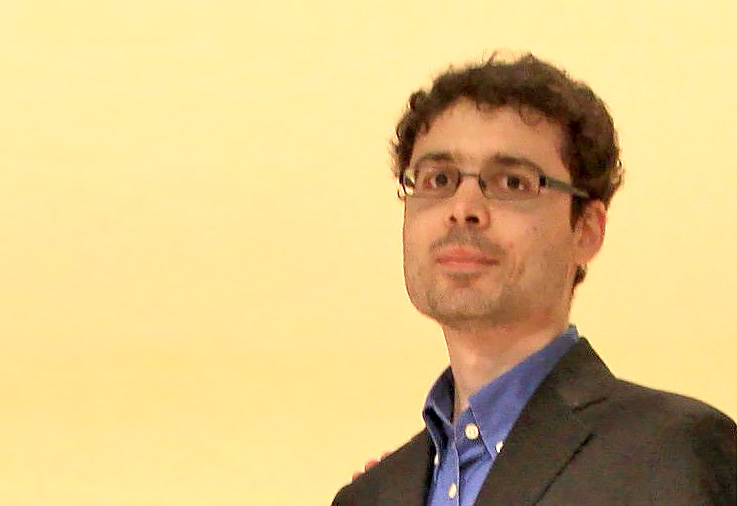
CMU Portugal Inside Story: Zita Marinho

Zita Marinho is a CMU Portugal program Alumnus in Computer Science/Robotics who graduated in 2018. Her research areas have a focus on machine learning and optimization with applications on Robotics and Natural Language Processing. She was jointly advised by André Martins, Geoffrey Gordon and Siddhartha Srinivasa and her thesis was centered on spectral methods for prediction and planning tasks. Zita is currently a researcher at Priberam Labs and is affiliated with the Institute for Robotics and Systems, at University of Lisbon, Portugal.

When you decided to pursue a PhD, why did you choose the CMU Portugal Program?

I decided to pursue a PhD two years after my Masters graduation, I was doing an internship at ESA in the Advanced Mission Concepts team and wanted to learn more about Machine Learning and Robotics. The CMU Portugal Program provided an extraordinary opportunity for me to do a PhD in one of the best Universities in the field.

How would you describe your experience under the CMU Portugal program? 

My PhD experience was very enriching, I had the chance of meeting and collaborating with other students and great researchers at CMU. It was very motivating and inspiring to be a part of my research lab, and the campus provides a very intense and thriving student life.

In what ways do you think this PhD impacted your current career?

It was a crucial step to me as a researcher, since your PhD university will let you bridge very important connections with other students and faculty for your future. It also puts you in a very privileged position to pursue you dreams in a vast range of cutting-edge research topics.

What are you doing at the moment?

At the moment I am leading the research team at Priberam labs, a company that provides on Natural Language Processing applications, such as recommendation systems, summarization, etc.

For other students that are thinking about doing a CMU Portugal Dual Degree PhD, what would your advice be?

Be prepared to work very hard, and be very motivated, a PhD is a long journey but definitely a rewarding one. Your PhD will open your career path to a new set of opportunities and it will shape the very core of your abstract and structural thinking and prepare you for your academic or entrepreneurialship endeavours.
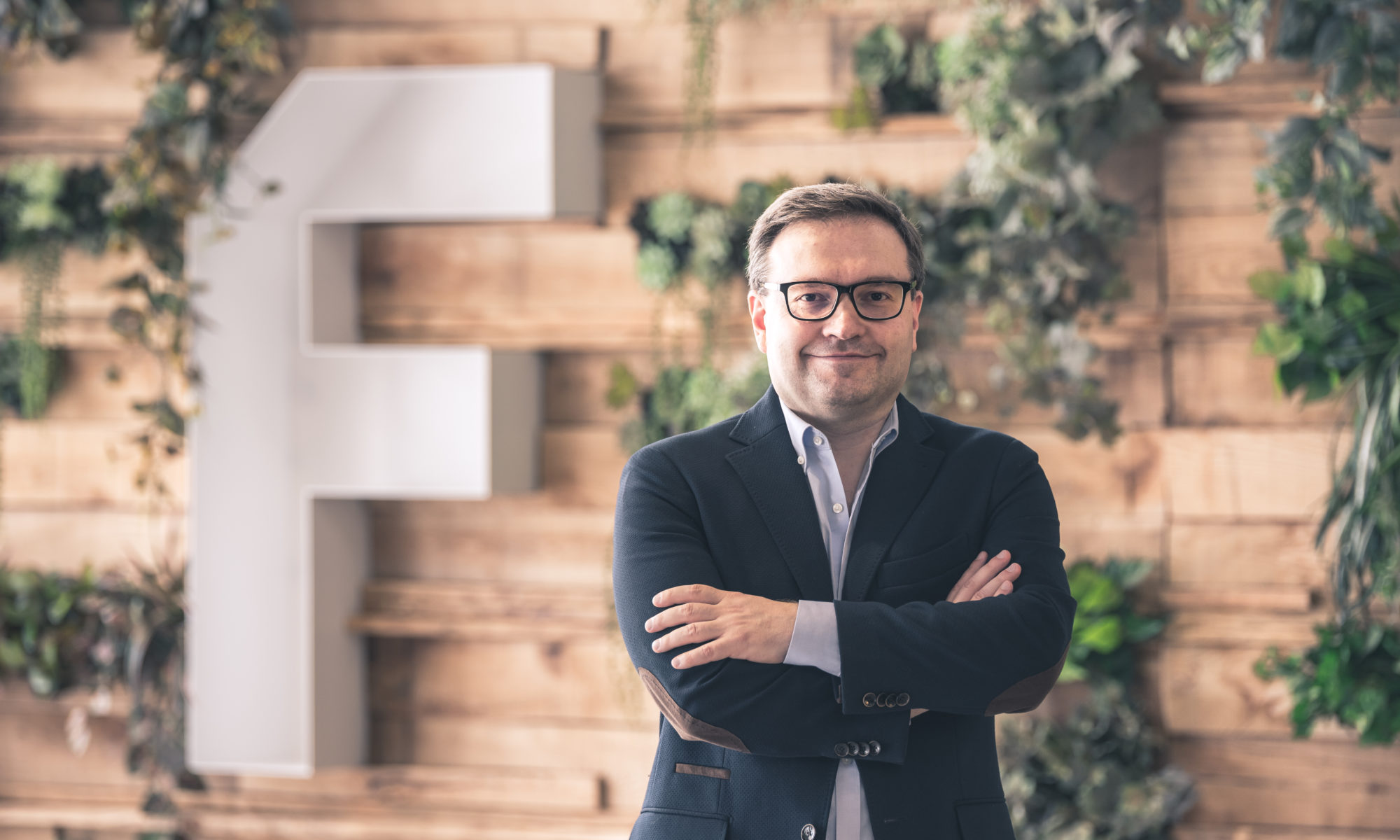
 

Industry Partner Interview: Farfetch

Cipriano Sousa is Chief technology officer (CTO) at Farfetch, a leading online retail platform which mission is to be the global technology platform for luxury fashion. In 2018 the company, which is the first Portuguese Unicorn company, became one of CMU Portugal Program Industry Affiliates.
Currently, the digital fashion marketplace founded by José Neves offers selections from over 1000 brands, boutiques and department stores worldwide and has websites in 15 local languages. Being a global technology platform makes crucial to invest in areas such AI, machine learning or big data so, according to Cipriano de Sousa, partnerships like the one with CMU Portugal are “a match made in heaven”.

  1. Farfetch is an online luxury fashion platform with a strong ICT/Engineering focus. How are areas such as machine learning or big data considered and managed within the company?

I believe that machine learning or big data, but also artificial intelligence, augmented reality, automation or blockchain, are quickly making their way into the retail industry. The retail industry is facing a paradigm shift in how its customers select and purchase goods and retailers need to adapt to this consumer change with greater digital services, while, at the same time, rethinking how they use physical stores.

Through Farfetch’s business unit Store of the Future, we have developed, and continue to evolve, a suite of connected in-store technologies to provide a digitally enabled, personalized physical shopping experience. We are now already testing some features in our Browns East store in London and last year we announced an exclusive innovation partnership with CHANEL. Ownership of Browns (since 2015) enables us to understand the luxury fashion ecosystem through the lens of a boutique.

  1. Since the CMU Portugal Program is mainly focused in ICT related areas, what are your main expectations for this partnership?

Carnegie Mellon University is a reference in the investigation of Information and Communication Technologies, so I believe it makes every sense for Farfetch to be a technology company partner with such an honourable and reputable institution. I hope we can work together building activities that bring the academia closer to professionals. I think this is an extraordinary time for Farfetch, living its chapter two after such an amazing first chapter that culminated with the company’s IPO in New York. Carnegie Mellon shares this revolutionary culture we have, it’s a diverse and inclusive community, like Farfetch, and they’ve made it their mission to create a transformative community, impacting society through research, creativity, innovation and entrepreneurship. It’s a match made in heaven and, ultimately, I expect this partnership to be one more step towards knowledge and innovation for both institutions.

  1. How do you envision that a stronger partnership with academia can help Farfetch reach its goals?

Farfetch has a very strong connection to universities in general, whether it’s by participating in conferences in educational institutions, for example, or by simply opening the doors of our offices to the student community, allowing them to visit us and to learn a little about the company and the business. It’s important not just because we want to be close to our community, but also because we are a global company and we’re constantly looking for great, talented people who might want to work with us. Since day one we’re trying to build a successful business, of course, but it’s our goal to build a fantastic place to work, where people feel genuinely happy, with a fantastic culture, one that people recognize themselves in. A strong partnership with academia will help us convey this message, while at the same time putting us closer to the community that we want to engage. Great people build great businesses.

  1. How does specialized training in ICT fit into your HR strategy?

Recruiting is challenging, no matter the field, but it’s common knowledge that ICT is one of the most required fields. It’s a challenge not only to recruit, but also to keep talent. Of course, we’re always looking for the most talented, most specialized people. However, we have to be aware that besides all the skills a particular role might demand, it’s important to tick all the other boxes to make sure the candidate is the perfect fit for the role, and that Farfetch is the right company for that person. It’s a process of mutual knowledge that we respect greatly. At Farfetch, we try to satisfy the demands of each role while respecting the culture of the company and the candidate’s profile.

  1. How would you shortly (one word/sentence) describe the Engineering strategy at Farfetch?

Farfetch’s employee brand ethos fits perfectly here: do what’s never been done.


CMU Portugal Inside Story: Jaime Roca

Jaime Bonnin Roca is a CMU Portugal program Alumnus in Engineering and Public Policy who graduated in 2017. He currently works as a Research Associate at the Institute of Manufacturing for the University of Cambridge. His studies are mainly focused on how different sources of technical and market uncertainty may change the adoption of advanced manufacturing technologies. As a PhD student, he studied the introduction of metal additive manufacturing in sectors such as aviation or automotive and was part of the CMU Portugal Program ERI (E4Value).

When you decided to pursue a PhD, why did you choose the CMU Portugal Program?

The program gave me the opportunity to attend one of the top technical universities in the USA, and enrich my personal experience through the exposure of two very different countries and research contexts.

How would you describe your experience under the CMU Portugal program?

My experience in the program has been overall very positive. I have created working relationships with high-level members in industry and government on both sides of the Atlantic. Moving from one city to another might look daunting at the beginning, but my transition was relatively smooth. I also made some good friends within the program, and the community is very supporting.

Professionally, the PhD has opened an array of new career possibilities which were unimaginable when I started.
The CMU brand is highly valued in the market.


What are you doing at the moment?

I am working on several research projects at the University of Cambridge, related to the adoption and diffusion of emerging manufacturing technologies, and the role of regulatory agencies in the commercialization of those.

For other students that are thinking about doing a CMU Portugal Dual Degree PhD, what would your advice be?

A PhD is always a tough path which requires a lot of hard work, and mental resilience against the uncertainty about your research and the future. But if you really want to go down that path, there are not many ways better than through the CMU Portugal program.

Industry Partner Interview: Unbabel

André Martins was the first dual degree student to finish a Ph.D. in Language Technology (LTI), both at Instituto Superior Técnico of the Universidade Técnica de Lisboa (IST/UTL) and Carnegie Mellon University (CMU). After  his graduation in 2012, he joined the Machine Learning research team at Priberam, a spin-off company from IST focused in language technology development. In 2015 he started working as Head of Research at Unbabel, a Translation company that combines neural Machine Translation with professional human editing, to deliver high quality translation at massive scale.


  1. Unbabel is a Web translation service firm that combines artificial and human intelligence to deliver faster translations with human quality. What is the importance of areas such as machine learning or big data, and how are they managed within the company?

Machine learning is a key component of Unbabel’s products. For example, we use it to build neural machine translation systems that are tailored to our customers’ data. The better the quality of these systems, the less post-editing humans need to do, increasing the efficiency of the whole translation process. Another example is our quality estimation systems, which estimate how reliable a translation is before sending it to the customer, using neural models learned from customers’ data and translators’ post-edits. In both cases we clearly observe that the systems improve their performance continuously, as the amount of available data keeps increasing.

  1. Since the CMU Portugal Program has a strong focus in these areas, what are your main expectations for this partnership?

CMU is very strong in machine learning and natural language processing. We already collaborate with some faculty professors there, and we have hosted some of their students in Summer internships. We expect this partnership to enhance these connections even further in the future, possibly via joint research projects.

  1. How do you envision that a stronger partnership with academia can help Unbabel reach its goals?

We’ve believed since day one that a strong partnership with top international academic institutions is key to achieve our ambitious goals. We participate in projects involving some of the best universities in Europe in natural language processing. We participate in innovation actions on which we hosted several students and professors from these institutions, and we have AI Summer research internships involving students from all over the world. For us, the partnership is important since we learn from the latest achievements in machine learning and ensure we are an active part of this research community. For the academic partners, it is beneficial since they can test their tools in real-world problems and have access to data that is generally not available at universities.

  1. How does specialized training in ICT fit into your HR strategy?

For our AI teams, specialized training is very important. For senior-level positions we hire doctorates with experience in natural language processing, machine learning, and related areas. Besides, across the board, we provide training in-house, via online courses, participation in conferences and workshops, and an internal mentorship program.

  1. How would you shortly (one word/sentence) describe the Engineering strategy at Unbabel?

Data-driven, product-oriented, AI-fueled.

CMU Portugal Inside Story: João Semedo

João SemedoJoão Semedo is a Portuguese student who finished this year his CMU Portugal Program Dual Degree PhD in Electrical and Computer Engineering with a focus on Computational Neurosciences. He started the Program in 2012, and in 2016 he moved to CMU to join Professor Byron Yu’s laboratory, one of his PhD supervisors along with Professor Christian Machens (Champalimaud Research) and Doctor Adam Kohn (Einstein College of Medicine).

Also in 2016, he was selected to receive a Bertucci Graduate Fellowship, a grant of US $ 20,000, to provide merit fellowships to graduate students pursuing doctoral degrees in Engineering in CIT. His research focuses on the analysis of neuronal signals, in order to study the principles and mechanisms that control the propagation of information between the various areas of the brain. After the conclusion of his PhD in the beginning of 2018, he was asked to extend his stay at Professor Yu’s Laboratory for one more year.

Profile Interview

1. Could you please briefly sum up your academic background before starting the CMU Portugal Program?

Before starting the CMU Portugal Program I completed my M.S. and B.S. in Biomedical Engineering at Instituto Superior Técnico.

2. When you decided to pursue the PhD, why did you end up choosing the CMU Portugal Program ECE Doctoral program?

The rare and invaluable opportunity to work at a top US university!

3. You stayed for one year in Portugal, and then spent another year at CMU, to finally coming back to Portugal for 2 more years. How would you describe this experience?

While moving back of forth between Portugal and the US so many times was certainly challenging at times, it allowed me to experience life and research at two new (for me) and very different institutions, CMU and the Champalimaud Research Centre (almost simultaneously!). This combination was crucial to the work I developed throughout my PhD. The decision to move back and forth, instead of simply spending time at one institution and then moving and finishing at another, came because it was very important to keep our collaboration going between the two institutions, as opposed to something more akin to two different, consecutive, projects.

4. In 2016, you returned to Professor Byron Yu’s laboratory to finish your PhD. You ended up spending  two extra semesters there. Why was that?

I was given the chance to extend my stay in the US for one more year. Given that I had a few collaborations with people in Pittsburgh, we felt it made sense to stay while applying the finishing touches on my PhD work.

5. How would you describe this experience at Professor Yu’s Laboratory?

Absolutely fantastic! Professor Yu is inspiring, both professionally and personally. The lab does leading work in systems neuroscience and is composed of very talented people, who are great to work with every day.

6. Could you please explain us what is the core of your research?

The primary goals of my research are to use neuroscience “big data” to understand how brain areas communicate and to develop new statistical tools specifically tailored to this problem.

7. Which moment would you consider the highlight of your PhD?

That’s a great question… I suppose the thesis defense must rank pretty high. Not only was it a momentous occasion, it provided an incredible perspective over what was a very significant part of my life so far.

8. In what ways was the CMU Portugal program important for your work and your future as a researcher?

It was through the CMU Portugal program that I got to engage and collaborate with top researchers not only in Pittsburgh, but also in New York and in Lisbon. Without this opportunity, my work would simply have been impossible!

9. In addition to your professional experience, how did you adapt to life in Pittsburgh and in the United States?

Pretty well I think. Pittsburgh is a fairly calm city and the truth is that my day-to-day life is very similar living in Portugal or the United States.

10. For other students that are thinking about doing a CMU Portugal PhD, what would your message be?

Go for it! I’m immensely grateful for this opportunity, and I cannot recommend this program enough.

11. What are your plans? What comes next?

For the moment I will continue to work on Professor’s Yu lab as a Postdoctoral Research Associate, continuing the project I’m currently a part of. After that… Who knows!


Nuno Alexandre Martins Seixas, Master of Software Engineering

Nuno Alexandre Martins Seixas
Nuno Alexandre Martins SeixasNuno is a software developer at Portugal Telecom-Inovação where he works in Healthcare Information Systems. He holds a B.Sc. in Nursing from the Polytechnic School of Coimbra and also a B.Sc. in Informatics Engineering from the University of Coimbra. In his free time, Nuno enjoys reading and watching quality TV shows. Recently, Nuno was interviewed for an article in Portugal’s Sol newspaper regarding his studies at Carnegie Mellon.

How is the Pittsburgh campus different from your home campus?

The Carnegie Mellon campus is different because it has many more activities. We can attend a conference with a Nobel Prize winner, listen to a lecture from any academic department, or even discuss social issues, like how Pittsburgh deals with the different cultures that live in it. This campus, for its size and level of activity presents the students with many new opportunities, not only related to one’s specific area of study, but also in more broader areas.

What do you think of living in Pittsburgh?

The first difference I felt in Pittsburgh was of course the weather. Back in Portugal we don’t have these low temperatures and we have much more sun. Here, we have snow and cold, but it has been fun coming to campus and seeing all the snow. The area where the campus is located is very nice to live in, and it feels good to be here.

Why did you decide to do the dual degree program?

I identified this program as one of the best in the world and, therefore, it would be a very good opportunity for me to grow as a professional. Also, the benefits that Portugal Telecom gives me are very good and allow me to really engage in this program as a full-time student.

Jacinto Daniel Marcelino Barbeira, Master of Software Engineering – ICTI: Information & Communication Technologies Institute – Carnegie Mellon University

Jacinto Daniel Marcelino Barbeira
Jacinto Daniel Marcelino BarbeiraJacinto graduated in Informatics and Computing Engineering from Faculdade de Engenharia at the University of Porto. He has since been employed at Portugal Telecom-Inovação, with responsibilities in developing learning contents and management systems.

How is the Pittsburgh campus different from your home campus?

There are two main differences: our campus in Portugal is only about 10 years old and the architecture in Coimbra is more functional than aesthetic. The second and main difference is that in Pittsburgh the campus is located in the middle of the city. This offers more opportunities for off-campus activities and also brings the city to the campus, thus enabling a richer exchange of activities.

What do you think of living in Pittsburgh?

Although it lacks the “sunny” possibility of going out to an esplanade and enjoying an afternoon at the sun, it has other possibilities. There are lots of events and places you can go, both for sports, culture, or shopping. However it is also a quiet place to live (at least where we are staying), which is very nice when you want to seclude yourself to work.

Why did you decide to do the dual degree program?

Besides the opportunity to try something new in an area that is still green in Portugal, the idea of getting a Masters degree in one of the most reputed institutions in the world made me forget about the workload and take the challenge.

Anselmo José Gandarão Pereira da Silva, Master of Software Engineering – ICTI: Information & Communication Technologies Institute – Carnegie Mellon University

Anselmo SilvaAnselmo has been a project manager at Portugal Telecom-SI for 10 years. He has worked in several units including Customer Management, Document Management, and Content Management Solutions. He holds a B.Sc. in Informatics and Systems Engineering from University of Minho and a PMP certification by the Project Management Institute. Anselmo is married and has a lovely one-year-old daughter named Alice.

How is the Pittsburgh campus different from your home campus?

Maybe the major differences are the cultural and athletic facilities available on the Carnegie Mellon campus. Also, we are able to attend conferences, talks, and presentations that normally aren’t available on the Coimbra campus. Otherwise, the two campuses are mostly the same.

What do you think of living in Pittsburgh?

It has been a nice experience, but unfortunately we don’t have enough time to explore the region as much as we would like. The city has nice museums, good restaurants, and an active cultural life.

Why did you decide to do the dual degree program?

I was looking to get a Masters in Software Engineering for awhile. Fortunately, my company (Portugal Telecom) started to sponsor university studies and offers the employees who get accepted good benefits. So far, the experience has been extraordinary as we are being challenged to improve ourselves.

Ana Rita Rodrigues, Master of Software Engineering – ICTI: Information & Communication Technologies Institute – Carnegie Mellon University

Ana Rita RodriquesAna Rita graduated in 2002 from the Instituto Superior Técnico with a B.Sc. in Informatics and Computer Engineering. She is now a software developer at Portugal Telecom-SI where she works for the Billing Department. Before Portugal Telecom she worked for Optimus, a major cell phone operator, where she was involved in configuration management. In her free time, Ana Rita enjoys spending time with her nephews, traveling abroad, and studying photography.

How is the Pittsburgh campus different from your home campus?

“The Pittsburgh campus is larger, since it is composed of several colleges and institutes. So, there are many extracurricular activities that are very interesting. Although the campus does not have a well-defined limit, [the MSE program] is mostly at the western end of the campus. Back home the campus was smaller and we were in the center.

Since we are the first group of MSE students in Coimbra, we have a room just for us on the campus there. Here in Pittsburgh we share an open space and schedule meeting rooms, which can be tricky. But this has been an opportunity to know people from different cultures, since our colleagues come from different parts of the world.

What do you think of living in Pittsburgh?

Pittsburgh has cultural places there are very interesting, like the museums. The program is very demanding so I don’t often have the opportunity to visit them all, but I’m planning to. The parks seem very nice but in this time of the year the weather prevents me from enjoying them as much as I’d like. On the other hand, I had the chance to practice sports. It has been an adaptation to be away from family and friends, with such cold weather (although I like the snow), and without some of the things I’m used to (like a car). Still, I consider Pittsburgh an interesting experience.

Why did you decide to do the dual degree program?

I selected this program because it is aimed at professionals in my area and because it will contribute my professional growth. The semester in Pittsburgh was an additional motivation, because it allows me to be in the top university in software engineering and close to experts in the field. Also, it gives me the chance to learn about different cultures.