CMU Portugal takes faculty from Portugal to Pittsburgh to develop research work in ICT and reinfornce cooperation between Portuguese Universities and CMU

A group of 6 faculty from Portuguese Institutions was selected to visit Carnegie Mellon University (CMU) in Pittsburgh during 2020 to develop their research work in the field of Information and Communication technologies (ICT) supported by the CMU Portugal Program and Fundação para a Ciência e a Tecnologia (FCT). The faculty will be granted a scholarship funded under the CMU Portugal Mobility Program Visiting Faculty and Researchers Program 2020 Call that closed in January 12th 2020. Through their formal appointment as a visiting faculty member  at CMU, the faculty affiliated with a Portuguese higher education institution will spend up to 4 months to work in research in ICT and participate in other academic activities while hosted in a research group at CMU.

Since 2007, 81 faculty had the opportunity to visit CMU under the scope of CMU Portugal mobility programs. The Program has offered faculty the possibility of further developing their knowledge and skills as researchers, establish new research collaborations or reinforce exisiting ones, and experience Carnegie Mellon University culture and best practices.

This year’s edition will be attended by researchers from Faculdade de Ciências da Universidade de Lisboa (FCUL)/ LASIGE, Instituto Superior Técnico (IST)/ INESC-ID, Instituto Superior Técnico (IST)/ Instituto de Telecomunicações (IT), Universidade de Aveiro/ IEETA and  Universidade do Minho/DEI.

2020 Participants Profile:

Alina Trifan: Universidade de Aveiro/ IEETA
Department and Host at Carnegie Mellon University: Computer Science Department – Language Technologies Institute, Professor Eric Poe Xing.
Research topic: Machine learning and its application in biological and social systems

Arlindo Oliveira: Instituto Superior Técnico (IST)/ INESC-ID
Department and Host at Carnegie Mellon University: Machine Learning Department, Professor Roni Ronsenfeld
Research topic: Developing the application of deep learning to novel areas

João Ascenso:  Instituto Superior Técnico (IST)/ Instituto de Telecomunicações
Department and Host at Carnegie Mellon University: Computer Science Department, Professor Artur Dubrawski
Research Area: Exploring new visual representation, processing and coding techniques leveraged on machine learning advances and their potential multimedia application.

João Saraiva: Universidade do Minho/ Department of Industrial Electronics
Department and Host at Carnegie Mellon University: Computer Science Department, Professor Claire Le Goues
Research topic:  Defining automated techinques and tools do repair energy inefficient programs

Naercio Magaia: Faculdade de Ciências da Universidade de Lisboa/ LASIGE
Department and Host at Carnegie Mellon University: Computer Science Department, Professor Justine Sherry
Research topic: State consistency framework for programmable network data planes

Paulo André: Instituto Superior Técnico (IST)/ Instituto de Telecomunicações
Department and Host at Carnegie Mellon University: Department of Materials Science and Engineering, Professor Elias Towe
Research Area: Planning of the collaborative research effort in quantum photonics and neuromorphic photonic systems
CMU Portugal takes master students from Portugal to Pittsburgh to develop research work in ICT

A group of 9 master students from Portuguese Institutions was selected to visit Carnegie Mellon University (CMU) in Pittsburgh during 2020 to develop their research work in the field of Information and Communication technologies (ICT) supported by the CMU Portugal Program and Fundação para a Ciência e a Tecnologia (FCT). The students will be granted a scholarship funded under the CMU Portugal Mobility Program Visiting Students Program 2020 Call that closed in January 12th 2020. The scholarships will allow Master students affiliated with a Portuguese higher education institution to spent up to 6 months to work in research in ICT at CMU, be mentored by leading faculty and researchers, and have the opportunity to be immersed in Carnegie Mellon’s culture.

Since 2014, 39 students had the opportunity to visit CMU under the scope of CMU Portugal mobility programs. The Program has offered master students the possibility of developing their knowledge and skills as researchers, while opening perspectives for career opportunities in cutting-edge fields of Information and Communication Technologies.

This year’s edition will be attended by researchers from Instituto Superior Técnico (IST), Faculdade de Ciências da Universidade de Lisboa (FCUL), Faculdade de Ciências e Tecnologia da Universidade Nova de Lisboa (FCT-UNL) and Faculdade de Arquitectura da Universidade de Lisboa (FA-UL), who will collaborate with five departments/institutes at CMU including Human-Computer Interaction Institute, Computer Science Department, Electrical and Computer Engineering DepartmentInstitute for Software Research and Machine Learning Department.

2020 Participants Profile:

Álvaro Santos: Department of Informatics at Faculdade de Ciências da Universidade de Lisboa (FCUL)
Department and Host at Carnegie Mellon University: Institute for Software Research, Professor Jonathan Aldrich.
Research Area: Programming Languages, Distributed Systems

Diogo Pereira: Instituto de Telecomunicações/ Faculdade de Ciências e Tecnologia da Universidade Nova de Lisboa (FCT-UNL)
Department and Host at Carnegie Mellon University: Electrical and Computer Engineering Department, Professor Hyong S. Kim
Research Area: Computer Networks

Guilherme Espada: Department of Informatics at Faculdade de Ciências da Universidade de Lisboa (FCUL)
Department and Host at Carnegie Mellon University: Computer Science Department, Professor Jan Hoffmann
Research Area: Programming Languages, Software Engineering

Hugo Simão: LASIGE/  Faculdade de Arquitectura da Universidade de Lisboa
Department and Host at Carnegie Mellon University: Human-Computer Interaction Institute, Professor Jodie Forlizzi
Research Area: Human-Robot Interaction

João Almeida: Department of Electrical and Computer Engineering/ Instituto Superior Técnico (IST)
Department and Host at Carnegie Mellon University: Machine Learning Department, Professor Katerina Fragkiadaki
Research Area: Robotics, Computer Vision and Machine Learning

Margarida Ferreira: INESC-ID/ Instituto Superior Técnico (IST)
Department and Host at Carnegie Mellon University: Computer Science Department, Professor Rúben Martins
Research Area: Program Synthesis

Miguel Pinho: Department of Electrical and Computer Engineering/ Instituto Superior Técnico (IST)
Department and Host at Carnegie Mellon University: Electrical and Computer Engineering Department, Professor James C. Hoe
Research Area: Computer Architecture

Paulo Santos: Department of Informatics at Faculdade de Ciências da Universidade de Lisboa (FCUL)
Department and Host at Carnegie Mellon University: Institute for Software Research, Professor Christopher Timperley
Research Area: Programming Languages, Genetic Programming, Program Synthesis

Ricardo Brancas: INESC-ID/ Instituto Superior Técnico (IST)
Department and Host at Carnegie Mellon University: Computer Science Department, Professor Rúben Martins
Research Area: Program Synthesis

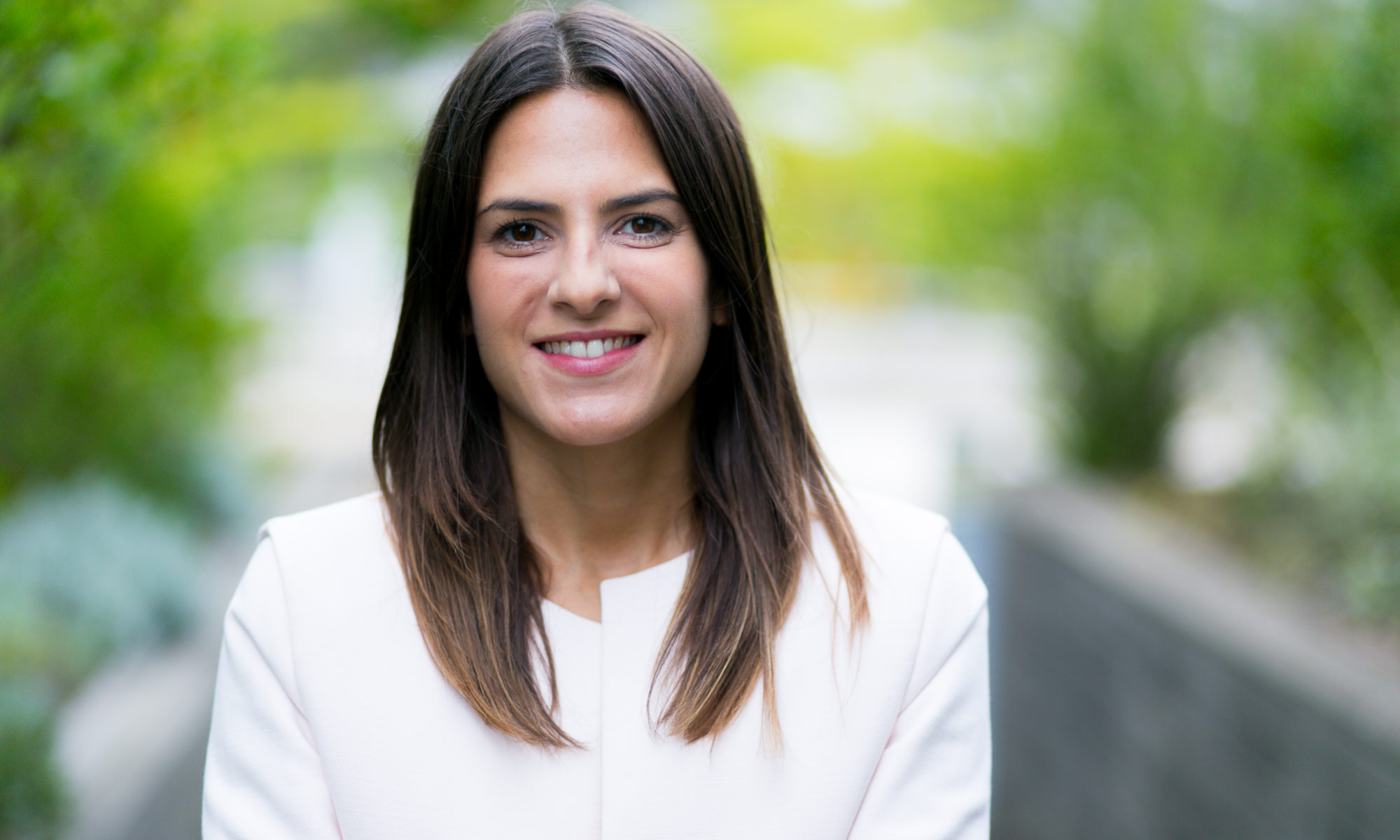
CMU Portugal Inside Story: Luís Borges experience as a first year Dual Degree PhD student

Luís Borges is a CMU Portugal student in Language Technologies, having started his PhD in 2019. His Master’s degree was focused on the application of Natural Language Processing and Deep Learning techniques on the topic of fake news detection. For his PhD, he is working on Neural Information Retrieval, also leveraging NLP and Deep Learning tools. Currently, Luís is in his first year, doing required coursework and research, under the supervision of Professors Bruno Martins (IST) and Jamie Callan (CMU).
Why did you choose the CMU Portugal Program to pursue your PhD?

While I was doing my MSc, I was in doubt whether after I finished it, I would start working for a company or I would go on to pursue a PhD. Given that my MSc research went really well, it was Professor Bruno Martins, my advisor, who suggested I should consider taking a PhD. After some reflection, I decided to go for the PhD, and started looking for PhD programs that allowed me to spend some time abroad, because besides my technical knowledge, I was also looking to expand my cultural horizons. I also applied for a PhD at IST, for backup reasons, but when I discovered the CMU Portugal program, where I was able to study in one of the world’s greatest universities, and also to spend two years in the United States, I truly stopped caring about any other options.

Were you surprised to be admitted considering the challenging acceptance rate at CMU?

I was in Japan when I knew I had been accepted, and what a celebration it was! I’ll be honest, yes, I was surprised. In such a top university like CMU, with a relatively low acceptance rate, I couldn’t really be surprised if I had been rejected. This essentially serves as motivation, since I know I’ve been given a once in a lifetime opportunity, I must work hard not to waste it.

You’ve just started the Program at IST. How is everything going?

Everything is going great! Coursework is going as expected. Regarding my research, I have weekly meetings with my advisors, via Skype, where we discuss the work I developed during the week, and where I’m given new tasks to implement and work on. Communication between me and my advisors is excellent, and the work I’m developing is challenging, like I was hoping, and expecting.

What are your main expectations for these 5 years?

I essentially expect growth, both on an academic/technical level, and also on a personal level. On a personal level, I’ll be able to spend two years in the U.S, on a different cultural context, and benefit from all the advantages that brings me. Regarding technical knowledge, I will have the opportunity to study and to work with very intelligent people, who are at the top in their research fields, and I hope to learn a lot from that experience. I’m not expecting everything to be a bed of roses – a PhD is a long and arduous journey, which requires high levels of motivation, hard work, and mental resilience, but I know that in the end, this program will be highly beneficial for my career, and I will feel proud and accomplished I was able to finish it.

For those thinking on applying this year what advice would you give?

Go for it! You have nothing to lose. Still, have a backup plan. Do not underestimate the required English tests! If you are accepted, be ready to give everything you have to take the most out of the great opportunity you have been given.


Industry Partner Interview: Cátia Baptista, HR Feedzai

Cátia Baptista is a Human Resources Business Partner at Feedzai, the first CMU Portugal start-up and the market leader in fighting financial crime with AI. The Portuguese tech company is coding the future of commerce with today’s most advanced risk management platform powered by big data and machine learning. Founded and developed by data scientists and aerospace engineers, Feedzai has one mission: to make banking and commerce safe. With more than 500 employees and 60% year-on-year growth, Feedzai is considered to be the best in class by Aite and one of the most successful AI companies by Forbes. The world’s largest banks, processors, and retailers use Feedzai’s fraud prevention and anti-money laundering products to safeguard trillions of dollars and manage risk, while improving customer experience.

Feedzai was founded in 2008  by Paulo Marques and Pedro Bizarro, two faculty members of the Faculdade de Ciências e Tecnologia da Universidade de Coimbra (FCTUC), and Nuno Sebastião, product manager at the European Space Agency (ESA). This innovative startup focused in processing large volumes of data with low-latency, producing actionable information in real-time.

In Portugal, there’s an estimated lack of 15K to 25K engineers and most ICT companies have a difficult time recruiting. As Feedzai Head of HR, what is your view on this situation?

As a global company we see this challenge not being exclusive to our country, rather a tendency of the industry itself. When we take a closer look to Portugal we can see the IT market started to grow fast in the past few years, with new start-ups emerging and other big corporations choosing to open their innovation centers here as part of their strategy, so the hiring demand of this type of talent got even higher which amplified the challenge. Despite of that, Portugal is still in a good place when it comes to the pool of talent it has, namely due to its great higher education system, including in the ICT area.

In your opinion what could be done to change this scenario? 

 Due to its complexity, you would need to approach the scenario from multiple perspectives, ensuring we have more talent prepared in the market with the right competencies for this area. For that to happen, companies and academia should work together and align current and future needs of the industry. While we don’t have enough engineers locally, having more programs/initiatives (like the “Tech Visa”, launched by IAPMEI) that can help streamline the process of hiring highly qualified talent from other countries, would be greatly appreciated.

Feedzai is, since 2018, a CMU Portugal Industry Affiliated partner. Do you consider that establishing partnerships with the academia is one possible way to achieve the change?

As mentioned before, academia and industry should definitely work hand in hand. At Feedzai we work to have different initiatives that can bridge both worlds and strengthen this relationship (and it could not be different when we have two of our co-founders as former University Professors). This relationship is even more important when Feedzai brings added value due to the fact that it is leading one of the most recent areas that emerged in Portugal in recent years: Data Science. A few examples are: having students doing internships with our teams (summer and curricular), having some of our engineers give technical workshops in different Universities, University partnerships that sometimes lead to have our engineers lecturing some of their classes. With this both sides can complement themselves based on their different needs – the industry contributing to promote the development of the competencies that they need; the academia with indicators of market trends and ideas of new potential domains to explore.

Can you share with us Feedzai’s recruitment strategy for ICT professionals?

As the company is experiencing an exponential growth, our strategy is making sure we can attract talent from different sources locally and abroad. Brand awareness is an essential part of the job and for that we have a schedule of the most important events and partnerships to do throughout the year. That includes: attending top University Job Fairs, attending and hosting Tech MeetUps, partner with top Universities and Institutions within our domain.  During such events we don’t only look to talk about what we do, but also how we do it, meaning our culture and principles, as those take also an important role in our recruiting process as well – we want people that like what we do, but that are also aligned with how we do it – Grit, Raise the Bar, Ownership, Think Globally. Looking back, we know that this was one of the key elements that made Feedzai grow the way it has in the past years.

After hiring and since it is a really competitive sector, it’s crucial to keep employees. What is Feedzai strategy to make its employees feel “happy”?

One of the most important things on this matter is to make sure you hear the organization and know that you are tackling the right things in the right moment. That’s why we spend time in hearing what our people have to say about the things we excel as a team and others where improvement needs to happen. We do this through engagement surveys, local (office based) all hands meetings, HR open hours, ask me anything moments with our CEO. All these data points serve as a guideline to define our people’s strategy resting assured that it will have a positive impact in the company and in our people.

The CMU Portugal Program is planning to launch Executive programs in ICT-related areas. Do you think that this could be a way to train and also recruit more people into ICT job positions?

In a time where all the companies are becoming more “tech” (e.g., banks, retail), this is a great initiative to develop managers and above positions on how to lead, manage, support this new pool of talent. Programs like this can help grow and develop important skills and competencies that technical individual contributors are not exposed to on a daily basis due to the technical nature of their work and by doing so it will also have an important impact on their retention.


CMU Portugal Inside Story: Andreia Mordido experience as a 2019 CMU Portugal Visiting Faculty & Researcher

Andreia Mordido is an Invited Assistant Professor in the Department of Informatics from Faculdade de Ciências da Universidade de Lisboa (FCUL) and a researcher at LASIGE. She received a Ph.D. degree in Information Security from IST in 2017 and a M.Sc. degree in Mathematics and Applications, also from IST, in 2011. Her main research interests include logic, probabilistic reasoning, probabilistic satisfiability, and type theory.

In 2019, she participated in the CMU Portugal Visiting Faculty and Researchers Program, hosted by Professor Frank Pfenning at Carnegie Mellon University in the Computer Science Department. Here’s her opinion about this experience and the feedback from her host at CMU, Professor Frank Pfenning.

Why did you choose to enroll in the CMU Portugal Visiting Faculty & Researchers Program and what were your expectations?

When the call opened, I was in contact with Frank Pfenning, Professor at CMU. We had some ideas to collaborate on a topic emerging from the combination of our areas of interest and the work we were doing at the time. The Visiting Faculty & Researchers Program offered us the perfect opportunity to start this collaboration.

Were your expectations fulfilled and, in your opinion, what were the main benefits of this experience?

All expectations were definitely exceeded. From my experience, CMU gathers conditions of excellence for a completely focused mindset, which are ideal properties to boost our research work. These conditions not only result from the quality of the research being done, but (directly or indirectly related) also from students’ quality, the diversity within research topics, and the overall spirit of collaboration among the researchers. This program enables us to combine our work at Portuguese universities, which we greatly cherish, with a unique, insightful experience.

Do you think that the research that you’ve done and the connections that you built will have impact on your future work?

Absolutely! My collaboration with Frank Pfenning, Ankush Das, and Henry DeYoung did not finish with the end of the program. In this work, we are particularly interested in understanding how to type message-passing programs containing constructors for lists, queues, or trees, that are widely used in practical programming. I am confident that more ideas will follow for future work.

How was the experience to work so closely with peers at CMU, including Professor Frank Pfenning and his research group?

It was an extraordinary experience. Joining a new research group, with its own dynamics, with well-defined and synchronized working methods, and with relevant research topics in the community of programming languages, was as challenging as it was enriching. For me, it was extremely helpful and rewarding.

Would you recommend other Portuguese researchers to enroll in this Program?

I definitely recommend everyone that has the opportunity to enroll in this program to do it. It was of the greatest importance for me, both professionally and personally.

——————————————– ///———————————————–

Professor Frank Pfenning, her host at CMU, also said some words about this experience and the Visiting Faculty & Researchers Program:

Recently, under the CMU Portugal Visiting Faculty & Researchers Program, you hosted Professor Andreia Mordido in your Department. How did this experience go?

It went very well.  Andreia engaged frequently in research in group meetings and separately with some of my students.  We continue this work with the goal of preparing our results for publication sometime in the spring.

In your opinion, what are the main benefits of the Visiting Scholars Program and receiving peers from Portugal at CMU?

Engagement with faculty and scholars on research is the best way to build connections that will benefit the program long-term.  Moreover, experiencing the CMU academic culture is something that cannot be replicated remotely or via email, so I think the Visiting Scholars Programs is essential for the program.

Is this, in your opinion, a good way to establish solid partnerships and collaborations for the future?

Yes, absolutely.

Would you consider hosting Portuguese colleagues again in future editions of this Program?

Certainly.


CMU Portugal takes Researchers from Portugal to Pittsburgh to foster research collaborations between the two countries

A group of 10 Researchers from Portuguese Institutions was selected to visit Carnegie Mellon University (CMU) in Pittsburgh during 2019 to develop their research work in the field of Information and Communication technologies (ICT) supported by the CMU Portugal Program and Fundação para a Ciência e a Tecnologia (FCT). The researchers will be granted a scholarship funded under the CMU Portugal Mobility Program Visiting Faculty and Researchers Program” 2019 Call that was closed in late March 2019. The scholarships will allow Portuguese researchers to spent up to 4 months at CMU to collaborate in teaching and research activities hosted by CMU colleagues.

According to the CMU Portugal Program National Directors Nuno Nunes and Rodrigo Rodrigues, “this is a great opportunity for Portuguese faculty and researchers to work directly with peers from their areas at CMU and thus open doors for future collaboration between both parties. At the time of application, candidates have already point out a research area and a CMU host to work with and that will also receive them in their own Department or Lab. This support is undoubtedly one of the great advantages of this initiative.”

Since 2007, 71 researchers had the opportunity to visit CMU under the scope of CMU Portugal mobility programs. They have developed diverse activities with very concrete results including: improvements to the scientific writing process; changes in teaching methods, toward a higher focus on student learning and involvement; introduction of new and dynamic ideas to improve organization within their own departments; higher interaction with other research groups in Portugal, enabled by the relations with other participants in the program; the jump-starting of ongoing research collaborations with their peers at CMU.

This year’s edition will be attended by researchers from Universidade de Aveiro, Universidade de Coimbra, Universidade da Madeira and Universidade de Lisboa who will collaborate with six departments at CMU including Human-Computer Interaction Institute, Computer Science, Department of Electrical and Computer Engineering, Department of Psychology, Institute for Software Research and Department of Mechanical Engineering.

2019 Participants Profile:

Andreia Mordido: Department of Informatics at Faculdade de Ciências da Universidade de Lisboa (FCUL)
Department and Host at Carnegie Mellon University:  Computer Science, Professor Frank Pfenning.
Research Area: Probabilistic logic, Probabilistic satisfiability, Type theory, Formal methods

Bongkeum Jeong: Interactive Technologies Institute (ITI) from LARSyS.
Department and Host at Carnegie Mellon University:  Human-Computer Interaction Institute (School of Computer Science), Professor Jason Hong.
Research Area: interactive technologies for HCI, issues of wearable computing, mobile computing, and context-aware computing.

Bruno Direito Leitão: Instituto de Ciências Nucleares Aplicadas à Saúde at Universidade de Coimbra.
Department and Host at Carnegie Mellon University:  Center for Cognitive Brain Imaging (Department of Psychology), Professor Marcel Just.
Research Area: Brain-Computer Interfaces (BCI), functional magnetic resonance imaging neurofeedback, neurorehabilitation and machine learning.

Élvio Rúbio Gouveia: Department of Physical Education and Sport at Universidade da Madeira.
Department and Host at Carnegie Mellon University: Human-Computer Interaction Institute (School of Computer Science), Professor Daniel Siewiorek.
Research Area: Technologies for the improvement of Quality of Life (QoL).

Paulo Dias: Department of Electronics, Telecommunications and Informatics at Universidade de Aveiro.
Department and Host at Carnegie Mellon University:  Human-Computer Interaction Institute, Professors Daniel Siewiorek and Asim Smailagic
Research Area: Augmented Reality (AR) and Virtual Reality (VR), applications and practices.

Pedro Manuel Soares Moura: Department of Electrical and Computer Engineering at Universidade de Coimbra.
Department and Host at Carnegie Mellon University:  Department of Electrical and Computer Engineering, Javad Mohammadi.
Research Area: Distributed energy resources, such as electric vehicles (EV) and solar photovoltaic (PV).

Petia Georgieva: Department of Electronics Telecommunications and Informatics at Universidade de Aveiro
Department and Host at Carnegie Mellon University: Electrical and Computer Engineering, Professor Pei Zhang.
Research Area:  Machine Learning, Control Systems, System Theory, Deep Learning.

Thomas Durieux: INESC-ID.
Department and Host at Carnegie Mellon University: Institute for Software Research, Professor Claire Le Goues.
Research Area: Automatic program repair and self-healing.

Vânia Silvério: INESC-MN / Instituto Superior Técnico.
Department and Host at Carnegie Mellon University: Mechanical Engineering Department (Soft Machines Lab: SML), Professor Carmel Majidi.
Research Area: Microfluidics Scientist, R&D projects combining nanotechnology with simulation tools for the design, fabrication, integration and test of microfluidic devices and sensors.

Vasco Miguel Gomes Nunes Manquinho: Department of Computer Science and Engineering at Instituto Superior Técnico.
Department and Host at Carnegie Mellon University:  Computer Science Department, Ruben Martins.
Researc Area: Program synthesis, usage of computational logic methods for verification.

Carnegie Mellon Portugal Program has €400 thousand to support Exploratory Projects in emerging areas of ICT

The Carnegie Mellon Portugal Program has an Open Call for Exploratory Research Projects (ERPs), in strategic emerging areas, funded through the Fundação para a Ciência e a Tecnologia (FCT). The applications deadline is July 30, 2019. The total investment available for Portuguese research institutions is up to €400 thousand, with an equivalent amount available for complementary research, at Carnegie Mellon University.

During the two first phases of the Program (2006-2017), seven research project funding calls have been opened and 55 research and development projects have been supported. While 2018 was a transition year for the Program with the start of the 3rd phase, it was an important year to define next steps and redefine a new strategy for the Program. Now in 2019, CMU Portugal launched two calls for projects: one in April for Large-Scale Collaborative Research Projects that closed  June 19th, followed by this current ERPs call.

ERPs are designed to assist teams of researchers from Portuguese institutions, Carnegie Mellon University and industry partners, to bootstrap high-impact potential research activities of strategic relevance for the Carnegie Mellon Portugal Program. For this Call, the CMU Portugal is seeking proposals in the area of ICT, with a focus on the opportunities provided by the data economy as a driver for growth and change and can be submitted by:

  • Portuguese Higher Education Institutions, their institutes and R&D units;
  • State or international Laboratories with head office in Portugal;
  • Non-profit private institutions whose main objective is R&D activities;
  • Other non-profit private and public institutions developing or participating in scientific research activities

Depending on the quality and merit of the applications, it is expected that up to 8 projects will be supported, with the maximum funding for Portuguese research institutions for each project being €70.000,00 euros for consortia with more than one Portuguese research institution and 50.000,00 for consortium with a single research institution. The projects will have a maximum duration of 12 months.

The launch of this second call confirms the Program’s commitment in continuing to support research developed in Portugal and place the country in the forefront of Science and Innovation, by strengthening R&D collaborations between Portugal and the Carnegie Mellon University.  Applications must be submitted online through the FCT website until 5:00 pm GMT of July 30, 2019.

Information requests about his Call can be sent to: research@cmuportugal.org.

More information about the projects here.
All about the Terms of the call here.

CMU Portugal Inside Story: Rui Correia

Rui Correia is a CMU Portugal program Alumnus in Language Technologies who graduated in 2018. He is a Natural Language Processing researcher with interest in applying Machine Learning to real-world problems. He was jointly advised by Maxine Eskenazi at Carnegie Mellon University and Nuno Mamede at IST, with a thesis entitled Automatic Classification of Metadiscourse.

Rui currently works as a Lead Machine Learning Engineer at DefinedCrowd, an intelligent data platform for Artificial Intelligence and Machine Learning that offers efficient data workflows to collect, process and enrich training data by combining crowdsourcing, tools, and machine learning capabilities to accelerate enterprise machine learning training and modeling.

Rui’s self-proclaimed mission (and passion) is to bring together linguistics and technology.

 You are currently a Lead Machine Learning Engineer at DefinedCrowd, can you tell us more about the company and your position?

DefinedCrowd provides a human-in-the-loop platform for data collection and enrichment, which is called Neevo. Through Neevo, we build and enrich a community of contributors who are qualified to work on tasks that may involve text, audio or image, such as Named Entity Tagging, Speech Collections, or Object Detection. At the other end of Neevo, our clients, often other Machine Learning teams, gain access to this pool of contributors allowing them to establish continuous and complex flows of quality annotated data to train their AI solutions.
Our goal in the Machine Learning Team spans across several areas of the platform. From assuring and measuring the quality of the data that is delivered, to optimizing the annotation and generation pipelines, we work in a cycle of research and development to continuously improve the product and guarantee that our contributor’s effort is spent where it is most needed.

In 2018 you finished your PhD. In what ways do you think this PhD impacted your current career?

My PhD allowed me to become an expert in areas I had a real passion for, such as Crowdsourcing and Natural Language Processing. Having this expertise really helped me not to compromise when looking for my next career challenge. I got to apply to companies that were doing things that interested me, and today I get up every day and have the luxury of working in something that I love and that challenges me.

When you decided to pursue a PhD, why did you choose the CMU Portugal Program?

During my Master’s degree at Técnico, I was actually already working on a collaborative project with CMU, which was called REAP – a software for learning a second language through reading real-world articles. The coordinator of such project was Professor Maxine Eskenazi, who would then become my PhD advisor at CMU. This is to say that the decision for me was very natural. Things were going well during the Master’s and I was invited to apply to the program to continue and further develop the work I had already done.

How would you describe your experience, both at CMU and IST? 

Above all, it’s a privilege. The experience of pursuing your PhD in two different institutions, surrounded by two very distinct social and cultural surroundings was incredible. I was able to take relevant complementary courses from the Psychology department while doing my PhD in Language Technologies. How great is that? It was also overwhelming at times and extremely challenging, but in the end, it rewarded me with the greatest sense of accomplishment and pride.

How do you intend to pursue your “self-proclaimed” mission of bringing together linguistics and technology?

For me, one of the most important things in my work is to have a keen sensitivity to the problem I am trying to solve, whether it involves natural languages or not. You may have solved something similar a hundred times before but take your time to understand the current context. What are the specifics and the details that are intrinsic to that problem? Can you take advantage of them to improve your solutions? What new questions can you raise? The bottom line is to know the domain you are working on and stay inquisitive and curious.

For other students that are thinking about doing a CMU Portugal Dual Degree PhD, what would your advice be?

Chose a topic that you love, work hard and master it. Get involved in your research community and take advantage of the fact that you will be exposed to great minds that can give their take on your subject. Other than that, just enjoy the ride. Make friends, go bowling, and get inspired. Go Penguins!


CMU Portugal Inside Story: Interview with Kazi Huq, “THz – Communication for Beyond 5G Ultra-fast Networks” project PI

Kazi Mohammed Saidul Huq is the Principal Investigator of the the THz – Communication for Beyond 5G Ultra-fast Networks, one of the 8 Exploratory Research Projects (ERPs) that the CMU Portugal Program has currently running. These projects were selected through a Call for Exploratory Research projects, funded by the Fundação para a Ciência e a Tecnologia (FCT) with the main objective of promoting cutting edge research in ICT.

The project PI is leading the research at the Instituto de Telecomunicações (IT) of Universidade de Aveiro (UA) and in a brief interview explained the goal and focus of this work.

The goal of the THZ project is to “look beyond 5G”. What does this mean and how do you propose to do it?

At the verge of the beyond 5G (B5G) mobile communications era, it is widely agreed that B5G networks should achieve greater system capacity (>100 times compared to 5G networks), higher data rate (in the range of terabits-per-second (Tbps)), and greater user density (to adequately support the Internet of Things (IoT) and Nano-Things paradigms). These enhancements are based on the predicted monthly smartphones traffic that should reach 136 exabytes by 2024, i.e., about 4 times the amount of traffic registered in today’s networks (33 exabytes in 2019). As a result, there is significant interest in the development of innovative solutions for B5G ultra-fast dense heterogeneous networks. It is generally accepted that there are three major ways to obtain several orders of increase in throughput gain: extreme densification of the communication infrastructure, large quantities of newly available spectrum, and massive antenna systems, allowing a throughput gain in the spatial dimension. One of the solutions to fulfill such demanding requirements is to use more bandwidth beyond the microwave (μWave) and millimeter-wave (mmWave) spectra, toward higher frequencies in the Terahertz (THz) frequency range.  THz-band communication is envisioned as a key wireless technology to satisfy real-time traffic demand for beyond 5G systems by diminishing the spectrum scarcity and capacity limitations of current wireless systems.

Briefly, can you explain us what is the main focus of the “THz – Communication for Beyond 5G Ultra-fast Networks” project?

The primary focus of this project is to identify key use cases and frequency bands for THz-based mobile communications; develop new Generalized Hybrid Beamforming for Vehicular Connectivity using THz Massive MIMO and study the impact of 3D channel modeling for ultra-high speed B5G networks that take into account spatial coupling by re-examining legacy engineering tools such as mobility modeling through interdisciplinary design, and involve practical experimentation that will be implemented in system level simulation available in the research group. THz seems to be the key to providing the orders of magnitude of gain required to meet the challenge of this project which will provide the springboard ready to embark on his 5G legacy and beyond.

What are its major challenges?

Although the potential of THz is exciting, the challenges facing a dense urban THz-based cellular network are barely understood, and currently immense. Between rapid urbanization and an accelerating number of cellular-enabled devices per person, the density and physical environment these networks will face is new. Although these trends are becoming more widely recognized, there are few models, measurements, analysis, or evaluation methodologies for a hyper-dense, urban THz cellular system. Considerable basic research is needed to enable the development of these crucial technologies.

Moving toward making THz a reality for broadband communication, this proposal will address a few important issues. These are:

(i) Impact of 3D Channel Modeling for Ultra-High Speed Beyond-5G Networks
(ii) Terahertz Massive MIMO for Beyond-5G Wireless Communication.
(iii) Generalized Hybrid Beamforming for Vehicular Connectivity using THz Massive MIMO

The project was one of the winners of the last CMU Portugal Call for Exploratory projects. In what way was this support important for your research work?

This project worked as a brainchild to arrange a special issue on the prestigious IEEE Communications Magazine (https://ieeexplore.ieee.org/document/8387209) where Kazi Huq played the role of the Lead Guest Editor. Moreover, the finding of this research work will “strengthen” us for attracting new sources of research targeting beyond 5G networks.

You are currently working with Carnegie Mellon University Engineering and Public Policy Department Head, Doug Sicker. How does this collaboration work and what are its main benefits? 

The Carnegie Mellon Portugal exploratory project is an international partnership with the mission to place Portugal at the forefront of innovation in key focused areas of Information and Communication Technologies (ICT). What makes this project so significant is that it gives us the opportunity to work with some of the world’s most brilliant researchers, in this case, Douglas Sicker. By receiving constant feedback from him and in unison with the other researcher, we can gauge the level of our work to the world class level.

By the end of the CMU Portugal grant, what are the expected results?

We are expecting to achieve and publish our results in the high-impact research journals and conference venues. We have already published two journal papers in highly prestigious IEEE and IET journals. It is expected that the results achieved in this project should be able to create synergies with several International institutional and industrial partners and so reinforce the collaborative work which is being pursued, in terms of international collaboration.