
In the media: CMU Portugal student research highlighted in “The Register”

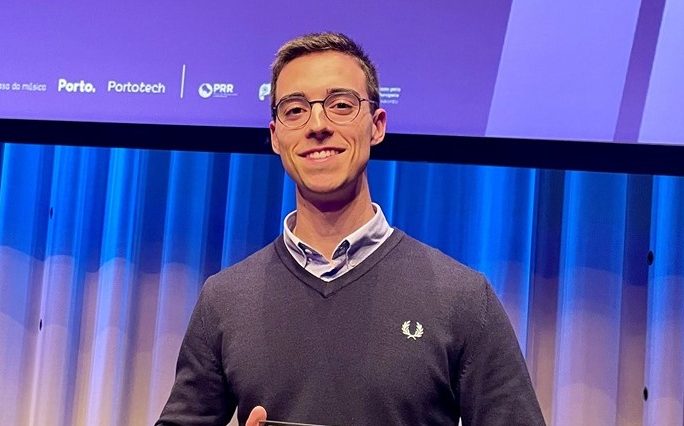
The research work led by André Duarte, a CMU Portugal Dual Ph.D. student in Language Technologies at Instituto Superior Técnico I INESC-ID, and at Carnegie Mellon University, has been highlighted in The Register, a leading British technology news and opinion website.

His research, which uncovers how AI models memorize copyrighted content, was described in the pre-print paper titled “RECAP: Reproducing Copyrighted Data from LLMs Training with an Agentic Pipeline” co-authored by his supervisors Arlindo L. Oliveira (Instituto Superior Técnico I INESC-ID) and Lei Li (CMU). 

The publication presents new methods for probing large language models (LLMs) and understanding what they retain from training data, specifically targeting copyrighted, proprietary and public-domain content. 

Duarte and his team at CMU and INESC-ID, argue that current safety alignment measures often act as a barrier to transparency, preventing researchers from identifying when a model has memorized specific data, whether it be public domain or copyrighted material. By focusing on how models “refuse” direct requests to quote text, Duarte emphasizes that his work aims to understand the scientific mechanics of memorization across all data types, using copyrighted examples primarily to highlight the real-world stakes of model transparency and developer accountability.

To address the limitations of existing probing techniques, Duarte co-developed RECAP, an agentic software tool designed to extract memorized content through an iterative feedback loop. Unlike static prompts, RECAP uses a secondary agent to guide the model toward more complete extractions without providing the target text itself

Read the full article on “The Register’s” to learn more.

About André Duarte

André Duarte enrolled in the Dual Ph.D. Program in Language Technologies in the academic year 2024/2025 having participated in the CMU Portugal’s “Visiting Students” program in 2023 as a Master student. His Ph.D. research, focused on security, safety, and trustworthiness in LLMs, is supervised by Arlindo Oliveira (Técnico/INESC ID) and Lei Li (Carnegie Mellon).

Other articles featuring André Duarte:
CMU scholar Ramayya Krishnan participates in the Responsible AI Forum 2025

Credits: Notícias ao Minuto

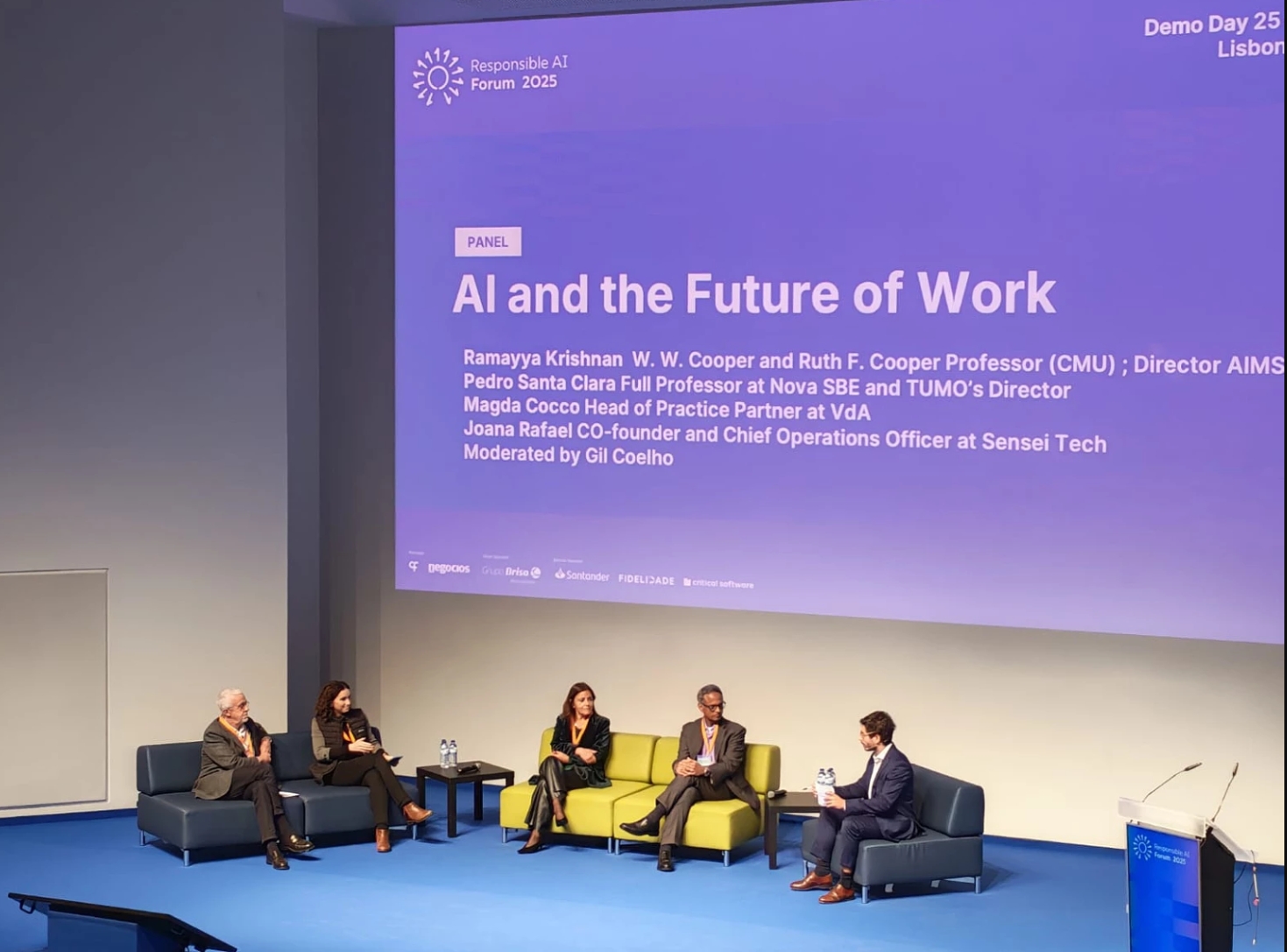
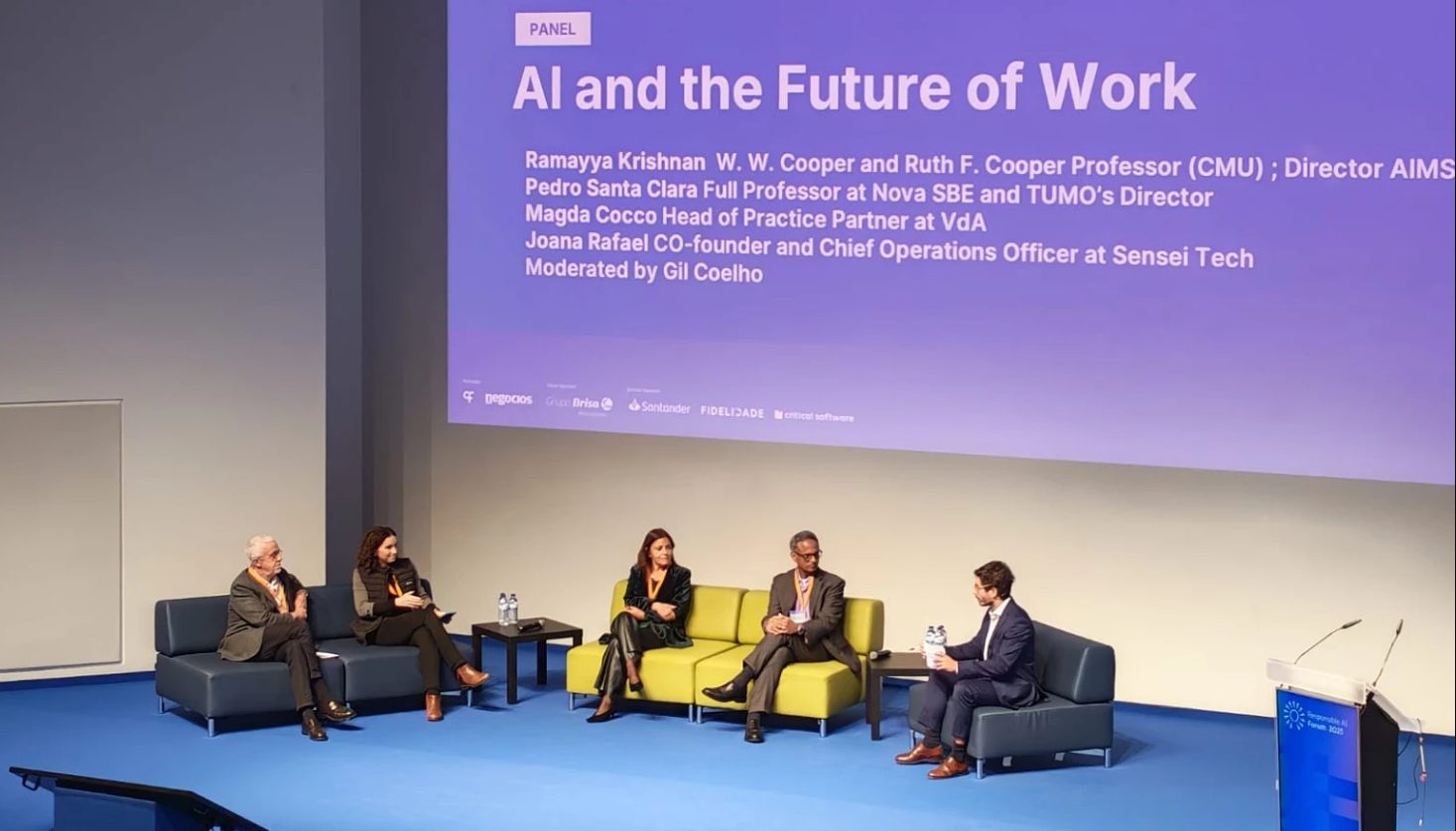
Ramayya Krishnan, William W. and Ruth F. Cooper Professor of Management Science and Information Systems, and Dean Emeritus of Carnegie Mellon University’s Heinz College, was in Lisbon, supported by the CMU Portugal Program, to participate in the Responsible AI Forum 2025. The event was held at Fundação Champalimaud, on November 25th, organized by the Center for Responsible AI

Ramayya Krishnan joined Pedro Santa Clara (NOVA SBE and TUMO Portugal), Magda Cocco (VdA), and Joana Rafael (Sensei Tech) on the panel “AI and the Future of Work” where they explored the impact of Artificial Intelligence on the workplace, the evolution of organizational models,  and the transformation of professional skills.

The discussion raised a central  question: “Who should take responsibility for mitigating the negative impacts of technology — governments, companies, or civil society?” 

The panel reached a clear consensus that companies cannot address  these challenges alone. Governments must play a leading role by developing  public policies, implementing reskilling programs, and establishing effective regulatory frameworks. At the same time, civil society and academia  have an essential part to play in promoting digital literacy and encouraging the ethical and responsible adoption of AI. 

In an interview with Lusa during his visit to Portugal, Ramayya Krishnan, a member of the US National AI Advisory Committee, highlighted that the country’s short-term opportunities lie in developing AI-related infrastructure, such as data centres and gigafactories. However, while these projects create many skilled jobs during the construction and engineering phases, they require far fewer workers once completed: “Once these data centres are built, the number of people needed to manage them is very small; it takes a lot of people to build them, but very few to manage them — it is necessary to have a strategy for what to do with the data centres and with the AI that is in these infrastructures,” he noted.

Krishnan argued that, over the next three to five years, Portugal should prioritise AI by focusing on translational capabilities (turning advanced AI tools into practical applications) to support their adoption by small and medium-sized enterprises and the public sector, as their successful AI adoption will largely determine national impact. At the same time, there will be growing pressure to invest in skills development and AI literacy, so that both organisations and individuals can effectively use these tools.

To conclude, he emphasised that “there will be a big increase in infrastructure construction.” What remains uncertain, he added, is how AI will ultimately be integrated and implemented. Whether it will increase human work or replace it, it will make a difference in terms of exactly which skills people will need. “Once AI is used, it does not mean that the amount of work has to remain fixed. You can increase the pie so that it may require more people to do the work,” he says.

Read more in the related media articles:
EN –  AMAN Alliance
PT –Tek Notícias, Notícias ao Minuto (1 and 2).

CMU Portugal members are among Forbes Portugal’s Most Powerful Women in Business

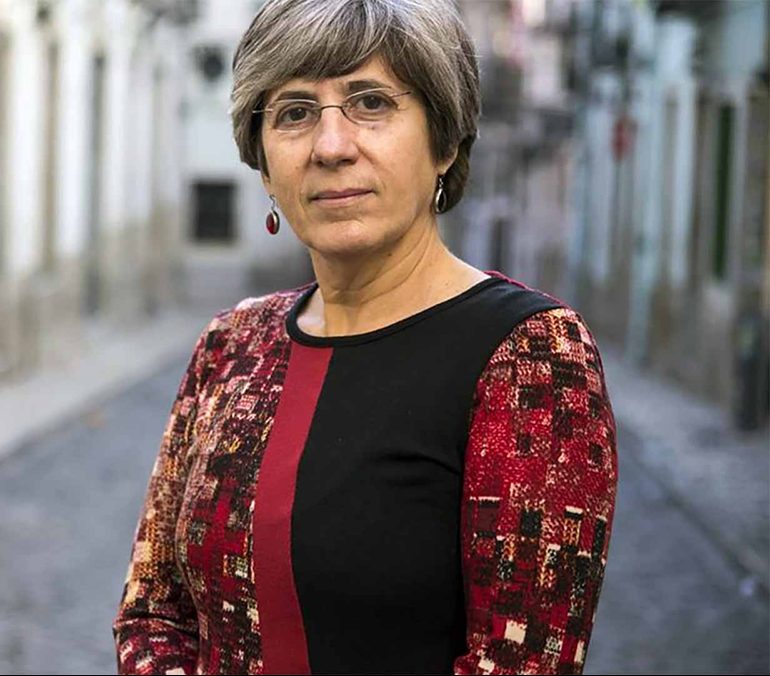
CMU Portugal members Irene Fonseca and Manuela Veloso, have once again been featured in Forbes Portugal’s list of the Most Powerful Women in Business, in recognition of their scientific contributions and achievements. 

Irene Fonseca joined Carnegie Mellon University in 1987 and is currently the Director of the Center for Nonlinear Analysis. She has significantly contributed to the Carnegie Mellon Portugal Program, serving as the coordinator of the dual degree doctoral program in Applied Mathematics and advising several doctoral students and postdocs. She also served as principal investigator at CMU under the math project Thin Structures, Homogenization and Multi Phase Problems.


Manuela Veloso is Head of J.P. Morgan Chase AI Research and Herbert A. Simon University Professor Emerita at Carnegie Mellon University, where she was previously Faculty in the Computer Science Department and Head of the Machine Learning Department.  Under the CMU Portugal Program she led multiple collaborative projects and has  been an advisor to CMU Portugal Ph.D. students in the areas of Computer Science, Robotics and Machine Learning.


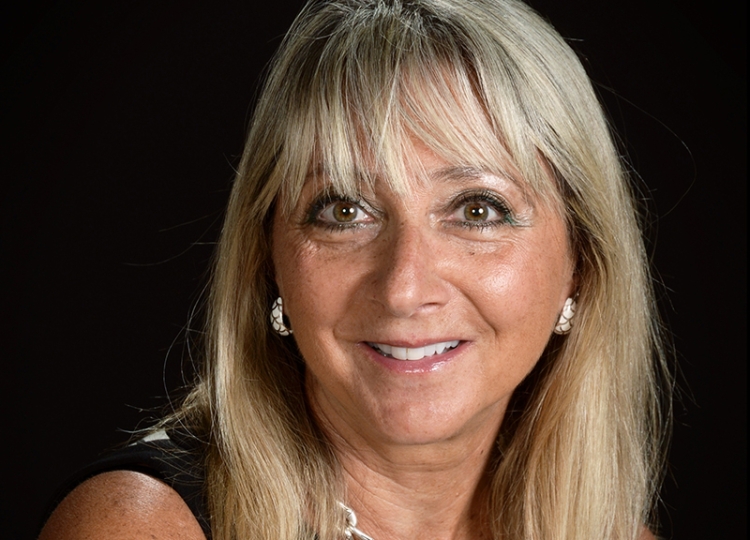
The list also recognizes Isabel Capeloa Gil, member of CMU Portugal’s Board of Directors. 

Credits: Forbes Portugal

Isabel Capeloa Gil  is the Rector of Universidade Católica Portuguesa (UCP) since 2016. In July of this year, she was elected president of the Strategic Alliance of Catholic Research Universities, after becoming the first woman to preside over the International Federation of Catholic Universities since 2018.  

With over 150 publications, she holds an honorary doctorate from Boston College (2019) and the Institut Catholique de Paris (2021). In 2022, she was appointed by Pope Francis as a consultant to the Dicastery for Education and Culture of the Holy See.


The CMU Portugal  2024 news article is available here.

In the media: “Will artificial intelligence revolutionize user innovation?” by Pedro Oliveira

In a recent opinion article in Jornal de Negócios, Pedro Oliveira, Dean of NOVA School of Business and Economics (Nova SBE), highlights  Patient Innovation (PI), an initiative launched in 2014,  under the scope of the Carnegie Mellon Portugal Program.

The Patient Innovation Platform is the outcome of the CMU Portugal Program Entrepreneurial Research Initiative (ERI) TEIPL, led by Pedro Oliveira, and Helena Canhão, Dean of Nova Medical School and currently Secretary of State of Science and Innovation. Today, the platform has over 2,500 solutions.

The Patient Innovation Bootcamp, organized by Nova SBE, Nova Medical School, and its partners, and funded by EIT Health, has already supported 64 projects from more than 20 European countries. 

Pedro Oliveira’s article focuses on one of its most notable  success stories.  Hans Jørgen Wiberg is a visually impaired man who developed the Be My Eyes app,  which connects blind users with sighted volunteers through video calls for visual assistance. In 2023, Be My Eyes introduced Virtual Volunteer, an AI-powered feature for immediate descriptions, and is partnering with Ray-Ban to integrate AI into smart glasses. Wiberg’s solution has already achieved global reach, with over 9.3 million users across 150 countries. 

“The case of Hans Jørgen Wiberg demonstrates how AI has the potential to amplify users’ capacity for innovation. By automating complex tasks, from image reading and clinical data analysis to digital device prototyping, AI frees up time and resources, allowing patients, caregivers, and entrepreneurs to focus on the more human aspect of innovation: creativity and empathy. AI can also suggest improvements, predict impact, and accelerate the cycle between experience and innovation, turning every user into a potential value creator in healthcare. User innovation is just one more area that AI will disrupt in unpredictable ways.” shares Pedro Oliveira. 

In this article, Pedro Oliveira also refers to the CMU Portugal PI Accelerator Program, launched in May 2024. The Program, developed in collaboration with Project Olympus, a CMU Incubator Program; the Swartz Center for Entrepreneurship; and AlphaLab Health,is considered the first and only acceleration program focused on solutions developed by patients who are caregivers for their own needs.

Read the opinion article here (in Portuguese).

In the media: Manuel Reis Carneiro featured in “90 segundos de ciência”

Manuel Reis Carneiro, CMU Portugal Dual Degree Ph.D. student in Electrical and Computer Engineering (ECE) at Faculty of Science and Technology (FCTUC) of Universidade de Coimbra and Carnegie Mellon’s ECE Department, was interviewed by the “90 segundos de ciência” (90 seconds of science) Podcast on Antena 1 radio. 

In this episode, Manuel shares  his Ph.D. research being carried out at the Institute of Systems and Robotics (ISR) of Universidade de Coimbra, where he developed an eco-friendly water-based conductive ink tailored for producing flexible electronic circuits for use in medical devices.  

This innovative technique is being tested in electronic patches for monitoring health data, (such as heartbeat and brain activity) as part of the “E-skins: Wearable Bio Stickers for Long-Term Electrophysiology” research project, built on the findings of the CMU Portugal’s Large Scale Collaborative Research project WoW

Manuel Reis Carneiro’s Ph.D. research is supervised by  Mahmoud Tavakoli, director of the “Soft and Printed Microelectronics Laboratory” (FCTUC I Universidade de Coimbra) in Portugal, and by Carmel Majidi, director of the Soft Machines Lab at CMU. 

In 2024, Mahmoud Tavakoli and Manuel Reis Carneiro, were awarded the J. Norberto Pires Innovation Prize, for their contributions to the field of wearable electronics.

Listen to the episode here (in Portuguese).

Other articles featuring Manuel Carneiro:

In the Media: “Prometheus-1” satellite will be launched in January 2025

The 5 cm PocketQube satellite PROMETHEUS-1 is set to be launched into space, aboard a Space X rocket, in January 2025. The launch has recently gained significant media attention featuring on TV coverages by Portuguese channels RTP and SIC Notícias

PROMETHEUS-1 was developed at Universidade do Minho in collaboration with Instituto Superior Técnico  and Carnegie Mellon University, under the CMU Portugal’s Exploratory Research Project “Prometheus”. The 2021 project has the main goal of providing easy access to space for the research and education community.  The project aims to test and validate the Pycubed-mini platform designed at CMU’s Rexlab by Zachary Manchester’s team at Carnegie Mellon. 

Alexandre Ferreira da Silva, PI of the project, is using this platform in a classroom as an education tool for Aerospace Engineering students at Universidade do Minho, building replicas of the Prometheus-1 satellite to showcase not only its components and ecosystem, but also what is required to put a satellite into orbit (licensing, certification, and more). 

“We plan to build a constellation of satellites to monitor the Atlantic, and that’s why it is so important to educate students so they can contribute in their future careers to this ever rapidly growing sector, and Portugal has a lot of potential in its development”, shares Alexandre Silva to SIC Notícias.

In the Media:  RTP; SIC Notícias, Eco Sapo, Guimarães Agora, Free Guimarães.

Other articles featuring PROMETHEUS-1:

In the media: Inês Lynce speaks on gender balance following the “World Record for Largest Computer Programming Lesson”

Inês Lynce, CMU Portugal National co-director, was interviewed by Líder Magazine, following the event held on October 12th that earned Instituto Superior Técnico the Guiness’ “World Record for Largest Computer Programming Lesson” with a total of 1668 participants.  

The event included a programming lesson taught by Inês Lynce and Arlindo Oliveira, faculty members  at Instituto Superior Técnico, and alumni Ricardo Girão Serrão. 

Inês Lynce, President of INESC-ID, speaks on the growing interest of girls in technology, who made up 12% of the event’s participants. She highlights how this trend challenges the stereotype that “computers are male.” and emphasizes the responsibility of academic institutions to create an inclusive environment that supports and empowers girls.

Read the interview here (in Portuguese).

In the media: CMU Portugal Large Scale Collaborative Project “Building Hope”

The CMU Portugal Large Scale Collaborative Project “Building Hope” was highlighted in the Portuguese media, showcasing the research work developed under the project. 

Launched in 2020, Building Hope aimed  at developing and validating  a tool for Holistic Optimization of Prosumed Energy (HOPE) of buildings. 

Its primary goal was to leverage data collection and sensing technology, developing AI-driven methodologies to accelerate the transition to a cleaner energy future.

The project  was developed by dstsolar in collaboration with Innovationpoint, Watt-IS, Instituto Superior Técnico, University of Coimbra, and Carnegie Mellon University, from 2020 to 2023. It  was one of the 12 flagship projects selected under the 2018 competitive Call launched by COMPETE 2020, ANI – Agência Nacional de Innovation, and Fundação para a Ciência e Tecnologia, under the GO PORTUGAL initiative that was concluded in June 2023.

“With its holistic approach and advanced technology, Building Hope makes it possible to manage energy resources more intelligently and sustainably, demonstrating that technological innovation is crucial to face global environmental challenges”, explains Raúl Cunha, CEO of dstsolar. 

Read the articles:   Diário do Minho I ConstruirI E24Sapo (in Portuguese).

Other CMU Portugal articles:

In the media: Zita Marinho, CMU Portugal Alumna, featured in “45 Graus” podcast

In the #174 episode of the “45 Graus” Podcast, Zita Marinho spoke with the host José Maria Pimentel about ChatGPT algorithms and how Large Language Models work.

Currently a Research Scientist at Google Deep Mind, Zita Marinho earned her  CMU Portugal dual degree Ph.D. in Computer Science/Robotics in 2018 from the Robotics Institute at  Carnegie Mellon University and from the Institute for Robotics and Systems (ISR) at Instituto Superior Técnico. During her Ph.D. she was co-advised by André Martins and João Paulo Costeira (Instituto Superior Técnico I  ISR), and Geoffrey Gordon and Siddhartha Srinivasa at Carnegie Mellon. 

Her research focuses on machine learning and optimization with applications on Robotics and Natural Language Processing. 

Listen to the episode here (in Portuguese).


CMU Portugal articles featuring Zita Marinho