
On July 9th, the CMU Portugal Program participated once again in the Encontro Ciência Summit, joining forces with the MIT Portugal and UT Austin Portugal programs for the session titled “FCT’s Partnerships with U.S. Universities: Shaping the Future Through Impactful Science.”
Hosted this year at the NOVA SBE campus in Carcavelos between July 9 and 11, the FCT’s Partnerships session welcomed representatives from the Portuguese Government in science and education policy, including the Minister of Education, Science and Innovation, Fernando Alexandre, and the Secretary of State for Science, Helena Canhão, who delivered the closing remarks and announced José Manuel Mendonça as the chairperson that will lead the mission structure for the governance of the three partnerships.
João Magalhães, National Co-Director of CMU Portugal, welcomed speakers and participants and introduced the first panel discussion, ‘A Successful Journey from the Research Bench to the Market’. The debate reflected on nearly two decades of impactful partnerships with American institutions — collaborations that have bridged the gap between academia and entrepreneurship, contributed to societal progress, and are now shaping the way for a new phase leading up to 2030.
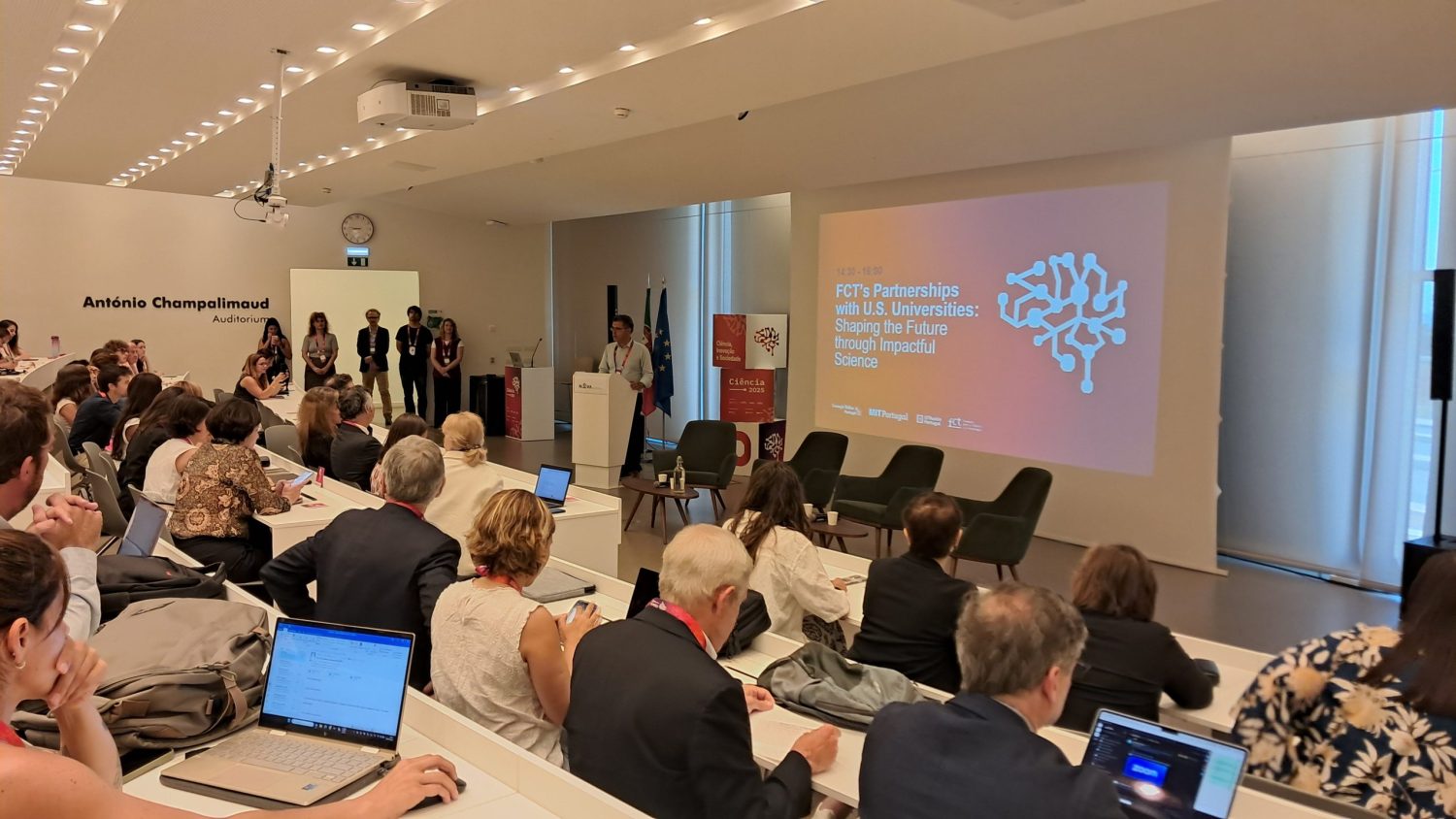
The session was moderated by John Hansman, Co-Director of the MIT Portugal Program, and featured representatives from the three Partnerships.
Representing CMU Portugal, Paulo Dimas, VP of Product Innovation at Unbabel and CEO of the Center for Responsible AI, shared his perspective on the program’s impact alongside Hélder Silva, Head of Aerospace Flight Software at Thales Edisoft Portugal, representing MIT Portugal, and John G. Ekerdt, Professor Emeritus at the Cockrell School of Engineering, UT Austin, representing UT Austin Portugal. Each had the opportunity to share insights on the partnerships’ role in supporting the development of scientific and entrepreneurial projects.
Hélder Silva presented the “AEROS Constellation” project, developed within the scope of the MIT Portugal Program, while John G. Ekerdt highlighted UT Austin’s contributions to scientific advancement through exploratory and large-scale transatlantic collaborations such as uPGRADE and BOB, emphasizing their ongoing commitment to research, training, and mentorship.
In his presentation, Paulo Dimas highlighted CMU Portugal’s role in the founding of Unbabel in 2013 by Vasco Pedro — a graduate of CMU’s Language Technologies Institute and former CMU Portugal post-doctoral fellow. Dimas also recognized the contribution of André Martins, a CMU Portugal alumnus in Language Technologies, who joined Unbabel in 2015 as Head of Research and recently transitioned to VP of AI Research Chief Science Officer, having led Unbabel Research almost since its launch.
Between 2020 and 2022, Unbabel led the CMU Portugal large-scale collaborative project MAIA focused on developing a multilingual conversational platform supported by machine translation and dialogue systems, where AI agents assist human agents. This project inspired the launch of the Center for Responsible AI in 2023, gathering start-ups, research centers, a law firm, and industry leaders to develop AI products leveraged by responsible technologies, principles and regulation. Halo is one of those products using AI “for good”, rehabilitating the communication capacity of patients with neurodegenerative diseases, such as Amyotrophic Lateral Sclerosis.
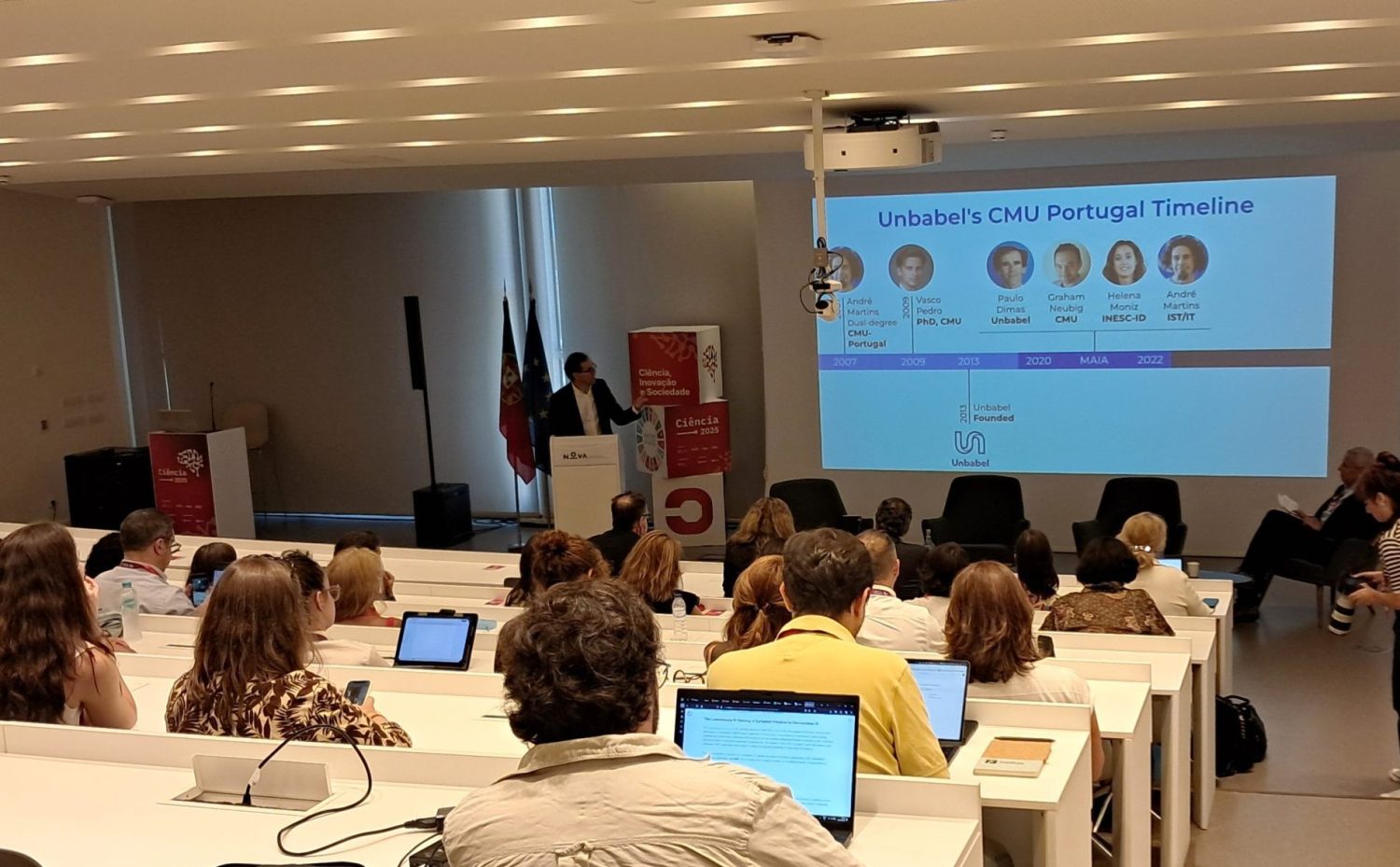
Following the presentations, the session proceeded with a roundtable discussion focused on the future of the partnerships and their scientific, entrepreneurial, and societal impact.
During the discussion, Paulo Dimas emphasized the importance of educational initiatives such as the CMU Portugal Dual Degree Ph.D. Programs, particularly in their role in developing human capital and retaining talent in Portugal:
“Nowadays, it’s difficult to retain talent in Portugal. Programs like the Dual Degrees and the Large Scale Collaborative Projects are truly effective. In these cases, the level of commitment from the participating institutions is completely different, much higher than in initiatives that don’t directly involve partners from both countries.”
He also highlighted the contributions of CMU Portugal Ph.D. students like Mariana Nunes and Patrick Fernandes to the research carried out at Unbabel, and offered a key piece of advice: “It is crucial to keep investing not only in projects, but also in products — that’s how we create real value.”

In the second part of the session, Fernando Alexandre, Minister of Education, Science, and Innovation, presented an overview of the next phase of partnerships planned for 2025–2030, including the public announcement of the nomination of José Manuel Mendonça as chairperson to lead the mission structure for the new joint governance of the international partnerships.
According to the Minister, the goal of this new structure is to establish a broader, shared vision across the three partnerships, while expanding their overall ambition. Launched nearly two decades ago, the initiative is now entering a new phase focused on restructuring and reassessing how these collaborations can strengthen Portugal’s position within Europe.
“We need to be more relevant in Europe and rise to the challenges the EU is currently facing. I believe these partnerships will help us make a difference and improve the well-being of Portuguese society ” stated the Minister, adding that the Government is committed to making these partnerships bigger and more ambitious.


Credit: UT Austin Portugal
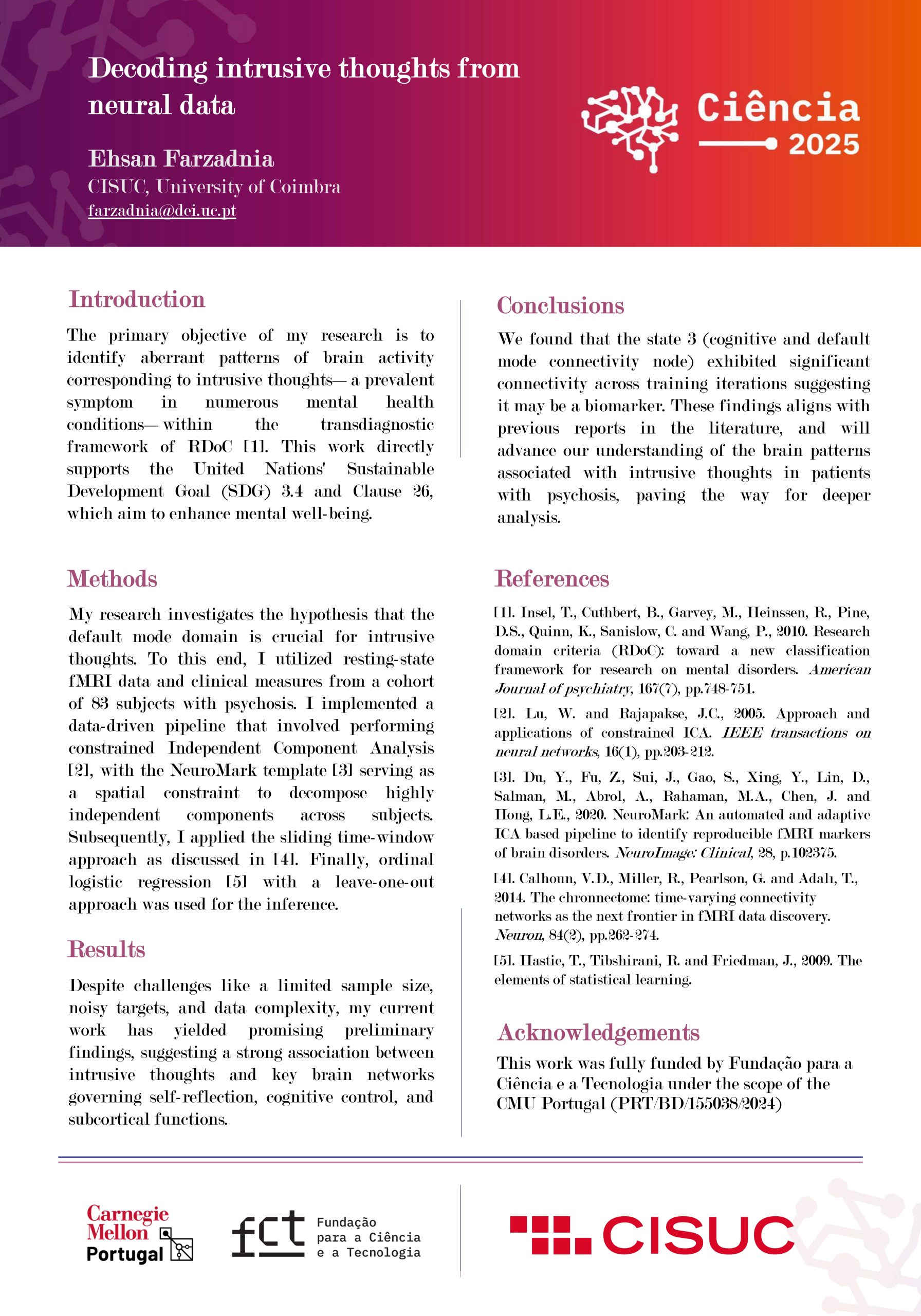
Throughout the Encontro Ciência 2025 Summit, eight CMU Portugal Ph.D. students were also featured through e-posters showcased in the conference’s virtual gallery.
The participating students were: Beatrice Maggipinto (Técnico/CMU), Brissa Acevedo (FEUP/CMU), Catarina Fidalgo (Técnico/CMU), Duarte Sousa (Técnico), Ehsan Farzadnia (Universidade de Coimbra), Miguel Ferreira (Técnico/CMU), Oraib Almegdadi (NOVA FCT), and Reyhaneh Mohsenzadeh (FEUP/CMU).




For a closer look at the event, check the interviews by Encontro Ciência with João Magalhães and Paulo Dimas (in Portuguese).