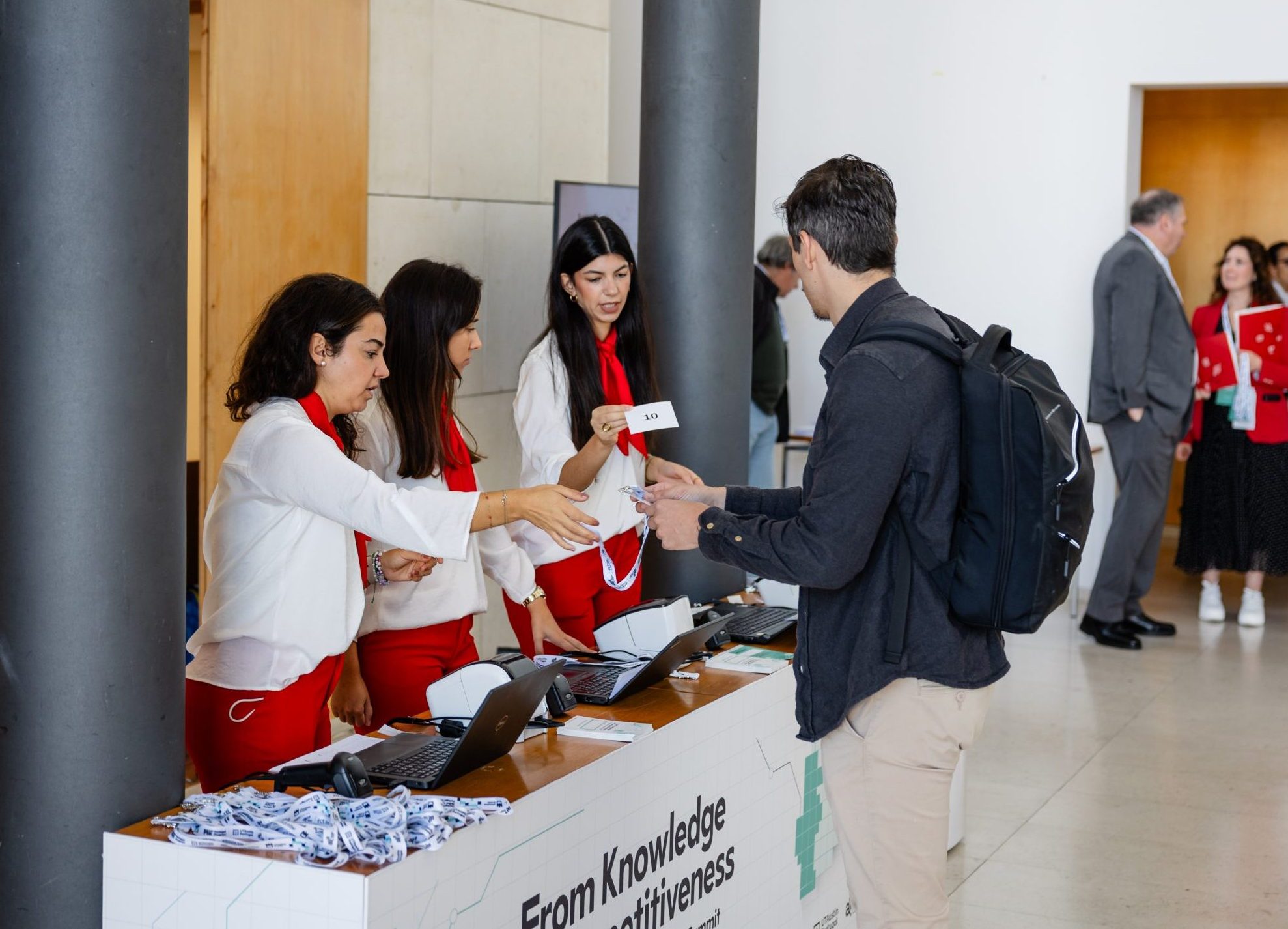
On October 29 and 30th, the University of Aveiro, hosted two major CMU Portugal events: the CMU Portugal Conference: “From Ideas to Impact: 20 Years of CMU-Portugal Partnership” & the Portugal-US Partnerships Summit ”From Knowledge to Competitiveness”. Together, these gatherings represented a major milestone, celebrating 20 years of the CMU Portugal Program and its transatlantic impact.
Let’s take a look back at two days of discussions, innovation, collaboration, and celebration.
29th October – CMU Portugal 2026 Summit: “From Ideas to Impact: 20 Years of CMU-Portugal Partnership”
On October 29, the CMU Portugal Program marked the 20th anniversary of the Portugal-US partnership with the Summit “From Ideas to Impact: 20 Years of CMU Portugal Partnership.“ The event brought together members of the CMU Portugal community, including faculty, students, researchers, alumni, industry leaders, and institutional partners, to reflect on two decades of collaboration between Portugal and Carnegie Mellon University (CMU). Throughout the day, the Summit explored how the CMU Portugal Program has fostered international collaboration through cutting-edge research projects, advanced ICT education programs, entrepreneurship initiatives, and mobility opportunities connecting Portuguese universities, companies, and CMU.
Opening session
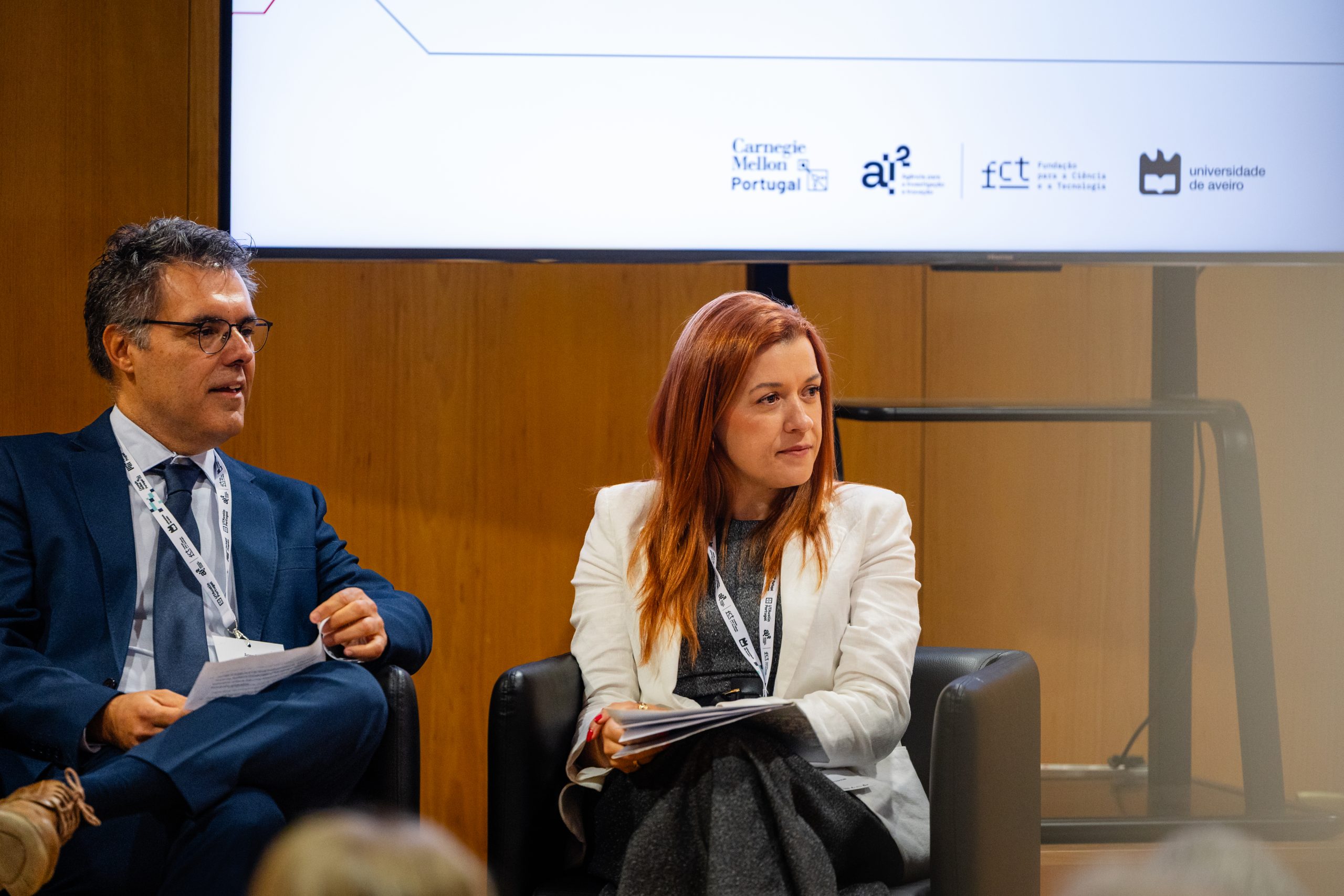
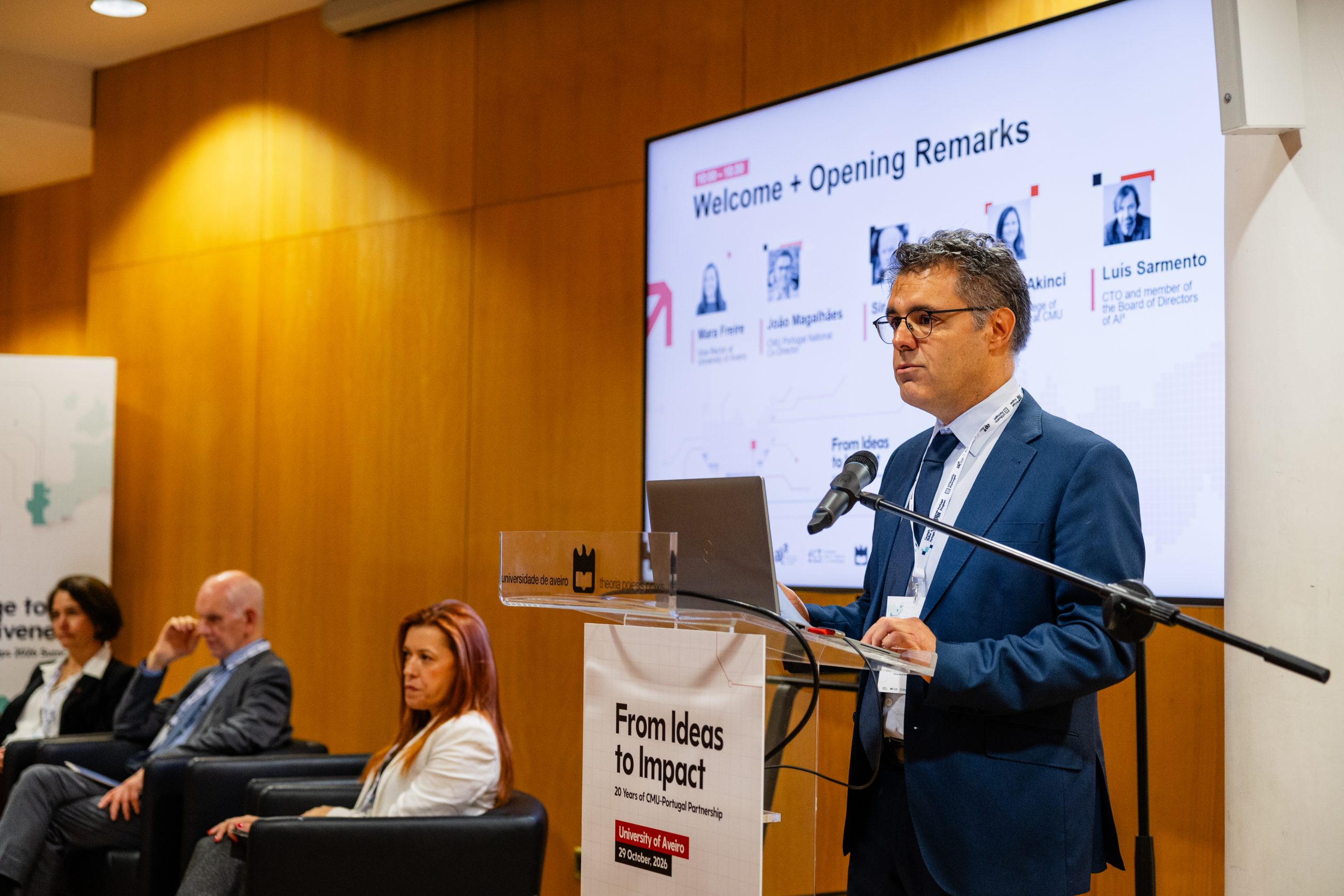
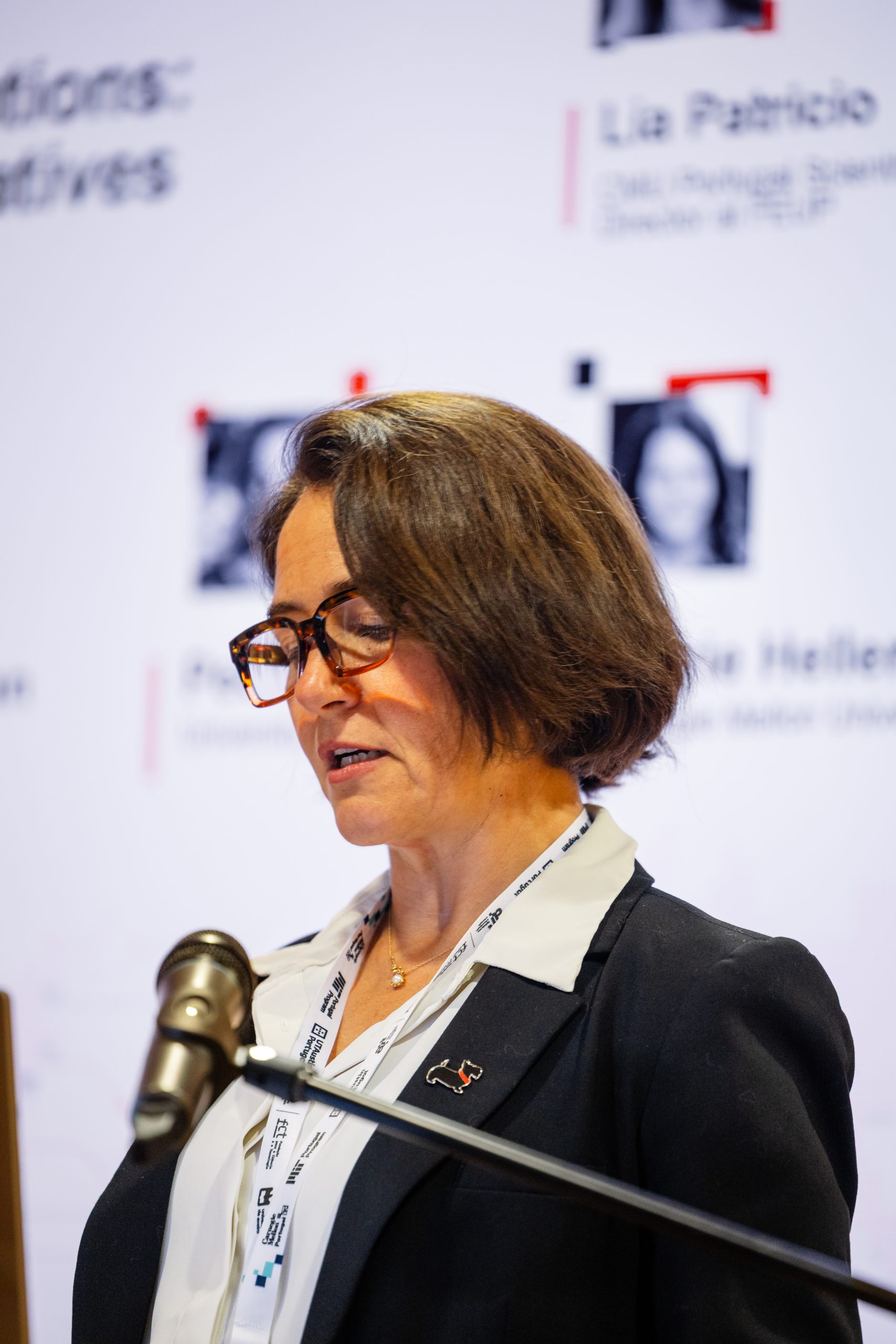
The Summit opened with welcoming remarks from institutional leaders representing the key organizations behind the CMU Portugal partnership. Mara Freire, Vice-Rector of the University of Aveiro, welcomed participants to the host institution, while João Magalhães, CMU Portugal National Co-Director, reflected on the Program’s achievements and mission to strengthen collaboration between Portugal and CMU.
“Our mission is to place Portugal at the forefront of research and technological development in Information and Communication Technologies (ICT). In the last 20 years we achieved that by cultivating a synergistic innovation ecosystem that tightly couples cutting-edge research, world-class graduate education, and highly innovative companies within the data-driven economy. “
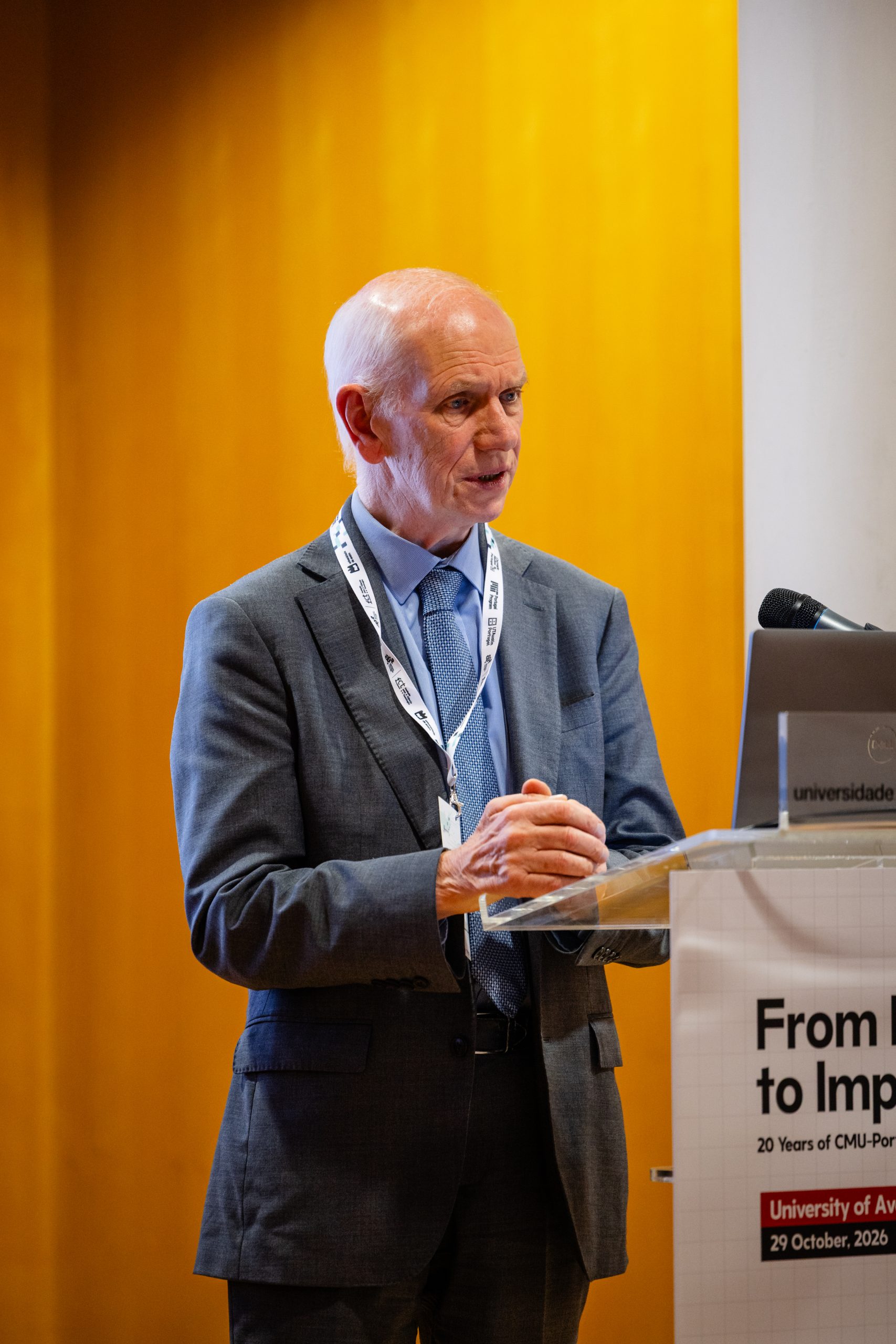
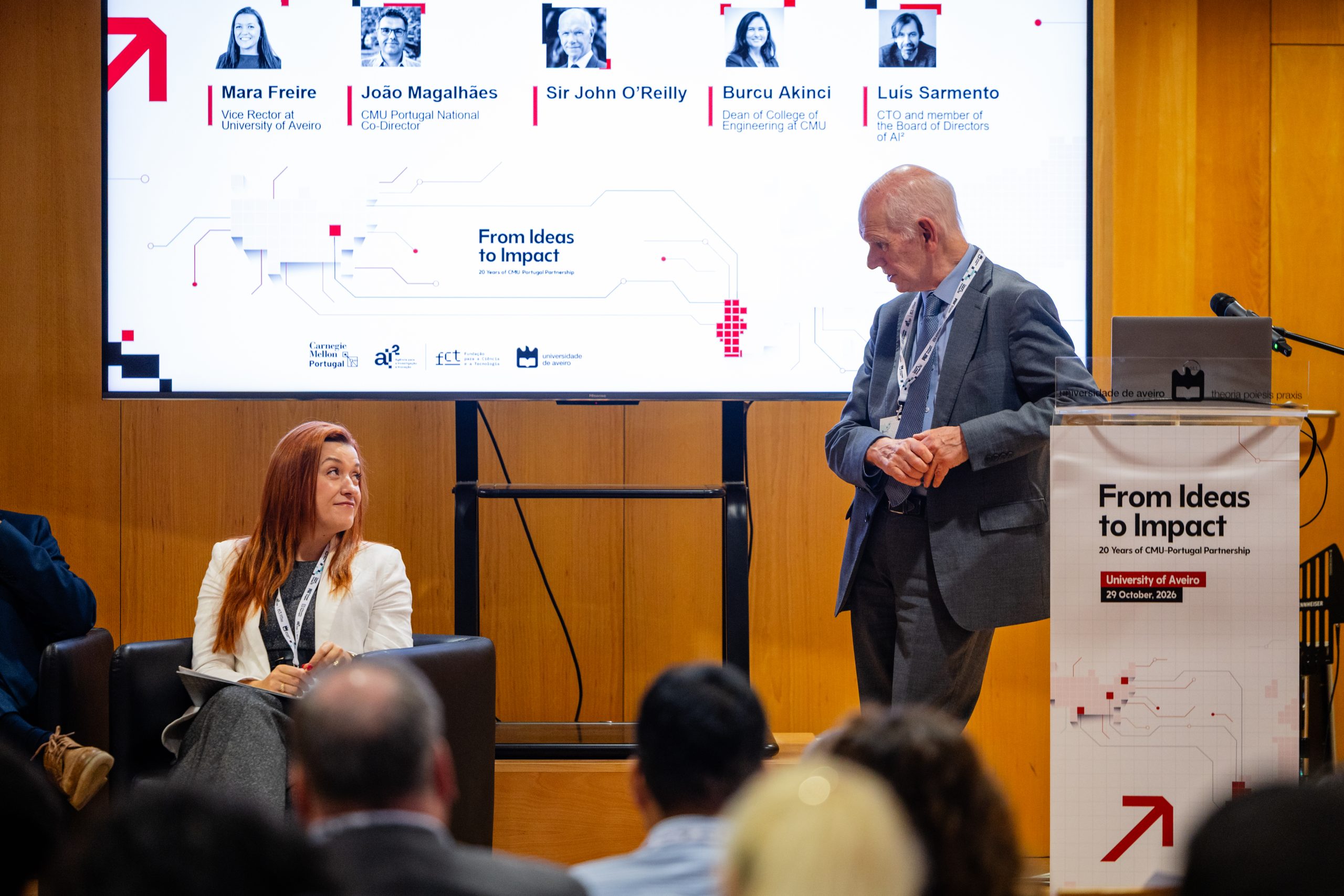
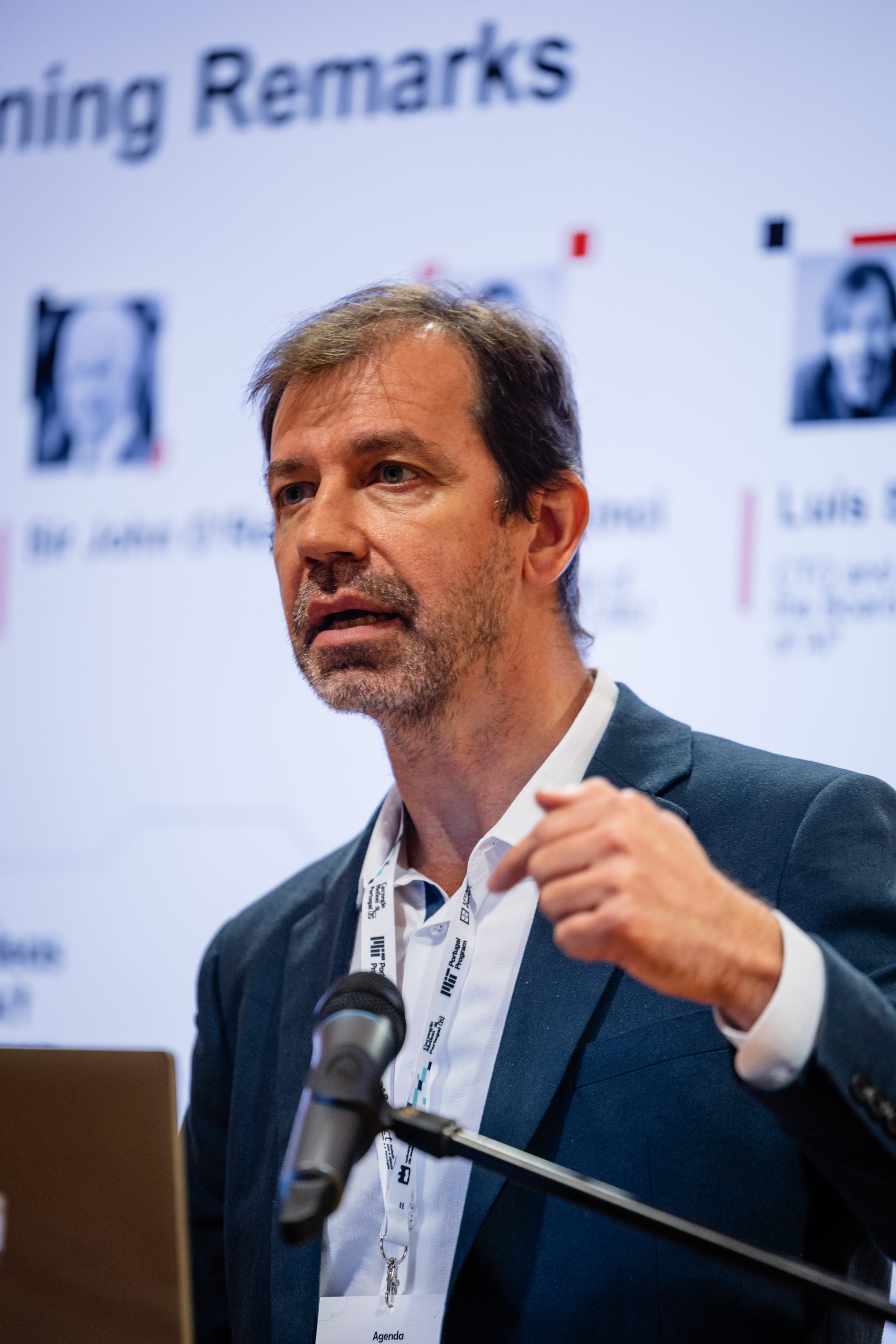
The opening session featured contributions from Sir John O’Reilly, External Review Committee member; Burcu Akinci, Dean of the College of Engineering at CMU, and Luís Sarmento, CTO and Board Member of AI²– Agência para a Investigação e Inovação.
In his address, Sir John O’Reilly emphasized the importance of ICT, highlighting that while science creates knowledge, innovation transforms it into impact through strong research foundations and academia-industry collaboration. Burcu Akinci reflected on the partnership’s achievements in research, education, entrepreneurship, and innovation, emphasizing its role in connecting academia and industry and fostering talent development.
Luís Sarmento highlighted Portugal’s commitment to the CMU Portugal partnership 20 years ago, emphasizing that its success reflects the strength of the institutions involved and a shared culture of ambition. He addressed the transformative impact of AI on science, technology, and innovation, emphasizing the need to strengthen research institutions and build stronger bridges between academia and industry. He argued that the true value of partnerships goes beyond numbers and results; it relies on the capabilities they develop and the long-term opportunities they create.
As the CMU Portugal Program celebrates its 20th anniversary, a special recognition must be given to José M. F. Moura, whose leadership and commitment have been instrumental in shaping the partnership since its creation. Throughout the day, panelists and guests acknowledged his commitment, vision, and leadership over the past two decades.
Session I “Fostering Research Collaborations: A Look into CMU Portugal Initiatives”
The session highlighted the scientific collaboration established between Portuguese institutions and CMU, who has supported over 100 collaborative projects over the past two decades. Focusing on the ongoing Exploratory Research Projects (ERPs) and initiatives funded through Portugal’s Recovery and Resilience Plan (PRR), the panel showcased the next generation of research addressing pressing challenges in diverse areas such as healthcare, artificial intelligence, neuroscience, autonomous systems, and climate change.
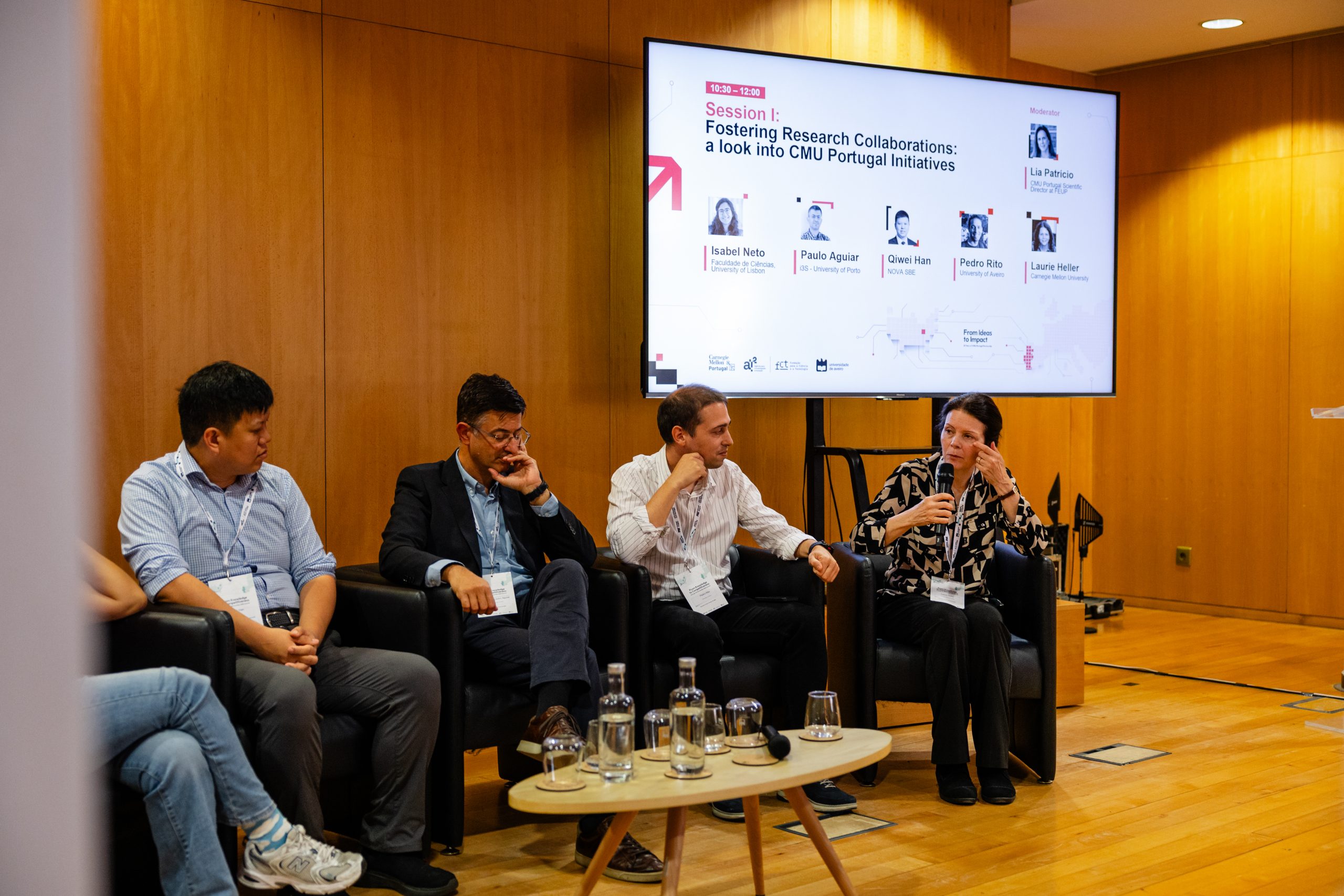
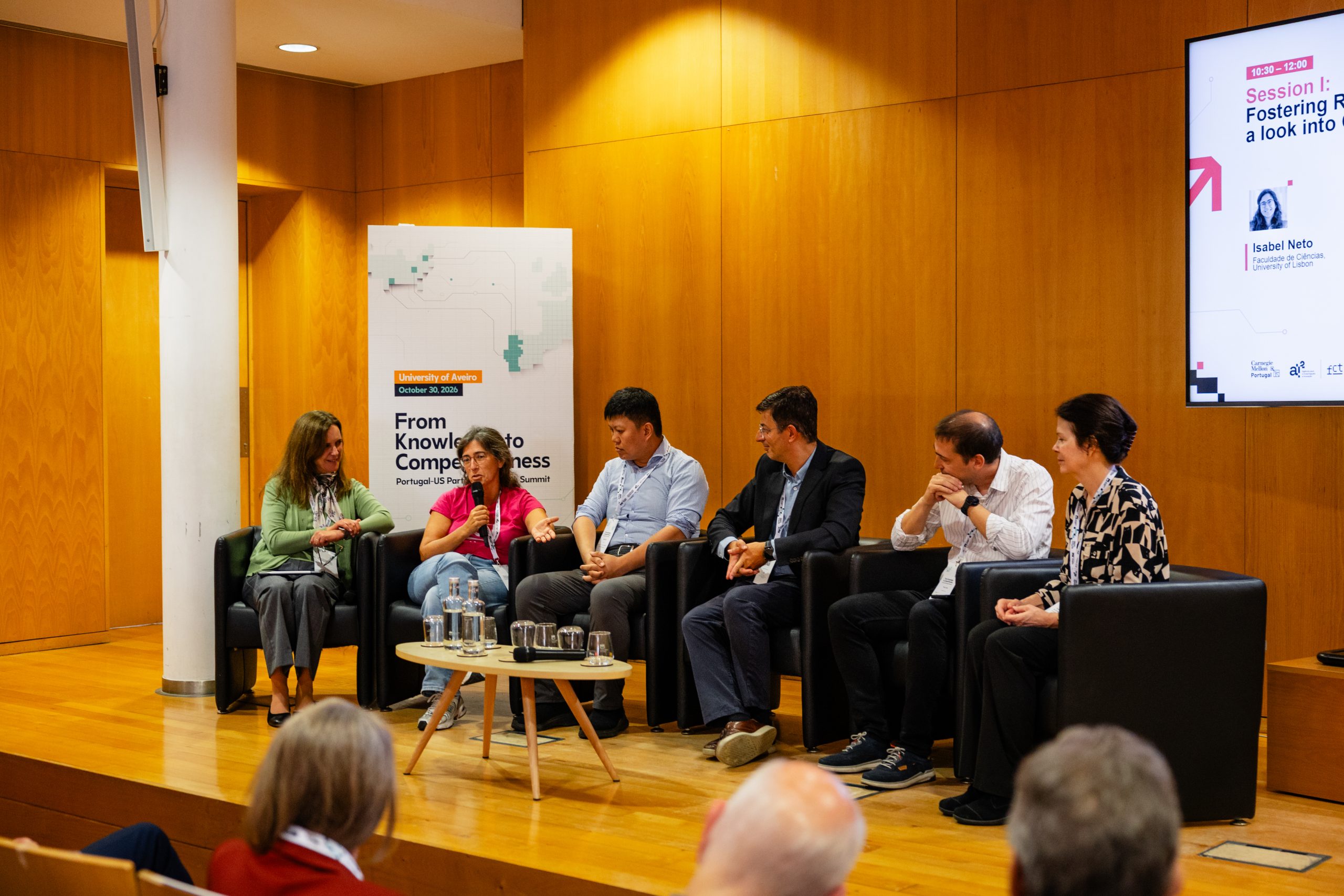
Moderated by Lia Patrício, CMU Portugal Scientific Director and Professor at FEUP, the session featured faculty who showcased their research work:
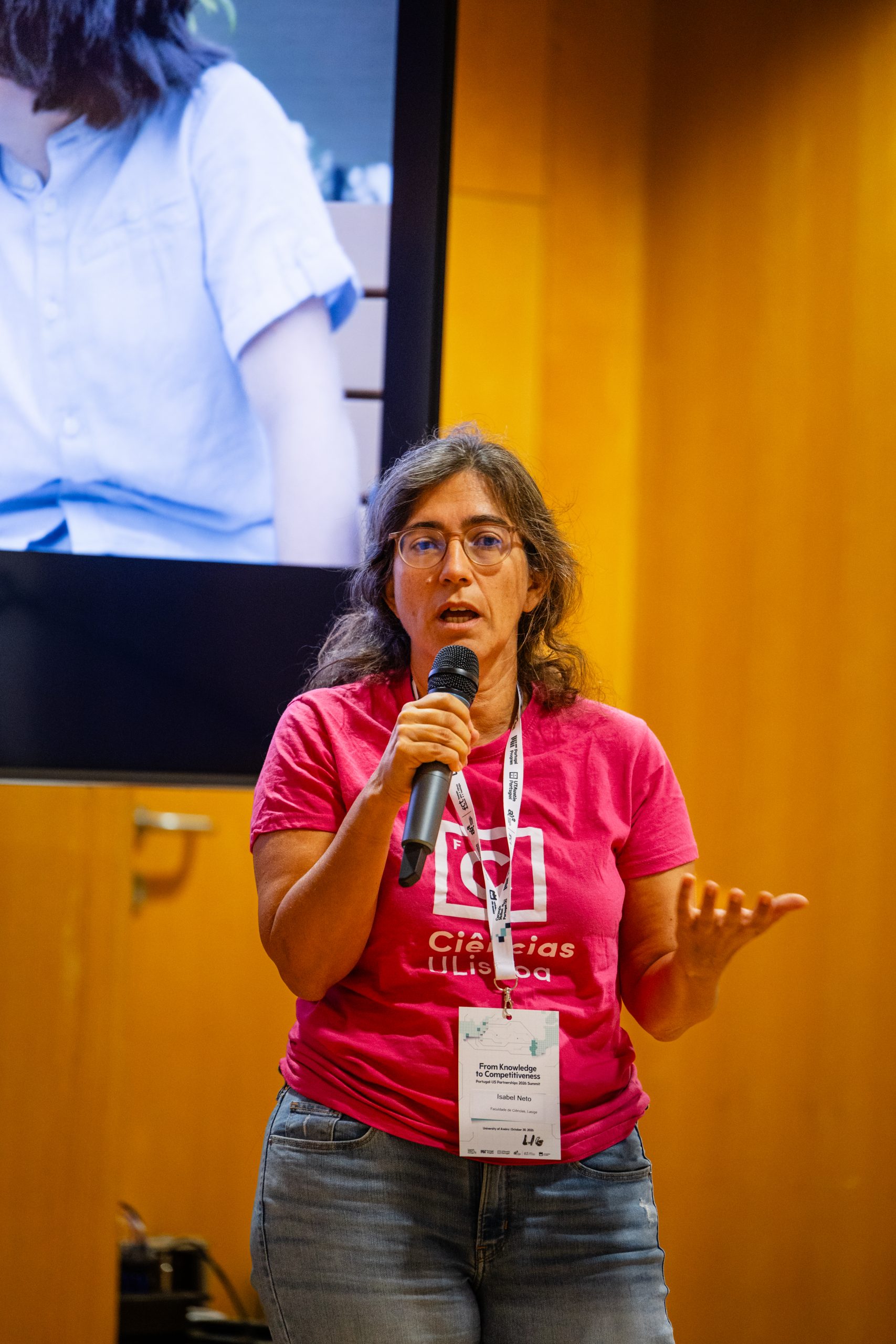
Isabel Neto, Assistant Professor at Faculdade de Ciências of University of Lisbon and researcher at LASIGE, showcased the ERP project “ChildrEngage: Measuring Real-Time Children Group Engagement”, developed in collaboration with the Robotics Institute at CMU, with Professor Reid Simmons as PI. The project addresses the limitations of existing vision models by developing an engagement model that focuses on the diverse ways neurodiverse, deaf, hard of hearing, and visually impaired children express and interpret engagement through non-verbal cues. The team plans on building a dataset of children in mixed-ability contexts, developed a child-sensitive group engagement model for real-time human-robot interaction, and test-bed the model.
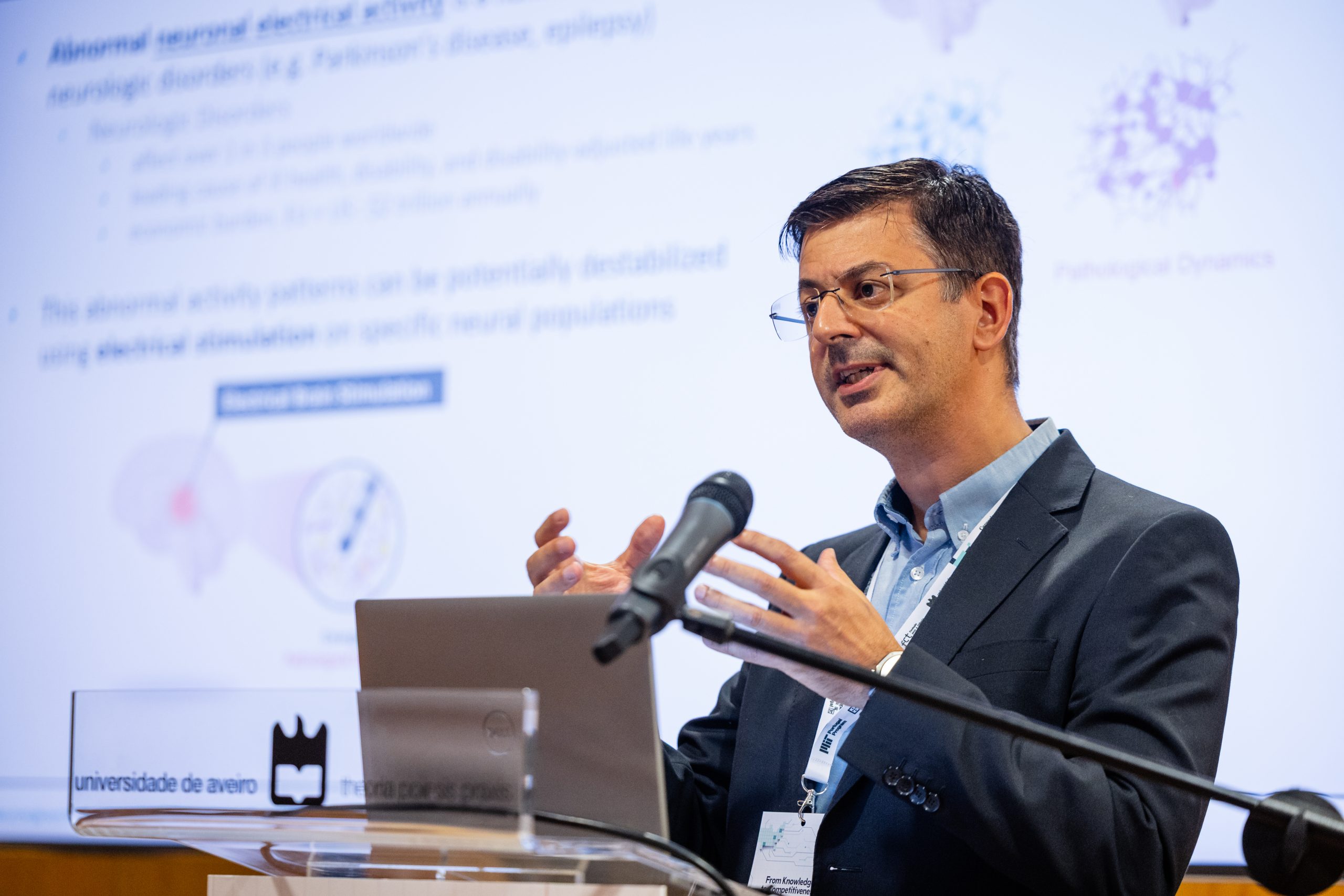
Paulo de Castro Aguiar, Principal Investigator at i3S – Instituto de Investigação e Inovação em Saúde, University of Porto, presented “NeuroSAFE: Safe Reinforcement Learning for Closed-Loop Neural Control Using Brain-on-Chip Platforms”, developed in collaboration with the Electrical and Computer Engineering Department at CMU, with Yorie Nakahira serving as PI. Among the team members contributing to the research is CMU Portugal’s Dual Degree Ph.D. student Xiyu Deng. The research addresses abnormal neuronal electrical activity in major neurological disorders like Parkinson’s disease and epilepsy by implementing real-time closed-loop control algorithms with microelectrode arrays and human iPSC-derived neurons. The collaboration with CMU allows to combine theoretical foundations with neuroengineering applications, working alongside international research partners and lab members.
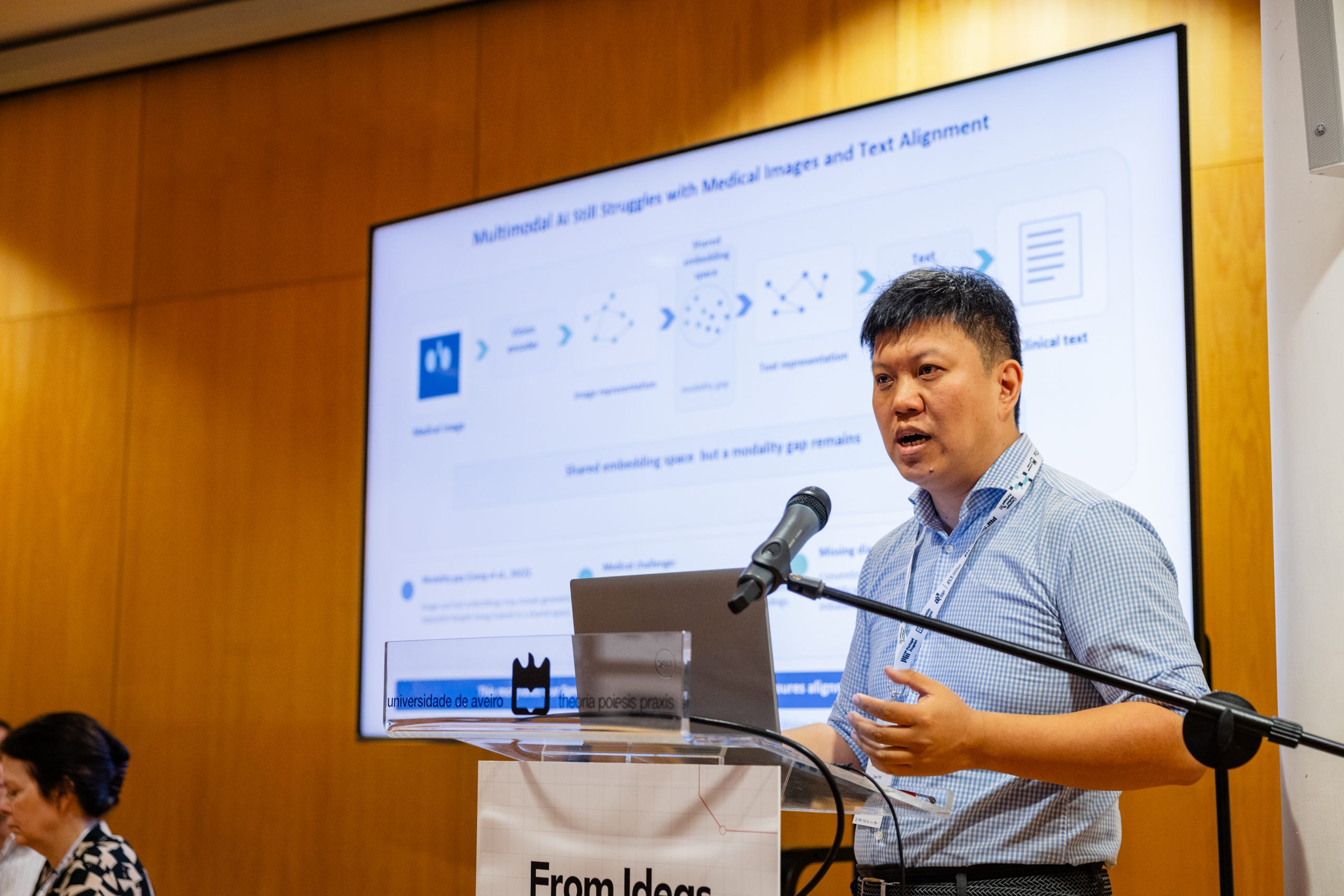
Qiwei Han, Assistant Professor at NOVA SBE and CMU Portugal Dual Degree alum, presenting “MED-CONGRUENT: Enhancing Multimodal Alignment and Physician Perception in Generative Medical Reports”, developed in collaboration the Computational Biology Department at CMU, with Jian Ma serving as PI. The exploratory project bridges model geometry and clinical application through a coherent four-step pipeline that curates medical image-report pairs with controlled omissions, diagnoses representation imbalance using spectral tools, calibrates a Med Congruence Score with monotonic score mapping, and validates the output against expert judgments. To achieve this, there is a planned physician study at NOVA SBE’s AI X Lab in collaboration with CUF, where physicians will review medical images alongside reference and systematically altered AI-generated reports.
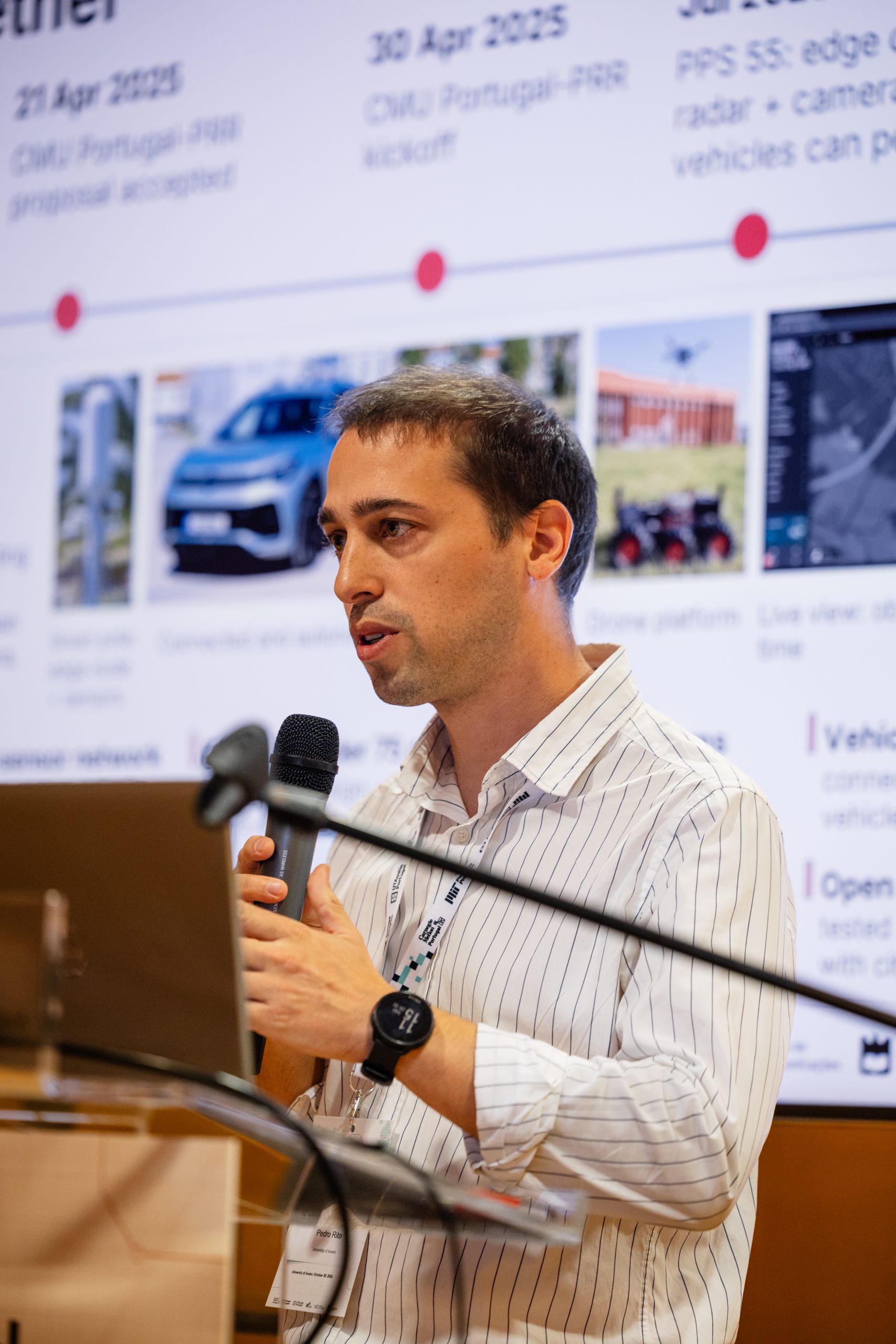
Pedro Rito, Assistant Professor at the University of Aveiro, presented “Toward Cost-Effective Provable Safety in Autonomous Driving”, a joint project between the University of Aveiro and the Robotics Institute at CMU, led by Susana Sargento and John M. Dolan. The work collaborates with the PRR-funded initiative “Route 25: Agenda for Autonomous, Intelligent, Interoperable and Inclusive Mobility”. This project also counted on the contribution of André Clérigo, Ph.D. student at University of Aveiro and former participant of the Mobility “Visiting Student” initiative. The presentation addressed safety in autonomous driving through sensors installed in infrastructure (such as 4D radars and cameras on poles) that share data in real time with vehicles via V2X, complementing local perception and optimizing bandwidth through intelligent pedestrian grouping, based on the Aveiro Tech City Living Lab.
Laurie Heller, Professor of Psychology at CMU, showcased “A Virtual Reality Game To Transform Attitudes About Climate Change”, as part of the PRR-funded initiative “eGames Lab”. The project is led by Laurie Heller at CMU and Ana Pires in Portugal (ITI LARSyS & University of Madeira), in collaboration with WOWSYSTEMS. The research team also includes CMU Portugal’s Affiliated Ph.D. student Duarte L. Sousa, as a close collaborator, and Dual Degree Ph.D. student Beatrice Maggipinto, who contributed to the development of the virtual reality (VR) experience.
This project involves the Animal POV project, an 8-minute VR experience developed for a dolphin and an eagle to stimulate interest in climate change. By combining the entertainment of animal embodiment with serious environmental challenges, the project explores how virtual reality games can spark curiosity about animal well-being and inspire real-world actions, with a specific focus on cross-cultural testing and a Portuguese website designed to measure post-game engagement.
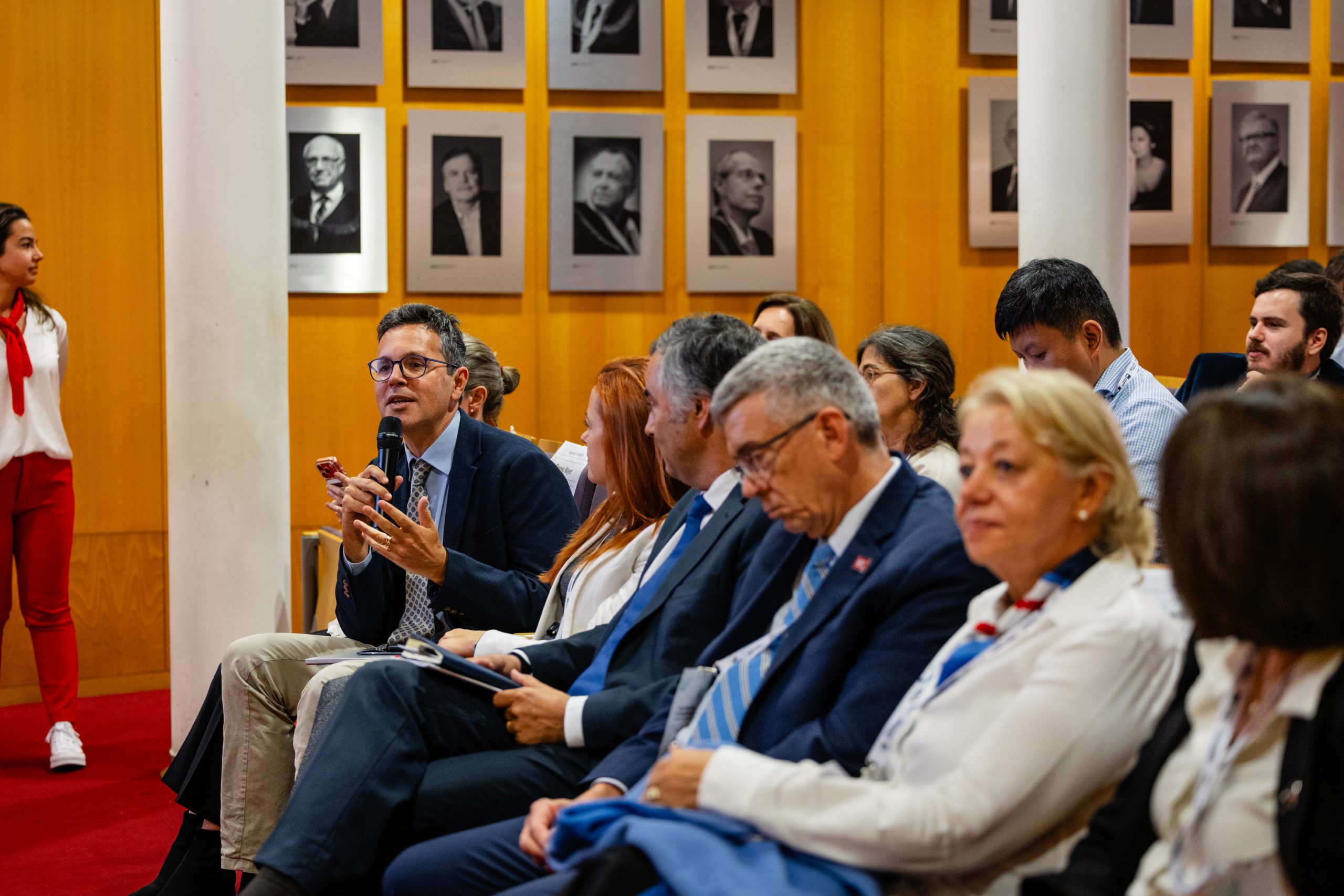
After presenting the projects’ goals and early results, the discussion explored how collaborations between Portuguese institutions and CMU were established and evolved. The guest speakers reflected on their experiences – from a former Dual Degree PhD student now becoming the PI to a collaboration years in the making, with a chance encounter at a conference leading to a mobility period at CMU and finally a successful proposal. The speakers also remarked on the potential of these exploratory initiatives to serve as foundations for future research, larger-scale collaborations, and synergies with other CMU Portugal activities, highlighting the Program’s role in fostering interdisciplinary research and strengthening transatlantic partnerships.
Networking lunch & Poster session
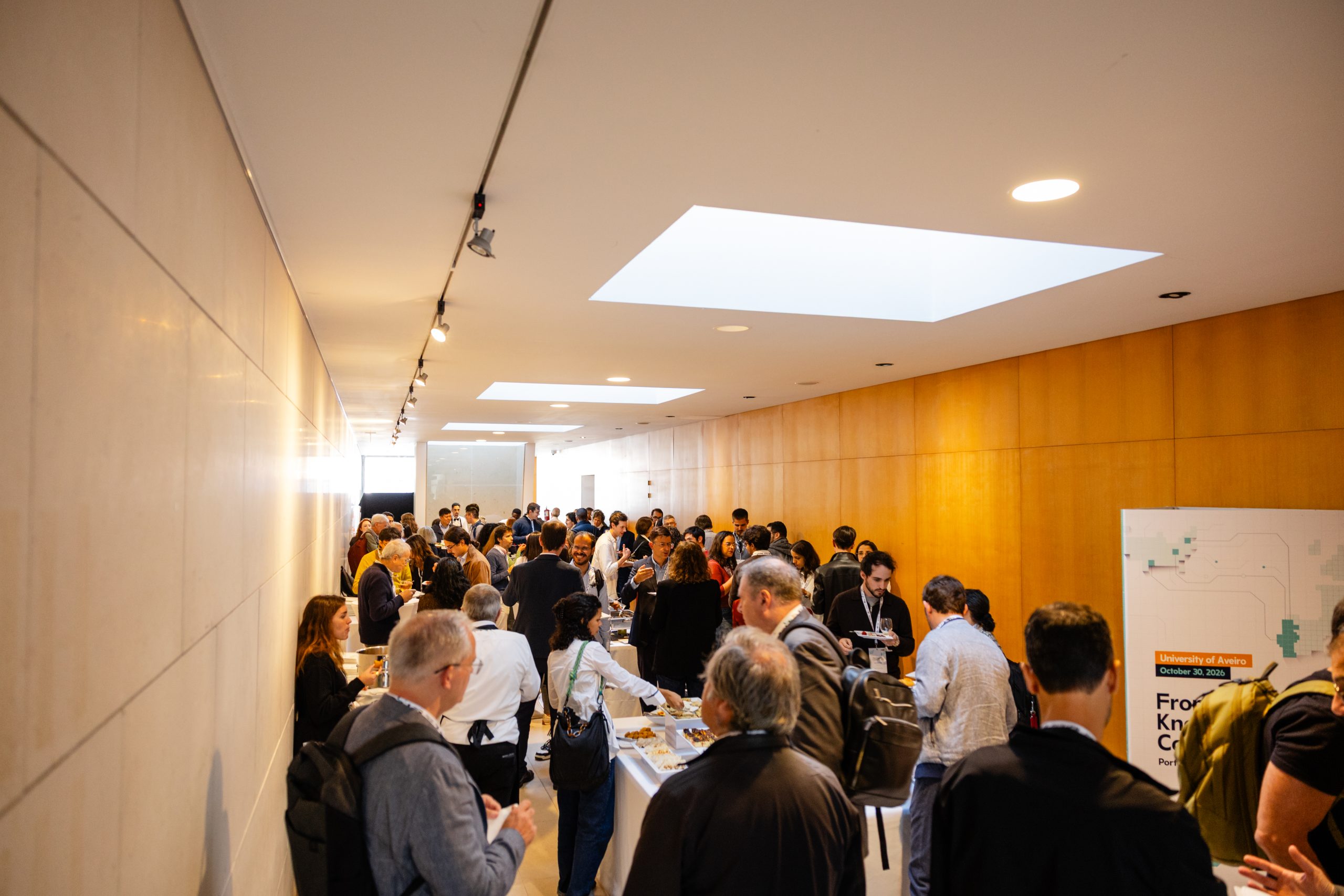
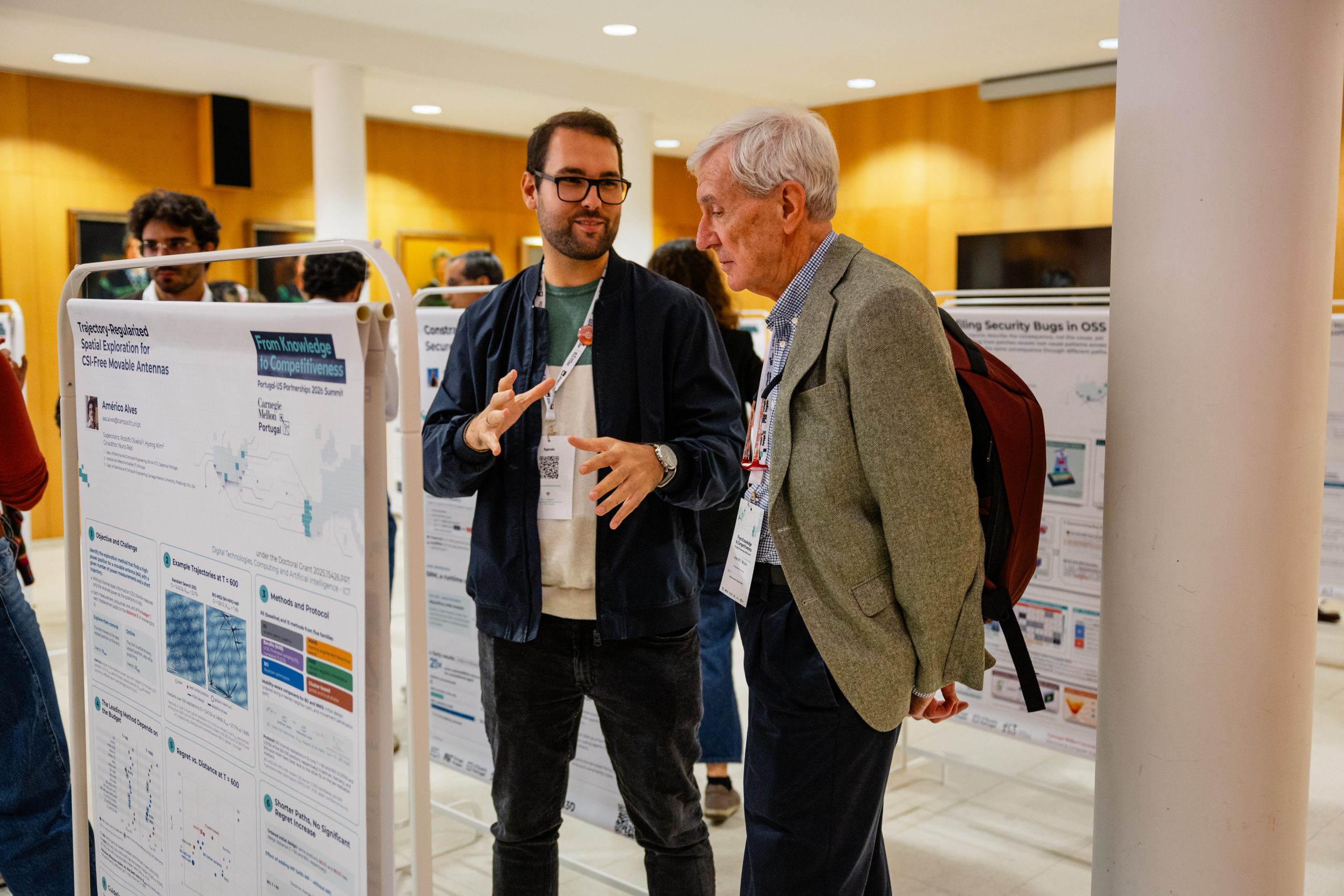
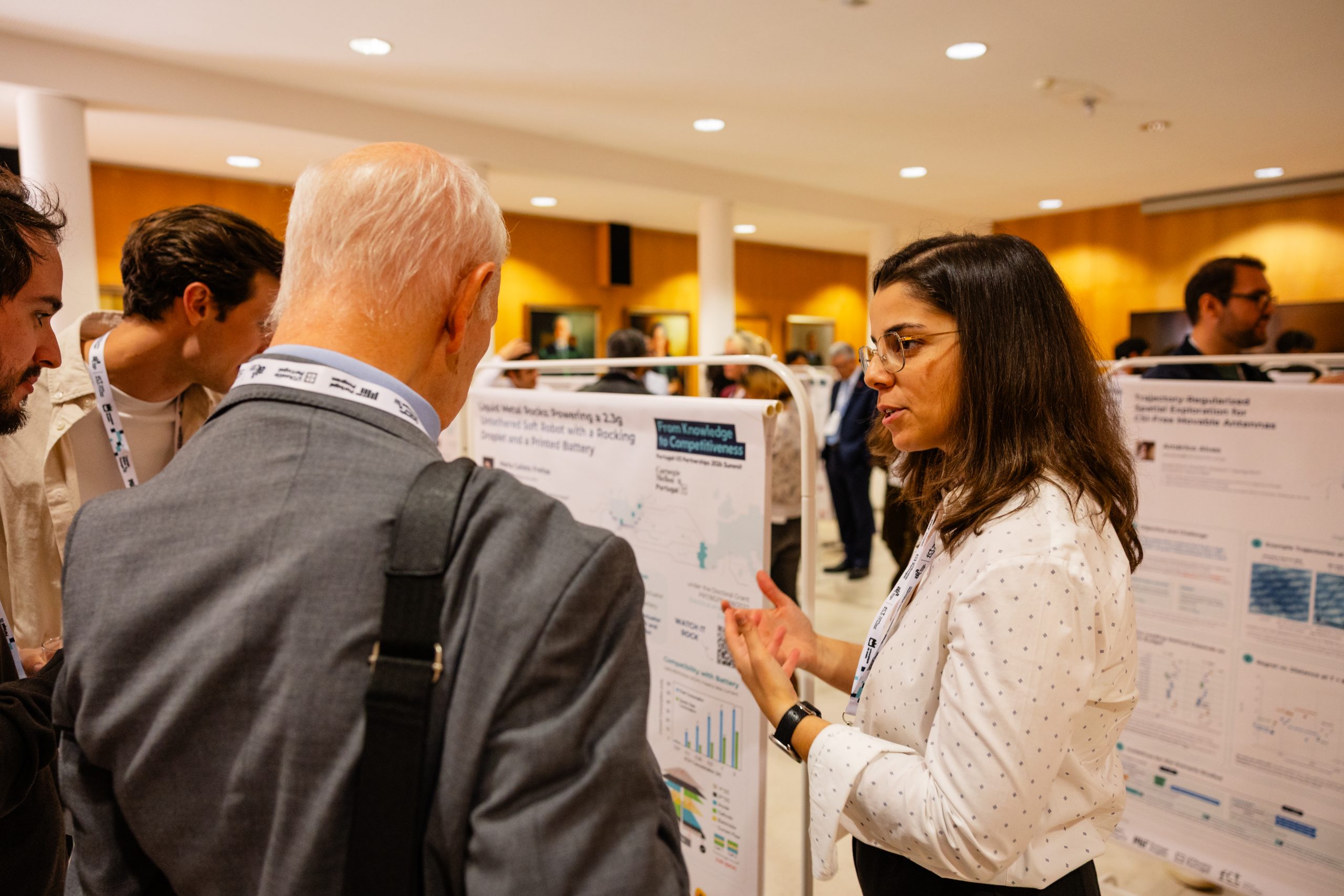
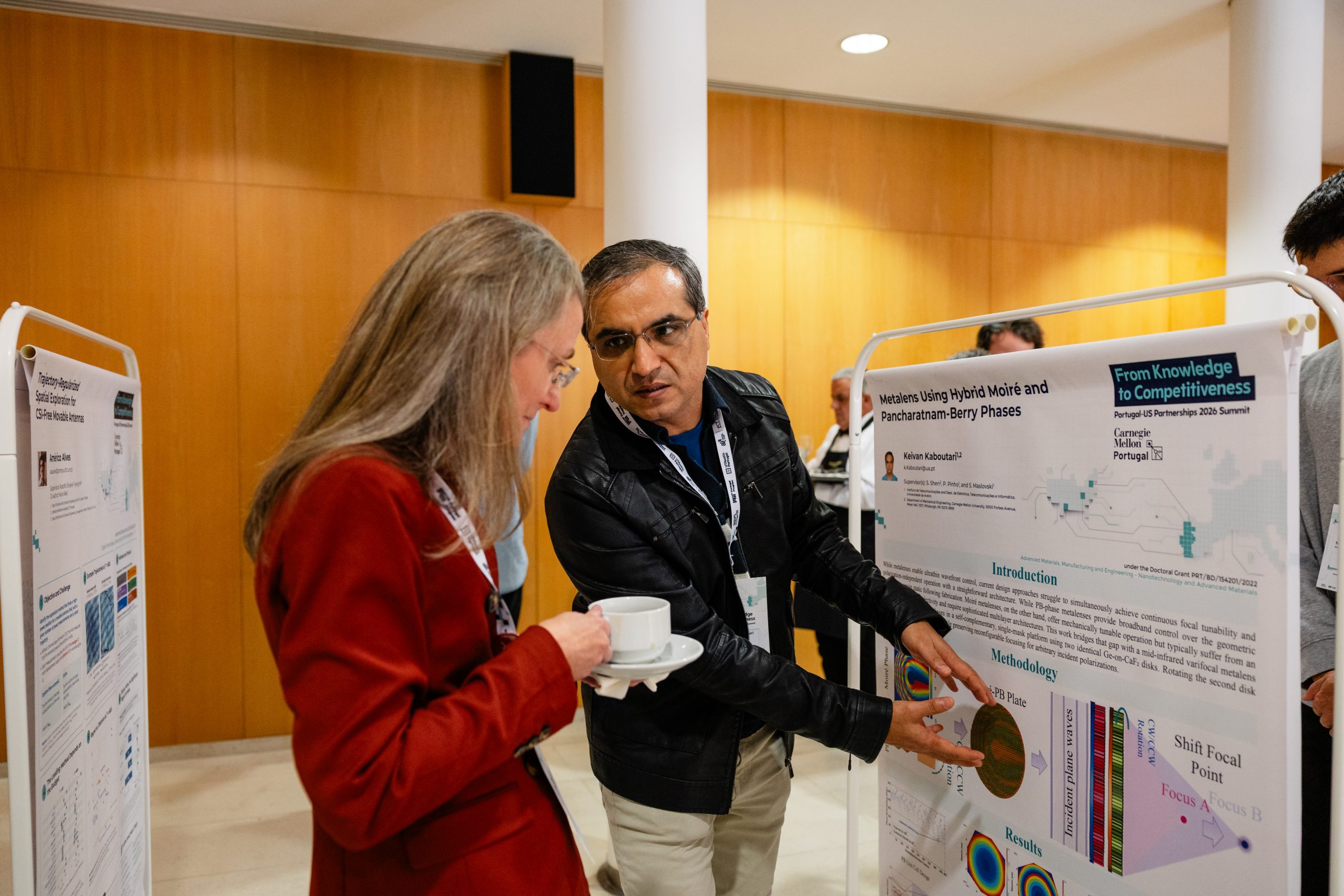
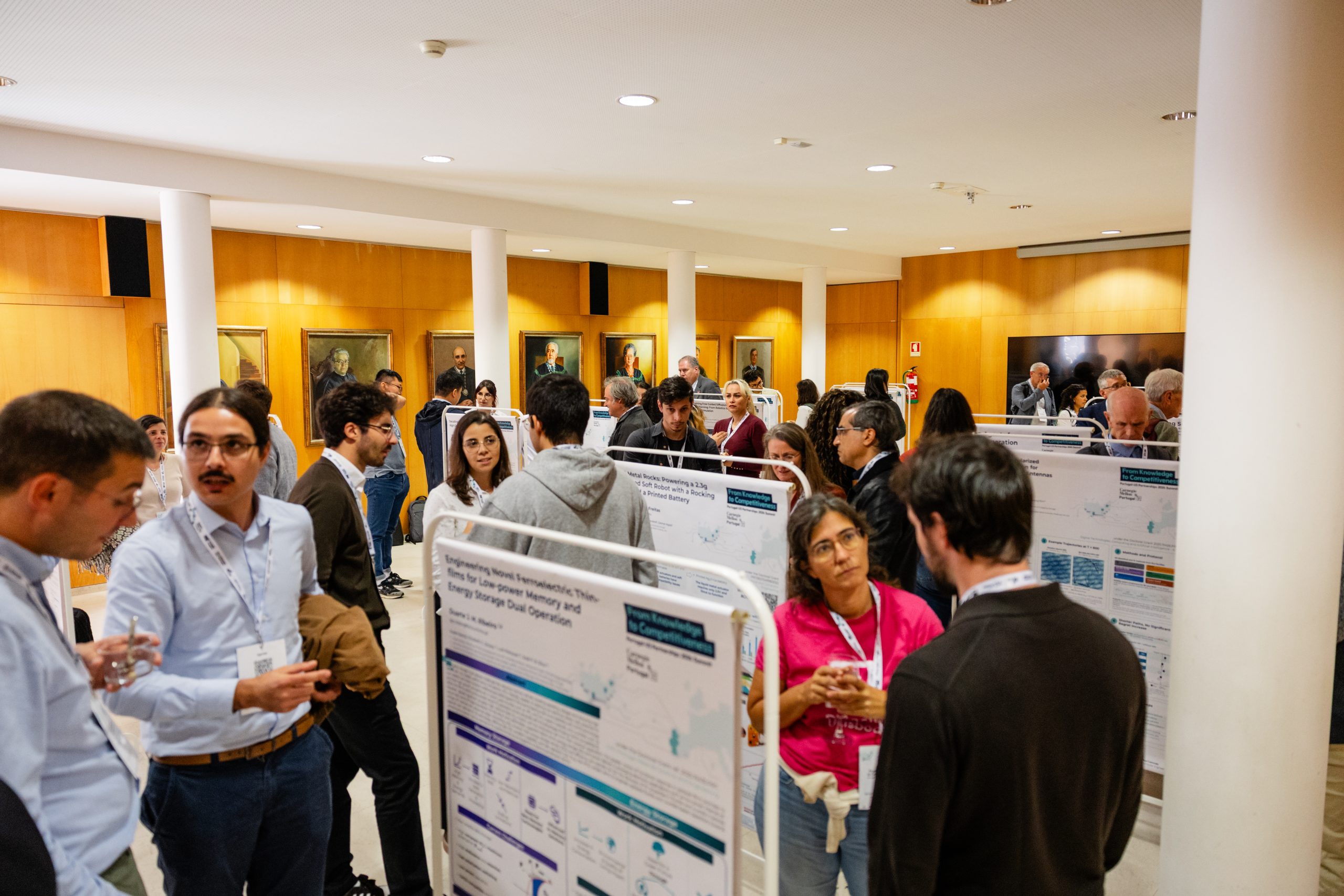
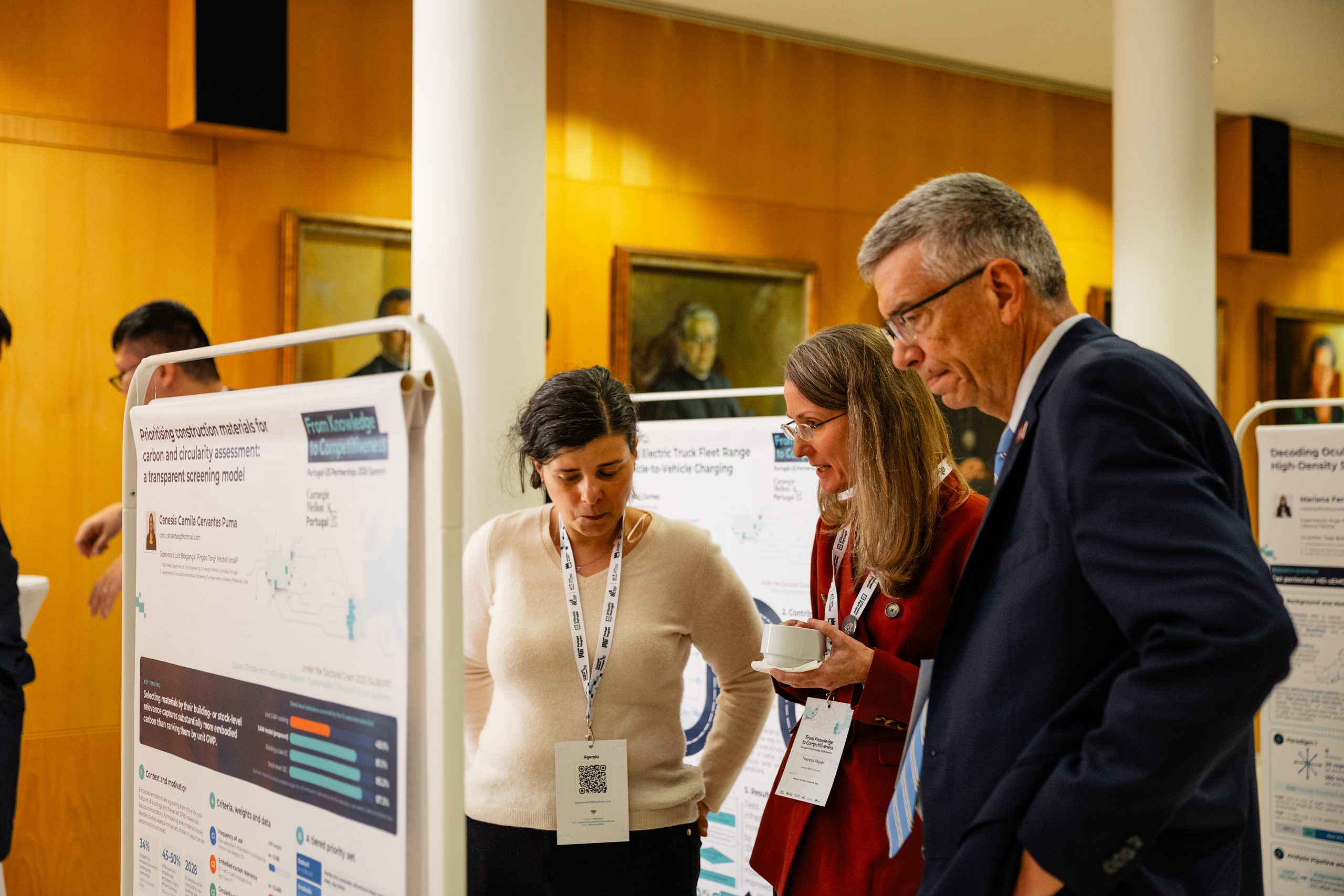
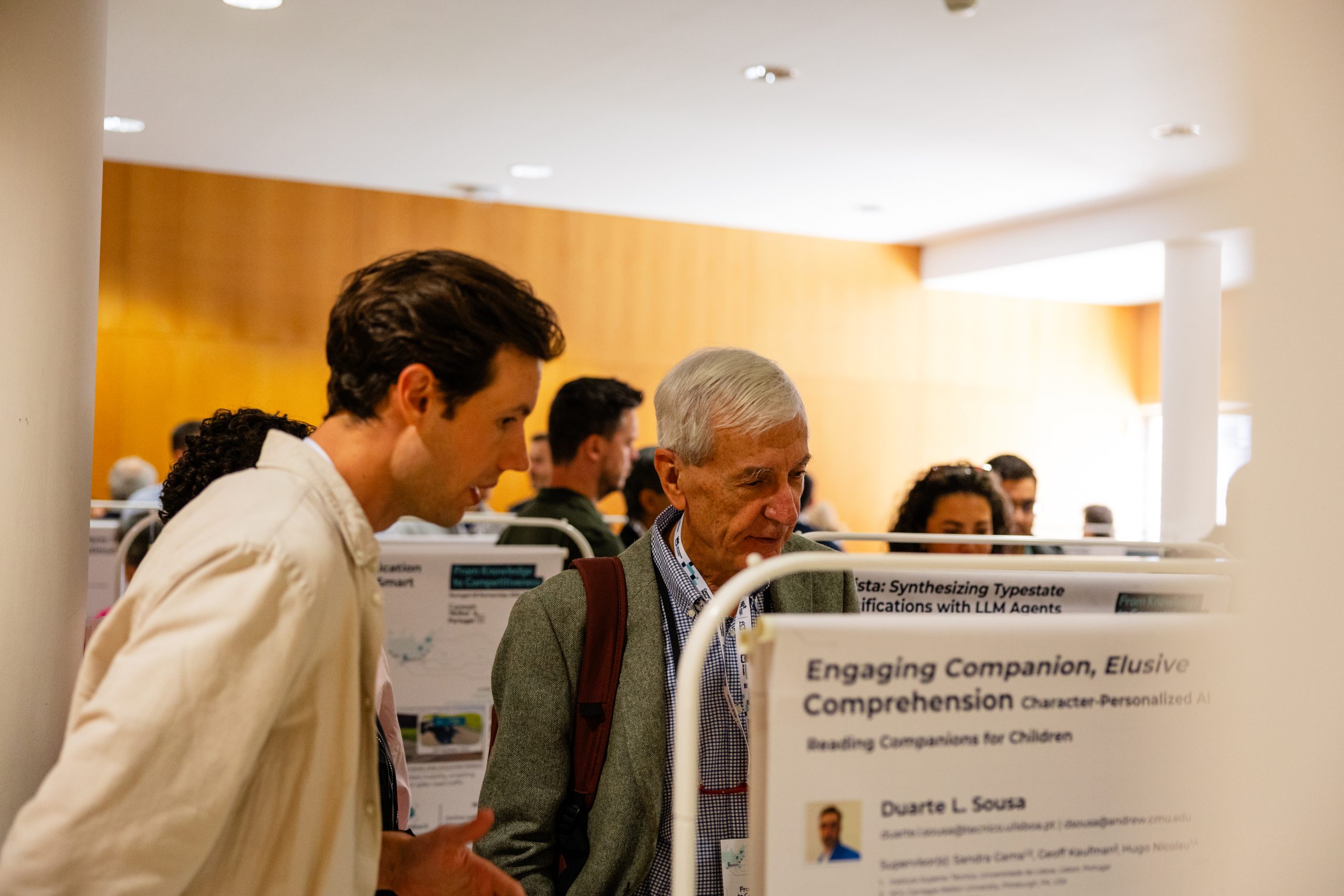
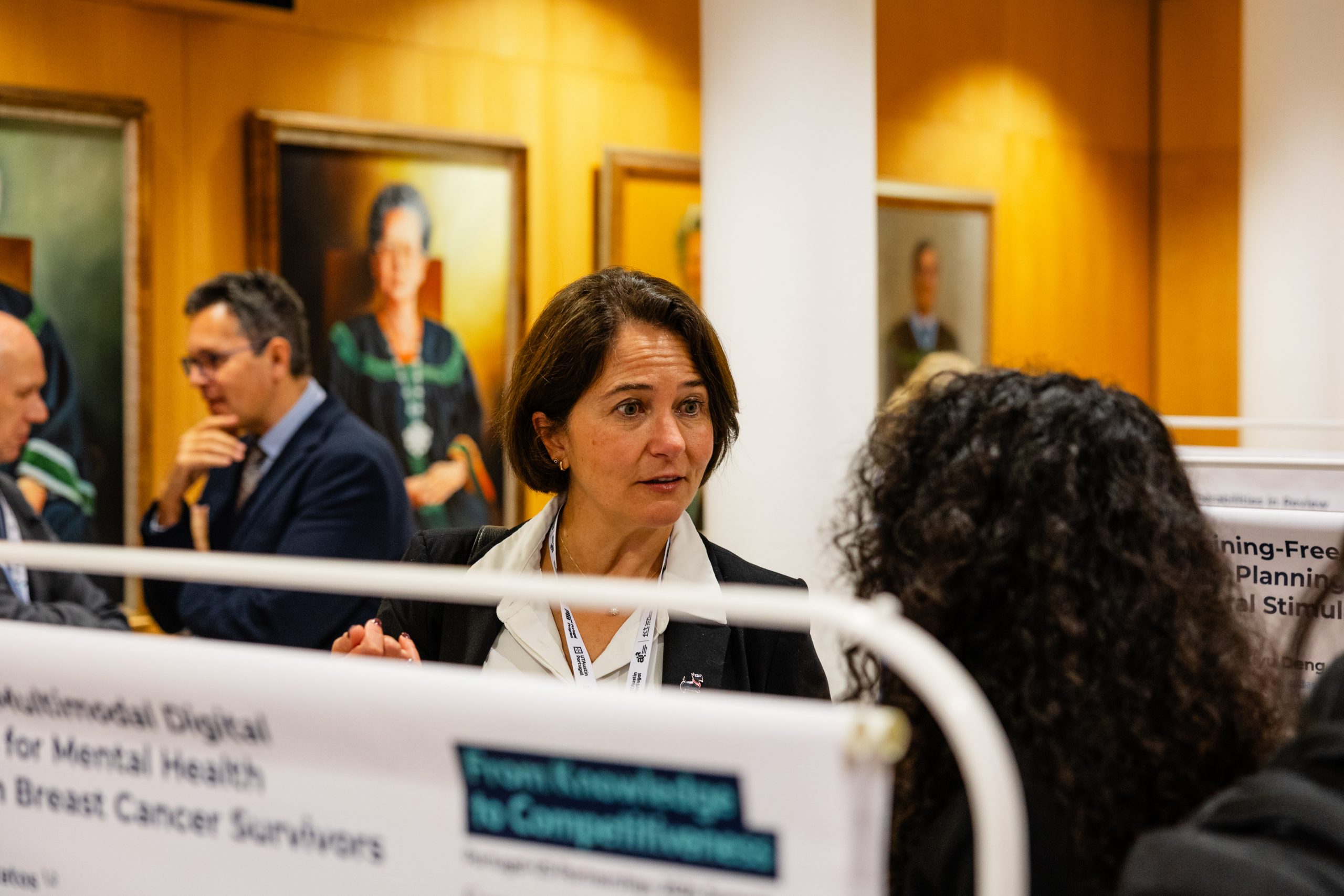
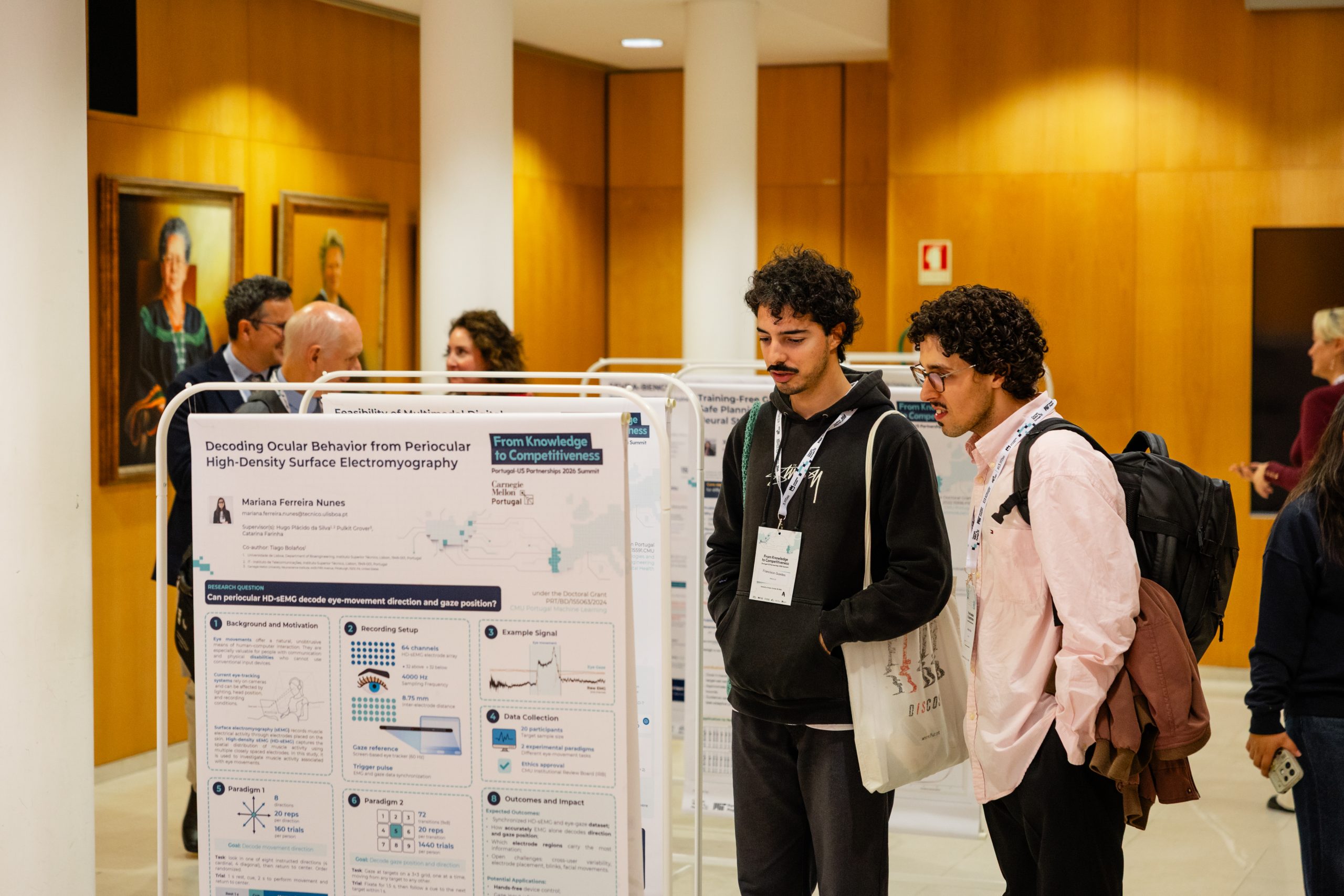
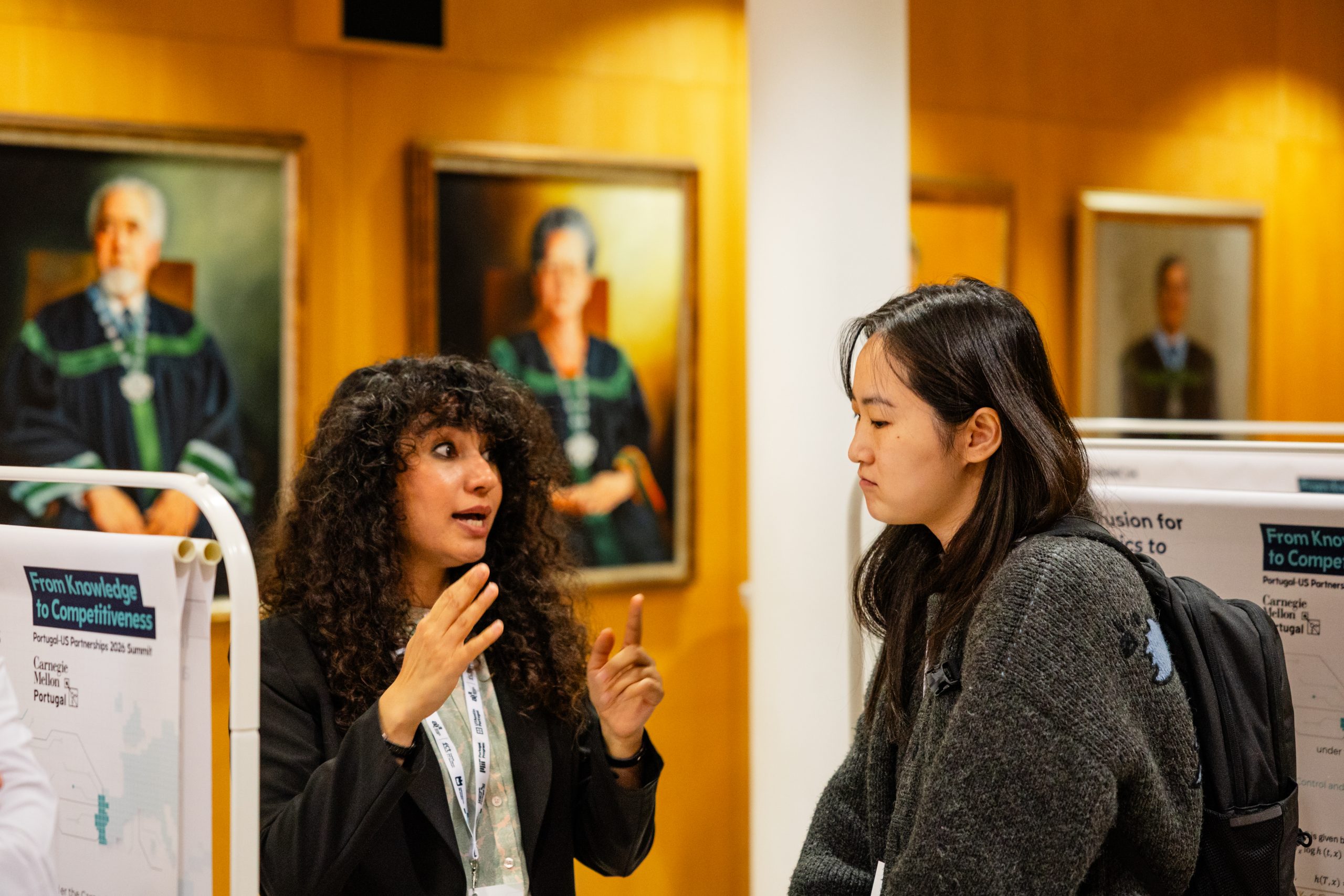
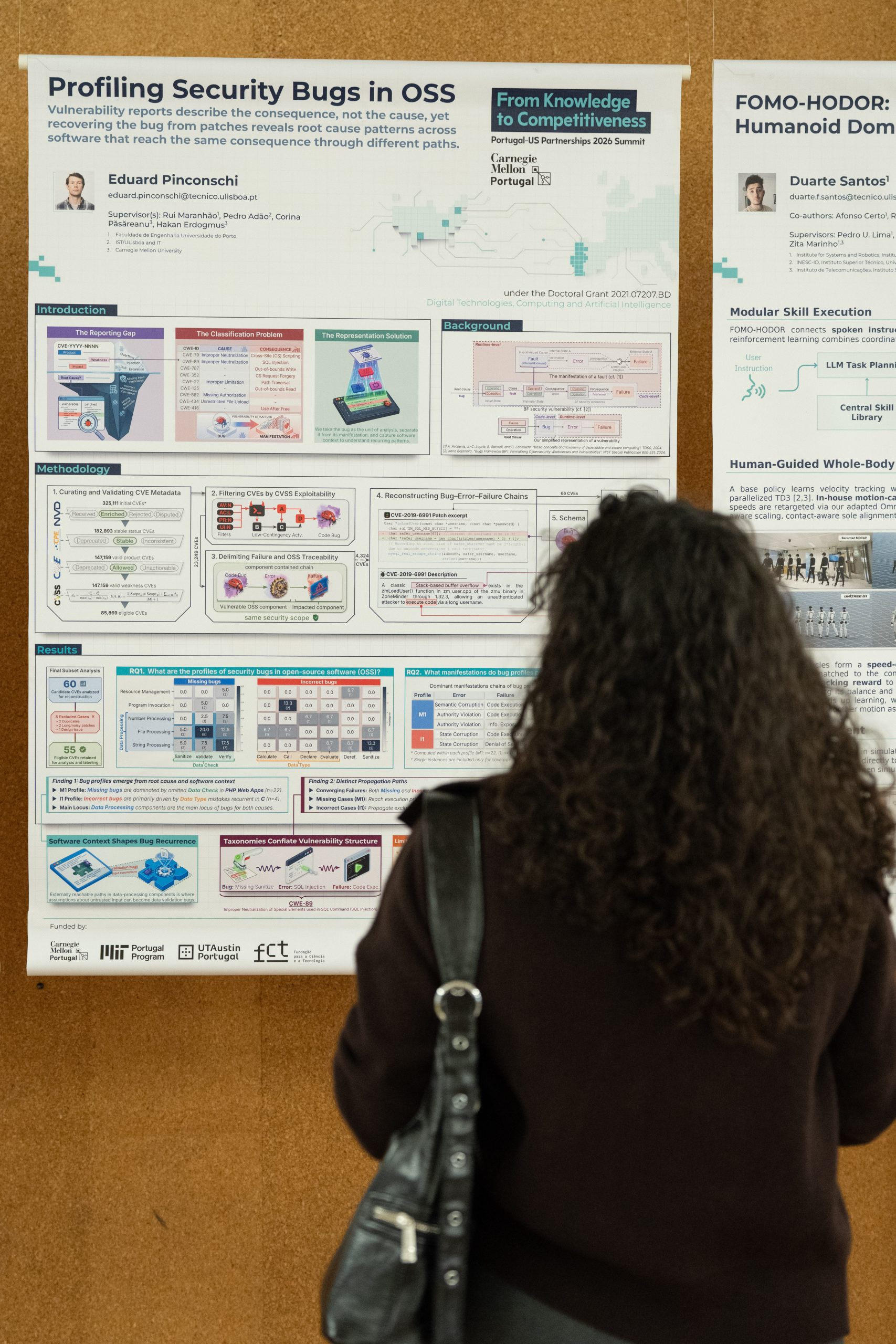
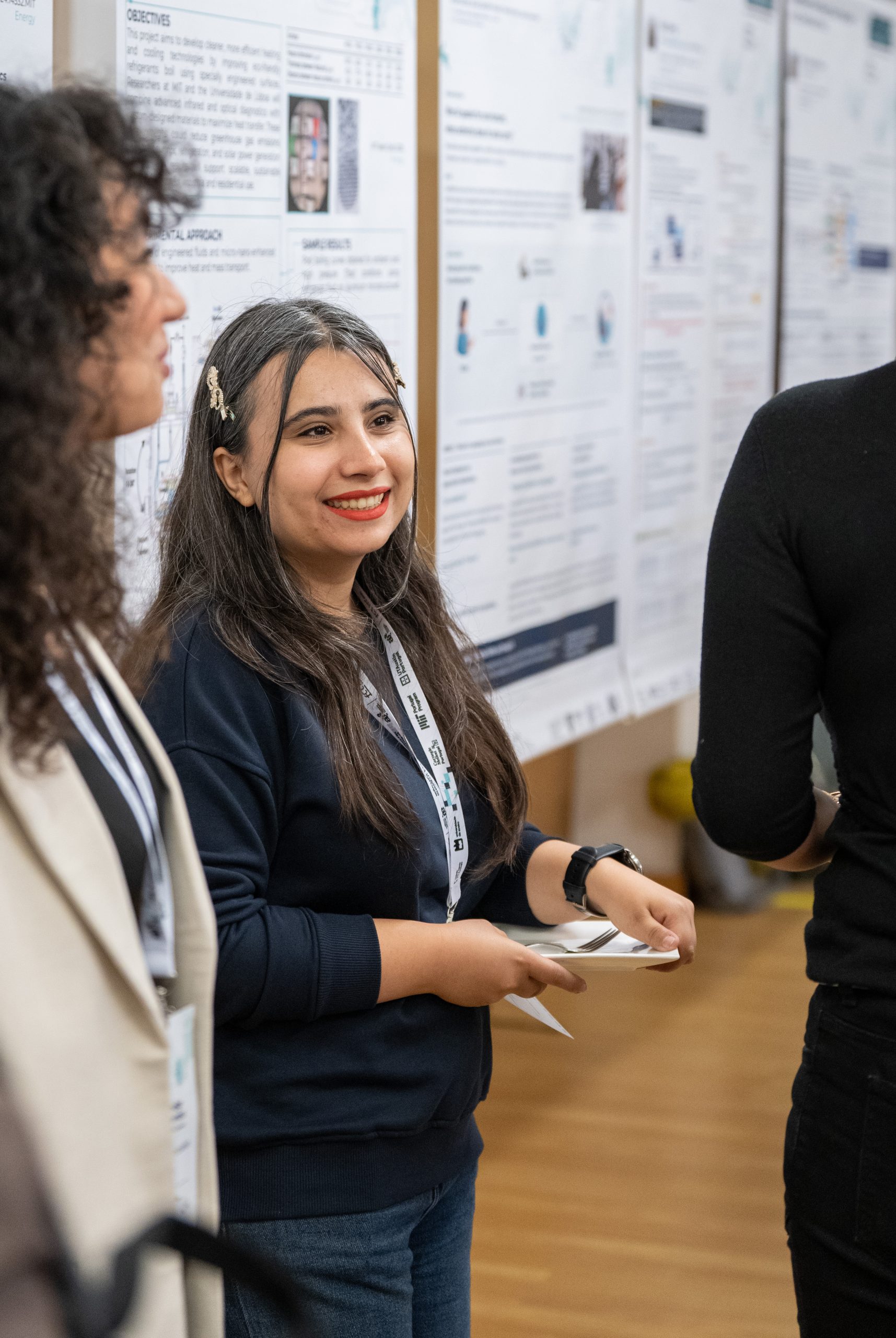
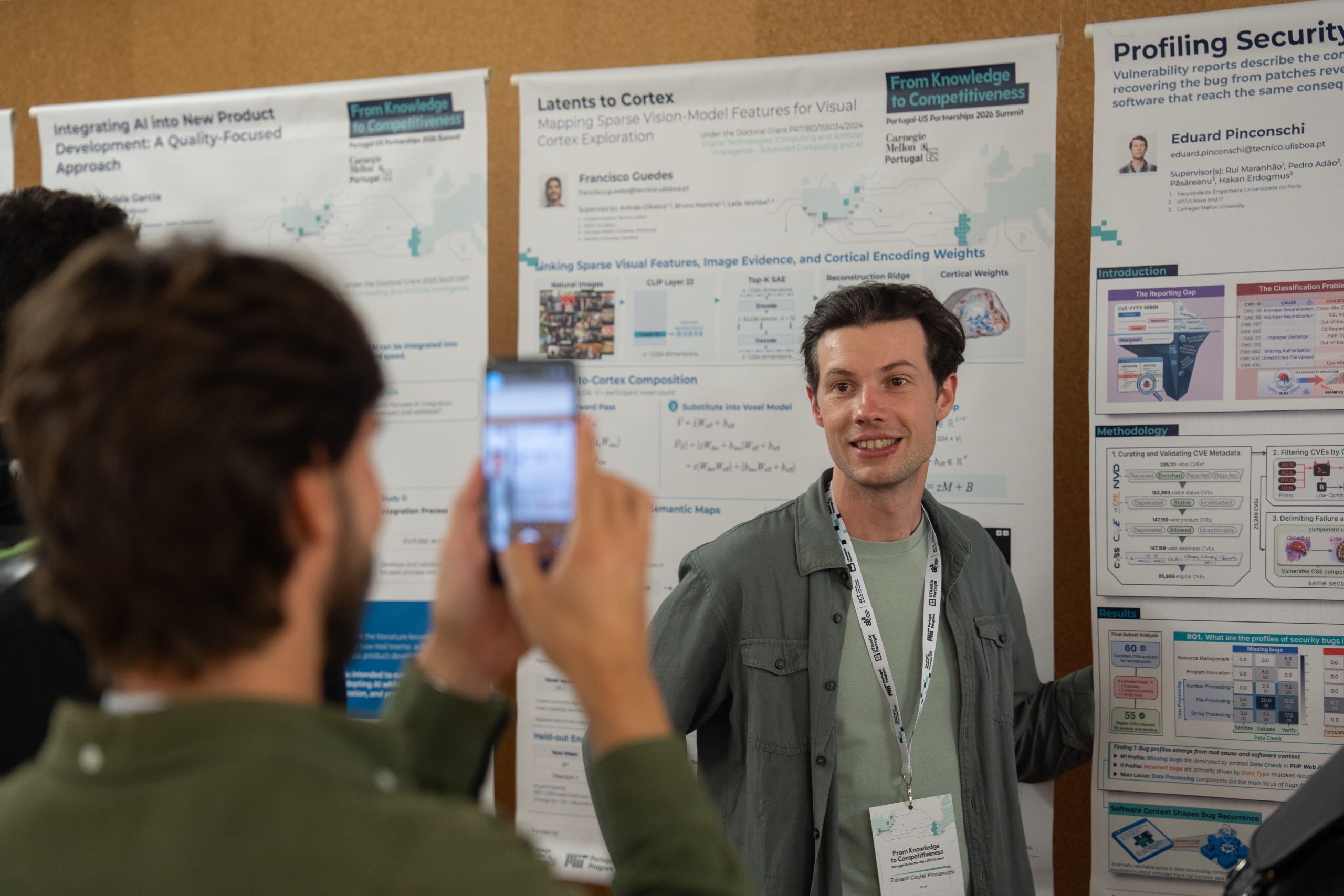
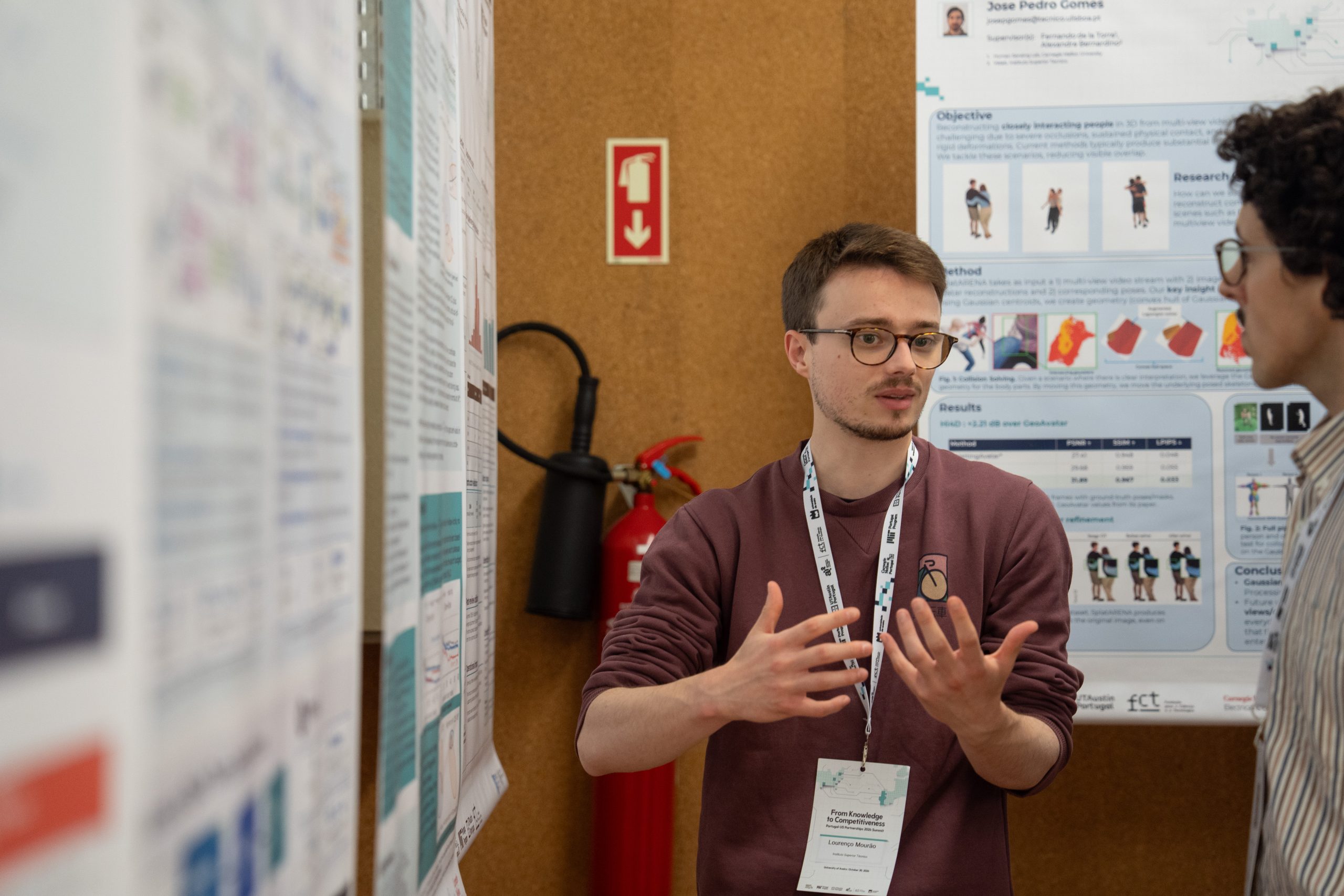
The event continued with a networking lunch, which included the poster exhibition, where 33 CMU Portugal Ph.D. candidates and Mobility initiative students presented their research to the Conference participants and the CMU Portugal community. The session was a great opportunity for students and researchers to share their latest findings across a wide range of scientific and technological fields, such as Advanced Materials; Digital Technologies, Computing and Artificial Intelligence; Health Technologies and Biomedical Engineering; Space, Climate and Sustainable Systems, while exchanging ideas and engaging with peers, faculty, and industry representatives. The poster session was a reflection of the talent and innovation emerging from the Program and the contributions of the students’ community to the future of science and technology.
Session II “From Research to Market: CMU Portugal as an Innovation Hub”
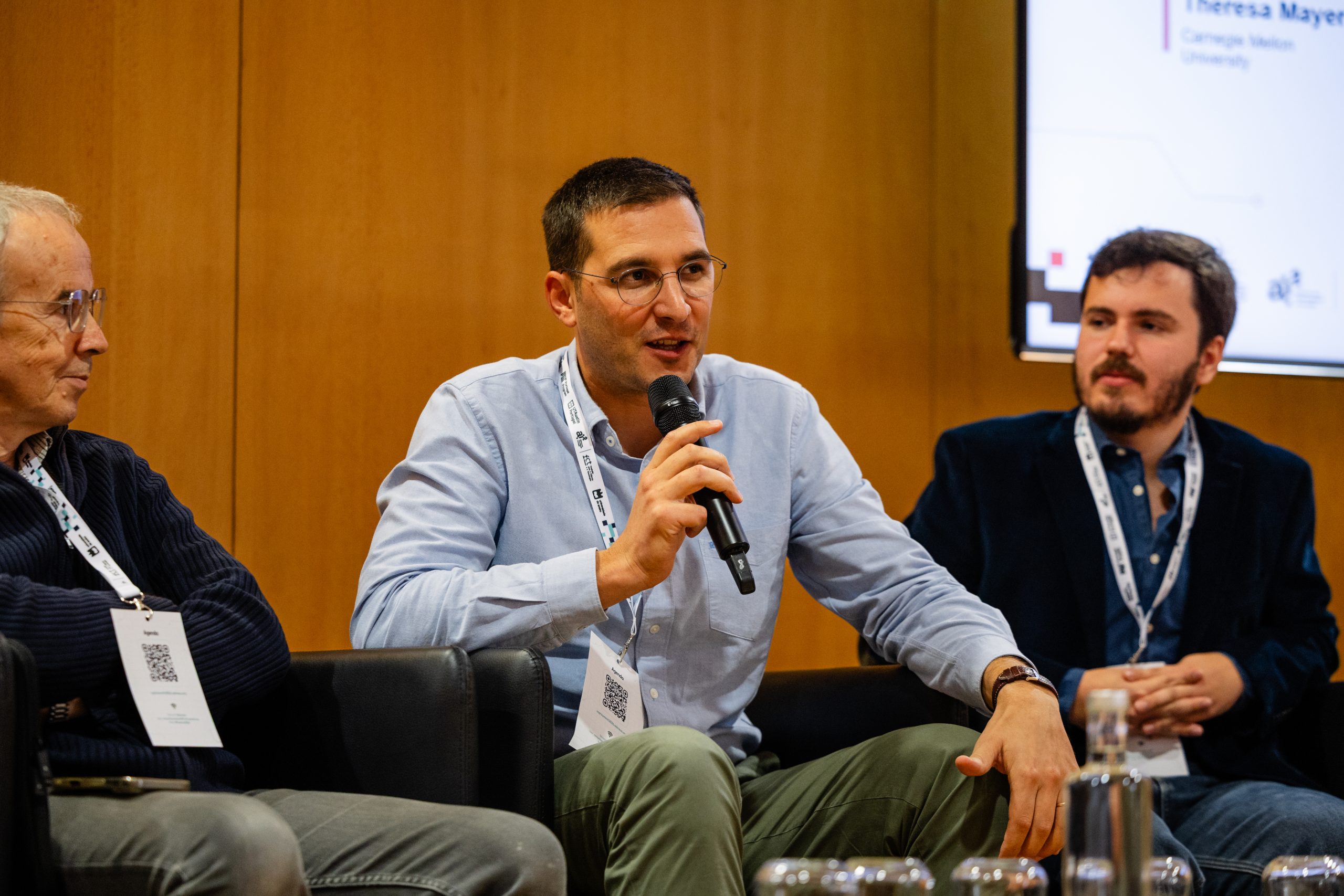
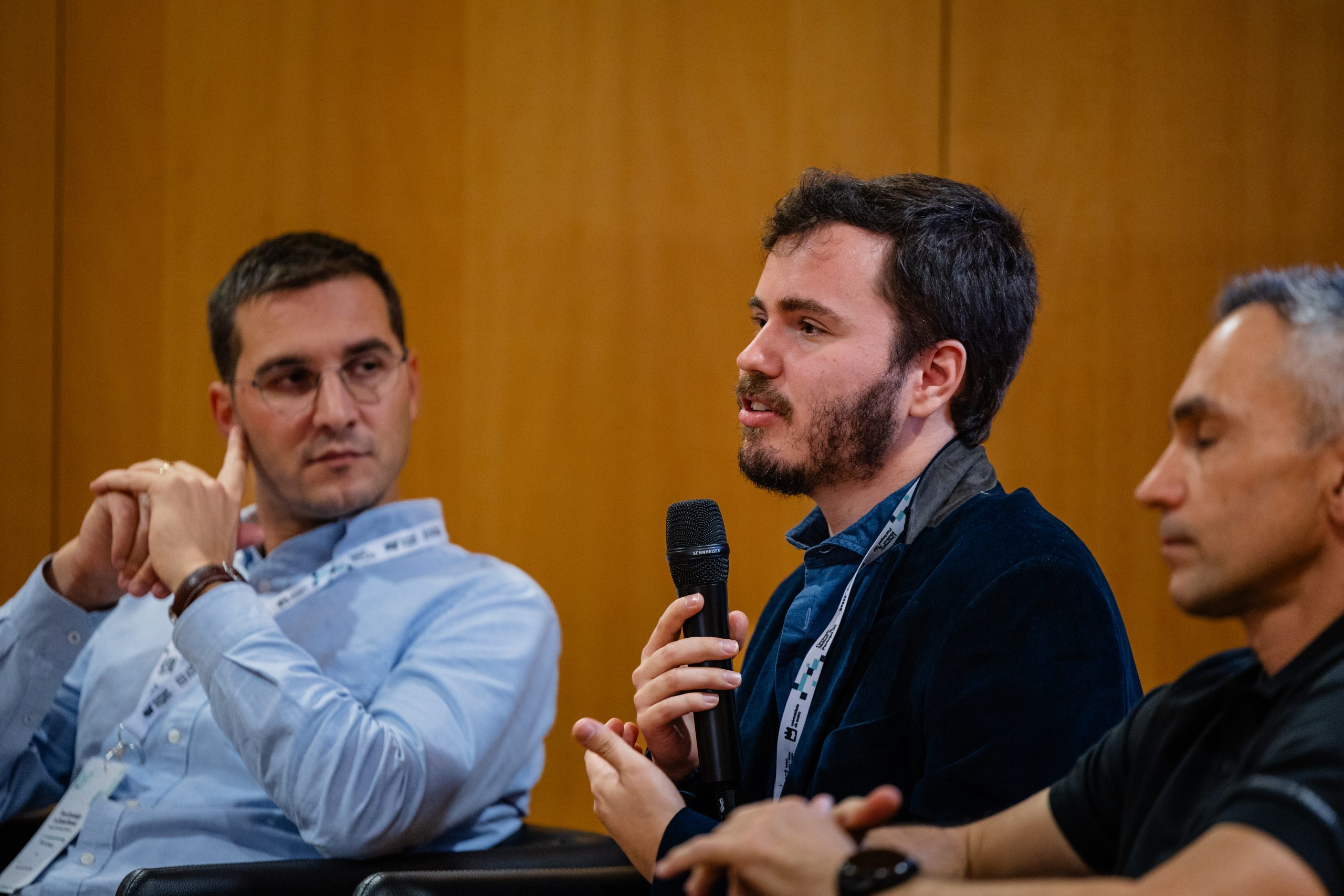
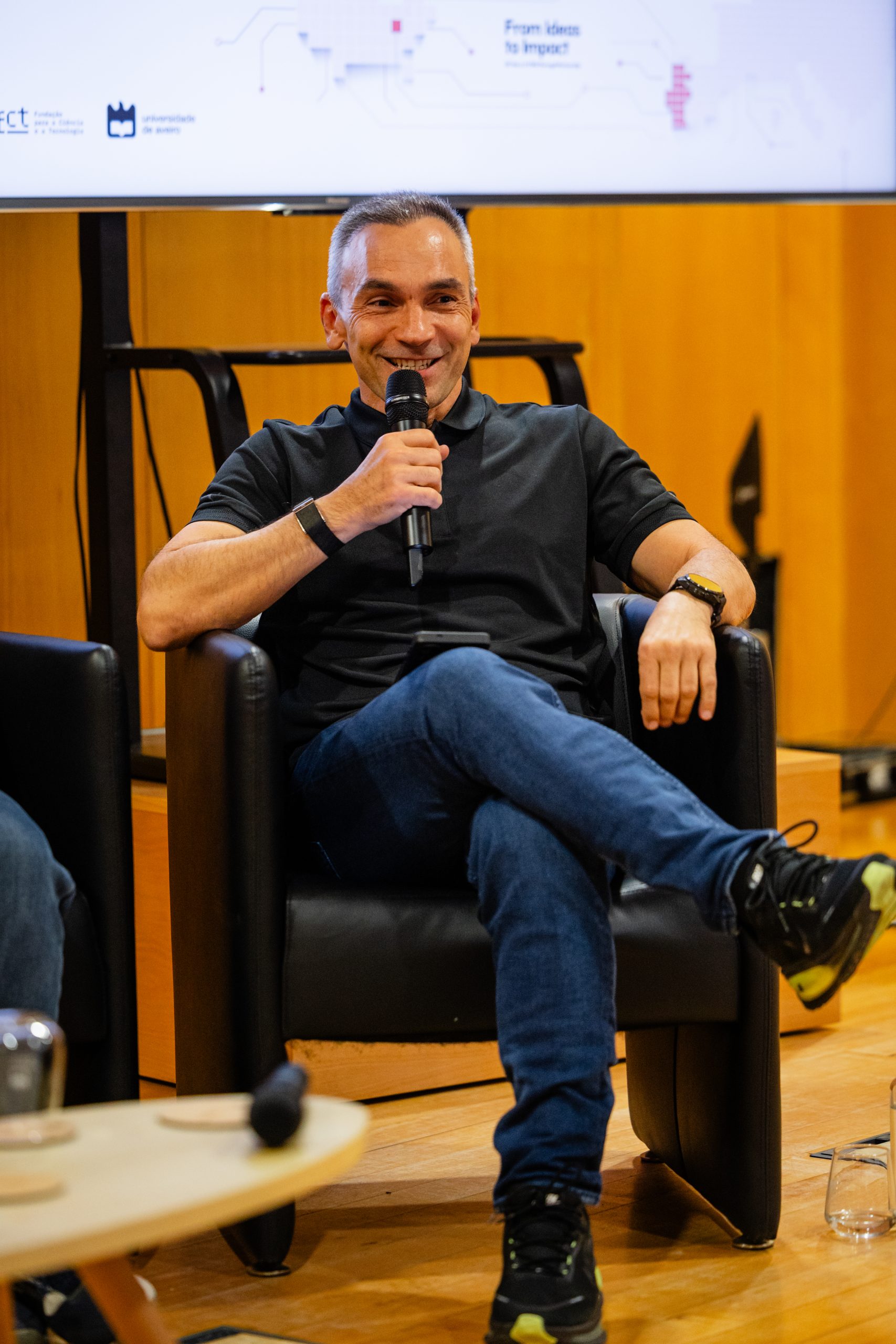
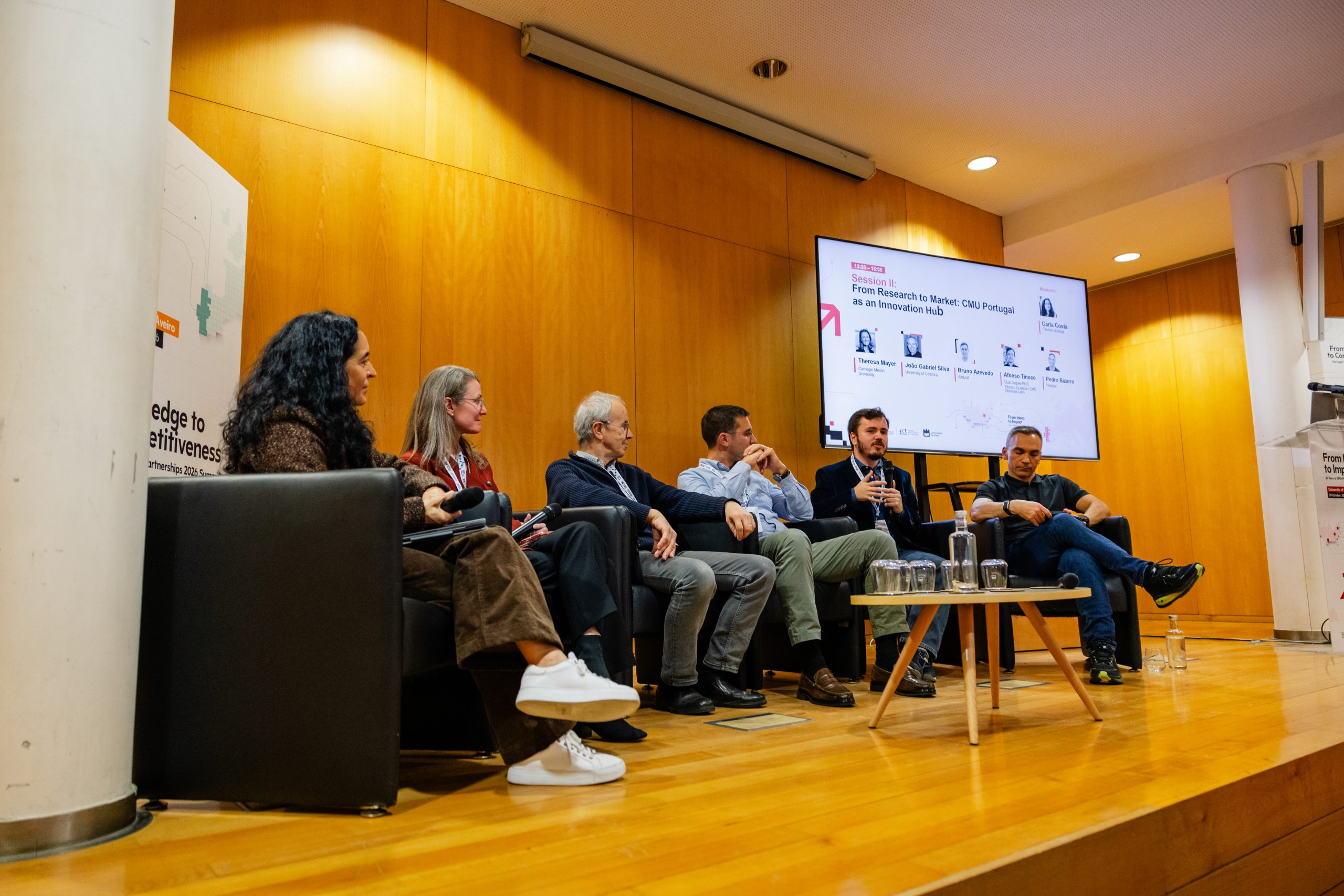
In the afternoon, the Summit resumed with Session II “From Research to Market: CMU Portugal as an Innovation Hub”, which explored how the Program has contributed to fostering innovation, entrepreneurship, and technology transfer over the past two decades, putting the spotlight on the role of universities in supporting startup ecosystems and commercializing research.
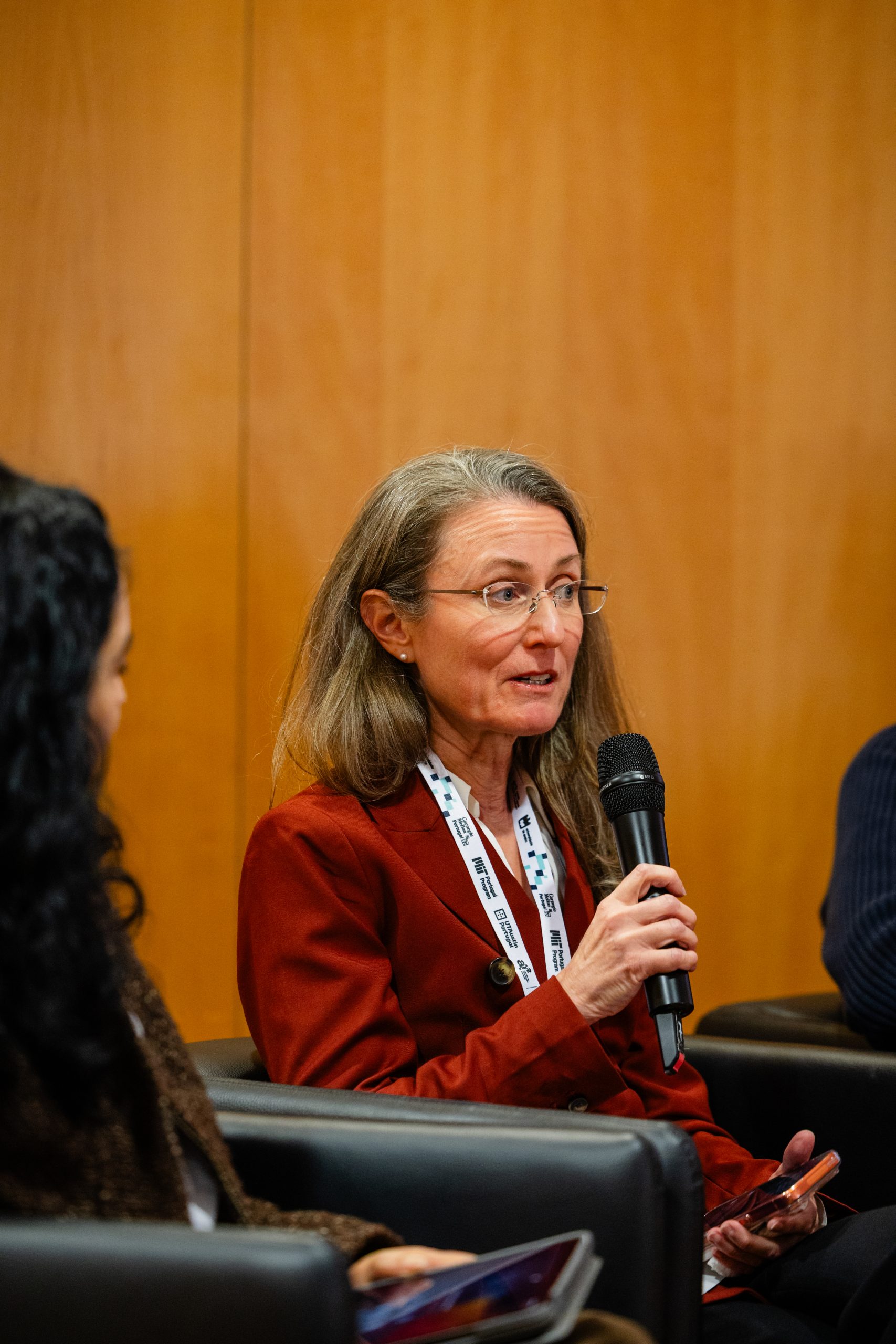
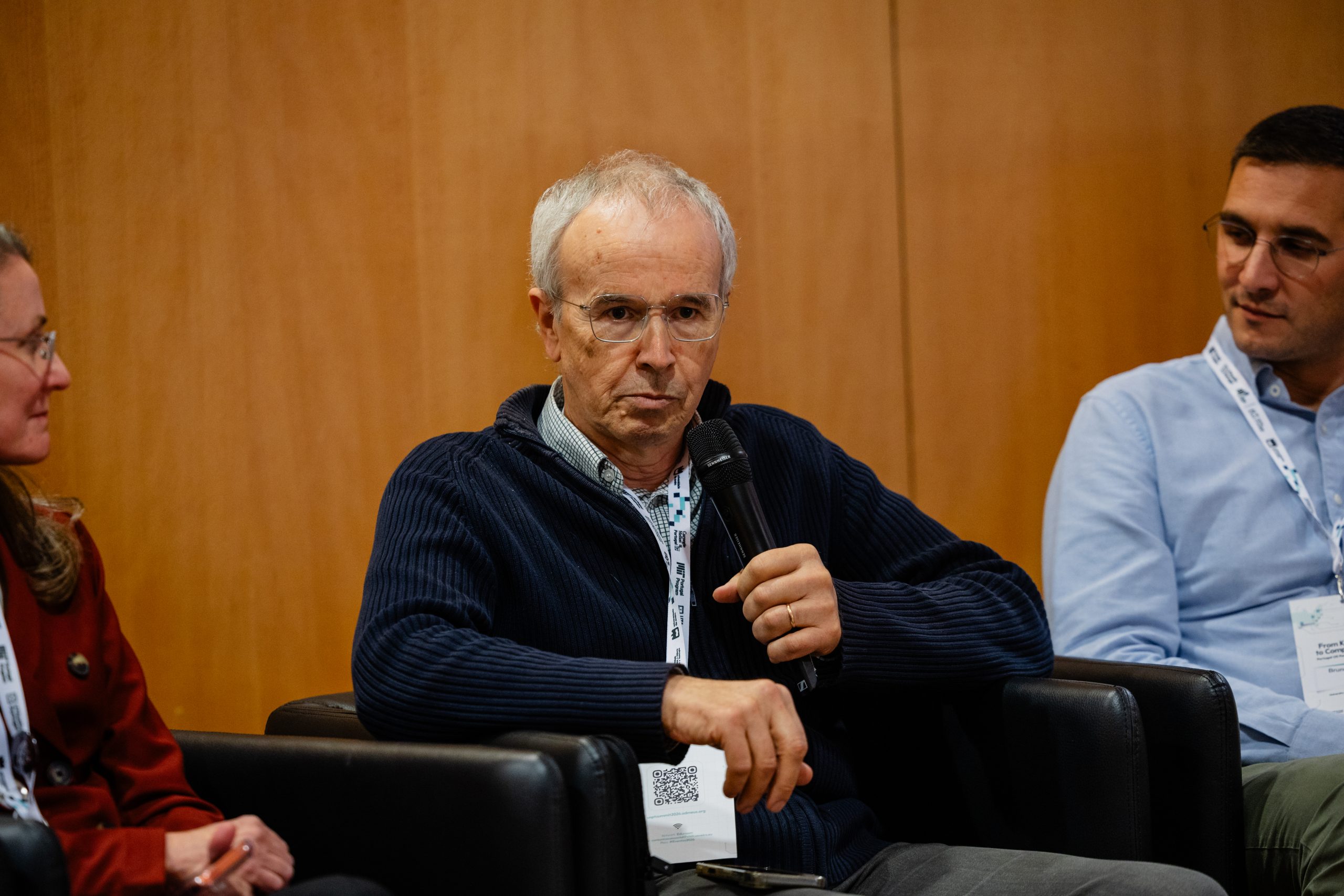
Moderated by Carla Costa, Assistant Professor of the Engineering and Management Department at Técnico ULisboa, and CMU Portugal Dual Degree Alum, the panel brought together Theresa Mayer, Vice President for Research at CMU; João Gabriel, Full Professor, former Rector of the University of Coimbra and former Director of the CMU–Portugal Dual Degree MSc in Software Engineering; Bruno Azevedo, Founder & Managing Director of Addvolt, participant in the inRes program; Afonso Tinoco, CMU Portugal Dual Degree Ph.D. Student and co-founder of Oblivious Labs; and Pedro Bizarro, Co-Founder and Chief Science Officer at Feedzai.
Through their experiences, speakers reflected on how the Program has contributed to building a vibrant innovation ecosystem and transforming research excellence into lasting economic and societal value.
Session III “20 Years of CMU Portugal: Building the Next Decade”
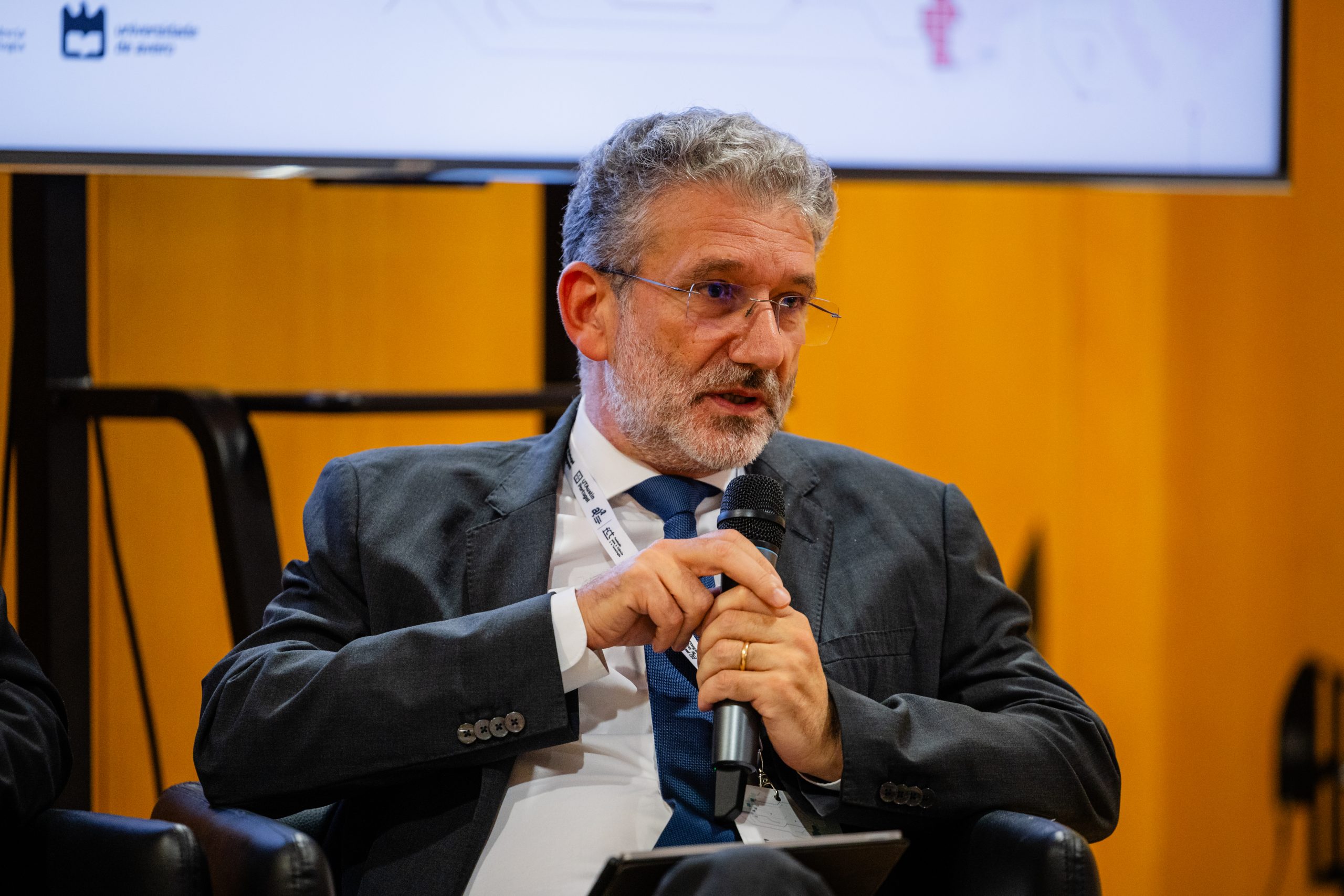
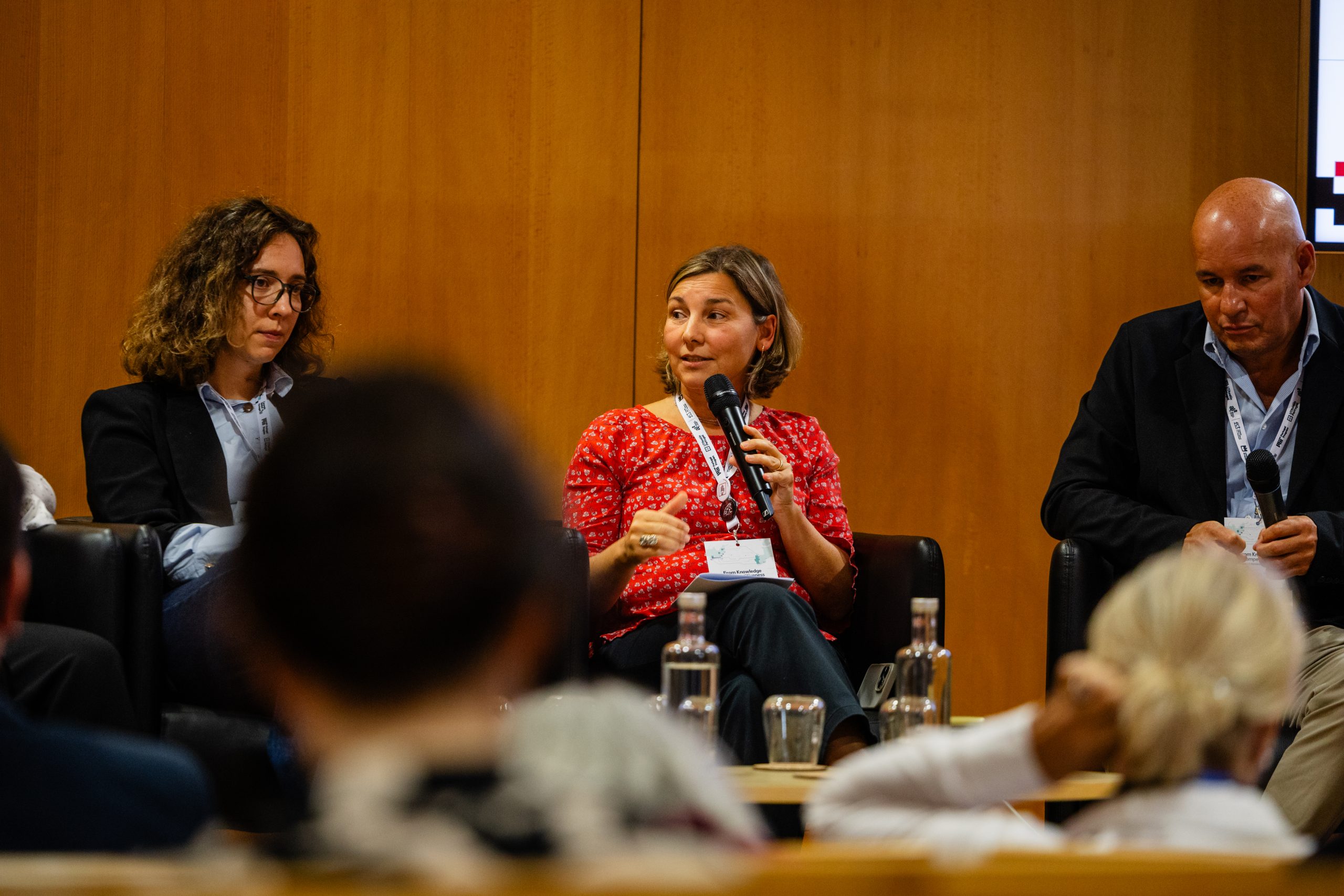
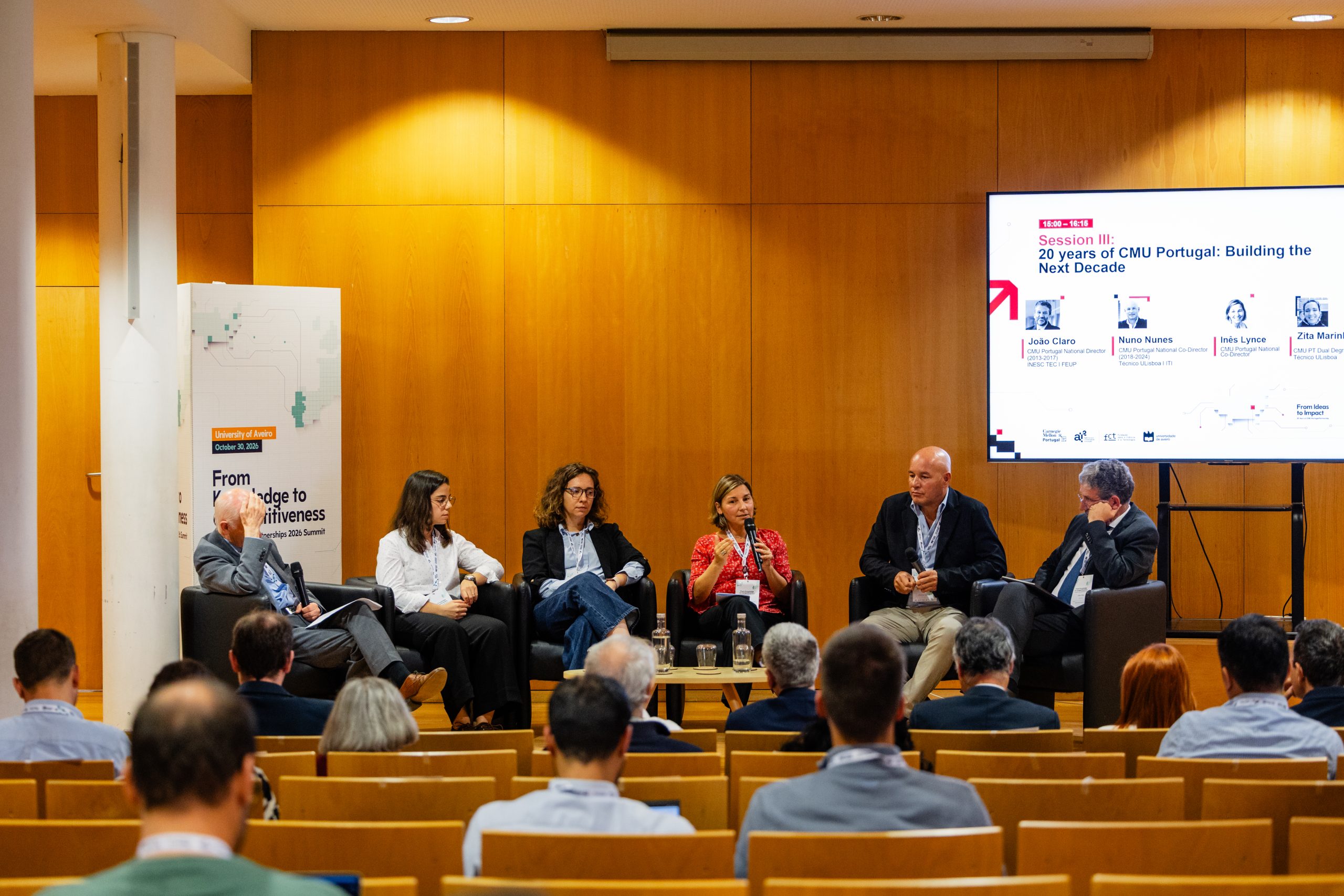
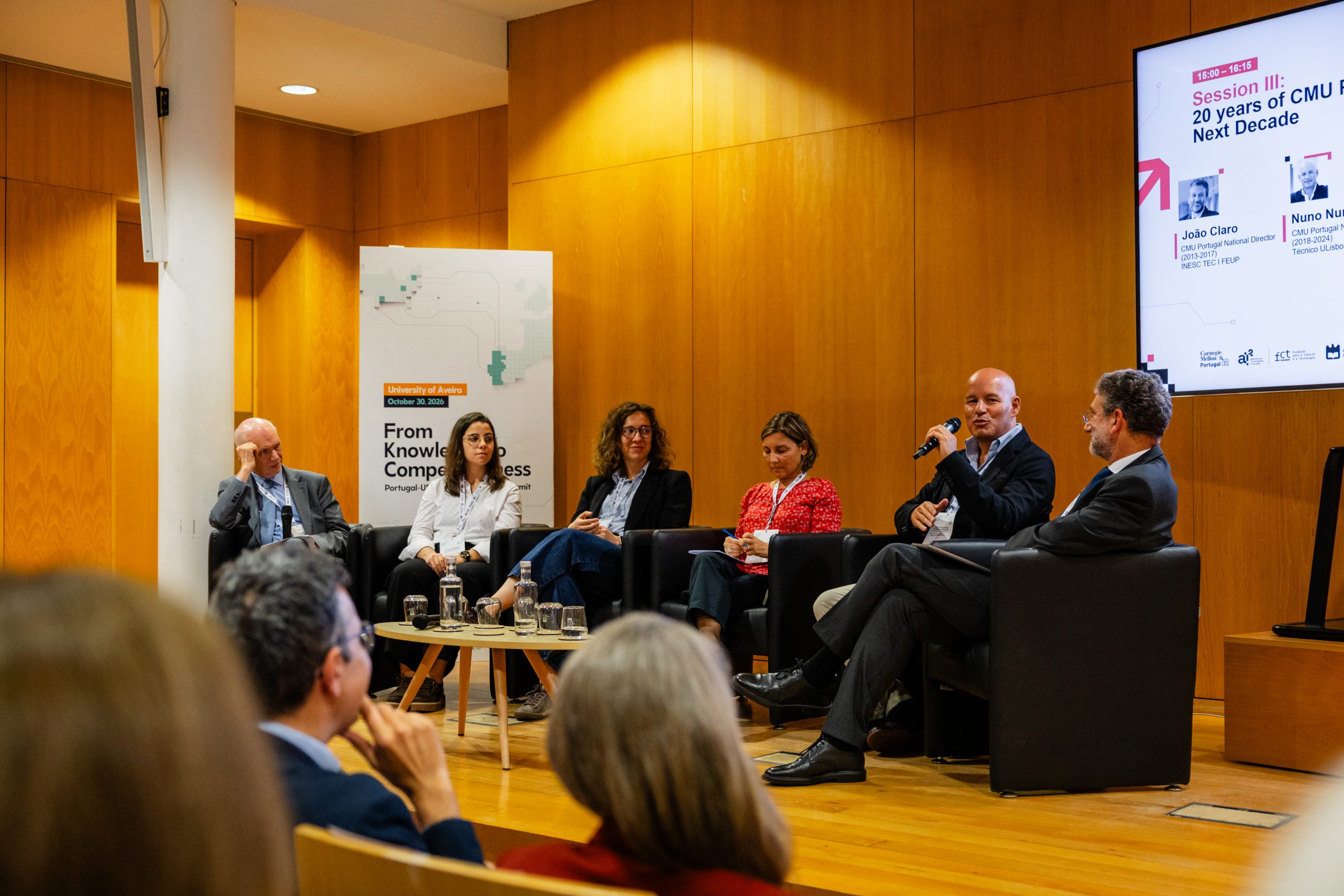
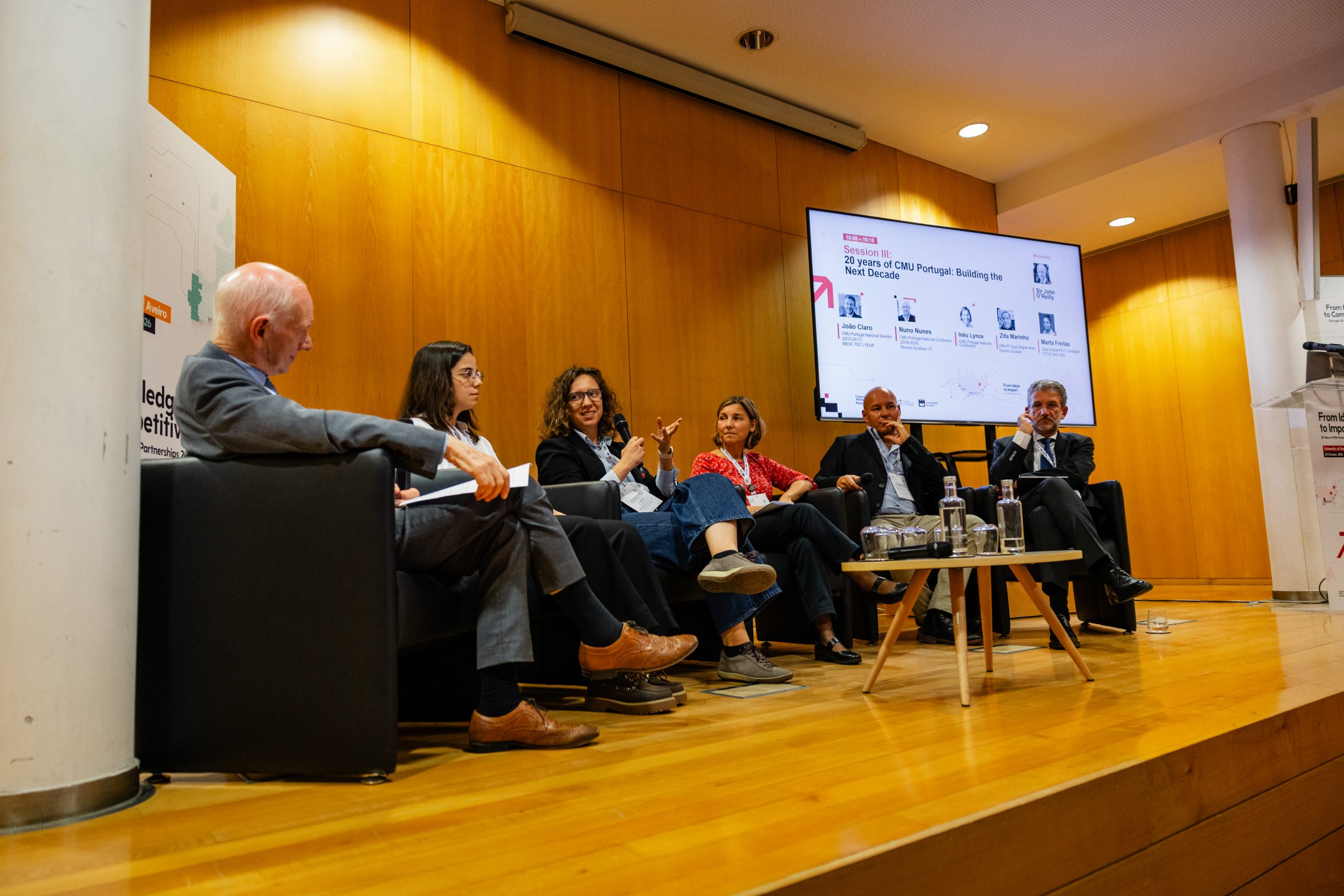
The third and final session of the Summit, “20 Years of CMU Portugal: Building the Next Decade,” offered a moment of reflection on the Program’s journey and a discussion on its future.
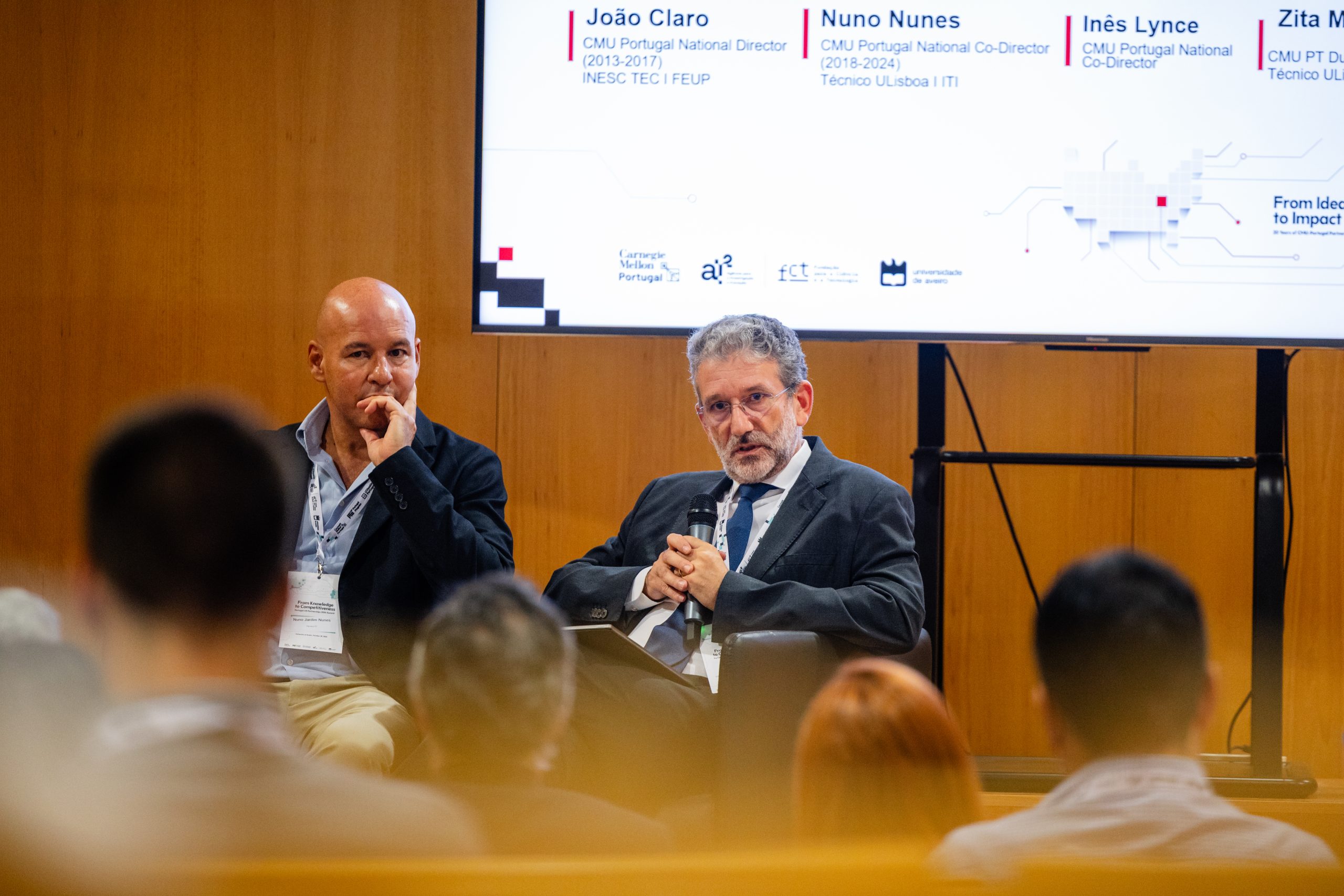
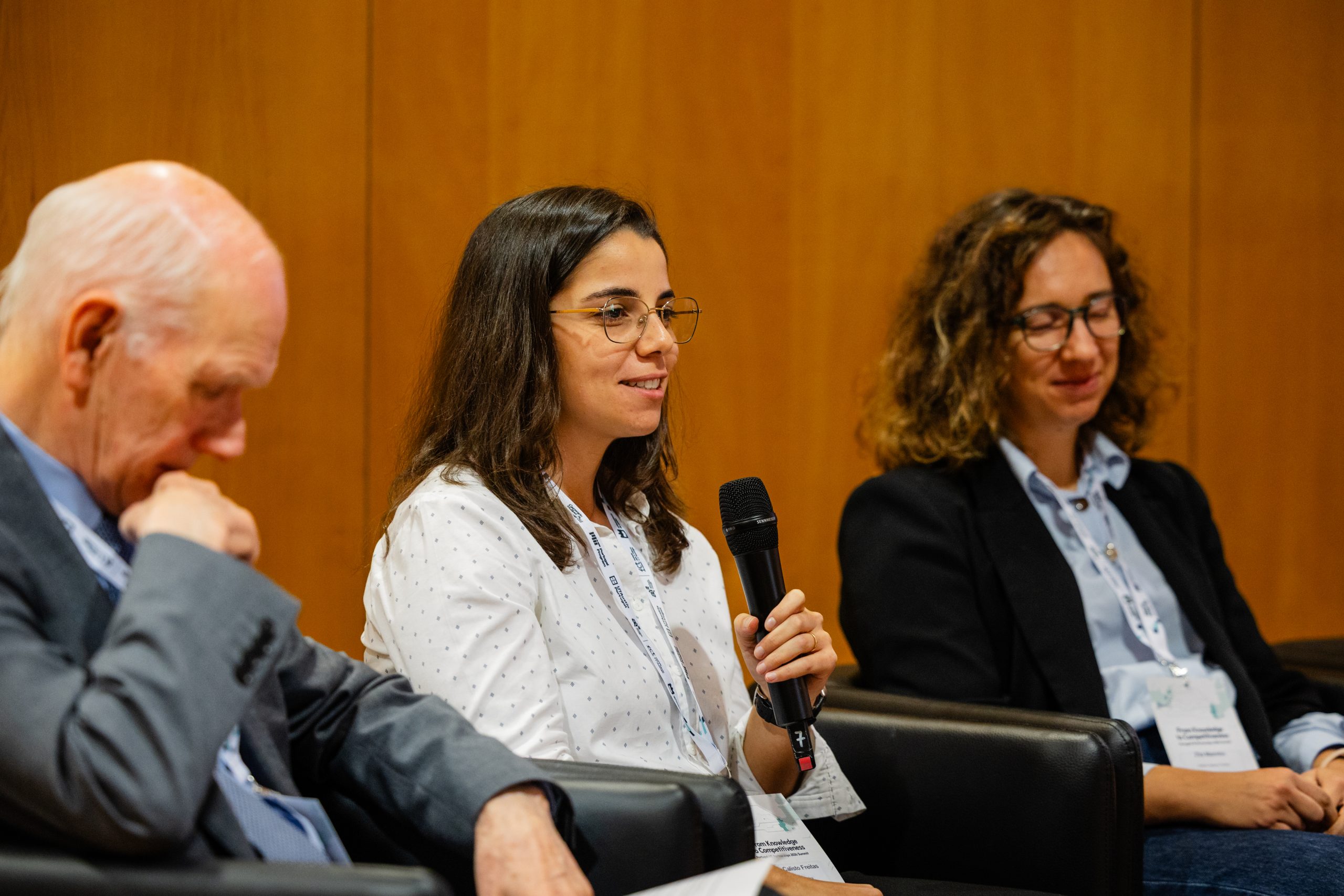
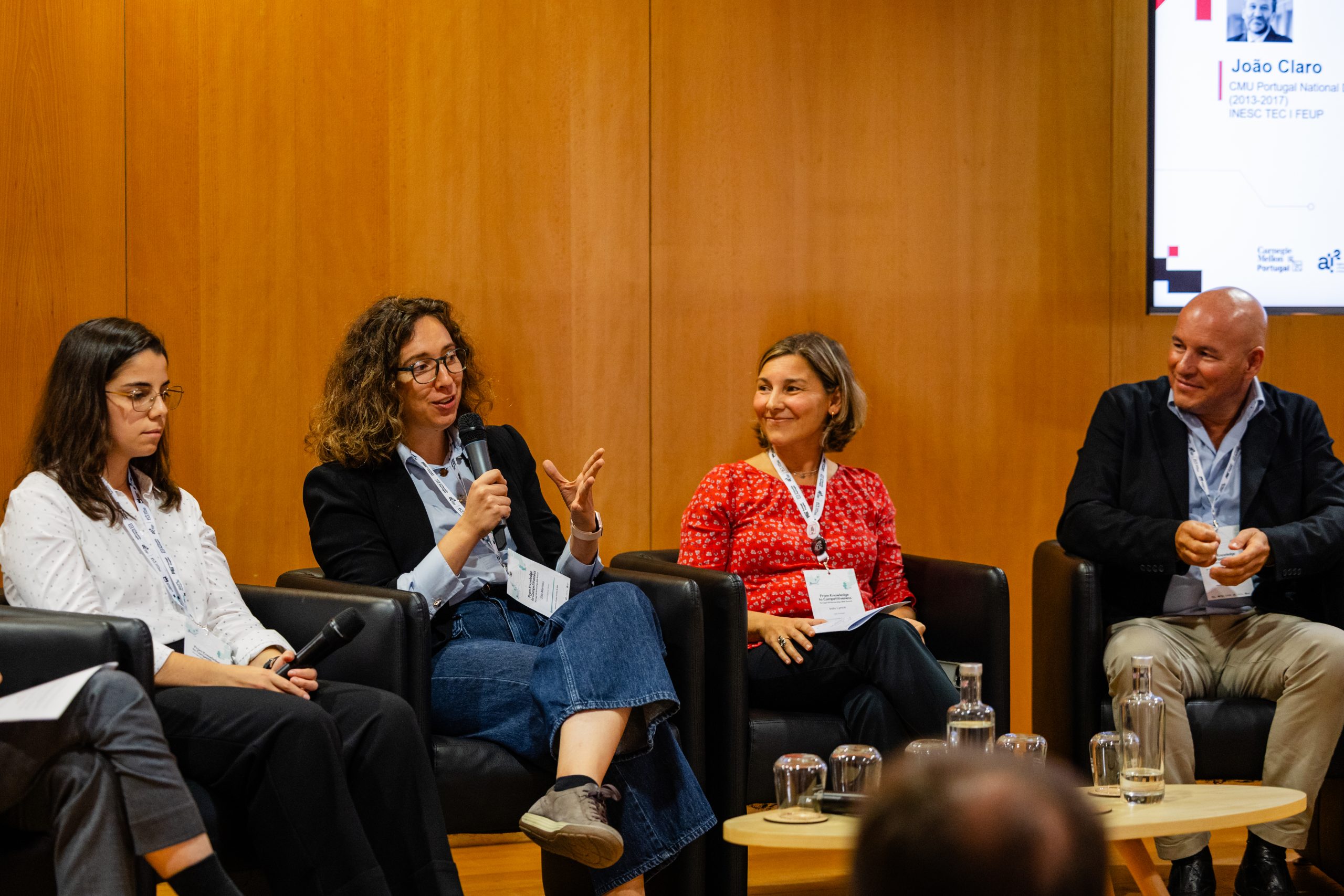
Moderated by Sir John O’Reilly, member of the External Review Committee, the panel brought together João Claro, CMU Portugal National Director (2013-2017), Chairman and CEO of INESC TEC and Professor at FEUP; Nuno Nunes, CMU Portugal National Co-Director (2018-2024), Full Professor at Técnico ULisboa, and President and Founder of Interactive Technologies Institute; and Inês Lynce, CMU Portugal National Co-Director (2021-present), President of the Board of Directors at INESC-ID and Professor at Técnico ULisboa.
Inês Lynce highlighted that CMU Portugal is, above all, a true partnership, built on equal commitment from both Portugal and CMU, with both sides working together toward shared goals. She emphasized the importance of supporting different research and innovation pathways through complementary programs and instruments, while stressing that students remain at the heart of the Program.
The discussion was further enriched by perspectives from the CMU Portugal community. Zita Marinho, Associate Professor at Técnico ULisboa, former Research Scientist at Google DeepMind, and CMU Portugal Dual Degree alumna, described her experience in the Program as life-changing, highlighting the value of being part of an international network of talented and ambitious individuals. She reflected on the lasting impact of that experience on her career and encouraged students to actively seek opportunities and build meaningful connections. Marta Freitas, currently pursuing a dual Ph.D. in Electrical and Computer Engineering at FCTUC and CMU, shared how her participation in the Visiting Students Program served as a catalyst for applying to the dual degree program. Her time at CMU helped her step outside her comfort zone and grow both personally and professionally as a researcher.
Looking toward 2030, the panelists reflected on the opportunities and challenges facing the research and innovation ecosystem, including the transformative role of artificial intelligence, the growing need for access to cutting-edge infrastructure, and the importance of sustained investment in science. A recurring theme throughout the session was that CMU Portugal’s greatest legacy lies not only in its achievements, but also in the talent, capabilities, and international partnerships it builds, providing a strong foundation for the next decade of research, innovation, and collaboration.
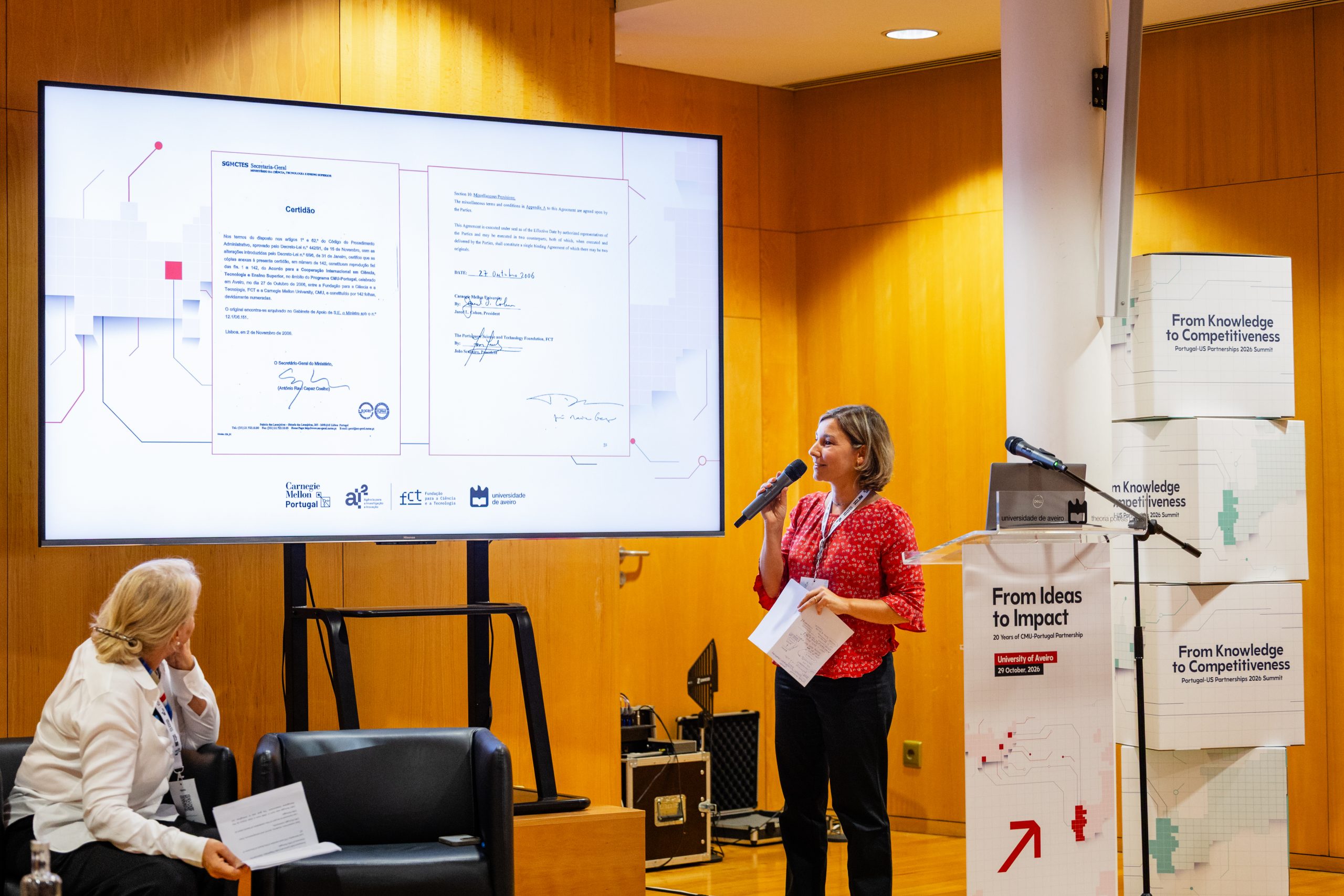
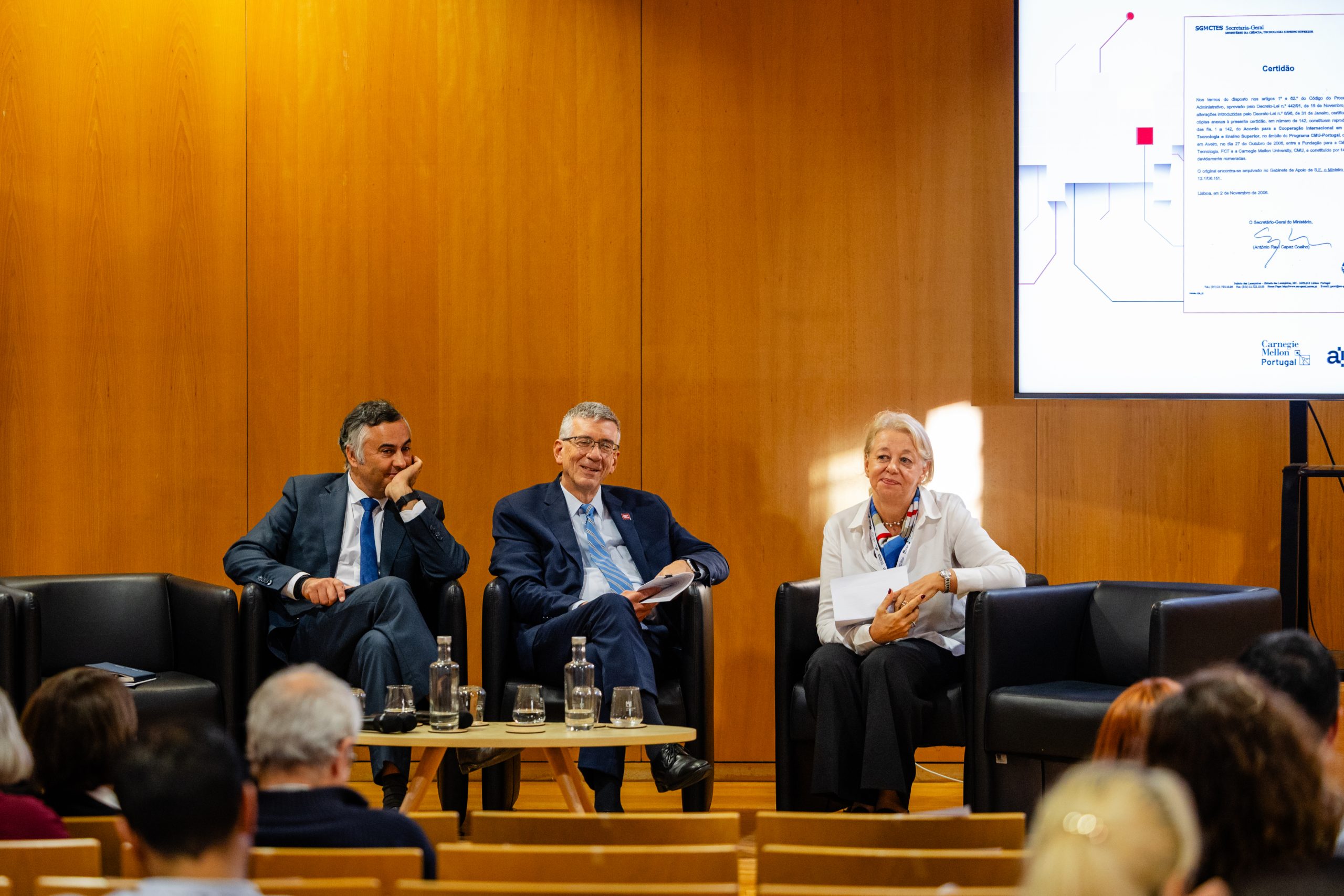
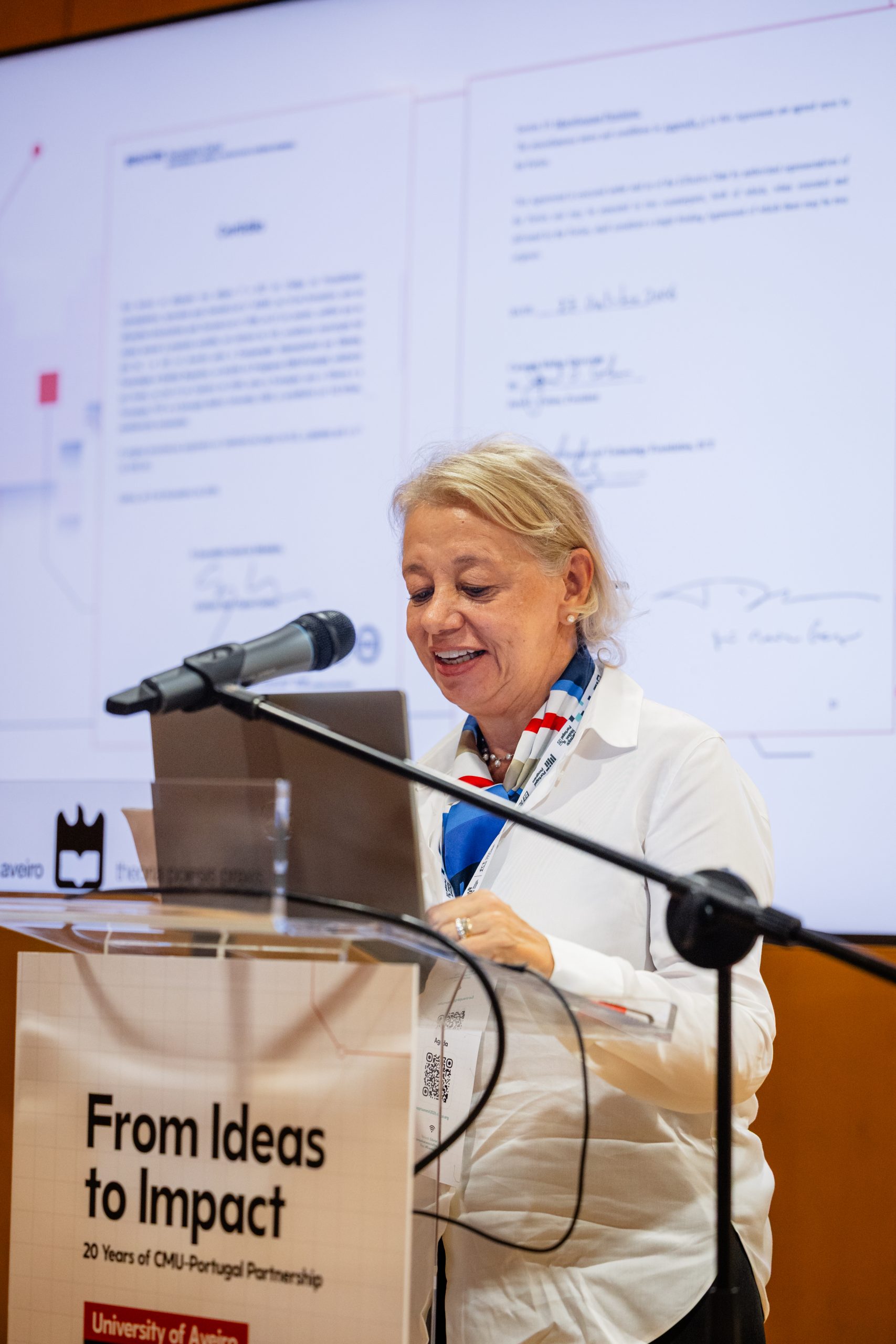
Moving to the Closing Session, Inês Lynce started her speech by inviting all to step back to 20 years ago, where exactly two decades ago, in Aveiro, the very first CMU Portugal Program contract was signed.
Looking back on two decades of collaboration, Inês highlighted how the Program’s impact extends far beyond research projects and initiatives. Its greatest strength lies in its people, particularly the more than 200 students, and the researchers, industry partners, entrepreneurs, and alumni who have contributed to building a vibrant innovation ecosystem, including successful spin-offs.
The success of the CMU Portugal Program has been driven by human connections, trust, and a shared commitment between institutions on both sides of the Atlantic. Looking ahead to a new decade shaped by artificial intelligence and autonomous systems, the importance of continuing to invest in talent, research excellence, and international collaboration was reinforced. The power of partnership will remain pivotal to addressing future challenges and turning new ideas into lasting impact.
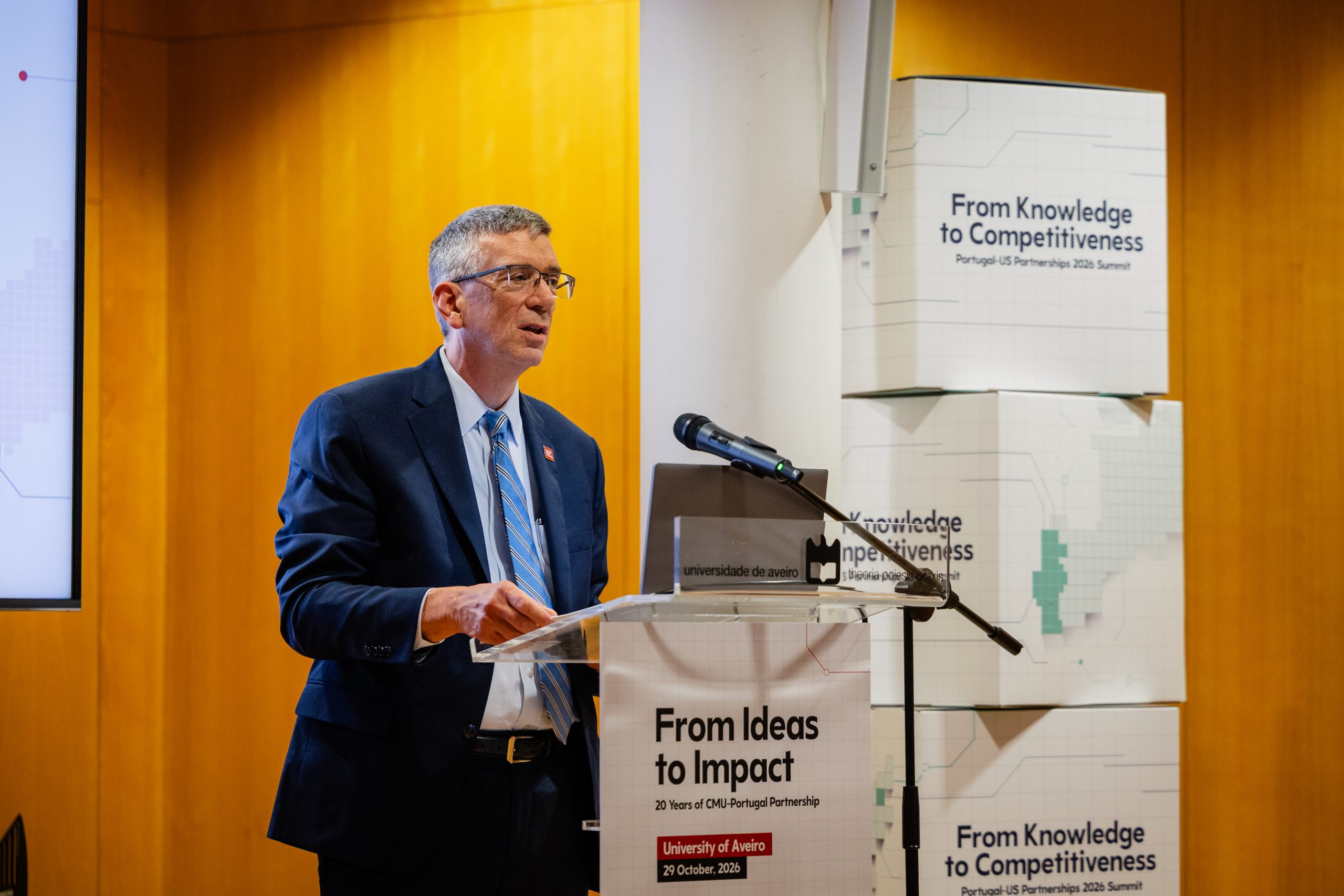
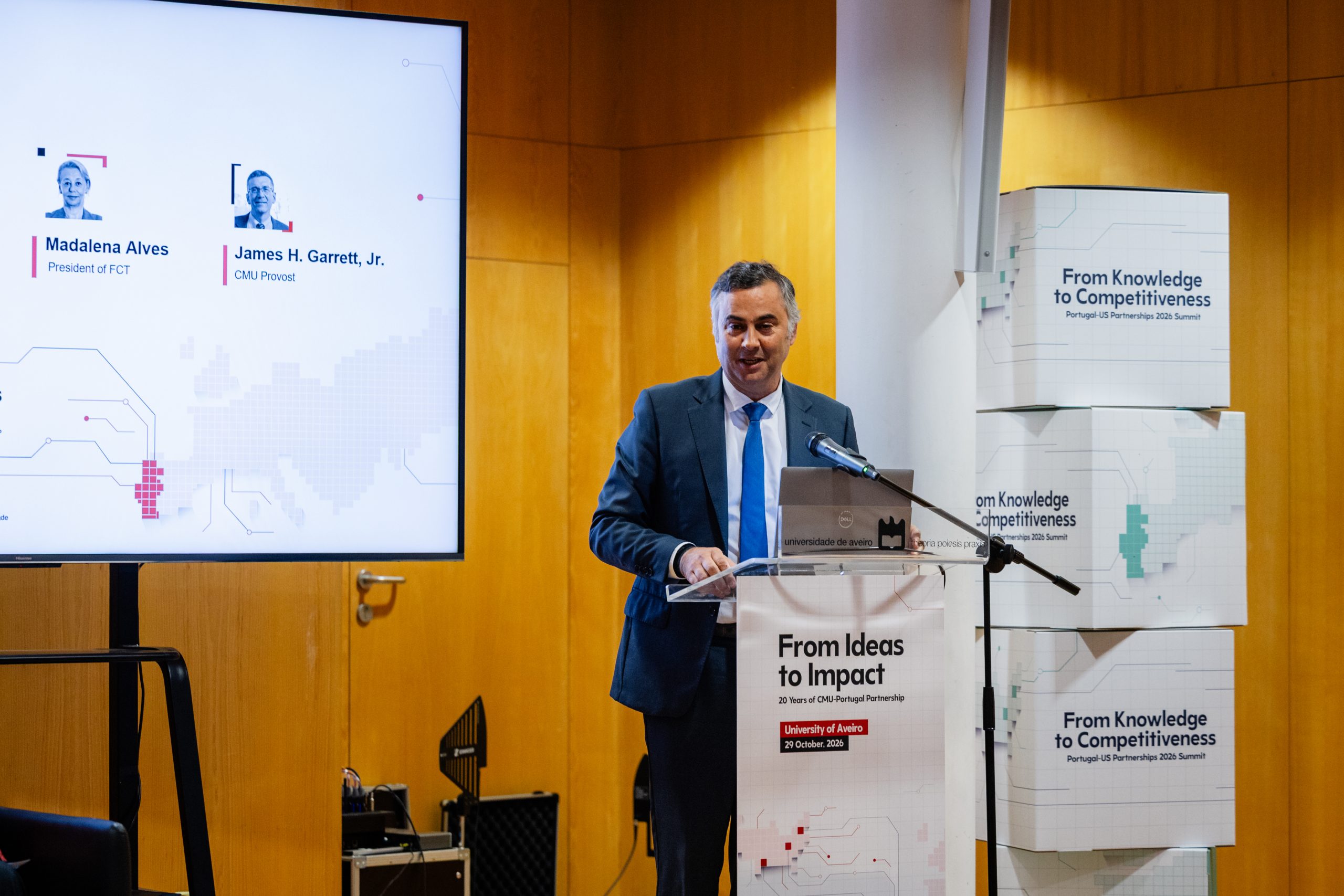
Madalena Alves, President of FCT, James H. Garrett Jr., Provost of CMU, and Fernando Alexandre, the Minister of Education, Science and Innovation, reflected on the achievements of the past two decades and the opportunities ahead, reaffirming the importance of international collaboration in advancing science, technology, innovation, and talent development.
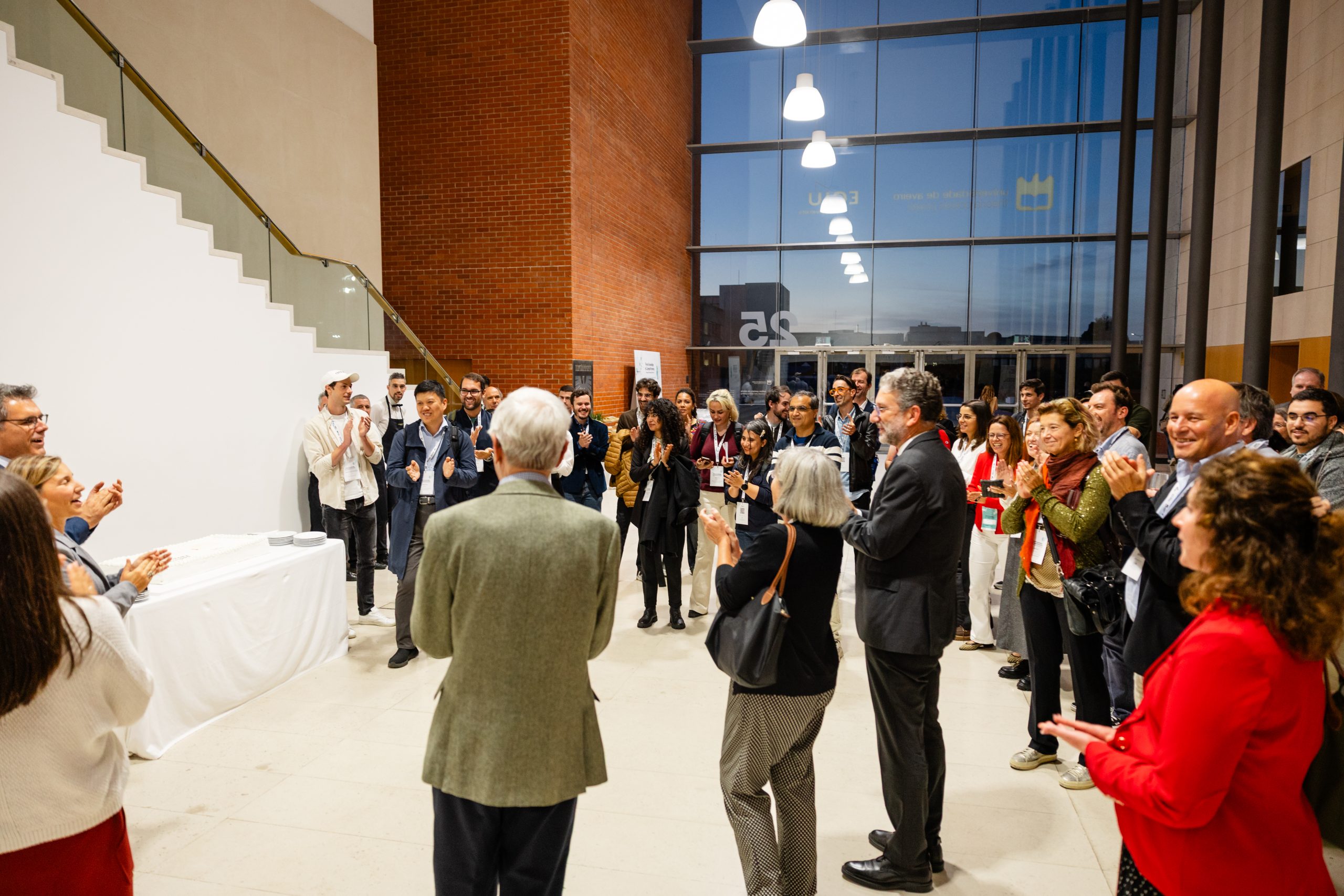
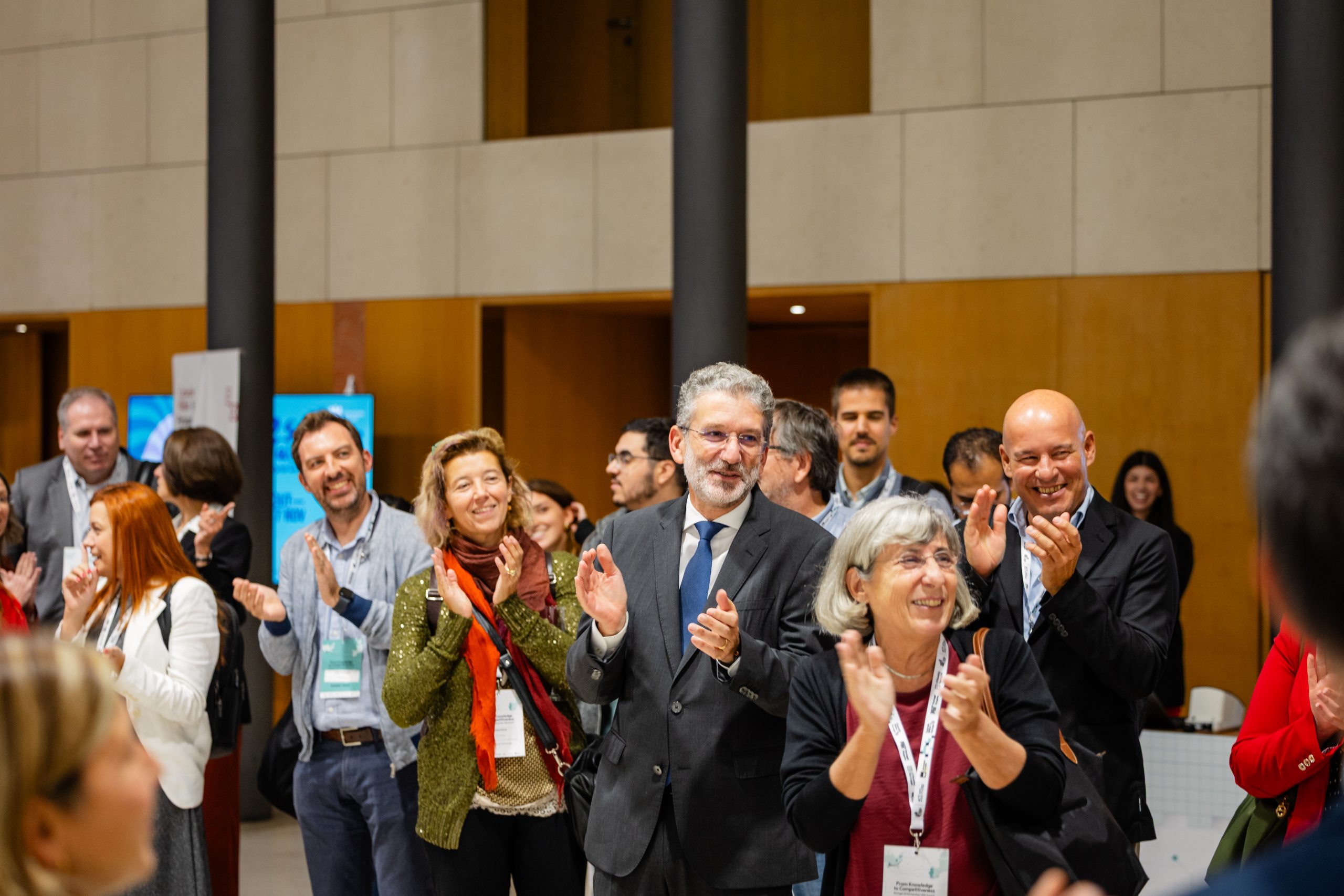
Following the closing remarks, participants and guests gathered to celebrate the CMU Portugal Program’s 20th anniversary with a commemorative toast, anniversary cake, and a final networking moment, an opportunity for researchers, students, alumni, institutional representatives, and industry partners to reconnect, exchange ideas, and celebrate two decades of collaboration, innovation, and impact.
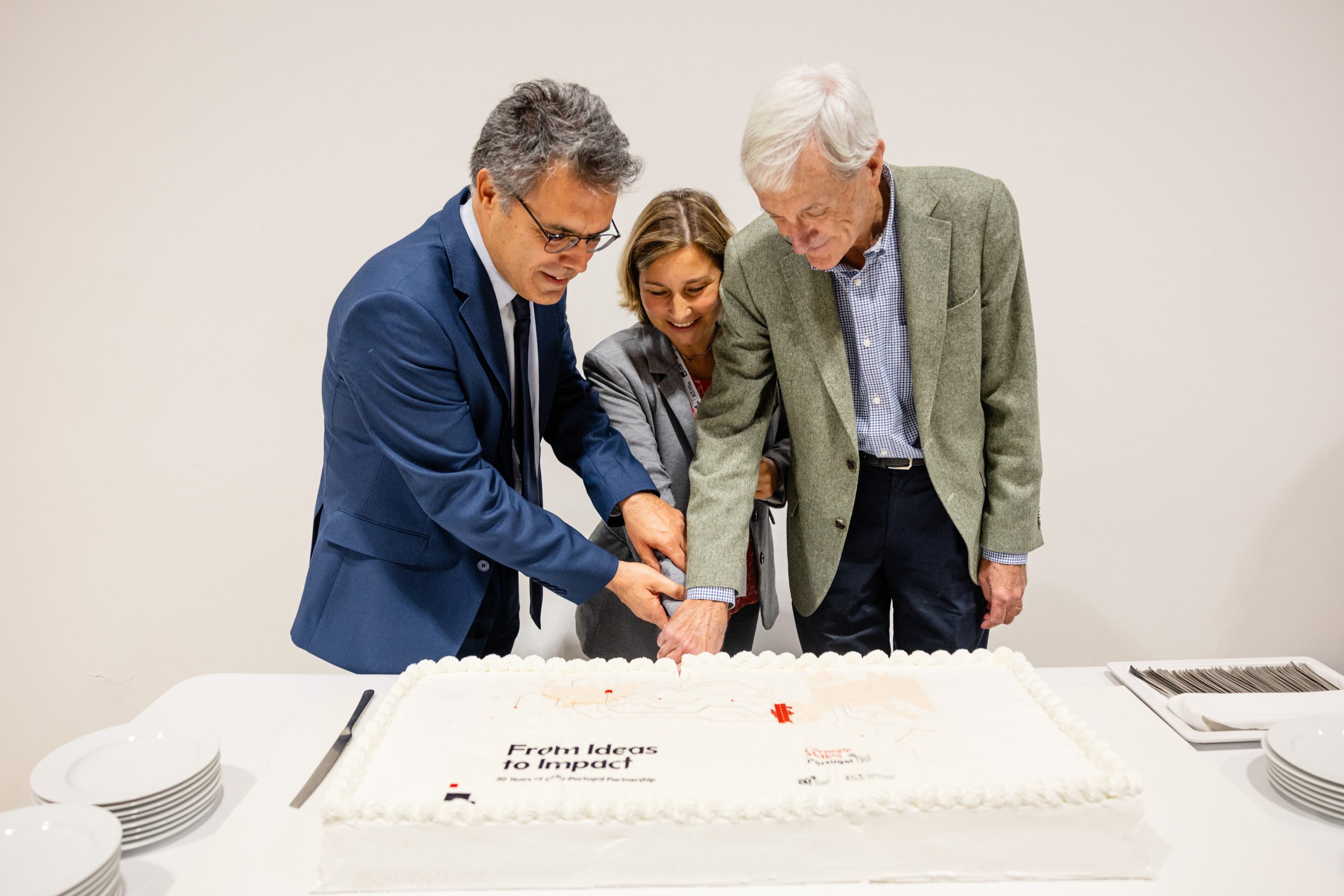
That evening, CMU Portugal Ph.D. students and recent graduates gathered for an informal dinner, an opportunity to reconnect, share experiences, and strengthen the relationships that have been a cornerstone of the Program’s success.
October 30: Portugal-US Partnerships 2026 Summit: “From Knowledge to Competitiveness”
Moving to the second day, October 30, the spotlight turned to the Portugal-US Partnerships 2026 Summit – the first Phase IV Conference jointly organized by CMU Portugal, MIT Portugal, and UT Austin Portugal.
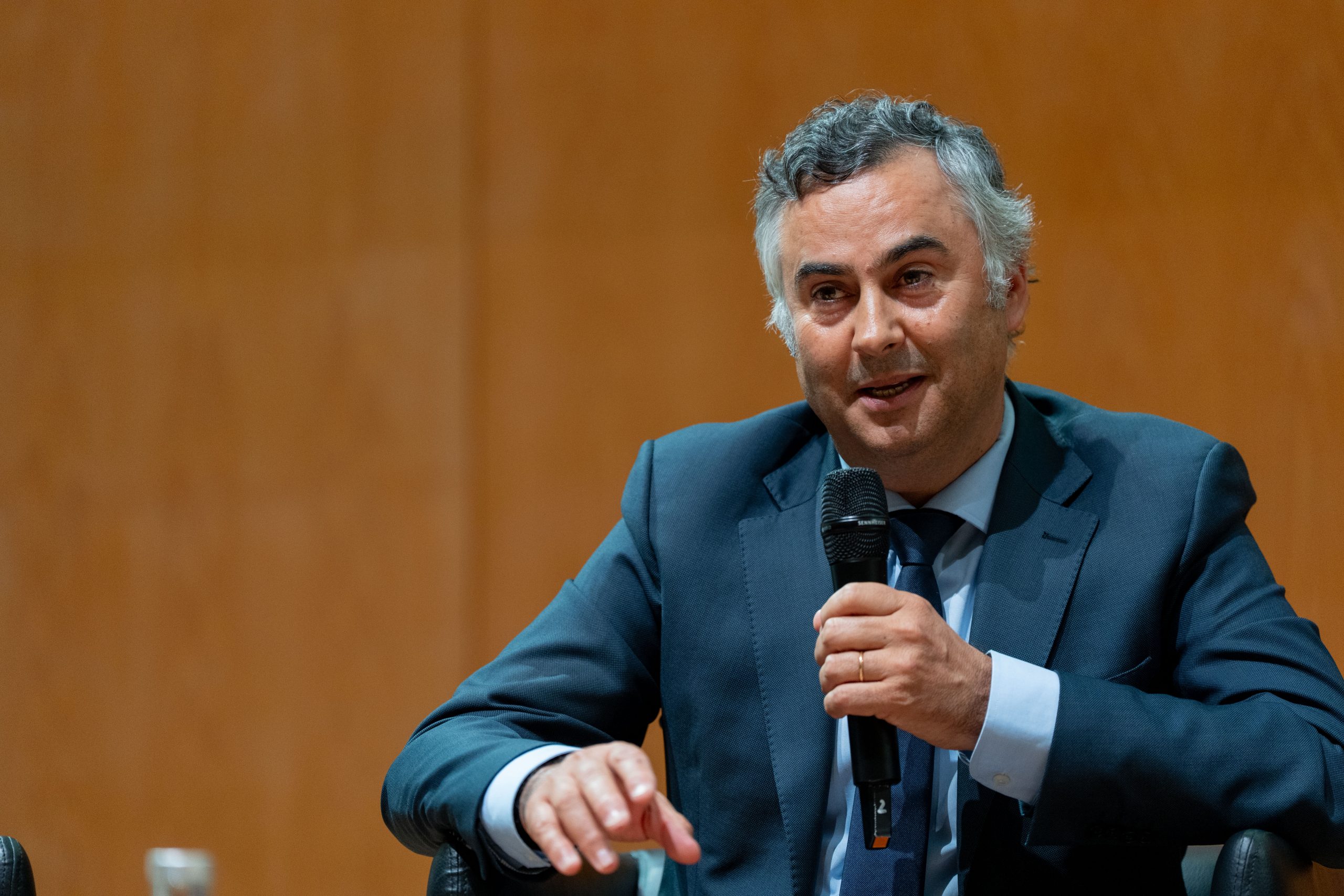
The Summit opened with remarks from Artur Silva, Rector of the University of Aveiro, José Manuel Mendonça, Coordinator of the Portugal-US Partnerships, João Barros, President of AI² – Agência para a Investigação e Inovação, and Helena Canhão, Secretary of State for Science and Innovation. The speakers highlighted the achievements of the Portugal-US Partnerships and emphasized the importance of international collaboration, research excellence, innovation, and talent development in addressing future societal and technological challenges.
Addressing students, researchers, and innovators, João Barros delivered an inspiring message: “Don’t let anyone tell your dreams are too big for Portugal” encouraging them to pursue their vision and ambitions and overcome obstacles along the way.
The inaugural session “Portugal-U.S. Cooperation in Perspective: From Research to Innovation and Competitiveness” was moderated by João Barros, President of AI², bringing together representatives from academia, industry, and research organizations: Isabel Furtado, Vice-President of AmCham Portugal; Michael Baum, Executive Board Member at FLAD – Luso-American Development Foundation; Dan Stanzione, Associate Vice President for Research & Executive Director of Texas Advanced Computing Center (UT Austin); Theresa Mayer, Vice President for Research at CMU, and Duane Boning, Vice Provost for International Activities of MIT.
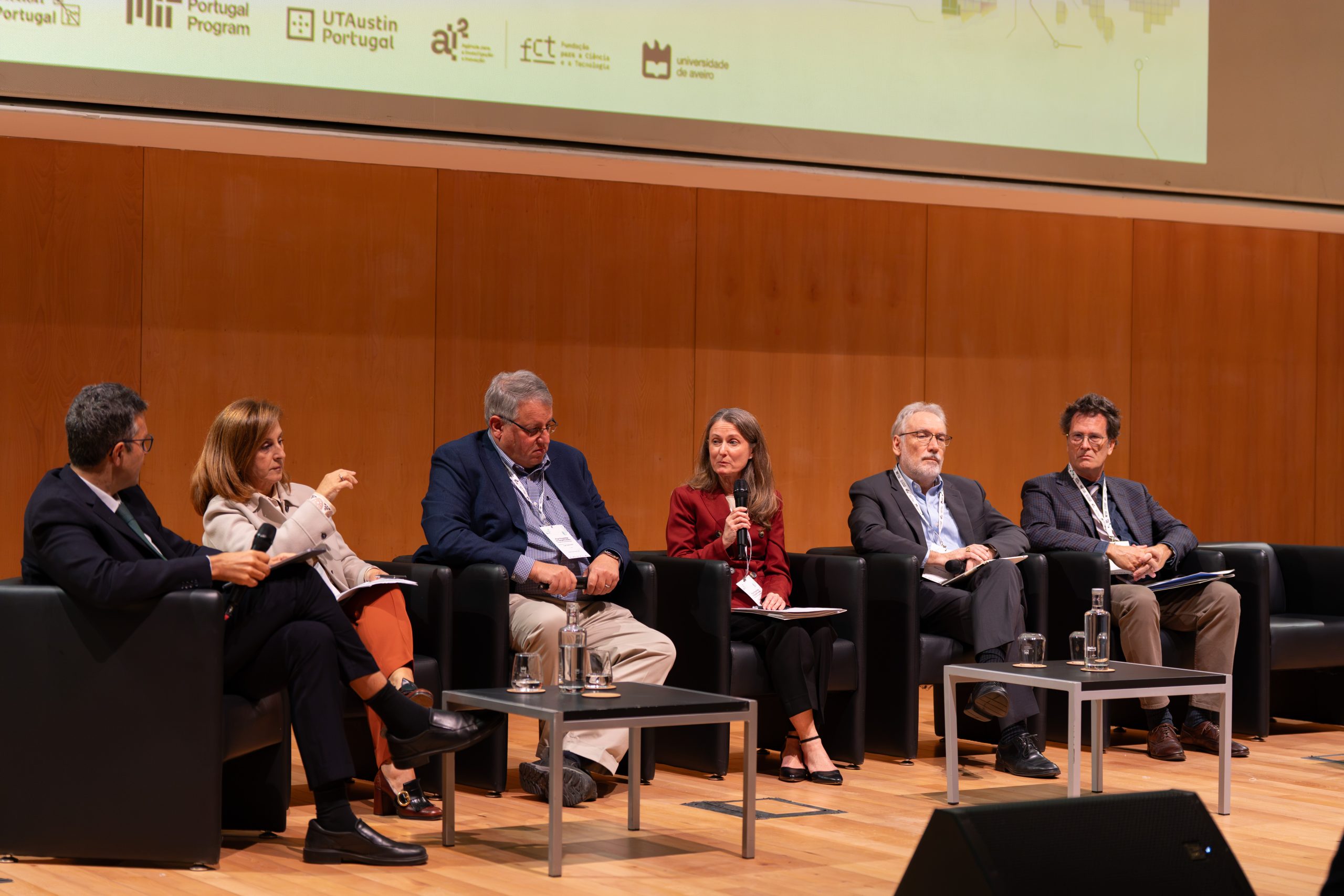
The speakers reflected on the impact of the Portugal-U.S. partnerships in advancing scientific excellence and translating research into economic and societal value, while highlighting future opportunities for collaboration in emerging technologies and innovation.
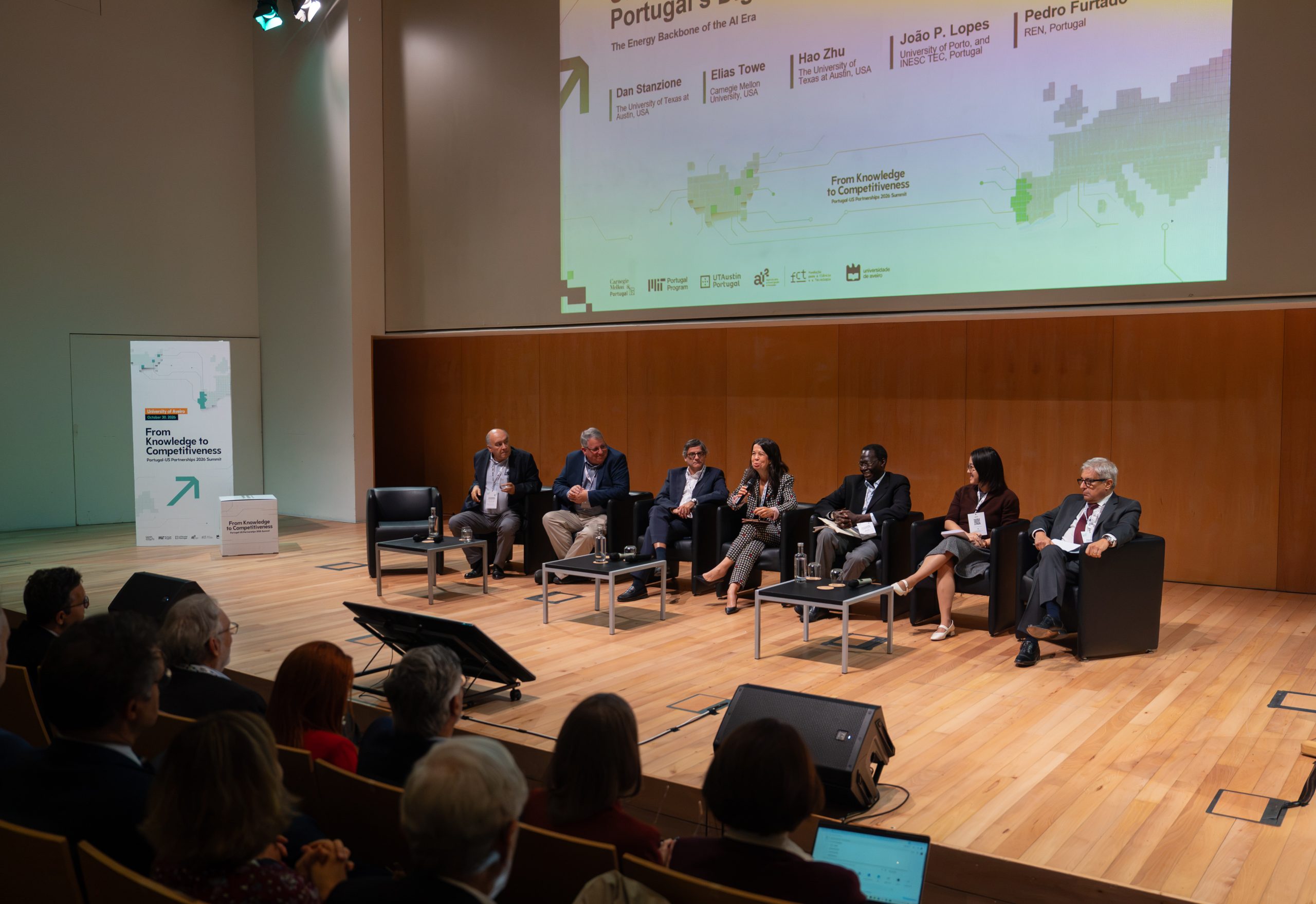
The first thematic session of the Summit, “Powering Portugal’s Digital Future: The Energy Backbone of the AI Era” was organized by the UT Austin Portugal Program and explored the challenges and opportunities associated with supporting the rapid growth of AI-driven infrastructure.
Moderated by Rui Olivera and Rute André, UT Austin Portugal National Directors, the panel featured contributions from Dan Stanzione; Elias Towe (CMU), Hao Zhu (UT Austin), João Peças Lopes (INESC TEC), and Pedro Furtado (REN). The discussion highlighted the importance of sustainable computing, grid resilience, energy efficiency, and international collaboration in ensuring that digital transformation is compatible with long-term energy and sustainability goals.
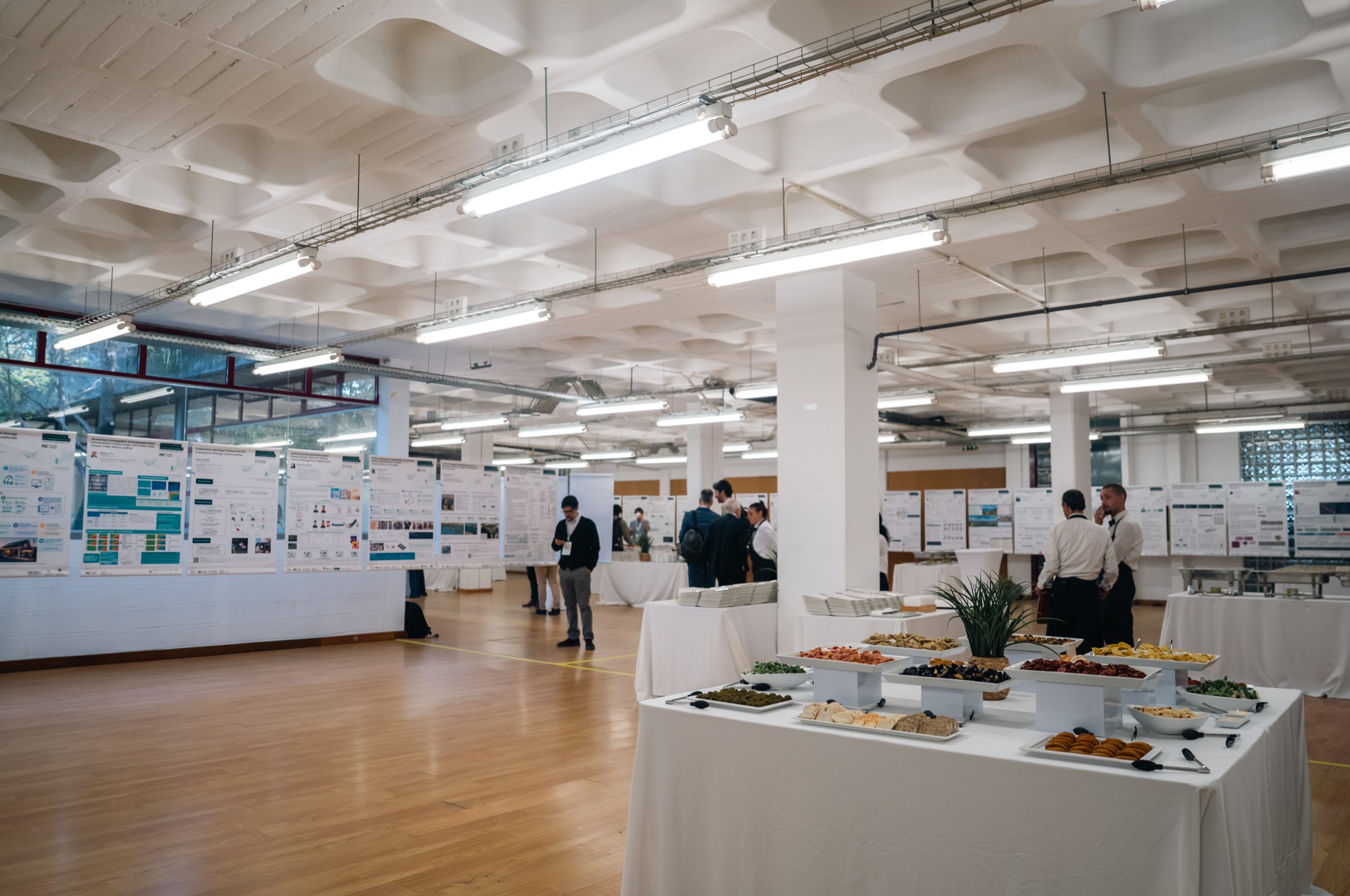
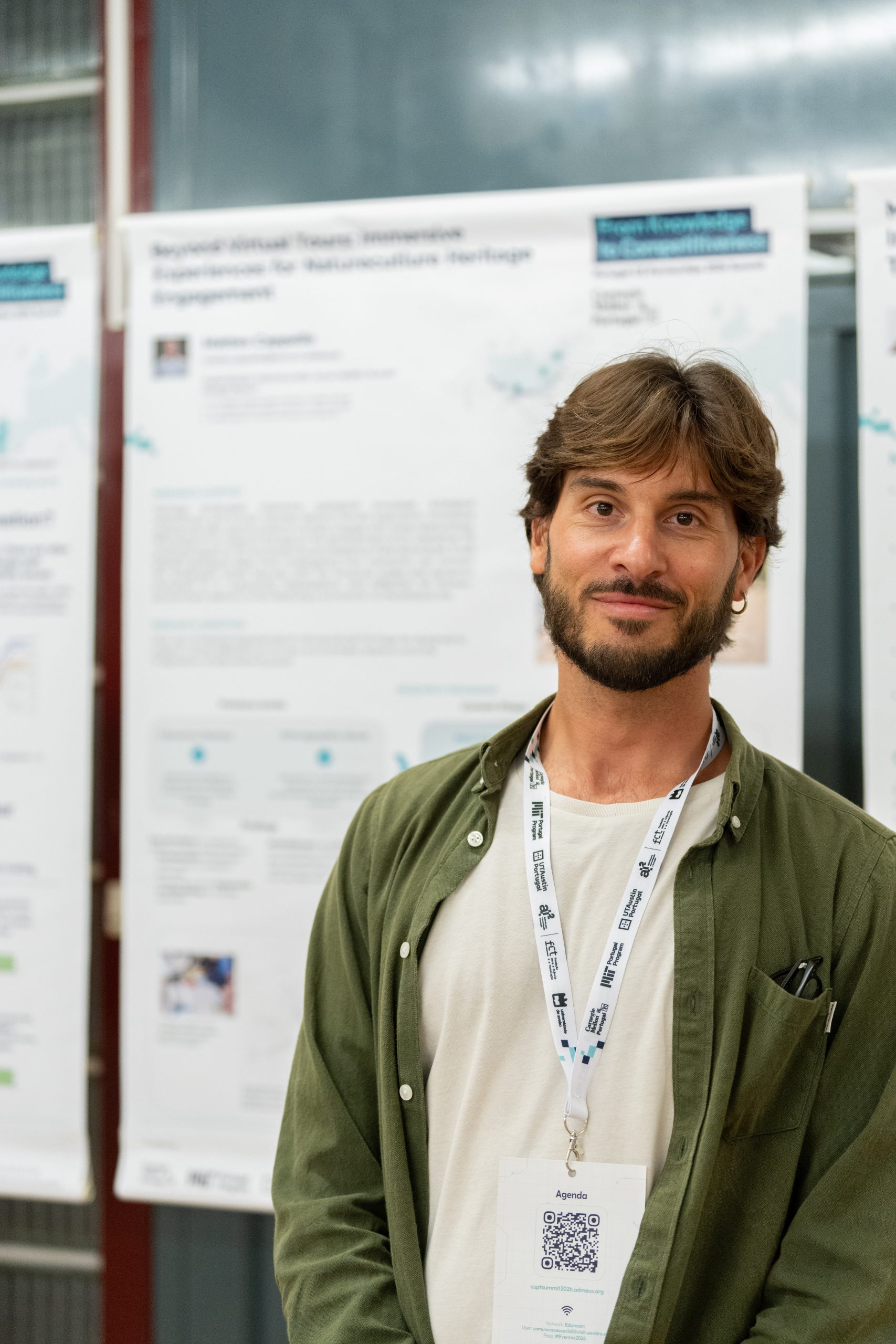
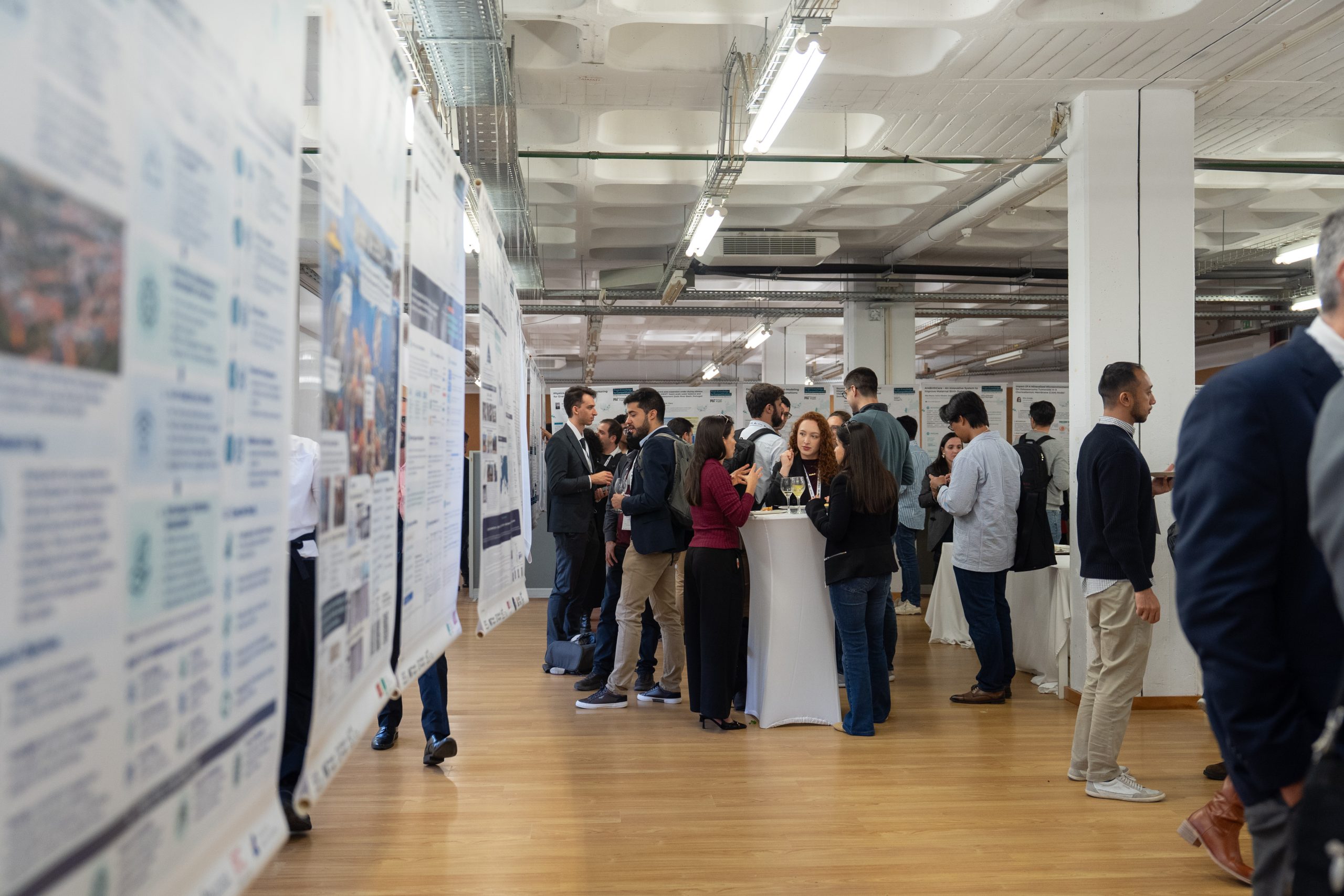
Following the morning sessions, participants of the Summit gathered for a networking lunch and poster exhibition. The informal setting provided an opportunity for researchers, students, faculty and industry representatives to connect, exchange ideas, and explore new avenues for collaboration. The exhibition was composed of 82 posters from the three international partnerships, showcasing research achievements, talent development initiatives, entrepreneurial projects, and innovative solutions developed across the three partnerships.
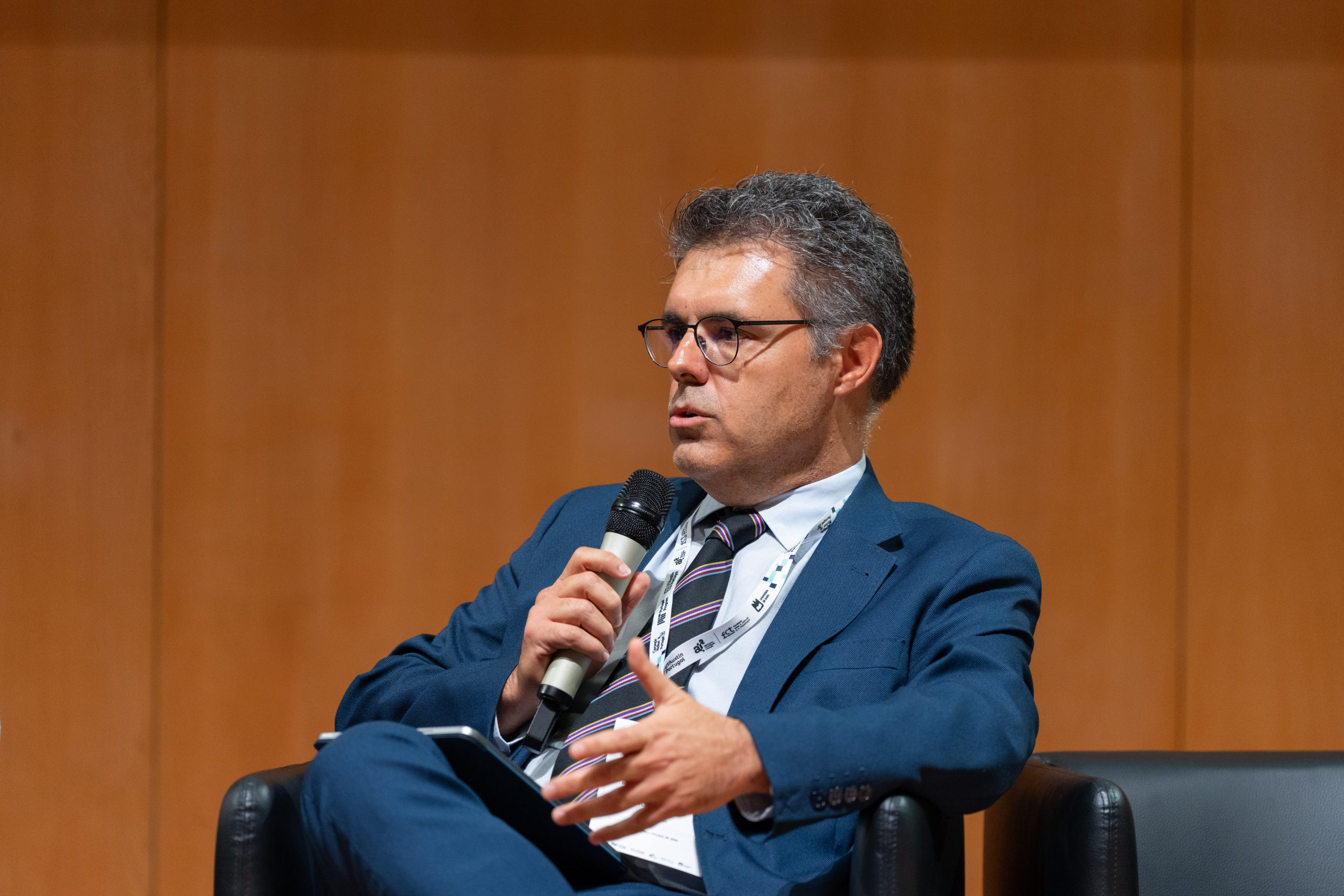
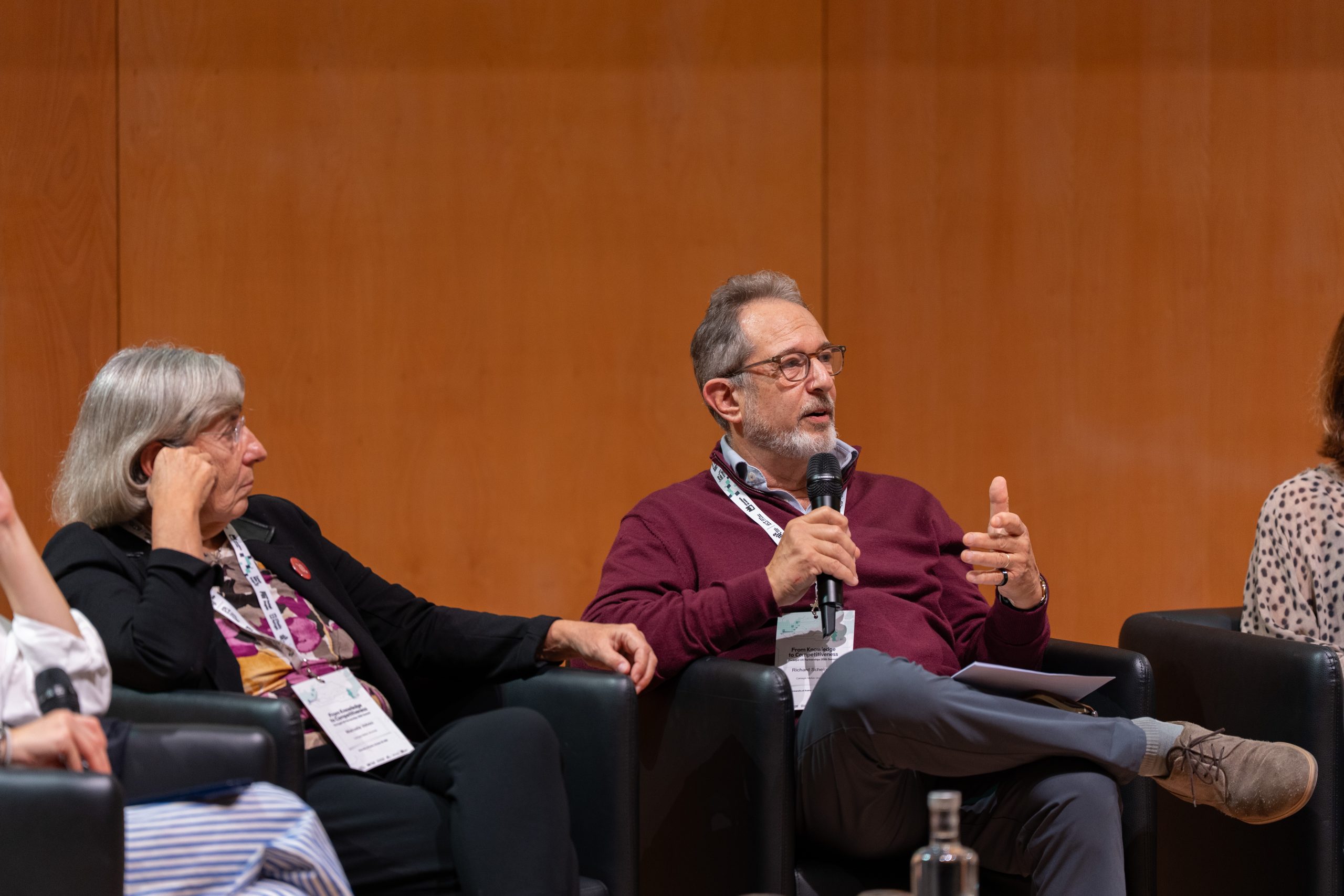
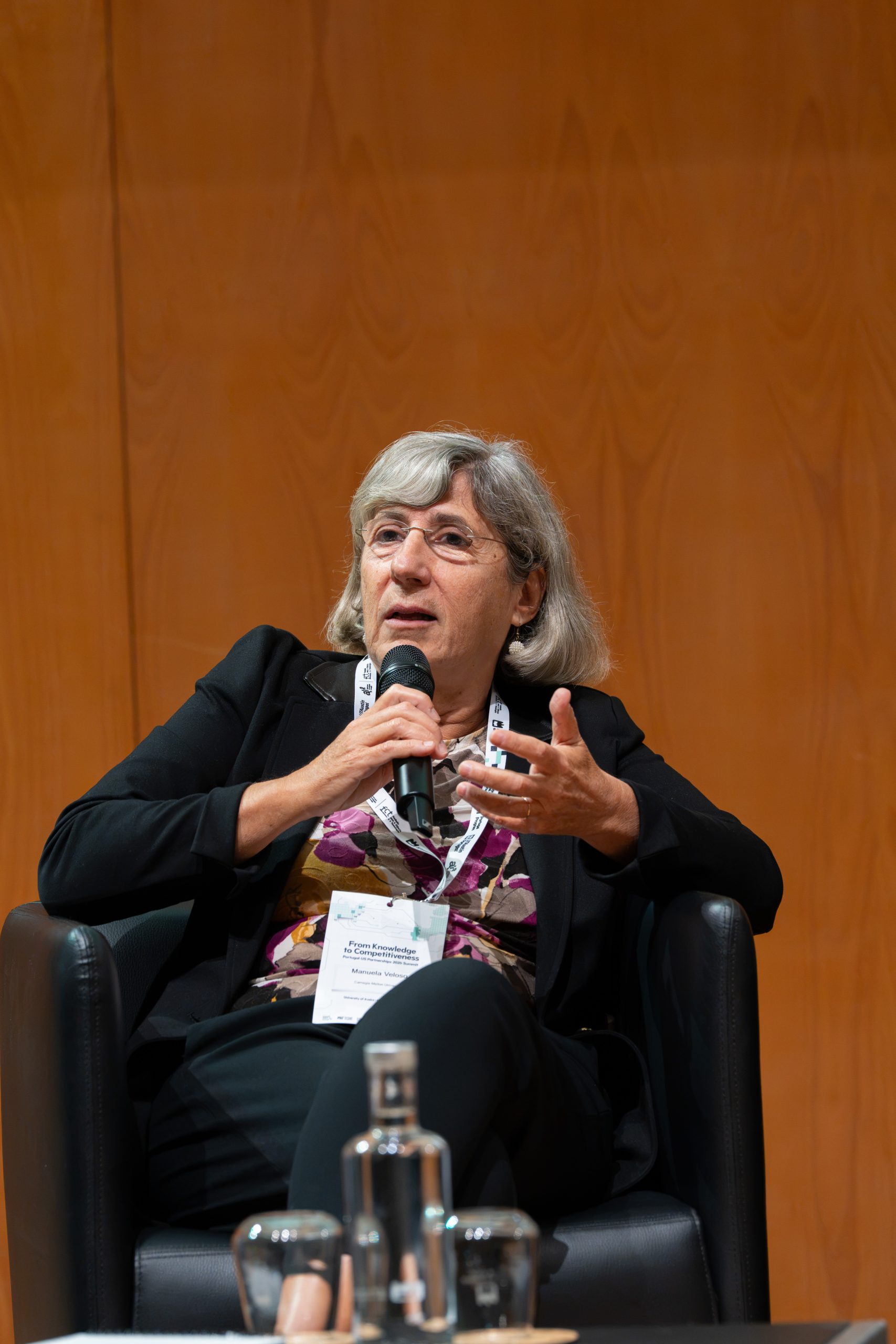
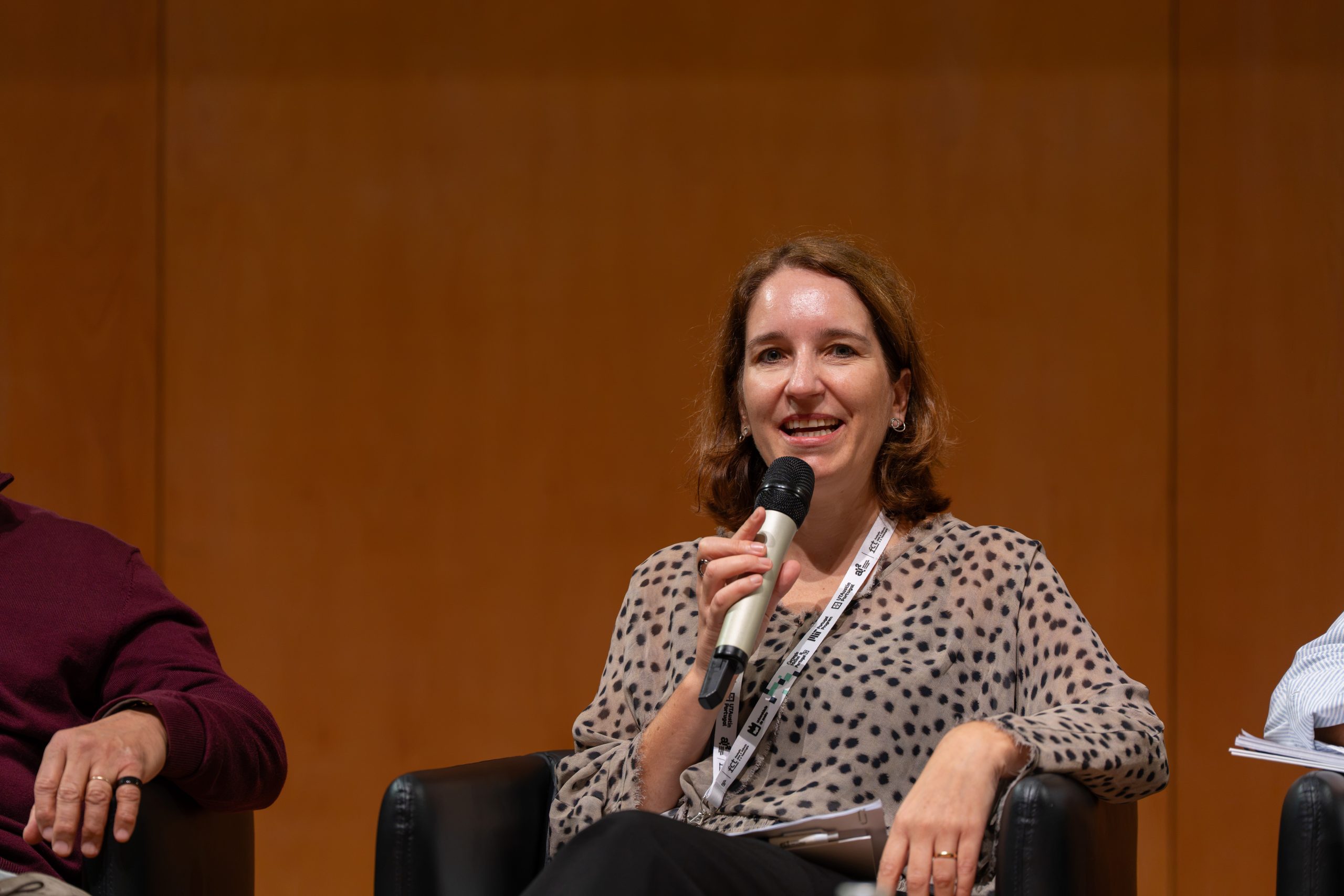
In the afternoon, session II “Universities and AI: What’s Next?” organized by the CMU Portugal Program, focused on how universities must evolve in response to the quick development of Generative AI. Moderated by Paula Cordeiro, Assistant Professor at ISCSP and Scientific and Pedagogical Coordinator of Radio Hub, the discussion brought together Manuela Veloso, Herbert A. Simon University Professor Emerita at CMU, Richard Scheines, University Professor of Philosophy, Dean Emeritus CMU, Sandra Soares, Vice Rector at University of Aveiro and Coordinator of the Artificial Intelligence group at CNIPES; Bernardo Caldas, Data and AI Director at Mollie, and João Magalhães CMU Portugal National Co-Director, Full Professor at NOVA School of Science and Technology, to reflect on the future of higher education in an AI-driven world.
Throughout the session, the speakers agreed that Generative AI does not diminish the relevance of universities, but it does require institutions to rethink how they teach, assess, and prepare students for the future. The discussion highlighted AI’s potential to personalize learning and expand access to knowledge, while emphasizing the continued importance of critical thinking, foundational skills, and human guidance in the learning process.
A recurring theme was the need to shift assessment from final outputs to learning processes, ensuring that students develop a genuine understanding of concepts rather than relying solely on AI-generated results. The discussion highlighted that universities must foster environments where curiosity, creativity, and interdisciplinary problem-solving can thrive, with faculty increasingly acting as mentors and coaches rather than only providers of information.
The panel concluded that universities must adapt to the AI era by integrating AI into teaching and learning in a purposeful way, while preserving critical thinking, foundational knowledge, and meaningful intellectual challenge. The panel’s recommendations revolved around eight priorities: integrating AI into the curriculum; assessing learning processes rather than outputs; preserving foundational skills and intellectual challenge; investing in teaching innovation; strengthening AI and digital literacy; ensuring human accountability for AI use; measuring learning outcomes instead of student satisfaction; and fostering interdisciplinary collaboration using partnerships such as CMU Portugal to share good practices.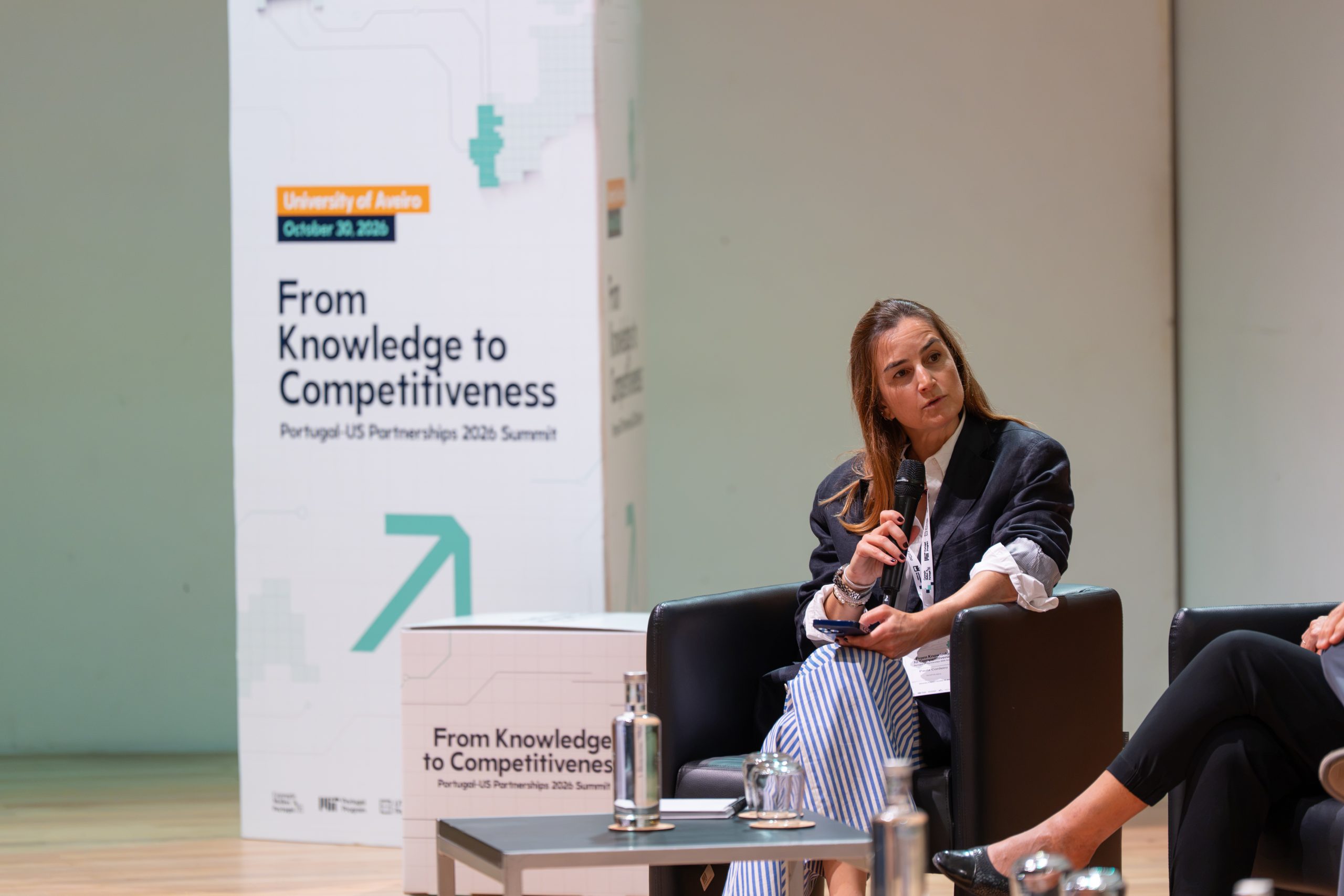
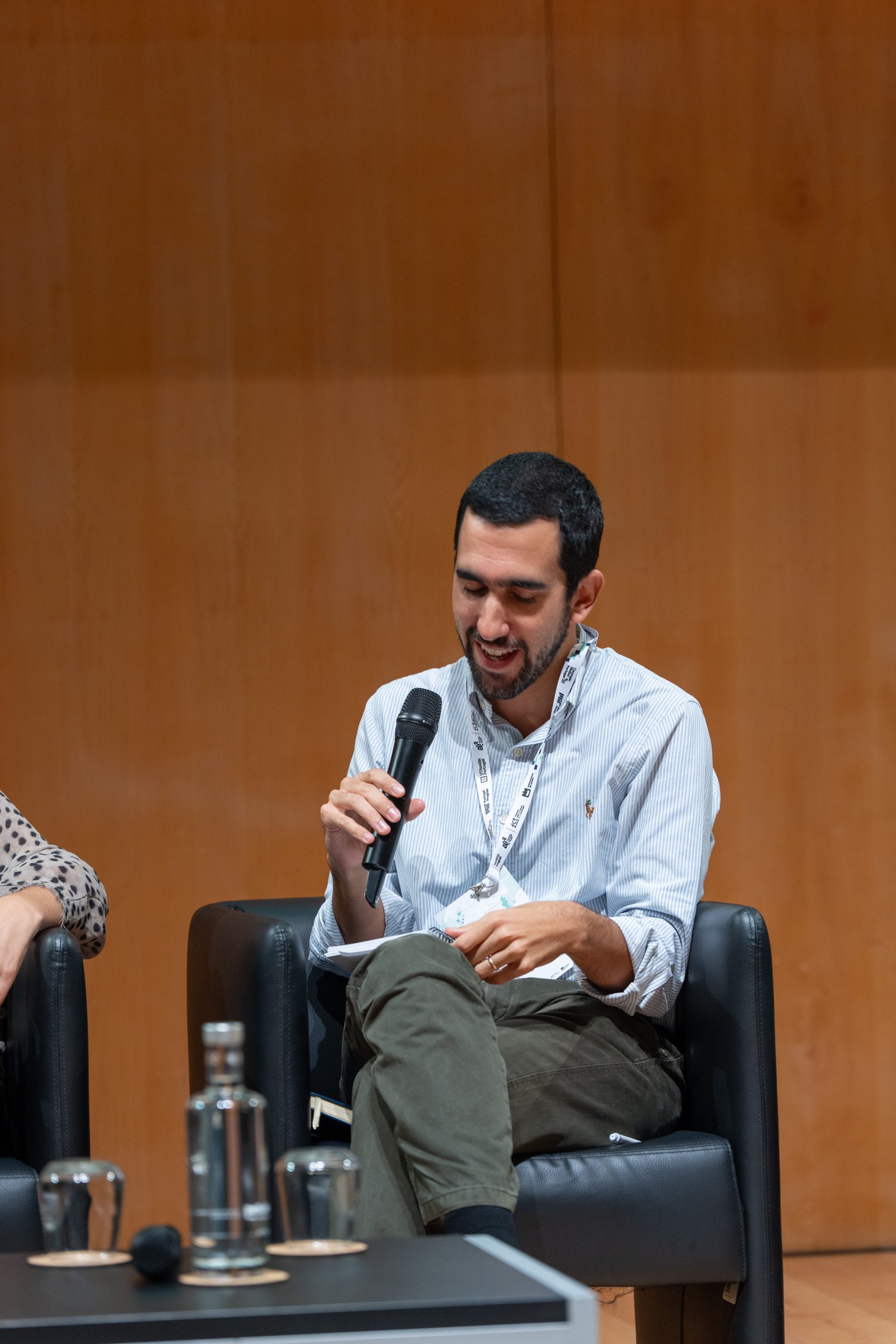
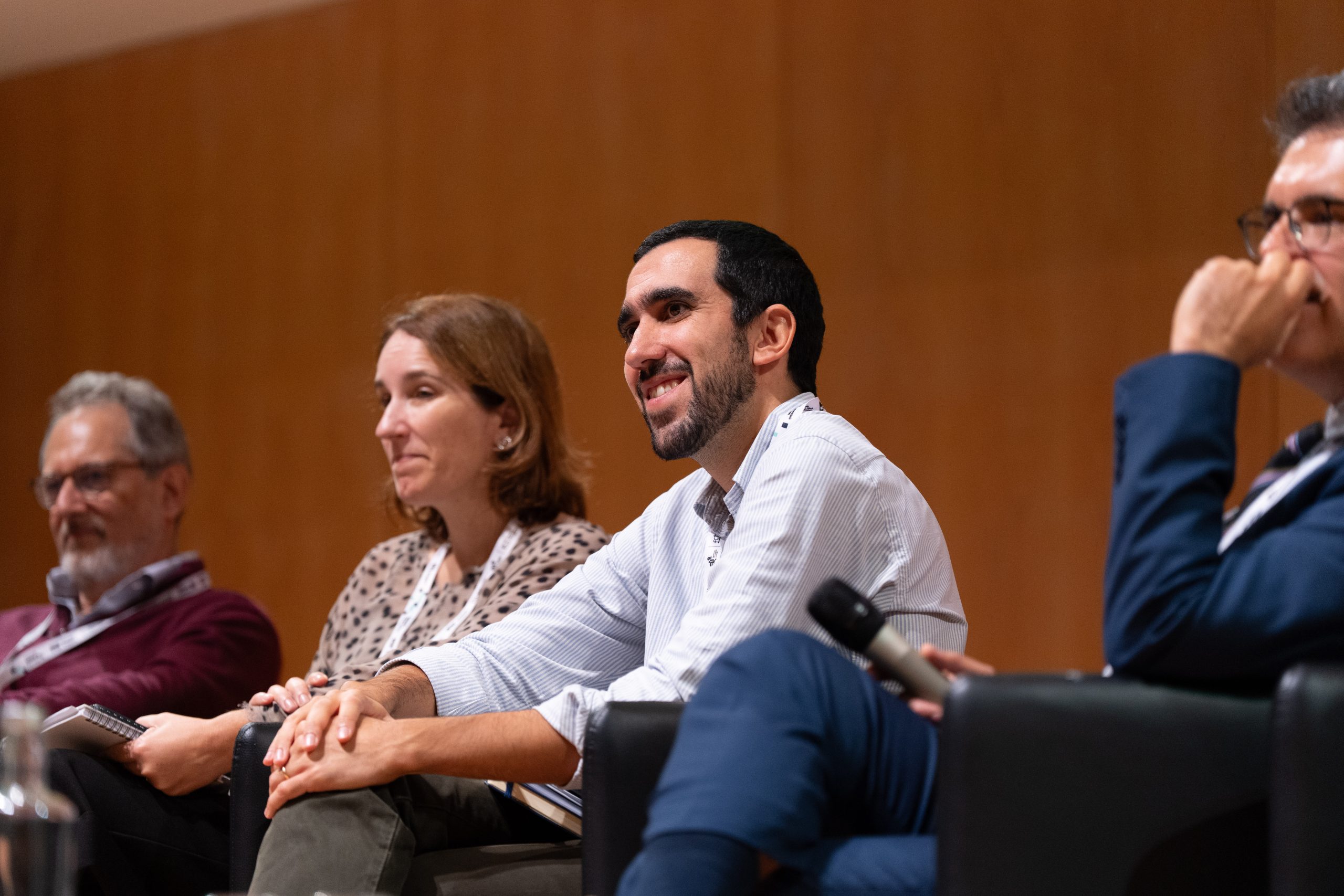
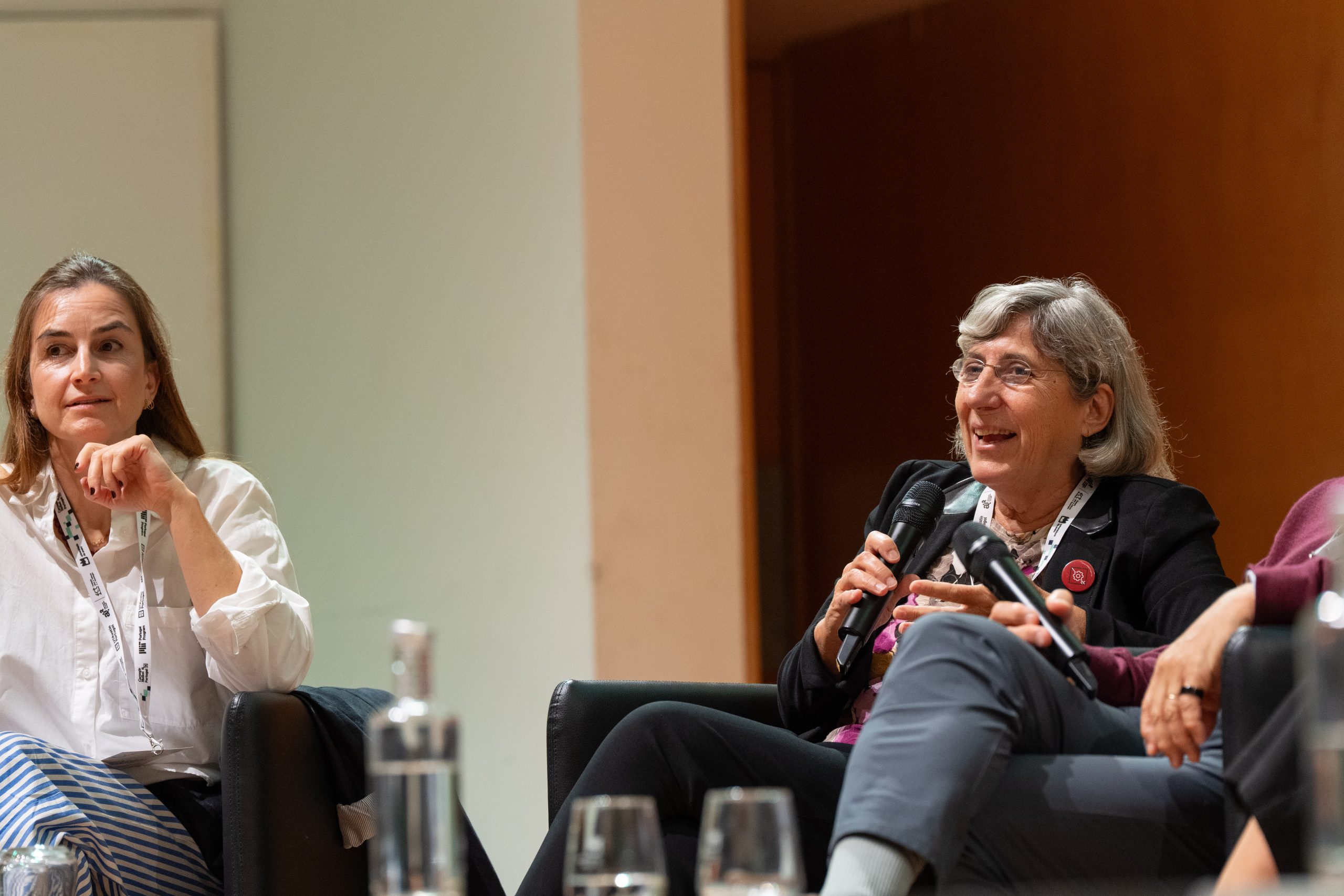
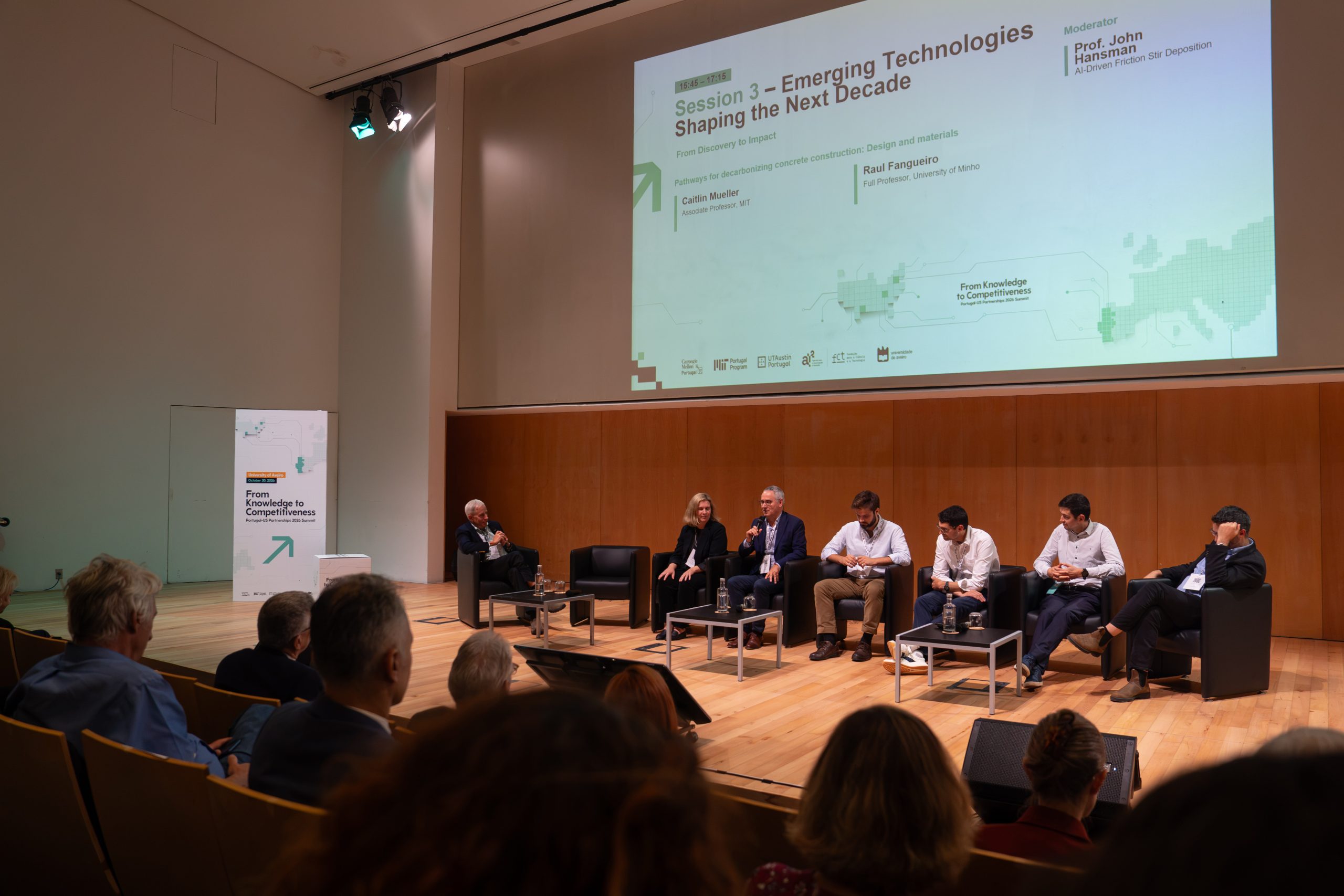
After a short break, the Summit reconvened with session III “Emerging Technologies Shaping the Next Decade: From Discovery to Impact”, organized by the MIT Portugal Program, to explore how emerging technologies are creating new opportunities to address global challenges while strengthening economic competitiveness.
Moderated by John Hansman (MIT), the session highlighted the growing convergence of fields such as artificial intelligence, advanced manufacturing, space technologies, sustainable materials, and climate-focused innovation, and the role of international collaboration in accelerating their development and deployment.
Through presentations of three MIT Portugal projects, speakers showcased how research can be translated into real-world impact. Zachary Cordero (MIT) and Eduardo Marques (University of Porto) showcased research on “AI-Driven Friction Stir Deposition for Repair of Critical Aerostructures”; Zachary Manchester (MIT, and former CMU Portugal faculty) and João Paulo Monteiro (IST NanosatLab, ULisboa) introduced “AstroBit”, an open-source platform for small spacecraft development; and Caitlin Mueller (MIT) and Raul Fangueiro (University of Minho) shared the research on “Pathways for decarbonizing concrete construction: Design and materials”.
After the presentations, the discussion focused on how interdisciplinary research, technological convergence, and international partnerships can help bridge the gap between scientific discovery and practical impact. The panelists reflected on Portugal’s potential to build on its scientific and industrial strengths to become a leader in emerging technology sectors, while highlighting the importance of collaboration among academia, industry, and government to transform research excellence into economic and societal value.
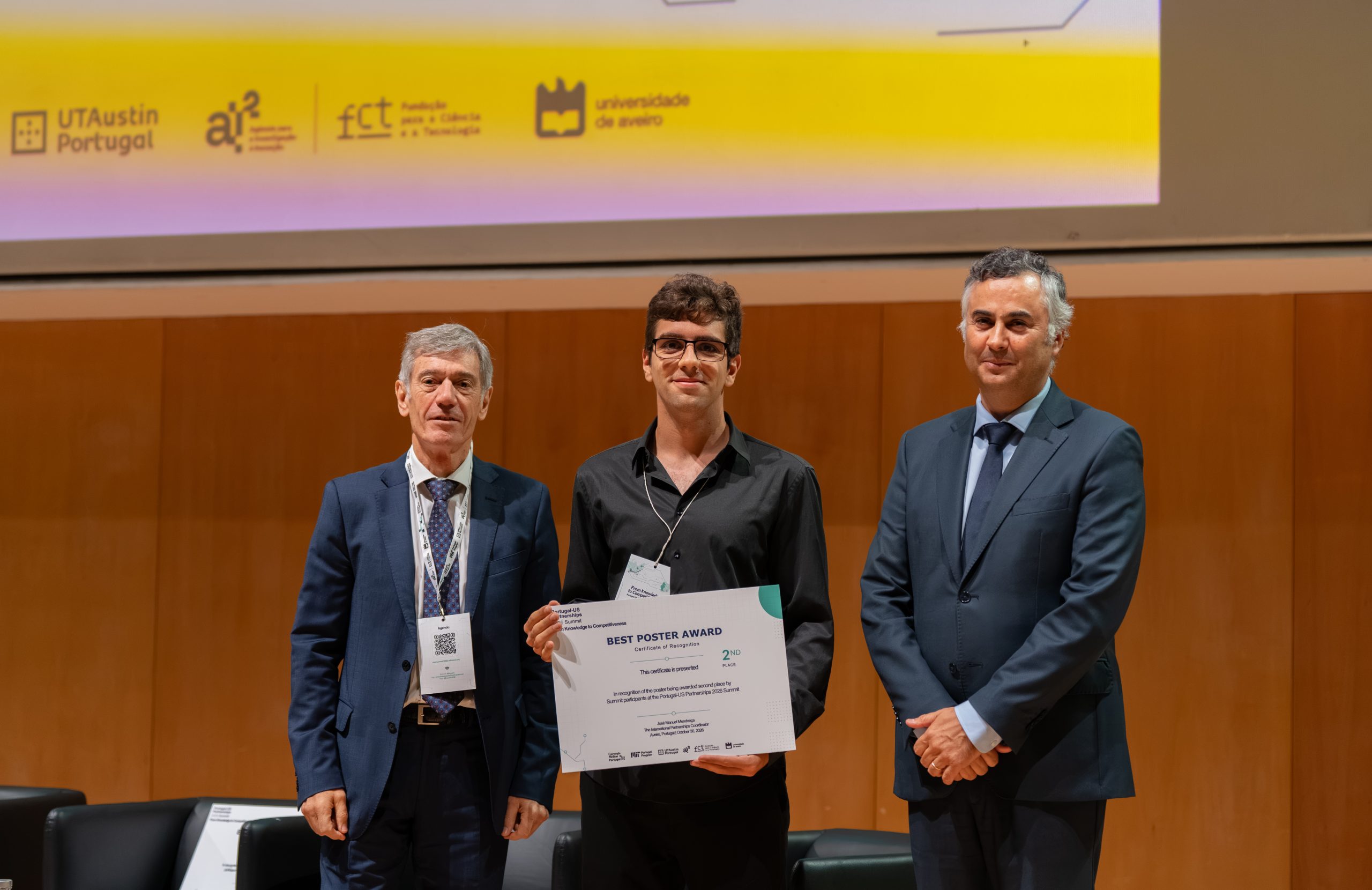
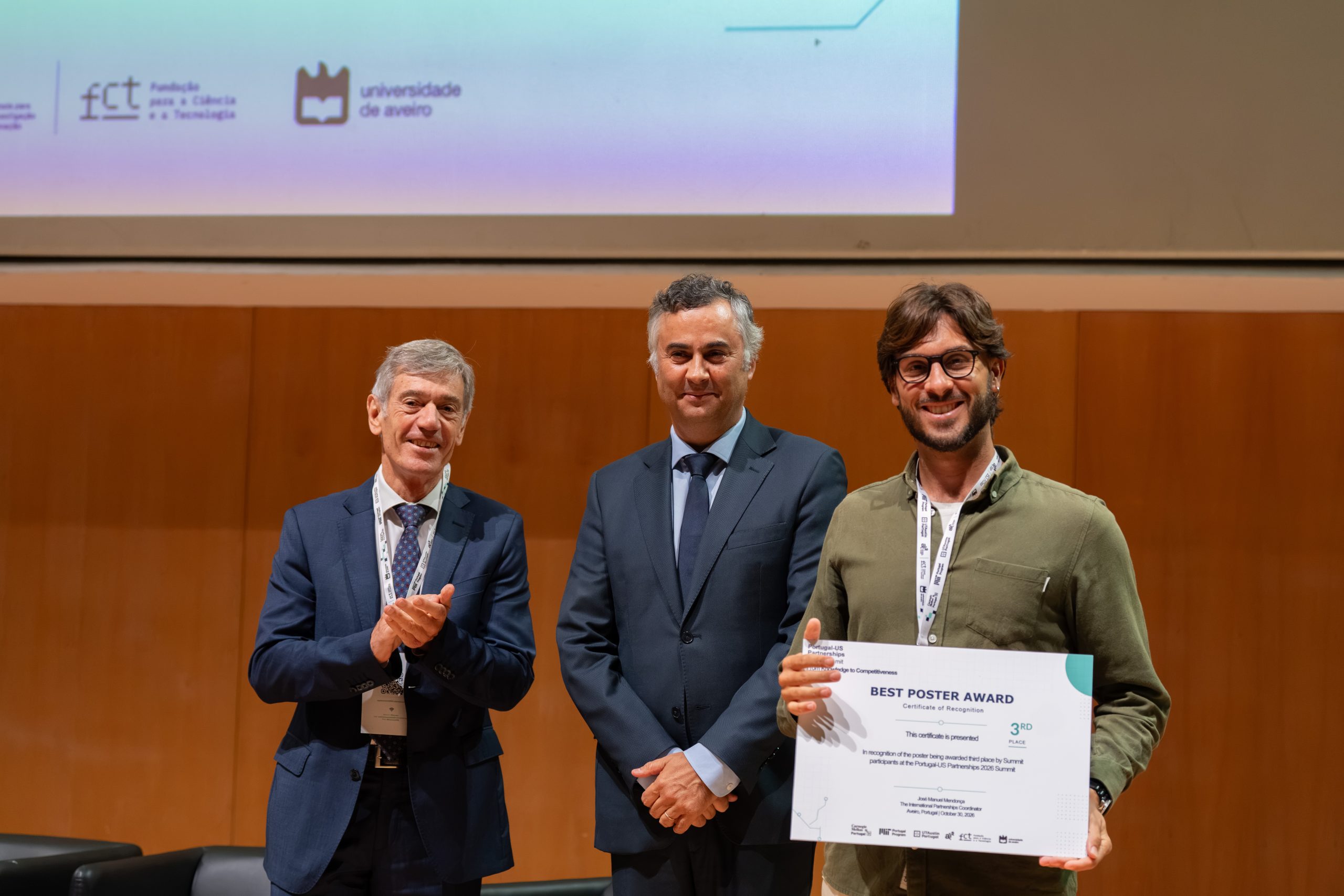
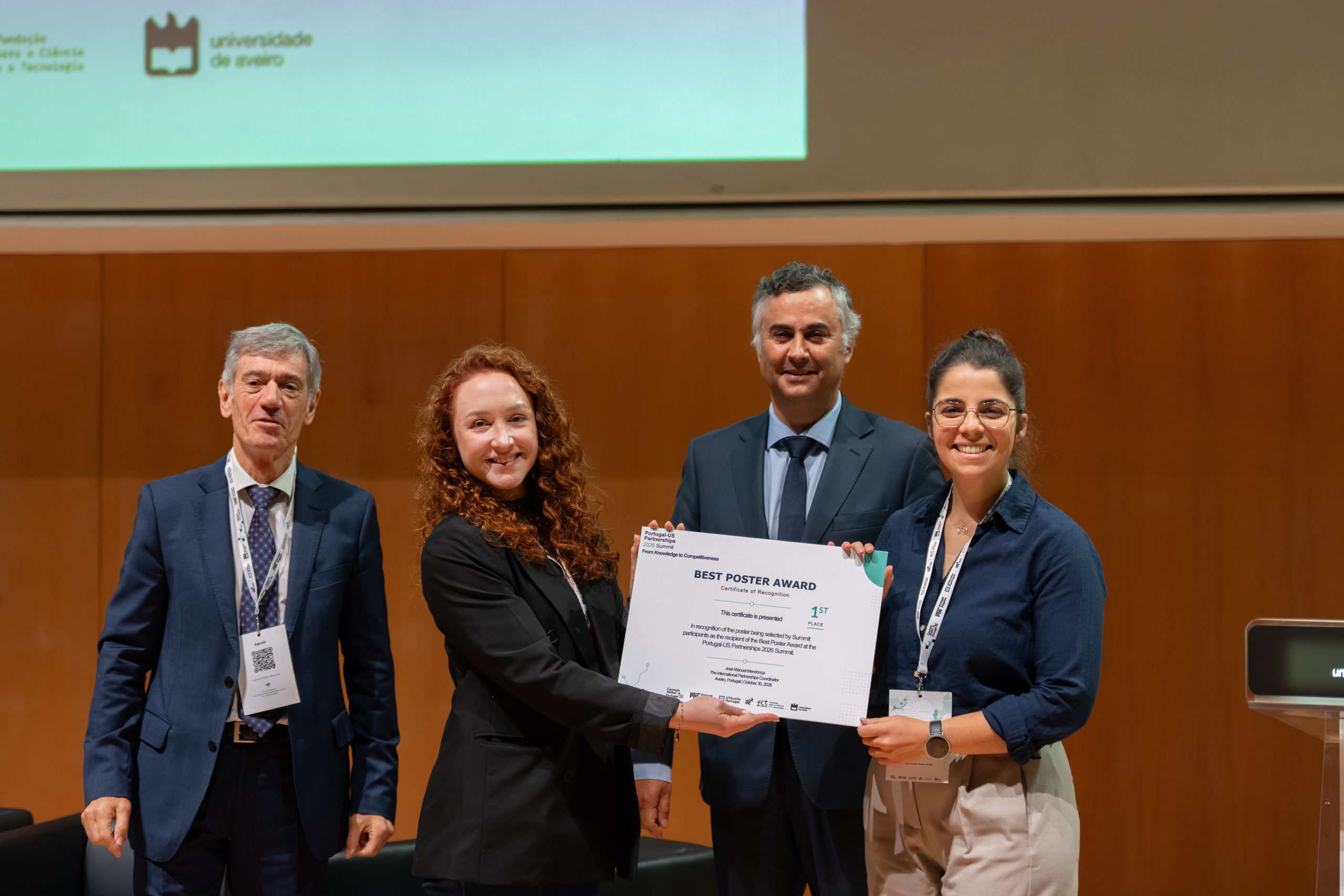
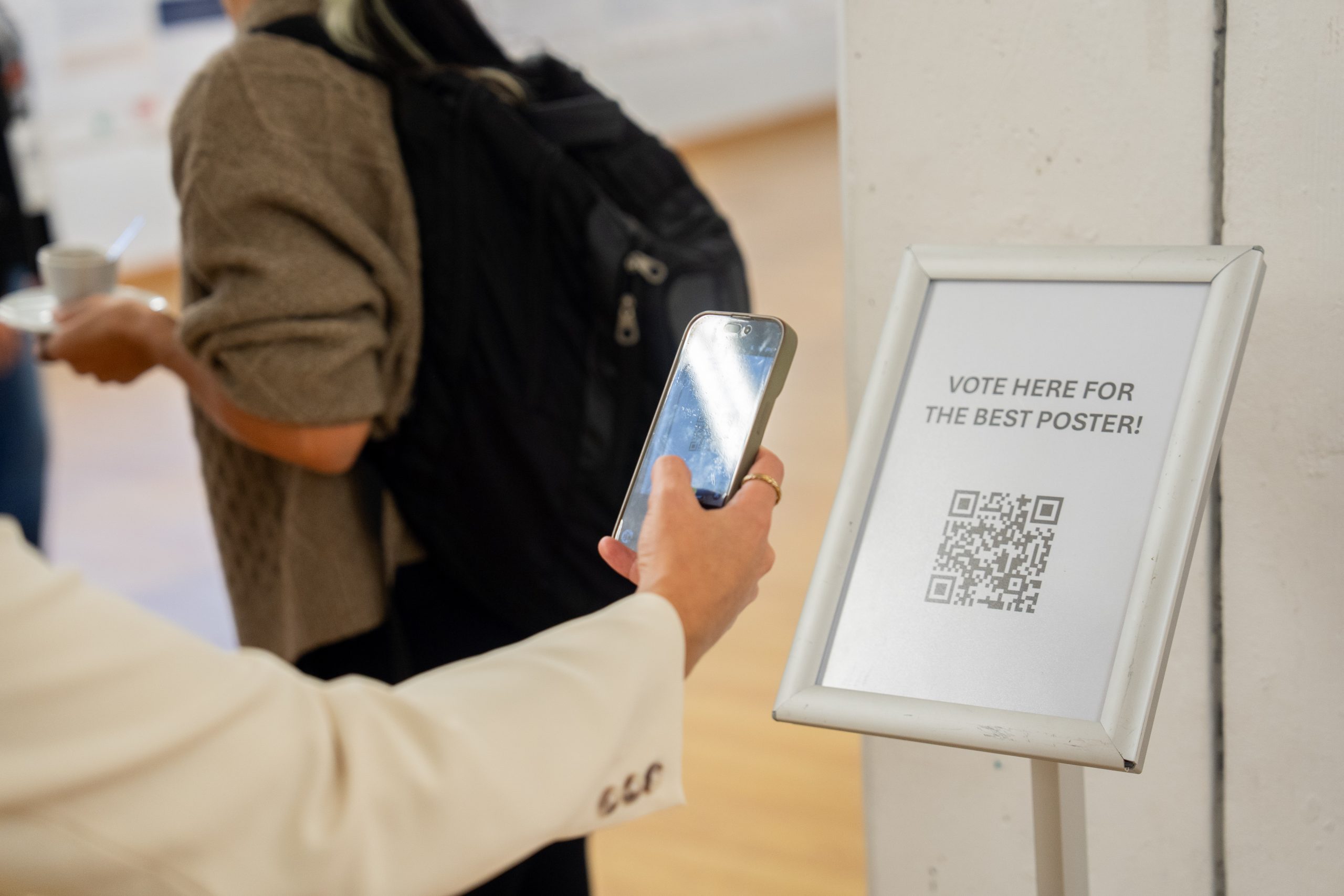
Ahead of the closing session, the Summit celebrated the exceptional research on display with the presentation of the Best Poster Awards, determined by a vote among Summit participants.
Fernando Alexandre, Minister of Education, Science and Innovation, alongside José Manuel Mendonça, Coordinator of the International Partnerships, presented the awards. Third place went to Matteo Capello (CMU Portugal), second place to Diogo Santos Costa (UT Austin Portugal), while Nathalia Hammes (UT Austin Portugal) and Marta Freitas (CMU Portugal) tied for first place (ex aequo).
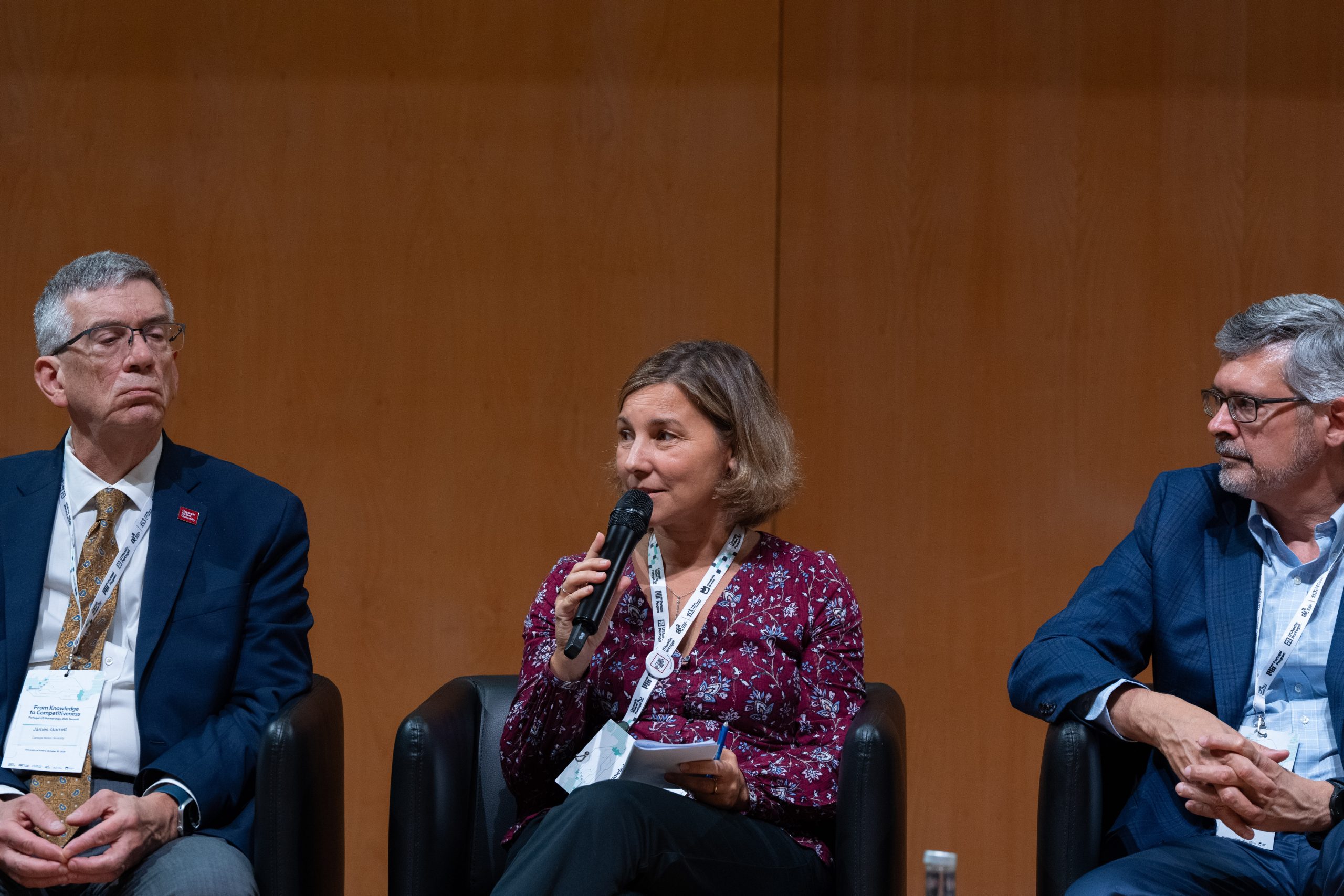
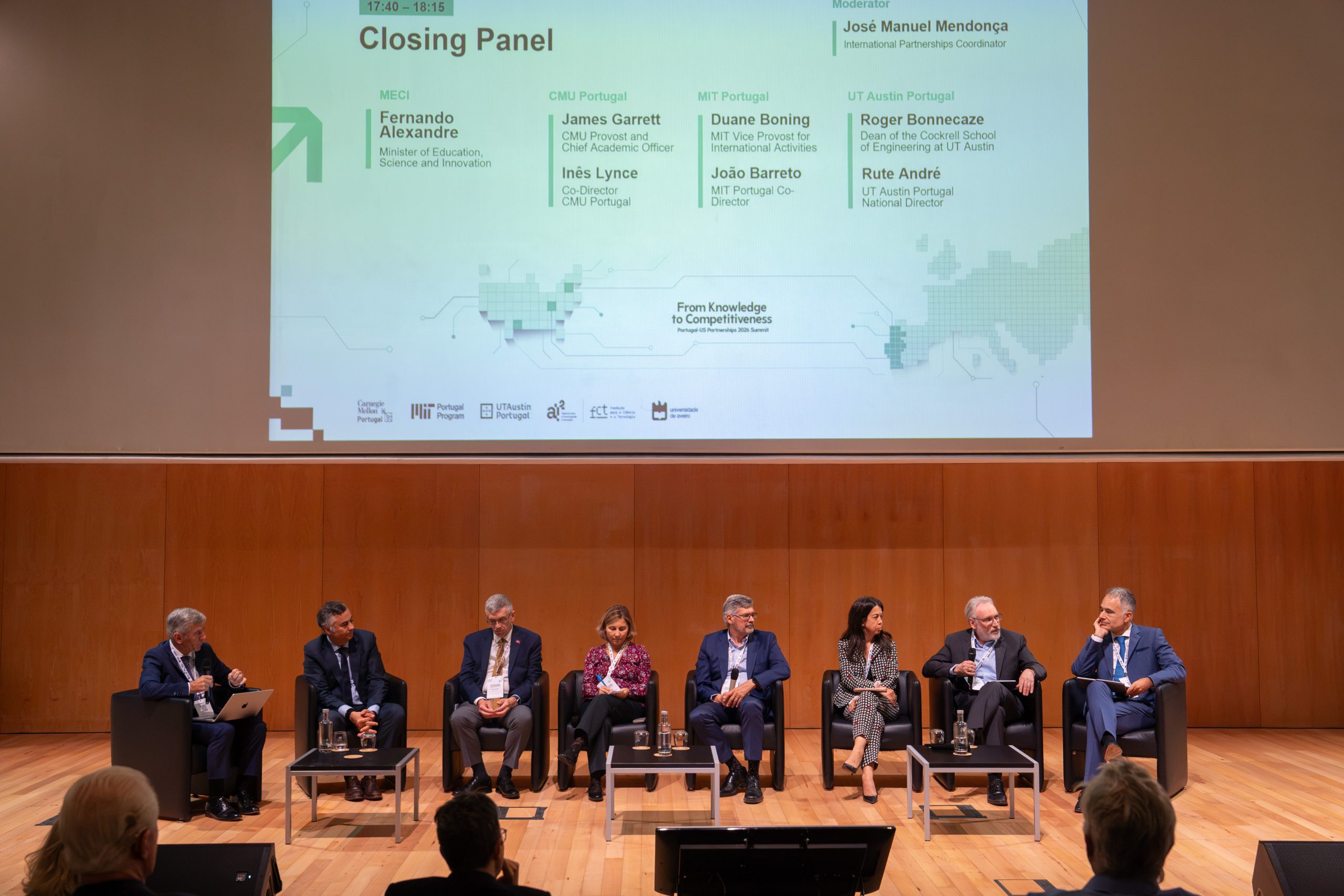
The final session, ‘Main Takeaways from the Portugal-US Partnerships,’ brought together representatives from all three programs to reflect on the key themes that emerged throughout the day. Moderated by José Manuel Mendonça, the panel featured Fernando Alexandre, Minister of Education, Science and Innovation, alongside partnership leaders James H. Garrett Jr. and Inês Lynce (CMU Portugal), Duane Boning and João Barreto (MIT Portugal), and Roger Bonnecaze and Rute André (UT Austin Portugal).
The panelists highlighted the complementary strengths of the three partnerships and their collective contribution to addressing major societal and technological challenges. Looking ahead, the panel reinforced the vital importance of sustained, long-term investment in science, innovation, and transatlantic cooperation. The Summit concluded on an inspiring note with the announcement of the next Portugal-U.S. Partnerships Summit in 2027, set to take place in Coimbra.
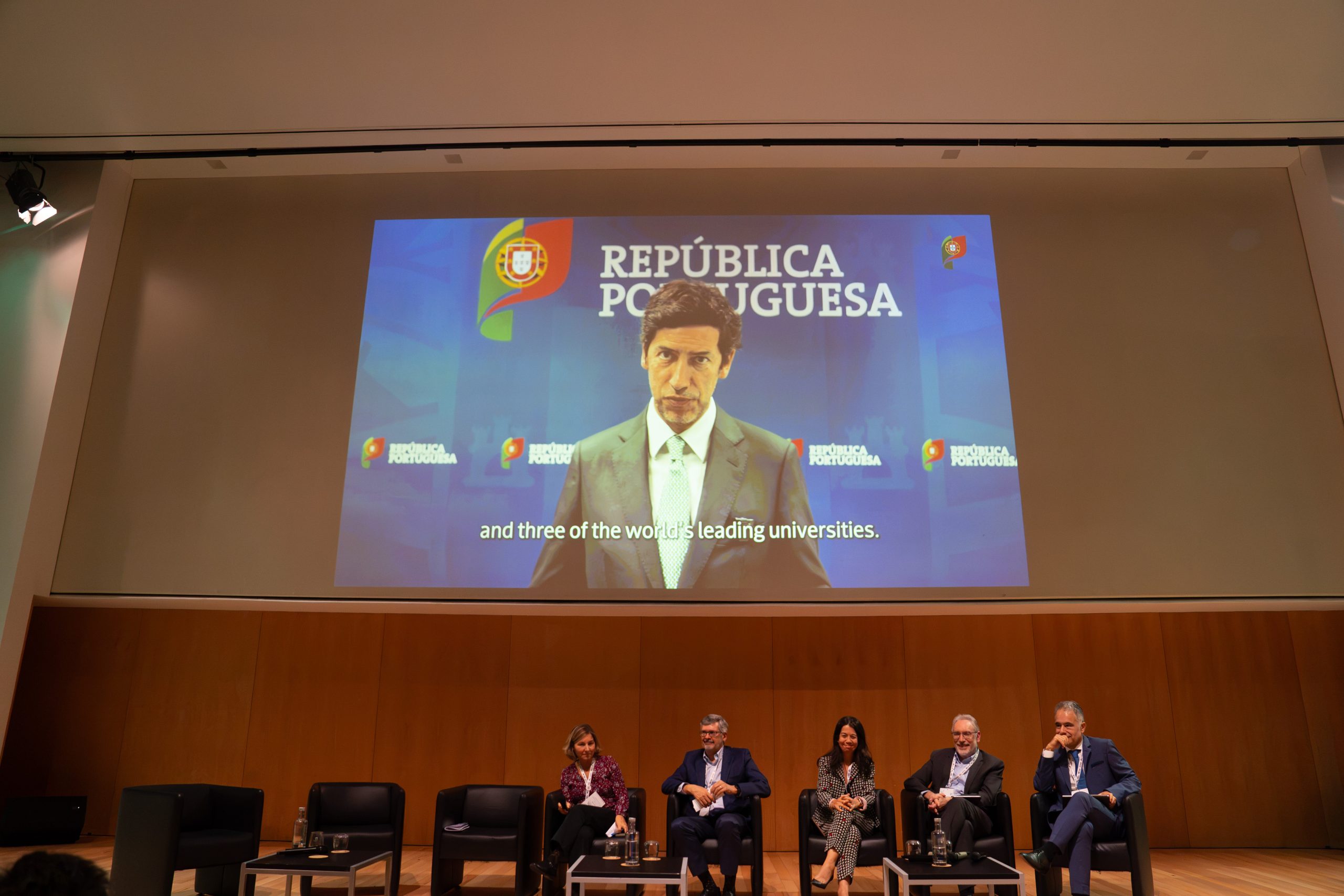
To formally close the Summit, participants watched a video message from João Rui Ferreira, Secretary of State for the Economy, who reflected on the importance of international partnerships in fostering innovation, competitiveness, and economic growth.
As the Portugal-U.S. Partnerships 2026 Summit came to an end with an “Aveiro de Honra” cocktail reception, participants left the Summit with new ideas, strengthened connections, and a shared commitment to advance science, research, innovation, and community development.
We look forward to continuing the conversation at the next Portugal-U.S. Partnerships Summit in 2027, in Coimbra!