
Building on a strategic meeting held in November 2025, PLANAPP, the CMU Portugal Program, and the Carnegie Mellon University Department of Engineering and Public Policy (CMU EPP) hosted a one-day hybrid workshop on March 26th at INESC TEC to bridge the gap between scientific research and public policy.
The event represented another major milestone in the ongoing collaboration between these institutions, focusing on three strategic pillars:
- Artificial Intelligence and Public Policy
- Clean Energy Technologies and Sustainability Transitions
- Critical and Emerging Technologies
Bringing together over 30 participants, from CMU faculty members to PLANAPP experts and key government stakeholders, the workshop was designed to establish detailed, operational agendas that translate technological knowledge into policy implementation and evaluation within Portugal.
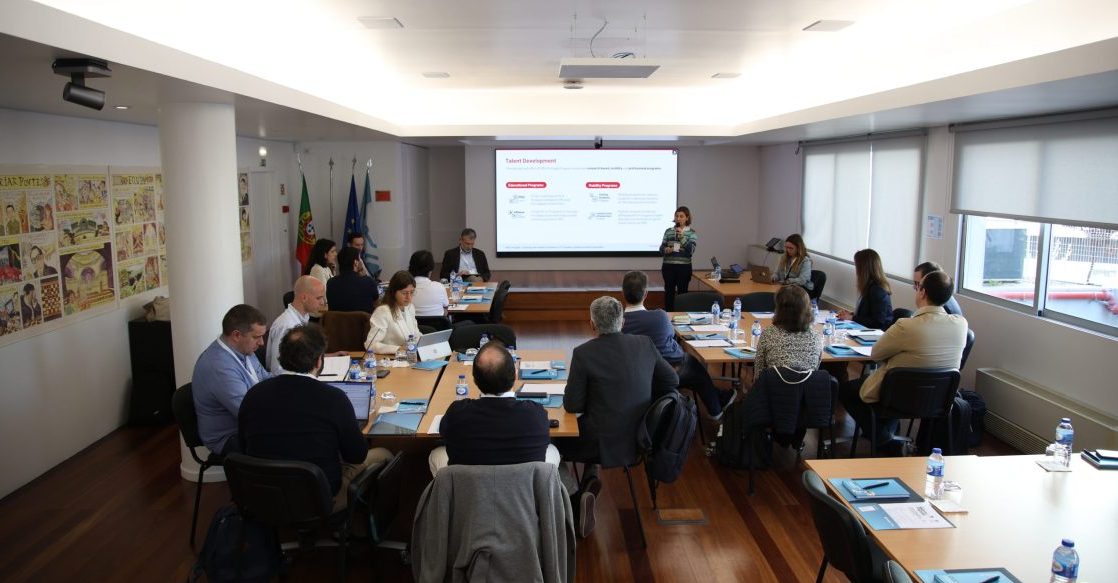
The delegation from PLANAPP (the Centre for Planning, Evaluation, Strategy and Strategy for Public Policies) was represented onsite by Carolina Nogueira, Gabriel Osório de Barros, Tiago Louro, Elsa Picão, Sofia Carvalho, Carlos Ferreira, and Hugo Moreira. CMU Portugal was represented by Inês Lynce and João Magalhães, co-directors of the CMU Portugal Program, Joe deCarolis, Director of the Department of Engineering and Public Policy at CMU, and Lia Patrício, Scientific Director of the Engineering and Public Policy area at CMU Portugal. The workshop also involved multiple academic experts from both Portuguese universities and CMU, namely Carlos Soares, Ricardo Bessa and José Coelho Rodrigues from FEUP, João Magalhães, CMU Portugal Co-Director from NOVA FCT, Carlos Silva and Yasser Omar from the Instituto Superior Técnico, as well as Ramteen Sioshansi and Afonso Amaral from CMU .
Public administration and government agencies were represented by Manuel Casquiço and Madalena Santos from ADENE, Cláudia Barroso from the Agência para a Reforma Tecnológica do Estado (ARTE), and Maria João Jacinto from the State Secretariat for Science and Innovation (SECI). The inter-ministerial dimension was supported by representatives from various departments within the Ministry of Education, Science, and Innovation (MECI), including Bruno Teixeira and José Cardoso from ANI, Daniel Ferreira from DGEPA, and Marta Norton from FCT. Additionally, the Ministry of Economy was represented by Pedro Esteves via DGE, while Carlos Gandarez represented the Ministry of Justice.
Joining online throughout the discussions were Granger Morgan, Baruch Fischhoff, Joseph Calandrino, Sarah Cen and Jon Peha (CMU); Pedro Esteves (DGE); Yasser Omar (Técnico); João Peças Lopes and Alexandra Mendes (FEUP), Patrícia Fortes (Ministério do Ambiente e Energia / LNEG).
The meeting promoted an open dialogue among all participants, both onsite and remotely, to ensure that international research effectively supports evidence-informed policymaking for Portugal’s major national initiatives, such as the Portugal 2030 Strategy and other digital and environmental sectoral policies.
This joint initiative also aligns with the latest phase of Portugal’s partnerships with U.S. universities, which focuses on turning research excellence into tangible societal and economic value.
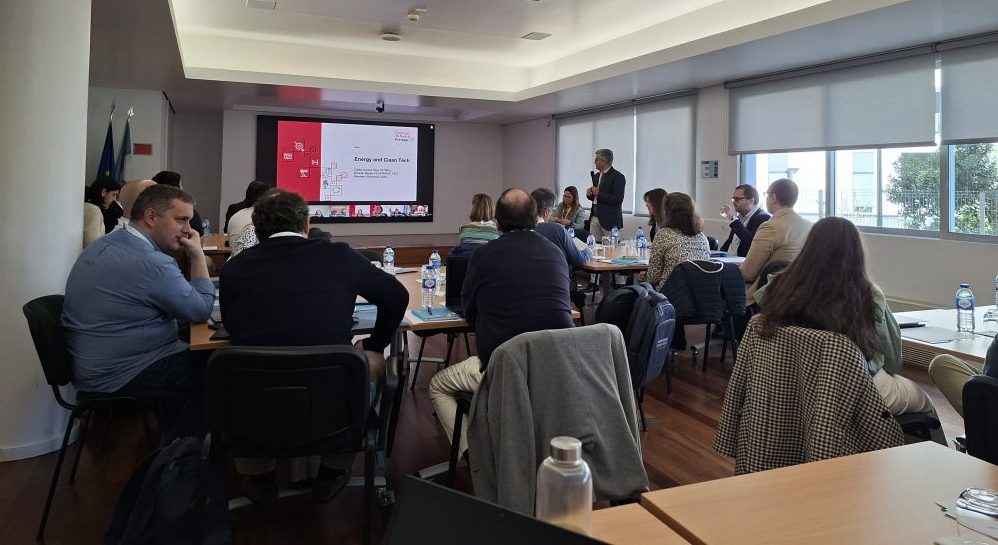
The morning started with a welcome by João Claro, President of INESC TEC, and José Manuel Mendonça representing the US International Partnerships. This was followed by Inês Lynce, Co-Director of the CMU Portugal Program providing the context and overview of the meetings’ mission.
Carolina Nogueira, Deputy Director at PLANAPP, presented the center’s vision for evidence-informed policymaking, followed by an overview of the Engineering and Public Policy area at CMU, by Joe de Carolis, and at CMU Portugal Program, by Lia Patrício. To set the stage for deeper discussion, faculty members Afonso Amaral, José Coelho Rodrigues, Carlos Santos Silva, and João Magalhães, provided inputs on the three thematic pillars of the collaboration.
The event followed with parallel breakout sessions where experts and government stakeholders discussed specific national challenges and explored opportunities for collaboration in three focus areas.
In Energy and Clean Tech, Patrícia Fortes from LNEG discussed climate neutrality, while Manuel Casquiço of ADENE addressed energy poverty and João Peças Lopes of INESC TEC explored network resilience, complemented by Ramteen Sioshansi’s perspective on U.S. policy design.
In the Artificial Intelligence and Policy Session, Tiago Louro from PLANAPP outlined how the agency is using AI to solve complex public policy issues , while Carlos Soares and João Magalhães provided a diagnosis of AI adoption in the public sector and the concerns related with its large scale usage, alongside André Carreiro (Fraunhofer Portugal) insights on responsible AI implementation. Sarah Cen and Joe Calandrino also shared specific examples of how CMU research can directly inform these policy decisions.
The third breakout session on Emerging Technologies involved presentations from Afonso Amaral and from Sofia Carvalho (PLANAPP), Yasser Omar (Técnico), Jon Peha (CMU and José Rodrigues (INESC TEC). This session enabled the identification of opportunities for international alliances and the analysis of different methodologies for identifying emerging and critical technology areas. This initial presentation set the basis for an open discussion among the group on common ideas to face the emerging technological challenges.
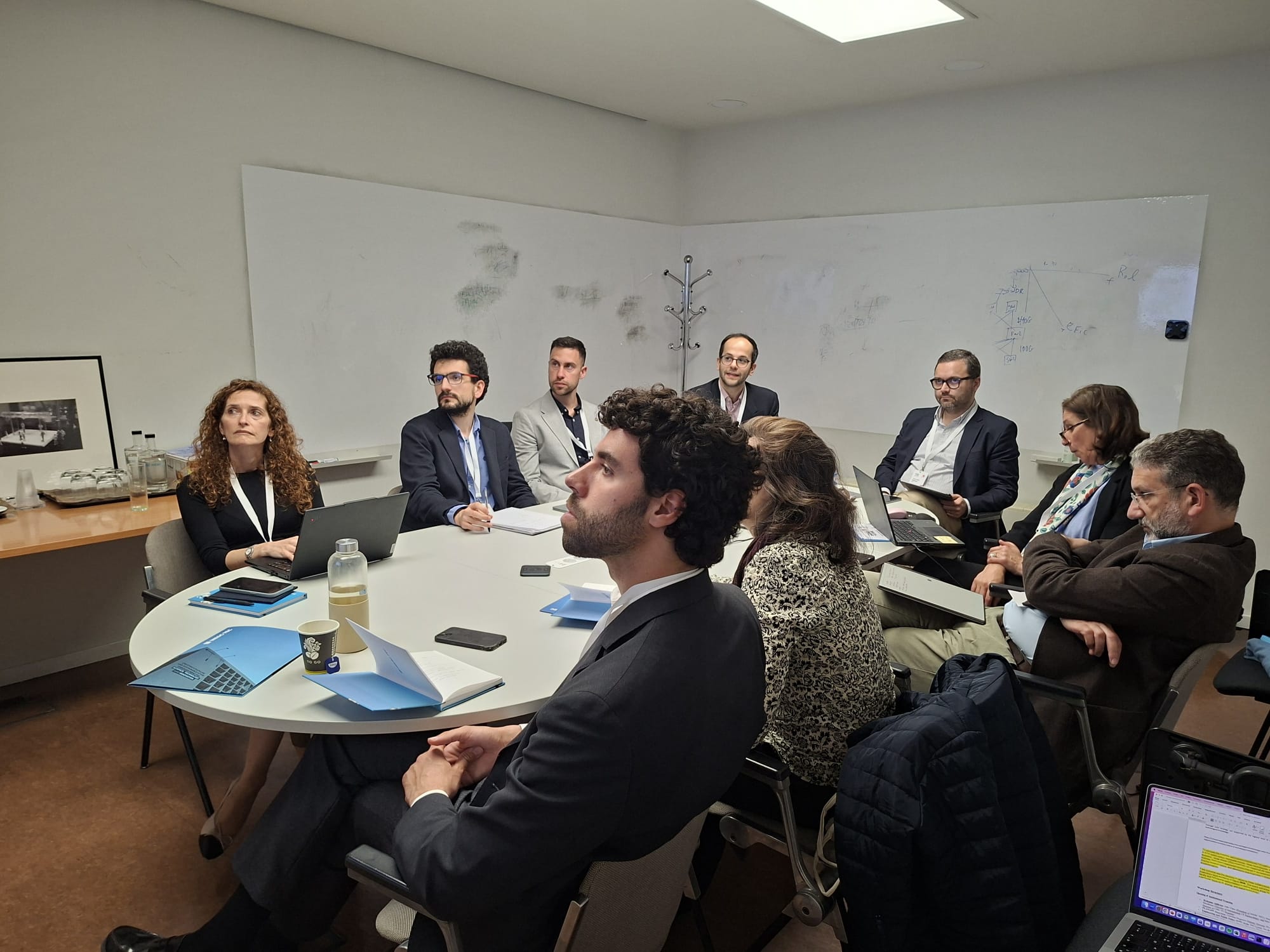
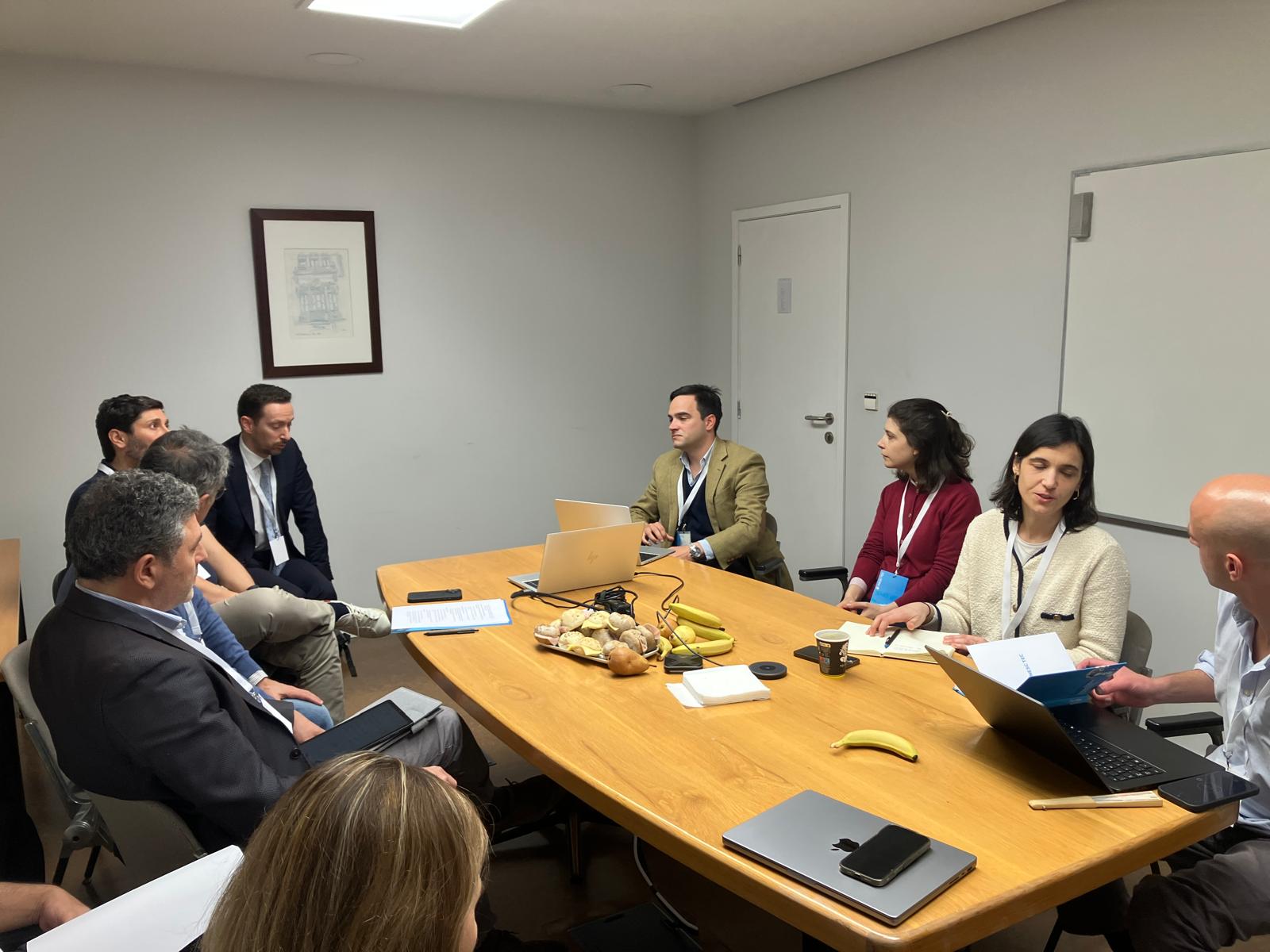
The afternoon focused on action, with participants identifying specific funding instruments and pilot projects to operationalize joint research.
This culminated in a plenary session where groups shared their findings to build a unified strategy for each thematic area.
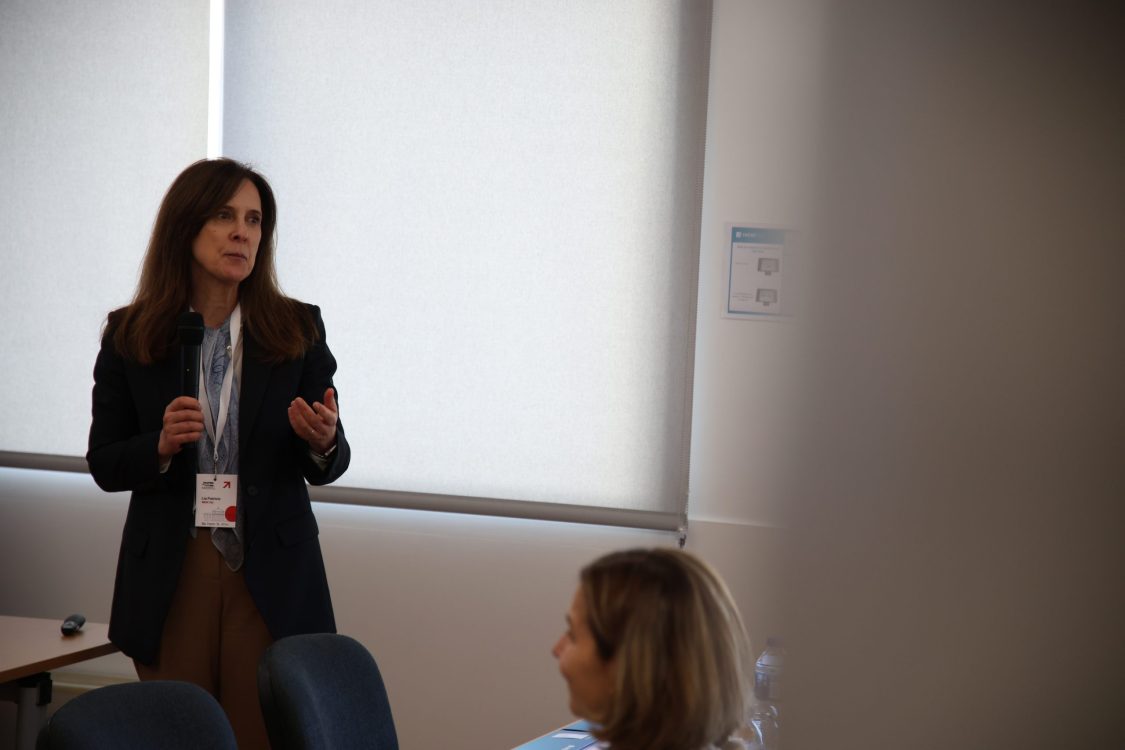
To wrap up the day, Lia Patrício presented a roadmap for sustained engagement between academia and public administration, ensuring that Portugal’s macro-policies – including the Portugal 2030 Strategy – are based on world-class scientific expertise.
Building on the success of the previous two meetings, plans are underway for a follow-up session. This gathering will allow teams from all three areas to share their final conclusions and propose concrete initiatives to put these collaborations into practice.
Read the PLANAPP & CMU Portugal 2025 meeting here.