
Nikolas Martelaro, Assistant Professor at Carnegie Mellon’s Human-Computer Interaction Institute (HCII), recently conducted a visiting research period in Portugal. With financial support from the CMU Portugal Program, Martelaro spent six weeks at the Interactive Technologies Institute (ITI), working both at the University of Lisbon headquarters and at ITI’s facilities of the University of Madeira in Funchal.
ITI University of Lisbon (June 2 – 27, 2025)
Hosted by Nuno Nunes and Valentina Nisi, the CMU Professor focused on meeting with students to learn about their research and offer feedback on CMU Portugal Affiliated Ph.D. applications, particularly for those interested in AI and design.
Nikolas Martelaro reflects on his time with the students: “Our research discussions centered on interactive systems for sustainability, ecological, and systems thinking. This focus was particularly exciting given my interest in sustainable human-computer interaction, an area I believe is important yet understudied. While CMU HCII has limited research in this field, the extensive discussions with ITI Lisbon students brought me new perspectives. I was especially keen on exploring how to support designers in reasoning about complex ecological systems and appreciated the students’ interest in AI to aid people in ecological thinking and creating interactive exhibits to foster ecological awareness.”
ITI University of Madeira (June 27 – July 10, 2025)
While at ITI premises University of Madeira, Nikolas Martelaro primarily met with students to experience the systems they have been developing and provide feedback. Some of the students’ research included: a demonstration of a dating simulation game, experiencing CritterConnect, a wearable augmented-reality experience, and testing pilots of numerous exhibits at the Madeira Museum of Natural History. He also met with CMU Portugal Affiliated PhD student Duarte de Sousa to discuss his research on developing AI storytelling agents.
Nikolas adds that their conversations “revealed many overlaps in design methods interests and although learning support is not a primary research area of mine, I have agreed to provide co-advising support on Duarte’s upcoming studies which will involve developing a conversational AI agent and hosting design workshops with educators to explore how these agents can fit into curriculum.”
The six-week stay was highly beneficial and yielded the following outcomes:
- Promote future collaborations through co-supervision of students
- Initiated a collaborative research project with André Borracas, Valentina Nisi, and Nuno Nunes focused on AI tools for sustainable design. This project is currently progressing toward a conference paper submission in September.
- Participated in three user studies, providing research and technical guidance.
- Established a research collaboration with Valentina Nisi on AI exhibit design.

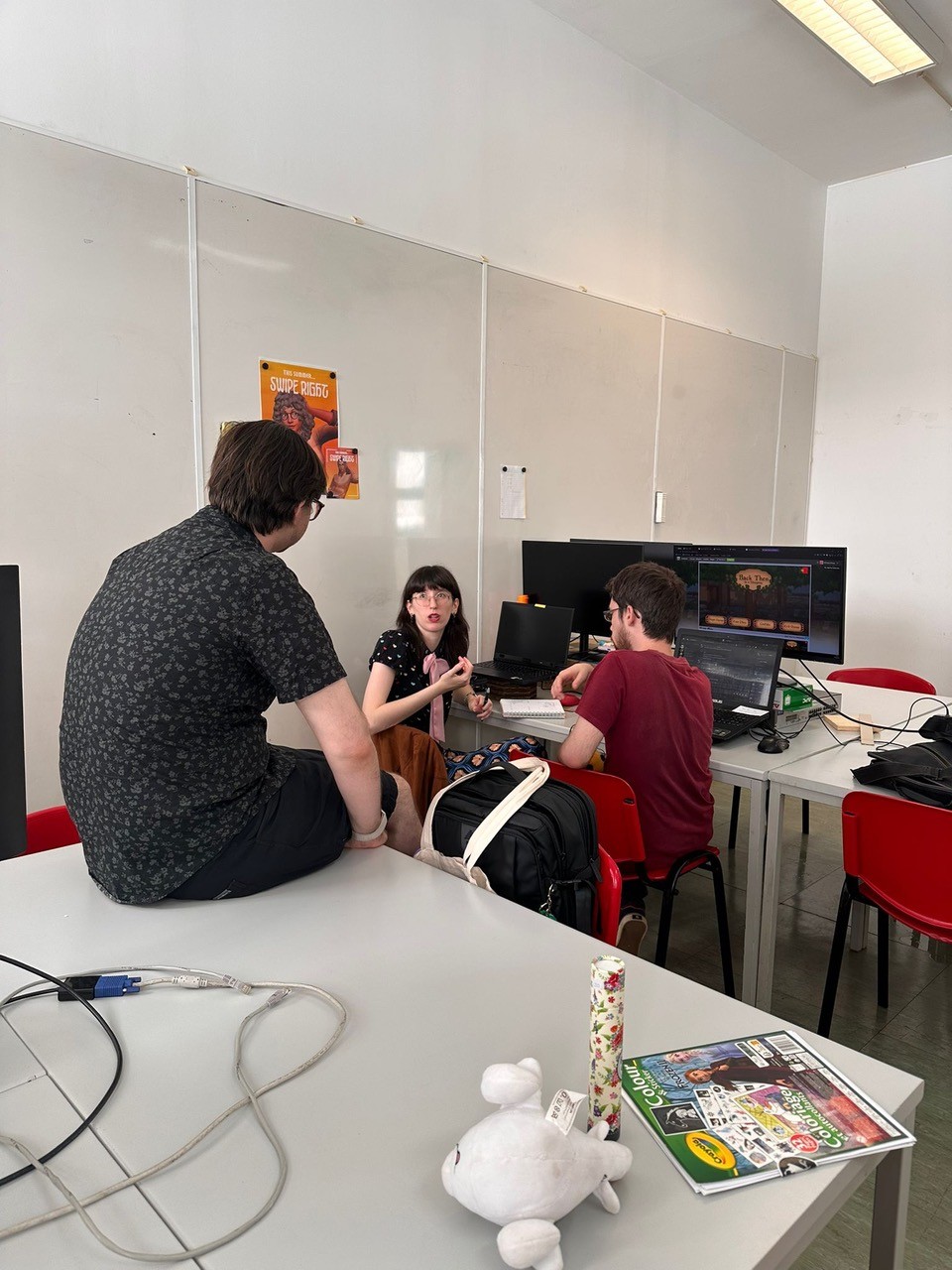
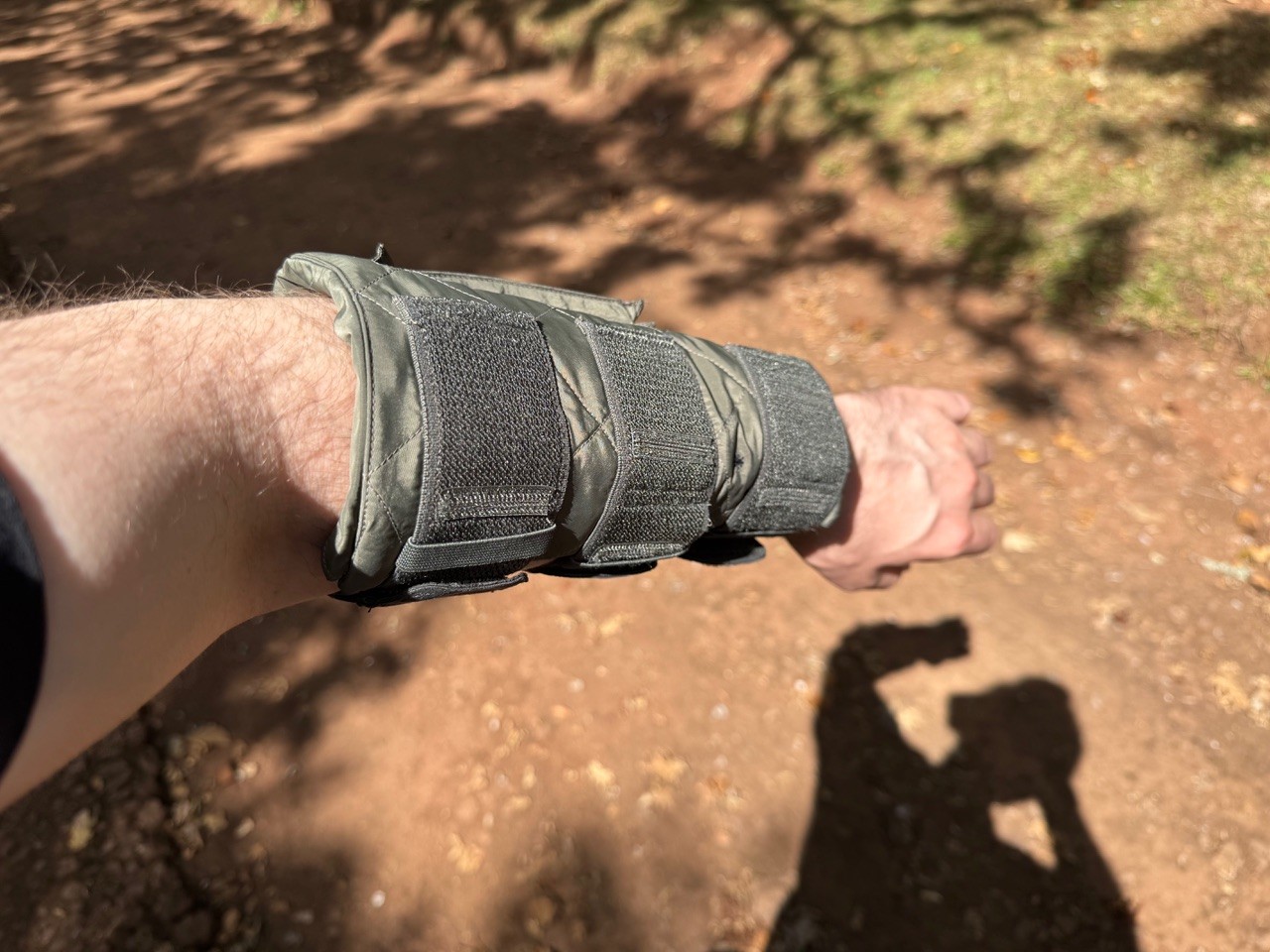
Nikolas testing a student’s prototype