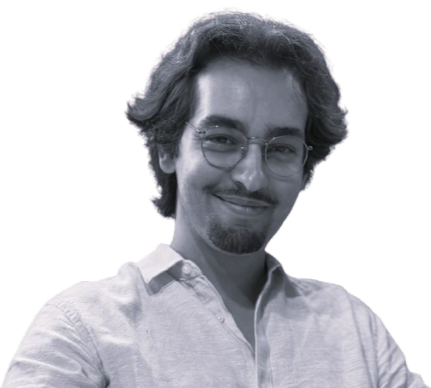
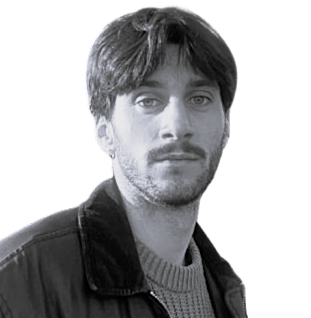
I am a PhD student at IST, under the CMU Portugal Affiliate PhD Program. I was previously a Junior Researcher at the HLT (Human Language Technologies Laboratory) of INESC-ID, where I worked on machine unlearning for speech recognition in the LeaF project. My PhD focuses on explainability and fairness of speech models in clinical settings.
Polymer Engineer from UMinho and researcher at IPC. My work focuses on upgrading the injection molding process. By blending 3D simulations with AI, I aim to design optimal cooling channels and solve real-world thermodynamic puzzles for manufacturing.
Miguel Borges received the B.Sc. degree in bioengineering and the M.Sc. degree in biomedical engineering from the University of Porto, Portugal, in 2023 and 2025, respectively. During Fall 2024 semester, he has participated in a student internship through a mobility program with the University of Genoa, Genoa, Italy. From Fall 2025 to Fall 2026, he was a research fellow at the Faculty of Medicine of the University of Porto, where he worked on the development of real-time biosignal acquisition systems. His research interests include neuroscience/neuroengineering and embedded systems.
I hold a Bachelor’s degree in Biomedical Engineering from ISEP where I learned the importance of integrating knowledge from different fields to develop innovative solutions. My fascination with the human brain then led me to pursue a Master’s degree in Neuroscience at FMUP. This background shaped my interest in computational approaches to neuroscience, particularly in the application of artificial intelligence to understand and analyse brain function. My Master’s research focused on biologically constrained neural networks for brain signal classification, integrating functional and structural brain information to improve model plausibility. The potential of the developed models has motivated me to pursue further research at the intersection of neuroscience and artificial intelligence.
Longyue Huang is a PhD student in Planetary Health at the University of Lisbon, working at the intersection of Artificial Intelligence, AI literacy, design for ageing, and participatory research. She holds a BEng in Industrial Design from Northeast Petroleum University and an MSc in Product Service System Design from Politecnico di Milano, where she conducted community-based participatory research with older adults and developed digital prototypes to address digital exclusion and support ageing in place. Her current research investigates relational AI literacy, especially focusing on how older adults learn about, interpret, evaluate, negotiate, and engage with AI through everyday social, material, and care relationships.
I am a Ph.D. student in Digital Media at ITI-LARSyS and the CMU Portugal Affiliated Program. Before starting my PhD, I studied digital cultural heritage at Tianjin University, focusing on how digital technologies can transform and empower traditional cultural practices and design in Tibetan communities. My current research is driven by HCI, sustainability, and human-centered approaches to emerging technologies
I hold a BSc in Psychology and a Research Master’s in Psychology, both from the University of Amsterdam. My academic training has primarily focused on computational cognitive neuroscience. For my PhD, I am interested in human–AI alignment, investigating how artificial and biological vision can be better aligned to improve our understanding of both systems.
I consider myself a curious, interested and professional person, ready to put in the effort to accomplish my goals while enjoying the process. Always interested in learning more, be it by studying, travelling, or researching.
I’m a Master’s graduate in Computer Science and Engineering at Instituto Superior Técnico (University of Lisbon), where I also completed my Bachelor’s degree. I will be joining CMU as a PhD student, researching AI-assisted formal verification, using LLM-based agents to automate proof construction at a system-level.